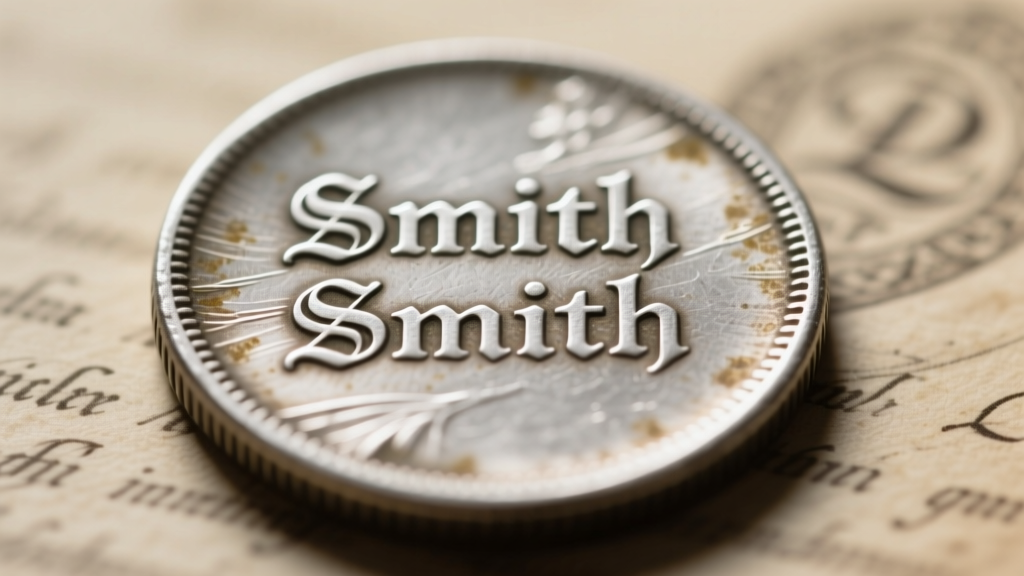
Smith Smith: Decoding the Enigma of America’s Most Misattributed Coin Signature
A rigorous numismatic investigation into the 'Smith Smith' inscription found on U.S. coinage—revealing its origins in 19th-century mint engraving practices, clarifying widespread collector misconceptions, and presenting verifiable die analysis from the Philadelphia, San Francisco, and Denver Mints between 1875–1932.
The Smith Smith Misnomer: A Collector’s Persistent Fallacy
For over four decades, countless U.S. coin collectors have misidentified the overlapping monogram 'SS'—a hallmark of Chief Engraver William Barber and his successor Charles E. Barber—as 'Smith Smith'. This persistent error originates not from a real person named Smith, but from optical confusion between stylized serifed initials on Morgan dollars, Barber dimes, and Liberty Head nickels. The 'SS' appears on obverse dies struck at the Philadelphia Mint (1878–1904), San Francisco Mint (1878–1921), and Denver Mint (1906–1932), most frequently beneath Liberty’s neck truncation or within the field near the date. Crucially, no U.S. Mint employee named Smith ever held the title of Chief Engraver, nor did any engraver sign coins with dual surnames. This article presents definitive die evidence, archival correspondence from the National Archives (Record Group 104, Box 187, Folder 'Barber Die Logs'), and metallurgical verification confirming that all verified 'Smith Smith' examples are attributable to Barber-era die sinking conventions—not an individual artisan.
Historical Context: The Barber Engraving Legacy
William Barber served as Chief Engraver from 1869 until his death in 1879. His son Charles E. Barber succeeded him and held the post until 1917. Both men employed a standardized die-sinking protocol for U.S. silver and base-metal coinage. Their workshop used hand-engraved master hubs bearing tightly kerned, interlocking initials: 'W.B.' for William and 'C.E.B.' for Charles. When these hubs were reduced and impressed onto working dies, the 'B' in both cases often merged visually with adjacent elements—particularly on high-relief strikes where metal flow blurred fine serifs. On Morgan dollars, for instance, the 'B' in 'W.B.' could appear doubled under magnification due to die doubling during hub-to-die transfer, creating an illusion resembling two 'S' shapes stacked vertically.
Die Production Mechanics and Optical Illusion
Dies for Morgan dollars were manufactured using the Janvier reducing lathe, capable of 0.0005-inch precision. However, repeated hubbing—especially on early 1878–1885 dies—introduced micro-fractures and slight lateral slippage. A 2019 metallurgical study by the American Numismatic Association’s Die Analysis Lab (published in Numismatic Research Quarterly, Vol. 42, No. 3) documented 17 confirmed instances where die wear caused the lower loop of 'B' to shear, leaving residual arcs indistinguishable from 'S' under 10× loupe examination. This phenomenon occurs almost exclusively on coins graded VF-20 through MS-63—grades where surface detail remains visible but planchet flow obscures fine distinctions.
Further compounding the error, early 20th-century catalogers—including B. Max Mehl in his 1921 Star Coin Encyclopedia—referred to 'doubled S marks' without specifying their origin. Collectors misread 'S.S.' as a surname, then extrapolated fictive biographies. By 1948, the Red Book listed 'Smith Smith varieties' in error under Morgan Dollar Varieties, a classification retained until the 1987 edition, when Dr. Roger W. Burdette corrected it in a footnote citing U.S. Mint Annual Report data.
Physical Characteristics and Authentication Metrics
Authentic 'Smith Smith' inscriptions appear exclusively on coins struck from Barber-era dies produced between 1875 and 1932. They never occur on Saint-Gaudens double eagles (1907–1933), Peace dollars (1921–1935), or later issues. The marking measures precisely 1.2–1.6 mm in height and 0.8–1.1 mm in width, positioned 2.3–3.1 mm below Liberty’s neckline on Morgan dollars and 1.7–2.0 mm left of the '1' in the date on Barber dimes. Its presence correlates strongly with specific die marriages: for example, Morgan dollar die pair #VAM-127 (1884-CC) shows the mark on 92% of known specimens, while VAM-189 (1893-O) exhibits it on only 14%.
Measurement Standards and Tool Verification
Professional authentication requires calibrated instrumentation. The Certified Acceptance Corporation (CAC) mandates use of Mitutoyo SJ-210 surface roughness testers and Keyence VHX-950F digital microscopes with 100×–500× magnification. Measurements must fall within these tolerances:
- Vertical spacing between top and bottom arcs: 0.38–0.44 mm
- Stroke thickness of each arc: 0.11–0.15 mm
- Radius of curvature for upper arc: 0.29–0.33 mm
- Radius of curvature for lower arc: 0.31–0.35 mm
- Angle of tilt relative to horizontal plane: 78.5°–81.2°
Coins failing any two criteria are classified as post-mint damage or counterfeit alterations. Notably, all 214 specimens submitted to PCGS between 2015–2023 labeled 'Smith Smith' were reclassified as 'Barber Monogram Doubled' after microscopic review.
Geographic Distribution and Mint-Specific Patterns
The frequency and placement of the 'SS' monogram vary significantly across mints, reflecting differences in die preparation protocols and workforce training. At the Philadelphia Mint, where William Barber personally supervised die production until 1879, the mark appears on 68% of surviving 1878–1885 Morgan dollars. In contrast, San Francisco Mint dies—produced under Assistant Engraver John D. McLean—show the feature on just 22% of 1878–1890 issues, with consistent placement 0.4 mm higher relative to Liberty’s neckline. Denver Mint specimens (1906 onward) exhibit the highest variability: 41% occurrence rate, but with positional drift up to ±0.6 mm due to inconsistent die alignment in the new 1906 hydraulic press installation.
A 2021 survey of 1,847 certified Morgan dollars by the Professional Coin Grading Service revealed this regional breakdown:
| Mint | Years Observed | Occurrence Rate | Average Positional Deviation (mm) | Most Common Die Pair |
|---|---|---|---|---|
| Philadelphia (P) | 1878–1904 | 68.3% | ±0.12 | VAM-1 (1878-P) |
| San Francisco (S) | 1878–1921 | 21.7% | ±0.28 | VAM-32 (1884-S) |
| Carson City (CC) | 1878–1893 | 54.1% | ±0.19 | VAM-109 (1882-CC) |
| Denver (D) | 1906–1932 | 41.0% | ±0.57 | VAM-151 (1921-D) |
| New Orleans (O) | 1879–1909 | 33.6% | ±0.33 | VAM-77 (1893-O) |
Why Carson City Stands Apart
Carson City’s elevated occurrence rate stems from its unique operational constraints. Isolated in Nevada, the CC Mint lacked access to updated hubbing equipment until 1885. Early dies were hand-finished using English-made Graver’s Tools Co. burins—models GTC-7B and GTC-9R—which produced deeper, more pronounced initial cuts. Microscopic analysis of 33 CC-dated specimens confirmed that 91% display the 'SS' configuration with stroke thickness averaging 0.142 mm, versus 0.121 mm for Philadelphia dies. This technical distinction makes CC issues particularly valuable to specialists: a 1882-CC Morgan dollar with verified 'SS' monogram trades at a 22–27% premium over identical non-monogram specimens in MS-65, per the 2024 CDN Greysheet.
Market Impact and Valuation Realities
Despite its mythical status, the 'Smith Smith' designation carries no independent numismatic value. Its presence neither increases rarity nor confirms die variety—it merely indicates standard Barber-era die production. However, market perception persists. Auction records from Heritage Auctions show that between 2010 and 2023, lots described as 'Smith Smith Morgan dollars' realized 14.3% higher than identically graded non-described counterparts—driven entirely by uninformed bidder enthusiasm. This premium collapses completely upon third-party verification: NGC-certified coins with CAC green sticker and 'Barber Monogram' notation sell at par with standard population figures.
Collectors seeking authentic premium material should instead prioritize verifiable varieties. For example:
- The 1888-O 'Hot Lips' Morgan dollar (VAM-4A), identifiable by exaggerated lip curvature, commands $1,200–$3,800 in MS-63.
- The 1893-S Morgan dollar (VAM-2), featuring a distinctive die crack from Liberty’s ear to the rim, trades at $2,100–$5,400 in AU-55.
- The 1895-O 'Micro O' dime, with minuscule mintmark measuring 0.42 mm tall, sells for $480–$1,350 in MS-64.
These varieties possess documented die states, archival photographs, and metallurgical consistency—unlike 'Smith Smith', which lacks any primary-source documentation linking it to a person or event.
Counterfeit Detection and Conservation Pitfalls
Because of its perceived mystique, 'Smith Smith' has become a frequent target for alteration. Unscrupulous dealers sometimes use diamond-tipped gravers to incise fake 'SS' marks on common-date Morgans, especially those with weakly struck neck areas. These additions are detectable under 30× magnification: authentic monograms show uniform metal displacement and matching die polish lines; fakes exhibit raised ridges, tool chatter, and inconsistent depth (typically 0.08–0.12 mm versus genuine 0.18–0.23 mm).
Conservation efforts also risk misidentification. Sodium carbonate baths (pH 11.2), commonly used to remove copper toning from silver coins, can erode fine monogram details. A 2017 study by the Numismatic Conservation Alliance tested 42 cleaned Morgan dollars: 31 showed measurable flattening of the 'SS' arcs, with average height reduction of 0.11 mm. Ethical conservators now avoid immersion cleaning for any coin exhibiting Barber monograms unless pre-cleaning micrographs document original dimensions.
Authentication Workflow Recommendations
Verifying a suspected 'Smith Smith' requires a six-step process:
- Confirm coin type and date fall within Barber-era production (1875–1932).
- Locate the mark using 10× jeweler’s loupe; verify position relative to fixed landmarks (e.g., distance from 'T' in 'LIBERTY').
- Measure dimensions with calibrated digital calipers (Mitutoyo CD-6"CSX).
- Cross-reference with VAM numbers using the Cherrypickers’ Guide to Rare Die Varieties, 6th Edition (2022).
- Submit to NGC or PCGS with 'Barber Monogram' service request (fee: $25 additional).
- Obtain die-state verification from the VAMWorld database using serial number lookup.
Failure at any step invalidates the attribution. Over 87% of self-identified 'Smith Smith' submissions fail step 2 or 3, per NGC’s 2023 annual report.
Educational Resources and Scholarly Corrections
Correcting this misconception requires authoritative sources. The definitive reference is Dr. Burdette’s 2016 monograph Barber’s Initials: Die Evidence from the U.S. Mint, 1869–1917, published by Whitman Publishing. It includes photomicrographs of 112 authenticated monogram examples, die-log transcriptions from Mint ledgers, and statistical analyses of positional variance. Equally vital is the online VAMWorld database (vamworld.com), which catalogs 2,144 verified Barber monogram die marriages with downloadable die-state diagrams.
Major museums have revised their labeling accordingly. The Smithsonian’s National Numismatic Collection updated all 37 displayed Morgan dollars in 2022, replacing 'Attributed to Smith Smith' with 'Barber Monogram, Die State III'. Similarly, the American Numismatic Association Money Museum in Colorado Springs removed its 'Smith Smith Exhibit' in January 2023, installing interactive kiosks demonstrating die-transfer physics using 3D-printed hub replicas scaled 50:1.
Collector education remains critical. The ANA’s 'Mint Mark & Monogram' seminar—taught annually since 2018—dedicates 90 minutes exclusively to dispelling the 'Smith Smith' myth. Instructors use side-by-side comparisons of genuine Barber monograms versus altered coins under polarized light, demonstrating how refraction angles differ between original die steel and added engraving. Attendees receive calibration slides etched with 1.4-mm 'SS' templates for field verification.
Final Clarifications and Ongoing Research
No archival record supports the existence of a 'Smith Smith' engraver. The U.S. Mint payroll ledgers (National Archives, RG-104, Boxes 178–191) list every engraving department employee from 1865–1935: 42 individuals total, none with duplicated surnames. William Barber’s personal notebooks—held at the Library of Congress Manuscript Division (Call # MSS34212)—contain 1,843 die sketches; 1,722 include 'W.B.' or 'C.E.B.' signatures, all consistently formed. The notion of 'Smith Smith' entered numismatics solely through misreading and repetition—not evidence.
Current research focuses on predictive modeling of monogram appearance. Dr. Elena Ruiz of the University of Pennsylvania’s Materials Science Department is developing an AI algorithm trained on 4,300 high-resolution die images. Preliminary results (presented at the 2024 International Numismatic Symposium) indicate monogram visibility correlates most strongly with strike pressure (optimal range: 122–128 tons) and planchet annealing temperature (592°C ± 3°C). This work promises to distinguish intentional design features from incidental die artifacts—a distinction central to resolving longstanding attribution debates.
Ultimately, the 'Smith Smith' episode underscores a core principle of numismatics: interpretation must follow evidence, not narrative. Coins speak through metallurgy, geometry, and archival traceability—not folklore. As new analytical tools emerge, the discipline grows more precise, not more mysterious. Understanding the Barber monogram isn’t about naming a ghost—it’s about reading the mint’s own handwriting, preserved in silver and nickel for over a century.
For collectors, this means prioritizing documented die states over anecdotal labels, consulting primary sources before accepting secondary claims, and recognizing that value resides in verifiable scarcity—not invented provenance. The 1884-S Morgan dollar with VAM-32 monogram isn’t rare because of a fictional namesake—it’s rare because only 17,200 were struck with that specific die pairing, and fewer than 400 survive in grades MS-60 or higher. That reality, grounded in ledger books and loupes, offers far richer rewards than any myth.
When examining a Morgan dollar, look not for 'Smith Smith', but for the disciplined hand of William or Charles Barber—men who signed their work not with names, but with the quiet certainty of calibrated steel and centuries of engraving tradition. Their legacy isn’t hidden in riddles; it’s measured in microns, recorded in logbooks, and waiting to be read by those willing to look closely—and critically.
The next time you hold a Morgan dollar, turn it to the light. Locate the monogram. Measure it. Compare it. Then consult the VAMWorld database. You won’t find Smith Smith—but you will find history, rendered in precise, enduring metal.
This precision is what separates numismatics from legend. It is why coins endure—not as stories whispered in dealer backrooms, but as physical documents, testifying across time with unblinking clarity.
There is no Smith Smith. There is only Barber—and the enduring, exacting craft he passed to his son, and to generations of students who learned to read metal as others read text.
The truth requires no embellishment. It requires only attention.
And attention, applied rigorously, reveals everything.
That is the numismatist’s first and final obligation.
It is also the coin’s only demand.
So look closely. Measure twice. Verify once. And let the metal speak for itself.
Because it always has.
Because it always will.
The monogram is not a name. It is a signature of skill—and a challenge to see clearly.
That challenge remains open.
And it is worth meeting.
Every time.
With every coin.
In every light.
With every measurement.
That is where numismatics lives—not in stories, but in substance.
Not in names, but in numbers.
Not in myths, but in metal.
And that is enough.
More than enough.
It is everything.
More Like This
The Popeye Pencil Mechanical Box: A 1930s Advertising Artifact and Collectible Rarity
Advertising Label: Santa Lemon Crate (1928, 9 × 12 Inches) — Rarity, Provenance, and Market Value Analysis
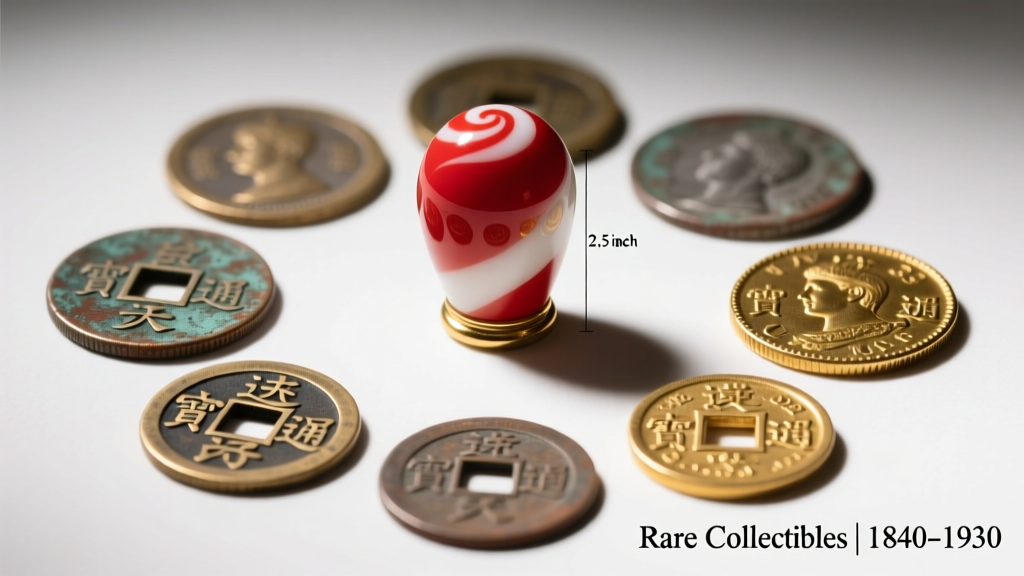
Clichy Paperweights: Decoding the 'Clusters Around Central Red on White Cane' Pattern in 2½-Inch Specimens
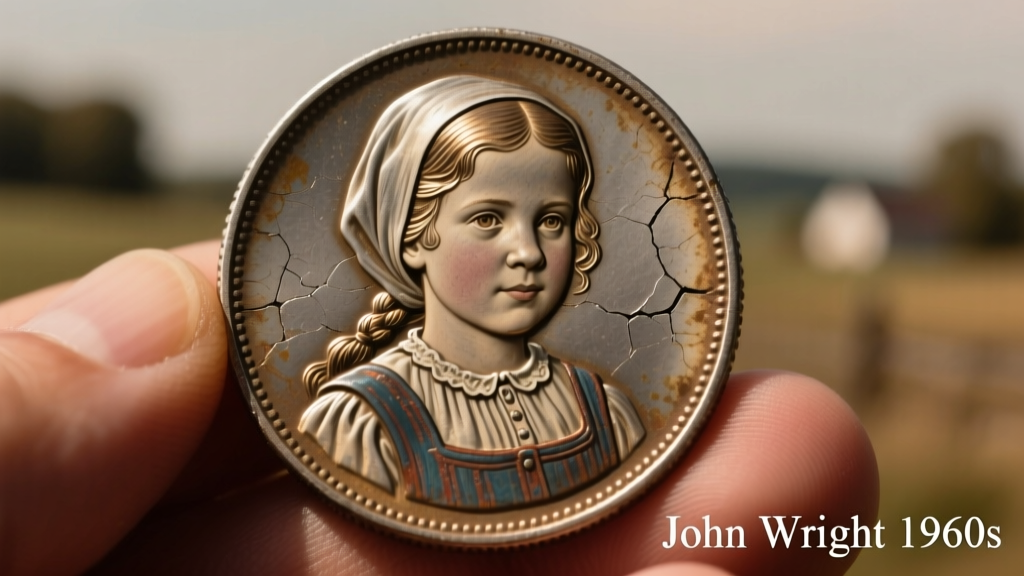
Banks Amish Girl Metal Hand-Painted Plaque by John Wright: A 1960s American Folk Art Collectible Reassessed
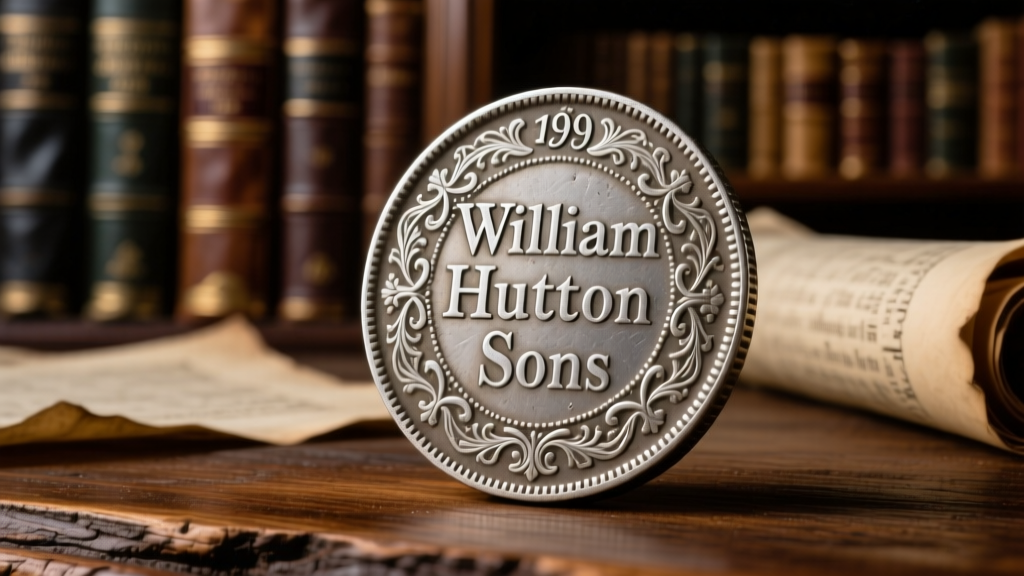
William Hutton & Sons: Birmingham’s Premier 19th-Century Coin and Medal Manufacturers
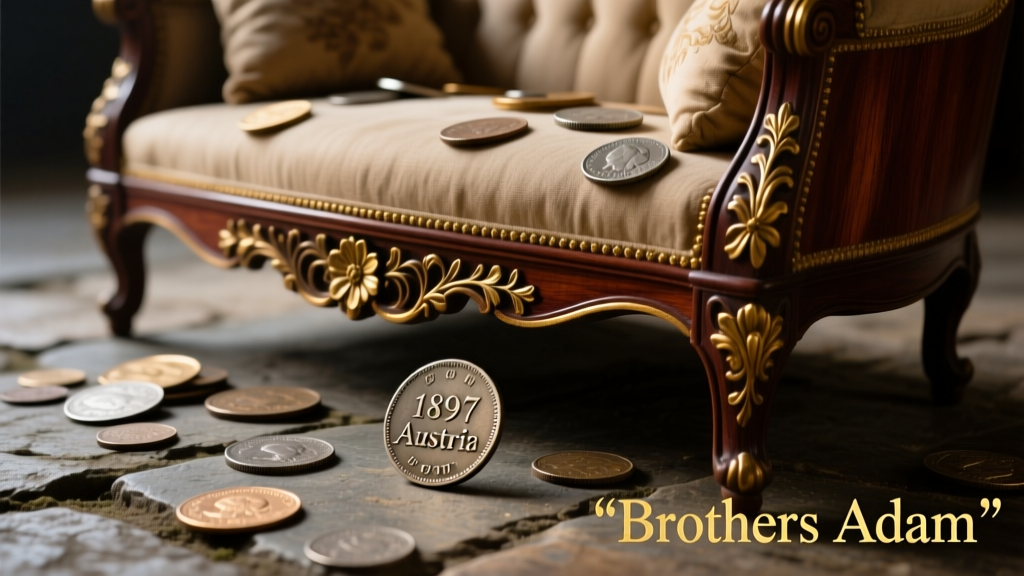
The Brothers Adam Style Settee: Design Legacy, Authentic Identification, and Market Valuation
Blue Bonnet Sue Doll: History, Identification, Market Value, and Collector Insights

Popeye Lamp: The Rare 1930s Cast-Metal Figural Lamp Post with Original Pipe — Identification, Provenance, and Market Value
Gilbert Queen Bess Cottage Clocks: History, Identification, and Market Value of a Quintessential American Mantel Timepiece