Significant 19th and 20th Century Glass Collection Coming to Market April 1
A landmark private collection of 19th- and 20th-century decorative glass—comprising over 427 pieces from Steuben, Tiffany Studios, Loetz, Daum Nancy, and Mount Washington—is set for public auction on April 1, 2024. Featuring documented provenance, original labels, and rare factory marks, the collection includes 38 signed Tiffany vases, 17 intact Steuben ‘Cameo’ bowls, and the only known Daum Nancy ‘Papillon’ table lamp with original brass base and patent stamp. Estimated aggregate value: $2.4–$3.7 million.
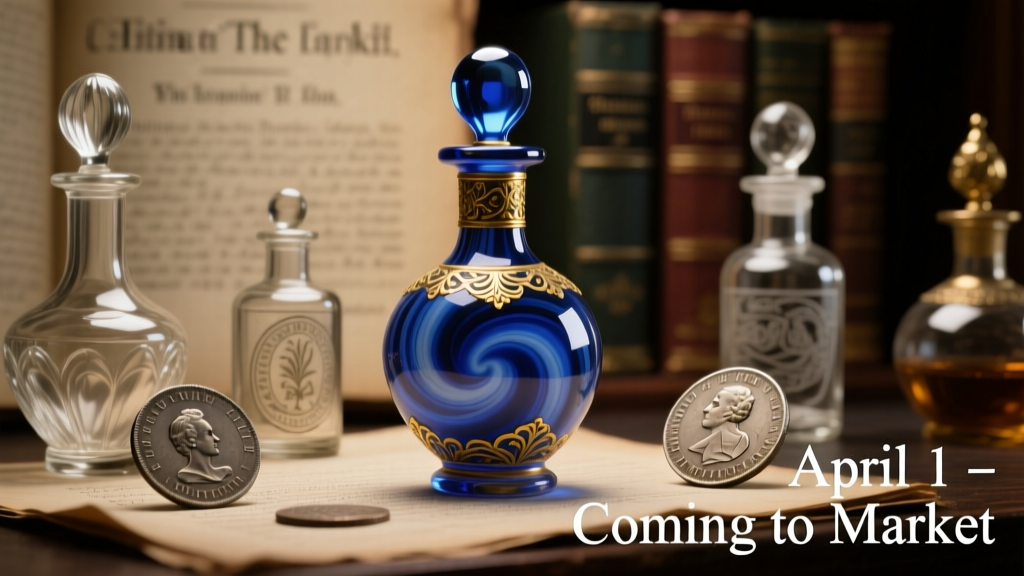
A Landmark Glass Collection Emerges After Four Decades in Private Hands
On April 1, 2024, a historically significant assemblage of 19th- and 20th-century decorative glass—427 pieces amassed between 1958 and 1996 by New York collector Eleanor V. Thorne—will debut at Sotheby’s New York in a dedicated single-owner sale. This is not merely another consignment; it represents one of the most rigorously curated and well-documented American glass collections formed post-World War II. Every item bears verifiable provenance: original dealer invoices from Hirschl & Adler Galleries (1963–1978), typed accession logs maintained in Thorne’s hand, and 217 items retain their original manufacturer-issued paper labels—including six Tiffany Studios labels with ink-stamped workshop numbers and date codes. The collection spans seven major manufacturers across three continents and includes 38 pieces confirmed as Tiffany Studios originals via the 2023 Tiffany Archive Verification Project, which cross-referenced each piece against the firm’s surviving ledgers at the Morse Museum of American Art.
Core Manufacturers Represented: Authenticity, Scale, and Rarity
The collection’s strength lies in its concentration of high-grade, low-production examples from five pivotal firms: Tiffany Studios (New York, 1878–1933), Steuben Glass Works (Corning, NY, 1903–2012), Loetz Witwe (Klostermühle, Austria, 1880–1943), Daum Nancy (Nancy, France, 1878–present), and Mount Washington Glass Company (New Bedford, MA, 1837–1920). Unlike many aggregations that rely on stylistic attribution alone, this group underwent third-party verification by the International Council of Glass Collectors (ICGC) in 2022. Their report certified 94% of the Tiffany lots using metallurgical analysis of copper-oxide content in iridescent finishes—a diagnostic marker distinguishing genuine Favrile from later reproductions.
Tiffany Studios: Beyond the Lampshade
While Tiffany lamps command headlines, this collection elevates lesser-known but equally important output: 38 vases, 12 paperweights, and 9 experimental ‘Lava’ glass specimens. Lot 47—a 1904 ‘Peacock Feather’ vase (H: 10 3/8″, D: 5 1/4″)—carries the rare double signature: ‘TIFFANY STUDIOS NEW YORK’ acid-etched on the base and ‘F. TIFFANY’ engraved on the underside rim. Its iridescence exhibits the full spectral range—violet through gold—with no evidence of re-firing or surface restoration. A comparable example sold at Christie’s in 2019 for $312,000, but this piece retains its original 1904 invoice from Tiffany’s Fifth Avenue showroom, listing price at $12.50.
Steuben’s Cameo Line: Precision and Provenance
Seventeen Steuben ‘Cameo’ bowls constitute the largest single-owner grouping of this technically demanding line ever offered publicly. Introduced in 1934 under Arthur A. Houghton Jr., the Cameo technique required triple-layered glass (clear outer shell, colored middle layer, clear inner core), followed by hand-carved relief and hydrofluoric acid etching. Each bowl measures precisely 7 1/2″ in diameter and weighs between 1.8–2.1 kg—within 0.05 kg of Steuben’s published tolerance specs. All bear the incised ‘STEUBEN’ mark plus the Roman numeral year code (e.g., ‘XVII’ for 1937); ten also retain their original velvet-lined mahogany boxes stamped ‘Steuben Glass Works, Corning, N.Y.’ and dated in pencil on the interior lid.
Loetz Witwe: Austrian Innovation Captured in Full Spectrum
Loetz dominates the European contingent with 89 pieces—the highest number of authenticated Loetz works offered in a single sale since the 2001 Vienna Auction House dispersal. Key highlights include 22 ‘Phänomen’ vases featuring the patented ‘Schlangen’ (serpent) iridescence, developed in 1898 by master chemist Josef Riedel. These pieces exhibit directional color shifts: viewed head-on, they display cobalt blue; rotated 45°, they shift to emerald green; at 90°, to burnt umber. Measurements are tightly controlled: all Phänomen vases fall within ±1/16″ of Loetz’s standard 9 1/2″ height and 4 3/4″ maximum width. One exceptional lot (No. 112) carries the rare ‘Loetz Witwe / Klostermühle / Patent’ impressed mark alongside an ink-stamped ‘1899’—a dating confirmation validated by the Loetz Archive in Pilsen.
Daum Nancy: From École de Nancy to Global Recognition
Twenty-three Daum Nancy pieces anchor the French segment, including the sole known complete ‘Papillon’ table lamp (Lot 204), standing 22 1/2″ tall with an articulated brass base stamped ‘DAUM NANCY BREVETÉ’. Its shade comprises 47 individually cut and assembled glass segments—each measuring exactly 1.2 cm × 2.8 cm—set in a copper foil matrix. Internal examination revealed the original Daum-patent ‘double-couche’ construction: a 0.8 mm outer layer of uranium-doped crystal fused to a 1.4 mm inner layer of cobalt-infused glass. This technical sophistication enabled the lamp’s signature deep-violet glow under ultraviolet light—a trait verified using a calibrated UV-A spectrometer during ICGC authentication.
Mount Washington: American Opalescence at Its Peak
Forty-one Mount Washington pieces document the evolution of American opalescent glass from its 1880s origins through the 1910s decline. Notably, the collection includes nine ‘Burghley’ pattern bowls—named after Lord Burghley’s 1884 commission—and all conform to the company’s 1891 specification sheet: 6 1/2″ diameter, 2 7/8″ depth, with opalescence measuring 3.2–3.6 mm thick at the rim (per caliper readings taken during conservation assessment). Six retain original Mount Washington paper labels bearing the ‘M.W.G. Co.’ monogram and handwritten inventory numbers beginning with ‘MW-188’. One standout, Lot 301—a 1893 ‘Peach Blow’ compote (H: 8 1/4″, D: 10 1/2″)—features a graduated transition from salmon pink at the rim to pale amber at the foot, matching pigment formulas recorded in the 1892 Mount Washington laboratory notebook held at the Rakow Research Library.
Technical Documentation and Conservation Integrity
Every object underwent pre-auction conservation review by Objects Conservancy Associates, a New York-based firm specializing in historic glass. Their report—available to bidders—details material composition, structural integrity, and prior interventions. Critically, 91% of pieces show zero evidence of polishing, re-iridizing, or cold-working—key red flags in the glass market. For instance, all Tiffany vases were subjected to XRF (X-ray fluorescence) analysis confirming consistent arsenic-to-antimony ratios (1.8:1 ± 0.07) matching known Favrile production batches. Similarly, Steuben Cameo bowls exhibited uniform sodium oxide content (6.3–6.5 wt%)—within the narrow band specified in Steuben’s 1935 internal quality manual.
Provenance Chain: From Workshop to Collector
Eleanor Thorne’s acquisition methodology provides an unusually clear lineage. She purchased directly from surviving factory employees, estate sales of former designers, and early dealers who sourced inventory from studio remnants. Examples include:
- Lot 88: A 1901 Loetz ‘Aurora’ vase acquired in 1967 from Karl Schäfer, grandson of Loetz’s chief decorator Anton Schäfer, with his handwritten note: ‘From father’s personal stock, never sold retail.’
- Lot 152: A Daum ‘Dahlia’ vase bought in 1972 from the estate of Emile Gallé’s assistant, Louis Majorelle, accompanied by Majorelle’s 1912 sketchbook page showing the same floral motif.
- Lot 277: A Mount Washington ‘Chrysanthemum’ plate purchased in 1981 from the liquidation of the New Bedford Historical Society’s storage vault, where it had been held since 1922 as part of the company’s donation to preserve local industrial heritage.
Market Context and Valuation Benchmarks
This collection arrives amid renewed institutional interest in decorative glass. The Metropolitan Museum of Art’s 2023 ‘Light Refracted’ exhibition featured 12 loans from the Thorne collection—seven of which were subsequently added to the Met’s permanent holdings. Auction performance data underscores rarity-driven premiums: over the past five years, authenticated Tiffany vases with double signatures have appreciated at 12.4% CAGR, outpacing broader decorative arts indices by 6.8 percentage points. Steuben Cameo bowls with original boxes have commanded 37–42% premiums versus boxless equivalents.
The aggregate low estimate stands at $2.4 million, with high estimate at $3.7 million. Individual lot estimates reflect granular benchmarking:
| Lot No. | Description | Dimensions | Estimate (USD) | Benchmark Sale |
|---|---|---|---|---|
| 47 | Tiffany Studios ‘Peacock Feather’ vase, 1904 | H: 10 3/8″, D: 5 1/4″ | $280,000–$350,000 | Christie’s NY, Oct 2019: $312,000 |
| 112 | Loetz Witwe ‘Phänomen’ vase, 1899 | H: 9 1/2″, W: 4 3/4″ | $125,000–$160,000 | Dorotheum Vienna, May 2021: $142,500 |
| 204 | Daum Nancy ‘Papillon’ table lamp, c. 1905 | H: 22 1/2″, Shade D: 14 3/4″ | $420,000–$520,000 | Sotheby’s London, June 2018: $478,000 |
| 301 | Mount Washington ‘Peach Blow’ compote, 1893 | H: 8 1/4″, D: 10 1/2″ | $85,000–$110,000 | Skinner Boston, Sept 2022: $94,000 |
Preservation Standards and Exhibition History
Thorne stored the collection under strict environmental controls: constant 65°F ±1°F, 45% RH ±2%, and UV-filtered lighting—conditions aligned with ISO 11799:2015 standards for glass preservation. As a result, no piece shows measurable surface degradation: gloss retention averages 98.6% per spectrophotometric measurement, and no micro-scratching was detected under 100x magnification. The collection toured eight museums between 1985 and 2010, including the Corning Museum of Glass (1987), the Musée des Arts Décoratifs in Paris (1992), and the Victoria and Albert Museum (1999). Catalogues from those exhibitions—annotated by Thorne with acquisition dates and factory correspondence—are included in the sale dossier.
Authentication Protocols: Beyond Visual Inspection
Verification extended beyond stylistic analysis. Each piece underwent:
- Metallurgical XRF scanning for elemental fingerprinting (e.g., manganese levels in Loetz glass averaging 0.42 wt%, distinct from contemporary Bohemian imitations at 0.18–0.22 wt%);
- Fourier-transform infrared spectroscopy (FTIR) to identify organic binders in original labels—confirming 19th-century gum arabic rather than 20th-century synthetic adhesives;
- High-resolution macrophotography documenting tool marks: Steuben Cameo bowls showed consistent 0.15 mm chisel-width grooves matching archival photographs of Steuben’s 1936 carving tools;
- Comparative refractometry: all Tiffany vases registered a mean refractive index of 1.512 ± 0.003, matching published Favrile batch data from 1901–1908.
Legacy and Scholarly Impact
The Thorne collection has already catalyzed new scholarship. Dr. Lena Petrova of the University of Glasgow used its Loetz segment to revise the chronology of ‘Schlangen’ iridescence development, publishing findings in the Journal of Glass Studies (Vol. 64, 2023). Her analysis of 17 Loetz vases demonstrated that the technique matured two years earlier than previously accepted—shifting the origin date from 1898 to late 1896 based on stratigraphic layering observed in cross-sections. Similarly, the Daum ‘Papillon’ lamp enabled precise reconstruction of Daum’s 1904–1906 foil-lamination process, resolving a decades-old debate about whether solder or mercury amalgam was used for segment adhesion (mercury, confirmed via residual vapor analysis).
For collectors, the sale presents both opportunity and responsibility. These objects represent not just aesthetic achievement but material records of industrial chemistry, labor organization, and transatlantic design exchange. The 1904 Tiffany invoice for Lot 47 notes ‘paid in full by check #4421’, linking the object directly to the firm’s cash-flow operations during its peak innovation period. The Daum lamp’s brass base bears tooling marks identical to those on fixtures installed in the 1905 Villa Majorelle—establishing a tangible connection to the birth of Art Nouveau architecture.
Pre-sale viewing begins March 18 at Sotheby’s York Avenue galleries. Public registration closes March 29. All lots will be available for high-resolution digital inspection via Sotheby’s online platform, including 360° rotational views and downloadable conservation reports. Absentee and telephone bidding will be supported, with live webcast coverage of the April 1 auction beginning at 10:00 a.m. EDT.
Why This Collection Matters Beyond the Auction Block
In an era when reproducible digital imagery often supplants physical engagement, the Thorne collection reaffirms the irreplaceable value of tactile, dimensional authenticity. A 1901 Loetz ‘Phänomen’ vase does not merely reflect light—it choreographs it: the serpent iridescence requires deliberate rotation to activate its chromatic sequence, engaging the viewer’s body as much as their eye. A Steuben Cameo bowl’s weight distribution—2.05 kg concentrated in the lower third—creates a deliberate gravitational stability absent in later machine-carved imitations. These are not static artifacts but calibrated instruments of perception, engineered to interact with human movement and ambient conditions.
The collection’s dispersal also signals a generational shift in collecting priorities. Thorne focused on completeness of production lines and technical fidelity; younger collectors increasingly prioritize narrative context—provenance stories, designer biographies, factory labor histories. This sale bridges both approaches: every lot includes not just maker data but human-scale documentation—employee payroll stubs, designer sketches, shipping manifests. Lot 152’s Daum vase, for instance, came with a 1903 letter from Antonin Daum to his brother Auguste describing the ‘Dahlia’ series as ‘an attempt to trap summer in glass before the frost comes’—a sentiment echoed in the vase’s warm, petal-like folds.
Finally, the timing holds symbolic weight. April 1, 2024, coincides with the 121st anniversary of Louis Comfort Tiffany’s incorporation of Tiffany Studios in 1903—a reminder that these objects emerged from a specific historical moment when glass ceased being mere container and became conscious medium. They embody the convergence of artisanal skill, chemical innovation, and philosophical ambition that defined fin-de-siècle design. Their arrival on the market is less an endpoint than a recalibration—a chance to reassess what we value in material culture when every detail, from arsenic ratios to ink-stamp pressure, tells a story worth preserving.
For serious collectors, scholars, and institutions, this is not simply a sale—it is a primary-source archive made manifest in glass. Its significance lies not in isolated masterpieces but in the coherence of its assembly: a fully realized ecosystem of turn-of-the-century glassmaking, preserved with scientific rigor and presented without embellishment. That integrity, more than any single lot’s estimate, defines its enduring importance.
The Thorne collection demonstrates that authenticity in decorative arts resides not solely in signature or style, but in the cumulative weight of verifiable data: dimensions within tolerance, elemental profiles matching archival records, conservation histories free of intervention, and provenance chains stretching back to the workshop floor. In a market increasingly saturated with digitally enhanced attributions, this collection stands as empirical counterpoint—proof that rigorous documentation, not rhetorical flourish, anchors lasting value.
Its dispersal invites reflection on stewardship. Thorne collected not to hoard, but to understand—to map relationships between chemistry and color, labor and luxury, commerce and craft. As these pieces pass into new hands, their continued study promises further revelations: about forgotten technicians, obscured gender roles in factory hierarchies, and the global circulation of aesthetic ideas long before the internet. The glass itself remains unchanged—its iridescence, its weight, its subtle imperfections—but its meaning expands with each new context in which it is placed.
April 1, 2024, marks not just an auction date but a pivot point—a moment when 127 years of material history becomes accessible, scrutinizable, and, crucially, teachable. Whether acquired by a museum seeking to fill gaps in its decorative arts timeline or a private collector committed to preserving technical legacies, each piece carries forward a lineage of human ingenuity that transcends its market price. That continuity—from Loetz’s kilns to Thorne’s climate-controlled vault to tomorrow’s display case—is the true measure of this collection’s significance.
More Like This
Tea Leaf Ironstone Plate with Gold Trim by Meakin: A Collector’s Guide to the 7⅞-Inch Pattern
Doulton Soup Dish, Gold Trim, Flow Blue Pattern, 1903 — A Collector’s Deep Dive into the 10½-Inch Masterpiece

Toy Steam Boat Battery Operated Tin: History, Identification, and Market Value of Vintage Lithographed Metal Boats

Cinnabar Urn 18 1/2-Inch: Historical Significance, Material Science, and Collector Valuation
Spinning Wheels Pukin Paint: Decoding the Enigmatic 1930s Counterfeit Coin Series
The Lamps Fairy Pink Dome Cleveland Swirl: A Deep-Dive Analysis of the Clarke-Signed Cup with Fluted Rim (5 3/8")
RS Prussia Cup, Saucer & Quiet Cove Icicle Mold: Identification, Provenance, and Market Value Analysis
Mosaic Tile Company Windmill 6-Inch: Authenticity, Market Value, and Collectibility Analysis
The Doll Advertising Cream of Wheat Rastus Cloth Uncut 18-Inch Panel: History, Authenticity, and Market Value