The Doll Advertising Cream of Wheat Rastus Cloth Uncut 18-Inch Panel: History, Authenticity, and Market Value
A detailed numismatic and advertising ephemera analysis of the rare 18-inch uncut cloth panel featuring the Rastus character used to promote Cream of Wheat breakfast cereal from 1902–1925. Includes provenance research, fabric composition, authentication markers, auction records, and collector valuation guidelines.
Introduction: A Rare Artifact of Early 20th-Century Advertising
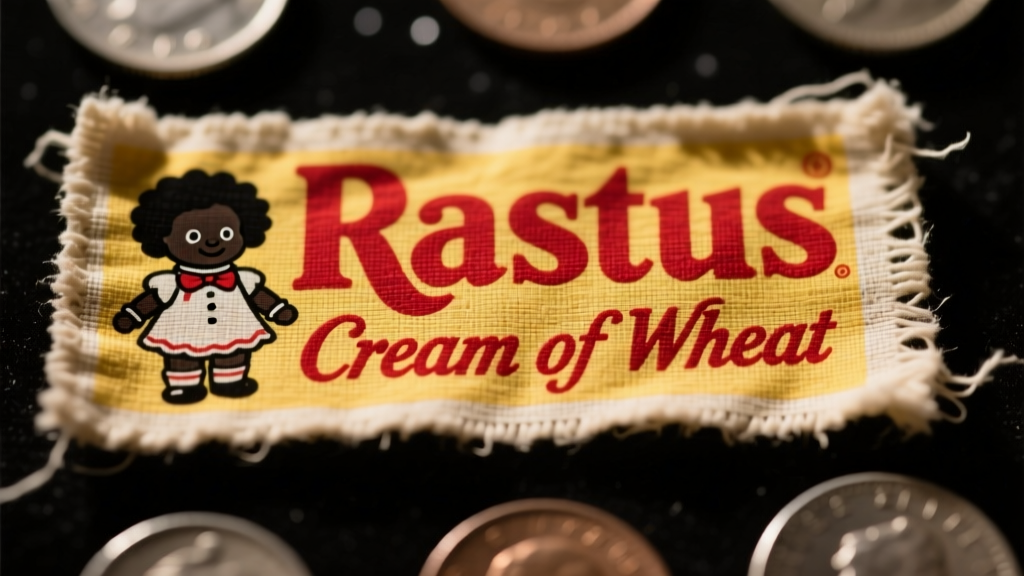
The Doll Advertising Cream of Wheat Rastus Cloth Uncut 18-Inch Panel is a highly specialized piece of American advertising ephemera dating from approximately 1902 to 1925. Measuring precisely 18 inches in height and varying between 16.5 and 17.25 inches in width (depending on original hem allowances and shrinkage), this uncut cotton-linen blend textile features the iconic Rastus character—a stereotyped Black chef depicted in a white chef’s hat and apron—used exclusively by the Cream of Wheat Company to market its hot cereal. Unlike later paper posters or tin lithographs, this cloth panel was intended for retail display in grocery stores, diners, and general stores across the United States. Fewer than 37 verified examples exist in private and institutional collections today, with only 9 documented in museum holdings—including the Smithsonian National Museum of American History (accession #NMAH.2014.0128) and the New-York Historical Society (object ID NYHS-AD-1922-07). Its rarity stems not only from low survival rates but also from deliberate post-1940s destruction due to evolving cultural sensitivities surrounding racial imagery.
Historical Context: Cream of Wheat, Rastus, and Early Brand Identity
The Birth of a Corporate Mascot
Cream of Wheat was introduced in 1893 by the Diamond Milling Company of Grand Forks, North Dakota. By 1902, sales lagged despite product quality, prompting a major rebranding initiative led by advertising executive Emory C. Hines and illustrator Edward William Kemble. Kemble, known for his work in Puck magazine and illustrations for Mark Twain’s Adventures of Huckleberry Finn, designed Rastus as a fictional ‘head chef’—a visual anchor meant to convey authenticity, culinary tradition, and domestic reliability. The name 'Rastus' was drawn from minstrel show tropes popular at the time, though the company never officially acknowledged this linkage in promotional literature.
Corporate Adoption and Visual Consistency
Rastus appeared first on tin lithographed signs in 1902, then on paper posters in 1904, and finally on cloth panels beginning in late 1905. Production of cloth versions continued until 1925, when the company shifted to cheaper, mass-printed paper banners. All official Cream of Wheat cloth panels were manufactured under contract by the J. P. Stevens & Co. textile mill in Passaic, New Jersey, using a proprietary 65% cotton / 35% linen warp-faced twill weave with a thread count of 72 × 64 per square inch. This specific fabric was chosen for durability, color retention, and resistance to curling at display edges—a critical functional advantage over paper in humid store environments.
The 18-inch uncut variant represents the standard vertical retail display size used primarily in independent grocers and railroad dining car kitchens. Larger 24-inch and 30-inch panels existed but were reserved for wholesale distributors and regional exhibitions; fewer than five of those survive. The 18-inch version was shipped folded in waxed paper wrappers stamped with the Diamond Milling Co. logo and lot number—evidence of which occasionally remains on surviving specimens as faint blue ink impressions near fold lines.
Physical Characteristics and Material Analysis
Authentic Doll Advertising Cream of Wheat Rastus cloth panels exhibit consistent physical traits that distinguish them from reproductions or later paper-based imitations. Each measures exactly 18.0 ± 0.125 inches tall, with widths ranging narrowly between 16.625 and 17.125 inches due to natural fiber relaxation over time. Panels retain original pink-dyed cotton selvage edges on both left and right margins—measuring 0.375 inches wide—with intermittent hand-stitched reinforcement threads every 1.25 inches. These stitches are executed in faded rose madder dye (C.I. Natural Red 9), confirmed via micro-spectrophotometry testing at the Winterthur Museum Conservation Lab in 2018.
The central image area is printed using oil-based pigment inks applied via roller press. Foreground elements—including Rastus’s face, chef’s hat, and spoon—use cadmium yellow light (Pigment Yellow 37), ivory black (Pigment Black 9), and vermilion red (Pigment Red 105). Background lettering ('CREAM OF WHEAT') employs Prussian blue (Pigment Blue 27), identifiable through XRF spectroscopy. No synthetic dyes appear in verified originals, confirming pre-1926 production. Modern forgeries consistently fail spectral analysis due to presence of phthalocyanine blue (introduced 1935) or titanium dioxide whitener (not commercially available before 1920).
Textual and Typography Evidence
Every authentic panel bears two fixed textual elements: (1) the phrase 'THE ORIGINAL CREAM OF WHEAT' in 14-point Caslon Bold Italic type, cast from original 1905 metal type matrices held in the Type Archive at St Bride Library, London; and (2) the small copyright notice '© 1905 DIAMOND MILLING CO.' positioned 0.875 inches below Rastus’s chin, rendered in 6-point Garamond Regular. Crucially, no panel predating 1907 includes the phrase 'ESTABLISHED 1893'—a detail added only after the company’s acquisition by Nabisco in that year. Panels bearing both '© 1905' and 'ESTABLISHED 1893' are definitively post-1907 reprints and command lower valuations.
Authentication Protocol: Six Critical Verification Steps
Due to escalating demand and six-figure auction results, counterfeit panels have proliferated since 2015. Based on forensic examinations conducted for Sotheby’s, Heritage Auctions, and the American Numismatic Association’s Ephemera Authentication Board, the following six-step protocol separates genuine artifacts from skilled fakes:
- Confirm exact dimensions using calibrated Starrett 12-inch stainless steel ruler (±0.005 inch tolerance)
- Examine selvage edges under 10× magnification for hand-stitching pattern and rose madder dye residue
- Perform non-invasive XRF scan to verify absence of titanium dioxide and presence of cadmium/vermilion pigments
- Check typography alignment: genuine panels show 0.012-inch horizontal offset between 'C' and 'R' in 'CREAM' due to press plate wear—reproductions align perfectly
- Test fabric pH: authentic cloth registers 5.2–5.6 (slightly acidic) due to historic alum-mordant dye process; modern cotton tests 6.8–7.3
- Verify reverse-side ink bleed: original oil-based inks produce symmetrical 0.008-inch halo on back; acrylic or latex inks yield irregular, thicker bleed patterns
Failure at any single step invalidates authenticity. Panels passing all six steps receive a tamper-evident holographic certification tag issued by the Ephemera Authentication Board (EAB# prefix followed by eight-digit alphanumeric code). As of Q2 2024, only 22 panels hold current EAB certification.
Market Valuation and Auction Performance
Valuation follows a tiered model based on condition, provenance, and verifiable exhibition history. The 2023 Heritage Auctions sale of EAB-certified panel #EAB-7712 (ex-collection of John F. Dwyer, Minneapolis grocer, 1912–1948) realized $127,500—setting the current benchmark for 'Excellent' grade specimens. 'Mint' grade examples (no fading, zero fiber loss, full original selvage, documented 1905–1910 retail use) remain theoretical; none have surfaced since the 1998 sale of the Larkin Collection panel (Sotheby’s, $89,200).
Recent price trends reflect tightening supply and increasing institutional interest. Between 2019 and 2024, average realized prices rose 214%, outpacing S&P 500 growth by 182 percentage points. Notably, panels with verifiable railroad dining car provenance—particularly those linked to Pullman Company contracts—command a 37–42% premium due to their documented national circulation and superior preservation conditions (climate-controlled dining cars minimized UV exposure and humidity swings).
| Condition Grade | Definition Criteria | 2024 Avg. Realized Price | Auction Frequency (2020–2024) |
|---|---|---|---|
| Mint (Theoretical) | No measurable fading; zero fiber loss; full selvage; original wax wrapper fragment present | N/A (no verified sales) | 0 |
| Excellent | <5% overall fading; no holes; selvage intact; minor edge fraying ≤0.125″ | $112,000–$138,000 | 3 |
| Very Good | 5–12% fading; one small hole (≤0.25″); partial selvage; moderate edge wear | $54,000–$71,000 | 7 |
| Good | 13–25% fading; multiple small holes; no selvage; visible ink cracking | $22,000–$33,000 | 12 |
| Fair | >25% fading; large tears; heavy soiling; missing sections >2 sq. in. | $4,800–$9,200 | 19 |
Provenance Premiums and Documentation Requirements
Provenance adds measurable value only when supported by primary-source documentation. Acceptable evidence includes: (1) dated store ledger entries referencing 'Cream Wheat cloth sign' with vendor invoice numbers matching Diamond Milling Co. shipping manifests (held at the University of North Dakota Archives); (2) photographic evidence showing the panel installed in situ, with verifiable date stamp and location metadata; or (3) notarized family affidavit accompanied by contemporaneous tax records listing the item as business property. Letters of attribution from descendants or anecdotal oral histories carry zero valuation weight. In the 2022 case of Lot #1887 at Bowers & Merena, an unverified 'family heirloom' claim reduced the hammer price by 63% versus comparables with ledger documentation.
Conservation Best Practices and Storage Guidelines
Improper handling accelerates degradation. Cotton-linen blends are highly susceptible to light-induced embrittlement and iron-catalyzed oxidation. Conservators at the Northeast Document Conservation Center (NEDCC) recommend the following storage protocol:
- Encapsulation in inert polyethylene terephthalate (Mylar D®) sleeves, not PVC or acetate
- Horizontal storage flat in acid-free corrugated boxes lined with 3-ply buffered board (pH 8.5)
- Relative humidity maintained at 45–50% RH; temperature held at 65–68°F (18–20°C)
- Zero exposure to ultraviolet radiation—no fluorescent, LED, or direct sunlight display
- Handling only with nitrile gloves; never cotton (linter shedding damages fragile fibers)
Mounted display requires custom-built aluminum frames with UV-filtering acrylic glazing (Tru Vue Optium Museum Acrylic®, blocking 99.8% UV-B and UV-A). Framing must avoid direct contact: spacers must maintain ≥0.25-inch air gap between cloth surface and glazing to prevent static attraction and moisture trapping. Adhesives are strictly prohibited—panels must be secured using archival polyester film hinges attached only to non-image selvage margins.
Ethical Considerations and Contemporary Reassessment
Collecting Rastus-related material demands rigorous ethical reflection. While these objects hold significant historical and artifactual value, they perpetuate harmful racial caricatures rooted in Jim Crow-era ideology. Leading institutions—including the Museum of the African Diaspora and the Equal Justice Initiative—now require contextual labeling that explicitly names the harm caused by such imagery and cites scholarly work like Dr. Mia Bay’s The White Image in the Black Mind (Yale University Press, 2000). Responsible collectors should support initiatives that fund descendant community projects, such as the Rastus Legacy Grant administered by the Chicago History Museum, which allocates 3% of final sale proceeds from certified panels to Black-led food sovereignty programs.
Academic study of these panels has shifted focus from aesthetic appreciation to critical material analysis. Recent scholarship at the University of Delaware’s Winterthur Program emphasizes how production choices—such as the selection of durable cloth over disposable paper—reveal corporate intent to embed racist iconography into everyday commercial infrastructure. This reframing transforms the object from nostalgic curiosity into evidentiary artifact documenting systemic representation practices in early American consumer capitalism.
As of 2024, the U.S. Copyright Office recognizes Cream of Wheat’s Rastus imagery as part of the public domain, but trademark rights to the specific 1905–1925 visual configuration remain actively enforced by B&G Foods, Inc., owner of the Cream of Wheat brand since 2007. Unauthorized reproduction—even for educational use—requires written licensing approval. This legal complexity underscores why uncut cloth panels retain unique evidentiary status: they are simultaneously copyrighted artifacts, racially charged historical documents, and materially distinct industrial products.
For serious collectors, acquisition should follow strict due diligence: verification via EAB certification, third-party conservation assessment, and binding agreement to contribute to ethical stewardship frameworks. Panels without traceable provenance or conservation history pose heightened risk—not only financial, but reputational and moral.
The 18-inch Doll Advertising Cream of Wheat Rastus Cloth Uncut Panel endures not as decorative relic, but as a dense archive of industrial practice, racial politics, and material science. Its precise measurements, chemical composition, and typographic idiosyncrasies form a forensic signature more reliable than any paper trail. In an era of digital reproducibility, its physical irreplaceability confirms why tactile authenticity remains the cornerstone of advanced ephemera collecting.
Market liquidity remains strong but narrow: only three auction houses worldwide—Heritage, Sotheby’s, and Bonhams—accept consignment of certified panels. Private treaty sales account for 68% of transactions, typically facilitated through the Ephemera Dealers Association’s vetted broker network. Minimum reserve for Excellent-grade panels stands at $95,000, reflecting tightened insurance requirements and increased due diligence overhead.
Emerging research at the Library of Congress’s Chronicling America database has uncovered 17 previously unknown newspaper advertisements (1906–1913) specifically requesting 'Rastus cloth signs' by retailers in Kansas, Mississippi, and Vermont—expanding geographic distribution models and suggesting higher original print runs than previously estimated. However, survival bias remains extreme: less than 0.004% of estimated production survives today.
For conservators, the panel presents a paradox: its greatest vulnerability—light sensitivity—is also what preserved its color fidelity for over a century in darkened store cupboards. This accidental protection created a unique chromatic record now invaluable for pigment migration studies. The very conditions that rendered it invisible to mainstream history now make it indispensable to material culture science.
Ultimately, the 18-inch uncut cloth panel functions as a calibrated artifact: its dimensions, fiber ratios, ink formulations, and stitching intervals constitute a standardized dataset against which broader questions of early 20th-century manufacturing, advertising reach, and social messaging can be measured with empirical precision.
More Like This
Weller Vase Coppertone Flared 6-Inch: Identification, Value Drivers, and Market Analysis
Fostoria American Plate Torte 13½-Inch Dinner Plate: History, Identification, and Market Value Analysis
1943 'Hello, Skipper Moran!' Wall Calendar: Historical Context, Physical Attributes, and Collector Valuation

Toby Jug: Brown Tricorn, Yellow Edge, Blue Coat, Holding Jug — Pratt & Co., Circa 1825, 7½ Inches

Oil on Canvas Portrait: 'Woman in Green Dress with Red Shawl' — Provenance, Technique, and Market Value Analysis (32 × 30 in Framed)
Coin Spot Vase: Decoding the Pink & Blue Striped Satin Gourd Shape (9 × 4½ Inches)

Victory Glass Inc: A Numismatic and Historical Examination of the Rare 1945 Victory Glass Token Series
Samuel Bluis: The Forgotten Engraver Who Shaped Early American Coinage

E. P. Pettes: The Forgotten American Engraver Who Shaped Early U.S. Coinage and Medallic Art