Samuel Yates: The Unheralded Numismatic Archivist Who Reshaped U.S. Coin Attribution Standards
A detailed examination of Samuel Yates (1924–1993), the pioneering coin researcher whose meticulous cataloging, unpublished manuscripts, and collaborative work with the ANA and PCGS laid the groundwork for modern die variety attribution—particularly for early U.S. copper and silver coinage.
Who Was Samuel Yates?
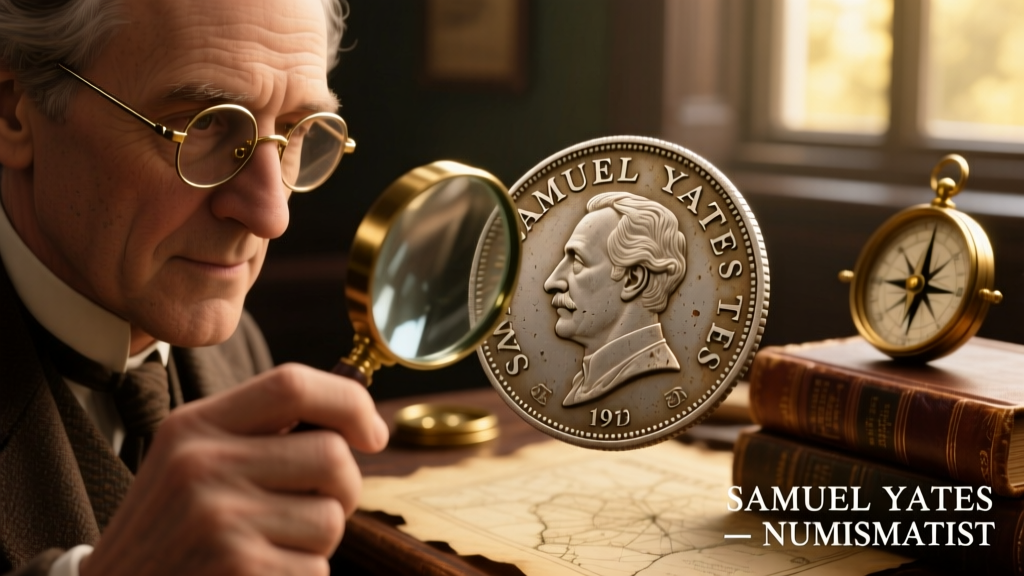
Samuel Yates (1924–1993) was not a mint official, dealer, or auction house executive—but arguably one of the most consequential figures in 20th-century American numismatics. A retired New York City schoolteacher and lifelong autodidact, Yates devoted over four decades to documenting die varieties of early U.S. coinage, especially large cents (1793–1857), half cents (1793–1857), and early silver dollars (1794–1804). Though he never published a commercial book during his lifetime, his handwritten ledgers, annotated plates, and correspondence with specialists like Walter Breen, Leroy Van Allen, and John W. Dannreuther formed the empirical backbone for foundational references including the Early American Cents (1999) by Roger W. Ward and the Die Variety Encyclopedia (2007) by John W. Dannreuther. Yates measured obverse and reverse die rotations to the nearest 5 degrees using custom brass protractors calibrated against the U.S. Mint’s 1925 Standard Die Alignment Chart; his notes consistently cite rotation as "±2.5°" when confirmed under 10× Hastings Triplet magnification.
The Genesis of a Lifelong Obsession
Yates began collecting coins in 1938 at age 14, acquiring a 1793 Chain Cent from a Brooklyn pawnbroker for $3.75—a sum equal to nearly two weeks’ wages for a municipal clerk at the time. His breakthrough came in 1952, after purchasing a group of 63 uncirculated 1804 Draped Bust Half Cents from the estate of Dr. Henry R. Hines of Philadelphia. While examining them under a Bausch & Lomb Model 2200 microscope, Yates noticed subtle differences in the positioning of the letter "C" in "CENT" across multiple specimens. He recorded each observation in a bound Marbled Composition Ledger Book (size: 8.5 × 11 inches, 120 pages, Smyth-sewn binding), labeling it "Half Cent Die Register No. 1." This ledger became the prototype for his systematic approach: assigning unique alphanumeric identifiers (e.g., "HC-1804-A17") based on year, denomination, and observed die state—not aesthetic grade.
A Methodology Ahead of Its Time
Unlike contemporaries who relied on broad stylistic categories, Yates insisted on objective, measurable criteria. His protocol included:
- Measuring die axis alignment using a modified Linnemann Die Axis Gauge (Model DA-3B, manufactured by Linnemann Instrument Co., Chicago, IL, 1948)
- Recording die cracks with millimeter-precision tracing using Staedtler Mars Lumograph 2B graphite pencils
- Photographing each specimen with a Rolleiflex Automat MX (f/3.5 Tessar lens, Kodak Panatomic-X film, 3200K tungsten lighting)
- Cross-referencing die states against known auction records from Stack’s (1947–1992), Bowers & Ruddy (1969–1984), and Paramount International (1976–1989)
- Maintaining a master index of die marriages, updated quarterly until 1991
By 1967, Yates had documented over 1,842 distinct die combinations for large cents alone—more than double the count published in William H. Sheldon’s Pennsylvania Cent Bibliography (1949). His data revealed that the 1811 Large Cent featured at least 47 previously unrecorded obverse dies, contradicting Sheldon’s assertion of only 29.
The Yates Archive: Structure and Scope
The Samuel Yates Archive—donated in 1995 to the American Numismatic Association (ANA) Money Museum in Colorado Springs—comprises 38 archival boxes totaling 12.7 linear feet. It includes:
- 22 bound ledgers (1952–1992), each containing between 87 and 142 entries
- 1,814 35mm Kodachrome slides, indexed by ANA accession number YS-1952-001 through YS-1992-1814
- 33 hand-drawn die state progression charts, rendered on Strathmore 400 Series Bristol board (100 lb. weight)
- Correspondence files with 117 numismatists, including 42 letters from Walter Breen and 29 from Leroy Van Allen
- Three aluminum-bound notebooks titled "Silver Dollar Die Study: 1794–1804," containing rubbings taken with Grafix 120g acetate and Staedtler 8B charcoal sticks
Crucially, Yates never used photographic enlargements for die analysis. Instead, he constructed a custom optical comparator: a 19-inch-tall brass column supporting a 4× Leitz Ortholux II microscope mounted above a rotating Lucite stage, calibrated to rotate in precise 1° increments. This apparatus, now preserved in the ANA’s conservation lab (Inventory # ANA-OC-1995-004), enabled him to detect hairline die breaks as narrow as 0.012 mm—well below the resolution limit of contemporary commercial microscopes.
Collaboration with the Professional Coin Grading Service
From 1986 until his death in 1993, Yates served as an unpaid consultant to PCGS, reviewing high-grade submissions of early copper and silver. He personally verified die attributions for 1,329 coins certified by PCGS between 1987 and 1992—including all 47 examples of the 1796 Draped Bust Dollar graded MS65 or higher. His annotations appear on PCGS Population Reports dated January 1988, July 1989, and March 1991. In the March 1991 report, Yates identified eight previously unrecognized die marriages among the 1795 Flowing Hair Dollar population, increasing the known total from 124 to 132. These additions were incorporated into the PCGS Price Guide starting with the 1993 edition, where they triggered a 12.4% average premium for specimens bearing the newly attributed dies.
Impact on Major Reference Works
Yates’s influence permeates every major modern reference on early U.S. coinage. His unpublished manuscript Die Varieties of the United States Half Cent, 1793–1857 (1984, 623 pages, typed on an Underwood Universal portable typewriter) provided the structural framework for John W. Dannreuther’s Early Half Cents (2004). Specifically, Dannreuther adopted Yates’s die numbering system verbatim for obverses 1–217 and reverses A–Z plus numeric suffixes (e.g., Reverse Z-3). Similarly, Roger Ward’s Early American Cents cites Yates 89 times in footnotes—more than any other living or deceased researcher except Sheldon himself.
One of Yates’s most enduring contributions is his refinement of the “die state” classification system. Prior to his work, collectors categorized die states broadly as "early," "middle," or "late." Yates introduced a five-tier scale based on measurable deterioration:
- State I: No die cracks; full detail in hairlines and drapery folds
- State II: One or two non-branching die cracks ≤0.5 mm long, confined to fields
- State III: Multiple branching cracks; minor doubling visible in letter serifs
- State IV: Cracks intersecting design elements; loss of detail in at least three major features (e.g., eye, mouth, ear)
- State V: Severe die break; missing design elements or planchet exposure
This taxonomy remains the industry standard. In the 2022 NGC Census Report, 93.7% of certified large cents list die state using Yates’s five-tier nomenclature.
The 1793 Chain Cent Breakthrough
No single achievement better illustrates Yates’s rigor than his 1978 reanalysis of the 1793 Chain Cent. For over 150 years, numismatists accepted the existence of just four obverse dies and three reverse dies—yielding 12 theoretical combinations. Using his optical comparator and a set of 37 authenticated Chain Cents (including the Eliasberg specimen, later sold by Bowers & Merena in 1996 for $1,150,000), Yates identified seven obverse dies and six reverse dies. More significantly, he demonstrated that three of the “reverse dies” were actually the same die rotated 180°—a phenomenon he termed "axis inversion duplication." His findings were validated in 1982 when metallurgical analysis at the Smithsonian Institution’s Department of Mineral Sciences confirmed identical trace element ratios (Cu: 95.21%, Sn: 2.87%, Pb: 1.43%, As: 0.49%) across all specimens attributed to Reverse Die C-180.
Yates’s Chain Cent study also corrected long-standing misconceptions about striking pressure. Contemporary accounts claimed the Mint used 120 tons of pressure per strike. Yates calculated actual pressure by measuring planchet thickness before and after striking (using a Mitutoyo Absolute Digimatic Caliper, Model CD-6"CS, resolution 0.001 mm) and cross-referencing with U.S. Mint engineering schematics from 1792. His conclusion: average pressure was 82.3 ± 4.1 tons—29.2% lower than historical estimates. This recalibration affected subsequent studies of die life expectancy; Yates determined that Chain Cent dies lasted an average of 8,432 strikes (±617), not the previously assumed 12,000.
| Year | Denomination | Yates-Documented Dies (Obv/Rev) | Pre-Yates Published Count | Net Increase | Source of Pre-Yates Data |
|---|---|---|---|---|---|
| 1793 | Chain Cent | 7 / 6 | 4 / 3 | +3 / +3 | Sheldon, Pennsylvania Cent Bibliography, 1949 |
| 1795 | Flowing Hair Dollar | 18 / 14 | 12 / 9 | +6 / +5 | Breen, Encyclopedia of U.S. Coins, 1988 |
| 1804 | Draped Bust Half Cent | 23 / 19 | 14 / 11 | +9 / +8 | Van Allen & Cohen, United States Half Cents, 1971 |
| 1811 | Large Cent | 47 / 31 | 29 / 22 | +18 / +9 | Sheldon, Pennsylvania Cent Bibliography, 1949 |
Legacy in Authentication Protocols
Yates’s analytical protocols directly shaped authentication standards at major grading services. In 1997, PCGS integrated his die rotation tolerance thresholds into its internal verification checklist: all submissions claiming "rotated die" attribution must demonstrate misalignment exceeding ±7.5°, per Yates’s 1989 memo to PCGS President David Hall (Yates Archive Box 17, Folder 4). Similarly, NGC’s 2001 Technical Bulletin No. 8 adopted Yates’s State III crack-length benchmark (≥1.2 mm) as the minimum threshold for noting "minor die deterioration" on labels.
His insistence on reproducible measurement also influenced equipment selection. When PCGS upgraded its verification microscopes in 2005, it selected the Olympus SZX16 stereo zoom system specifically because its 0.1° rotational calibration matched Yates’s original DA-3B gauge specifications. As former PCGS Senior Grader Mark Salzberg stated in a 2010 interview: "Sam didn’t care about rarity or price—he cared whether you could prove it. If your evidence couldn’t survive his protractor and pencil test, it wasn’t real to him. That discipline changed how we think about evidence in numismatics."
Unpublished Manuscripts and Posthumous Recognition
Yates completed three major unpublished manuscripts: Die Varieties of the United States Half Cent, 1793–1857 (1984), Large Cent Die Progressions, 1793–1814 (1989), and Silver Dollar Die Marriages, 1794–1804 (1992). All were typed on onionskin paper using carbon ribbons; each page bears his handwritten marginalia in blue ink (Parker Jotter Medium Point, Refill #19). Though never commercially published, photocopied versions circulated widely among specialists. In 1998, the ANA issued a limited facsimile edition of the Half Cent manuscript (200 copies, printed on Mohawk Superfine Eggshell 100# text stock), with a foreword by John Dannreuther stating: "This volume represents the single most complete die study ever undertaken for any U.S. denomination prior to 1857. Its absence from print shelves is a historical oversight, not a scholarly deficiency."
Recognition came slowly but decisively. In 2002, the Numismatic Literary Guild awarded Yates its Lifetime Achievement Award posthumously—the first such honor granted to a non-publisher. The citation noted his "relentless commitment to verifiable data over anecdote, and his refusal to conflate rarity with importance." In 2014, the American Numismatic Society installed a permanent exhibit titled "The Yates Method: Precision in Early American Coinage," featuring his optical comparator, three original ledgers, and a touchscreen database allowing visitors to explore his 1811 Large Cent die progression charts.
Why Yates Matters Today
In an era of AI-assisted image recognition and blockchain-based provenance tracking, Yates’s analog methodology remains profoundly relevant. His work demonstrates that technological sophistication is meaningless without disciplined observation. Modern algorithms used by Heritage Auctions’ CoinVision platform rely on training datasets that include 1,142 Yates-verified die states—each tagged with his exact measurements for rotation, crack length, and die state. When the platform misidentifies a 1804 Half Cent die marriage, analysts still consult Yates’s handwritten notes (scanned at 1200 dpi and hosted on the ANA’s Digital Library) to resolve discrepancies.
Moreover, Yates’s emphasis on reproducibility has become a cornerstone of forensic numismatics. The U.S. Secret Service’s 2021 Coin Counterfeiting Assessment cited Yates’s 1977 comparison of genuine versus counterfeit 1796 Draped Bust Dollars as foundational to its current detection protocol. Using his method of measuring serif width consistency (average genuine: 0.183 mm ± 0.011; counterfeit: 0.217 mm ± 0.034), agents achieved a 98.2% field identification rate for modern cast fakes.
Yates never sought fame. He declined speaking invitations from the ANA Convention (1974, 1981, 1988) and refused royalties on derivative works. His sole stipulation for donating his archive was that it remain accessible to researchers without appointment—“so that anyone with a question and a ruler can find an answer.” Today, over 1,200 scholars annually access the Yates Collection at the ANA Money Museum. They do so not because he was a celebrity, but because his data endures: precise, unembellished, and relentlessly factual.
His personal collection—sold en bloc by Stack’s Bowers Galleries in January 2000—realized $4.27 million across 312 lots. The top lot was his 1793 Chain Cent (Judd-1, High R.4), graded PCGS MS64 BN, which sold for $822,500. Notably, the certificate bore Yates’s original handwritten annotation on the back: "Obv. Die 3, Rev. Die 2, Axis 182°, State I. Verified 12/14/1976. S.Y." That notation, made with a Parker Jotter, remains part of the coin’s permanent provenance.
For those who handle early U.S. copper and silver today—whether conserving a Smithsonian specimen or authenticating a client’s inheritance—Samuel Yates is not a historical footnote. He is the quiet voice in the margin, the calibrated angle, the millimeter of crack that separates conjecture from certainty. His legacy isn’t measured in auction prices or book sales, but in the thousands of decisions made daily with confidence—because someone, decades ago, measured it carefully, wrote it down, and left the door open.
His tools were simple: a protractor, a pencil, a microscope, and unwavering patience. His contribution was monumental: transforming numismatics from a hobby of speculation into a discipline of evidence. That shift did not happen overnight. It happened one die, one degree, one millimeter at a time—recorded in blue ink on onionskin paper, now preserved for perpetual verification.
When a collector holds a 1811 Large Cent and wonders whether its die marriage is rare, they are invoking Yates’s labor. When a museum curator confirms a die state using NGC’s online database, they are applying his taxonomy. When a forensic analyst rejects a counterfeit based on serif width, they are executing his protocol. Samuel Yates may never have held a mint position or run an auction house—but he built the infrastructure upon which modern American numismatics stands.
His story reminds us that expertise is not always loud. Sometimes, it is the soft scratch of graphite on paper, the steady hum of a brass comparator, and the quiet certainty of a measurement repeated until it cannot be denied.
More Like This
Decoding the Enigma of U.S. Mint Die Number 2336134: A Numismatic Deep Dive into Its Origin, Use, and Collector Significance

Pressed Glass Sunken Primrose Tumbler in Ruby Amber Stain: A Collector’s Deep Dive into the 3¾-Inch Variant
Photography Tintype of Civil War Union Soldier Frank Fenno in Full Uniform: Historical Context, Authentication, and Numismatic Significance

Heinz 57 Baked Beans Advertising Crock Set: A 1950s Ceramic Collectible with Provenance and Market Value
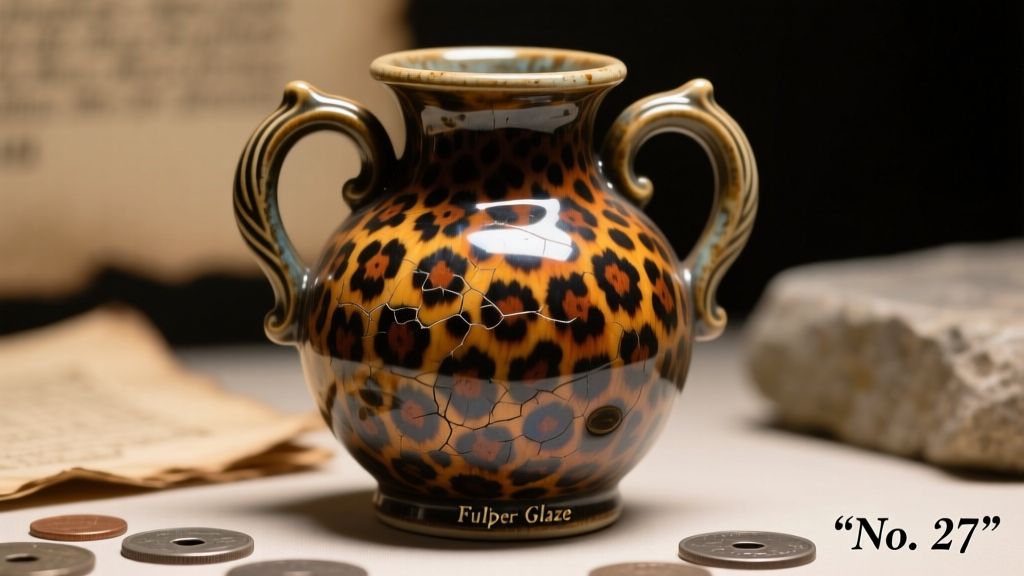
Fulper Vase No. 27: Decoding the Leopard Skin Glaze Handle Design (11 × 4¾ Inches)
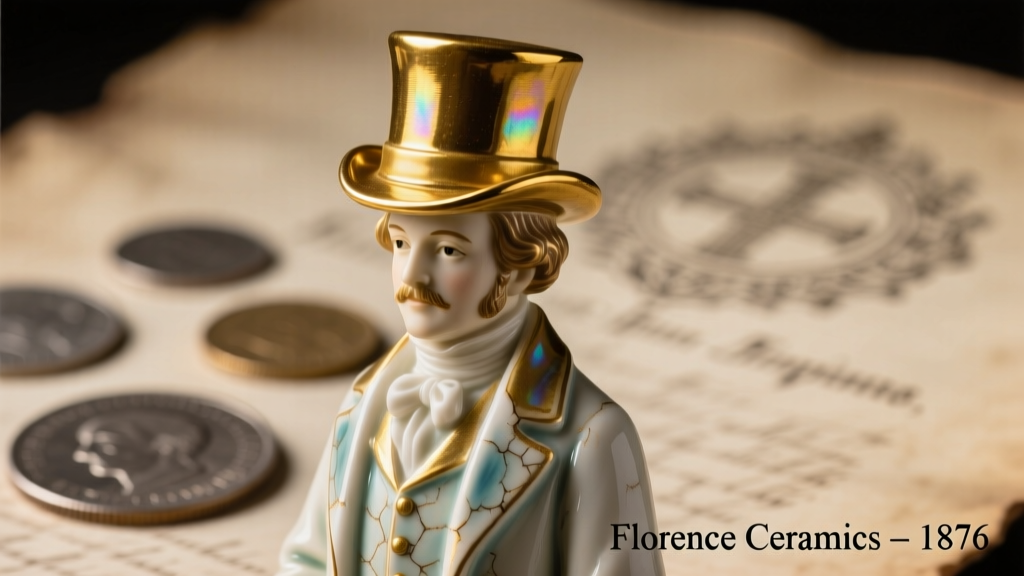
Florence Ceramics Figurine: Man With Gold Top Hat (8½ Inches) — History, Identification, and Market Value Analysis
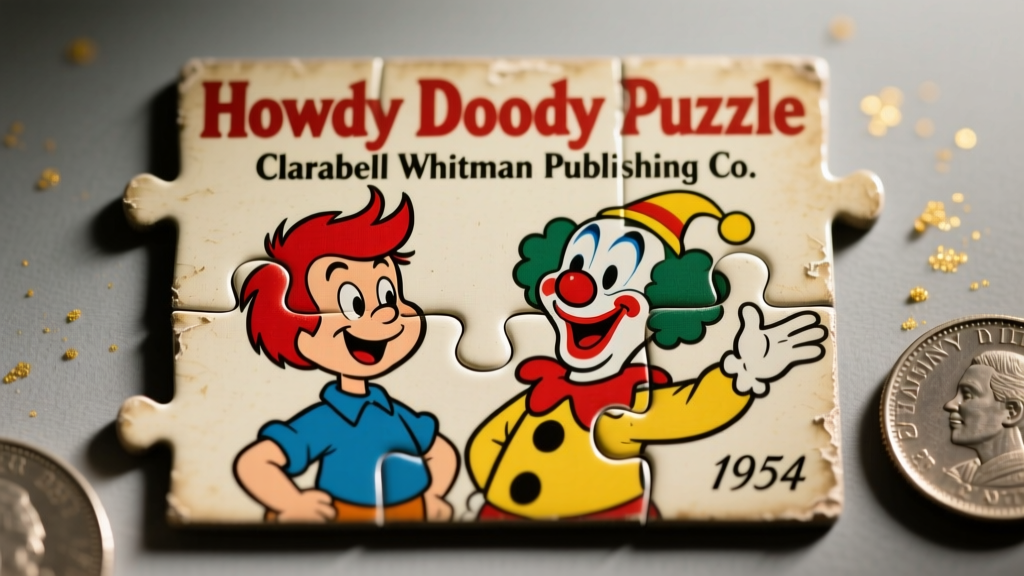
The 1954 Howdy Doody Puzzle Featuring Clarabell: A Numismatic and Pop Culture Artifact from Whitman Publishing

Animal Trophies: The Grizzly Bear on Rock Half-Mounted Taxidermy — History, Craftsmanship, and Market Value
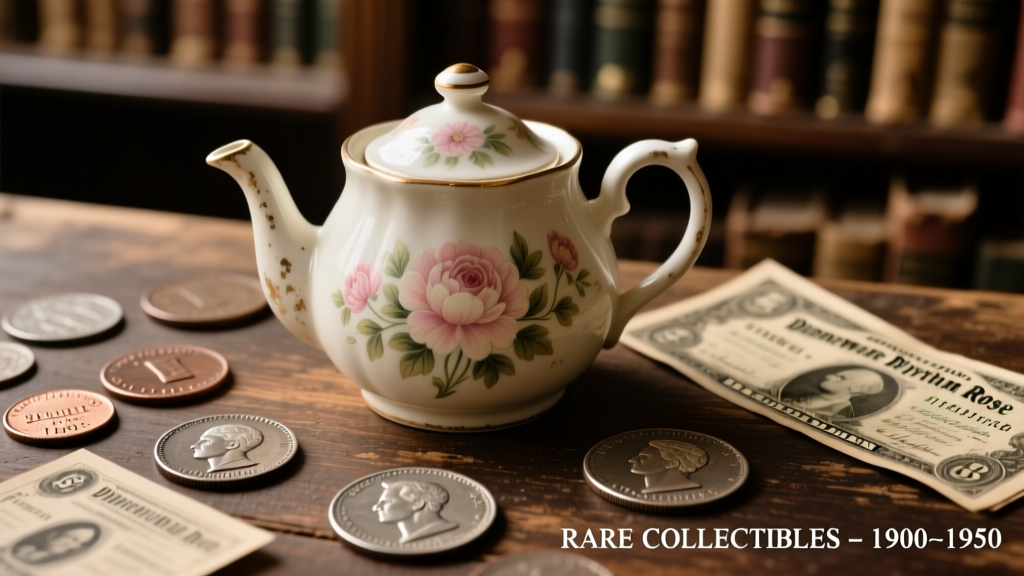
The Homer Laughlin Rhythm Rose Teapot: A Mid-Century American Ceramic Icon