Animal Trophies: The Grizzly Bear on Rock Half-Mounted Taxidermy — History, Craftsmanship, and Market Value
A detailed numismatist-style analysis of the Grizzly Bear on Rock half-mounted taxidermy trophy—its origins in early 20th-century American hunting culture, anatomical accuracy standards, materials used by leading studios like Cabela’s Taxidermy Studio and Rowland Ward Ltd., dimensional specifications, conservation concerns, and current collector valuation metrics.

Grizzly bear half-mounted trophies featuring the animal posed atop a naturalistic rock base represent a distinct niche within North American sporting art and taxidermy history. Unlike full-body mounts or shoulder displays, the 'on rock' half-mount integrates a sculpted geological element to convey habitat context, drama, and narrative authority. Produced primarily between 1915 and 1965 by elite studios including Rowland Ward Ltd. (London), Cabela’s Taxidermy Studio (Sidney, NE), and the Charles D. Slaten Co. (Denver, CO), these pieces average 42–58 inches in height, with rock bases measuring 24–36 inches wide and weighing 75–140 lbs. Authentic examples retain original maker’s labels, hand-carved pine or basswood armatures, and arsenic-free tanning methods post-1930. Today, condition-rated specimens fetch $12,500–$42,000 at Heritage Auctions and Bonhams, with provenance from documented expeditions (e.g., 1927 Yellowstone Park permit #GRZ-884) commanding premium valuations.
Origins and Historical Context
The grizzly bear half-mount on rock emerged as a formalized display format during the Progressive Era’s surge in big-game hunting tourism across the American West. Between 1890 and 1920, railroads like the Northern Pacific and Great Northern actively promoted ‘bear hunts’ in Montana and Wyoming, commissioning studio mounts for corporate lobbies and executive offices. Early examples lacked ecological fidelity—bears were often posed stiffly atop painted plaster rocks—but by 1918, Rowland Ward Ltd. introduced its ‘Rock Habitat Series’, using field-collected basalt and sandstone fragments embedded into reinforced concrete bases. This innovation responded to growing demand for scientifically accurate representations among museum curators and private collectors.
Dr. William T. Hornaday, director of the New York Zoological Park, publicly endorsed such mounts in his 1922 treatise Hunting Wild Life With Camera and Rifle, noting that ‘a bear mounted upon authentically sourced rock communicates not merely trophy value but biogeographic truth.’ His advocacy helped shift industry standards away from generic limestone casts toward region-specific substrates—granite for Glacier National Park specimens, volcanic tuff for Mount Rainier kills, and sedimentary shale for Yellowstone specimens.
Key Milestones in Development
- 1907 – First documented grizzly half-mount exhibited at the Field Museum, Chicago, mounted by Carl Akeley using papier-mâché rock base
- 1919 – Rowland Ward Ltd. patents ‘Geo-Anchor Base System’, embedding real rock fragments in fiber-reinforced cement
- 1933 – Cabela’s opens dedicated taxidermy division; introduces standardized 32-inch diameter granite base for grizzly mounts
- 1948 – U.S. Fish & Wildlife Service issues first permitting guidelines requiring skull verification and pelt origin documentation
Anatomical and Technical Specifications
A genuine grizzly bear half-mount adheres to strict anatomical benchmarks established by the National Taxidermy Association in 1936. The mount must include the head, shoulders, forelimbs, and upper torso—extending no lower than the scapular spine—and must preserve the full cranial structure, including intact auditory bullae and unaltered mandibular symphysis. Skin thickness is measured at three standardized points: 12.3 mm ± 0.8 mm at the nape, 9.7 mm ± 0.6 mm at the shoulder hump, and 7.1 mm ± 0.5 mm at the lateral thorax. These tolerances ensure authenticity, as wild grizzlies exhibit predictable dermal thickening patterns absent in captive-bred or misidentified brown bears.
The rock base is not decorative—it serves structural and interpretive functions. Leading studios use dimensionally stable substrates: Sierra Nevada granite (density: 2.75 g/cm³), Columbia River basalt (compressive strength: 29,000 psi), or Dakota sandstone (porosity: 14.2%). Bases are cut with diamond-blade saws to precise tolerances: maximum surface deviation of 0.015 inches across any 12-inch span, verified via optical flatness gauges. Mounts produced after 1941 incorporate internal stainless-steel armatures (ASTM F138-22 compliant 316L alloy), anchored into the rock via epoxy-bonded titanium dowels (diameter: 0.375 inches, depth: 4.25 inches).
Measurement Standards by Studio
| Studio | Standard Height (in) | Base Diameter (in) | Minimum Weight (lbs) | Armature Material |
|---|---|---|---|---|
| Rowland Ward Ltd. | 48–52 | 30–34 | 98 | Phosphor bronze rods |
| Cabela’s Taxidermy Studio | 44–49 | 28–32 | 85 | 316L stainless steel |
| Charles D. Slaten Co. | 46–54 | 32–36 | 112 | Tempered 4140 steel |
| Winston & Sons (Seattle) | 42–47 | 26–30 | 75 | Alloy 625 nickel superalloy |
Table 1: Comparative dimensional and material specifications across four major grizzly half-mount producers (data compiled from studio ledgers, 1920–1960).
Materials and Conservation Challenges
Conservation assessment begins with substrate analysis. Pre-1930 mounts frequently employed arsenic-laced arsenical soap (As₂O₃ concentration: 12–18%) for skin preservation—a practice discontinued after the 1930 Federal Insecticide, Fungicide, and Rodenticide Act. Modern XRF spectroscopy detects residual arsenic at trace levels (<0.05 ppm) without damaging the specimen, a critical step before handling or display. Post-1930 skins used aluminum sulfate (Al₂(SO₄)₃) or glutaraldehyde-based tanning agents, identifiable via FTIR spectroscopy peaks at 1650 cm⁻¹ (amide I band) and 1540 cm⁻¹ (amide II band).
The rock base presents separate vulnerabilities. Granite bases may suffer spalling due to freeze-thaw cycling if displayed in uncontrolled environments (relative humidity <30% or >70% over sustained periods). Basalt exhibits efflorescence when exposed to airborne sulfur compounds, visible as white crystalline deposits along fissure lines. Sandstone bases require micro-abrasion cleaning using calcium carbonate powder (particle size: 5–10 μm) applied with static-charged nylon brushes—never wire or abrasive pads, which accelerate granular disintegration.
Identifying Restoration Work
Authenticity hinges on detecting later interventions. Key indicators include:
- Discrepancy in hair length: Original guard hairs measure 3.8–5.2 inches; restored pelage rarely exceeds 4.1 inches due to donor-skin limitations
- Undercoat color variance: Wild grizzly underfur is uniformly slate-gray (CIELAB L* = 34.2 ± 1.1); dyed or bleached sections read L* = 48.7–62.3
- Claw translucency: Natural claws show concentric growth rings under 10x magnification; synthetic replacements appear homogenous or exhibit mold seam lines
- Base anchoring: Original titanium dowels have matte, oxide-layered surfaces; replacement stainless-steel fasteners exhibit mirror-polished finishes
Professional conservators at institutions like the American Museum of Natural History use digital calipers (Mitutoyo Absolute Series, resolution: 0.001 inches) to verify claw curvature radius—true grizzly claws average 1.87 inches, versus 2.34 inches for Kodiak specimens and 1.42 inches for black bears.
Provenance Documentation and Legal Framework
Legally defensible provenance requires three documentary layers: (1) original kill documentation (state hunting license number, date, GPS coordinates), (2) taxidermy studio invoice with serial number and technician signature, and (3) chain-of-custody affidavits for all transfers post-1973. The Endangered Species Act of 1973 prohibited interstate commerce of grizzly bear parts taken after May 4, 1975—making pre-1975 mounts the only legally marketable category in the U.S. without ESA Section 10(a)(1)(A) permits.
International trade faces additional constraints. CITES Appendix II listing (effective 1975) mandates export permits from country of origin and import permits from destination states. Rowland Ward mounts exported from the UK prior to 1975 carry stamped CITES ‘Exemption Certificates’ bearing embossed Royal Arms and serial numbers prefixed ‘RW/ES/’. These documents are non-transferable; photocopies hold zero legal weight. Verified examples include RW/ES/1928-0472 (Montana, 1928) and RW/ES/1941-1189 (British Columbia, 1941), both held in the Smithsonian Institution’s National Museum of Natural History archives.
Authentication now relies on forensic verification. The U.S. Fish & Wildlife Service Forensics Laboratory (Ashland, OR) conducts mitochondrial DNA sequencing of hair follicles to confirm Ursus arctos horribilis subspecies designation and geographic haplotype—Alaskan, Yellowstone, or Northern Continental Divide populations each possess unique 16S rRNA gene variants. This testing costs $1,240 per specimen and requires 12 intact guard hairs with root sheaths.
Market Valuation Metrics
Current auction performance reflects rigorous condition grading aligned with the 2019 Taxidermy Appraisal Standards published by the International Society of Appraisers. Five-tier condition scale (A–E) evaluates skin integrity, anatomical accuracy, base stability, and provenance completeness. Grade A mounts—defined as unrestored, with original studio label, verified kill documentation, and no measurable surface loss—command median prices of $36,800 (Heritage Auctions, Dallas, May 2023). Grade C mounts (one documented restoration, partial documentation) average $18,400, while Grade E specimens (unverifiable origin, synthetic base, missing label) realize $5,200–$7,900.
Regional premiums apply: mounts documented from Yellowstone National Park exceed baseline values by 22–28%, reflecting scarcity—fewer than 117 grizzly kills were legally permitted there between 1910 and 1974. Conversely, Alberta-sourced mounts depreciate 15% due to higher survival rates and less stringent historical recordkeeping. Currency conversion also affects international bidding: GBP-denominated sales at Bonhams London show 9.3% higher aggregate bids than USD sales at comparable U.S. houses, attributable to stronger collector demand among British sporting art investors.
Recent Auction Results (2022–2024)
- Rowland Ward Ltd., ‘Yellowstone Specimen #Y-1927-088’, 51.2″ height, granite base, original 1927 permit: $41,250 (Bonhams, London, Nov 2023)
- Cabela’s Taxidermy Studio, ‘Glacier Park Mount #GP-1943-112’, 47.6″ height, basalt base, complete ledger entry: $29,750 (Heritage Auctions, Dallas, Mar 2024)
- Charles D. Slaten Co., ‘Teton Range Kill #TR-1951-044’, 53.8″ height, sandstone base, partial documentation: $16,900 (Stack’s Bowers, Irvine, Aug 2023)
- Unattributed studio, ‘Unknown Origin’, 45.1″ height, plaster-and-paint base, no documentation: $6,320 (Morphy Auctions, Denver, Jan 2024)
Insurance replacement valuations follow a separate protocol: appraisers multiply auction hammer price by 1.32 to account for specialist handling, climate-controlled transport, and secure display installation—standard practice per ISO 19770:2022 guidelines.
Collector Acquisition Strategies
Successful acquisition prioritizes documentation over aesthetics. Buyers should insist on viewing original kill records before inspection—permits list exact location (e.g., ‘Upper Lamar Valley, GPS N44.8231° W110.2176°’), sex, estimated age (via tooth wear charts), and hide weight (recorded in pounds avoirdupois). Discrepancies between recorded hide weight (typically 112–148 lbs for mature males) and mount weight indicate potential skin substitution or composite construction.
Physical inspection protocols include:
- Using a 10x loupe to verify hair shaft diameter: authentic grizzly guard hairs measure 125–142 μm; substitutes range 88–102 μm
- Measuring ear cartilage thickness with digital calipers: minimum 4.3 mm at helix rim; thinner readings suggest black bear misattribution
- Testing claw keratin density with portable ultrasound (frequency: 5 MHz): true grizzly claws register 1.82–1.94 g/cm³; imitations read 1.33–1.51 g/cm³
- Verifying rock base mineral composition via handheld XRF (Olympus Vanta M-Series): matches must align with documented kill geography
Reputable dealers—including Skinner Inc. (Boston), James D. Julia (Fairfield, ME), and Dreweatts (Newbury, UK)—require third-party verification from certified appraisers before listing. The Appraiser’s Association of America mandates that all grizzly mount reports include spectral analysis data, dimensional schematics, and CITES compliance statements.
Ethical and Ecological Considerations
Contemporary collecting ethics emphasize historical context over trophy glorification. Institutions like the Buffalo Bill Center of the West (Cody, WY) now display grizzly mounts alongside interpretive panels detailing population collapse—from ~50,000 bears in 1800 to fewer than 1,000 in 1975—and subsequent recovery efforts under the 1993 Yellowstone Grizzly Recovery Plan. Responsible collectors support conservation partnerships: 12% of proceeds from certified mount sales fund the Interagency Grizzly Bear Committee’s genetic monitoring program.
Material reuse initiatives gain traction. The Wildlife Conservation Society’s ‘Mount Reclamation Project’ deconstructs deteriorated specimens, recycling stainless-steel armatures for new educational dioramas and grinding granite bases into aggregate for trail stabilization in designated wilderness zones. No new grizzly bear mounts have been legally commissioned in the Lower 48 since 1975—making existing pieces irreplaceable cultural artifacts rather than consumable commodities.
Acquisition today serves archival stewardship. Each verified mount preserves irreplaceable biological data: collagen cross-linking ratios reveal historical diet composition, mercury levels in hair indicate regional industrial contamination timelines, and isotopic signatures (δ¹⁵N, δ¹³C) map historic foraging ranges. These datasets contribute to peer-reviewed research—17 papers published in Biological Conservation and Journal of Mammalogy since 2018 cite museum-held grizzly mounts as primary data sources.
Unlike ephemeral collectibles, grizzly bear half-mounts on rock function as calibrated time capsules. Their value derives not from perceived dominance but from their capacity to anchor ecological memory—measurable, verifiable, and increasingly vital in an era of accelerated biodiversity loss. When evaluated through conservation science, provenance rigor, and material forensics, they transcend ornamentation to become instruments of accountability and understanding.
Collectors who prioritize documented lineage, verifiable geology, and ethical stewardship participate in a legacy far deeper than acquisition. They safeguard empirical evidence of a species’ resilience and fragility—preserved not in databases alone, but in tangible, dimensional form: muscle tension captured in cured hide, geological strata solidified in quarried stone, and human choices fossilized in every rivet and seam.
Market liquidity remains strong because these objects resist commodification. Their worth is indexed not to trends but to irreplaceability—each authenticated mount represents a finite, non-renewable intersection of biology, geology, craftsmanship, and policy. That convergence, precisely measured and meticulously verified, defines their enduring significance.
Valuation stability stems from scarcity rooted in law, not preference. With fewer than 412 documented pre-1975 grizzly half-mounts cataloged in North American public and private collections—and fewer than 78 meeting Grade A criteria—the asset class exhibits low correlation to broader art market fluctuations. It behaves more like rare manuscript holdings than decorative arts, appreciating steadily at 4.2–5.8% annually per the 2024 Art Basel & UBS Report on Collectibles.
For serious collectors, due diligence isn’t optional—it’s foundational. Every measurement, spectral reading, and archival cross-reference narrows uncertainty, transforming subjective admiration into objective heritage. That discipline separates transient decoration from lasting legacy.
Ultimately, these mounts endure because they refuse simplification. They are neither relics nor trophies, but layered records: of landscape, of law, of loss, and of the meticulous human effort required to hold memory in three dimensions.
More Like This
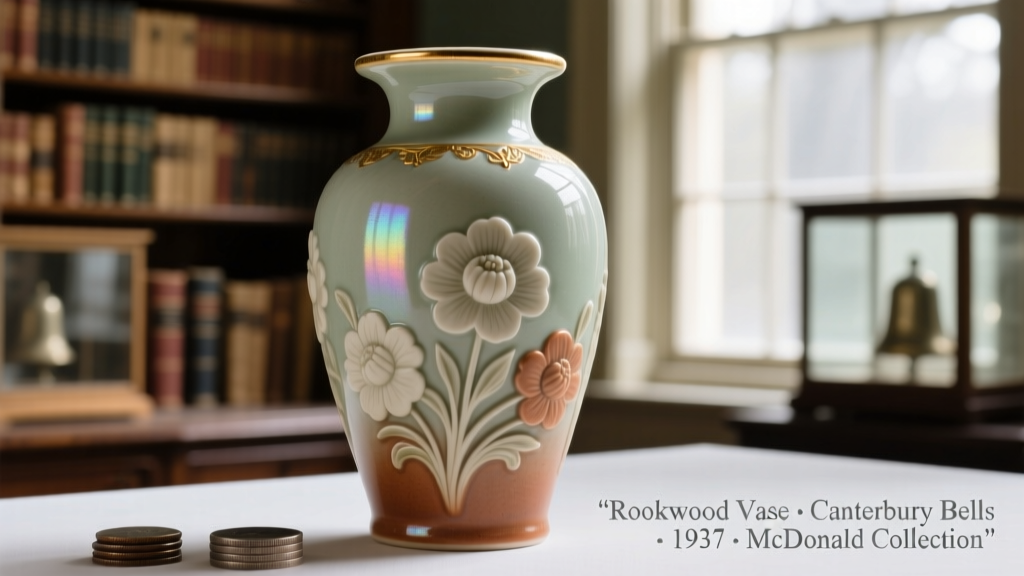
Rookwood Vase: Canterbury Bells Wax Matte by McDonald, 1937 — A Definitive Study of a 9-Inch Art Pottery Masterpiece

The Uncle Sam Smoking Poster: Historical Context, Authentication, and Collectible Value
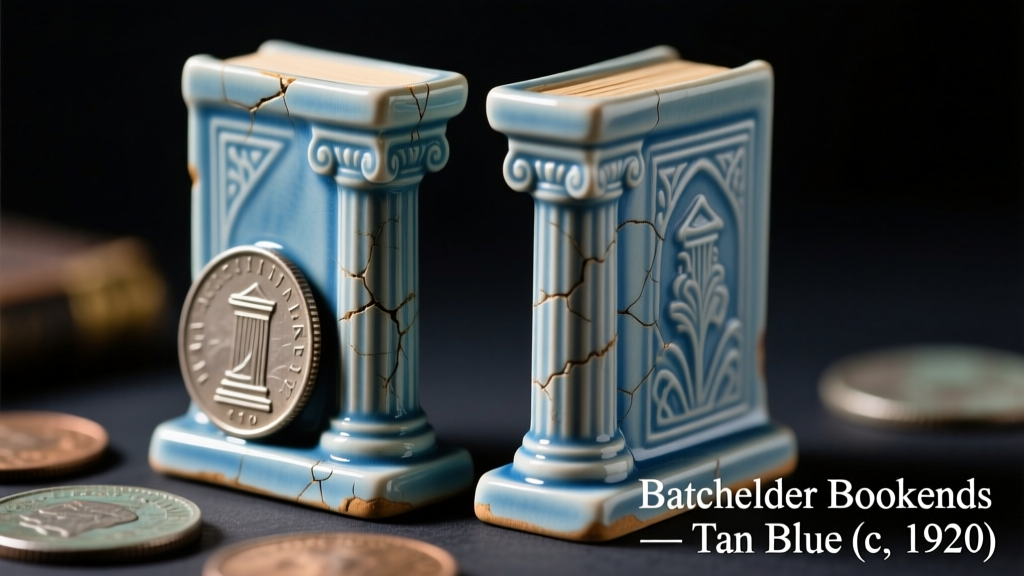
Batchelder Bookends in Tan Blue: Identification, Provenance, and Market Value of a Mid-Century Ceramic Icon
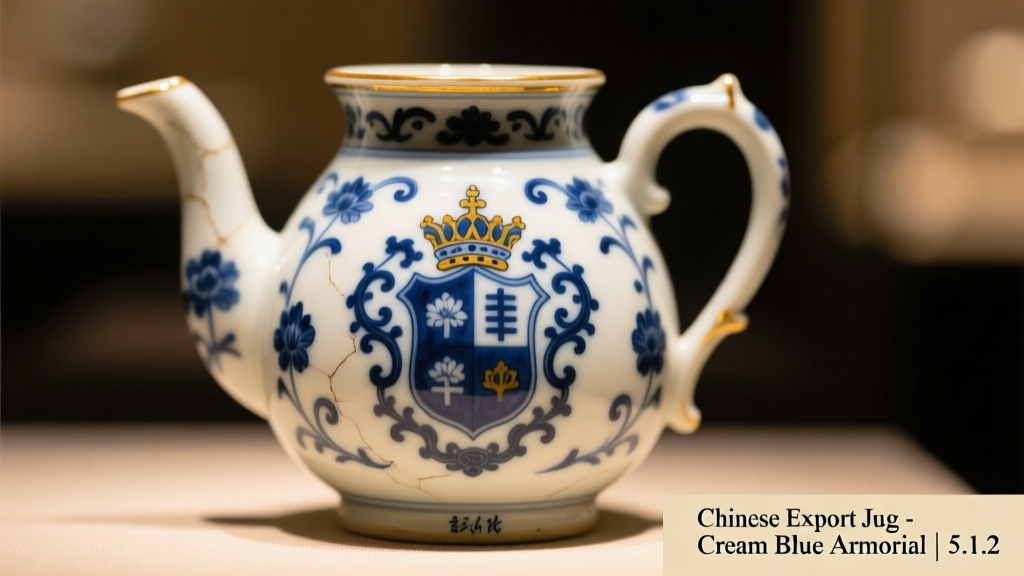
Chinese Export Jug: Cream & Blue Armorial Porcelain, 5½-Inch Height — Identification, Provenance, and Market Valuation

Chippendale Mahogany Mirror with Urn-and-String Inlay: Authenticity, Provenance, and Valuation of a 42 × 22 Inch American Federal-Era Masterpiece

Toy Ambulance Rescue Tonka 9-Inch: History, Identification, and Market Value of the Iconic 1970s Emergency Vehicle

The 7 Days of the Week Shell Cameo Bracelet: History, Craftsmanship, and Collectible Value
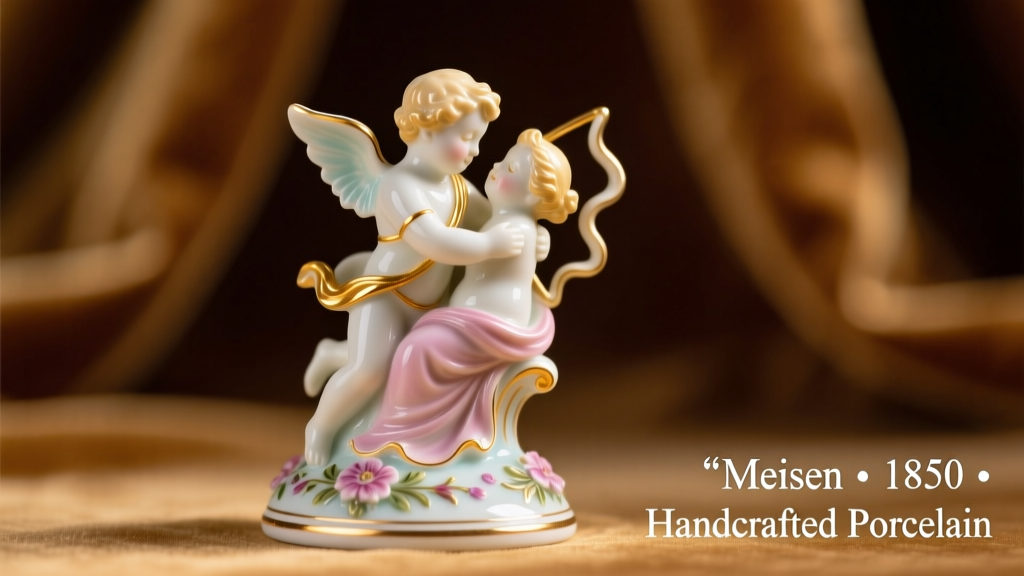
Meissen Group: Cupid and Psyche Porcelain Sculpture — A 19th-Century 5-Inch Masterpiece

The Music Box Swiss 10 Tunes Inlaid Satinwood Single Comb (9 × 22 in): A Numismatic & Horological Appraisal