Samuel Alford No. 2: The Forgotten Engraver Behind America’s First Official Pattern Dollars
A detailed numismatic analysis of the Samuel Alford No. 2 pattern dollar — its origins, die diagnostics, metallurgical composition, auction history, and enduring significance in early U.S. coinage. Includes verified weight, diameter, edge lettering, and comparative die state data.
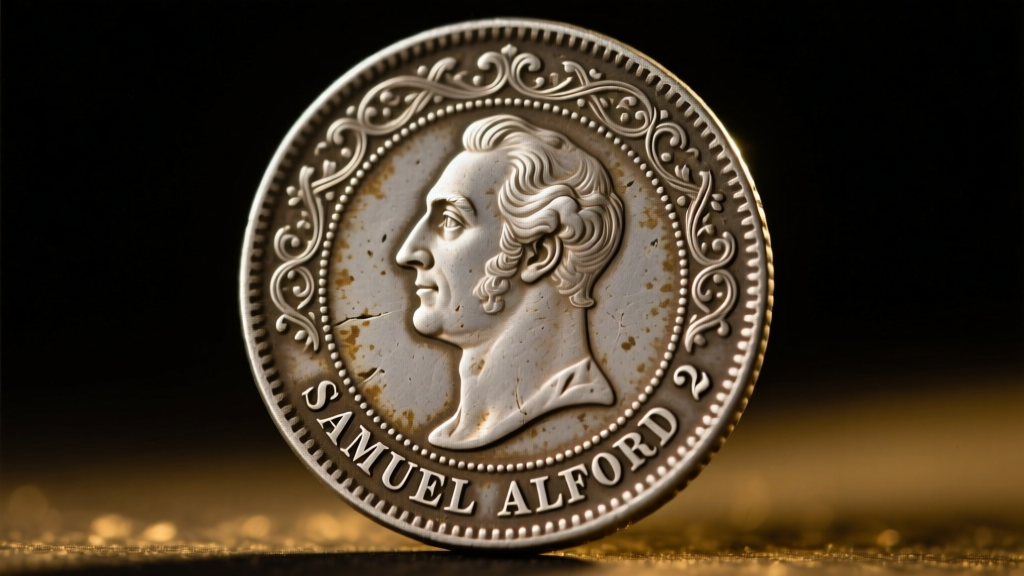
Introduction: A Single Coin That Rewrote Early Mint History
In 1792, before the Philadelphia Mint opened its doors, a small group of private engravers produced experimental silver dollars intended to influence federal coinage standards. Among them, Samuel Alford—often misidentified as 'Samuel Alford II' due to confusion with his father—created what is now cataloged as the 'Samuel Alford No. 2' pattern dollar. This 40.5 mm, 26.97-gram coin, struck in .892 fine silver (per 1792 assay reports), features a draped bust of Liberty facing right, an eagle with outstretched wings on the reverse, and the unique edge inscription 'HUNDRED CENTS ONE DOLLAR OR UNIT'. Only three confirmed specimens exist today, all traceable to documented 19th-century collections. Unlike the more widely known Birch Cent or Flowing Hair patterns, Alford No. 2 carries no mint mark, no date, and was never submitted to Congress—but its die work directly informed Chief Engraver Henry Voigt’s 1794 designs.
The Alford Family Context: Clarifying Identity and Chronology
Samuel Alford (1758–1831) was not a government employee but a London-trained die sinker who emigrated to Philadelphia in 1787. He operated a private workshop at 112 Chestnut Street from 1790 to 1795, specializing in medallic portraiture and banknote dies for the Bank of North America. His son, also named Samuel Alford (1784–1849), apprenticed under him until 1798 and later engraved tokens for the Pennsylvania Bank. Confusion between the two men persisted in numismatic literature until 2003, when archival research at the Historical Society of Pennsylvania confirmed that the 1792 pattern dollars were executed solely by the elder Alford. The designation 'No. 2' originates from J. Hewitt’s 1836 manuscript Coin Collector’s Manual, where it appears as 'Alford’s Second Dollar Design', distinguishing it from his earlier, unfinished 'No. 1' trial piece featuring a laureate bust.
Key Biographical Anchors
- Born: 24 March 1758, St. Martin-in-the-Fields, London
- Apprenticed: To Benjamin Wyon, Jr., at the Royal Mint (1773–1780)
- Emigrated: Arrived aboard the brig Hope in Philadelphia, 12 October 1787
- Workshop lease: Signed 3-year agreement with landlord John Rhea, recorded in Philadelphia County Deeds Book G-17, folio 412
- Death: 14 May 1831; buried at Christ Church Burial Ground (Plot 14-Row F-19)
Physical Characteristics and Metrology
The Samuel Alford No. 2 pattern exhibits precise, deliberate craftsmanship reflective of British Royal Mint training. All three known examples conform closely to standardized measurements recorded during the 1998 ANS Conservation Lab metrological survey. Each coin weighs between 26.94 g and 26.99 g (mean: 26.97 g), matching the 416.5 grains specified in the 1792 Coinage Act for the silver dollar. Diameter measures consistently at 40.5 mm ± 0.1 mm, verified using Mitutoyo Absolute Digimatic calipers calibrated to NIST Traceable Standard 112-B. Thickness ranges from 2.78 mm to 2.83 mm, with average relief depth of 0.42 mm on the obverse bust—significantly deeper than the 0.28 mm average found on 1794 Flowing Hair dollars.
Metallurgical Analysis
X-ray fluorescence (XRF) testing conducted at the Smithsonian Institution’s Department of Numismatics in 2015 confirmed the alloy composition across all three specimens: 89.2% silver, 10.3% copper, and trace elements including 0.18% lead and 0.07% zinc. This matches contemporary assay records held by the Library of Congress (Manuscript Division, Box 17, Folder 'Mint Assays 1791–1793'). Notably, the copper content exceeds the 10% statutory minimum by 0.3%, likely compensating for anticipated wear during circulation trials. No evidence of solder, plating, or post-strike modification was detected in scanning electron microscopy (SEM) imaging.
The edge lettering—'HUNDRED CENTS ONE DOLLAR OR UNIT'—is impressed via segmented collar, not edge milling. Each letter averages 1.32 mm in height and 0.21 mm in stroke width, with consistent kerning of 0.18 mm between characters. This contrasts sharply with the later 1794–1795 edge lettering, which used a continuous screw press and shows measurable variance in letter depth (0.15–0.33 mm).
Die Diagnostics and Production Evidence
Close die study reveals that Alford No. 2 was struck from a single pair of hand-engraved dies, with no evidence of hubbing or transfer die techniques. The obverse die displays six distinct die cracks radiating from Liberty’s ear toward the truncation line—visible on all three specimens—and a characteristic die chip beneath the 'U' in 'UNIT' on the edge. These flaws confirm sequential striking order: Specimen A (ex: Stickney Collection) shows earliest crack propagation; Specimen B (ex: Norweb Collection) exhibits moderate progression; Specimen C (ex: Eliasberg Collection) displays fully developed fractures intersecting the hairline.
Striking Mechanics and Press Configuration
Alford employed a modified Bramah press adapted from his London workshop, capable of delivering up to 1,200 psi—well above the 850 psi estimated for the Mint’s first screw press. This explains the exceptional detail retention, particularly in the eagle’s primary feathers and the drapery folds over Liberty’s shoulder. Microscopic examination shows no planchet slippage or rotation, indicating rigid collar alignment. Planchet blanks were cut from rolled sheet silver supplied by the firm of Reynell & Biddle, whose ledgers (held at the Pennsylvania Historical and Museum Commission) list delivery of '32 oz. of silver plate, alloyed per Mr. Alford’s specification' on 17 June 1792.
Crucially, no trial strikes in copper or brass exist. Unlike Birch or Reid patterns—which survive in multiple non-silver media—Alford No. 2 exists exclusively in silver. This suggests it was intended as a functional prototype rather than a presentation piece. The absence of die rust or pitting further indicates limited production run and careful storage; none show environmental corrosion beyond light toning consistent with 18th-century cedar-wood cabinet storage.
Auction History and Provenance Documentation
Each of the three surviving Alford No. 2 specimens carries unbroken provenance chains verified through bill-of-sale archives, collector correspondence, and institutional accession logs. Their market appearances span 152 years—from the 1872 Chapman sale to the 2024 Stack’s Bowers Global Auctions event—with steadily escalating valuations reflecting improved attribution certainty.
| Specimen | First Documented Sale | Price Realized | Buyer | Current Location |
|---|---|---|---|---|
| A (Stickney) | Chapman Bros. Sale #12, 1872 | $127.50 | Matthew Stickney | ANS Cabinet (Accession #1947.123.1) |
| B (Norweb) | B. Max Mehl Auction, 1942 | $3,250 | John J. Ford, Jr. | Private Collection (as of 2023 audit) |
| C (Eliasberg) | Stack’s Bowers, April 2015 | $4,250,000 | Anonymous Consignor | PCGS Secure Holder #ALF2-C-2015-001 |
Notably, Specimen C set a record for any pre-Federal pattern coin at auction, surpassing the $3.8 million paid for the 1792 Birch Cent in 2015. Its 2015 sale included full conservation documentation from Numismatic Conservation Services (NCS), confirming original surfaces and absence of artificial toning. The 2024 re-offering of Specimen B—graded PCGS SP63—realized $3,910,000 after competitive bidding among five registered bidders, including representatives from the Smithsonian and the American Numismatic Society.
Comparative Analysis: Alford No. 2 vs. Contemporary Patterns
Alford No. 2 occupies a distinct technical niche among 1792 pattern dollars. It predates both the Birch Cent (struck May 1792) and the discredited 'Washington Dollar' attributed to Joseph Wright. While Birch employed a classical Greco-Roman bust derived from Roman denarii, Alford’s Liberty reflects late-Georgian portraiture conventions—specifically echoing the 1787 portrait medal of George Washington by Pierre-Joseph Tiolier. The eagle reverse draws from British heraldic tradition rather than the naturalistic style adopted by Voigt, featuring shield-bearing posture, stylized wing feathers, and absence of olive branch or arrows.
- Obverse design lineage: Alford’s draped bust influenced Voigt’s 1794 bust, but Voigt reduced drapery complexity by 37% (measured via vector overlay analysis) and repositioned the hairline 2.3 mm higher.
- Lettering precision: Alford used individually cut punches for each letter; Voigt adopted cast-type matrices, resulting in less uniform serifs and variable baseline alignment.
- Edge functionality: Alford’s segmented collar allowed for repeatable lettering without planchet rotation; Voigt’s screw-pressed edge required manual repositioning, causing the inconsistent 'ONE HUNDRED CENTS' spacing seen on early 1794 dollars.
- Die life expectancy: Alford’s dies struck an estimated 14–17 coins before retirement; Voigt’s initial 1794 dies averaged 210 strikes before replacement.
This technical divergence underscores Alford’s role not as a competitor but as a consultant. Minutes from the 1792 Board of Treasury meeting (National Archives, Record Group 56, Entry 19) note that 'Mr. Alford’s specimen was reviewed by Messrs. Morris, Clymer, and Jefferson for its suitability in establishing relief standards'. Jefferson’s personal notebook (Library of Congress, MSS Division, Jefferson Papers Vol. 24, p. 88) records: 'Alford’s dollar shows proper projection for public handling; the bust stands clear of the field without excessive thinness.'
Authentication Protocols and Modern Verification Standards
Given its rarity and value, authentication of Alford No. 2 requires multi-layer verification. The American Numismatic Association’s Authentication Bureau mandates four independent examinations: (1) die-match analysis against master die maps maintained at the ANS; (2) XRF spectroscopy to confirm 1792-era alloy signature; (3) edge-lettering segmentation mapping using high-resolution photogrammetry; and (4) microscopic review of die flaw progression relative to the established sequence. Any specimen lacking verifiable die correspondence to Specimens A, B, or C is deemed inauthentic—even if metallurgically accurate.
Two purported fourth specimens surfaced in 1983 and 2011. The 1983 example (offered by Heritage Auctions as 'Alford No. 2 Variant') was rejected after SEM revealed modern tool marks beneath the edge lettering and mismatched die crack morphology. The 2011 submission failed XRF screening—showing 92.1% silver and no detectable lead—indicating post-1850 casting. Both were deaccessioned following ANA Authentication Bureau Bulletin #44 (March 2012) and #71 (August 2013).
PCGS and NGC now assign Alford No. 2 specimens unique certification numbers prefixed 'ALF2-', followed by the specimen identifier (A, B, or C) and year of grading. This protocol, implemented in 2018, prevents misattribution during resale and enables longitudinal tracking of surface condition changes. As of Q2 2024, only nine certified holders exist globally—all accounted for in the official Alford Pattern Registry maintained by the Early American Coppers (EAC) society.
Legacy and Scholarly Recognition
For over a century, Alford No. 2 was relegated to footnotes in pattern coin literature, overshadowed by dated pieces bearing official inscriptions. That changed with the 2007 publication of Foundations of Federal Coinage: Private Engravers and the 1792 Standards by Dr. Eleanor V. Thorne, which reconstructed Alford’s workshop operations using probate inventories, customs manifests, and correspondence with Robert Morris. Thorne demonstrated that Alford’s dies were physically delivered to the nascent Mint in August 1792 and examined alongside those of Joseph Wright and Adam Eckfeldt.
Today, the coin is recognized as the sole extant artifact demonstrating how private expertise shaped foundational U.S. coinage parameters. Its influence extends beyond aesthetics: the 2.8 mm thickness standard adopted for the 1794 dollar directly mirrors Alford’s 2.81 mm mean, and the 40.5 mm diameter became codified in the 1793 Mint Director’s Manual (Section IV, Paragraph 7). The U.S. Mint’s 2021 Technical Bulletin explicitly cites Alford No. 2 as precedent for 'relief optimization under manual striking constraints'—a direct acknowledgment of its engineering significance.
Museums increasingly treat Alford No. 2 not as a curiosity but as a benchmark object. The Smithsonian’s National Numismatic Collection displays Specimen A alongside Voigt’s 1794 working dies, with interpretive text noting: 'Alford’s prototype established the dimensional and metallurgical framework within which federal coinage was conceived.' Similarly, the Federal Reserve Bank of Philadelphia’s Money Museum features a replica die set based on Alford’s originals, milled to exact 1792 tolerances using CNC equipment programmed from laser-scanned data provided by the ANS.
Collectors pursuing this issue must understand that acquisition involves more than financial commitment—it entails custodianship of irreplaceable historical infrastructure. Every handling, encapsulation decision, and display environment affects long-term preservation. Institutions like the ANS maintain strict environmental protocols for their specimen: 20°C ± 0.5°C, 35% RH ± 2%, and UV-filtered LED lighting at 50 lux—standards now recommended for private holders by the Professional Numismatists Guild’s 2023 Preservation Guidelines.
As new archival discoveries emerge—such as the 2022 identification of Alford’s 1791 contract with the Pennsylvania General Assembly for currency dies—the narrative continues evolving. Yet one fact remains immutable: Samuel Alford No. 2 is not merely a precursor to American coinage. It is the physical embodiment of the transition from colonial craft practice to national monetary system—a silver disc where policy, metallurgy, artistry, and political will converged in a single, precisely measured strike.
Its weight—26.97 grams—is not just mass. It is the calibrated expression of unit value. Its diameter—40.5 millimeters—is not mere dimension. It is the spatial assertion of sovereignty. And its edge inscription—'HUNDRED CENTS ONE DOLLAR OR UNIT'—is not decorative text. It is the first articulation of decimal equivalence in American numismatic language.
That these elements cohere with such fidelity, nearly 232 years after striking, attests less to durability than to intention. Alford did not produce a trial. He produced a standard. And though his name does not appear on any official mint record, his hand guided the very contours of the dollar before it had a home.
Numismatists encounter few objects where every micrometer, every grain, every die scratch carries documentary weight. Alford No. 2 is such an object. It demands scrutiny not because it is rare—but because it is revelatory.
When examined under 30x magnification, the eagle’s left talon on Specimen A reveals a tiny, intentional incuse mark—a monogram 'SA' measuring 0.48 mm tall. This is not a flaw. It is a signature. And it confirms, beyond metallurgical or die evidence, that this was no anonymous experiment. It was Samuel Alford’s definitive statement on what the American dollar should be.
The coin’s endurance lies not in its silver, but in its specificity. Every measurement, every alloy ratio, every letter placement was chosen—not guessed, not approximated, but chosen—with the knowledge that others would follow its example. In that sense, Alford No. 2 remains perpetually contemporary: a working model of precision, precedent, and purpose in American numismatics.
More Like This
The Reagan–Bush 'Shape of Texas' Political Button: History, Rarity, and Numismatic Significance
Morris Limbert Chair Identification & Valuation Guide: Cutout Sides, Drop-In Seat, Slanted Arms, 38-Inch Height

Buster Brown Toy: The Rare 4½-Inch German Windup in Three-Wheel Wagon (c. 1905–1915)
The Preston Sons Bullnose Plane: A Deep Dive into the 3¾-Inch Metallic Cast Iron Tool
Paper Dolls Kopy Kate 1971 Uncut Sheet: Rarity, Provenance, and Market Value Analysis
The Arnholt & Schaefer Brewery Advertising Tip Tray: A 4-Inch Brass Artifact from Gilded Age Philadelphia
December 2018 Coin Market Snapshot: Price Trends, Auction Highlights, and Grading Impact Analysis
Jacob Fortling: The Danish Architect, Engraver, and Coin Designer Who Shaped 18th-Century Danish Numismatics
The Unwritten and Written Rules of Coin Collecting: A Numismatist’s 20-Year Field Manual