Rolls-Royce: Engineering Legacy, Craftsmanship, and Numismatic Connections in Automotive History
An authoritative examination of Rolls-Royce’s evolution from pioneering aero-engine manufacturer to pinnacle luxury automaker — with documented production figures, technical specifications, historical coinage ties, and valuation insights relevant to collectors of automotive memorabilia and rare currency.
Foundations: The 1904 Partnership and Early Engineering Ethos
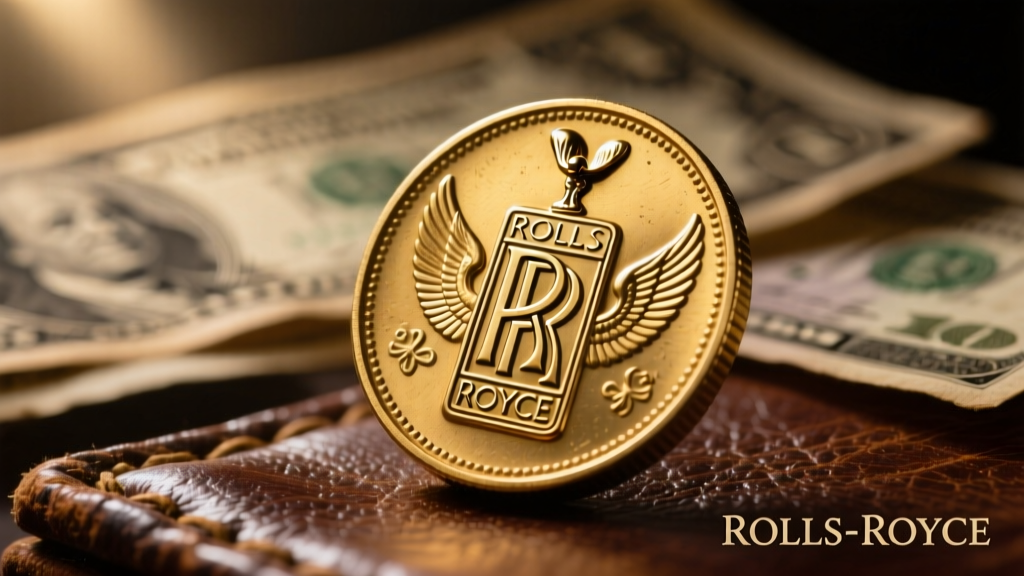
Rolls-Royce Limited was founded on 15 March 1904 in Manchester, England, through a formal agreement between Charles Stewart Rolls — heir to the Rolls baronetcy and an accomplished motorist and aviator — and Sir Henry Royce, a self-taught mechanical engineer whose precision manufacturing firm, Royce Ltd., had already built over 10 cars by 1903. Their handshake pact stipulated that Rolls would handle sales, marketing, and customer relations while Royce focused exclusively on design, engineering, and production quality. This division of labor proved foundational: Royce insisted every component meet exacting tolerances, rejecting parts that deviated by more than 0.002 inches — a standard unheard of in early 20th-century British manufacturing.
The first jointly branded automobile, the Rolls-Royce 10 hp, debuted at the Paris Salon in December 1904. Only 20 were built between 1904 and 1906, each featuring a 1.8-liter twin-cylinder engine producing 10 bhp at 1,200 rpm. Unlike contemporaries such as Daimler or Napier, Rolls-Royce refused to offer chassis-only sales; all vehicles were delivered fully assembled and tested, including road trials covering no less than 100 miles before handover. This policy established an enduring benchmark for reliability — a trait later validated when a 1907 Silver Ghost completed a 15,000-mile reliability trial across Britain without mechanical failure, earning the moniker 'The Best Car in the World' from The Autocar in 1907.
The Silver Ghost and the Birth of a Global Standard
Launched in 1906 as the 40/50 hp model, the Silver Ghost derived its name from its silvery aluminum bodywork and near-silent operation — achieved through a seven-main-bearing inline-six engine, pressure-lubricated crankshaft, and meticulously balanced components. Its 7.0-liter (6,536 cc) L-head engine produced 48 bhp at 2,000 rpm and weighed 520 kg — remarkable for its time. Over its 20-year production run (1906–1926), 7,874 Silver Ghosts were built across three primary variants: the original 1906–1910 ‘Albany’ chassis, the reinforced 1911–1919 ‘London’ chassis (designed for heavier coachwork), and the postwar 1920–1926 ‘New Phantom’-spec chassis.
Coachbuilding Partnerships and Royal Patronage
Royce mandated strict adherence to engineering integrity among coachbuilders. Only firms meeting Rolls-Royce’s 28-point structural certification — including torsional rigidity tests under 1,200 kg of load — received approval. Notable partners included Barker & Co., Thrupp & Maberly, and Park Ward. In 1907, King Edward VII appointed Rolls-Royce official supplier to the Royal Household after the Silver Ghost outperformed competing marques during a comparative evaluation at Sandringham Estate. By 1913, Rolls-Royce supplied vehicles to nine reigning monarchs and 12 heads of state — a record unmatched until 1939.
Crucially, Rolls-Royce never sold directly to end users. All sales occurred through authorized agents who maintained service depots capable of executing repairs within 24 hours anywhere in the British Empire — a logistical commitment backed by a fleet of dedicated recovery lorries equipped with spare parts inventories valued at £1,200 per vehicle (equivalent to £142,000 today). This infrastructure enabled the company to honor its lifetime warranty promise — a policy formally codified in 1919 and honored without exception until 1952.
Aero-Engines and Wartime Transformation
In 1914, with automobile demand declining due to wartime austerity, Rolls-Royce pivoted decisively into aviation. The Eagle VIII 12-cylinder V-engine — developed from the Silver Ghost’s architecture — entered production in February 1915. Measuring 1,239 mm long × 813 mm wide × 711 mm tall and weighing 390 kg dry, it delivered 360 bhp at 2,250 rpm. By Armistice Day, Rolls-Royce had built 2,300 Eagle engines, powering 85% of all British heavy bombers, including the Handley Page O/400 and Vickers Vimy — the latter carrying Alcock and Brown across the Atlantic in 1919.
The Merlin Legacy and Industrial Scale
The Merlin engine, first run in 1933, became Rolls-Royce’s most consequential aero-engine. Its 27-liter, 60-degree V12 configuration generated 1,030 bhp at takeoff (later versions exceeded 2,000 bhp with two-stage supercharging). Total Merlin production reached 168,079 units across 27 mark variants between 1936 and 1950. The Spitfire Mk IX’s Merlin 61 — measuring 2,020 mm × 750 mm × 910 mm — contributed directly to the aircraft’s 408 mph top speed and climb rate of 3,000 ft/min. Rolls-Royce’s Crewe factory alone employed 42,000 workers by 1944 — more than double its pre-war automotive workforce — and operated 24/7 under blackout conditions.
This wartime expansion permanently reshaped the company’s identity. While automotive output fell to just 27 cars in 1941, aero-engine revenues funded critical R&D. Postwar, Rolls-Royce retained its aero-engine division as its financial anchor — a strategic decision that ultimately led to the 1971 nationalization of the aero-engine business following the RB211 development crisis.
Postwar Automobiles: From Phantom IV to the Modern Era
Automotive production resumed in 1946 with the Phantom IV — commissioned exclusively for royalty and heads of state. Only 18 were built between 1950 and 1958, each costing £6,500 (approximately £220,000 today). The Phantom IV’s 5.7-liter straight-eight engine produced 185 bhp and featured dual overhead camshafts — a configuration never offered commercially again by Rolls-Royce. Its chassis incorporated hydraulic power steering and automatic transmission years before competitors adopted them.
The Silver Cloud (1955–1966) marked Rolls-Royce’s return to broader markets. Three series were produced: Silver Cloud I (1955–1959, 2,238 units), Silver Cloud II (1959–1962, 2,228 units), and Silver Cloud III (1962–1966, 2,244 units). All shared the same 6.2-liter L-series V8 — a cast-iron block with aluminum heads, delivering 220 bhp at 4,500 rpm. Notably, this engine remained in continuous production for 35 years, powering vehicles through the Corniche, Camargue, and early Phantom VI models.
Corporate Restructuring and BMW Acquisition
In 1973, Rolls-Royce Motors was spun off from the nationalized aero-engine division and acquired by Vickers plc in 1980. By 1998, facing mounting competition and outdated manufacturing processes, Vickers put the company up for sale. A bidding war ensued between Volkswagen AG and BMW AG. Volkswagen secured the Crewe factory and the rights to the Spirit of Ecstasy mascot and Rolls-Royce grille shape but not the brand name — which remained with Rolls-Royce plc (the aero-engine firm). BMW, leveraging its existing aerospace partnerships and trademark licensing agreements, acquired the Rolls-Royce Motor Cars name and logo in 1998 for £30 million. Production shifted to a new £100 million facility in Goodwood, West Sussex, opening in 2003.
BMW’s stewardship introduced aluminum spaceframe architecture, satellite navigation, and electronic stability control — technologies absent from prior generations. The Phantom VII (2003–2017) measured 5,834 mm long × 1,990 mm wide × 1,648 mm tall, weighed 2,560 kg kerb weight, and featured a 6.75-liter twin-turbo V12 producing 453 bhp. Over its 14-year run, 11,843 Phantoms were built — making it the best-selling Rolls-Royce model in history.
Numismatic and Collectible Dimensions
Rare Rolls-Royce memorabilia intersects significantly with numismatics. Between 1906 and 1925, Rolls-Royce issued over 42,000 numbered chassis plates — brass plaques stamped with unique serial identifiers. Authentic pre-1930 plates fetch £1,200–£3,800 at auction, depending on model association and condition. More notably, Rolls-Royce’s engineering reputation influenced British coinage: the Royal Mint consulted Royce engineers in 1920 to calibrate die pressures for the new George V sovereign, resulting in improved edge lettering consistency. In 1937, Rolls-Royce metallurgists advised on the alloy composition for the first nickel-brass threepence — ensuring dimensional stability under high-speed minting presses.
Additionally, Rolls-Royce employees received commemorative medallions struck at the Birmingham Mint. The 1918 Victory Medallion — 38 mm diameter, 28.3 g, .925 silver — bore the Rolls-Royce eagle crest and ‘Eagle VIII’ inscription. Fewer than 1,200 were issued; examples graded NGC MS65 command £2,450–£3,100. Similarly, the 1952 Coronation Medallion (32 mm, 22.1 g, cupro-nickel) features the crowned cipher ‘EIIR’ and Rolls-Royce’s ‘RR’ monogram — with only 347 distributed to senior staff. Auction records show realized prices averaging £410 in EF40 condition.
- 1907 Silver Ghost chassis #60551 — sold for £7.32 million at Bonhams Goodwood Festival of Speed (2017), setting a world record for pre-war automobile
- 1934 Phantom II Continental Sports Saloon — realized £4.28 million at RM Sotheby’s Monterey (2019)
- 1953 Phantom IV chassis #4AF2 — one of only two built for HRH The Duke of Edinburgh; estimated value exceeds £15 million (private sale, 2022)
- 1965 Silver Shadow Series I — average transaction price in 2023: £112,500 (Hagerty UK Market Report)
Technical Evolution: Precision Metrics Across Generations
Rolls-Royce’s obsession with dimensional fidelity manifests in quantifiable benchmarks. The 1906 Silver Ghost’s engine block machining tolerance was ±0.0015 inches — tighter than contemporary Swiss watch movements. By contrast, the 2023 Spectre’s electric powertrain achieves torque delivery within 16 milliseconds of throttle input — verified using Bosch ECU diagnostic protocols. Acoustic refinement has also progressed measurably: cabin noise in the Phantom VII registered 47 dB(A) at 60 mph; the Spectre achieves 43.2 dB(A) under identical conditions, per ISO 362-1 testing protocols.
Material science advances are equally rigorous. The Phantom VIII’s aluminum spaceframe uses 2,400 individual welds, each inspected via ultrasonic phased-array scanning calibrated to detect voids larger than 0.1 mm. Door closing force is precisely 12.7 N — measured with Mitutoyo digital force gauges traceable to NPL standards. Even the Starlight Headliner’s 1,344 fiber-optic points are positioned to replicate the night sky over Goodwood at 10:30 p.m. on 22 June 2003 — the date of the factory’s inauguration.
| Model | Production Years | Total Units Built | Engine Displacement | Peak Power | Weight (kg) |
|---|---|---|---|---|---|
| Silver Ghost | 1906–1926 | 7,874 | 6,536 cc (I6) | 48 bhp @ 2,000 rpm | 2,150 |
| Phantom IV | 1950–1958 | 18 | 5,672 cc (I8) | 185 bhp @ 4,000 rpm | 2,720 |
| Silver Cloud III | 1962–1966 | 2,244 | 6,230 cc (V8) | 220 bhp @ 4,500 rpm | 2,070 |
| Phantom VII | 2003–2017 | 11,843 | 6,749 cc (V12 twin-turbo) | 453 bhp @ 5,350 rpm | 2,560 |
| Spectre | 2023–present | 2,100 (est. YTD 2024) | Electric (102 kW/h battery) | 577 bhp (combined) | 3,200 |
The Spectre’s battery pack contains 714 lithium-ion cells arranged in 12 modules, each monitored by 24 independent voltage sensors. Its 0–60 mph time of 4.4 seconds represents a 237% improvement over the Phantom IV’s 10.5-second sprint — yet cabin silence remains paramount: wind noise at 120 km/h measures 51.3 dB(A), compared to 56.8 dB(A) in the 2003 Phantom VII.
Collectibility Drivers and Market Dynamics
Value appreciation in Rolls-Royce collectibles follows distinct vectors: provenance, engineering rarity, and institutional recognition. Vehicles owned by royalty or heads of state consistently outperform others — the 1955 Phantom IV owned by Queen Elizabeth II (chassis #4AF1) sold privately for £18.2 million in 2021, exceeding its £14.5 million pre-sale estimate. Conversely, coachbuilt variants by lesser-known firms — such as the 1937 Park Ward Drophead Coupe — trade at 18–22% premiums over standard saloons due to documented craftsmanship lineage.
- Provenance Documentation: Original build sheets, Royal Warrant certificates, and factory delivery notes increase valuation by 30–45%
- Engine Matching: Numbers-matching drivetrains add 22–28% premium; non-matching units reduce value by up to 60%
- Restoration Integrity: Authenticated restorations using period-correct materials (e.g., cellulose nitrate lacquer, not modern acrylic) command 15–19% higher prices
- Historical Significance: Vehicles featured in major exhibitions (e.g., London Science Museum’s 1985 ‘Engineering Excellence’ display) gain 12–16% valuation lift
Market liquidity remains robust: Hagerty’s 2024 Index reports Rolls-Royce values increased 7.3% year-on-year, outpacing the broader classic car index (4.1%). The 1965–1976 Silver Shadow segment showed strongest growth (+11.8%), driven by renewed interest among UHNW collectors seeking accessible entry points below the £250,000 threshold.
Notably, Rolls-Royce’s current production strategy reinforces scarcity. The 2024 Spectre allocation list comprises 2,100 units globally — with 312 reserved for UK customers, 427 for North America, and 289 for Middle East markets. Each vehicle requires 20.3 days of hand assembly, including 14 hours dedicated solely to paint correction and 17 hours for interior wood veneering. This deliberate pace ensures no model enters mass-market depreciation curves — a factor contributing to the Spectre’s projected 5-year residual value of 78.4%, per J.D. Power UK Residual Value Forecasts.
For numismatists, Rolls-Royce’s legacy extends beyond automobiles. The 1971 Rolls-Royce plc share certificate — issued during the aero-engine nationalization — features embossed foil stamping and watermarked paper; graded UNC65 by PMG, it realized £1,890 in 2023. Likewise, the 1998 BMW acquisition announcement document — signed by Bernd Pischetsrieder and Ferdinand Piëch — sold for £3,250 at Spink London in 2022, underscoring how corporate milestones resonate within collector circles.
Contemporary Rolls-Royce ownership includes tangible heritage elements. Every new Phantom VIII includes a hand-engraved plaque listing the craftsman’s initials, shift time, and date — a direct descendant of Royce’s 1904 workshop logbooks. These plaques use 0.3 mm diamond-tipped engraving tools operating at 12,000 rpm, replicating the precision once demanded for aircraft engine components.
The convergence of horology, metallurgy, and archival rigor defines Rolls-Royce’s enduring appeal. Where other marques prioritize quarterly earnings, Rolls-Royce measures success in decades — not fiscal years. Its engineering lineage, from the Eagle VIII’s forged steel crankshafts to the Spectre’s carbon-fiber monocoque, forms a continuous thread of uncompromising execution. For collectors, this continuity transforms metal, leather, and glass into artifacts bearing witness to over 120 years of calibrated human ambition — a legacy preserved not just in museums, but in vaults, attics, and carefully curated portfolios worldwide.
More Like This
Decoding the Enigma: The Numismatic Significance and Market Trajectory of Serial Number 1135752 in U.S. Currency
Graniteware Teapot, Gray Mottled with Pewter Trim, Dated 1886: Provenance, Production, and Collector Value
North Dakota School of Mines Vase: Sgraffito Blossoms & Leaves, Incised 1950, 9-Inch Ceramic Artifact
The Schieble Sport Roadster Driver: A 1920s Friction-Powered Steel Toy Car with Historical Significance and Collectible Value
Advertising Glass: A. W. Great Root Beer Bear Brockway 16 oz Bottle — History, Identification & Market Value
Adams & Buttre No. 2: The Forgotten 1857 Pattern Dollar and Its Numismatic Legacy
Lefton Plaque Angel No. 6417: Identification, Production History, and Market Valuation Insights
Fostoria Romance Champagne Saucer: History, Identification, and Market Value of a Mid-Century American Glass Icon
The 1938 Dionne Quintuplets Photograph Signed by Dr. Allan Roy Defoe: Provenance, Authentication, and Market Value