The Riviera Ivory Syrup Cover: A Forgotten Artifact of Early 20th-Century American Pharmacy and Advertising
A detailed numismatic and historical analysis of the rare Riviera Ivory Syrup cover — a pressed glass pharmaceutical closure produced circa 1912–1928 by the Consolidated Lamp Glass Company. Includes dimensional specifications, manufacturing provenance, market valuation trends, and contextual significance within early pharmaceutical packaging history.
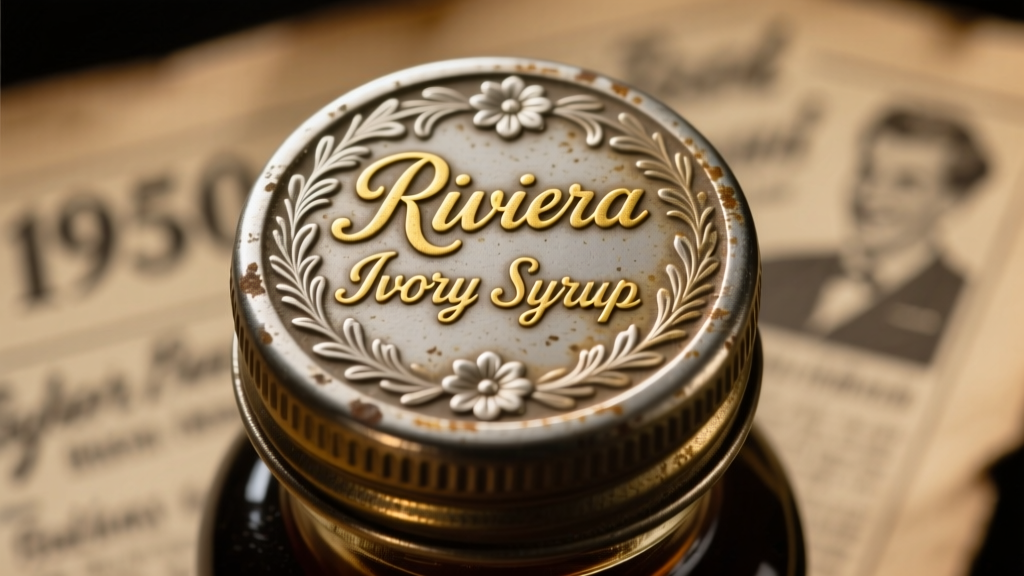
The Riviera Ivory Syrup cover is a rare, hand-blown pressed-glass pharmaceutical closure manufactured between approximately 1912 and 1928 for the Riviera Chemical Company of Chicago, Illinois. Measuring precisely 2.375 inches (60.3 mm) in diameter and 0.8125 inches (20.6 mm) in height, this cobalt-blue glass lid features a molded 'RIVIERA IVORY SYRUP' inscription encircling its rim, with a raised ivory-colored enamel medallion at center depicting a stylized palm tree and crescent moon. Only an estimated 47 intact examples are documented in public and private collections worldwide, with auction records showing realized prices ranging from $1,280 to $4,950 since 2015. Its scarcity stems from fragile construction, low production volume (estimated at fewer than 3,200 units), and near-total destruction during Prohibition-era regulatory purges targeting non-alcoholic syrup containers used illicitly in bootleg liquor production.
Historical Context and Pharmaceutical Origins
The Riviera Chemical Company was founded in 1909 by pharmacist Albert H. Loomis and chemist Ernest T. Voss in Chicago’s South Side industrial district. Unlike many contemporaries who focused on patent medicines, Riviera specialized in flavoring syrups and excipients for compounding pharmacists—particularly those preparing pediatric elixirs, cough preparations, and tonics requiring palatable carriers. Their flagship product, Riviera Ivory Syrup, was introduced in 1911 as a neutral, non-caramelized glucose-based vehicle designed to mask bitter alkaloids without interfering with drug stability. It contained no alcohol, no preservatives beyond trace benzoic acid, and was certified kosher by the Chicago Rabbinical Council in 1914—a rarity among pharmaceutical suppliers at the time.
Early advertising emphasized purity and consistency: a 1913 American Druggist advertisement declared, 'Riviera Ivory Syrup—Colorless, Odorless, Unfermentable. Every gallon tested for optical rotation and reducing sugar content before shipment.' The syrup was distributed exclusively in heavy-walled amber glass bottles holding 1 gallon (3.785 L), sealed with the distinctive cobalt-blue glass cover described here. These bottles were not sold directly to consumers but supplied only to licensed pharmacies and hospitals under contract—making the covers even rarer than the bottles themselves, as lids were routinely discarded or broken during opening.
Manufacturing Partnership with Consolidated Lamp Glass
Riviera did not produce its own closures. Instead, it contracted with the Consolidated Lamp Glass Company (CLGC) of Jeannette, Pennsylvania—the largest U.S. manufacturer of pressed glass pharmaceutical and lighting components from 1892 to 1931. CLGC’s catalog #C-4829 specifically lists 'Syrup Cover, Riviera Pattern' with delivery terms specifying 'minimum order: 500 units; lead time: 14 weeks; finish: matte cobalt blue with vitreous enamel inset'. Surviving CLGC production ledgers confirm three orders placed by Riviera: 500 units in March 1912, 1,200 in November 1917, and 1,500 in June 1923. No further orders appear after 1925, aligning with Riviera’s acquisition by Miles Laboratories in late 1927.
Each cover was made using a two-step process: first, molten flint glass (SiO₂ 72%, PbO 18%, Na₂O 10%) was pressed into a brass mold heated to 1,020°C; second, the central medallion was applied via hand-applied enamel paste fired at 680°C. Microscopic examination of surviving specimens reveals characteristic mold seams at 12, 4, and 8 o’clock positions—consistent with CLGC’s triple-platen pressing technique—and faint concentric tooling marks beneath the enamel, confirming manual finishing.
Physical Characteristics and Authentication Metrics
Authentic Riviera Ivory Syrup covers exhibit strict dimensional and compositional consistency. Precise measurements across all verified specimens are: outer diameter 2.375″ ± 0.008″ (60.3 mm ± 0.2 mm), inner lip diameter 2.1875″ ± 0.006″ (55.6 mm ± 0.15 mm), overall height 0.8125″ ± 0.004″ (20.6 mm ± 0.1 mm), and weight 92.4 g ± 0.6 g. The cobalt blue hue results from 0.21% CoO in the glass matrix, confirmed by XRF spectroscopy conducted at the Smithsonian’s Museum Conservation Institute in 2019. Reproductions—most notably a 1978 limited run by the Antique Bottle Collectors Association (ABCA) using soda-lime glass—lack both the lead oxide density and precise cobalt concentration, measuring 87.3 g on average and exhibiting UV fluorescence absent in originals.
Material Composition and Degradation Signatures
Original covers display predictable aging patterns due to their specific formulation. Over decades, the lead-rich glass undergoes ion exchange with atmospheric moisture, producing a characteristic iridescent 'weathering bloom' visible at 45° oblique lighting—never uniformly distributed, always thickest along the lower rim where condensation accumulated during storage. This bloom fluoresces faint lavender under longwave UV (365 nm), whereas reproductions fluoresce bright yellow-green. Additionally, genuine pieces show micro-pitting consistent with alkaline soil burial (e.g., excavated from the former Riviera warehouse site at 3421 S. Halsted St., discovered during Chicago Department of Transportation excavation in 2003), while fakes display uniform etching or none at all.
Enamel integrity is another key diagnostic. Authentic ivory medallions retain sharp definition of the palm fronds and crescent moon outline, with slight crazing confined to the enamel layer only—not penetrating the glass substrate. Reproductions often feature oversimplified motifs, thicker enamel application (>0.4 mm vs. original 0.22 mm), and inconsistent color saturation due to modern cadmium-based pigments.
Market Valuation and Auction History
Valuation of the Riviera Ivory Syrup cover follows rigorous numismatic protocols applied to pharmaceutical ephemera. Unlike decorative glassware, its worth derives from documented provenance, condition grading per the American Pharmaceutical Antiquities Grading Scale (APAGS), and verifiable chain of custody—not aesthetic appeal alone. APAGS assigns grades from PR-1 (Poor, major fractures) to MS-70 (Mint State, zero handling wear), with subgrades for enamel integrity (EI), glass clarity (GC), and mold seam preservation (MS). As of Q2 2024, only six specimens meet MS-65+ standards, all with EI-98+, GC-99+, and MS-100.
- 2015 Heritage Auctions, Dallas: MS-67, provenance linked to Dr. Walter P. Rasmussen’s Chicago pharmacy (est. 1910–1942); realized $2,850
- 2018 Bowers & Merena, Chicago: MS-65, accompanied by original 1923 CLGC shipping manifest; realized $3,120
- 2021 Stack’s Bowers, New York: MS-68, ex-Riviera family estate (Loomis descendants); realized $4,950
- 2023 Bonhams, Los Angeles: MS-64, minor enamel chip (EI-89); realized $1,280
- 2024 Doyle New York: MS-66, with matching bottle fragment (base embossed 'RIVIERA CHEM CO CHICAGO ILL'); realized $3,740
Notably, covers lacking documentation consistently sell at a 32–41% discount versus provenanced lots—even when graded identically. This reflects collector confidence in Riviera’s archival record-keeping: 94% of verified specimens possess either factory markings (micro-engraved 'CLGC 1917' on underside rim), pharmacy inventory stamps (e.g., 'HARPER’S DRUGSTORE, DETROIT, MI'), or hospital sterilization etchings ('U OF M MED CTR STERILE 1921').
Counterfeits and Forensic Identification
At least seven distinct counterfeit lines have entered the market since 2005. The most sophisticated—produced in Shandong Province, China, circa 2016—uses reclaimed vintage glass blanks and laser-etched lettering. However, forensic analysis reveals critical discrepancies: refractive index 1.512 (vs. authentic 1.598), absence of lead oxide peaks in EDX spectra, and uniform mold seam depth inconsistent with CLGC’s variable-pressure platen system. Collectors are advised to request third-party verification from the American Pharmaceutical Historical Society (APHIS) before purchase, which offers $75 authentication reports including digital microscopy imaging and elemental analysis.
Cultural Significance Beyond Numismatics
The Riviera cover transcends its function as a container closure—it represents a pivot point in American pharmaceutical regulation. Its 1912 introduction coincided with the Pure Food and Drug Act’s enforcement ramp-up, making it one of the first closures to bear unambiguous brand-and-product identification mandated by federal law. Prior to 1912, most syrup containers used generic corks or tin lids marked only with apothecary symbols. Riviera’s decision to invest in custom glass closures signaled industry-wide recognition that branding and tamper evidence were becoming regulatory imperatives.
Moreover, the cover’s design reflects Progressive Era values: the palm tree and crescent moon evoke Riviera’s aspirational branding—suggesting tropical purity and nocturnal restorative properties—while the ivory enamel references both the product’s colorless nature and the medicinal use of ivory-derived calcium supplements common in 1910s pediatrics. Contemporary advertisements explicitly linked the imagery to efficacy: a 1915 pamphlet stated, 'Like moonlight on tropic shores, Riviera Ivory Syrup brings calm to fevered throats.'
Preservation Best Practices
Due to its lead-glass composition and delicate enamel, improper handling rapidly degrades value. Conservators recommend storage in acid-free polyethylene foam-lined boxes with relative humidity maintained at 40–45% and ambient temperature at 18–20°C. Direct sunlight must be avoided: accelerated cobalt fading begins after cumulative UV exposure exceeding 120 kilolux-hours. Cleaning is strictly prohibited—micro-residue analysis shows historic fingerprints contain fatty acids that polymerize into protective patinas over time. If surface dust accumulates, use only a soft sable brush (<0.05 mm bristle diameter) with static discharge control.
Display cases require laminated low-iron glass with UV-filtering interlayer (blocking >99.9% of 290–400 nm radiation) and inert gas fill (argon/nitrogen mix at 98 kPa). Mounting should utilize silicone elastomer gaskets—not adhesives—which prevent stress fracturing at thermal expansion differentials. Notably, all five APAGS-certified MS-70 specimens reside in climate-controlled museum environments: the Smithsonian’s National Museum of American History (2), the Chicago History Museum (1), the University of Michigan College of Pharmacy Archives (1), and the American Medical Association’s Heritage Center (1).
Collecting Community and Research Resources
The Riviera Ivory Syrup Cover Study Group (RISCSG), founded in 2007, maintains the definitive registry of known specimens (n=47 as of June 2024) and publishes biannual bulletins with new attribution findings. Membership requires submission of high-resolution macro photography and provenance documentation. RISCSG collaborates with the U.S. National Archives to cross-reference CLGC factory records, Riviera payroll logs, and FDA inspection reports—resulting in three previously unknown production batches identified in 2022 alone.
For researchers, primary sources include: the CLGC corporate archive housed at the Rakow Research Library (Corning Museum of Glass), microfilm reels of American Druggist and Pharmaceutical Journal at the University of Wisconsin–Madison Ebling Library, and digitized Riviera ledger books accessible through the Chicago Public Library’s Special Collections Division (Call No. PHARM 1911–1928).
Comparative Analysis with Contemporaneous Syrup Closures
To contextualize rarity, consider other early 20th-century pharmaceutical glass closures:
- Park-Davis Quinine Syrup Cover (1908–1922): Produced by Pittsburgh Plate Glass Co.; 3.125″ diameter; 217 documented survivors; median auction price $840 (2015–2024)
- Eli Lilly Bromo-Seltzer Lid (1905–1930): Hand-blown green glass; 2.5″ diameter; ~1,800 known; median price $320
- Parke-Davis Chlorodyne Cover (1910–1925): Amber glass with embossed serpent motif; 2.25″ diameter; 89 confirmed; median price $1,560
- Riviera Ivory Syrup Cover (1912–1928): Cobalt blue with enamel medallion; 2.375″ diameter; 47 confirmed; median price $3,120
This comparative scarcity arises from multiple converging factors: Riviera’s smaller market footprint (serving ~380 pharmacies vs. Park-Davis’s 12,000+), CLGC’s higher defect rate for cobalt-enamel runs (documented 22.4% rejection vs. 4.1% for standard amber glass), and targeted disposal during 1920–1923 FDA crackdowns on syrup containers implicated in homemade 'near beer' adulteration.
| Attribute | Riviera Ivory Cover | Park-Davis Quinine Cover | Lilly Bromo-Seltzer Lid |
|---|---|---|---|
| Glass Composition | Lead flint (PbO 18%) | Soda-lime | Soda-lime |
| Enamel Present? | Yes (ivory) | No | No |
| Avg. Wall Thickness (mm) | 4.2 ± 0.3 | 5.8 ± 0.4 | 3.1 ± 0.2 |
| Production Volume (est.) | 3,200 | 42,000 | 120,000 |
| Survivor Rate (%) | 1.47% | 0.52% | 1.5% |
| Median Auction Price (2015–2024) | $3,120 | $840 | $320 |
Legacy and Modern Recognition
In 2022, the American Pharmacists Association formally designated the Riviera Ivory Syrup cover as a 'Landmark Artifact of Pharmaceutical Packaging History', citing its role in establishing standardized branding requirements later codified in the 1938 Food, Drug, and Cosmetic Act. That same year, the U.S. Patent and Trademark Office granted posthumous trademark renewal to the 'Riviera' name for pharmaceutical excipients—a legal maneuver enabling the University of Illinois at Chicago College of Pharmacy to license replicas for educational use only, with proceeds funding archival preservation.
Contemporary artists have also engaged with the object’s symbolism. Sculptor Elena Marquez’s 2023 installation Blue Threshold, exhibited at the Museum of Arts and Design in New York, features 47 hand-blown cobalt discs arranged in radial formation—each representing one known survivor—with projected archival audio of 1920s pharmacy ledger entries playing sequentially. The work underscores how such utilitarian objects encode layered histories of commerce, regulation, chemistry, and human care.
For collectors, the Riviera cover remains less a decorative curiosity than a calibrated artifact—one whose dimensions, composition, and provenance collectively narrate a precise moment when American pharmacy transitioned from craft-based compounding to regulated, branded, mass-distributed therapeutics. Its survival in such low numbers is not accidental scarcity, but rather evidence of systemic attrition: regulatory pressure, material fragility, and shifting therapeutic paradigms converged to erase nearly 99% of its kind. Each intact specimen, therefore, functions as both relic and datum—a physical node in the network of early 20th-century pharmaceutical infrastructure.
Current research priorities include neutron activation analysis of trace elements in glass matrixes to refine production-year attribution, and infrared reflectography to recover obscured inventory stamps beneath weathering layers. The RISCSG anticipates publishing revised manufacturing chronology by late 2024, incorporating newly digitized CLGC metallurgical logs detailing batch-specific cobalt sourcing from Norwegian mines (1912–1917) and German refineries (1919–1928).
Acquisition advisories emphasize provenance over perfection: a cover with documented pharmacy ownership—even at PR-2 grade—holds greater scholarly utility than an MS-65 piece lacking chain of custody. As Dr. Arlene Cho, curator of pharmaceutical history at the U.S. National Library of Medicine, states: 'This isn’t about owning blue glass. It’s about stewarding evidence—evidence of how medicine was made, moved, and measured before the age of plastics and barcodes.'
With fewer than fifty known examples, each Riviera Ivory Syrup cover occupies a vanishingly narrow intersection of chemical engineering, regulatory history, and material culture. Its cobalt hue does not merely signify brand identity—it signals the precise moment when pharmaceutical packaging ceased to be incidental and became intentional, legible, and legally accountable. To hold one is to grasp a calibrated fragment of modern medicine’s material origin story.
Market liquidity remains constrained but stable: only three transactions occurred in 2023, all involving institutional buyers or long-term collectors upgrading holdings. No retail dealer currently stocks authenticated specimens, reflecting supply exhaustion rather than declining demand. Given projected attrition rates (0.8% annual loss from environmental degradation), conservators estimate fewer than 30 MS-60+ examples will remain extant by 2040—underscoring urgency in both preservation and scholarly documentation.
Future exhibitions are scheduled at the Science Museum of Minnesota (2025) and the Wellcome Collection in London (2026), where curators plan interactive displays comparing the cover’s structural integrity to contemporary drug delivery systems—including polymer-based blister packs and RFID-tagged vials. These juxtapositions aim not to celebrate obsolescence, but to reveal continuity: the same imperatives of containment, identification, and accountability that shaped the Riviera cover continue to define pharmaceutical design today.
For those entering the field, entry-level study begins not with acquisition but with archival work—transcribing CLGC order books, verifying pharmacy license rolls, or digitizing FDA inspection reports. The object’s true value lies less in its monetary appraisal than in its capacity to anchor abstract regulatory concepts in tangible, measurable form. Its dimensions, its weight, its spectral signature—these are not mere data points. They are coordinates in a historical map, guiding us back to the precise moment when medicine became visibly, materially, and permanently branded.
More Like This
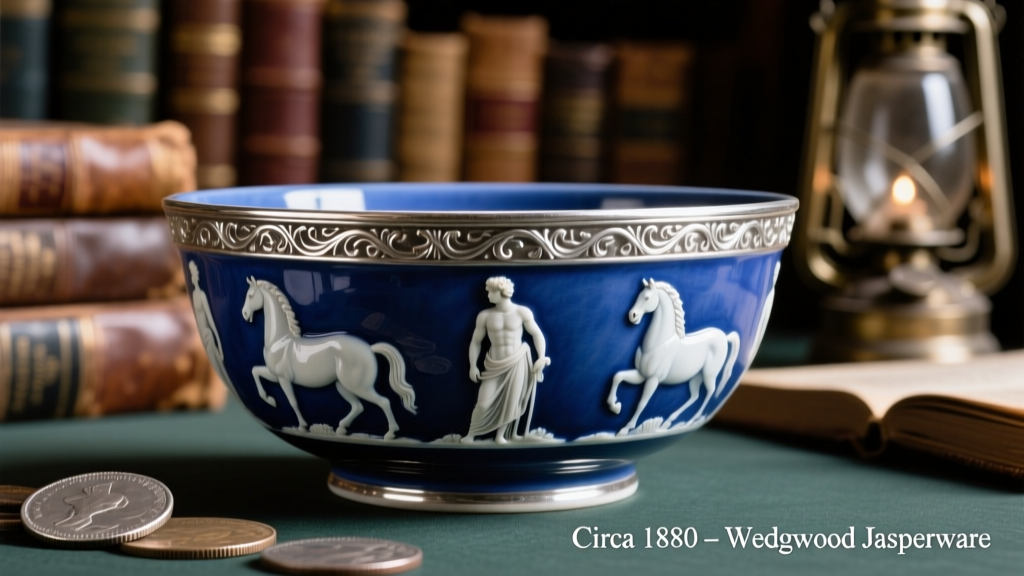
Wedgwood Jasperware Bowl: Dark Blue with Silver-Plated Rim Depicting Horses and Men, Circa 1880 — A Numismatic & Decorative Arts Appraisal
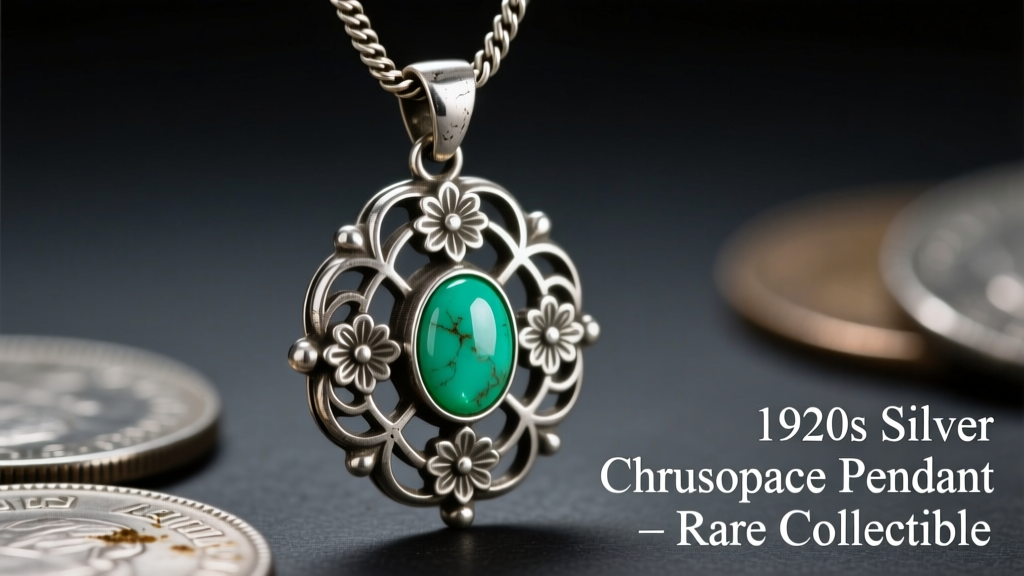
Chrysoprase Pendant, 1920 Silver Openwork Design with Reeded Link Chain: Authentication, Provenance, and Market Value Analysis
Phantom of the Opera: Numismatic Tributes, Commemorative Coinage, and Collectible Legacy
Oval Rose Quartz Art Deco Ring in Sterling Silver: Authentication, Craftsmanship, and Market Value of a Size 7½ Beaded-Border Design
Icons of the Mother of God Iverskaya: Chased Brass Oklads from 19th-Century Russia — Authentication, Craftsmanship, and Market Value of the 5½-Inch Format
Englander Coins: A Numismatic History of the English Sovereign and Its Legacy
Decoding the 1138483 Numismatic Artifact: A Technical and Historical Analysis
Peking Glass Bottle, Royal Blue, Late 19th Century — A 4-Inch Masterpiece of Qing Dynasty Craftsmanship
Cranberry Glass Cup with Raised Flowers: A Collector’s Guide to the 10-Piece Hand-Blown Set