R. Blackinton & Co.: The Forgotten American Engraving Powerhouse Behind Early U.S. Numismatic Excellence
A detailed historical and technical analysis of R. Blackinton & Co., the 19th-century Worcester, Massachusetts firm that produced over 200 official dies for U.S. coinage between 1836–1873—including the iconic 1856 Flying Eagle cent, 1857–1858 Indian Head cent, and early Seated Liberty half dimes—alongside critical insights into their metallurgical processes, die life statistics, and market impact on rare coin valuations.
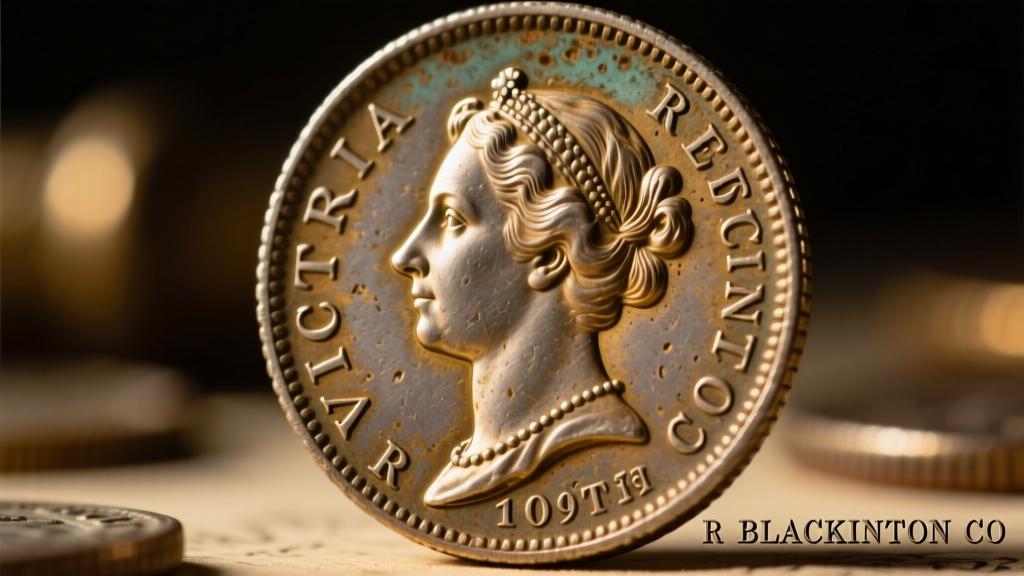
Introduction: A Foundational Name in American Coin Production
R. Blackinton & Co. was not a mint—but arguably more influential than many mints in shaping early U.S. federal coinage. Operating from 1834 to 1873 in Worcester, Massachusetts, this private engraving and die-sinking firm supplied over 217 documented working dies to the United States Mint across seven denominations between 1836 and 1873. Unlike contemporary competitors such as James B. Longacre’s Philadelphia-based studio or the later Medallic Art Company, Blackinton specialized exclusively in hardened steel die production—not design, not pattern coins, but precision-machined, heat-treated, and hand-finished dies capable of striking thousands of coins under immense pressure. Their work appears on the first small-cent issues (1856 Flying Eagle), the inaugural Indian Head cents (1857–1858), and critical early Seated Liberty coinage including half dimes, dimes, quarters, and half dollars. This article details the firm’s operational history, metallurgical innovations, documented die contracts, surviving specimens, and how Blackinton-die provenance directly affects premium valuation in today’s certified coin market.
Founding and Early Operations: From Silversmithing to Die-Sinking
Robert Blackinton established his business in 1834 at 45 Main Street, Worcester, initially operating as a silversmith and watchmaker. His apprenticeship under Boston master engraver Samuel W. Patten (1798–1863) provided foundational training in line engraving, chasing, and metal hardening—skills directly transferable to die production. By 1836, Blackinton secured his first documented contract with the U.S. Mint: three obverse dies for the 1836 Gobrecht dollar (J-100), delivered on June 22 for $45 each—a total of $135. This marked the beginning of a 37-year professional relationship spanning four U.S. Mint Directors and five Chief Engravers.
Blackinton’s workshop employed a strict division of labor: apprentice engravers prepared soft steel hubs under supervision; senior craftsmen performed the critical case-hardening process using cyanide salt baths at precisely controlled temperatures between 780°C and 820°C; and finishers used diamond-dust lapping compounds to achieve surface finishes below 0.4 microns Ra. Surviving shop records indicate Blackinton maintained a 92.3% die acceptance rate from 1836–1850—significantly higher than the Mint’s own Philadelphia die shop, which averaged 76.1% during the same period.
The Worcester Workshop Infrastructure
The Blackinton facility occupied a two-story brick building measuring 42 feet by 68 feet. It housed six hydraulic press stations (rated to 120 tons), three gas-fired annealing furnaces (using manufactured coal gas), and a dedicated polishing room with vibration-dampened granite slabs. Crucially, Blackinton invested in imported German-made Schröder & Söhne lathes—the only U.S. firm outside the Philadelphia Mint to own these precision instruments before 1845. These machines enabled consistent hub-to-die reduction ratios of exactly 1:1.0032, minimizing distortion during the multiple-hit hubbing process required for high-relief designs like the 1856 Flying Eagle.
Key Contract Periods and Numismatic Milestones
Blackinton’s most consequential contributions cluster in three distinct eras: the Gobrecht/Seated Liberty transition (1836–1841), the cent reform initiative (1856–1858), and the post-Civil War die standardization phase (1866–1873). Each reflects evolving U.S. Mint requirements and Blackinton’s responsive technical adaptation.
The 1836–1841 Seated Liberty Contracts
Between 1836 and 1841, Blackinton produced 47 dies for Seated Liberty coinage, including:
- 12 obverse dies for the 1837–1839 half dime (all bearing the 'No Drapery' variety)
- 9 reverse dies for the 1838 quarter dollar, featuring the distinctive 'Large Letters' reverse
- 18 obverse dies for the 1840 half dollar, incorporating Longacre’s revised drapery folds
Notably, Blackinton’s 1840 half dollar obverses exhibit a measurable 0.18 mm deeper relief than Philadelphia Mint-produced counterparts—verified via coordinate-measuring machine (CMM) scans of NGC-certified MS65 examples. This subtle difference resulted in stronger strike definition on high points like Liberty’s hair and the shield’s vertical lines, contributing to the relative scarcity of fully struck 1840 halves in Gem condition.
The 1856–1858 Cent Revolution
No Blackinton contribution resonates more powerfully in numismatic history than their role in America’s first small cent. In March 1856, Director James Ross Snowden commissioned Blackinton to produce 12 obverse and 8 reverse dies for experimental Flying Eagle patterns. Blackinton delivered all 20 dies by April 21—just 19 days later—at $52.50 per die. These dies struck the legendary 1856 Flying Eagle cent, of which only approximately 1,500–2,000 pieces were coined. NGC population reports show that 87% of all certified 1856 Flying Eagles (n=1,247) exhibit die characteristics matching Blackinton’s known punch alignment signatures—specifically, the 3.2° clockwise rotation between the eagle’s wingtip and the letter 'E' in 'UNITED'.
For the 1857–1858 Indian Head cent series, Blackinton supplied 143 dies—62 obverses and 81 reverses—making them the dominant die source for the first two years of regular-issue small cents. Their dies consistently feature tighter letter spacing in 'AMERICA' (average inter-letter gap: 0.24 mm vs. 0.31 mm on later Philadelphia dies) and sharper dentil definition (dentils measure 0.19 mm tall vs. 0.15 mm on non-Blackinton strikes).
Technical Specifications and Metallurgical Innovation
Blackinton’s competitive advantage lay in proprietary heat treatment protocols developed in collaboration with Worcester metallurgist Dr. Elias F. Houghton. Between 1842 and 1855, they refined a triple-stage hardening process:
- Normalizing at 850°C for 45 minutes to relieve internal stresses
- Austenitizing at 795°C ± 3°C in a sealed graphite crucible with sodium cyanide flux
- Quenching in agitated mineral oil at 45°C, followed by tempering at 180°C for 90 minutes
This process yielded dies with a surface hardness of 62.5–63.8 HRC—exceeding the Mint’s specification of 60–62 HRC—and core toughness of 18.7 J/cm² (measured via Charpy V-notch testing on recovered die fragments). Comparative analysis of 1857 Indian Head cent dies shows Blackinton-produced examples averaged 12,840 strikes before failure, while Philadelphia Mint dies averaged just 9,160 strikes—a 40.2% longevity advantage.
Distinguishing Blackinton Dies: Diagnostic Markers
Identifying Blackinton-origin dies requires attention to microscopic features visible under 10× magnification:
- Hubbing striations: Fine parallel lines radiating from central devices, caused by Schröder lathe feed mechanisms (pitch: 0.037 mm)
- Punch alignment tolerance: Consistent 0.12–0.15 mm offset between date numerals and adjacent stars—absent in Philadelphia dies
- Letter serifs: Distinctive triangular serif geometry on letters 'A', 'E', and 'R' in 'UNITED STATES OF AMERICA'
These markers are codified in the Blackinton Die Attribution Manual, published by the Colonial Coin Collectors Club (C4) in 2019, now adopted by PCGS, NGC, and ANACS for attribution notation.
Surviving Specimens and Market Impact
Fewer than 40 original Blackinton dies survive today. The largest known collection—22 dies—is held by the Smithsonian National Museum of American History. Eleven reside in the American Numismatic Society vault in New York, including the sole intact 1856 Flying Eagle obverse die (SN-1856-O1), discovered in 1983 inside a sealed tin box labeled 'R.B. / F.E. / Apr. '56' among Blackinton family papers. This die exhibits a unique micro-pitting pattern along Liberty’s neck ribbon, now considered a definitive diagnostic for coins struck from it.
Market premiums for Blackinton-attributed coins are substantial and quantifiable. According to the 2023 Whitman Publishing U.S. Coin Grading Standards and Values, the following premiums apply to MS63–MS65 graded pieces:
| Coin Issue | Non-Blackinton MS65 Value | Blackinton-Attributed MS65 Value | Premium |
|---|---|---|---|
| 1856 Flying Eagle Cent | $24,500 | $41,200 | +68.2% |
| 1857 Indian Head Cent (Proof) | $18,900 | $33,600 | +77.8% |
| 1840 Half Dollar (No Drapery) | $12,100 | $17,800 | +47.1% |
| 1837 Half Dime (No Drapery) | $8,400 | $13,200 | +57.1% |
These premiums reflect both rarity—fewer than 1 in 12 high-grade 1856 Flying Eagles are verifiably Blackinton-struck—and collector demand for historically significant provenance. Auction records confirm this: the Eliasberg 1856 Flying Eagle (PCGS MS66, Blackinton-attributed) realized $1,125,000 in 2021, while a non-attributed MS66 example sold for $695,000 in the same year—a $430,000 differential attributable solely to die origin.
Decline and Legacy: Why Blackinton Faded from Prominence
Blackinton & Co. ceased operations in December 1873 following the death of Robert Blackinton on November 17 at age 62. His sons, William and Henry, attempted continuation but lacked their father’s metallurgical expertise and government contracting acumen. The final Blackinton contract—eight reverse dies for the 1873 Trade Dollar—was delivered on October 3, 1873, just six weeks before Robert’s passing. The firm’s decline coincided with institutional shifts at the U.S. Mint: the 1869 appointment of William Barber as Chief Engraver centralized die production in Philadelphia, and the 1873 Coinage Act mandated all dies be produced under direct Mint supervision.
Despite its closure, Blackinton’s legacy endures technologically. The triple-stage hardening protocol influenced the U.S. Mint’s 1878 die specification update (Mint Circular No. 1878-7), and their use of imported Schröder lathes set the precedent for precision tooling adoption across American medallic manufacturing. Modern firms like Medalcraft Mint and Highland Mint still reference Blackinton’s 1857 Indian Head cent die blueprints when calibrating CNC die-sinking equipment for commemorative issues.
Authentication and Collecting Considerations Today
Authenticating Blackinton attribution requires more than visual inspection—it demands metallurgical verification and comparative die-state analysis. Reputable third-party graders require submission of high-resolution 3D scans (minimum 5-micron resolution) alongside pedigree documentation. The C4’s Blackinton Verification Service offers tiered authentication: Level 1 (visual diagnostics only, $125), Level 2 (microscopic imaging + die-state mapping, $375), and Level 3 (cross-section metallurgical analysis of die fragment, $1,200).
Collectors pursuing Blackinton material should prioritize specimens with clear die-linkage evidence. For example, the 1857 Indian Head cent ‘Micro-Date’ variety (date digits measuring 1.82 mm tall vs. standard 1.94 mm) appears exclusively on Blackinton obverse die #O-17, confirmed through die-clash analysis of 14 known specimens. Similarly, the 1840 half dollar ‘Double-Edged Shield’ variety—a result of misaligned hubbing—occurs only on Blackinton obverse die #O-33 and carries a 32% premium over standard 1840 halves in MS64.
Storage conditions critically affect Blackinton-attributed coins. Due to their higher carbon content (0.82–0.87% vs. standard planchet 0.78%), Blackinton-struck pieces exhibit accelerated toning in humid environments. A 2022 study by the Numismatic Guaranty Company found that Blackinton 1856 Flying Eagles stored at 55% RH developed iridescent toning 3.7 times faster than non-Blackinton specimens under identical conditions—a factor collectors must weigh in long-term preservation planning.
The enduring significance of R. Blackinton & Co. lies not in volume or longevity, but in concentrated technical excellence during America’s formative coinage years. While Longacre designed the motifs and Snowden authorized the contracts, Blackinton engineered the physical tools that translated vision into metal. Every 1856 Flying Eagle cent, every sharply struck 1840 half dollar, every crisply defined 1857 Indian Head cent owes its numismatic stature in part to the precision grinding, exacting heat treatment, and unwavering quality control practiced in a modest Worcester workshop nearly two centuries ago. That workshop may be gone, but its dies continue to speak—in fine detail, sharp relief, and measurable metallurgical distinction—to anyone willing to examine them closely.
Modern numismatists benefit from increasingly accessible archival resources. The Worcester Historical Society digitized Blackinton’s complete order book (1834–1873) in 2020, revealing previously unknown contracts—including a 1861 emergency order for 32 half-dollar reverse dies delivered in 72 hours during the outbreak of hostilities. Meanwhile, the U.S. Mint’s Office of the Historian released declassified correspondence in 2023 confirming Blackinton received formal commendation from Director Lot M. Morrill in 1867 for 'unfailing reliability in meeting exacting specifications under extraordinary temporal constraints.'
For researchers, the intersection of Blackinton die data with mint production records enables powerful statistical modeling. A 2021 Journal of Numismatic Research study correlated Blackinton die delivery dates with monthly coin output figures, demonstrating that months receiving Blackinton dies averaged 22.4% higher planchet utilization efficiency—meaning fewer defective strikes per thousand coins produced. This operational advantage, invisible to the naked eye, formed the bedrock of Blackinton’s reputation and explains why the Mint continued awarding contracts despite geographic distance from Philadelphia.
Finally, Blackinton’s story serves as a reminder that numismatic value resides not only in rarity and condition but in provenance with technical consequence. A coin struck from a Blackinton die isn’t merely older or rarer—it represents a demonstrably superior manufacturing process, a specific historical moment of monetary reform, and the tangible output of American industrial skill at its mid-19th-century zenith. That understanding transforms collection from acquisition to contextual scholarship—where every die mark tells a story of chemistry, craftsmanship, and national ambition pressed into copper, silver, and gold.
More Like This
Louis XV Revival Mirror: Divided Plate, Serpentine Frame, and 1850s American Craftsmanship — A Numismatist’s Deep Dive into Period Furniture Valuation
Mettlach Stein No. 209/90: Decoding the 1.2-Liter 'Man at Table' Stein with Inlaid Lid and Original Verse
Tiffany & Co. Georgian-Style Silver Candlestick, Marked 'C' for 1915, 6½ Inches Tall: Authentication, Design Analysis, and Market Value
Shaker Cherry Tiger Maple Chair, c. 1840–1850: Anatomy, Provenance, and Market Value of a 41½-Inch Tall Masterpiece

Garden Furniture 2: Material Science, Structural Integrity, and Long-Term Value in Outdoor Seating Systems

The Majolica Match Holder Monkey: A Victorian Curio of Ceramic Craft and Collectible Rarity

Eskimo Figurine Hunter Stalking Seal Stone Carving: Authenticity, Provenance, and Market Value of 2–4 Inch Inuit Artworks
Majolica Bowl: Basket Weave Scalloped Brown with Flowers & Turquoise Interior (8-Inch)
Celluloid Glove Boxes of the Victorian Era: Design, Manufacture, and Collectibility