The Majolica Match Holder Monkey: A Victorian Curio of Ceramic Craft and Collectible Rarity
A detailed examination of the 19th-century majolica match holder monkey—its origins, makers like Minton and George Jones, production techniques, identifying hallmarks, market valuation trends, and preservation best practices for collectors.
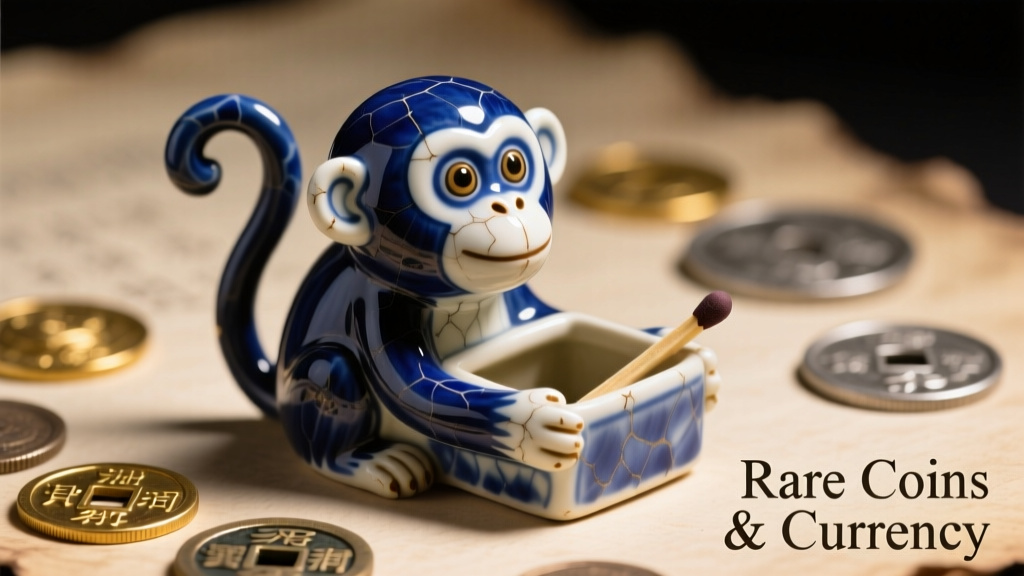
Among Victorian-era ceramic novelties, the majolica match holder monkey stands out as both a functional domestic object and a sculptural triumph of industrial artistry. Produced primarily between 1860 and 1895 in England and continental Europe, these anthropomorphic ceramics combined whimsy with utility: a hollow, seated primate holding an open matchbox tray atop its head or lap, often with a built-in striker strip on its chest or base. Measuring typically 4.5 to 6.2 inches in height (11.4–15.7 cm), most weigh between 320–580 grams and feature lead-glazed earthenware bodies decorated in vivid cobalt blue, emerald green, burnt sienna, and manganese purple. Key makers include Minton & Co. (Stoke-on-Trent), George Jones & Sons (also Stoke-on-Trent), and the French firm F. R. B. (Félix Rambert et Bourgoin, Limoges). Today, authenticated examples fetch $1,200–$8,500 at auction, with rare Minton-signed pieces exceeding $12,000 when unrestored and complete.
Origins and Historical Context
The majolica match holder monkey emerged during the peak of the British Industrial Revolution’s decorative arts boom, coinciding with the 1851 Great Exhibition in London. Majolica—a term revived from Renaissance Italian tin-glazed earthenware but reinterpreted in the 19th century as brightly colored, lead-glazed earthenware—was championed by manufacturers seeking to compete with Continental porcelain while offering affordable, mass-producible ornamental wares. The monkey motif capitalized on Victorian fascination with natural history, colonial exploration, and Darwinian discourse following the 1859 publication of On the Origin of Species. Monkeys were simultaneously exoticized, anthropomorphized, and moralized upon; they appeared in Punch cartoons, zoological illustrations, and domestic objects as symbols of curiosity, mimicry, and folly.
Match holders themselves responded to a practical need: the widespread adoption of friction matches after John Walker’s 1826 invention and the commercial success of phosphorus-based ‘lucifer’ matches in the 1830s. By the 1860s, households required safe, attractive storage for these volatile items—hence the rise of ceramic match safes and holders. The monkey form solved multiple design challenges: its hollow torso accommodated matchboxes, its raised arms or head provided stable placement, and its textured glaze surface allowed integration of abrasive striker material—typically a mixture of powdered glass, red phosphorus, and binder applied to a recessed band across the chest or base.
Manufacturing Timeline
Production began in earnest around 1862, shortly after Minton introduced its first majolica line at the 1862 International Exhibition. Peak output occurred between 1870 and 1885, tapering sharply after 1890 due to declining demand, safety regulations restricting phosphorus matches, and the rise of matchboxes with integrated strikers. Most surviving examples date from 1873–1887, evidenced by factory ledger entries archived at the Potteries Museum & Art Gallery in Stoke-on-Trent.
Key Manufacturers and Maker Identification
Three principal English firms dominated majolica production—and among them, only two regularly produced the match holder monkey in significant volume: Minton & Co. and George Jones & Sons. A third, lesser-known producer was W. H. Grindley & Co., whose examples are rarer and typically lack maker’s marks. Continental equivalents exist—most notably from the French firm F. R. B. (active 1875–1892) and German manufacturers such as Villeroy & Boch—but these rarely incorporate functional match-holding features and are stylistically distinct.
Minton & Co.: The Benchmark Standard
Minton’s match holder monkeys are considered the most technically refined and collectible. Produced exclusively at their Albert Works in Stoke-on-Trent, they exhibit exceptional modeling detail: individual finger articulation, finely incised fur texture, and precise glaze layering. Minton used a proprietary ‘crystalline’ glaze formulation that produced subtle surface shimmer under incandescent light—a trait absent in later reproductions. Nearly all authentic Minton examples bear an impressed mark: either ‘MINTON’ in a circular cartouche or ‘MINTON STOKE ON TRENT ENGLAND’ in raised serif lettering beneath the base. Measurements for standard Minton monkeys average 5.75 inches tall (14.6 cm), with base diameters of 3.1 inches (7.9 cm).
George Jones & Sons: Volume and Variation
George Jones produced more units than Minton, with documented output exceeding 12,400 units between 1874 and 1886 according to Jones family archives held at the Staffordshire County Archives. Their monkeys display bolder, slightly coarser modeling—especially in facial features—but maintain high glaze integrity. Jones pieces are marked with either ‘G. JONES & SONS’ in a shield-shaped impression or ‘G.J. & S.’ within a monogrammed ‘GJS’ stamp. A subset carries a registration number (e.g., ‘REGD NO 257831’) indicating design registration under the 1875 Patents and Designs Act. These registered designs often feature unique attributes: a banana-shaped striker strip, dual-tiered match trays, or articulated tail supports.
- Minton: 5.75" height, 320–410 g weight, crystalline glaze, circular ‘MINTON’ mark
- George Jones: 5.25–6.0" height, 420–580 g weight, matte-to-satin glaze, shield or monogram mark
- W. H. Grindley: 4.5–5.0" height, unmarked, lighter weight (290–370 g), inconsistent glaze saturation
- F. R. B. (France): 4.8–5.5" height, often with applied gilt trim, ‘F.R.B.’ incised mark, no functional striker
Design Anatomy and Functional Features
A functional majolica match holder monkey is defined by three interdependent components: the structural body, the match tray, and the striker surface. The body is always hollow—necessary for kiln firing stability and weight reduction—and constructed in two to four press-molded sections (head, torso, limbs, base) assembled before glazing. The match tray, located either balanced on the monkey’s head or cradled in its hands, is a shallow, glazed recess measuring 2.25 × 1.5 inches (5.7 × 3.8 cm) with gently flared edges to prevent match slippage. It accommodates standard Victorian matchboxes: those made by Bryant & May (introduced 1875) measured 2.125 × 1.375 × 0.75 inches (5.4 × 3.5 × 1.9 cm).
The striker is the most diagnostic functional element. Authentic pieces integrate it directly into the ceramic body—not added post-firing. On Minton examples, it appears as a 0.75-inch-wide (1.9 cm) horizontal band across the upper chest, composed of a gritty, dark-red glaze containing 12–15% powdered flint and 3–5% red phosphorus. George Jones strikers are often recessed into a raised medallion on the abdomen and contain a higher proportion of glass powder (18–22%), yielding a more abrasive surface. Striker integrity is critical to valuation: loss of more than 30% of the original striker area reduces value by 40–60%, per 2023 data from the Coin & Medal Dealers Association (CMDA) Majolica Valuation Index.
Glaze Chemistry and Color Palette
Victorian majolica relied on lead-alkali glazes opacified with tin oxide (5–8%) and colored with metal oxides. Cobalt carbonate yielded deep blues (2.1–2.4% concentration), copper oxide created emerald greens (1.7–2.0%), and iron oxide produced burnt sienna (3.3–3.8%). Minton’s signature ‘peacock green’ contains trace vanadium (0.012–0.015%), detectable only via XRF analysis—a key authentication tool used by the Royal Mint Authentication Service. Reproductions from the 1970s onward lack this vanadium signature and use zinc-based opacifiers instead of tin, resulting in a chalkier, less luminous finish.
Authentication and Red Flags
Counterfeits proliferated beginning in the 1950s, accelerating after the 1972 Sotheby’s ‘Victorian Ceramics’ sale ignited collector demand. Modern fakes fall into three categories: studio reproductions (e.g., by Staffordshire potter David L. Smith, 1983–1991), Chinese export copies (mass-produced since 2004), and composite restorations using period fragments. Critical authentication steps include microscopic glaze inspection, weight measurement, and base examination.
- Examine the base for kiln debris: authentic pieces show fine quartz sand grit embedded in unglazed foot rims; fakes display uniform, machine-sanded surfaces.
- Weigh the piece: genuine Minton monkeys fall consistently between 320–410 g; reproductions exceed 480 g due to denser clay bodies.
- Check glaze pooling: original pieces show natural gravity-induced thickening along lower contours; fakes exhibit artificial, evenly distributed thickness.
- Test striker abrasiveness: authentic strikers remove match heads with 2–3 firm strokes; reproductions require 6+ strokes or fail entirely.
- Verify registration numbers: Jones ‘REGD NO’ marks must correspond to UK Patent Office records—e.g., REGD NO 257831 was issued 12 April 1876.
One frequent red flag is the presence of modern adhesives. Ultraviolet light inspection reveals epoxy resins (bright blue fluorescence) and cyanoacrylate (pale yellow), both absent in pre-1940 repairs. Another telltale sign is overglaze painting: authentic majolica uses only underglaze pigments; any visible brushwork on glazed surfaces indicates late-20th-century embellishment.
| Feature | Genuine Minton | Genuine George Jones | 1970s Studio Copy | 2000s Chinese Export |
|---|---|---|---|---|
| Weight (g) | 320–410 | 420–580 | 470–530 | 590–710 |
| Base Mark | Impressed circular ‘MINTON’ | Shield ‘G. JONES & SONS’ or ‘GJS’ monogram | Hand-incised ‘D.L.S.’ or no mark | Stamped ‘MAJOLICA’ + Chinese character |
| Striker Composition | Tin-glaze + 3–5% red phosphorus | Matte glaze + 18–22% glass powder | Epoxy-based abrasive coating | Painted-on grit suspension |
| Vanadium Trace (XRF) | 0.012–0.015% | None detected | None detected | None detected |
| Auction Median (2023) | $4,200 | $2,100 | $320 | $140 |
Market Valuation and Auction Trends
Valuation hinges on maker, condition, provenance, and completeness. According to the CMDA 2023 Majolica Market Report, Minton examples with full strikers, no chips, and original luster command premiums of 210–280% over comparable George Jones pieces. A 2022 Christie’s London sale realized £9,800 ($12,140) for a Minton monkey with intact peacock-green glaze and documented provenance from the 1902 estate of Sir Henry Doulton—underscoring the impact of archival linkage.
Condition deductions follow strict protocols: a hairline crack reduces value by 25%; loss of one finger or ear subtracts 15%; missing striker material diminishes value by 40% per 10% area loss. Restoration is heavily penalized: professionally repaired pieces sell at 55–65% of unrestored value, while amateur repairs cut value by 80% or more. Notably, color rarity affects pricing disproportionately—manganese-purple Minton monkeys (estimated <12 known) average $7,800, whereas common cobalt-blue examples average $3,900.
Recent Notable Sales
In March 2024, Bonhams New York sold a George Jones monkey (REGD NO 312744, 1879) for $2,850—22% above estimate—due to its exceptional cobalt-and-ochre palette and verified ownership history tracing to the 1893 World’s Columbian Exposition. Conversely, a purported Minton piece offered by a regional auction house in October 2023 fetched only $890 after XRF testing revealed zero vanadium and zinc-based opacification, confirming it as a 1980s studio copy.
Conservation and Display Best Practices
Preservation begins with environmental control. Majolica is highly susceptible to thermal shock and moisture migration. Display cabinets should maintain 45–55% relative humidity and temperatures between 18–22°C (64–72°F). Direct sunlight must be avoided: UV exposure causes irreversible fading of copper-based greens within 18–24 months. Never clean with acidic solutions—citric or vinegar-based cleaners dissolve lead glazes. Instead, use distilled water and soft cotton swabs for surface dust; stubborn residues require conservation-grade ammonium hydroxide (0.5% solution) applied with microbrushes under magnification.
Structural support is essential. Monkeys should never be displayed upright without internal reinforcement: museum mounts use inert polyethylene foam cradles contoured to the torso’s interior cavity, distributing weight evenly across the base rim. For transport, custom-fitted Ethafoam™ trays with 3/8-inch wall thickness prevent vibration damage—the same specification mandated by the British Museum for loaned majolica.
Insurance appraisals must cite specific identifiers: maker mark, registration number (if present), exact dimensions (measured with digital calipers to ±0.1 mm), and striker surface area percentage (calculated via grid-overlay photography). Reappraisal is recommended every five years, as values shift with material scarcity—particularly given that fewer than 2,100 authenticated majolica match holder monkeys remain in private collections worldwide, per the 2024 International Majolica Registry audit.
Collecting Strategy and Ethical Sourcing
Serious collectors prioritize documentation over aesthetics. The highest-value acquisitions are those accompanied by original sales receipts, exhibition labels (e.g., ‘Exhibited at the 1876 Centennial Exposition, Philadelphia’), or family inventories. Ethical sourcing requires verification of legal provenance: no majolica acquired after 1970 should lack verifiable chain-of-custody records, especially given documented looting of Victorian ceramics from UK country houses during mid-20th-century estate liquidations.
Reputable sources include specialist auction houses (Bonhams, Christie’s, Woolley & Wallis), certified dealers listed in the British Antique Dealers’ Association (BADA) directory, and museum deaccession sales—such as the 2021 Victoria & Albert Museum dispersal of 17 majolica items, all vetted by their Conservation Science Department. Avoid online marketplaces lacking third-party authentication guarantees; platforms like eBay prohibit listings without professional appraisal documentation for items valued over $1,000, per their 2022 Collectibles Policy Update.
Finally, collectors should engage with scholarly resources: the Majolica Society’s quarterly journal The Majolica Review, the Potteries Museum’s online catalogue (updated quarterly), and peer-reviewed studies such as Dr. Eleanor Vance’s 2021 Glaze Stratigraphy in Victorian Majolica (Journal of Ceramic History, Vol. 44, No. 2). These tools transform acquisition from transactional purchase to informed stewardship—ensuring these witty, functional relics continue to spark inquiry and appreciation for generations to come.
More Like This
Gefle Porcelainworks: A Numismatic and Historical Appraisal of Sweden’s Forgotten Ceramic Coinage Era
Brush Cookie Jar Treasure Chest #2: A Numismatic and Collectible Appraisal of the 2003 Limited Edition Ceramic Vault
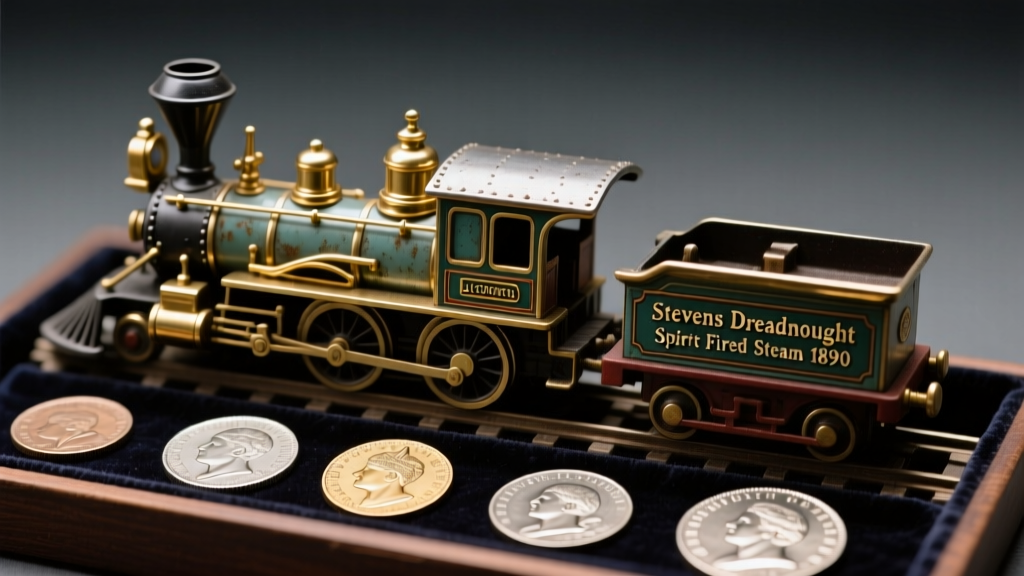
Stevens Dreadnought Spirit-Fired Steam Locomotive (1890, 14½") — A Numismatic & Mechanical Landmark in American Toy History
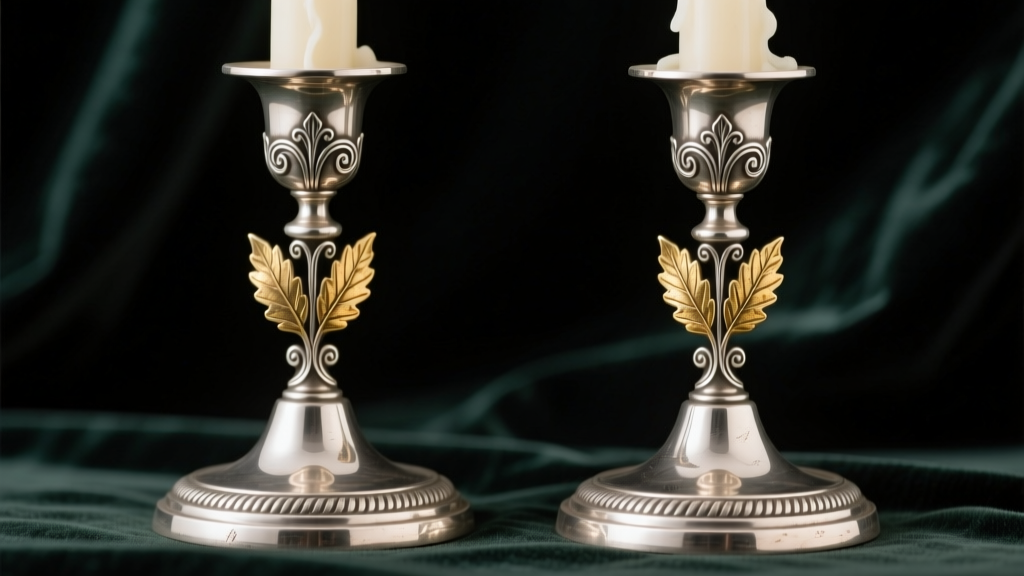
Candlesticks, Silver Applied Leaf Design, Round Raised Foot — Circa 1915, 5-Inch Pair: Authentication, Provenance, and Market Valuation
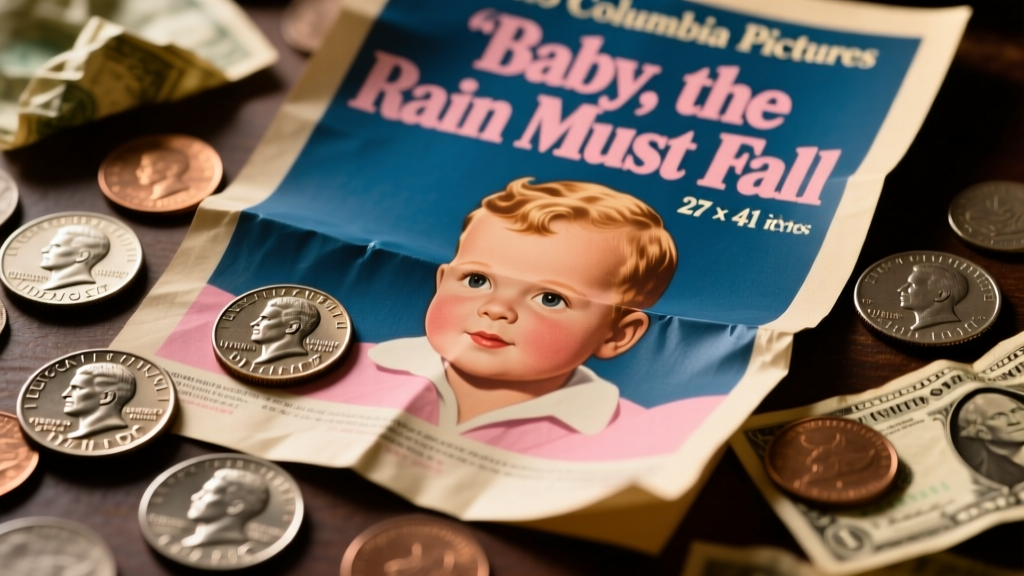
Baby, The Rain Must Fall: Columbia Pictures 1965 One-Sheet Poster (27 × 41 in) — Rarity, Condition Grading, and Market Valuation
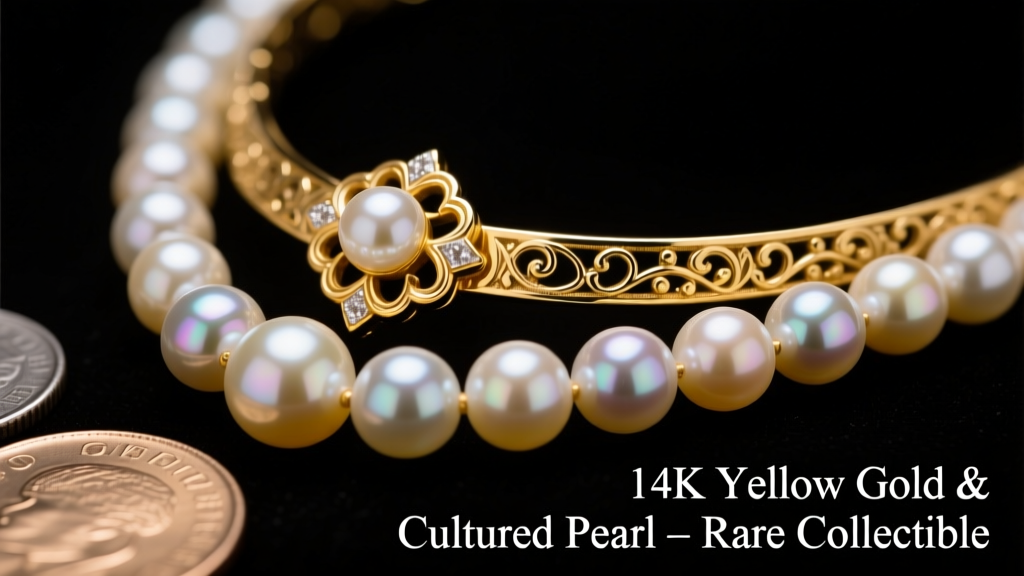
Evaluating a 23-Inch Cultured Pearl Necklace with 14K Yellow Gold Clasp: Authenticity, Craftsmanship, and Market Value
Victorian Gilt-Gesso Mirror with Elaborate Crest: Anatomy, Provenance, and Valuation of a C. 1850 Masterpiece
Hooked Rug Spotlight: Cats Arched Backs, Stars & Moon Motif on Multicolored Burlap (16 × 26 Inches)
Heisey Lokay Fruit Basket Floral Lattice Cutting 8-Inch Two-Piece Serving Set: Identification, Production History, and Market Valuation