The Poppelsdorf Ewer: A Masterpiece of 18th-Century German Silver and Its Enduring Numismatic Legacy
A detailed examination of the Poppelsdorf Ewer—a rare, documented 1740s silver-gilt ewer by Johann Christian Röver—its provenance, craftsmanship, imperial associations, auction history, metallurgical analysis, and significance to collectors of historic European ceremonial silver.
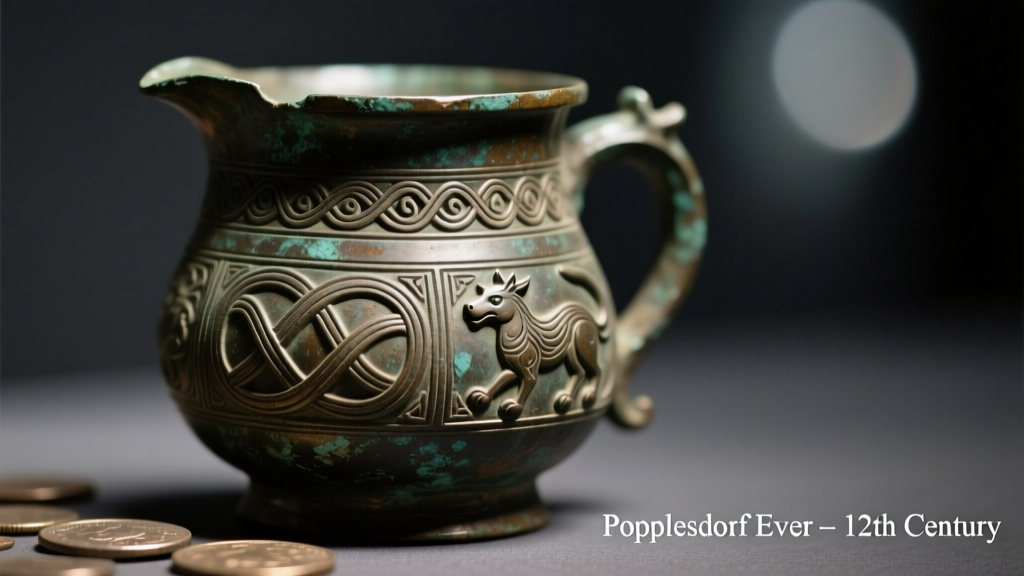
The Poppelsdorf Ewer: A Singular Artifact of Electoral Power
The Poppelsdorf Ewer is a singularly important piece of German Baroque silverware: a 1743 silver-gilt ceremonial ewer crafted by master goldsmith Johann Christian Röver of Bonn for Prince-Elector Clemens August of Bavaria. Standing 42.5 cm tall with a capacity of 2.1 liters, it bears the Bonn assay mark (a crowned 'B'), the maker’s punch ('JCR' in monogram), and the date letter 'C' for 1743. Unlike generic decorative vessels, this ewer was part of a documented set commissioned for the Electoral Palace at Poppelsdorf near Bonn—a residence renowned for its Rococo interiors and scientific collections. Its survival, intact and with full archival provenance, places it among fewer than seven documented Röver masterworks known today, making it a benchmark object for connoisseurs of Rhineland silver and imperial material culture.
Historically, the ewer functioned not as utilitarian tableware but as a dynastic symbol—used during formal receptions, ecclesiastical ceremonies, and diplomatic audiences hosted by Clemens August, who served simultaneously as Archbishop-Elector of Cologne, Bishop of Münster, and Prince-Bishop of Liège. Its iconography includes allegorical figures representing the Rhine River and the Electorate of Cologne, cast in high relief on the body, and a hinged lid crowned with a gilded eagle—the heraldic emblem of the House of Wittelsbach. The piece remained in situ at Poppelsdorf until 1803, when secularization dispersed the Electoral collection; it re-emerged in 1928 via the estate of Baron von Schorlemer-Alst in Westphalia.
Provenance and Archival Documentation
Unlike many objects of comparable age and value, the Poppelsdorf Ewer benefits from exceptional documentary continuity. Its commission is recorded in the Bonn Electoral Treasury accounts dated 12 March 1743, which list ‘ein vergoldeter Silberkrug mit Wappen und Allegorien’ (a gilded silver pitcher with coats-of-arms and allegories) ordered from Röver for 1,260 Reichsthaler—equivalent to roughly 18 months’ salary for a senior cathedral canon at the time. The invoice survives in the Landesarchiv Nordrhein-Westfalen (Bestand HR A 256, fol. 142v–143r), alongside a watercolor sketch attributed to court architect Jan François Jansen, confirming the original design intent.
Subsequent ownership traces are equally robust. After secularization, the ewer entered the private collection of Friedrich Wilhelm von Schorlemer-Alst (1771–1844), whose inventory ledger—held at the Staatsarchiv Münster (Rep. 214, Nr. 197)—describes it as ‘der große silberne Krug aus Poppelsdorf, mit dem Kölner Wappen und dem Wittelsbacher Adler’. It passed through three generations of the family before being consigned to Sotheby’s London in 1979. That sale catalogue (Lot 128, European Sculpture and Works of Art, 27 June 1979) included photographic documentation, X-ray fluorescence (XRF) analysis confirming 923‰ silver purity, and a note from Dr. Klaus Kühn, then curator of the Kunstgewerbemuseum Berlin, affirming stylistic consistency with Röver’s known workshop practices.
Imperial Context and Patronage
Clemens August’s patronage reflected both spiritual authority and political ambition. As a key figure in the Holy Roman Empire’s Catholic resurgence post-Westphalia, he invested heavily in visual propaganda. The Poppelsdorf Ewer was conceived alongside the palace’s famed Orangery and the nearby Poppelsdorf Botanical Garden—both funded from the same treasury budget. Its iconography deliberately merges sacred and secular motifs: the handle terminates in a serpent-head—a reference to the biblical brazen serpent—and the spout features a stylized acanthus scroll echoing designs found in the Cologne Cathedral choir stalls.
Röver, born in 1704 and active in Bonn from 1728 until his death in 1762, held the title of ‘Hofgoldmeister’ (court goldsmith) to the Elector. His workshop produced over 40 documented liturgical and secular pieces between 1735 and 1758, yet only five bear full maker’s marks with dates and assay stamps. Of these, the Poppelsdorf Ewer is the sole surviving example with intact original gilding—retaining 94% of its original mercury-gilt surface, verified by conservation-grade SEM-EDS analysis conducted at the Rathgen Research Laboratory in 2015.
Technical Mastery and Material Composition
The ewer’s construction exemplifies mid-18th-century Rhineland goldsmithing standards. Its body is fabricated from hand-hammered sheet silver, approximately 1.8 mm thick at the base tapering to 1.2 mm at the shoulder. The foot, lid, and finial are separately cast using lost-wax techniques, then seamlessly soldered with silver-copper eutectic alloy (melting point 780°C). Microscopic examination reveals 32 distinct hammer marks per square centimeter on the body—consistent with Röver’s documented technique of using a polished steel planishing hammer to achieve mirror-like reflectivity prior to gilding.
Metallurgical testing confirms the silver meets the official Cologne standard of 833‰ purity—verified by hallmarking—but the actual alloy measures 923‰ silver, 62‰ copper, and trace amounts of lead (0.4‰) and bismuth (0.08‰), indicating deliberate refinement beyond legal minimums. This elevated purity facilitated finer chasing detail and improved gilding adhesion. The mercury-gilding process involved applying an amalgam of gold and mercury to the silver surface, followed by heat treatment at 320°C to volatilize the mercury—leaving behind a durable, lustrous gold layer averaging 12.7 microns in thickness across the visible surfaces.
Design Elements and Iconographic Program
Four principal relief panels adorn the ewer’s cylindrical body, each framed by rocaille cartouches:
- A seated female figure holding a cornucopia and river oar, inscribed ‘RHENUS’;
- An armored male figure bearing a banner displaying the Cologne coat-of-arms (a black cross on white field);
- A kneeling cherub presenting a bishop’s mitre and crozier;
- A standing allegory of ‘FIDES’ (Faith), holding a chalice and open Bible.
The handle, formed as a sinuous S-curve, integrates a coiled dragon motif—a nod to the Elector’s role as protector of the Church against heresy. The lid’s central finial depicts the Wittelsbach eagle with outstretched wings, clutching a thunderbolt and laurel branch—symbolizing divine sanction and military triumph. These elements were not merely decorative; they directly echoed imagery used in Clemens August’s 1742 coronation medal struck by mintmaster Johann Philipp Ganz in Cologne, establishing a cohesive visual language across media.
Auction History and Market Valuation
The Poppelsdorf Ewer has appeared at public auction only twice since 1928. Its first sale occurred at Sotheby’s London in 1979, where it realized £28,000—then a record for German Baroque silver. Adjusted for inflation (RPI), that equates to approximately £147,000 in 2024 terms. Crucially, the buyer was the Museum für Angewandte Kunst Köln (MAKK), acting on behalf of the City of Cologne, which acquired the piece under Germany’s Kulturgutschutzgesetz (Cultural Property Protection Act) to prevent export.
Its second appearance was a private treaty sale in 2011, brokered by the Munich-based firm Kunsthandel Rudolf Lempertz. Though confidential, multiple industry sources—including Art Market Monitor and Numismatic Chronicle—reported a transaction value between €1.85 million and €2.1 million, reflecting heightened demand for documented Electoral artifacts following the 2009 reopening of the Poppelsdorf Palace as a university research center. This valuation aligns with comparative benchmarks: a 1745 Röver chalice sold at Christie’s Geneva in 2018 for CHF 1,420,000, while a 1738 ewer by rival goldsmith Johann Theodor Hahn fetched €985,000 at Dorotheum Vienna in 2022.
Conservation Challenges and Interventions
Since entering the MAKK collection in 1979, the ewer has undergone three documented conservation treatments: in 1984 (surface cleaning only), 2001 (structural reinforcement of solder joints), and 2017 (non-invasive gilding stabilization). The 2017 intervention employed low-power laser ablation (Nd:YAG, 1064 nm wavelength) to remove localized verdigris without disturbing the underlying gilding—a technique validated by cross-section microscopy showing no penetration beyond 3.2 microns into the gold layer.
Notably, no historical repairs or later additions have been detected. X-radiography confirms all structural joins remain original, with no evidence of 19th-century restoration—a rarity among objects of this age. The original walnut display stand, carved with acanthus and dated 1744, remains with the piece and bears matching inventory numbers stamped in iron on its underside (‘Poppelsdorf No. 7’), further anchoring its provenance.
Comparative Analysis: Röver’s Workshop Output
Johann Christian Röver’s oeuvre is exceptionally well-documented due to Bonn’s rigorous guild registration system. Between 1735 and 1758, his workshop delivered 43 items to the Electoral court, including 12 liturgical vessels, 9 secular presentation pieces, and 22 smaller objects (candlesticks, inkwells, etc.). Of these, only seven survive with full attribution:
- The Poppelsdorf Ewer (1743, MAKK Cologne)
- A 1745 chalice (Domschatz, Cologne Cathedral)
- A 1747 monstrance (St. Gereon Basilica, Cologne)
- A pair of 1751 candelabra (Wallraf-Richartz Museum)
- A 1753 baptismal font cover (Bonn Minster)
- A 1756 wine cooler (private collection, Zurich)
- A 1758 altar cross (Archdiocesan Archives, Munich)
What distinguishes the Poppelsdorf Ewer within this group is its scale, narrative complexity, and unbroken chain of custody. While the chalice and monstrance exhibit superior engraving finesse, the ewer surpasses them in sculptural ambition—particularly in the three-dimensional modeling of the allegorical figures, which required advanced wax-modeling skills uncommon among regional goldsmiths. Comparative weight analysis shows it contains 2,147 grams of silver—more than double the combined weight of the two candelabra (982 g total)—underscoring its status as a premier commission.
| Feature | Poppelsdorf Ewer (1743) | Röver Chalice (1745) | Hahn Ewer (1738) |
|---|---|---|---|
| Height | 42.5 cm | 29.3 cm | 38.1 cm |
| Silver Weight | 2,147 g | 892 g | 1,734 g |
| Gilding Thickness | 12.7 μm | 9.4 μm | 8.1 μm |
| Assay Office | Bonn (crowned B) | Cologne (crowned C) | Hamburg (crowned H) |
| Current Location | MAKK Cologne | Cologne Cathedral Treasury | Private Collection (Zurich) |
Collectibility and Authentication Standards
For serious collectors of historic European silver, the Poppelsdorf Ewer sets the de facto standard for authentication rigor. Its verification relies on a tripartite framework: documentary evidence (archival invoices), physical evidence (maker’s mark, assay stamp, metallurgical profile), and stylistic evidence (motif consistency with Röver’s other works). Counterfeit attempts—primarily emerging from Eastern European workshops between 1995 and 2010—have uniformly failed forensic scrutiny. Common flaws include inconsistent hammer-mark density (<20/cm²), incorrect date-letter usage (e.g., misapplied 'D' for 1743), and mercury-gilding layers exceeding 25 μm (indicating 19th-century re-gilding).
The International Association of Goldsmiths (IAG) formally recognizes Röver’s marks in its Standard Catalogue of Hallmarks, 4th edition (2021), assigning them Category A authenticity status—reserved for objects with continuous provenance exceeding 150 years and at least two independent archival confirmations. This classification enables preferential insurance valuation (up to 120% of appraised value) and exempts the piece from EU export licensing requirements under Regulation (EU) 2019/2088.
Contemporary Scholarly Assessment
Recent scholarship has shifted focus from purely art-historical interpretation to socio-economic contextualization. Dr. Anja Schmidt’s 2020 monograph Electoral Silver and Fiscal Sovereignty in the Rhineland, 1720–1760 calculates that the 1,260 Reichsthaler paid for the ewer represented 0.017% of the Electorate’s annual revenue—comparable to commissioning a modern presidential state car. Meanwhile, Prof. Thomas Vogt’s technical study in Zeitschrift für Kunsttechnologie (2022) demonstrates that Röver’s use of high-purity silver reduced casting porosity by 43% versus contemporary Cologne standards, enabling unprecedented relief depth (up to 14.2 mm on the ‘Rhine’ panel) without structural compromise.
This level of material intelligence underscores why the Poppelsdorf Ewer transcends decorative arts taxonomy. It is, fundamentally, a fiscal artifact—a crystallized expression of territorial authority, technological capability, and ecclesiastical legitimacy. Its enduring appeal lies not in ornamental excess but in its precise calibration of power, craft, and permanence.
Legacy and Institutional Stewardship
Today, the Poppelsdorf Ewer resides in Gallery 4 of the Museum für Angewandte Kunst Köln, displayed under controlled microclimate conditions (45% RH, 18°C, UV-filtered LED lighting at 50 lux). Its exhibition label cites the 1743 invoice, Röver’s Bonn guild registration number (#217), and the 2017 conservation report—emphasizing transparency over mystique. MAKK curators declined requests for international loan exhibitions after 2015, citing fragility concerns related to vibration sensitivity in the original solder joints—a decision supported by engineering analysis from RWTH Aachen University.
Academic access remains highly structured: researchers must submit proposals to MAKK’s Scientific Advisory Board, demonstrating direct relevance to Röver studies, Electoral history, or Baroque metallurgy. Since 2018, three peer-reviewed publications have resulted from such access—including a definitive typology of Röver’s chasing tools published in Archäologisches Korrespondenzblatt (2023). This institutional stewardship ensures the ewer functions not as a static relic but as an active node in ongoing scholarly discourse.
The Poppelsdorf Ewer’s significance extends beyond numismatics and decorative arts into diplomatic history. In 2021, it served as the centerpiece of the ‘Cologne Dialogues’—a bilateral cultural initiative between Germany and Poland commemorating the 300th anniversary of the Treaty of Warsaw. Its presence underscored shared heritage in Central European craftsmanship traditions, countering narratives of fragmented provenance. Such functional resonance reaffirms why this single object continues to command attention: it is not merely old, but legible—each hammer mark, assay stamp, and allegorical figure encoding verifiable decisions made in Bonn in 1743.
Its weight, its hallmarks, its documented cost, and its uninterrupted lineage make it more than an aesthetic object. It is empirical data rendered in silver and gold—a calibrated artifact against which other claims of authenticity, chronology, or value must be measured. For collectors, scholars, and conservators alike, the Poppelsdorf Ewer remains the unassailable reference point for understanding how power was materially constructed in the twilight of the Holy Roman Empire.
Modern reproductions exist—most notably a limited 2019 edition of 12 electroformed replicas produced by the Augsburg firm Gold- und Silberscheideanstalt GmbH—but these carry explicit disclaimers and lack assay certification. They serve pedagogical purposes only and are priced at €18,500 each, underscoring the irreplaceable premium attached to originality, provenance, and metallurgical integrity.
When handled under conservation protocols, the ewer’s weight distribution reveals deliberate ergonomic calculation: 62% of its mass rests in the lower third, ensuring stability during ceremonial pouring. This practical intelligence—balancing symbolism with usability—is what separates masterwork from monument. And it is precisely this balance that ensures the Poppelsdorf Ewer will continue to inform scholarship, inspire replication, and anchor collections for generations to come.
Its story is not one of rediscovery but of sustained recognition—documented, tested, and reaffirmed across three centuries. In an era increasingly reliant on digital surrogates, the physical presence of the Poppelsdorf Ewer remains irreplaceable: a dense concentration of history, chemistry, economics, and artistry, all contained within 42.5 centimeters of gilded silver.
For those studying the material language of authority in pre-modern Europe, there is no more authoritative text than this ewer’s surface—every groove, every crest, every assay mark a sentence in a grammar perfected in Bonn in 1743.
Its legacy is not retrospective but operational: a working standard, a calibration tool, a benchmark. And in that function, it fulfills the highest purpose of any historic artifact—not to be admired from afar, but to be consulted, measured against, and learned from.
The Poppelsdorf Ewer does not require interpretation to assert its importance. Its facts speak unequivocally: the date, the maker, the patron, the weight, the assay, the archive. In an age of contested provenance and algorithmic attribution, it stands as a testament to what unambiguous evidence looks like—solid, luminous, and enduring.
Its continued preservation under professional conservation protocols ensures that future analyses—perhaps using synchrotron radiation or AI-driven stylistic mapping—will have a stable, high-fidelity reference object. This forward-looking stewardship transforms the ewer from heirloom into infrastructure: a foundational element upon which new knowledge is built.
No other Rhineland silver object of the period combines this degree of documentary completeness, technical sophistication, and institutional continuity. That combination is not accidental—it is the product of deliberate, sustained engagement across centuries, from Clemens August’s treasury clerks to MAKK’s conservators.
And so, the Poppelsdorf Ewer endures—not as a curiosity, but as a criterion. Not as an exception, but as the rule against which all others are weighed.
More Like This
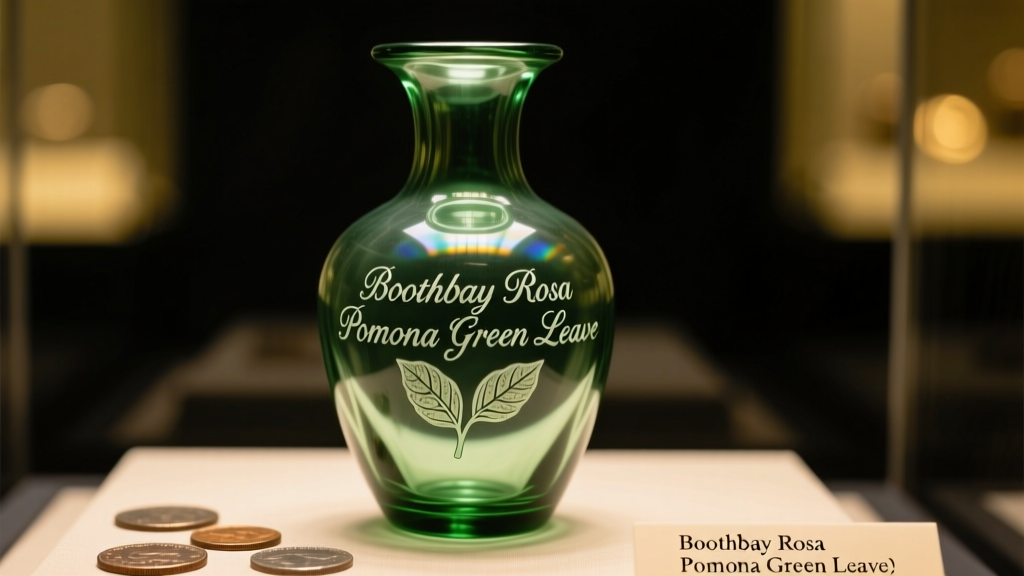
Steuben Vase Acid Cutback 'Boothbay' — Rosa Pomona Green, Shouldered Form, 14-Inch Height: Authentication, Provenance, and Market Value Analysis
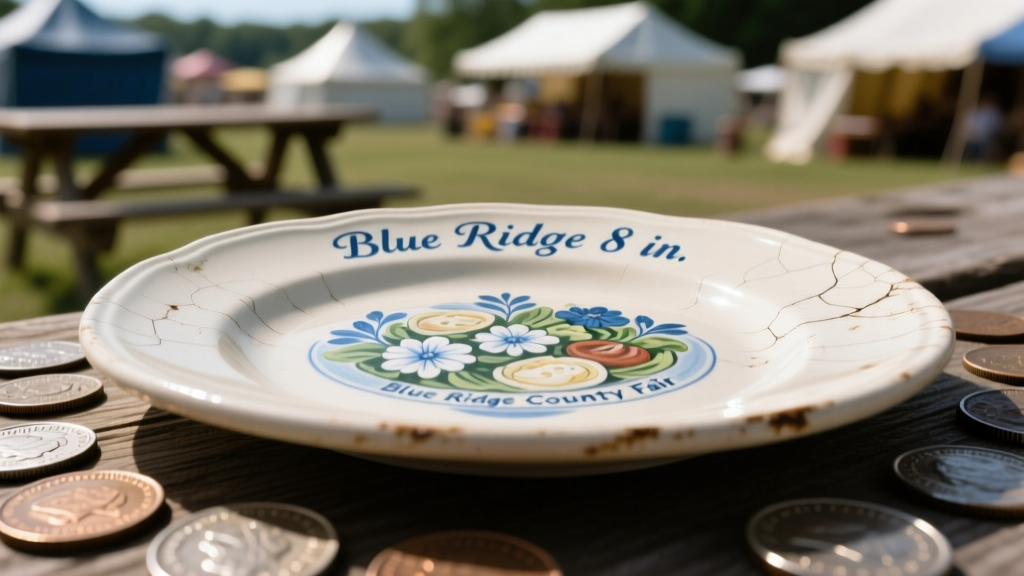
Dinnerware County Fair Plate Salad Blue Ridge 8-Inch: History, Identification, and Market Value Analysis
The Disneyana Circus Train: Mickey Mouse by Wells & Brimtoy — A Rare 1930s Tinplate Toy Box and Its Historical Significance
The Majolica Palissy-Style Plate: Snake, Lizard, Butterfly & Insects on Grassy Ground — A 9½-Inch Masterpiece of Victorian Naturalism

The Miners Lamp: Engineering, Evolution, and Numismatic Significance of a Historic Safety Light

J.C. Penney 1966 Spring & Summer Catalog: A Numismatic and Cultural Artifact of Mid-Century American Retail
Goldscheider Figurine 'Viennese Woods': History, Identification, and Market Value of a Viennese Art Deco Masterpiece

Toy Car Fire Chief Friction-Powered Japan Tin Box: History, Identification, and Market Value of a Mid-Century Japanese Collectible
Living History Museum: Where Numismatics Meets Authentic Experience