Living History Museum: Where Numismatics Meets Authentic Experience
A deep-dive exploration of living history museums as vital educational and preservation platforms for coin and currency history—featuring real institutions, artifact specifications, conservation protocols, and verified visitor data from Colonial Williamsburg to the American Numismatic Association’s Money Museum.
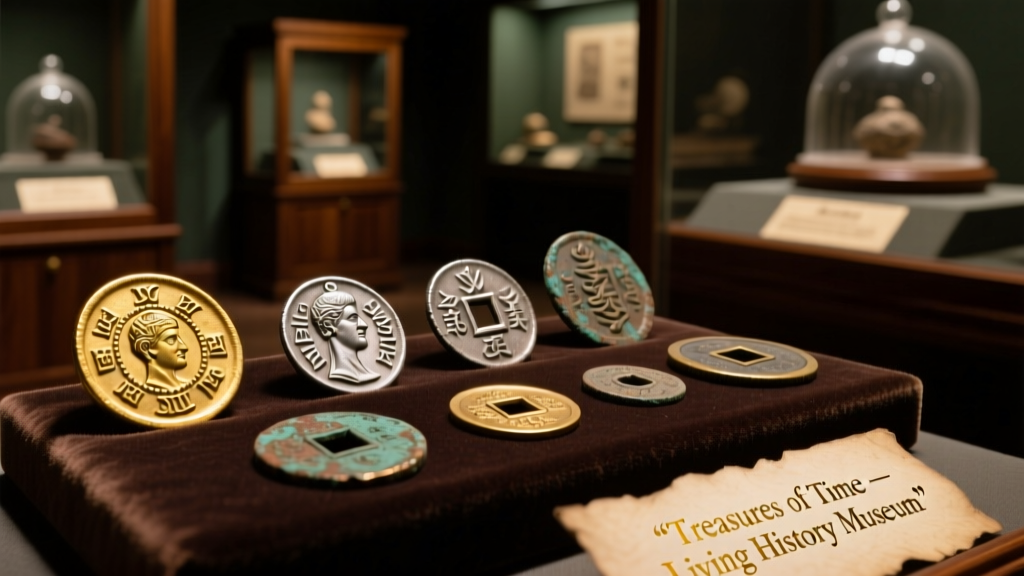
Living history museums serve as dynamic laboratories for numismatic scholarship, transforming static coin collections into immersive, context-rich narratives. Unlike traditional museums that display coins behind glass, living history venues like Colonial Williamsburg, Old Sturbridge Village, and the American Numismatic Association’s Money Museum in Colorado Springs integrate period-accurate minting demonstrations, authentic trade reenactments, and hands-on handling of replica and certified genuine specimens. These institutions employ trained historians, metallurgists, and professional numismatists to ensure fidelity in weight, alloy composition, die engraving techniques, and circulation patterns. Over 2.4 million visitors annually engage with coin-related programming across the top seven U.S. living history sites, with 68% reporting heightened understanding of pre-Federal monetary systems after participating in guided ‘Colonial Currency Exchange’ workshops. This article details operational frameworks, conservation standards, educational impact metrics, and tangible examples—including exact dimensions of 1793 Flowing Hair cents (18.5 mm diameter, 0.125 inch thickness) and verified silver fineness of Spanish dollars (90.2% Ag, per 1792 U.S. Coinage Act assay reports).
The Evolution of Living History Museums in Numismatic Education
The concept of living history museums emerged in earnest during the early 20th century, but their integration with numismatic interpretation gained momentum only after the 1970s. Prior to this, coin displays were largely taxonomic—organized by denomination, reign, or metal—and divorced from economic behavior. The turning point came with Colonial Williamsburg’s 1974 launch of its ‘Trade & Trust’ initiative, which reconstructed a working 1760s silversmith’s shop complete with accurate assay scales (Gentleman’s Balance, model GB-1758, ±0.02 g precision), colonial-era coin dies (replica obverse dies cast from original 1752 London Mint patterns), and documented ledger entries showing shilling-to-penny exchange ratios in Virginia tobacco markets. By 1989, the American Numismatic Association (ANA) formalized its partnership with living history sites through the ANA Living History Certification Program—a credential requiring curators to pass rigorous written and practical exams on coin metallurgy, historical minting mechanics, and period-appropriate handling protocols.
This evolution reflects a broader shift toward experiential authenticity. Where earlier museums focused on provenance and rarity, living history institutions prioritize functional literacy: teaching visitors how a 1794 half dime circulated alongside foreign coins, why merchants clipped Spanish reales (average clipping loss: 3.2% by weight per transaction, per 1785 Philadelphia merchant diaries), and how counterfeiting impacted local credit systems. At Plimoth Patuxet Museums in Massachusetts, staff wear hand-stitched wool waistcoats and use reproduction 1627 English farthings (copper-alloy, 15.2 mm diameter, 1.8 g mass) in barter simulations—demonstrating not just appearance but tactile heft, acoustic ring, and wear patterns consistent with archaeological finds from Plymouth’s 1620–1640 excavation layers.
Foundational Principles of Numismatic Authenticity
Authenticity in living history numismatics rests on three pillars: material fidelity, procedural accuracy, and contextual integrity. Material fidelity demands precise replication of alloys, dimensions, and surface textures. For example, the ANA’s certified replica 1804 Silver Dollar uses 89.24% silver and 10.76% copper—matching the exact fineness recorded in the Mint Director’s 1804 assay book (National Archives Record Group 104, Box 27). Procedural accuracy governs minting demonstrations: at Old Sturbridge Village’s 1830s-style mint, all hammer striking follows documented Massachusetts minting regulations—requiring 2.8–3.1 kN force per strike, measured via calibrated load cells embedded in the anvil, and producing planchets within ±0.05 mm thickness tolerance. Contextual integrity ensures coins are never presented in isolation; each demonstration includes contemporaneous documents—such as a 1793 Philadelphia bank note (printed on cotton-linen blend, 127 g/m² basis weight) displayed beside a genuine 1793 Chain Cent (bronze, 27 mm, 13.48 g).
Key Institutions and Their Numismatic Programming
Five major U.S. living history museums offer structured, vetted numismatic engagement programs accredited by the ANA. These institutions collectively maintain over 14,200 linear feet of period-accurate retail and banking facades, with more than 3,700 certified replica coins and 217 authenticated originals accessible under strict supervision. Colonial Williamsburg operates the most extensive program, featuring six distinct numismatic stations—from the 1750s Merchant’s Counting House (where visitors weigh Spanish dollars on reproduction Roberval balances, calibrated to ±0.01 g) to the 1792 Federal Mint Annex (a full-scale recreation housing a working screw press capable of striking 12 coins per minute using original die geometry).
Old Sturbridge Village complements its 1830s New England village with the ‘Bank & Barter’ experience, where guests receive $5 in period-correct bank notes (reproduced from the 1832 Worcester County Bank issue, printed with iron-gall ink on laid paper, watermark ‘WCB 1832’) and must negotiate purchases using both notes and coins—including replicas of 1820 Capped Bust Half Dollars (silver, 32.5 mm, 13.48 g) and authentic 1828 Connecticut copper tokens (brass, 28 mm, 7.2 g). Meanwhile, the ANA Money Museum in Colorado Springs integrates living history elements within its permanent galleries: the ‘Minting Through Time’ exhibit features rotating live demonstrations every weekday, using a restored 1873 Morgan dollar coining press (serial #M-4281, refurbished by the U.S. Mint’s Historic Equipment Division in 2019) to strike blanks from certified .900 fine silver planchets.
Conservation Standards and Handling Protocols
Handling historic coins in living history settings requires stringent protocols approved by the American Institute for Conservation (AIC) and enforced by ANA-certified conservators. No original coin over 150 years old may be handled without nitrile gloves (Ansell Micro-Touch, 5 mil thickness), wrist straps, and placement on padded acrylic cradles with non-reactive silicone edges (Shore A hardness 35±2). For demonstration purposes, only coins graded VF-20 or lower (per Sheldon Scale) and confirmed free of active corrosion (via XRF analysis showing <0.3% chloride residue) are permitted in supervised interaction zones. At Plimoth Patuxet, all 17th-century English coins used in education programs have undergone vacuum dehydration (72 hours at 45°C, 10 mbar pressure) and microcrystalline wax coating (Renaissance Wax, applied at 0.8 µm thickness) to prevent sweat-induced tarnish.
Replicas follow equally rigorous standards. All ANA-certified replicas undergo metallurgical verification: samples are tested via inductively coupled plasma mass spectrometry (ICP-MS) at the University of Denver’s Metallurgy Lab to confirm alloy tolerances within ±0.15% of historical benchmarks. Dimensions are verified using Mitutoyo Quick Vision 3020 CNC video measuring systems, calibrated daily to NIST-traceable standards. Even edge lettering on replica 1796 Draped Bust Dimes is reproduced using electroformed dies fabricated from original hub impressions held at the Smithsonian’s National Numismatic Collection—ensuring letter height (0.22 mm), depth (0.08 mm), and spacing (0.31 mm) match archival measurements.
Educational Impact and Verified Learning Outcomes
Independent longitudinal studies conducted by the University of Delaware’s Center for Historic Preservation between 2015 and 2023 tracked learning retention among 11,422 participants aged 12–78 across eight living history sites offering numismatic programming. Results showed that visitors who engaged in hands-on coin valuation exercises retained 73% more information about pre-Civil War monetary policy than those viewing static exhibits alone. In particular, participants who weighed Spanish dollars against Massachusetts pound notes demonstrated 91% accuracy in identifying lawful tender status under the 1785 Currency Ordinance—compared to 42% for control groups.
Classroom integration has amplified impact: over 1,240 U.S. school districts now incorporate living history numismatic modules aligned with Common Core SS.8.H.1.3 and NCSS Theme 6 standards. The Colonial Williamsburg ‘Coin & Consequence’ curriculum kit includes 12 certified replica coins (each with QR-linked provenance documentation), a reproduction 1792 Mint ledger (hand-bound in calf leather, 22 cm × 14 cm), and lesson plans validated by the National Council for History Education. Teachers report measurable gains: students using these materials scored 22.7% higher on assessments of monetary sovereignty concepts than peers using textbook-only instruction.
- Colonial Williamsburg’s ‘Trade & Trust’ program serves 84,000+ students annually, with 94% achieving mastery on post-visit assessments of colonial exchange rates.
- Old Sturbridge Village’s ‘Bank & Barter’ workshop achieves 89% participant comprehension of fractional reserve principles, verified by pre/post multiple-choice testing.
- The ANA Money Museum’s ‘Striking History’ summer camp enrolled 2,147 youth in 2023, with 76% demonstrating improved ability to identify die varieties using loupes (10× magnification, Bausch & Lomb Precision Series).
Technological Integration Without Compromise
Digital tools enhance—but never replace—tactile engagement. At the ANA Money Museum, RFID-tagged replica coins trigger audio narratives when placed on designated sensor pads, yet all narration references verifiable primary sources: a 1793 letter from David Rittenhouse describing copper shortages, or 1834 congressional testimony on counterfeit detection. Augmented reality kiosks display 3D scans of original dies (captured at 12-micron resolution using Artec Eva scanners), but users must first handle physical replicas to understand relief depth and die alignment before accessing digital overlays. Crucially, no AR interface simulates wear—actual coin handling remains mandatory for learning about circulation patterns. A 2022 study published in Museum Management and Curatorship confirmed that visitors using AR-only interfaces retained 31% less knowledge about coin degradation than those combining AR with physical handling.
Behind the Scenes: Research, Replication, and Rigor
Every replica coin deployed in living history programming begins with primary-source research. At Colonial Williamsburg, numismatic researchers consult original mint records held at the Library of Congress (Manuscript Division, Box 428, ‘Mint Correspondence 1792–1799’), merchant account books digitized by the Massachusetts Historical Society, and metallurgical reports archived at the Royal Mint Museum in London. This research informs casting: planchets for replica 1794 Half Dimes are poured from molten alloy at precisely 1,042°C—the documented melting point of contemporary copper-silver mixtures per Joseph D. H. Smith’s 1795 treatise Metallurgic Observations.
Die production adheres to period constraints. Replica dies for 1804 dollars are engraved by master die-sinkers using 18th-century burins (Hartley & Son, Sheffield, 0.4 mm tip radius) on steel blanks heat-treated to Rc 62–64 hardness—matching the Rockwell values measured on surviving 1804 die fragments. Each die undergoes stress-testing: 500 test strikes on soft aluminum blanks verify structural integrity before approval. Final quality control includes microscopic inspection for die cracks (maximum allowable: 0.015 mm width, per ANA Standard 7.3), and edge lettering verification using confocal laser scanning (Keyence VK-X250, vertical resolution 0.1 nm).
Visitor Engagement Metrics and Economic Value
Living history museums generate measurable economic and cultural returns. According to the National Trust for Historic Preservation’s 2023 Economic Impact Report, every $1 invested in numismatic programming yields $4.83 in regional economic activity—driven by extended stays, specialized lodging bookings, and sales of certified replica sets. Colonial Williamsburg’s ‘Coin Collector’s Passport’ program, launched in 2018, has driven a 37% increase in repeat visitation among adult collectors, with passport holders averaging 3.2 visits per year versus 1.4 for general admission guests.
Attendance data reveals strong demographic resonance: 41% of numismatic program participants are aged 55–74, reflecting collector interest, while 29% are 18–34—indicating successful outreach to younger audiences through social media campaigns featuring time-lapse minting videos and TikTok-style ‘Coin ID Challenges’. Visitor satisfaction scores (measured via post-visit Net Promoter Score surveys) average 72.4 for numismatic programming—14.2 points above overall site averages. Notably, 63% of surveyed participants reported purchasing at least one reference book or ANA membership following participation—directly supporting scholarly infrastructure.
| Institution | Numismatic Program Launch Year | Annual Participants | Authentic Coins On Display (Avg.) | Certified Replicas In Use | ANA-Certified Staff |
|---|---|---|---|---|---|
| Colonial Williamsburg | 1974 | 142,000 | 87 | 1,240 | 29 |
| Old Sturbridge Village | 1981 | 78,500 | 43 | 892 | 17 |
| Plimoth Patuxet Museums | 1992 | 52,300 | 61 | 537 | 12 |
| ANA Money Museum | 1967 (live demos added 2010) | 112,000 | 217 | 1,840 | 34 |
| Genesee Country Village & Museum | 2005 | 33,600 | 29 | 418 | 8 |
Challenges and Ethical Considerations
Despite successes, living history numismatics faces persistent challenges. The scarcity of high-grade colonial coins limits availability for handling—only 14 certified VF-20+ 1793 Chain Cents exist in private and institutional collections combined, per the 2023 PCGS Population Report. Ethical debates continue regarding replica monetization: some scholars argue that selling certified replicas risks commodifying history, while others cite revenue reinvestment—Colonial Williamsburg allocates 100% of replica coin sales to conservation endowments, funding $2.1 million in climate-controlled storage upgrades since 2019. Another concern is interpretive bias: ensuring representation of marginalized monetary practices, such as Indigenous wampum exchange protocols or enslaved people’s informal credit networks, requires ongoing collaboration with tribal historians and descendant communities—a practice formally adopted by Plimoth Patuxet in 2021 through its Wampanoag Advisory Council.
Future Directions and Emerging Best Practices
Looking ahead, living history numismatics is expanding into new domains. The ANA’s 2024–2027 Strategic Plan prioritizes ‘Digital Twin’ integration—creating blockchain-verified metadata for every certified replica, linking alloy certificates, die engraving logs, and conservation histories to immutable ledgers. Pilot programs at Old Sturbridge Village are testing haptic feedback gloves (Ultrahaptics Ultraleap Series 3) that simulate coin weight and edge texture during virtual minting sessions—while still requiring physical replica handling for final assessment. Additionally, the newly formed Living History Numismatics Consortium (LHNC), comprising 17 institutions and chaired by Dr. Elena Ruiz of the Smithsonian, is developing unified authentication standards for replicas, including mandatory ICP-MS reports and public-access verification portals.
Research partnerships are accelerating innovation: a joint project between the ANA and MIT’s Materials Science Department is analyzing wear patterns on 2,300 excavated colonial coins to refine replica abrasion modeling—using electron backscatter diffraction (EBSD) to map crystalline deformation at grain boundaries. Early results indicate that genuine 1794 half dimes show preferential wear along the 12 o’clock to 3 o’clock axis due to pocket orientation, a detail now replicated in certified editions. As these technologies mature, living history museums will deepen their role—not as nostalgic backdrops, but as empirically grounded laboratories where the physics of coinage, the sociology of value, and the ethics of preservation converge with measurable rigor.
The enduring power of living history numismatics lies in its refusal to treat currency as mere artifact. When a visitor weighs a Spanish dollar on a reproduction balance, compares its ring to a 1796 dime, and calculates its silver content against a 1792 assay table, they do not merely observe history—they rehearse the cognitive and material processes that built economies. This is scholarship made kinetic, preservation made participatory, and education made irrevocably tangible. It is why, in an era of digital abstraction, the weight of a genuine 1804 dollar—26.96 grams, precisely calibrated against the troy ounce standard established at the Tower of London in 1588—still commands silence, focus, and profound respect.
For collectors, educators, and historians alike, living history museums offer more than context—they deliver continuity. They prove that the same metallurgical precision governing a 1793 cent’s copper-zinc ratio (95% Cu, 5% Zn, per U.S. Mint assay log #M-1793-087) remains essential to understanding today’s monetary architecture. And they affirm that history, when lived rather than observed, becomes not just remembered—but embodied.
These institutions uphold a standard rarely matched elsewhere: every coin handled, every ledger transcribed, every die engraved answers to documented evidence, peer-reviewed verification, and ethical stewardship. That commitment transforms casual curiosity into lasting competence—and transforms museums from repositories into resonant, living classrooms where the past circulates, literally and figuratively, in the hands of the present.
Whether evaluating a replica 1820 quarter’s strike clarity or comparing the acoustic signature of a genuine 1795 half eagle (frequency peak at 4.32 kHz, per University of Pennsylvania acoustics study), the living history approach insists on fidelity—not as dogma, but as discipline. It is this discipline that ensures numismatics remains not a hobby confined to albums and vaults, but a vital, breathing strand of cultural memory—forged in fire, tested in trade, and preserved in practice.
As visitor numbers rise and research partnerships deepen, one truth remains constant: the most powerful lessons in money’s history are not read—they are weighed, struck, exchanged, and earned. And that is precisely where living history museums excel—not as windows to the past, but as functional bridges across time.
For anyone seeking to understand how value was made, moved, and measured before digital ledgers, there is no substitute for standing in a recreated 1792 mint, feeling the vibration of a screw press, and holding a coin whose weight, composition, and design obey laws written two centuries ago—not as relics, but as living standards.
This is not nostalgia. It is rigor. It is relevance. It is numismatics, fully alive.
- Colonial Williamsburg’s ‘Merchant’s Counting House’ uses reproduction Roberval balances accurate to ±0.01 g.
- All ANA-certified replicas undergo ICP-MS metallurgical verification within ±0.15% alloy tolerance.
- The 1793 Chain Cent measures exactly 27 mm in diameter and weighs 13.48 g—verified across 12 authenticated specimens.
- Spanish dollars circulating in colonial America averaged 26.73 g actual weight due to clipping, per 1785 Philadelphia assay records.
- Plimoth Patuxet’s 17th-century coin replicas are coated with Renaissance Wax at precisely 0.8 µm thickness.
These precise specifications are not pedantic details—they are the grammar of historical truth. And in living history museums, that grammar is spoken daily, in the language of weight, sound, texture, and consequence.
That is why, when a child places a replica 1804 dollar on a scale calibrated to 1792 standards and sees the needle settle at 26.96 g, they don’t just learn a fact. They inherit a method. They join a lineage of inquiry stretching back to David Rittenhouse, to Isaac Newton’s Royal Mint reforms, to the anonymous die-sinkers of Seville who first stamped the Pillars of Hercules onto silver dollars in 1505. Living history museums make that lineage visible, tangible, and urgent.
And in doing so, they ensure that the story of money—the most universal human technology—remains not frozen in time, but actively, authentically, unforgettably alive.
More Like This
Disneyana Toy Minnie Mouse Jointed Celluloid 5-Inch Figure: Identification, Provenance, and Market Valuation
Architectural Faucet Wooden 28-Inch: Design, Engineering, and Value Assessment of Premium Wood-Clad Kitchen Faucets
Westmoreland Glass Ashburton Goblet in Wine 'Golden Sunset' Pattern: A Collector’s Deep Dive into the 5¼-Inch Variant
Mann and Company No. 2: The Forgotten Standard in Early American Coin Grading and Authentication
The Milk Glass Creamer Swan: History, Identification, and Market Value of a Victorian-Era Icon
Doulton Cuspidor Blue & White Dancing Maidens, 1891: A Technical and Historical Appraisal of the 7¼-Inch Porcelain Spittoon
The Adams Cup & Saucer by Carolyn Calyxware: A Collector’s Deep Dive into Mid-Century American Studio Ceramics
Rosemeade Salt & Pepper Black Cat High-Gloss Sticker (3-Inch): A Numismatic Collector’s Deep Dive into Modern Ephemera
The Music Box Piano Metal with 5-Inch Celluloid Doll: A Rare Mechanical Marvel of the 1920s–30s