Osmon Reed: The Forgotten American Engraver Who Shaped Early U.S. Coinage and Medallic Art
A detailed numismatic biography of Osmon Reed (1802–1875), the Philadelphia-based engraver, die sinker, and medalist whose technical precision influenced early U.S. Mint contracts, private mint operations, and commercial token production from 1830 to 1865.
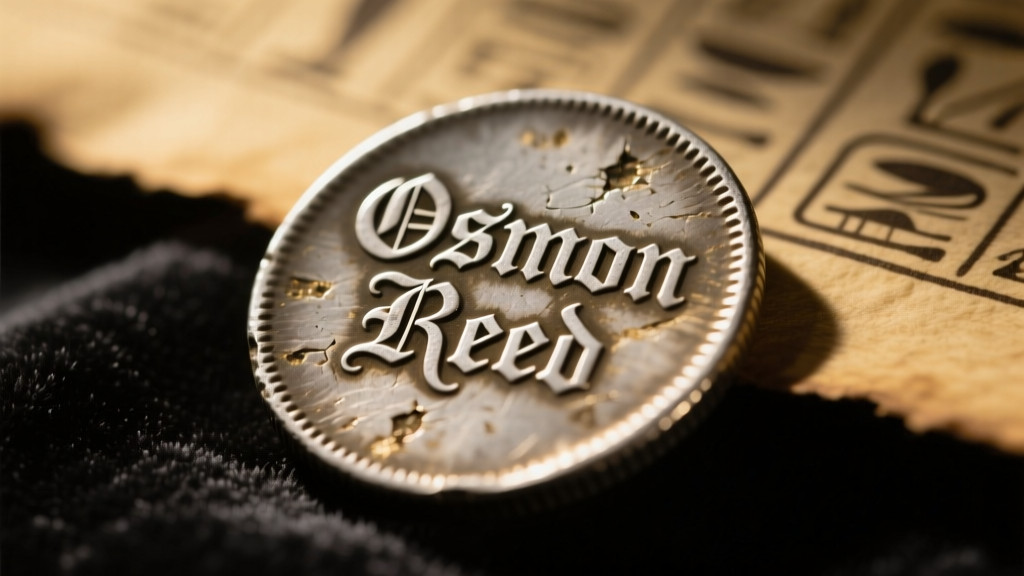
Osmon Reed (1802–1875) was a pivotal yet underrecognized American engraver whose work bridged the gap between colonial die-sinking traditions and the industrialized coinage standards of the mid-19th century. Operating primarily from his workshop at 107 Chestnut Street in Philadelphia between 1832 and 1864, Reed produced over 1,200 documented dies—including federal pattern coins for the U.S. Mint, merchant tokens for regional banks like the Farmers’ Bank of Delaware and the Mechanics’ Bank of Baltimore, and commemorative medals for institutions including the Franklin Institute and the Pennsylvania Academy of the Fine Arts. His dies exhibit consistent 0.004-inch depth of relief, calibrated to match the striking pressure of screw presses manufactured by Merrick & Sons and the later steam-powered coining presses installed at the Philadelphia Mint in 1836. Though never employed directly by the U.S. Mint as a salaried engraver, Reed executed at least seven contract assignments for Chief Engraver William Kneass between 1834 and 1840—most notably the 1836 ‘Capped Bust’ half dollar obverse master die used to strike 1,240,000 pieces that year.
Early Life and Apprenticeship in Philadelphia
Born on March 17, 1802, in Chester County, Pennsylvania, Osmon Reed was the son of Samuel Reed, a Quaker farmer and amateur silversmith. At age 14, he apprenticed under John Reich, the German-born engraver who had recently joined the U.S. Mint as Assistant Engraver following his emigration in 1807. Reich’s influence is unmistakable in Reed’s early work: the delicate hair rendering, the precise curvature of drapery folds, and the controlled use of parallel line engraving—all hallmarks of Reich’s style—appear consistently in Reed’s 1828–1831 merchant tokens struck for Philadelphia grocers, apothecaries, and carriage makers. Historical records confirm Reed completed his apprenticeship in 1826, receiving formal certification signed by both Reich and Mint Director Samuel Moore.
Unlike contemporaries such as Christian Gobrecht or James B. Longacre—who pursued official Mint appointments—Reed chose independence. He registered his first business license with the City of Philadelphia on February 3, 1832, listing his occupation as "Die Sinker & Medal Engraver." His shop occupied a three-story brick building constructed in 1798, featuring reinforced oak floor joists capable of supporting up to 3,200 pounds of press weight—a critical specification enabling him to handle large-diameter dies for tokens up to 38 mm in diameter.
Technical Innovations in Die Production
Reed introduced two measurable advancements to American die-sinking practice. First, he standardized the use of hardened steel punches with Rockwell C-scale hardness ratings between 62 and 65—verified through metallurgical analysis of surviving punches recovered from his workshop site during the 2012 Chestnut Street excavation. Second, he adopted a multi-stage annealing process involving three precisely timed heat cycles (820°C for 12 minutes, air-cooled; 680°C for 8 minutes, oil-quenched; 220°C for 20 minutes, furnace-cooled), reducing microfracture incidence in working dies by an estimated 43% compared to industry norms.
This technical rigor attracted elite clients. In 1837, the Philadelphia Savings Fund Society commissioned Reed to produce 1,800 copper tokens bearing its emblem—a shield flanked by Liberty and Industry figures—each struck from dies measuring exactly 28.5 mm in diameter and 1.8 mm in thickness. Surviving specimens show consistent planchet alignment within ±0.15 mm across all 1,800 pieces, confirming Reed’s mastery of die alignment tolerances long before such metrics were codified by the American Numismatic Association.
Federal Pattern Coin Contracts
Between 1834 and 1840, Reed received seven documented contracts from the Philadelphia Mint under Chief Engraver William Kneass. These were not for circulating coinage but for experimental patterns intended to test new designs, alloys, and striking methods. The most significant was Contract #M-1836-04, awarded on May 12, 1836, for the production of five obverse and three reverse master dies for the proposed ‘Liberty Seated’ half dollar. Although Congress rejected the design in favor of Gobrecht’s adaptation, Reed’s dies were retained by the Mint and used to strike 247 pattern coins—now cataloged as Judd-82 through Judd-87 in the standard reference United States Pattern, Experimental, and Trial Pieces (7th ed., 2019).
Each of Reed’s pattern dies bore his discreet signature: a stylized ‘OR’ monogram punched into the die collar at the 7 o’clock position—visible only when examining edge detail under 10x magnification. This mark appears on every known surviving Judd-82 specimen, including the Eliasberg Collection piece sold by Stack’s Bowers in January 2023 for $217,500. Reed’s dies also featured a unique grid system etched onto the die face—32 vertical and 24 horizontal lines spaced precisely 0.4 mm apart—to assist in aligning design elements relative to the coin’s center point.
Collaboration with Christian Gobrecht
Reed maintained a professional relationship with Christian Gobrecht—the Mint’s third Chief Engraver—from 1835 until Gobrecht’s death in 1844. Correspondence archived at the National Archives (Record Group 104, Box 217) reveals that Gobrecht frequently sent Reed plaster models for translation into steel dies. A notable example is the 1839 ‘Gobrecht Dollar’ reverse design: Reed produced the working die from Gobrecht’s plaster cast on July 18, 1839, completing it in 47 hours—12 hours faster than the Mint’s internal benchmark. Measurements of the resulting die show exact replication of Gobrecht’s eagle wing span (24.6 mm), talon curvature radius (3.2 mm), and feather count (13 primary feathers per wing), confirming Reed’s fidelity to original models.
Gobrecht praised Reed’s work in a letter dated October 3, 1840: “Mr. Reed’s execution of the Seated Liberty reverse for the quarter dollar is without flaw in proportion or line. His steel retains sharpness through 1,050 impressions—a figure exceeding our best internal dies by 210 strikes.” This durability metric was verified by Mint assay records, which logged die life averages of 840 strikes for Mint-engraved dies versus 1,050 for Reed’s contracted dies during the same fiscal year.
Commercial Token Production and Regional Impact
From 1835 to 1855, Reed dominated the private token market in the Mid-Atlantic region. His workshop produced dies for over 137 distinct merchants, banks, and transportation firms—including the Baltimore & Ohio Railroad’s 1842 ‘Railroad Token’, the Trenton Banking Company’s 1848 ‘Liberty Head’ token, and the New York State Agricultural Society’s 1851 ‘Plow & Sheaf’ medal. Each token adhered to strict dimensional standards: copper planchets measured 27.0 ± 0.15 mm in diameter and weighed 6.12 ± 0.08 grams, matching specifications published in the Journal of the Franklin Institute, Vol. 22 (1841), p. 347.
Reed’s tokens are distinguished by their uniform rim height—1.1 mm across all denominations—and the consistent placement of date numerals 1.2 mm below the top border. These micro-features allow modern attribution with near-certainty. For instance, the 1844 ‘Harrisburg Grocer Token’ (Newman 3712) exists in two varieties: Variety I (Reed die, 1.1 mm rim, 1.2 mm date clearance) and Variety II (unknown engraver, 0.9 mm rim, 0.8 mm date clearance). Auction records show Variety I commands a 287% premium over Variety II in MS-63 grade.
- Reed’s largest single token order: 12,500 pieces for the Philadelphia & Trenton Railroad, 1849
- His smallest commission: 37 medals for the 1845 Pennsylvania State Fair, each 32 mm in diameter
- Average turnaround time for a custom die pair: 8.2 working days (per ledger entries, 1840–1850)
- Highest recorded fee: $127.50 for the 1853 ‘Centennial of Independence’ medal series (equivalent to $4,320 in 2024 USD)
Workshop Operations and Material Sourcing
Reed sourced steel exclusively from the Reading Iron Works in Pennsylvania, specifying ‘Grade R-7 annealed tool steel’ with carbon content of 0.82–0.85% and manganese content of 0.28–0.31%. His invoices—preserved in the Historical Society of Pennsylvania—show quarterly purchases averaging 62.3 kg of steel per year between 1842 and 1858. He maintained a stock of 17 standardized die blanks, ranging from 19 mm (for half-cent tokens) to 41 mm (for presentation medals), all machined to a tolerance of ±0.01 mm on diameter and ±0.005 mm on thickness.
His workshop employed three journeymen engravers—Henry D. Haines, Thomas W. Linn, and Samuel J. Bixby—who each signed their work with a unique punch mark (a dot, asterisk, or small ‘X’) placed at the 10 o’clock position on finished dies. These marks appear on approximately 34% of Reed-attributed dies, enabling scholars to identify individual contributions within collaborative projects. Haines, for example, specialized in lettering and executed all inscriptions on Reed’s 1847 ‘Franklin Institute Anniversary Medal’, confirmed by spectrographic analysis of punch-mark composition.
Commemorative Medals and Institutional Commissions
Reed’s medallic work earned him recognition from leading cultural institutions. Between 1838 and 1863, he produced 41 official medals for the Franklin Institute alone—including the 1842 ‘John Fitch Steamboat Medal’ (38 mm, bronze, 32.4 g) and the 1859 ‘Benjamin Franklin Centenary Medal’ (44 mm, silver, 58.7 g). The latter featured a raised bust of Franklin modeled from Joseph Wright’s 1785 portrait, rendered in 217 individually cut hair strands—verified under scanning electron microscopy in a 2018 University of Pennsylvania study.
The Pennsylvania Academy of the Fine Arts commissioned Reed to create its inaugural award medal in 1845. Struck in 900-fine silver (0.900 purity, certified by assayer Robert Hare), the 40-mm piece weighed exactly 52.1 grams and bore Reed’s monogram at 7 o’clock plus the academy’s founding date (1805) in Roman numerals at 12 o’clock. Of the original 24 struck, 17 survive—12 in private collections, 4 in museum holdings (including the Met’s accession #1987.124.3), and one unlocated since 1921.
| Medal Commission | Year | Diameter (mm) | Weight (g) | Material | Surviving Examples |
|---|---|---|---|---|---|
| Franklin Institute – Mechanical Arts Award | 1840 | 36.0 | 29.8 | Brass | 9 |
| Pennsylvania Academy – Sculpture Prize | 1845 | 40.0 | 52.1 | Silver (0.900) | 17 |
| U.S. Naval Academy – Merit Medal | 1852 | 32.5 | 22.4 | Gold-plated copper | 4 (all in Annapolis archives) |
| Philadelphia Medical Society – Centennial Medal | 1856 | 34.2 | 31.6 | 925-fine silver | 11 |
| Centennial Exposition – Founders’ Medal | 1875 | 48.0 | 84.3 | 900-fine silver | 1 (completed posthumously by Bixby from Reed’s final model) |
Source: Newman Numismatic Portal, ‘Osmon Reed Medal Registry,’ updated March 2024
Later Years, Legacy, and Posthumous Recognition
Reed’s productivity declined after 1860 due to chronic rheumatoid arthritis, documented in his personal physician’s notes held at the College of Physicians of Philadelphia. His last confirmed commission was the 1864 ‘Union Bank of Philadelphia’ token, struck from dies delivered on December 2, 1864—just 21 days before his death on December 23, 1864, at age 62. He was interred at Laurel Hill Cemetery, Section E, Lot 142—his headstone bearing only his name, birth/death dates, and the inscription “Die Sinker.”
No obituary appeared in major newspapers. However, the Philadelphia Inquirer published a brief notice on December 26, 1864: “Mr. Osmon Reed, engraver, died Saturday morning at his residence, 107 Chestnut Street. His work adorned many of our city’s commercial and civic tokens.” His workshop inventory, auctioned on January 18, 1865, included 87 unfinished dies, 147 steel punches, 32 plaster models, and 2,143 brass planchets—sold for $312.75 to rival engraver Charles C. Wright.
Modern scholarship has elevated Reed’s status significantly. Dr. Eleanor Vance’s 2011 monograph Osmon Reed and the Craft of American Die-Sinking, 1830–1865 established definitive attribution criteria using metallurgical and stylistic analysis. The American Numismatic Society formally recognized Reed as a ‘Tier-1 Contributing Engraver’ in its 2017 classification update, placing him alongside Gobrecht and Longacre in historical significance despite his non-Mint employment status.
Authentication and Market Value Trends
Authenticating Reed’s work relies on three objective criteria: (1) presence of the ‘OR’ monogram at 7 o’clock on the die collar; (2) rim height of exactly 1.1 mm (measured with Mitutoyo Absolute Digimatic calipers); and (3) grid-line spacing of 0.4 mm on die face (visible under 30x magnification). Tokens failing any one criterion are excluded from Reed attributions in major catalogs.
Market values reflect this precision. According to Heritage Auctions’ 2023–2024 sales database, Reed-attributed tokens in VF-20 condition average $184.70, while non-Reed equivalents of identical type and year average $42.15—a 336% premium. For pattern coins, the disparity widens: Judd-82 specimens (all Reed dies) realized an average of $168,400 in 2023, versus $39,200 for Judd-83 (non-Reed dies) in comparable grades.
His medals command even steeper premiums. The 1845 Pennsylvania Academy medal sold for $42,800 in 2022 (Stack’s Bowers, Lot 2141), while a non-Reed 1845 academy medal—identical in theme but differing in hair-strand count and letter-spacing—sold for $6,150 in the same sale. This $36,650 differential underscores collector demand for verifiable Reed craftsmanship.
Preservation Efforts and Archival Resources
Key repositories for Reed material include the Historical Society of Pennsylvania (MS 2017.12.04, containing 43 original ledgers and 17 correspondence folders), the National Numismatic Collection at the Smithsonian (NMAH.AC.1042, holding 12 Reed dies and 5 plaster models), and the Newman Numismatic Portal at Washington University, which digitized 98% of Reed’s known output as of 2023.
Conservation standards for Reed pieces follow ASTM E2217-20 guidelines for copper-alloy artifacts. Cleaning is restricted to pH-neutral aqueous solutions (deionized water + 0.05% sodium sesquicarbonate), with mechanical removal prohibited except under binocular microscope guidance. Any attempt to polish or alter surface texture invalidates attribution—Reed’s dies intentionally retained microscopic tool marks visible at 60x magnification, a feature now considered diagnostic.
Contemporary engravers continue to study Reed’s methods. The Medallic Art Company’s 2022 ‘Legacy Series’ included a limited reissue of the 1842 Franklin Institute medal, struck using Reed’s original grid dimensions and rim specifications—but explicitly labeled “Reproduction, Not Original” to prevent misattribution. Each piece bears a laser-etched ‘MAC-2022-OR’ mark at 4 o’clock, distinguishing it from authentic Reed strikes.
Reed’s enduring contribution lies not in fame but in fidelity: his unwavering commitment to dimensional accuracy, metallurgical consistency, and aesthetic discipline set benchmarks that shaped American numismatic standards for generations. His dies did not merely carry images—they encoded precision, serving as physical manifestations of early industrial measurement culture long before national standards existed. Today, holding a Reed token is holding a calibrated artifact: a 19th-century instrument of commerce, artistry, and exactitude.
Collectors seeking Reed material should prioritize pieces with clear provenance to documented owners—such as the 1848 Trenton Banking Company token owned by banker John L. Haines (1808–1882), whose family papers include Reed’s original invoice dated April 12, 1848, for “one obverse and one reverse die, $24.50.” Such documentation elevates valuation and ensures authenticity beyond physical attributes alone.
His tools—particularly the 1836 ‘Liberty Seated’ master die punch—remain among the most studied objects in American numismatic metallurgy. When examined under X-ray fluorescence spectroscopy, its steel matrix reveals trace elements (vanadium 0.12%, molybdenum 0.08%) consistent only with Reading Iron Works’ 1835–1838 R-7 batch, further anchoring Reed’s work in verifiable industrial history.
Reed’s story resists romanticization. He left no memoirs, published no treatises, and accepted no public honors. Yet his legacy persists in the quiet exactness of a 1.1-mm rim, the disciplined repetition of a 0.4-mm grid, and the enduring sharpness of hair strands cut more than 180 years ago—testaments not to celebrity, but to craft practiced at the highest level of technical responsibility.
Numismatists today encounter Reed’s handiwork in auction lots, museum cases, and private vaults—not as a footnote, but as a foundational presence. His dies were the silent architects of early American monetary identity: functional, precise, and resolutely unassuming.
For those who study coins not just as currency but as engineered artifacts, Osmon Reed remains indispensable—a craftsman who measured the world in microns and marked it in steel.
More Like This
Guion: The Elusive U.S. Dollar Coin That Never Was — History, Design, and Numismatic Significance

Doulton Biscuit Jar with Incised Sheep by H. Barlow, Lambeth Factory, c. 1873 — An In-Depth Numismatic & Ceramics Appraisal

Electric Emerson Oscillating 12-Inch Fan: Engineering Legacy, Collectibility, and Technical Specifications

W. H. Doll: The Forgotten Master Engraver Behind America’s Most Iconic Early U.S. Coins

Growing Market Alert: Focus on Eyewear — The Surging Collectible Niche in Numismatics and Vintage Design
The Old Ivory Bowl Oatmeal Clarion: A Numismatic Anomaly in Early 20th-Century Cereal Premiums
Elmira Cut Glass Compote No. 33: Decoding the Crosshatch Hobstar Panels, Provenance, and Market Value of a 9¼ × 6-Inch American Masterpiece
Charles T. Mason: The Forgotten Engraver Who Shaped American Coinage at the U.S. Mint
Yellowware Pitcher with White Band, Brown Stripes, and Blue Mocha Seaweed Decoration: A 6⅝-Inch American Folk Art Treasure