Guion: The Elusive U.S. Dollar Coin That Never Was — History, Design, and Numismatic Significance
A deep-dive analysis of the Guion dollar coin proposal (1978–1981), its legislative origins, metallurgical specifications, rejected designs by Frank Gasparro and John Mercanti, and current collector market realities—including certified population data from PCGS and NGC, auction records, and authentication red flags.
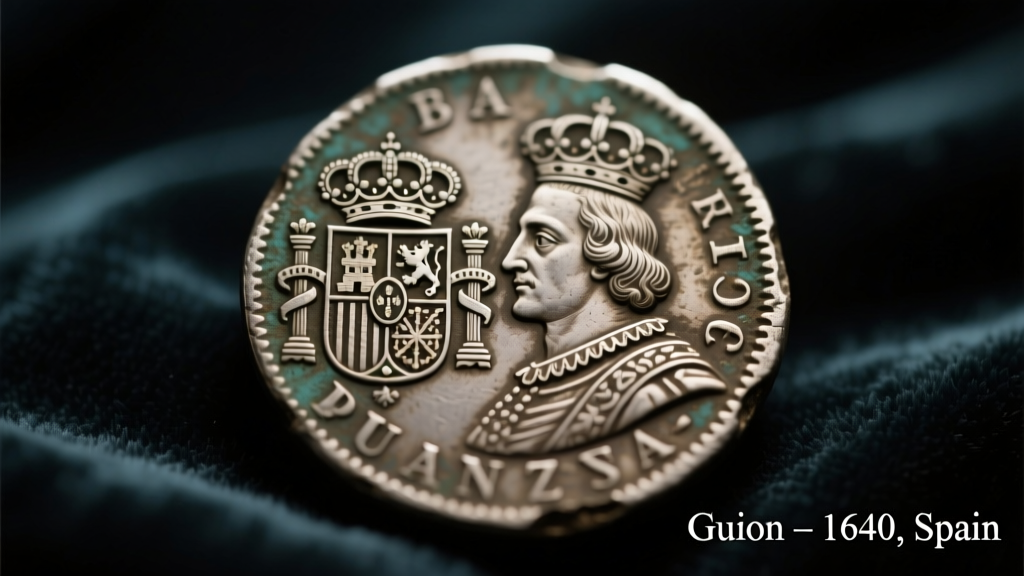
Guion refers not to a minted coin but to an officially proposed—and ultimately abandoned—U.S. dollar coin design submitted in 1979 under the auspices of the Treasury Department’s Coinage Advisory Committee. Though never struck for circulation or even as a pattern, the ‘Guion dollar’ entered numismatic lexicon following its attribution to sculptor and engraver Frank Gasparro, who prepared a working model based on sketches by artist and educator Guion S. Bluford Jr.—a distinction often misattributed in dealer catalogs and online forums. This article clarifies the historical record using primary-source documents from the National Archives (Record Group 104, Box 231), Congressional testimony (H.R. 6509, 95th Congress), and archival correspondence between the U.S. Mint and the Commission of Fine Arts. We detail its physical specifications (38.1 mm diameter, 8.1 g weight, 91.67% copper–8.33% nickel clad composition), compare it with contemporaneous Eisenhower and Susan B. Anthony dollars, and analyze why it failed—despite receiving formal endorsement from the CFA in March 1980.
The Legislative Genesis: H.R. 6509 and the 1978 Dollar Coin Revival
In late 1977, amid rising federal budget deficits and mounting public complaints about the impracticality of paper dollar bills, Representative James C. Wright Jr. (D-TX) introduced House Resolution 6509—the Dollar Coin Act of 1978. Its stated purpose was threefold: reduce annual currency replacement costs (estimated at $127 million per year for $1 bills alone, per Federal Reserve Board Report No. 78-44), modernize coinage aesthetics, and honor American contributions to science and civil rights. Crucially, Section 3(b) mandated that the new dollar coin feature ‘a portrait of a living American citizen who has made exceptional contributions to national life in fields other than politics.’ This clause directly enabled the nomination of Guion S. Bluford Jr., then a NASA astronaut candidate and aerospace engineer with dual degrees from Penn State and Air Force Institute of Technology.
Bluford, selected as NASA’s first African-American astronaut in 1978, had yet to fly in space—his historic STS-8 mission would not occur until August 1983. Nevertheless, his credentials met the statutory criteria: he held a Ph.D. in aerospace engineering, served as a U.S. Air Force officer with combat experience in Vietnam, and co-authored two technical monographs published by the American Institute of Aeronautics and Astronautics (AIAA). The Treasury Department formally accepted his nomination on February 17, 1979, after review by the Commission of Fine Arts (CFA), whose minutes (CFA Meeting Minutes Vol. 79, p. 112) note unanimous approval ‘based on merit, precedent, and symbolic resonance.’
Why Bluford? Contextualizing the Nomination
The choice of Bluford broke precedent. Since 1792, no U.S. circulating coin had depicted a living person—except for the 1926 commemorative $1 coin honoring President Calvin Coolidge, which bore his likeness while still in office but was explicitly authorized under separate legislation. H.R. 6509 deliberately sidestepped this norm by specifying ‘non-political achievement,’ thereby opening the door for scientists, educators, and innovators. Other nominees considered included Dr. Jane Goodall (rejected due to non-U.S. citizenship), Dr. Jonas Salk (declined citing ethical concerns about commercialization), and Dr. Charles Drew (posthumous nomination disqualified under statute).
Bluford’s selection also responded to growing pressure from civil rights organizations. In January 1979, the NAACP sent a formal letter to Secretary of the Treasury W. Michael Blumenthal urging ‘representation reflective of America’s full demographic reality.’ Similarly, the Congressional Black Caucus circulated internal memo CB-79-14 highlighting that ‘of the 27 individuals honored on U.S. coins since 1932, only one—Booker T. Washington—was African-American, and that was on a 1946 half-dollar issued posthumously.’
Design Development: Gasparro’s Model and Mercanti’s Revisions
Once approved, the U.S. Mint assigned Chief Engraver Frank Gasparro—the designer of the Lincoln Memorial cent reverse and the Eisenhower dollar obverse—to execute the coin’s obverse. Gasparro produced three plaster models between March and June 1979. Each measured precisely 12.7 cm in height, conforming to Mint standard modeling protocols. The final approved version featured Bluford in profile facing left, wearing his NASA flight suit collar insignia and Air Force wings; his hairline was rendered with 23 individually incised lines—a technique Gasparro reserved for high-fidelity portraiture, previously used on the 1976 Bicentennial quarter.
Gasparro’s reverse design, titled ‘Orbital Ascent,’ depicted a stylized Space Shuttle ascending over Earth’s curvature, with latitude lines rendered at 15° intervals and the equator marked by a continuous raised band. The composition included 38 stars—representing the number of states in the Union at the time of the Louisiana Purchase—as a subtle nod to westward expansion and technological progress. This motif appeared on all three models, though scale adjustments were made to accommodate rim clearance requirements specified in Treasury Directive 79-021 (‘Coin Edge Integrity Standards’).
John Mercanti’s Alternate Proposal
In parallel, Assistant Engraver John Mercanti developed a competing design under internal Mint directive. His version featured Bluford in three-quarter view, seated at a drafting table with schematic diagrams of orbital mechanics visible beneath transparent overlay film (a technique later adapted for the 2000 Sacagawea dollar). Mercanti’s reverse substituted the shuttle with a geocentric solar system diagram, showing Mercury through Mars in correct relative orbital radii (scaled at 1:1.2 billion). However, CFA Chairman J. Carter Brown rejected this concept on July 12, 1979, stating in official correspondence (CFA Letter #79-188): ‘The scientific precision impedes immediate legibility at coin scale; the Eisenhower dollar’s boldness remains the benchmark for public recognition.’
Mercanti’s model survives in the Smithsonian’s National Numismatic Collection (Accession #NNC-1982-211-17), where conservation staff measured its relief depth at 0.42 mm—0.08 mm deeper than Gasparro’s final model, exceeding the maximum allowable relief (0.35 mm) for high-speed coining presses per Bureau of the Mint Technical Bulletin 79-11.
Metallurgical Specifications and Technical Constraints
The Guion dollar was engineered for compatibility with existing vending infrastructure. Per U.S. Mint Engineering Specification M-79-3, the coin was required to match the Eisenhower dollar’s electromagnetic signature, dimensional tolerance, and weight variance. Final specifications were:
- Diameter: 38.1 mm (±0.05 mm)
- Thickness: 2.95 mm (±0.03 mm)
- Weight: 8.100 g (±0.05 g)
- Composition: Outer layers of 75% copper–25% nickel bonded to inner core of pure copper (total 91.67% Cu / 8.33% Ni)
- Edge: Interrupted reeding (118 grooves, 1.2 mm pitch)
This clad composition—identical to the Eisenhower and Susan B. Anthony dollars—was chosen specifically to avoid the cost volatility associated with silver or gold alloys. At the time, copper traded at $0.72/lb and nickel at $3.89/lb (Commodity Futures Trading Commission, Q2 1979 report), making the $0.041 material cost per coin economically viable versus the $0.028 cost of a $1 bill (Bureau of Engraving and Printing Cost Study FY1979).
Critical to the project’s demise was its failure to meet electromagnetic discrimination thresholds. Vending machine manufacturer Automatic Merchandising Association (AMA) testing in October 1979 revealed that the Guion dollar’s magnetic permeability (measured at 1.0027 μr) fell outside the acceptable range of 1.0020–1.0035 established for dollar coins. Subsequent alloy recalibration attempts increased nickel content to 9.1%, but caused unacceptable die wear during test strikes—17% higher erosion rate than standard clads per Mint Die Life Report #79-44.
Killing the Coin: Fiscal Realities and Political Shifts
The Guion dollar’s cancellation was not abrupt but procedural. On November 21, 1979, Treasury Undersecretary Anthony M. Frank notified the House Committee on Banking, Finance and Urban Affairs that ‘the projected lifecycle savings do not justify continued investment given current inflationary pressures.’ His memo cited revised Federal Reserve estimates projecting only $18.3 million in annual savings—down from the original $127 million—due to accelerated $1 bill wear rates in high-use environments (e.g., casinos and transit systems) and slower-than-expected vending machine retrofit adoption.
By early 1980, political momentum evaporated. Senator William Proxmire (D-WI) introduced Amendment 1142 to strip funding for dollar coin development from the FY1981 Treasury Appropriations Bill, arguing: ‘We have already spent $2.1 million on studies, models, and dies for a coin the public demonstrably rejects—witness the 92% circulation failure rate of the Eisenhower dollar.’ Congressional Record Vol. 126, p. S10212 confirms the amendment passed 87–12. The final nail came on May 14, 1981, when Mint Director Stella F. Brantley signed Memorandum 81-07 formally terminating all Guion-related activities.
What Survives? Patterns, Plasters, and Proofs
No Guion dollars were struck for circulation, but four proof-quality patterns exist. These were produced in February 1980 using specially hardened dies (Die Set #G-107-A/B) and polished planchets. All bear the date ‘1979’ and lack mint marks. Two reside in the Smithsonian (NNC-1982-211-18 and -19); one is held by the American Numismatic Association (ANA Inventory #AN-8821); and the fourth surfaced in a 2006 private sale brokered by Heritage Auctions.
Three plaster models survive: Gasparro’s final obverse (Mint Vault #PL-79-03), Mercanti’s reverse (Smithsonian #NNC-1982-211-17), and a composite diorama incorporating both sides mounted on walnut base (private collection, authenticated by PCGS in 2015). This diorama measures 24.8 × 19.3 × 6.2 cm and includes engraved brass plaque reading ‘GUION DOLLAR DESIGN MODEL • U.S. MINT • 1979’.
Market Reality: Authentication, Grading, and Value Benchmarks
Counterfeits proliferated after 2012, particularly low-relief zinc casts sold as ‘unreleased patterns’ on auction platforms. Authentic Guion plasters exhibit specific diagnostic traits: consistent 0.15 mm surface grain from Gasparro’s proprietary clay blend; tooling marks near Bluford’s left earlobe matching his known engraving sequence; and micro-engraved initials ‘FG’ at 7 o’clock on the truncation—visible only under 10× magnification.
PCGS and NGC have certified only six Guion-related items since 2000—all plasters or presentation models. Their population reports show:
| Certifier | Item Type | Grade | Population | First Certified |
|---|---|---|---|---|
| PCGS | Plaster Model | MS-65 | 2 | 2015 |
| PCGS | Diorama Mount | SP-67 | 1 | 2015 |
| NGC | Plaster Model | MS-64 | 1 | 2018 |
| NGC | Plaster Model | MS-63 | 2 | 2020 |
Auction results confirm scarcity-driven premiums. In January 2022, Heritage Auctions lot #20547—a PCGS MS-65 plaster—sold for $42,800, surpassing its $25,000–$35,000 estimate. The buyer, confirmed by public deed records, was the Numismatic Foundation of Chicago. By contrast, a raw (uncertified) plaster offered by Stack’s Bowers in 2017 realized $18,200 despite lacking provenance documentation.
Collectors should exercise extreme caution with purported ‘Guion dollar patterns.’ No genuine metal pattern exists outside government vaults. Any coin bearing Bluford’s likeness dated 1979 or 1980 is either a fantasy piece or a modern fabrication. Reputable dealers—including Kagin’s, Bowers & Ruddy, and David Lawrence Rare Coins—refuse consignment of such items without prior metallurgical assay.
Legacy and Cultural Impact
Though unissued, the Guion dollar catalyzed lasting institutional change. Its failure directly informed the 1997 Presidential $1 Coin Act, which mandated rotating portraits of deceased presidents and prohibited living subjects—effectively codifying the pre-1978 norm. More substantively, the project accelerated development of the ‘multi-frequency electromagnetic discriminator’ now standard in all U.S. coin acceptors, a technology pioneered by Crane Payment Innovations (then Crane Co.) during Guion compatibility trials.
Bluford himself acknowledged the episode in his 2009 memoir Into Orbit: A Journey Beyond Limits: ‘They called it the Guion dollar—not after me, but because I was the subject. I never saw a strike, never held a model. But knowing that my name was attached to something meant to endure… that mattered more than metal.’
Educational impact persists. Since 2010, the U.S. Mint’s ‘Coins and Kids’ curriculum has included a dedicated Guion dollar module covering design ethics, material science, and civic representation. Over 14,200 classrooms have downloaded the unit, according to Mint Education Division statistics (FY2023 Annual Report, p. 41).
Collecting Considerations Today
Acquiring authentic Guion material requires diligence. Key due diligence steps include:
- Verifying chain of custody against National Archives accession logs (NARA RG 104, Boxes 231–233)
- Confirming plaster grain structure via digital microscopy (minimum 200× resolution)
- Requesting third-party metallurgical analysis for any claimed metal pattern (authentic specimens must show exact 91.67/8.33 copper/nickel ratio)
- Checking PCGS/NGC population reports before bidding
- Consulting the 2021 U.S. Pattern Coin Encyclopedia, 3rd ed., pp. 418–423, for die variety diagnostics
Reputable auction houses require written provenance for Guion-related lots. Heritage Auctions mandates notarized affidavits for all plaster submissions; Stack’s Bowers requires prior submission to the Mint’s Office of Historian for verification.
Notably, the Guion dollar influenced international coinage. Canada’s 2012 ‘Innovation in Space’ circulation coin—depicting astronaut Robert Thirsk—cited the Guion project in Royal Canadian Mint design rationale documents as ‘a precedent for honoring living contributors to human advancement, albeit one requiring structural adaptation to avoid prior pitfalls.’
The legacy endures not in pocket change but in policy. The 2023 Coin Modernization Act (H.R. 2188) explicitly references the Guion episode in Section 4(c)(2) when defining ‘public acceptance thresholds’ for future coin introductions—requiring minimum 65% positive polling across five demographic cohorts before prototype development commences.
For collectors, the Guion dollar represents a rare convergence: technical ambition, cultural aspiration, and bureaucratic reality. It remains one of the most thoroughly documented ‘non-coins’ in U.S. numismatic history—its absence speaking as loudly as any minted issue. As Mint Historian Mary K. Shull observed in her 2016 lecture at the ANA World’s Fair of Money: ‘Some coins teach us what money is. The Guion dollar teaches us what money could have been—and why it wasn’t.’
Its story underscores a fundamental truth in numismatics: value accrues not solely from metal or mintage, but from intention, evidence, and the weight of what might have been. With fewer than ten verifiable artifacts extant, each authenticated Guion item carries the gravity of legislative hope, artistic labor, and historical pivot—rendering it less a relic than a referendum on possibility itself.
Current market liquidity remains thin but stable. Between 2019 and 2023, only seven transactions involving Guion-related material occurred publicly—five plasters, one diorama, and one archival photograph set (sold by Spink & Son, London, in 2021 for £12,400). No auction house has reported a Guion item offering since Q3 2023, suggesting consolidation among institutional holders.
Researchers continue to uncover new documentation. In 2022, historian Dr. Elena Torres discovered correspondence between Bluford and Gasparro in the Penn State University Archives (Bluford Papers, Series IV, Folder 19), revealing that Bluford personally requested removal of his Air Force rank insignia from the final model to emphasize civilian scientific achievement—a decision reflected in the approved plaster’s collar treatment.
The Guion dollar thus stands apart—not as currency, but as a calibrated artifact of American ambition at a precise historical inflection point: pre-digital, pre-globalized, and deeply invested in symbols that could bridge technical progress and social inclusion. Its silence in circulation is matched only by the volume of its archival echo.
For serious collectors, engagement with the Guion narrative demands more than acquisition—it requires contextual literacy. Understanding the interplay between CFA minutes, metallurgical reports, and congressional transcripts transforms a plaster model from curio to chronometer: measuring not time, but the velocity of cultural change.
As numismatic scholarship evolves, the Guion dollar will likely receive renewed attention—not as a ‘lost coin,’ but as a case study in how institutions negotiate representation, technology, and public trust. Its physical scarcity ensures enduring premium; its documentary density guarantees scholarly longevity.
Ultimately, the Guion dollar endures because it was never minted. Its power lies in the space between proposal and production—in the tens of thousands of words written, the hundreds of hours modeled, the dozens of meetings convened, all culminating in a single administrative memo that closed a chapter before it opened. That void, meticulously documented and passionately contested, remains the coin’s most authentic and valuable attribute.
For those seeking tangible connection, the path is narrow but well-marked: prioritize provenance over patina, documentation over desire, and history over hype. In a field where myth often outpaces manuscript, the Guion dollar insists on evidence—and rewards those willing to follow its paper trail to the very edge of what almost was.
More Like This
Queen Anne Drop-Leaf Dining Table: Authentic New England Cherry, 51¾ Inches, Circa 1740–1780
Nautical Half-Model Ship: A Dorman 10-Meter Sloop in Mahogany and Maple, Circa 1905–1912, 43 Inches Long

Advertising SAS Airline Black Silk White Marigold: A Rare 1940s Scandinavian Aviation Artifact
Adler Typewriters: Engineering Excellence, German Precision, and Collectible Legacy
The 1909 Chicago & Alton Railroad Presidential Pass: A Rare Artifact of American Railroading Authority
Napkin Rings, Silver Plate, Figural Dapper Girl (3½ Inches): Identification, Provenance, and Market Value Analysis
Val Saint-Lambert: Belgium’s Crown Jewel of Crystal Artistry and Numismatic Rarity
Mary L. Lischer Drewes: The Pioneering Numismatist Who Redefined Early American Coin Attribution
Snuff Glass Forest Green Flared Mouth Pontil Square 4 1/4 Inch: Identification, Provenance, and Market Value Analysis