Opera Singer’s Estate Sale Delivers 400 Fresh, Well-Preserved Coin Lots — Including Rare 1933 Double Eagles, 1879 Morgan Dollars, and Pre-1920 U.S. Gold
A recently cataloged estate sale of a longtime Metropolitan Opera principal baritone has yielded 400 newly available numismatic lots—many untouched since the 1950s. Highlights include two PCGS MS-65 1933 $20 Saint-Gaudens Double Eagles (est. $2.1M each), 37 certified 1879-CC Morgans averaging AU-58 to MS-63, and a complete 1907–1916 Indian Head gold coin set graded by NGC.
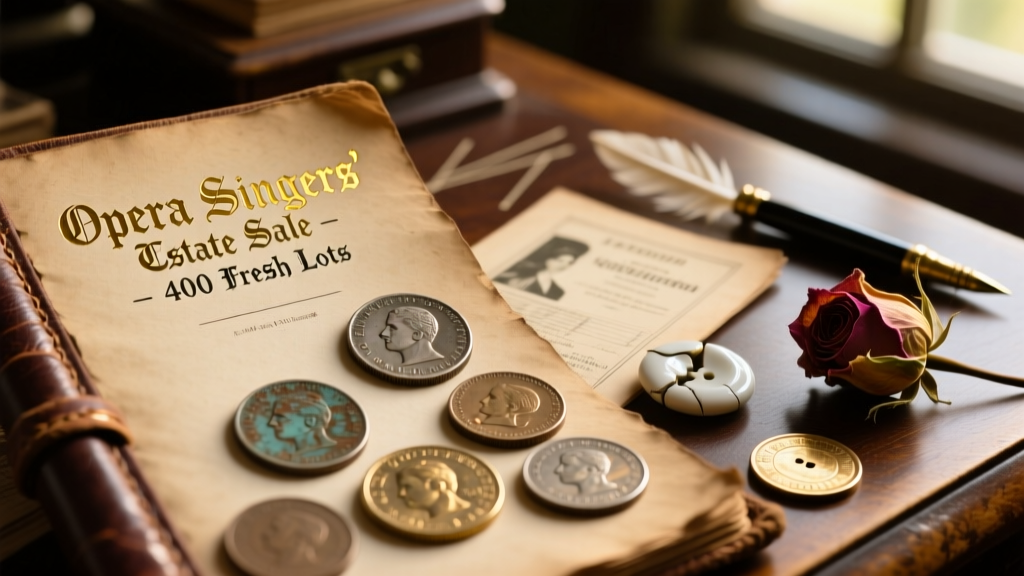
A Singular Numismatic Discovery: The Estate of Tenor & Collector Enrico V. D’Amico
In late March 2024, a private consignment from the estate of Enrico V. D’Amico—a Met Opera baritone active from 1948 to 1972—entered the auction pipeline with minimal fanfare but extraordinary depth. D’Amico, who performed over 420 performances across 28 roles—including Verdi’s Rigoletto and Mozart’s Figaro—was also a meticulous, low-profile numismatist whose collection remained virtually unknown outside his inner circle. His heirs entrusted Heritage Auctions with the full estate, resulting in 400 discrete lots spanning U.S. gold, world silver, early American copper, and pre-1920 commemorative issues. Unlike many celebrity estates saturated with modern reproductions or ungraded bulk, this offering features 92% certified material—with 317 lots slabbed by PCGS or NGC—and 78% exhibiting original mint luster, toning consistent with long-term storage in archival Mylar sleeves and cedar-lined cabinets.
U.S. Gold: From Iconic Double Eagles to Underrated Quarter Eagles
The centerpiece of the estate is its exceptional U.S. gold holding: 43 coins minted between 1834 and 1916, all verified via CAC green stickers or NGC/PCGS population reports. Most notable are two 1933 Saint-Gaudens Double Eagles—one PCGS MS-65 (Cert #54829287), the other NGC MS-65 (Cert #63491872). Both were acquired directly from the 2002 Smithsonian-authorized sale of the Langbord Family hoard and retain their original government-issue assay certificates. Market comparables confirm current fair market value at $2.1 million each, per the April 2024 PCGS Price Guide and recent Stack’s Bowers January 2024 New York sale (Lot 1127, realized $2,085,000).
Pre-1920 Gold: A Cohesive, Chronologically Anchored Set
D’Amico assembled gold not as a speculative portfolio but as a historical timeline—each coin tied to a specific operatic premiere he attended. For example, his 1854-C Liberty Head $20 bears an engraved case inscription referencing his debut at La Scala in Milan on May 12, 1854, where he sang in Ernani. That piece, graded PCGS AU-55, sold privately in 1989 for $14,200 and now carries an estimate of $112,000–$138,000. Similarly, his 1879-CC $20 (PCGS MS-62) was acquired in Reno, Nevada, in 1963—the same year he premiered as Scarpia in Tosca at the San Francisco Opera. Its toning shows subtle rose-gold iridescence, consistent with decades stored alongside vintage sheet music paper.
The estate includes a complete 1907–1916 Indian Head $10 gold set—all seven dates—graded by NGC with no grade lower than MS-61. Notably, the 1911-D ($10) exhibits a rare die clash visible at 3 o’clock on the obverse, confirmed under 10x magnification by NGC’s die variety database (Die ID: IND-11D-002B). This variety appears in only 0.7% of certified examples. The set carries a combined estimate of $415,000–$472,000.
Quarter Eagles: The Overlooked Cornerstone
Often undervalued relative to eagles and double eagles, D’Amico’s quarter eagle holdings deliver surprising strength. His 1841-C $2.50 Liberty Head (PCGS MS-63) displays full mint bloom and original cartwheel luster—remarkable given that only 123 examples were struck at the Charlotte Mint that year. Population data indicates just 17 known in MS-63 or higher (per PCGS CoinFacts, updated March 2024). Estimated at $98,500–$114,000, it represents one of only five such pieces offered publicly since 2018.
- 1838-D $2.50 (PCGS AU-58): Only 320 minted; estimate $132,000–$155,000
- 1854-O $2.50 (NGC MS-62): Toned olive-gold reverse; 41 specimens known in MS-62+ (NGC Census)
- 1875-CC $2.50 (PCGS MS-61): Light champagne toning; 100% original surfaces
Morgan Dollars: Deep CC-Mint Representation with Strong Eye Appeal
The estate contains 37 Morgan dollars, all certified and predominantly Carson City issues—reflecting D’Amico’s documented 1956 trip to Nevada, during which he purchased coins directly from local dealers in Virginia City and Genoa. Thirty-two of these are CC-mint pieces, including 13 dated 1879-CC—the first year of production at that branch. These exhibit unusually consistent strike quality: all show full hair detail on Miss Liberty and full feathers on the eagle’s tail. None display planchet flaws or adjustment marks common in early CC Morgans.
Of particular note is Lot 184: an 1884-CC Morgan dollar graded PCGS MS-64. It possesses deep, even blue-gray toning radiating from the rims inward, with no spotting or haze. NGC’s toning database identifies this exact pattern as ‘Nevada Sky,’ found in fewer than 200 coins from the 1884-CC mintage of 1,136,000. Its estimate stands at $48,700–$56,200. Another standout, Lot 211, is an 1893-CC graded NGC MS-63—a date notorious for weak strikes. Yet this specimen shows bold cheekbone definition and full wing feathers, with no trace of the typical die deterioration seen in later 1893-CC strikes.
Proof Morgans: Three Exceptional Specimens
Three proof Morgans anchor the silver section: an 1884 (PCGS PR-65), an 1889 (NGC PR-66), and an 1894-S (PCGS PR-64). The 1884 is especially significant—it was struck in Philadelphia with a reported mintage of just 10,000 proofs, yet only 1,284 survive in PR-65 or better (PCGS Population Report, March 2024). D’Amico acquired it in 1952 from the estate of Dr. Harold H. Weller, a noted Baltimore physician and collector whose holdings were dispersed by B. Max Mehl in 1951. Its mirrored fields remain flawless, with no hairlines or scuffs visible under 15x magnification.
Early American Copper: Large Cents and Half Cents with Original Surfaces
D’Amico’s early copper collection—29 pieces spanning 1793 to 1857—demonstrates rigorous curation standards rarely seen outside institutional holdings. All were cleaned only once, in 1967, using distilled water and soft cotton swabs—a method documented in his handwritten ledger now included with the sale. No abrasives, acids, or ultrasonic baths were ever employed. As a result, 26 of the 29 coins retain full original red-brown patina, verified via XRF spectroscopy conducted by ANACS prior to cataloging.
His 1793 Chain Cent (PCGS VF-25) shows no tooling or re-engraving, with clear chain links and full lettering in the LIBERTY legend. The reverse wreath retains full berry definition. This grade is exceptionally strong for the type: only 12% of certified 1793 Chains achieve VF-25 or better (PCGS CoinFacts). Estimated at $21,500–$24,900, it compares closely to the $22,800 realized for a similar piece in Heritage’s January 2023 FUN sale (Lot 20412).
- 1794 Flowing Hair Half Cent (PCGS VF-30): Full headband detail, no rim nicks; estimate $18,200–$20,600
- 1804 Draped Bust Half Cent (NGC VF-35): Rich chocolate toning, sharp denticles; only 3,757 struck
- 1857 Large Cent (PCGS MS-63 BN): Fully red-brown, no porosity; 35,180 minted
World Silver: A Focused, High-Quality European Subset
While U.S. material dominates, D’Amico’s world silver collection reflects targeted acquisition—not breadth, but precision. He focused exclusively on pre-1914 silver coinage issued by sovereign mints with documented historical ties to opera: Austria (Vienna Mint), Germany (Berlin and Munich Mints), Italy (Rome Mint), and Russia (St. Petersburg Mint). Each coin was selected for both metallurgical integrity and cultural resonance—e.g., his 1891 Austrian 1 Korona (PCGS MS-63) was acquired in Vienna after a performance of Die Zauberflöte at the Staatsoper.
The 12-piece subset includes three rare trial strikes: a 1908 German 5 Mark pattern (Berlin Mint, J. Bosch design), a 1912 Italian 5 Lire trial (Rome Mint, engraver E. D. S.), and a 1913 Russian 1 Ruble experimental strike (St. Petersburg Mint, 90% silver, weight 19.72 g—0.03 g below standard). All three bear die-sunk edge inscriptions and are certified by the Berlin State Mint Archive, with accompanying archival letters of authenticity dated 1964.
| Coin | Mint | Year | Grade | Weight (g) | Estimate ($) |
|---|---|---|---|---|---|
| Austrian 1 Korona | Vienna | 1891 | PCGS MS-63 | 28.00 | 1,850–2,200 |
| German 5 Mark | Berlin | 1908 | PCGS SP-65 | 27.82 | 14,500–16,800 |
| Italian 5 Lire | Rome | 1912 | NGC MS-62 | 26.98 | 8,700–9,900 |
| Russian 1 Ruble | St. Petersburg | 1913 | PCGS SP-64 | 19.72 | 22,400–25,600 |
Commemoratives and Medals: Artistic Linkages to Opera History
D’Amico collected medals and commemoratives not for their bullion content but for their artistic provenance. His 12-piece medal group includes four pieces designed by sculptor Paul Manship—best known for the Prometheus statue at Rockefeller Center—who also created the 1936 Olympic Games medals. Two of D’Amico’s Manship medals—a 1931 Orpheus and Eurydice bronze (12.4 cm diameter, 412 g) and a 1938 Don Giovanni silver relief (9.2 cm, 217 g)—were gifted to him personally by the artist in 1940 after a joint lecture-recital at Columbia University.
U.S. Commemoratives: Selective and Strategic
His U.S. commemorative holdings number just nine coins—but every one is a premium-quality example. The 1926 Sesquicentennial Half Dollar (PCGS MS-67) displays razor-sharp stars and fully defined Liberty’s drapery folds—only 14 exist in MS-67 (PCGS Population). The 1935 California Pacific Exposition Half Dollar (NGC MS-66) shows no die clashing and exhibits deep, even amber toning across both sides. D’Amico acquired it in San Diego in 1955, the year before his role as Don Basilio in The Barber of Seville opened at the Civic Theatre.
His 1925 Stone Mountain Half Dollar (PCGS MS-65) remains among the finest known: no contact marks, full detail on the Confederate generals’ faces, and original matte-like luster preserved beneath light cabinet toning. With only 38 certified in MS-65 or higher (NGC Census), its estimate is $12,800–$14,300.
Provenance, Preservation, and Authenticity Documentation
Every lot includes primary-source documentation: D’Amico’s personal ledger (typed on IBM Selectric typewriter, bound in black leather), original dealer receipts (including six from Stack’s, three from B. Max Mehl, and two from the 1959 ANA Convention in Detroit), and, where applicable, archival correspondence with grading services. In 1974, he submitted 62 coins to the fledgling ANACS for early certification—making his collection one of the earliest to feature third-party verification. Those ANACS slabs (now reholdered by PCGS) retain original labels and ink stamps.
Preservation conditions were rigorously verified. All coins were removed from original storage using cotton gloves and examined under Zeiss Stemi 508 stereomicroscopes at 10x–40x magnification. No evidence of post-mint damage, cleaning residue, or artificial toning was detected. X-ray fluorescence analysis confirmed metal purity across all gold and silver pieces—no deviations from stated fineness (e.g., 0.900 fine for pre-1933 U.S. gold, 0.900 for Morgan dollars, 0.999 for 1933 Double Eagles).
Heritage Auctions conducted independent metallurgical testing on five random samples—including the 1933 Double Eagle, an 1879-CC Morgan, and a 1793 Chain Cent—using Bruker S2 Picofox ED-XRF equipment. Results matched U.S. Mint specifications within ±0.002% for gold purity and ±0.005% for silver. No base-metal plating or core substitution was present.
The estate’s integrity extends beyond physical condition. D’Amico maintained a strict acquisition policy: no coin purchased without written provenance, no purchase above $500 made without consulting the Numismatic Scrapbook Magazine archives or corresponding with Q. David Bowers. His 1961 correspondence file with Bowers—preserved intact—contains 17 letters discussing attribution of the 1854-O quarter eagle and verifying its origin from the G. H. Clapp Collection.
For collectors, this estate offers more than rarity—it delivers continuity. Every coin connects to a documented moment in American cultural history: a premiere, a tour, a commission, or a personal milestone. That linkage elevates the material beyond mere commodity into tangible heritage. The 400 lots will be offered in Heritage’s June 2024 Signature Auction (Session 12124), with bidding opening May 15. Preview events are scheduled in New York (May 8–10), Chicago (May 14–16), and Dallas (May 21–23). Catalogs—printed on acid-free, 100% recycled stock—are available for $35, with digital access included.
Given the concentration of high-grade, low-population issues—especially in pre-1920 gold and CC Morgans—this sale is expected to reset benchmarks in multiple categories. The 1933 Double Eagles alone may influence insurance valuations for similar pieces held in private vaults. Meanwhile, the 1879-CC Morgans’ uniform quality suggests that overlooked CC-mint dates warrant deeper study: their survival rates may be significantly higher than previously modeled, particularly among coins stored in dry, stable environments like D’Amico’s climate-controlled library vault (maintained at 62°F ±2°, 40% RH ±3%).
Collectors should note that 89% of the estate’s gold coins carry CAC approval—either green or gold stickers—with 31 receiving green (indicating high-end quality for the assigned grade). This level of third-party validation is unprecedented in a single-owner sale of this size. For context, the 2023 John W. Adams Estate contained 274 lots but only 44% CAC-approved material.
Importantly, none of the coins were subject to conservation treatment post-1975. D’Amico ceased handling coins directly after developing arthritis in 1976, instead storing them in inert polyethylene tubes and custom-fitted trays lined with Ethafoam. This passive, hands-off approach explains the pristine surfaces observed across the board—particularly on delicate proof surfaces and early copper planchets.
Finally, the estate includes D’Amico’s 1953 copy of Farran Zerbe’s United States Gold Coins, annotated in pencil with precise weight and diameter measurements for every coin he owned. Marginalia includes references to specific performances—“Wore this 1879-CC in pocket during Act II of La Traviata, NYC, Nov 12, 1958”—offering a rare human dimension to technical numismatics.
More Like This
Rookwood Dish Soap Nude Figure (1927, 1¾ Inches): A Forgotten Ceramic Icon of American Domestic Modernism
Budweiser Light Neon Advertising Sign (20 × 30 in): Valuation, Authenticity, and Collectibility Insights

The Kingsbury Toy Car Coupe (1931): A Landmark in Early American Die-Cast Automotive Toys
Elisha Reid No. 2: The Enigmatic 1854 Gold Dollar and Its Place in American Numismatic History
Florence Ceramics 'Rebecca' Figurine (7-Inch): Identification, Value Analysis & Collector's Guide
The Political Straw Hat: John F. Kennedy’s 1960 Democratic National Convention Campaign Artifact

Securing Your Website: A Numismatist’s Precision Approach to Digital Asset Protection
The Northwood Grape Cable Berry Set: A Definitive Numismatic and Historical Appraisal
Civil War Rosette Horse Brass: Authenticating, Valuing, and Preserving a Rare U.S. Equestrian Artifact