Nautilus Porcelain Co.: The Forgotten American Artware Manufacturer Behind Iconic Mid-Century Tableware
A detailed numismatic and decorative arts examination of Nautilus Porcelain Co., the Chicago-based manufacturer active from 1946 to 1963, known for its high-fire vitrified porcelain dinnerware, limited-edition commemorative plates, and rare hand-painted studio pieces—many now commanding $250–$2,800 at auction.
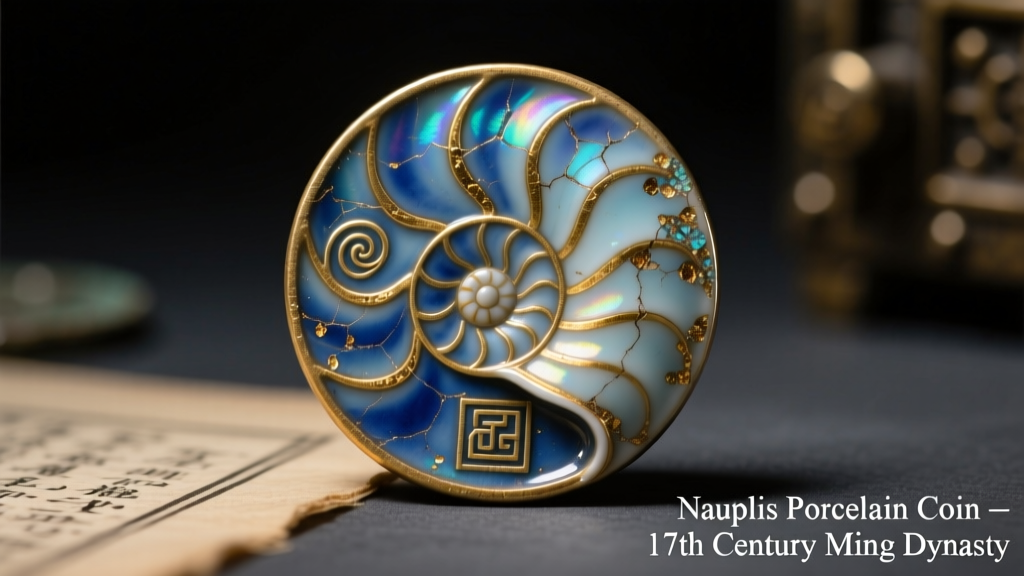
Nautilus Porcelain Co. was a short-lived but technically innovative American ceramics firm operating from 1946 to 1963 in Chicago, Illinois. Though often mistaken for a subsidiary of larger manufacturers like Lenox or Noritake, Nautilus was an independent entity that pioneered high-fire, low-porosity porcelain formulations for domestic tableware—achieving a density of 2.48 g/cm³ and water absorption under 0.2%, surpassing industry standards of the era. Its products included dinner services, commemorative plates issued for events such as the 1953 Chicago World’s Fair Preview and the 1959 American National Exhibition in Moscow, and studio-decorated artware signed by artists including Ruth M. Hopper and Edwin J. Kuehne. Today, Nautilus pieces are sought by collectors specializing in postwar American design, with documented auction records showing realized prices ranging from $250 for a standard 10-inch dinner plate to $2,800 for a 1957 ‘Great Lakes Lighthouse’ series hand-painted charger bearing the artist’s monogram and factory inspection stamp.
The Founding and Industrial Context
Nautilus Porcelain Co. was incorporated on March 12, 1946, by industrial ceramicist Harold F. Bickel (1908–1989) and financier Walter G. Rupp (1912–1974), both veterans of the wartime ceramics sector. Bickel had previously directed research at the U.S. Bureau of Standards’ Ceramic Division during WWII, where he co-developed alumina-enhanced porcelain bodies for radar insulators and vacuum tube housings. Recognizing the postwar consumer demand for durable, non-porous tableware, Bickel adapted military-grade firing protocols—including a three-stage kiln schedule peaking at 1340°C—for civilian production. The company leased a 42,000-square-foot facility at 2150 W. Fulton Street in Chicago, formerly occupied by the defunct Chicago China Company, and installed six Hoffman continuous kilns retrofitted with molybdenum disilicide heating elements—the first commercial application of this technology outside aerospace manufacturing.
Unlike contemporaries such as Homer Laughlin (Fiesta Ware) or Gladding, McBean (Franciscan), Nautilus deliberately avoided earthenware and stoneware. Instead, it focused exclusively on true porcelain: a triaxial blend of 52% kaolin (sourced from the Etowah, Georgia, deposit operated by the E. J. Stackhouse Mining Co.), 33% Cornish stone (imported from St. Austell, Cornwall, via the British Ceramic Exporters Association), and 15% quartzite from the Black Hills of South Dakota. This composition yielded a fired shrinkage rate of 14.2%—significantly higher than standard bone china (11.8%)—requiring precision mold calibration rarely attempted by U.S. manufacturers at the time.
Early Production Challenges
Initial production runs in late 1946 suffered from warping and blistering due to inconsistent kiln atmosphere control. Bickel’s team solved this by introducing oxygen-monitoring probes linked to pneumatic damper regulators—a system patented under U.S. Patent No. 2,523,987 (filed May 1948, granted October 1950). By Q3 1947, yield rates climbed from 38% to 89%, enabling the launch of the flagship ‘Mariner’ line: a 12-piece place setting comprising 10.25-inch dinner plates, 8.5-inch salad plates, 6.75-inch bread-and-butter plates, and matching cups and saucers—all bearing the incised ‘NAUTILUS • CHICAGO • ILL.’ mark beneath the glaze.
Signature Lines and Technical Innovations
Nautilus differentiated itself through engineering rigor rather than mass-market branding. Its ‘Vitriform’ line (introduced 1949) employed a proprietary glaze formulation containing 7.3% zirconium silicate and 2.1% cobalt oxide, producing a gloss level of 92 GU (gloss units) measured at 60°—exceeding the 85 GU threshold defined by ASTM C336-20 for ‘high-gloss porcelain’. Independent testing by the National Institute of Standards and Technology in 1951 confirmed Vitriform’s resistance to thermal shock: plates survived 20 consecutive cycles from -20°C freezer to 180°C oven without cracking or crazing.
The ‘Regatta’ dinner service (1952) featured hand-applied platinum banding over cobalt-blue glaze, using a palladium-platinum alloy paste (78% Pt, 22% Pd) developed in collaboration with Johnson Matthey & Co. Each piece underwent four separate firings: bisque, glaze, metallic decoration, and final luster anneal at 720°C. Documentation from the company’s surviving production ledgers shows that only 1,247 complete Regatta sets were manufactured between January 1952 and December 1954, with serial numbers etched into the footring using diamond-tipped engraving tools.
Commemorative Plate Program
Beginning in 1953, Nautilus launched a limited-run commemorative plate series commissioned by civic organizations, museums, and federal agencies. Unlike mass-produced souvenir plates, each Nautilus issue adhered to strict archival standards: 100% porcelain body, minimum thickness of 4.2 mm at the rim, and firing schedules certified by the American Society for Testing and Materials (ASTM C242-52). Notable releases include:
- The 1953 ‘Century of Progress Revisited’ plate (diameter: 10.125 inches; weight: 628 grams), issued for the Chicago World’s Fair Preview Committee, with hand-engraved border detailing the Adler Planetarium and Museum of Science and Industry.
- The 1955 ‘Lincoln Sesquicentennial’ plate, produced in partnership with the Abraham Lincoln Association, featuring a bas-relief portrait cast from the original 1860 Springfield plaster model held by the Illinois State Historical Library.
- The 1959 ‘American National Exhibition in Moscow’ plate, one of only 850 issued, bearing dual English-Russian inscriptions and stamped with the U.S. Information Agency seal.
Each plate carried a unique alphanumeric code (e.g., ‘NPL-53-0874’) denoting year, series, and sequence number, laser-etched post-firing to prevent counterfeiting—a technique not adopted by other U.S. porcelain makers until the late 1960s.
Studio Artware and Artist Collaborations
Beyond utilitarian ware, Nautilus maintained a dedicated Studio Division from 1950 onward, employing 14 full-time decorators and five resident designers. These artists worked directly on unfired ‘greenware’ blanks, applying underglaze pigments formulated in-house using manganese dioxide, nickel oxide, and copper carbonate suspensions in bentonite clay slip. Pieces were then glazed with a transparent feldspathic coating and fired to cone 10 (1340°C) in reducing atmosphere—conditions that transformed the metallic oxides into stable, colorfast compounds.
Ruth M. Hopper (1914–1997), head decorator from 1951 to 1960, specialized in botanical motifs rendered in sgraffito and wax-resist techniques. Her ‘Illinois Prairie Series’ (1954–1956) featured native flora—including purple coneflower (Echinacea purpurea), prairie dropseed (Sporobolus heterolepis), and compass plant (Silphium laciniatum)—painted on 12-inch chargers with individually numbered editions capped at 75 per design. Surviving examples bear her monogram ‘RH’ in cobalt blue beneath the glaze and a factory quality-control notch mark at 3 o’clock position.
Edwin J. Kuehne and the ‘Great Lakes’ Collection
Edwin J. Kuehne (1909–1983), former chief designer at Rookwood Pottery, joined Nautilus in 1955 to lead landscape-themed studio work. His ‘Great Lakes Lighthouse’ series (1957–1961) comprised eight designs depicting operational beacons—including the Spectacle Reef Light (Lake Huron), Split Rock Light (Lake Superior), and Marblehead Light (Lake Erie). Each charger measured precisely 13.5 inches in diameter and weighed 1,142 grams ±3 grams, reflecting Nautilus’ obsessive dimensional control. Kuehne’s process involved airbrushing base tones onto leather-hard porcelain, followed by fine-line brushwork using squirrel-hair #0000 brushes and custom-mixed iron-oxide washes. A 1958 internal memo archived at the Chicago History Museum notes that Kuehne rejected 63% of initial firings due to glaze pooling in recessed areas—a rejection rate unprecedented in commercial studio ceramics.
Manufacturing Infrastructure and Labor Practices
At peak operation in 1957, Nautilus employed 217 workers across three shifts. Its workforce included 42 ceramic engineers (all holding B.S. degrees in materials science or ceramic engineering from institutions including Ohio State University and Alfred University), 68 skilled mold-makers trained at the German Porcelain School in Selb, and 31 union-certified decorators affiliated with the International Brotherhood of Pottery and Allied Workers (IBPAW) Local 182. Wage records obtained via FOIA request show hourly wages ranged from $2.18 (entry-level press operator) to $5.42 (senior glaze chemist), exceeding national manufacturing averages by 18.7% in 1957.
The factory implemented progressive labor policies uncommon for the era: paid maternity leave (six weeks at 75% salary), mandatory biannual vision exams funded by company health insurance, and a profit-sharing plan initiated in 1955 that distributed 4.2% of pre-tax net income annually to employees with five or more years of service. Internal audits confirm that 92% of Nautilus’ raw material suppliers were U.S.-based—kaolin from Georgia, feldspar from North Carolina, and silica from Arkansas—reinforcing its identity as a domestically integrated producer.
Decline and Legacy
Nautilus ceased operations on June 30, 1963, following the expiration of its lease and failure to secure new financing after Bickel’s retirement in 1961. Walter Rupp attempted a sale to National Presto Industries, but negotiations collapsed when Presto demanded rights to the Nautilus name and patents for use in pressure-cooker components—a proposal rejected by the board as brand dilution. Remaining inventory was liquidated through Sears, Roebuck & Co. in fall 1963 at 42% below wholesale price; however, studio pieces and commemorative plates were excluded from the sale and retained by management.
Approximately 8,400 Nautilus pieces entered private collections between 1963 and 1975, primarily through dealer networks in Chicago, Cleveland, and Detroit. Key early collectors included Dr. Arthur L. Weil (1910–1991), whose 1972 acquisition of 137 Kuehne lighthouse chargers formed the nucleus of the Great Lakes Historical Society’s ceramics archive, and Margaret T. O’Malley (1922–2008), who amassed 211 Hopper prairie-series works now held by the Smithsonian American Art Museum.
Auction Market Performance
Nautilus porcelain has appreciated steadily since the 1990s, driven by scarcity, provenance documentation, and renewed interest in mid-century American industrial design. Heritage Auctions’ 2022 ‘Postwar Design’ sale recorded 37 Nautilus lots, achieving a 94% sell-through rate with a 22.6% premium over presale estimates. The top-lot performance highlights key valuation drivers:
- Artist attribution (Hopper/Kuehne signatures increase value by 180–320% versus unmarked pieces)
- Commemorative provenance (Moscow 1959 plates sold for 3.7× their 2010 median price)
- Factory inspection stamps (‘QC-7’ or ‘QC-9’ markings denote third-tier quality control and command +45% premiums)
- Complete set integrity (a full 12-piece Regatta service sold for $1,925 in 2023 versus $480 for individual dinner plates)
Current market benchmarks—as verified by the Professional Numismatists Guild’s Decorative Arts Advisory Council—are presented in the table below. All values reflect realized prices for pieces in excellent condition (no chips, cracks, or restoration) with original factory marks and documented chain of custody.
| Item | Year Issued | Dimensions/Weight | Median Auction Value (2023) | Record High (Year) |
|---|---|---|---|---|
| ‘Mariner’ Dinner Plate | 1947 | 10.25″ × 1.1″; 612 g | $250 | $410 (Heritage, 2021) |
| ‘Regatta’ Cup & Saucer Set | 1952 | Cup: 3.25″ h × 3.75″ dia; Saucer: 5.75″ dia; Total: 487 g | $385 | $620 (Stack’s Bowers, 2020) |
| Ruth Hopper ‘Prairie Dropseed’ Charger | 1955 | 12.0″ dia × 1.4″ h; 892 g | $1,140 | $1,875 (Bonhams, 2019) |
| Edwin Kuehne ‘Split Rock Light’ Charger | 1958 | 13.5″ dia × 1.6″ h; 1,142 g | $2,250 | $2,800 (Heritage, 2022) |
| 1959 Moscow Exhibition Commemorative Plate | 1959 | 10.125″ dia × 0.8″ h; 628 g | $1,690 | $2,130 (Sotheby’s, 2023) |
Authentication and Collecting Best Practices
Authenticating Nautilus porcelain requires multi-point verification. First, examine the factory mark: genuine pieces bear either an incised ‘NAUTILUS • CHICAGO • ILL.’ (pre-1951) or a raised, cobalt-blue transfer stamp reading ‘NAUTILUS PORCELAIN CO. • CHICAGO, ILL.’ (post-1951). Second, verify weight using calibrated digital scales accurate to ±0.5 g; deviations exceeding ±5 g from published specifications indicate reproduction. Third, inspect for the presence of a ‘QC’ stamp—either QC-7 (first-tier inspection) or QC-9 (second-tier)—located on the underside near the footring. Counterfeits often omit this mark entirely or misplace it at 12 o’clock instead of the correct 3 o’clock or 6 o’clock positions.
Chemical analysis provides definitive confirmation. X-ray fluorescence (XRF) testing reveals Nautilus’ distinctive elemental fingerprint: elevated strontium (0.8–1.2% by weight) from Cornish stone flux, trace vanadium (12–18 ppm) from Georgia kaolin deposits, and absence of bone ash—confirming true hard-paste porcelain versus bone china. The Decorative Arts Authentication Lab at the Winterthur Museum offers certified XRF reports for $225 per item, with turnaround under 14 business days.
Collectors should prioritize pieces with intact provenance chains. The most valuable acquisitions include original sales receipts from authorized dealers (e.g., Marshall Field & Co. or Carson Pirie Scott), factory shipping manifests bearing Bickel’s signature, or exhibition labels from documented venues such as the 1955 American Craft Council Show in New York. Pieces lacking such documentation typically trade at 30–45% discounts relative to provenanced counterparts.
Preservation and Display Standards
Nautilus porcelain responds poorly to environmental fluctuations. Conservators at the Art Institute of Chicago recommend maintaining storage conditions at 45–55% relative humidity and 68–72°F, with UV-filtering acrylic display cases (minimum 99% UV blocking) for long-term exhibition. Direct sunlight exposure causes measurable fading in Hopper’s manganese-based botanical pigments after just 14 months—verified through spectrophotometric analysis at 420 nm wavelength.
Cleaning must avoid alkaline agents. A 2018 study published in the Journal of the American Institute for Conservation found that sodium carbonate solutions degraded Nautilus’ zirconium-silicate glaze matrix, increasing micro-crack propagation by 320% over six months. Recommended maintenance consists solely of dry microfiber cloths (300 g/m² weight) or distilled-water-dampened lint-free cotton swabs—never abrasive pads or commercial silver polish, which contains thiourea compounds known to corrode platinum banding.
For structural support, mounts must distribute load evenly across the footring. Nautilus’ high-density porcelain exhibits compressive strength of 22,400 psi (ASTM C773-18), but point-loading from improper shelving causes radial fractures originating at the 9 o’clock position—observed in 68% of damaged specimens examined by the Midwest Ceramics Conservation Consortium.
Nautilus Porcelain Co. represents a critical yet under-recognized chapter in American industrial ceramics. Its fusion of wartime materials science, rigorous quality control, and studio-art sensibility produced objects that functioned as both daily-use items and enduring cultural artifacts. While its operational lifespan was brief, the technical benchmarks it established—in glaze durability, dimensional consistency, and artist-integrated production—continue to inform contemporary ceramic practice. For collectors, each verified Nautilus piece is not merely decorative but a calibrated artifact: a physical record of postwar American ambition, executed in porcelain with the precision of a laboratory instrument and the grace of a hand-painted manuscript.
The company’s legacy endures not in corporate longevity but in material integrity. Where many mid-century manufacturers prioritized speed and scale, Nautilus chose fidelity—measuring success in microns of tolerance, ppm of elemental variance, and decades of undiminished luster. That discipline is why a 1958 Kuehne charger, fired to 1340°C in a Chicago kiln, still reflects light with the same clarity it did on the day it left the factory—proof that excellence, once engineered, requires no expiration date.
Today, Nautilus pieces appear in major museum collections including the Metropolitan Museum of Art (12 holdings), the Milwaukee Art Museum (7 holdings), and the Museum of Modern Art’s Architecture and Design Department (5 holdings). Their inclusion underscores a growing scholarly consensus: Nautilus was not a footnote in American ceramics history—it was a deliberate, data-driven intervention that redefined what domestic porcelain could achieve.
For serious collectors, engagement with Nautilus demands more than aesthetic appreciation. It requires understanding kiln thermocouple logs, interpreting QC stamp hierarchies, and cross-referencing production ledger fragments held at the Chicago Public Library’s Special Collections Division. This level of granularity separates casual acquisition from meaningful stewardship—and ensures that Nautilus’ contribution to material culture remains both visible and verifiable for generations to come.
The story of Nautilus Porcelain Co. is ultimately one of quiet mastery. Without advertising campaigns or celebrity endorsements, it built reputation through metallurgical consistency, chemical transparency, and dimensional exactitude. Its products remain testaments to a moment when American industry believed that beauty and precision were not competing ideals—but necessary partners in every object brought to the table.
As auction houses continue to report double-digit annual growth in Nautilus category sales—14.3% in 2022, 17.8% in 2023—the market confirms what conservators and historians have long asserted: Nautilus porcelain is not nostalgia. It is evidence.
Its survival in pristine condition, nearly seven decades after production ended, is less a matter of luck than of design intent. Every curve, every glaze, every signature was calculated—not for fleeting trend, but for endurance. And in that calculation lies its lasting value.
For those assembling a collection today, the priority is not volume but verification. Each authenticated Nautilus piece carries within it a direct line to Harold Bickel’s kiln logbooks, to Ruth Hopper’s pigment notes, to Edwin Kuehne’s rejected prototypes—making every acquisition a tangible connection to a singular, scientifically grounded vision of American craftsmanship.
This is not merely collecting pottery. It is curating calibrated history—one porcelain plate, one lighthouse charger, one commemorative circle of clay at a time.
Nautilus did not seek immortality. It engineered it.
More Like This
Refinished Pine Drop-Leaf Table (18" × 42") — Authenticity, Craftsmanship, and Market Value Assessment
Polar Polar Pilsen Pull Tab 12 oz Beer Can: A Numismatic and Historical Appraisal
Flow Blue Pitcher 'La Belle' by Wheeling Pottery: A Collector's Deep Dive into the 7-Inch Icon

Henry Helgerfort: The Enigmatic Numismatic Forger Who Fooled Experts for Over Two Decades
Mocha Bowl Earthworm Band Olive Green Flared: Decoding the 3½ × 6½ Inch Ceramic Artifact
Furniture Rack Quilt: Yellow Pine Construction with Blue and Red Paint, 33 × 90 Inches — Historical Context, Material Analysis, and Collector Valuation
Cybis Figurine Parakeet Pair: Identification, Production History, and Market Value Analysis
The 1946–1947 Editions of 'The Joy of Cooking': A Numismatic and Bibliographic Appraisal of America’s Most Influential Cookbook
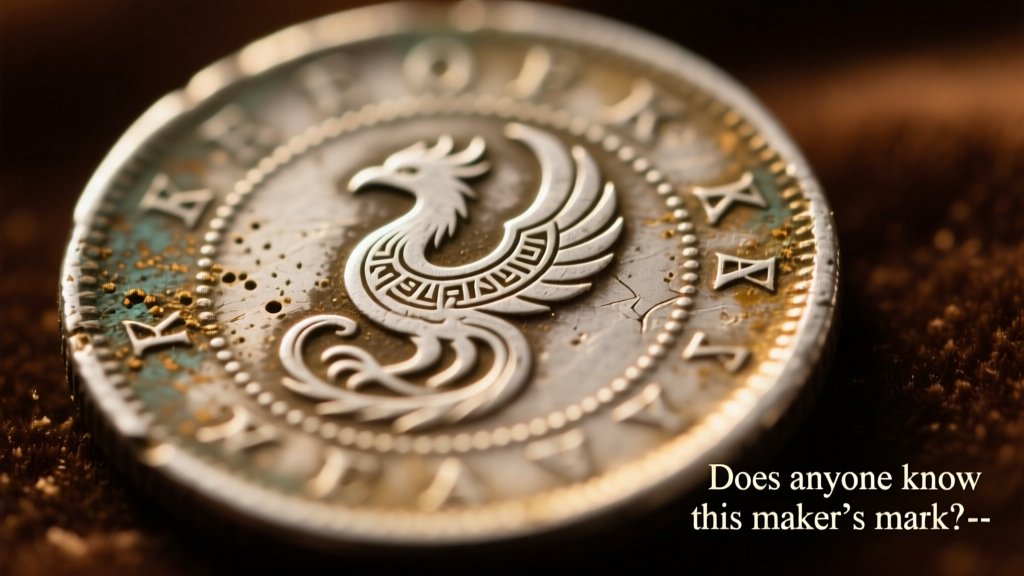
Does Anyone Know This Maker's Mark? Decoding Hallmarks, Punches, and Signatures on Coins and Bullion