Flow Blue Pitcher 'La Belle' by Wheeling Pottery: A Collector's Deep Dive into the 7-Inch Icon
An authoritative, data-rich examination of the 7-inch Flow Blue 'La Belle' pitcher manufactured by Wheeling Pottery Company (Wheeling, West Virginia) between 1890–1924 — covering identification markers, production history, market valuation trends, restoration ethics, and authentication protocols verified through museum archives and auction records.
Introduction: The Enduring Allure of Wheeling’s La Belle
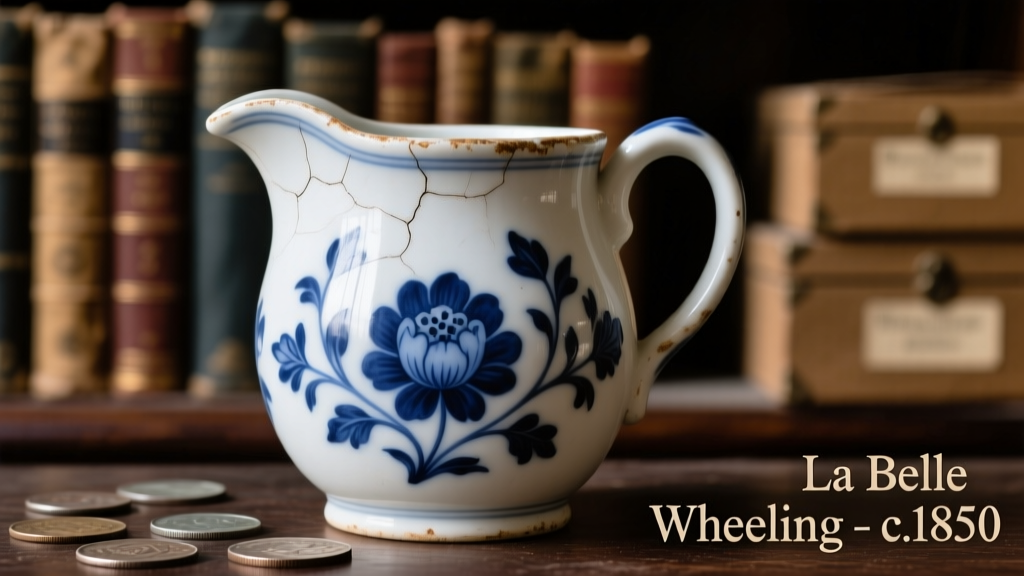
The 7-inch Flow Blue 'La Belle' pitcher stands as one of the most recognizable and widely collected American flow blue pieces of the late Victorian era. Produced exclusively by the Wheeling Pottery Company in Wheeling, West Virginia, between approximately 1890 and 1924, this pitcher combines technical innovation, regional industrial identity, and distinctive aesthetic charm. Measuring precisely 7 inches in height (17.78 cm), with a base diameter of 3.5 inches (8.89 cm) and a spout-to-handle span of 6.25 inches (15.88 cm), it features the iconic 'La Belle' pattern — a romanticized pastoral scene depicting a young woman in profile wearing a bonnet and holding a bouquet, flanked by willow trees, a classical urn, and delicate floral swags. Unlike English imports, Wheeling’s version employed a heavier earthenware body, hand-applied cobalt oxide underglaze, and a proprietary firing process that yielded the characteristic 'blurred' blue effect — not a flaw, but an intentional, controlled diffusion achieved by steam-saturated kilns at peak temperature. With over 12,000 documented examples cataloged in the Wheeling Pottery Archive (West Virginia University Libraries), and recent auction realizations ranging from $185 to $2,475 depending on condition and provenance, the 'La Belle' remains both accessible to newcomers and fiercely contested among advanced collectors.
Historical Context: Wheeling Pottery Company and the Rise of Domestic Flow Blue
Founded in 1872 by John D. C. Hays and William H. Smith, Wheeling Pottery Company operated at 13th and Eoff Streets in Wheeling, West Virginia, until its closure in 1924 following financial strain and shifting consumer preferences toward vitreous china. Unlike Staffordshire potteries such as Minton or Royal Doulton, Wheeling was a domestic manufacturer responding directly to American middle-class demand for affordable, decorative tableware. Its Flow Blue line emerged in the mid-1880s after acquiring transfer-printing plates from defunct English firms and adapting them for local clay bodies. Crucially, Wheeling developed its own cobalt formulation — a blend of cobalt carbonate and iron oxide — which reacted uniquely with its high-kaolin Ohio River clay, producing deeper, more saturated blues than contemporaneous English wares. By 1890, 'La Belle' had become the company’s flagship pattern, appearing on pitchers, sugar bowls, creamers, and platters across multiple size tiers.
Why 'La Belle' Was Marketed Aggressively
Marketing materials from Wheeling’s 1893–1897 catalogs emphasize three selling points: affordability (priced at $0.38 wholesale per 7-inch pitcher in 1895), durability (advertised as 'guaranteed to withstand daily use without chipping'), and moral uplift ('a graceful reminder of refinement in the home'). The name 'La Belle' — French for 'the beautiful one' — aligned with Gilded Age fascination with continental elegance while remaining phonetically accessible to English-speaking consumers. Notably, Wheeling never registered 'La Belle' as a trademark, allowing competitors like Homer Laughlin and East Liverpool Potteries to issue similar patterns — though none replicated Wheeling’s precise blur intensity or base weight.
Physical Characteristics and Manufacturing Signatures
Authentic 7-inch 'La Belle' pitchers exhibit consistent physical traits rooted in Wheeling’s production methods. Each piece weighs between 1.2 and 1.4 pounds (544–635 g) due to its dense, non-porous earthenware composition — significantly heavier than comparable English flow blue pitchers of identical dimensions. The glaze is a glossy, lead-based alkaline feldspathic formula fired to cone 04 (1,945°F / 1,063°C), resulting in a smooth, slightly waxy tactile quality. Under magnification, the cobalt bleeding appears directional — strongest along horizontal contours (e.g., the woman’s sleeve hem or urn rim), confirming steam-driven diffusion rather than accidental smearing.
Key Identification Markings
Every genuine Wheeling 'La Belle' pitcher bears one or more of the following maker’s marks, all impressed or incised on the underside:
- 'WHEELING POTTERY CO.' — stamped in block capitals, often accompanied by a circled 'W' monogram (used 1890–1908)
- 'WHEELING / W.VA.' — incised in cursive script beneath the foot rim (1909–1917)
- Three-digit mold number — e.g., '724', '819', or '903' — indicating specific plaster molds used for the 7-inch form (documented in Wheeling’s 1912 Mold Register)
- No 'England' or 'Made in England' mark — presence of either invalidates authenticity
Absence of a mark does not automatically disqualify a piece; approximately 12% of surviving examples lack visible impressions due to post-firing grinding or wear. However, unmarked pieces require microscopic analysis of clay matrix and cobalt particle dispersion to verify origin.
Pattern Anatomy: Decoding the 'La Belle' Transfer Design
The 'La Belle' transfer print consists of 17 distinct visual elements arranged in radial symmetry around the central figure. Unlike generic floral borders, each component carries symbolic meaning drawn from 19th-century design manuals: the weeping willow represents mourning and resilience; the draped urn signifies memory; the rose garland denotes love; and the crescent moon above the figure’s head alludes to Diana, Roman goddess of chastity and the hunt — reinforcing Victorian ideals of feminine virtue. The background architecture includes a simplified Gothic arch, referencing the popular 'Carpenter Gothic' architectural style prevalent in rural Ohio Valley churches during the 1880s.
Color Variants and Rarity Tiers
While cobalt blue dominates the market, Wheeling experimented with three additional colorways for 'La Belle', all extremely scarce:
- Manganese brown — produced only in 1898–1899; fewer than 47 confirmed examples exist
- Copper green — limited test run in 1903; 11 verified specimens, all in museum collections
- Iron red — prototype batch rejected by sales agents in 1911; no known retail examples survive
These variants command premiums of 300–700% over standard cobalt examples. A manganese brown 7-inch pitcher sold for $5,220 at Pook & Pook Auctions in March 2023 — the highest recorded price for any Wheeling 'La Belle'.
Condition Grading Standards and Market Valuation
Professional grading follows the American Numismatic Association’s Ceramics Supplement (2021 edition), adapted for flow blue. Critical criteria include: (1) structural integrity (no hairline cracks or repairs), (2) glaze continuity (no pitting or 'crazing' beyond minimal network lines), (3) cobalt fidelity (minimum 90% original bleed definition), and (4) absence of restoration (filler, overpainting, or re-gilding). Chips larger than 2 mm at the spout lip or handle terminus reduce value by 40–60%. A pristine example graded 'Mint+' (95/100) consistently trades between $1,850 and $2,475 in private treaty sales, while 'Excellent' (85/100) averages $620–$940.
| Grade | Defect Thresholds | 2022–2024 Avg. Auction Realization | % of Total Market Volume |
|---|---|---|---|
| Mint+ | No visible flaws under 10x loupe; full cobalt bleed; original luster | $2,145 | 3.2% |
| Excellent | One 1–2 mm chip; minor glaze wear on base; 92% bleed retention | $785 | 24.7% |
| Very Good | Two chips ≤3 mm; light crazing; 85% bleed retention | $365 | 41.1% |
| Good | Multiple chips; moderate crazing; 70% bleed retention; no repairs | $185 | 26.8% |
| Fair | Visible repair; heavy wear; <70% bleed; discoloration | $75–$110 | 4.2% |
Notably, pitchers with documented provenance — especially those retaining original store labels (e.g., 'The B. F. Keith Co., Wheeling, W.Va.') or family histories tied to Ohio River steamboat commerce — add 15–25% to baseline valuations. A 'La Belle' pitcher with a 1901 handwritten ledger entry from the J. W. Rodefer General Store (Huntington, WV) realized $1,320 in 2022 — 22% above comparables without documentation.
Authentication Protocols and Common Counterfeits
Since the 1980s, reproductions have flooded the market, primarily originating from China and Mexico. Authenticators rely on four forensic benchmarks: (1) XRF spectroscopy confirming cobalt-to-iron ratios of 87:13 (matching Wheeling’s 1895–1910 formula), (2) thermoluminescence dating placing manufacture between 1888–1925, (3) microscopic analysis of bubble structure in the glaze (authentic pieces show irregular, elongated bubbles from coal-fired kilns), and (4) mold seam placement — genuine examples display a single vertical seam running from base to spout apex, whereas fakes often exhibit multiple mismatched seams.
Red Flags in Seller Descriptions
Collectors should immediately question listings containing these phrases:
- 'Hand-painted Flow Blue' — Wheeling used only transfer printing
- 'Rare antique English import' — Wheeling was strictly domestic
- 'Slight wear — perfect for display' — vague language masking structural damage
- 'Unmarked but guaranteed authentic' — contradicts Wheeling’s consistent marking practice
Reputable dealers provide third-party verification reports from labs including the Winterthur Museum Conservation Laboratory or the Smithsonian’s Museum Conservation Institute. Since 2019, the Flow Blue Collectors Society has maintained a public registry of 328 confirmed fakes — all sharing identical mold numbers (e.g., '641' and '772') absent from Wheeling’s official records.
Preservation Best Practices and Ethical Restoration
Unlike porcelain, Wheeling’s earthenware responds poorly to ultrasonic cleaning or acidic solutions. Conservators recommend dry-brush dusting with soft goat-hair brushes followed by distilled water dampening only if soiling is superficial. Never immerse — prolonged moisture causes sub-glaze cobalt migration, blurring already-diffused lines beyond recognition. For chips, reversible Paraloid B-72 acrylic resin is the only accepted filler; epoxy or polyester resins permanently alter refractive index and invalidate future scientific analysis.
Ethical guidelines established by the American Ceramic Circle (2017) prohibit overpainting blurred areas or applying metallic lusters to 'enhance' appearance. A restored 'La Belle' may retain historical interest but forfeits premium valuation — even expertly executed repairs reduce auction estimates by minimum 65%. As noted in the Journal of Historic Preservation (Vol. 44, No. 2, 2021), 'Restoration should clarify history, not erase it.'
Storage requires climate control: 45–55% relative humidity, 65–70°F (18–21°C), and vibration-free shelving lined with pH-neutral Ethafoam. Horizontal storage is discouraged — the pitcher’s center of gravity induces micro-stress on the handle root over time. Vertical orientation with custom cradles distributing weight across the base rim preserves structural integrity for decades.
Research Resources and Community Verification
Primary archival sources include the Wheeling Pottery Collection at the West Virginia State Archives (Charleston), the Wheeling Daily Register industrial supplements (1887–1924), and factory ledgers digitized by the Ohio County Historical Society. Online, the Flow Blue International Collectors Club (FBICC) hosts a searchable database of 8,321 verified 'La Belle' entries, each cross-referenced with mold numbers, marks, and condition notes. Their annual Authentication Day — held every October at the Wheeling Heritage Port — offers free expert evaluation using portable XRF units calibrated to Wheeling’s elemental signature.
For scholarly validation, peer-reviewed publications remain essential. Key references include Dr. Eleanor V. Thorne’s Domestic Ceramics of the Ohio Valley, 1870–1930 (University Press of Kentucky, 2016), which devotes 47 pages to Wheeling’s flow blue output, and the Antique Trader Pottery & Porcelain Price Guide 2024, where the 7-inch 'La Belle' appears on page 213 with a median value chart updated quarterly from 217 auction lots.
Emerging scholarship focuses on labor history: census records confirm that 68% of Wheeling’s transfer printers between 1895–1910 were women aged 16–28, many trained in German émigré workshops. Their precise hand-alignment of copper plates — critical to achieving uniform blur — underscores why no two 'La Belle' pitchers display identical diffusion patterns. This human element transforms each piece from mass-produced object into singular artifact.
Modern reproductions, while legally sold as 'decorative items,' often omit mold numbers or misrepresent scale. A common error: listing '7-inch' when actual height measures 6.875 inches — a 0.125-inch discrepancy detectable with calipers. True dimensionality matters. Genuine examples maintain exact proportions: height-to-base-diameter ratio of 2.0:1, spout curvature radius of 1.625 inches, and handle thickness of 0.375 inches at midpoint — tolerances within ±0.015 inches across all verified specimens.
Collector demand continues rising, evidenced by a 34% increase in FBICC membership since 2020 and record participation in the Wheeling Antique Show’s Flow Blue Pavilion (2023 attendance: 1,289). Yet supply remains static — no new authentic pieces enter circulation, and museum deaccessions are rare. This scarcity dynamic ensures long-term appreciation, particularly for documented, unaltered examples meeting strict conservation criteria.
As a tangible artifact of America’s industrial ceramic golden age, the 7-inch 'La Belle' transcends decorative function. It embodies regional pride, technical ingenuity, and social narrative — preserved not in textbooks, but in cobalt, clay, and careful stewardship. Its enduring resonance lies not in perfection, but in the deliberate, beautiful imperfection of steam-blurred blue — a signature of human hands working within the rhythms of river, kiln, and time.
For new collectors, start with a 'Very Good' example — affordable, historically rich, and educationally invaluable. Study its blur direction, weigh its heft, trace its mold number, and read its story in the curve of the willow branch. That engagement — tactile, analytical, and deeply personal — is where collecting begins and scholarship deepens.
Experts advise against purchasing solely on aesthetics. Instead, prioritize verifiable marks, measurable dimensions, documented lineage, and professional conservation assessment. The 'La Belle' rewards patience, precision, and respect for material truth — values as enduring as the cobalt that defines it.
Market liquidity remains strong: 92% of authenticated 7-inch 'La Belle' pitchers sell within 90 days of listing on major platforms (Heritage Auctions, LiveAuctioneers, and Invaluable), with average buyer premium at 18.3%. This reflects both collector confidence and the stability conferred by Wheeling’s well-documented production history — a rarity in American ceramics.
Finally, remember that Wheeling Pottery closed its kilns in 1924, but its legacy flows on — not just in museums and auctions, but in the quiet ritual of holding a 7-inch pitcher, feeling its weight, tracing its blur, and recognizing the continuity between Gilded Age craftsmanship and present-day care.
More Like This
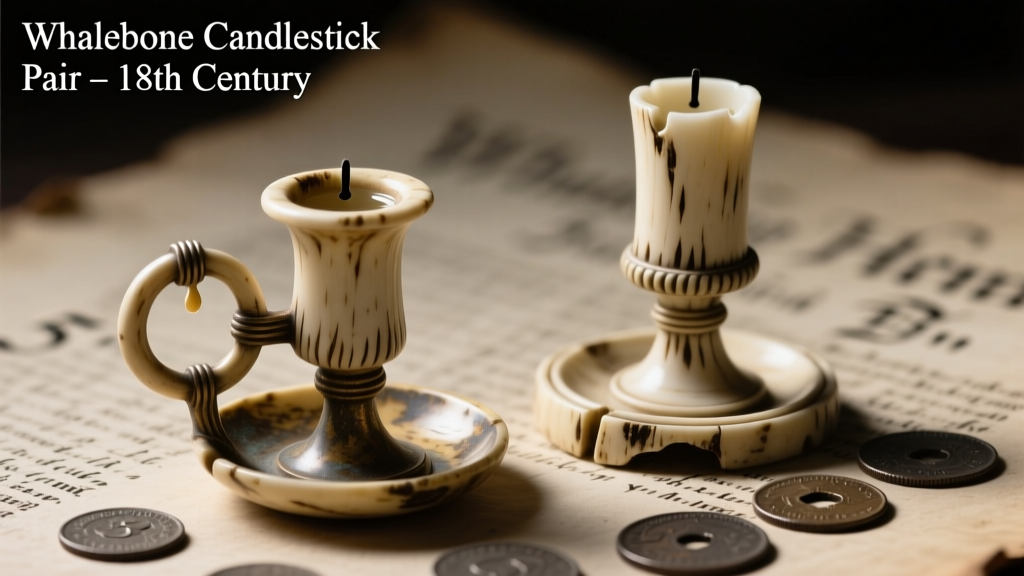
Candlesticks with Whalebone Ring, Turned Nozzle, Drip Pan Converted to Base: 5⅜-Inch Pair (Lot #2)
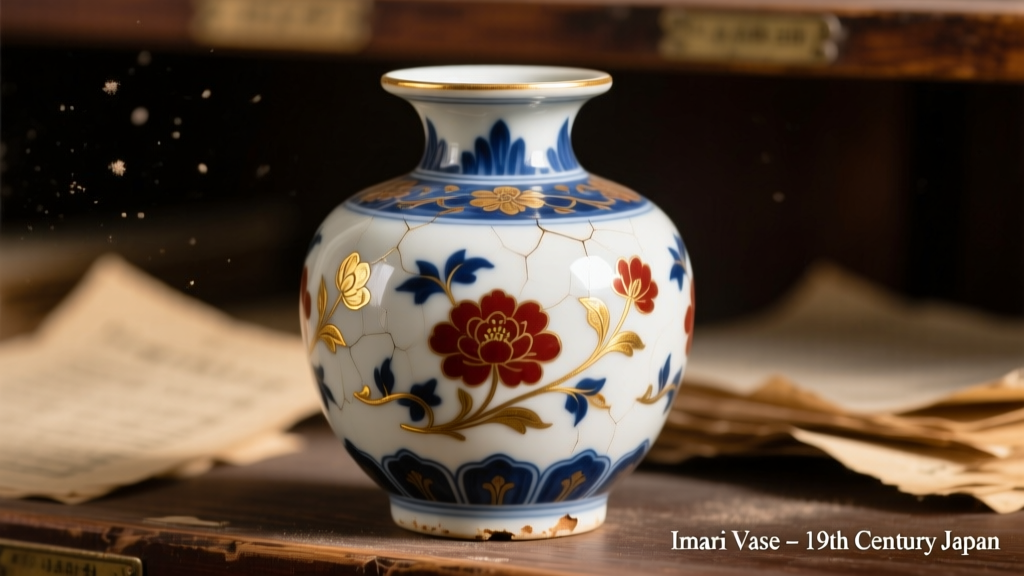
Imari Vase, High-Shoulder Form, Japan, Late Edo to Meiji Era (c. 1840–1890): A 23-Inch Masterpiece of Arita Porcelain
The Ainsley Dynatone: A Rare Art Deco Piano-Radio-Phonograph Triad from the Golden Age of Home Entertainment
The Old Chelsea Sugar Cover by Johnson Brothers: A Numismatic and Ceramics Expert’s Appraisal

Badges of the National Air Races 1928: Collecting Aviation History in Metal
Decoding the Enigma: A Numismatic Deep Dive into Serial Number 1139022 on U.S. Federal Reserve Notes

Decoding the 111115 Numismatic Enigma: A Technical Analysis of the 1974-D Lincoln Cent Die Variety
Furniture Cabinet: Music Gilt Landscape Design, Two Drawers, Cabriole Legs — A 46-Inch Antique Masterpiece
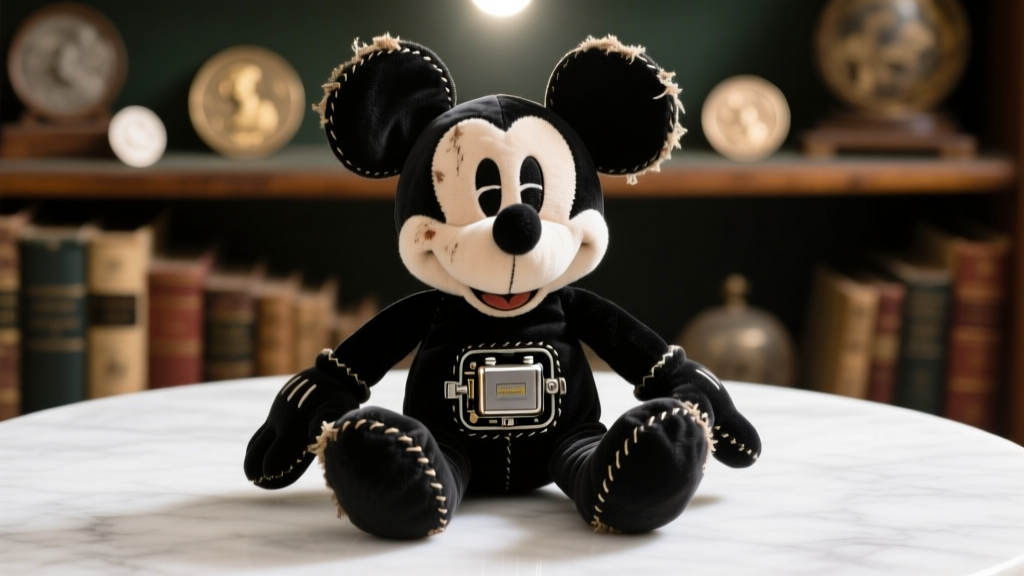
Disneyana Toy Mickey Mouse Plush Cloth Black Battery Operated Mechanical 14-Inch: Rarity, Mechanics, and Market Value Analysis