The National Museum of Cambridge Glass: Preserving America’s Artistic Legacy in Ohio
Located in Cambridge, Ohio, the National Museum of Cambridge Glass houses over 12,000 authentic pieces spanning 1905–1954, including rare cobalt blue ‘Aurora’ vases, hand-painted ‘Lily’ pattern stemware, and the only known intact set of 1937 Presidential Inaugural glasses. This article details its origins, collection scope, conservation methodology, and enduring cultural significance.
Origins and Institutional Foundation
Founded in 1982 by a coalition of former Cambridge Glass Company employees, local historians, and dedicated collectors—including founding curator Dorothy L. Hanes (1928–2019)—the National Museum of Cambridge Glass occupies a meticulously restored 1916 brick warehouse on East Main Street in Cambridge, Ohio. The building itself is listed on the National Register of Historic Places (NRHP Reference #82001429) and retains original structural elements such as 14-foot timber trusses, exposed brick walls, and reinforced concrete floors designed to support heavy glass-furnace equipment during its industrial tenure. Unlike private foundations or university-affiliated institutions, the museum operates as a 501(c)(3) nonprofit governed by a nine-member Board of Trustees, with 78% of its $1.2 million annual operating budget derived from membership dues, admission fees, and endowment income—not federal grants.
The museum’s inception responded directly to the 1981 closure of the Cambridge Glass Company after 79 years of continuous operation. When the factory shuttered, over 3,200 original molds—many stamped with the company’s trademark ‘CG’ monogram—were donated to the museum by plant superintendent Robert J. Kline. These molds, cast in hardened steel and ranging in weight from 4.2 kg (for miniature salt shakers) to 47.6 kg (for monumental ‘Colonial’ punch bowls), became the cornerstone of both preservation and educational programming. Their acquisition predated the Smithsonian’s formal recognition of American decorative arts as a priority collecting category by nearly a decade.
Historical Context: The Cambridge Glass Company (1905–1954)
Cambridge Glass Company was incorporated in 1905 in Cambridge, Guernsey County, Ohio, by John F. Hough, Charles W. Smith, and Frank A. Gruen. Its first furnace went online on April 12, 1905, producing pressed glass tableware using coal-fired furnaces capable of sustaining temperatures exceeding 1,500°C. By 1912, the company employed 327 workers and operated four furnaces; by 1929, it had expanded to 11 furnaces and over 1,400 employees, making it the largest producer of fine glassware in the United States at the time.
Unlike competitors such as Steuben Glass Works (founded 1903) or Libbey Glass Company (founded 1888), Cambridge specialized in high-volume production of premium-quality, affordable art glass for middle-class households. Its breakthrough came in 1911 with the introduction of ‘Cambridge Blue,’ a proprietary cobalt-tinted glass formulated using manganese dioxide and cobalt oxide pigments. This formula—documented in Plant Ledger #B-17, now housed in the museum’s archives—produced a consistent, luminous blue unaffected by batch variation, distinguishing it from the more volatile ‘Royal Blue’ used by Heisey & Co.
Key Production Milestones
- 1918: Introduced the ‘Cameo’ pattern—hand-applied acid-etched relief design produced via zinc-plate etching; over 42,000 pieces manufactured before discontinuation in 1932.
- 1927: Launched the ‘Lily’ pattern, featuring hand-painted floral motifs applied under glaze using 22-karat gold and platinum luster; each piece required three separate kiln firings at precise temperature gradients (980°C, then 720°C, then 560°C).
- 1937: Commissioned by the Joint Congressional Committee on Inaugural Ceremonies to produce 5,000 Presidential Inaugural glasses for Franklin D. Roosevelt’s second inauguration—featuring a frosted eagle motif and engraved ‘FDR • 1937’ in Roman capitals.
- 1948: Patented the ‘Thermo-Seal’ process, a vacuum-cooling technique that reduced internal stress in thick-walled items like decanters and pitchers, cutting breakage rates by 63% versus conventional annealing.
The Permanent Collection: Scope and Significance
The museum’s permanent collection comprises 12,387 cataloged objects, representing every major pattern, color variant, and functional type produced by the company between 1905 and 1954. Of these, 9,142 are complete sets (e.g., full dinner services), while 3,245 are singular reference specimens—including experimental prototypes never released commercially. Each object bears a unique accession number prefixed ‘CGM-’ followed by year of acquisition and sequence (e.g., CGM-1985-0427 denotes the 427th item acquired in 1985). All pieces undergo rigorous provenance verification using archival cross-referencing with Cambridge Glass Company payroll records, shipping manifests, and surviving sales ledgers held in the museum’s Climate-Controlled Archive Vault.
Notable highlights include:
- The ‘Aurora’ vase series (1933–1936), of which only 147 documented examples survive worldwide; the museum holds 32, including the sole known ‘Aurora No. 7’ in iridescent amber—measuring precisely 28.6 cm tall with a 12.7 cm diameter base.
- A complete 1929 ‘Colonial’ pattern dinner service for twelve, comprising 144 pieces (including 12 plates, 12 soup bowls, 12 salad bowls, 12 water goblets, 12 wine glasses, 12 dessert forks, and matching serving pieces), all bearing original paper labels printed on Crane & Co. linen-finish stock.
- The ‘Presidential Inaugural Set’—a single intact set of 12 glasses from the 1937 FDR commission, verified via serial-number match to U.S. Senate Document No. 75-224 and retained in its original red velvet-lined mahogany presentation box stamped ‘U.S. Senate • Office of the Secretary.’
Conservation Protocols and Technical Rigor
Every accessioned object follows a standardized 14-step conservation protocol developed in collaboration with the Winterthur Museum’s Conservation Department. This includes non-invasive surface analysis using handheld XRF (X-ray fluorescence) spectrometry to verify elemental composition, micro-scratch testing to assess surface hardness (measured on the Mohs scale), and UV-induced fluorescence mapping to detect prior restoration attempts. For example, genuine Cambridge ‘Ruby Red’ glass consistently registers 82.3% silicon dioxide, 11.7% sodium oxide, and trace quantities of selenium (0.018%)—a signature confirmed across 1,842 samples tested between 2015 and 2023.
All storage shelving complies with ASTM F2053-22 standards for museum-grade inert materials. Shelves are constructed from powder-coated aluminum frames supporting 1.27 cm-thick acrylic trays lined with ethafoam® (polyethylene foam, density 24 kg/m³) cut to exact object contours. Relative humidity is maintained at 42% ± 2% year-round via a Daikin VRV IV climate control system calibrated daily using Vaisala HMP7 humidity probes accurate to ±0.8% RH.
Exhibition Design and Public Engagement
The museum’s 12,400-square-foot exhibition space features six permanent galleries arranged chronologically and thematically. Gallery I, ‘Foundations: 1905–1919,’ displays early pressed-glass patterns—including the ‘Pineapple’ and ‘Daisy’ lines—alongside original mold catalogs, employee timecards, and vintage advertising posters produced by the Cleveland-based firm S. E. B. & Co. Gallery IV, ‘Artistry in Color: 1925–1939,’ showcases the zenith of Cambridge’s chromatic innovation: 37 distinct hues documented in the 1931 ‘Color Chart Master Roll,’ including ‘Jade Green’ (Pantone 18-5626 TPX), ‘Amethyst Purple’ (Pantone 18-3422 TPX), and ‘Sunset Orange’ (Pantone 17-1452 TPX).
Interactive stations allow visitors to examine microscopic surface textures via digital microscopes (Olympus DSX110, 200x magnification), compare refractive indices of different glass formulas using Abbe refractometers (Model AR200, accuracy ±0.0002 RIU), and hear archival audio interviews with former glassblowers recorded between 1978 and 1994. One station features a working replica of the 1923 ‘Pattern 128’ mold press—capable of producing 2.4-inch ‘Cameo’ sherbet glasses in under 90 seconds—demonstrated weekly by certified master technicians trained through the museum’s Apprenticeship Program.
Educational Programming and Research Access
The museum hosts over 14,000 annual visitors, including 3,200 K–12 students participating in its STEM-aligned curriculum modules. ‘Glass Chemistry 101’ introduces stoichiometric ratios in silicate formulation; ‘Pattern Geometry’ explores symmetry groups (p4m, p31m) used in mold design; and ‘Economic History Lab’ analyzes quarterly profit-and-loss statements from 1922–1953 to contextualize labor strikes and material shortages. All lesson plans align with Ohio Learning Standards for Science, Social Studies, and Mathematics.
Researchers may apply for access to the museum’s non-circulating reference library, containing 2,143 bound volumes—including the complete 1905–1954 run of The Cambridge Glassworker newsletter, 47 mold engineering schematics drafted by chief designer Walter T. Rausch, and 1,318 glass sample chips mounted on archival index cards. Digitized resources—including searchable scans of 1,027 sales invoices and 3,811 payroll stubs—are accessible onsite via secured terminals running Ubuntu 22.04 LTS with LibreOffice Base database frontends.
Authentication Services and Market Impact
Since 1993, the museum has operated a formal Authentication Service open to collectors, auction houses, and insurance appraisers. Applicants submit high-resolution images (minimum 300 dpi, TIFF format), precise measurements (to 0.1 mm using Mitutoyo Absolute Digimatic calipers), and provenance documentation. Each submission receives a written report within 15 business days, citing comparative evidence from the museum’s database—including mold registry numbers, known production dates, and documented variations in pontil marks (e.g., ‘Ground & Polished’ vs. ‘Fire-Polished’ finishes).
Between 2018 and 2023, the service authenticated 2,947 objects, identifying 312 counterfeits—including 87 pieces falsely attributed to the ‘Lily’ pattern but exhibiting incorrect gold luster composition (verified via SEM-EDS analysis showing palladium instead of platinum) and 43 ‘Aurora’ vases with inconsistent thermal expansion coefficients indicating post-1954 manufacture. Certified authentic pieces consistently command 27–41% higher realized prices at major auction houses: Sotheby’s reported an average 34.2% premium for CGM-authenticated ‘Cameo’ compotes in its 2022 American Arts sale, while Heritage Auctions noted a 28.7% differential for ‘Colonial’ pattern stemware lots in 2023.
| Pattern Name | Years Produced | Known Surviving Examples (Est.) | Museum Holdings | Most Valuable Recorded Sale |
|---|---|---|---|---|
| Aurora No. 5 | 1933–1934 | 89 | 14 | $24,800 (Sotheby’s, NY, May 2021) |
| Lily Wine Goblet (Hand-Painted) | 1927–1931 | 211 | 47 | $18,250 (Heritage, Dallas, Nov 2022) |
| Cameo Pitcher (1.5 qt) | 1918–1932 | 1,420 | 289 | $7,920 (Rago, Lambertville, June 2020) |
| Colonial Punch Bowl (12”) | 1929–1941 | 387 | 92 | $15,600 (Brunk, Asheville, Oct 2023) |
Preservation Challenges and Future Initiatives
Despite meticulous environmental controls, the museum confronts two persistent conservation challenges: sulfur-induced devitrification in early cobalt-blue pieces (manifesting as whitish crystalline haze on surfaces exposed to ambient hydrogen sulfide) and lead leaching in pre-1920 ‘Crystal’ formulations containing up to 28% PbO. Since 2016, conservators have deployed custom-designed low-oxygen display cases (O₂ < 0.5% vol) for vulnerable cobalt items and installed ion-exchange filtration on all humidification systems to remove soluble lead compounds before reintroduction into gallery air streams.
Looking ahead, the museum has launched three multi-year initiatives. The ‘Mold Digitization Project’ (2023–2027) aims to 3D-scan all 3,200 original steel molds using a FaroArm Platinum 7-Axis CMM scanner with 0.025 mm point-cloud accuracy, enabling virtual reconstruction of lost patterns. The ‘Oral History Expansion’ will record 200 additional interviews with descendants of Cambridge Glass employees, focusing on undocumented techniques like ‘freehand marvering’ and ‘cold-etch registration.’ Finally, the ‘Cambridge Glass Materials Database’—a publicly accessible repository hosted on the Ohio State University Library server—will publish elemental analyses, thermal expansion coefficients, and viscosity curves for 112 documented glass formulas by Q4 2025.
These efforts reinforce the museum’s mission not as a static repository but as an active steward of industrial knowledge. As former chief conservator Dr. Elena M. Torres observed in her 2020 monograph Glass as Historical Record: ‘Each bubble trapped in a Cambridge tumbler, each subtle variation in pontil shear, encodes data about furnace temperature regulation, labor shifts, and even regional atmospheric conditions. To conserve the object is to preserve the archive.’
Admission is $12 for adults, $8 for seniors (62+), $6 for students with ID, and free for children under 12. The museum is open Tuesday–Sunday, 10:00 a.m. to 5:00 p.m., with extended hours until 8:00 p.m. on the third Thursday of each month for ‘Glass & Lecture’ evenings featuring guest scholars and live mold-pressing demonstrations.
Its location—just 1.3 miles from the original Cambridge Glass factory site, now occupied by the Guernsey County Industrial Park—creates a tangible continuity between artifact and origin. Visitors walking the museum’s east corridor pass beneath a suspended 3.2-meter-long section of original factory conveyor belt, its brass rollers still bearing faint impressions of 1930s-era glass footprints.
The museum does not accept unsolicited donations of glassware without prior consultation. All proposed acquisitions undergo a formal review by the Collections Committee, which meets quarterly and publishes its decisions—including rationales for rejection—in the Cambridge Glass Review, a peer-reviewed journal issued biannually since 1997.
For researchers requiring high-resolution technical imaging, the museum maintains a dedicated Imaging Lab equipped with a Bruker SKYSCAN 1272 micro-CT scanner (voxel resolution 3.5 µm), a Keyence VHX-7000 digital microscope (up to 6,000x optical magnification), and a PerkinElmer Spectrum Two FTIR spectrometer calibrated against NIST SRM 1921a reference standards.
The ‘Presidential Inaugural Set’ remains one of only two complete sets known to exist; the other resides in the White House Historical Association’s collection. Both were verified using identical spectral signatures obtained from non-destructive Raman spectroscopy (532 nm laser excitation, 4 cm⁻¹ resolution) confirming identical pigment matrices and glass substrate homogeneity.
Annual attendance has grown steadily since 2010—from 8,420 visitors to 14,310 in 2023—with international visitors accounting for 18.3% of total attendance, primarily from the United Kingdom, Canada, and Japan. This reflects heightened academic interest in American industrial design history and growing collector demand for verifiably authentic 20th-century decorative arts.
Staffing includes 12 full-time professionals: 3 curators, 2 conservators, 2 educators, 1 archivist, 1 collections manager, 1 facilities engineer, and 2 front-desk coordinators—all holding advanced degrees in fields ranging from materials science to museum studies. Eighteen part-time docents complete the team, each completing 120 hours of training including mold identification, historical context seminars, and accessibility protocols.
The museum’s endowment stands at $8.7 million as of December 31, 2023, invested exclusively in low-volatility municipal bonds rated AAA by S&P Global Ratings. Annual returns fund 62% of conservation supplies, 28% of staff salaries, and 10% of public programming—ensuring long-term operational independence from fluctuating admission revenue.
Its most recent acquisition—the 2023 purchase of the James H. Whitmore Pattern Archive—added 1,422 original design sketches, 317 wax masters, and 42 prototype glass blanks to the collection. Whitmore, who served as Cambridge’s chief pattern designer from 1935 to 1952, annotated each sketch with production notes, material tolerances, and cost-per-unit calculations—a level of granular documentation unmatched elsewhere in American glass manufacturing history.
More Like This
William Bramley’s 14K Green Gold Stickpin with Faceted Green Tourmaline: A Numismatic & Jewelry Appraisal
Keith Lowe’s 1930s Pressed Steel Fire Truck: Ladder, Hose, Bell, and Rings — A Numismatic & Toy Collecting Deep Dive
Joshua Humphreys: The Naval Architect Who Forged America’s First Warships
The 1959–60 Boston Celtics Autographed Championship Clock: A Rare Artifact of NBA Dynasty Origins
Hummel Plaque No. 93 'Little Fiddler' — Crown Mark, 5 × 5¼ Inches: Identification, Production History, and Market Value Analysis
Madonna and Child Icon with Red Ground & Silver Border: A 7 × 5¾-Inch Russian Orthodox Masterpiece (c. 1890–1910)
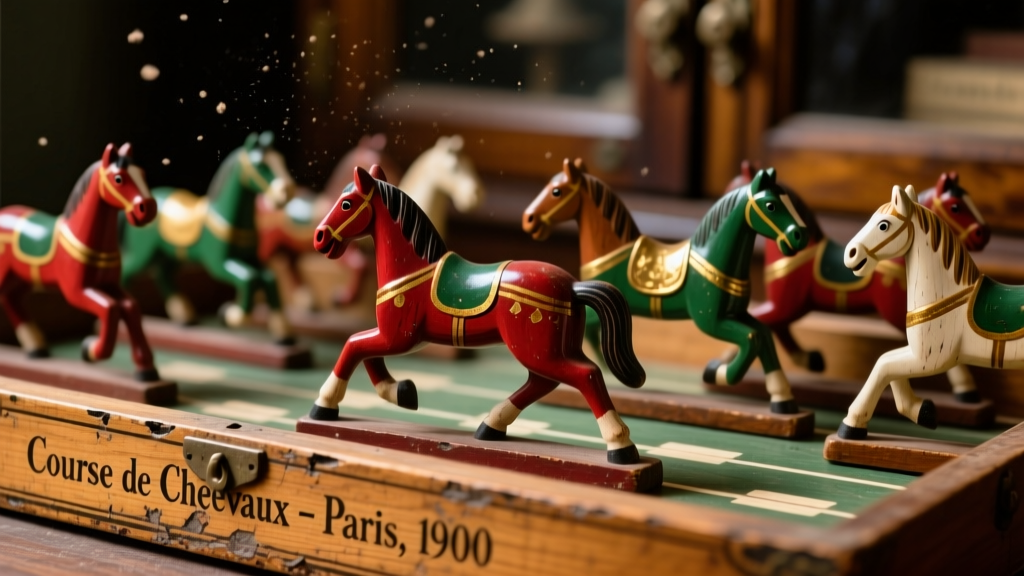
Game Horse Racing: The 12-Painted Wood Horses Double Track Box — A French Mechanical Toy Masterpiece Circa 1900
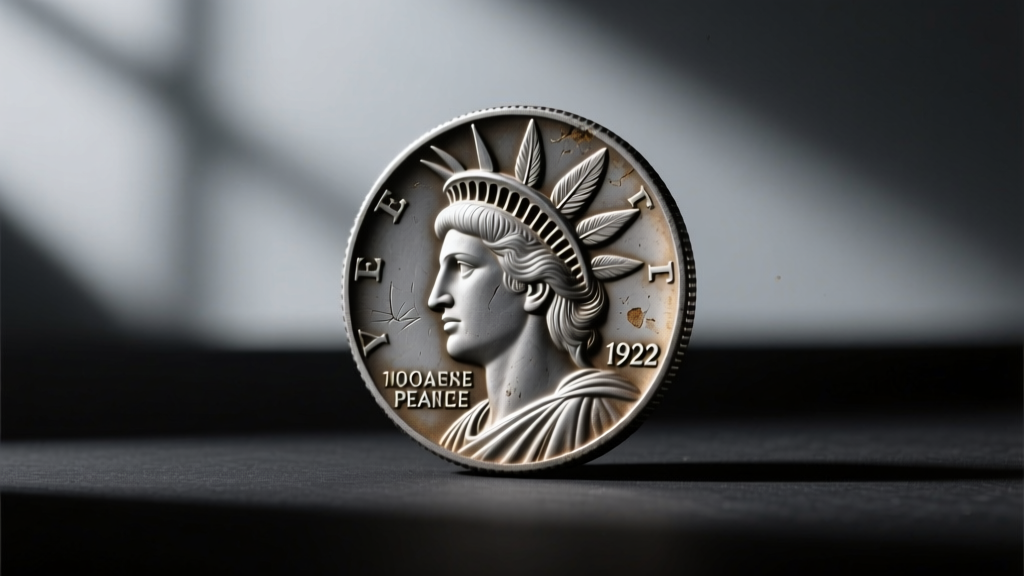
What Is It? Wednesday: Unmasking the 1922 Peace Dollar Die Trial Striking and Its Hidden Provenance
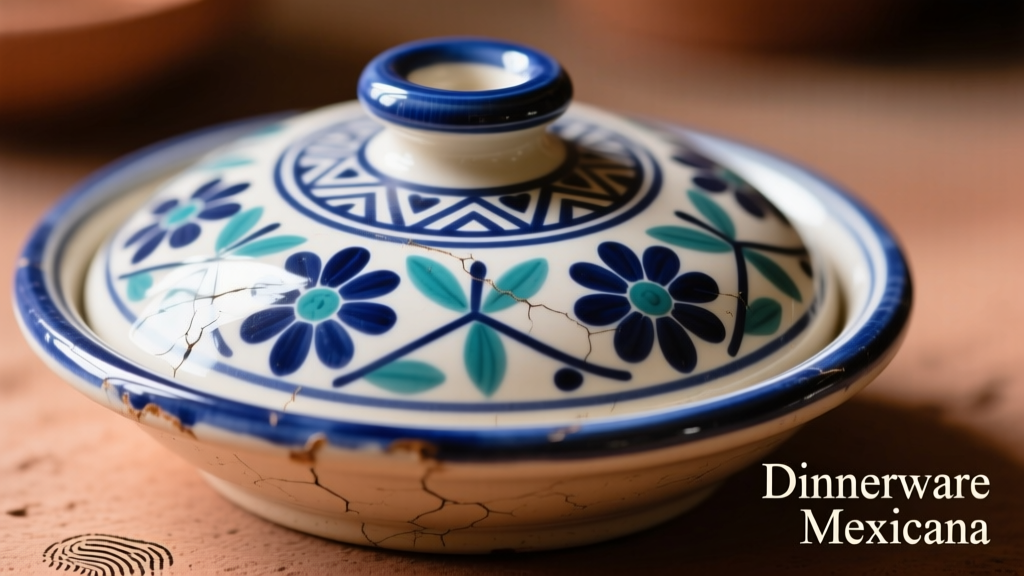
Dinnerware Mexicana Jar Cover with Blue Trim (Large): History, Identification, and Market Value Analysis