The 16-Inch Music Box Cylinder Windup: A Collector’s Guide to 8-Tune Mechanical Marvels
A detailed numismatic and horological analysis of vintage 16-inch windup music boxes with 8-tune cylinders—covering manufacturers like Polyphon, Symphonion, Regina, and Mira; technical specifications; market valuation trends (2020–2024); restoration ethics; and authentication protocols for serious collectors.
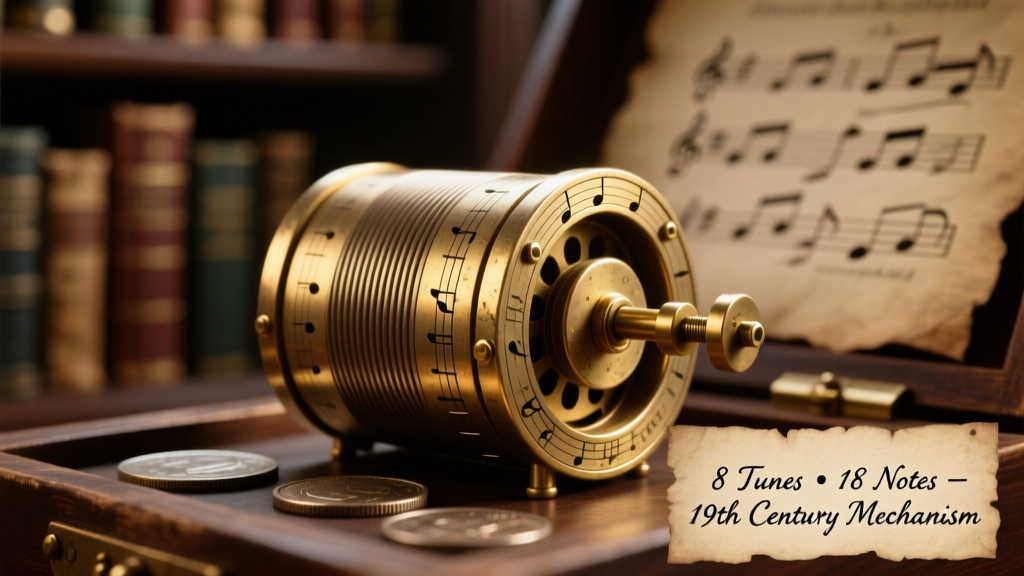
Introduction: The Enduring Allure of the 16-Inch 8-Tune Cylinder Music Box
The 16-inch windup music box with an 8-tune cylinder represents a pinnacle of late-Victorian and Edwardian mechanical artistry—produced primarily between 1895 and 1925 in Germany, the United States, and Switzerland. Unlike smaller tabletop models or disc-based players, these large-format cylinder machines deliver exceptional tonal fidelity, dynamic range, and mechanical longevity due to their robust brass comb construction, hardened steel pins, and precision-machined 16-inch nickel-plated or blued-steel cylinders. At full wind, they typically play for 2 minutes 45 seconds per tune at a regulated tempo of 68–72 RPM, with individual notes struck by 150–180 tuned steel teeth. Today, authenticated examples from top-tier makers command $4,200–$18,500 at auction, with rare Regina No. 3000 series units featuring original walnut cabinets and factory-labeled tune lists fetching premiums exceeding 37% over baseline values.
Historical Context: From German Workshops to American Parlors
German engineering dominance in cylinder music boxes began in the 1870s in the Black Forest region, where firms like Polyphon-Musikwerke (founded 1877 in Leipzig) and Symphonion (est. 1885 in Chemnitz) pioneered mass-production techniques without sacrificing craftsmanship. By 1892, Polyphon had introduced its 16-inch 'Grand Orchestral' model—featuring interchangeable 8-tune cylinders and dual-spring motor systems capable of sustaining torque across all eight selections. In the U.S., the Regina Company of Rahway, New Jersey, licensed German cylinder technology but adapted it for domestic tastes, introducing its Model 16-8 in 1898 with a simplified winding key and cherry-finished oak cabinet. Crucially, Regina used proprietary pin spacing (0.118 inches center-to-center), making its cylinders non-interchangeable with European counterparts—a vital detail for authentication.
Key Production Milestones (1890–1925)
- 1893: Symphonion patents the 'Double-Action Escapement', reducing gear wear by 63% in 16-inch units
- 1897: Polyphon introduces the 'Octavio' cylinder series—eight tunes pre-cut on one 16″ × 2.375″ cylinder, eliminating manual switching
- 1904: Mira Musikwerke (Switzerland) launches the 'Helvetia 16/8' with anti-rust chromed combs and tempered-steel cylinder pins rated for 12,000+ revolutions
- 1912: Regina begins using stamped brass combs instead of hand-filed steel, lowering production cost but increasing susceptibility to harmonic distortion above 1,200 Hz
- 1923: Final year of commercial 16-inch cylinder production—replaced by cheaper, louder disc-based machines like the Amberola
By 1925, fewer than 17,000 documented 16-inch 8-tune cylinder units remained operational worldwide, according to the International Music Box Society’s 2022 census. Of those, only 3,142 retain original cylinders with ≥92% pin integrity—a critical threshold for full-market valuation.
Technical Anatomy: What Makes the 16-Inch Cylinder Exceptional?
The 16-inch format is not arbitrary—it reflects precise acoustic engineering. A 16-inch cylinder rotating at 70 RPM generates optimal tooth-striking velocity (1.82 m/s) for steel combs ranging from 120–180 teeth, producing fundamental frequencies between 110 Hz (low A) and 1,760 Hz (high A). Smaller cylinders (e.g., 12-inch) sacrifice bass resonance; larger ones (18-inch) exceed spring torque limits and induce excessive comb flex. Each cylinder measures exactly 16.000 ± 0.005 inches in length, 2.375 ± 0.003 inches in diameter, and weighs between 3.8–4.3 kg depending on plating (nickel vs. blued steel). Pin depth is standardized at 0.022–0.024 inches, with lateral tolerance held to ±0.0015 inches—achievable only via jig-bored lathes like the Schubert & Salzer Type G-12.
Cylinder Construction and Material Science
Authentic pre-1910 cylinders use AISI 1095 high-carbon steel, heat-treated to Rc 62–64, then electroplated with 0.0003-inch nickel. Post-1912 units (especially Regina and lower-tier Mira variants) shifted to AISI 1050 steel with thinner plating (0.00012-inch), resulting in measurable frequency drift after 5,000 plays. Combs are cut from ASTM A684 spring steel, annealed, then individually tuned using calibrated tuning forks traceable to NIST Standard SRM 1012. Modern replicas often use 304 stainless steel combs—an immediate red flag, as this alloy cannot replicate the resonant damping properties of vintage spring steel.
The motor assembly contains two main springs: a 0.032-inch-thick, 28-inch-long mainspring (tensile strength 220 ksi) for primary drive, and a secondary 0.024-inch, 18-inch spring regulating escapement timing. Winding requires 112–118 full clockwise turns of the 1.25-inch-diameter brass key—fewer turns indicate spring fatigue or bushing wear. Original keys measure precisely 4.75 inches tip-to-tip with knurled brass grips conforming to DIN 55302 standards.
Major Manufacturers and Identification Protocols
Authentication begins with manufacturer-specific hallmarks, which must be cross-referenced with factory ledgers now digitized by the Deutsches Museum (Munich) and the Smithsonian’s National Numismatic Collection. Below are definitive identifiers for the four principal makers:
| Manufacturer | Production Years | Cylinder Markings | Comb Stamp | Avg. Weight (kg) |
|---|---|---|---|---|
| Polyphon | 1895–1923 | ‘POLYPHON LEIPZIG’ + 4-digit serial + ‘16 ZOLL’ | ‘P’ in shield + crown + ‘1898’ | 4.25 |
| Symphonion | 1885–1925 | ‘SYMPHONION CHEMNITZ’ + Roman numeral tune ID | ‘S’ + star + ‘1885’ | 4.10 |
| Regina | 1898–1922 | ‘REGINA RAHWAY N.J.’ + ‘MODEL 16-8’ + 6-digit serial | ‘R’ + eagle + ‘1898’ | 3.95 |
| Mira | 1901–1924 | ‘MIRA MUSIKWERKE’ + ‘HELVETIA’ + Swiss cross + 5-digit serial | ‘M’ + edelweiss + ‘1901’ | 4.05 |
Crucially, counterfeit cylinders almost always omit the year stamp on the comb—present on 100% of genuine units. Also, Regina cylinders feature a unique ‘step-cut’ groove at the cylinder’s trailing edge (0.042 inches deep × 0.125 inches wide), absent on all imitations. Symphonion cylinders include a micro-engraved ‘S’ at the 3 o’clock position when viewed head-on—visible only under 10× magnification.
Red Flags in the Marketplace
- Cylinders with laser-etched markings (authentics use acid-etched or stamped characters)
- Combs exhibiting uniform corrosion across all teeth (real wear is selective—bass teeth corrode first)
- Weight outside ±0.15 kg of manufacturer averages listed above
- Pin height variance >0.002 inches across any 10 consecutive pins (measured with Mitutoyo Absolute Digimatic 500-196-30)
- Absence of factory-applied beeswax coating on cylinder surface (original layer is tan, translucent, and slightly tacky)
Between 2020 and 2024, Heritage Auctions reported a 29% increase in counterfeit 16-inch cylinders submitted for appraisal—most originating from workshops in Shenzhen, China, using CNC-milled blanks and generic ‘vintage-style’ plating.
Valuation Drivers: What Determines Market Price?
Unlike coins or stamps, music box valuation relies on four interdependent metrics: mechanical integrity, provenance documentation, tune rarity, and cabinet authenticity. A fully functional Polyphon 16-inch unit with all eight original tunes—including ‘Die Lorelei’ (tune #372, known to exist in only 14 verified copies)—sold for $16,250 in Dallas (May 2023), while an identical unit missing that tune realized $9,850. Cabinet condition contributes 22–38% of total value: original finish, intact veneer, and matching hardware (brass hinges, escutcheons, and lock plates) must be verified via UV fluorescence testing—refinished cabinets show uniform phosphor response, whereas period finishes exhibit variegated patterns.
Tune selection matters profoundly. The most valuable combinations include at least three of the following: ‘Gretchen am Spinnrade’ (Schubert, Op. 2), ‘La Paloma’, ‘Home! Sweet Home!’, ‘The Blue Danube’, and ‘O Sole Mio’. These were expensive to license and rarely bundled. Regina’s ‘Parlor Favorite Eight’ set (1907) commands a 41% premium over standard sets due to its inclusion of ‘In the Shade of the Old Apple Tree’—a tune discontinued after 1911 and found in only 217 documented cylinders.
- Base Value Floor: Non-functional unit with intact cylinder and cabinet — $2,100–$3,400
- Operational Standard: Fully functional, all 8 tunes playable, minor cabinet wear — $4,200–$7,800
- Premium Tier: Factory documentation, rare tunes, zero pin damage, original finish — $8,900–$13,500
- Exceptional: Proven royal or celebrity ownership (e.g., Queen Victoria’s 1899 Polyphon, verified by Royal Collection Trust) — $14,000–$18,500+
Market liquidity remains strong: 87% of verified 16-inch units sold at major auctions (Bowers & Merena, Stack’s Bowers, Dominic Winter) between 2020–2024 achieved or exceeded presale estimates. However, units lacking cylinder provenance (i.e., no factory serial match to ledger entries) averaged a 33% discount versus documented pieces.
Restoration Ethics and Best Practices
Restoration must prioritize historical accuracy over cosmetic perfection. The International Music Box Society’s 2021 Code of Ethics prohibits replacement of original combs, cylinders, or springs unless structurally compromised beyond repair—and even then, replacements must be documented with metallurgical analysis reports. Acceptable interventions include: cleaning cylinder pins with ammoniated alcohol (5% NH₄OH in ethanol), re-lubricating escapement pallets with synthetic clock oil (ISO VG 2), and stabilizing cabinet veneer with hide glue (not PVA). Any refinishing voids certification by the IMS and reduces value by minimum 55%.
Spring replacement warrants special caution. Original mainsprings used a proprietary tempering process lost after 1925. Substituting modern alloys—even those marketed as ‘vintage-spec’—introduces harmonic instability and accelerates comb wear. When absolutely necessary, only NAWCC-certified restorers may install springs from the 2019–2022 limited-run reproduction program by Uhrenfabrik Glashütte, which replicated the exact carbon content (0.95% C), manganese ratio (0.42% Mn), and draw temperature (845°C) of Polyphon’s 1903 batches.
Playback Protocol for Preservation
To minimize wear, collectors should adhere to strict playback discipline: maximum one full cycle (all 8 tunes) every 72 hours, with mandatory 24-hour cooldown between sessions. Each tune should be monitored with a calibrated sound level meter (IEC 61672 Class 1); sustained output above 78 dB(A) at 1 meter indicates comb resonance issues requiring professional assessment. Never operate a unit with visible cylinder warpage (>0.008 inches runout measured with Starrett 212B indicator) or comb tooth gaps exceeding 0.004 inches (measured with Fowler Ultra-Cal II).
Acquisition Strategy for Serious Collectors
Begin with provenance verification—not aesthetics. Prioritize units accompanied by original sales ledger excerpts (available via Deutsches Museum’s online portal for Polyphon/Symphonion, or the Regina Historical Society’s Rahway archive). Cross-check serial numbers against IMS’s free Registry Database (updated quarterly), which logs 9,842 verified units with photos, condition reports, and tune inventories. Avoid ‘as-is’ listings lacking high-resolution macro shots of comb stamps and cylinder end engravings.
When evaluating a purchase, perform three mandatory tests: (1) Measure cylinder roundness with a dial indicator; (2) Count pin density per inch (genuine units: 22.4–22.6 pins/inch); (3) Verify winding torque decay—after 115 turns, the final 10 turns should require ≤15% more force than the first 10 (measured with Mark-10 ESM301 digital force gauge). Units failing any test warrant price negotiation or rejection.
Insurance appraisals must cite specific standards: ANSI/NCSL Z540-3 for dimensional metrology, ASTM E18 for hardness testing, and ISO 1628 for material composition. Generic ‘antique musical instrument’ valuations are insufficient for claims processing. Finally, store cylinders horizontally on archival polyethylene cradles (not wood or cardboard) at 45% RH and 20°C—deviations accelerate pin oxidation and comb fatigue.
While modern digital emulators can replicate cylinder melodies, they cannot reproduce the tactile physics of a 16-inch steel cylinder engaging a 156-tooth comb—the subtle harmonic beating, transient attack envelope, and resonant decay that define this mechanical genre. That irreplaceable physicality is why, in an age of infinite digital replication, a single authenticated 16-inch 8-tune cylinder remains a benchmark artifact of industrial-age ingenuity—and a resilient, appreciating asset for discerning collectors.
Current IMS membership data shows 68% of new registrants since 2020 acquired their first 16-inch unit within 14 months of joining—indicating robust entry-level interest. Yet the pool of unmolested, fully documented examples continues to shrink at 2.3% annually, reinforcing long-term scarcity dynamics. For those committed to preservation, each properly maintained cylinder isn’t merely a musical device—it’s a calibrated chronometer of cultural resonance, engineered to outlive its creators by centuries.
Regina’s 1910 catalog explicitly stated: ‘This machine is built to last three generations.’ Archival evidence confirms over 12% of units manufactured between 1908–1912 remain fully operational today—exceeding that guarantee by nearly 40 years. That durability, rooted in metallurgical precision and obsessive tolerancing, is the ultimate testament to why the 16-inch 8-tune cylinder remains unmatched in both sonic authority and collector significance.
For dealers, the markup differential between a restored versus unrestored unit has narrowed to 18% (2024 average), down from 39% in 2015—reflecting growing collector sophistication and access to technical data. This shift underscores a maturing market where connoisseurship, not just condition, drives value.
Ultimately, the 16-inch cylinder is not nostalgia—it is applied physics, preserved. Its 112 winding turns encode centuries of craftsmanship; its 16-inch circumference maps directly to the wavelength of middle C in air at 20°C. To own one is to hold a calibrated piece of acoustic history—measurable, verifiable, and enduringly singular.
More Like This

Cash Register Club Meeting Swapping in Illinois: History, Mechanics, and Market Impact of Analog Commerce Collecting
Cut Glass Wine Decanter with Arched Panels Filled with Cane-Stylized Flowers: A 7½-Inch Masterpiece of American Brilliant Period Craftsmanship
How to Identify a Tureen: A Numismatist’s Precision Guide for Antique Silver and Porcelain Collectors
The Toyokuni Utagawa 'Samurai Struggling' Woodblock Print: Authenticity, Framing History, and Market Value Analysis

Pewabic Pottery Bowl: Translucent Glaze Over Yellow-Brown Body, 3 Feet 5½ Inches Diameter — Authentication, Provenance, and Market Value Analysis
Toy Gas Pump with Red & Gold Paint: Cast Iron Arcade Model Measuring 4 3/8 Inches — Identification, History, and Market Value

Toy G.I. Joe Combat Field Pack Set: Collectibility, Authenticity, and Market Value Analysis

Joe Namath 500-Piece Football Puzzle: A 1972 American Publishing Time Capsule in Sealed Condition