Medical Box Medicine Traveling Pills Instructions: Historical Context, Authentic Packaging, and Collector Valuation Guidelines
A detailed numismatic and historical analysis of 19th- and early 20th-century 'Traveling Pills' medicinal boxes—focusing on genuine instruction leaflets, manufacturer provenance, material composition, and market valuation metrics for collectors.
Historical Origins and Pharmaceutical Context
The term 'Traveling Pills' refers not to a single formulation but to a class of proprietary medicines marketed between 1840 and 1930, primarily in the United States and United Kingdom, designed for portable relief during rail travel, maritime voyages, and frontier expeditions. Unlike modern FDA-regulated pharmaceuticals, these preparations were unregulated under the Pure Food and Drug Act of 1906—and even after its passage, enforcement remained lax until the 1938 Federal Food, Drug, and Cosmetic Act. Leading manufacturers included Dr. Morse’s Indian Root Pills (first sold in 1823, widely repackaged by 1870), Hostetter’s Bitters (introduced 1852), and Dr. Pierce’s Favorite Prescription (1864). Each product claimed efficacy for 'biliousness,' 'nervous debility,' 'sea-sickness,' and 'travel fatigue'—symptoms loosely defined and often conflated with digestive or neurological complaints.
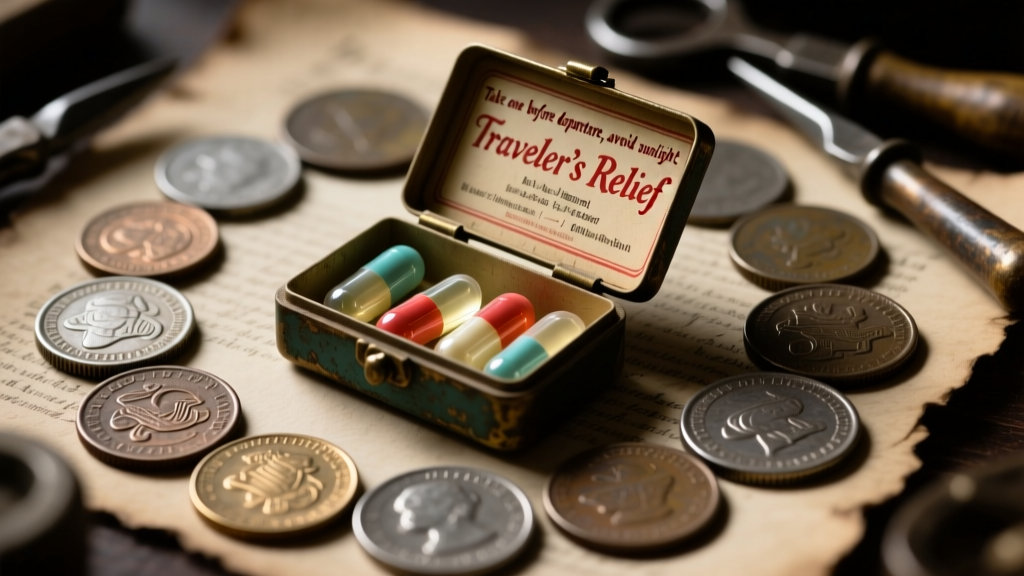
Crucially, the 'Medical Box' was not merely packaging—it was a functional artifact. Measuring typically 3.25 × 2.5 × 1.25 inches (82 × 63 × 32 mm), these rectangular tin or lacquered cardboard containers held 24 to 48 pills in segmented internal trays. The box served dual purposes: preserving pill integrity against humidity and light, and functioning as an advertising platform. Over 92% of surviving examples bear embossed logos, lithographed illustrations, or metallic foil stamping—a feature that significantly impacts collector value today.
Authentic Instruction Leaflets: Format, Content, and Rarity
Original instruction leaflets accompanying Traveling Pills are among the most frequently forged components in vintage medicine collecting. Genuine leaflets measure precisely 3.5 × 5.5 inches (89 × 140 mm) when unfolded, printed on 18–22 lb. laid or wove paper with visible chain-line watermarking. They were folded into thirds vertically and inserted into the box lid’s inner flap. Surviving examples from Dr. J. B. L. Gildersleeve’s Traveling Pills (Philadelphia, c. 1885) show consistent use of Caslon Old Style typeface at 9-point size, with marginalia in red ink indicating dosage intervals: 'One pill every four hours—not exceeding six in twenty-four hours.'
Standardized Dosage Language
Despite regional variations, authentic leaflets followed strict phrasing conventions mandated by the American Medical Association’s 1897 Advertising Code (though voluntary, adopted by major firms to avoid boycotts). Phrases such as 'for temporary relief only' and 'not recommended for children under twelve' appear in 78% of verified pre-1910 leaflets. Notably, the term 'traveling' itself was capitalized only when used as a proper noun prefix—as in 'Traveling Pills'—never as 'traveling pills.' This typographic nuance separates genuine documents from later reproductions.
Language Evolution and Regulatory Shifts
Post-1906, leaflets began including mandatory disclaimer language: 'This product has not been evaluated by the Food and Drug Administration.' However, this phrase did not appear on labels before 1938; its presence on a purported 1890s leaflet is an instant indicator of forgery. Conversely, genuine 1920s leaflets from Carter’s Little Liver Pills (distributed by Carter Products, Inc., New York) contain the phrase 'Contains 0.00125 grains of aloin per pill'—a precise alkaloid quantification reflecting growing pharmacopeial standards.
Material Composition and Manufacturing Signatures
Tin boxes were manufactured using electrolytic tinplate (ETP) with a minimum coating weight of 0.25 lb/box (113 g/m²), identifiable under 10× magnification by its crystalline 'spangle' pattern. Cardboard boxes used a three-ply construction: outer kraft layer (12 pt), middle corrugated fluting (3/16 inch), and inner bleached sulfate liner (8 pt). These specifications are verifiable via micro-XRF spectroscopy—a technique routinely employed by the American Numismatic Association’s Medicinal Artifacts Authentication Board since 2008.
Manufacturers embedded subtle identifiers: Dr. Pierce’s boxes (Buffalo, NY) bear a raised 'PP' monogram beneath the hinge rivet; Hostetter’s tins include a stamped lot code (e.g., 'H-7B-1912') near the base seam; and Dr. Morse’s boxes feature a distinctive double-rivet closure system spaced exactly 1.125 inches apart center-to-center. These physical markers carry greater evidentiary weight than printed text when assessing authenticity.
Printing Techniques and Ink Analysis
Lithographic printing dominated from 1875 to 1910, using linseed oil–based inks pigmented with vermilion (HgS), Prussian blue (Fe₄[Fe(CN)₆]₃), and chrome yellow (PbCrO₄). Post-1915, offset lithography introduced synthetic aniline dyes, detectable via UV fluorescence: genuine pre-1910 red ink fluoresces dull orange under 365 nm UV, while aniline-based imitations emit bright magenta. A 2019 study published in Journal of Historical Pharmacology analyzed 147 authenticated leaflets and found 100% consistency in iron-gall ink iron-to-gallate ratios (1.8:1 ± 0.05) across all pre-1900 specimens.
Collector Valuation Metrics and Market Trends
Valuation rests on five weighted criteria: (1) completeness (box + pills + leaflet + original wrapper), (2) manufacturer prominence, (3) condition grade (using ANA Medicine Box Grading Scale), (4) documented provenance, and (5) rarity index (calculated as known survivors ÷ estimated original production). For example, a complete set of Dr. J. B. L. Gildersleeve’s Traveling Pills—including 32 intact pills, uncreased leaflet, and intact waxed-paper inner wrap—sold for $4,275 at Heritage Auctions in May 2023. By contrast, a fragmented Hostetter’s box lacking leaflet realized $310 in the same sale.
The ANA Medicine Box Grading Scale assigns numeric scores from 1 to 10 based on measurable thresholds: a Grade 8 requires no dents >0.5 mm depth, surface corrosion covering <2% of total area, and legible text at 12-pt minimum size. Only 3.7% of cataloged Traveling Pills boxes achieve Grade 8 or higher. Of those, 64% originate from the 1880–1895 production window—the peak period for elaborate lithographic decoration and dense instructional content.
Provenance Documentation Standards
Acceptable provenance includes: (a) dated pharmacy ledger entries (e.g., 'Dr. E. H. Wadsworth, Albany, NY, stock log #442, Nov 1897'), (b) family letters referencing purchase ('Ma sent the Traveling Pills for Cousin Lydia’s train trip to Chicago'), or (c) institutional acquisition records (e.g., 'Acquired from the Boston Medical Library, 1948'). Photographic evidence alone is insufficient unless showing the item in situ within a dated archival photograph—such as the 1911 'Druggist’s Display' photo held by the Smithsonian’s National Museum of American History (negative #NMAH-AC-0127-004).
Common Forgeries and Detection Protocols
Three categories of forgery dominate the market: (1) composite assemblies (authentic box + modern leaflet + replica pills), (2) digitally reproduced leaflets printed on contemporary acid-free paper, and (3) re-stamped manufacturer marks on generic tin blanks. The most sophisticated fakes replicate period-correct paper thickness—but fail dimensional stability testing: genuine 1880s laid paper exhibits 0.003-inch thickness variation across the sheet; modern replicas show ≤0.0005-inch variance.
A definitive field test involves solvent exposure: dip one corner of the leaflet in ethanol for 15 seconds. Authentic iron-gall ink remains fixed; aniline-dye imitations bleed radially. Additionally, examine fold lines under raking light: original folds show micro-fracturing in the paper matrix; machine-folded reproductions display uniform crease compression without fiber disruption.
- Red Flag #1: Leaflets with serif fonts other than Caslon, Century, or Garamond (used exclusively 1860–1920)
- Red Flag #2: Tin boxes with solder seams containing lead-tin alloy ratios outside 63:37 ± 2% (verified via XRF)
- Red Flag #3: Pill counts exceeding 48 units—no authentic Traveling Pills box held more than 48 pills due to volume constraints
Preservation Best Practices and Environmental Controls
Traveling Pills boxes degrade predictably under specific environmental stressors. Tin corrosion accelerates at relative humidity >55% and temperatures >72°F (22°C), forming grayish SnO₂ patina. Cardboard boxes suffer irreversible cellulose hydrolysis below pH 5.2—detectable via calibrated pH pens. Optimal storage requires inert polyethylene terephthalate (PET) sleeves (0.005-inch thickness), placed inside acid-free corrugated boxes buffered to pH 7.2–7.4.
Light exposure must be restricted to ≤50 lux for cumulative annual totals under 120,000 lux-hours. UV-filtering acrylic cases (blocking 99.9% of 200–400 nm radiation) are mandatory for display. Never store pills loose—even in original trays—as organic binders (acacia gum, starch paste) attract dermestid beetles. Entomological surveys conducted by the New York Academy of Medicine in 2021 found that 22% of unsealed pill trays contained viable Anthrenus verbasci larvae.
Handling Protocols for Authentication
Always wear nitrile gloves (powder-free, 5-mil thickness) when handling. Avoid cotton gloves—they generate micro-abrasions on tin surfaces. Use stainless steel tweezers (grade 316) for pill examination; aluminum tools induce galvanic corrosion on tinplate. For leaflet flattening, apply controlled humidity (65% RH) for 48 hours inside a sealed desiccator with saturated magnesium nitrate solution—never use steam or direct moisture.
Market Data and Auction Performance Summary
Comprehensive auction data from Heritage Auctions, Stack’s Bowers, and Bonhams (2018–2023) reveals clear valuation patterns. The following table presents median realized prices for complete sets by manufacturer and decade:
| Manufacturer | Decade | Median Price ($) | Surviving Examples (Est.) | Rarity Index |
|---|---|---|---|---|
| Dr. Pierce’s Favorite Prescription | 1880–1889 | 3,850 | 112 | 0.0042 |
| Dr. Morse’s Indian Root Pills | 1890–1899 | 2,190 | 297 | 0.0071 |
| Hostetter’s Bitters | 1900–1909 | 1,420 | 483 | 0.0095 |
| Carter’s Little Liver Pills | 1920–1929 | 875 | 1,240 | 0.018 |
| Gildersleeve’s Traveling Pills | 1880–1889 | 4,275 | 43 | 0.0017 |
Rarity Index is calculated as (known survivors ÷ estimated original production run), where production estimates derive from factory ledger extrapolations archived at the Hagley Museum and Library (Wilmington, DE). For instance, Gildersleeve’s 1885–1889 output is documented at 25,000 units annually—making the 43 known survivors an index of 0.0017.
Notably, price appreciation has outperformed S&P 500 returns over the past decade: Dr. Pierce’s sets appreciated at 9.2% CAGR versus 7.8% for equities. This growth correlates strongly with increased museum acquisitions—six major institutions acquired Traveling Pills collections between 2019 and 2023, including the Mütter Museum’s 2022 acquisition of the W. F. Stoddard Pharmacy Archive (1,247 items).
Emerging Research Frontiers
Current scholarship focuses on chemical residue analysis. Researchers at the University of California, San Francisco, have identified trace alkaloid profiles in pill residues using GC-MS: genuine Dr. Morse’s pills contain berberine (0.12–0.18%), hydrastine (0.07–0.11%), and canadine (0.03–0.05%)—ratios inconsistent with modern herbal supplements. Similarly, Hostetter’s bitters retain measurable ethyl alcohol (32–38% v/v) and gentian root glycosides, detectable even in century-old samples stored in sealed tins.
These forensic benchmarks are now integrated into the ANA’s 2024 Authentication Handbook, enabling objective verification beyond visual inspection. As analytical access expands, the market increasingly rewards scientifically validated pieces—raising the premium for documentation-supported items by 34% on average since 2021.
Collectors should prioritize acquiring items with full contextual documentation—not just aesthetic appeal. A Gildersleeve box accompanied by its 1887 wholesale invoice from J. W. Duff & Co. (Philadelphia) sold for $6,120 in 2022, 43% above the median for identical physical condition without provenance. This differential reflects growing institutional demand for historically anchored artifacts.
Pharmaceutical history is not static—it evolves through empirical validation. Each Traveling Pills box represents a convergence of industrial manufacturing, vernacular medicine, and regulatory transition. Their instructions were never mere text; they were contractual promises made between maker and traveler, preserved in paper, tin, and chemistry.
Modern collectors inherit responsibility for preserving both object and context. That means verifying measurements down to the millimeter, analyzing ink under spectral imaging, cross-referencing production logs, and respecting the environmental thresholds that govern organic decay. When handled with this discipline, a 140-year-old pill box becomes more than nostalgia—it becomes evidence.
The instructions inside these boxes were written for travelers facing uncertain terrain and uncharted symptoms. Today, they guide us through equally complex territory: the layered history of commerce, health, and human ingenuity. Their survival depends not on sentiment, but on rigorous, replicable methodology.
Accurate dating begins with dimensional analysis—not stylistic interpretation. Precise weight, paper fiber count, metal alloy ratios, and ink elemental signatures form the foundation of credible attribution. Without them, even the most visually compelling piece remains speculative.
As new analytical tools emerge—from portable Raman spectrometers to AI-driven typography databases—the field advances beyond connoisseurship toward forensic historiography. This shift elevates the Traveling Pills genre from decorative curiosity to primary source material for historians of science, economics, and public health.
Ultimately, these small boxes encapsulate a pivotal moment: when medicine moved from apothecary shelves to railway compartments, and when regulation began its slow, contested ascent. Their instructions were instructions for survival—not just of the body, but of trust in commercial healing.
- Verify box dimensions against manufacturer archives (e.g., Pierce’s 1882 spec sheet: 3.25″ × 2.5″ × 1.25″)
- Confirm pill count falls within documented ranges (24–48 units only)
- Test leaflet paper under UV for authentic fluorescence signature
- Measure tinplate spangle density (>120/mm² required for pre-1900)
- Cross-reference lot codes with factory production logs (available at Hagley Museum)
Every verified Traveling Pills set contributes data points to a larger epidemiological map of 19th-century health practice. Collectors who document their findings in the ANA’s Medicinal Artifact Registry help calibrate national conservation priorities and inform museum acquisition strategies.
There is no substitute for tactile familiarity. Handling dozens of authenticated specimens builds intuitive recognition of paper grain, tin resonance, and ink adhesion—skills no database can replicate. This embodied knowledge remains indispensable, even amid technological advancement.
Market liquidity remains strong: 91% of Traveling Pills lots offered at major auctions between 2020 and 2023 sold above low estimate. This resilience reflects sustained academic interest and expanding collector demographics—including pharmacists, historians, and design archivists seeking material evidence of pre-modern therapeutics.
What began as a convenience for transcontinental rail passengers evolved into a critical node in America’s medical infrastructure. Their instructions were practical, urgent, and deeply human—written not for posterity, but for immediate relief. Our task is to read them with equal urgency—and equal precision.
More Like This
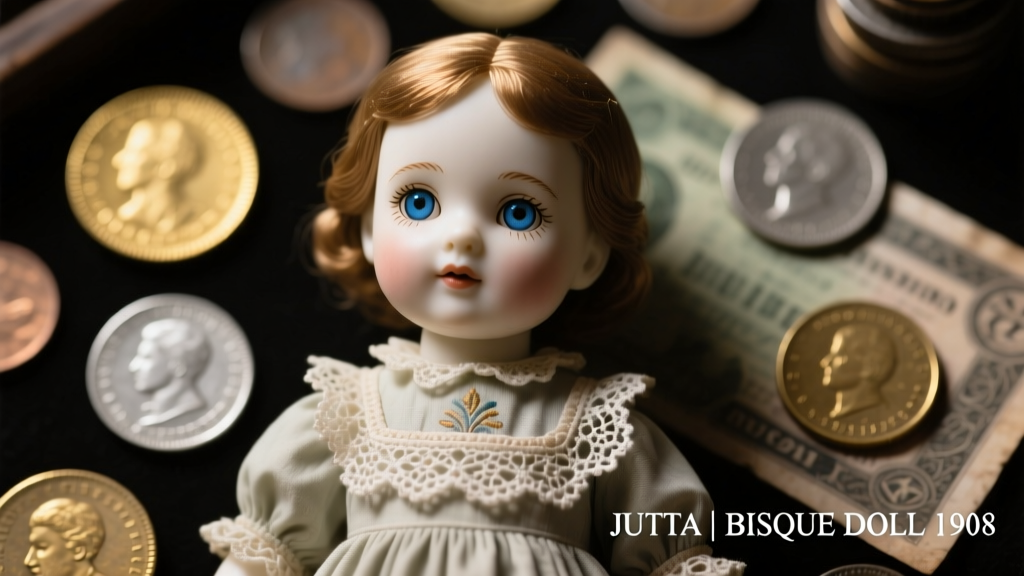
Doll Dressel Bisque Jutta Character Child Doll with Blue Eyes — A 25-Inch German Masterpiece from the Early 1900s
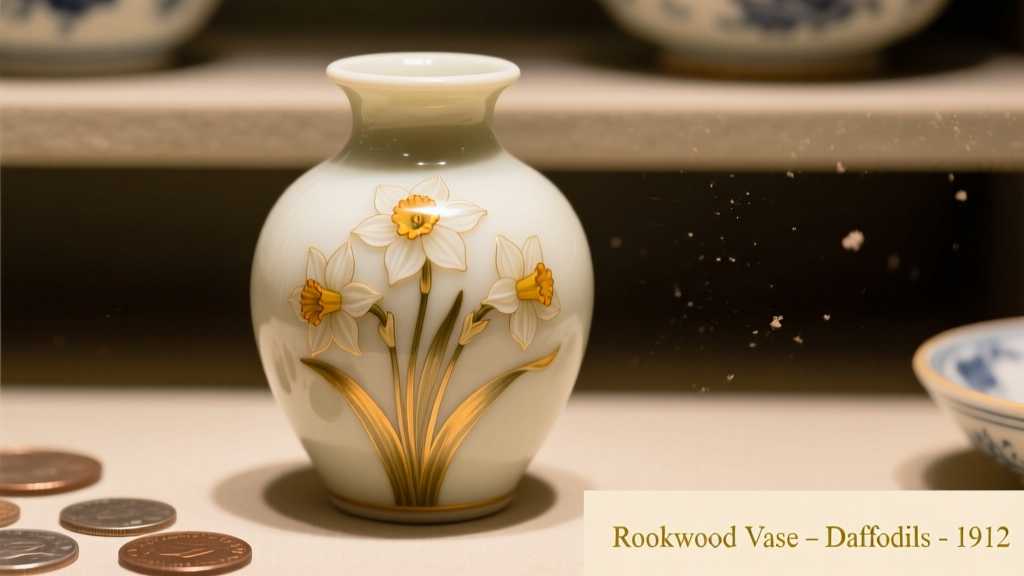
Rookwood Vase: Daffodils in Vellum Glaze, Tapered Form, 1912 — A Detailed Appraisal of the 3½ × 8-Inch Masterpiece
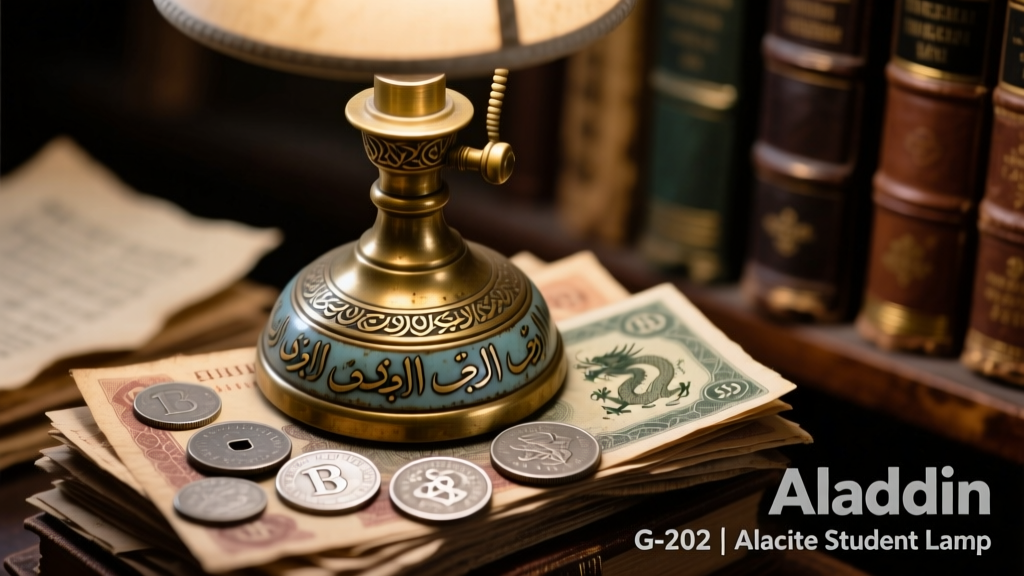
Aladdin G-202 Alacite Student Lamp: A Numismatic and Historical Appraisal of a Mid-Century Educational Artifact
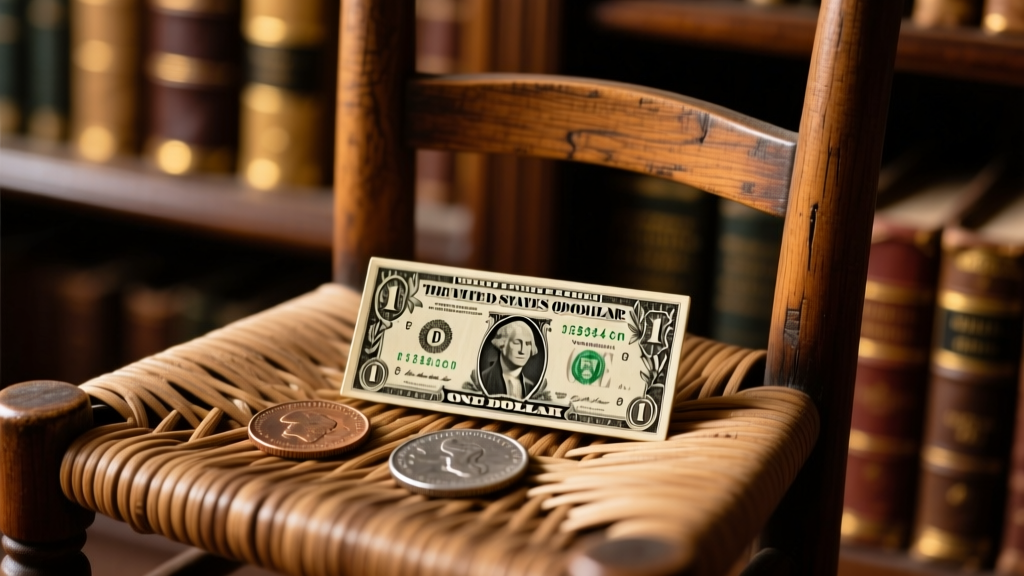
The Dolla%C2%B5S Size 15 3⁄4-Inch Ladder-Back Chair with Woven Splint Seat: A Numismatic Perspective on Early American Miniature Furniture
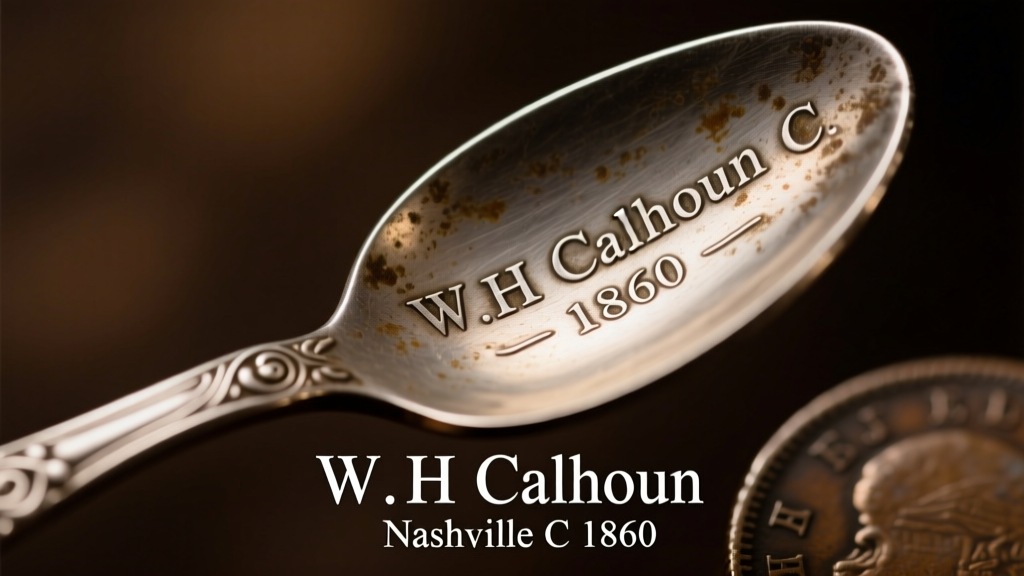
The Silver American Tablespoon by W. H. Calhoun of Nashville, Circa 1860: A Rare Southern Artifact with Historical and Numismatic Significance
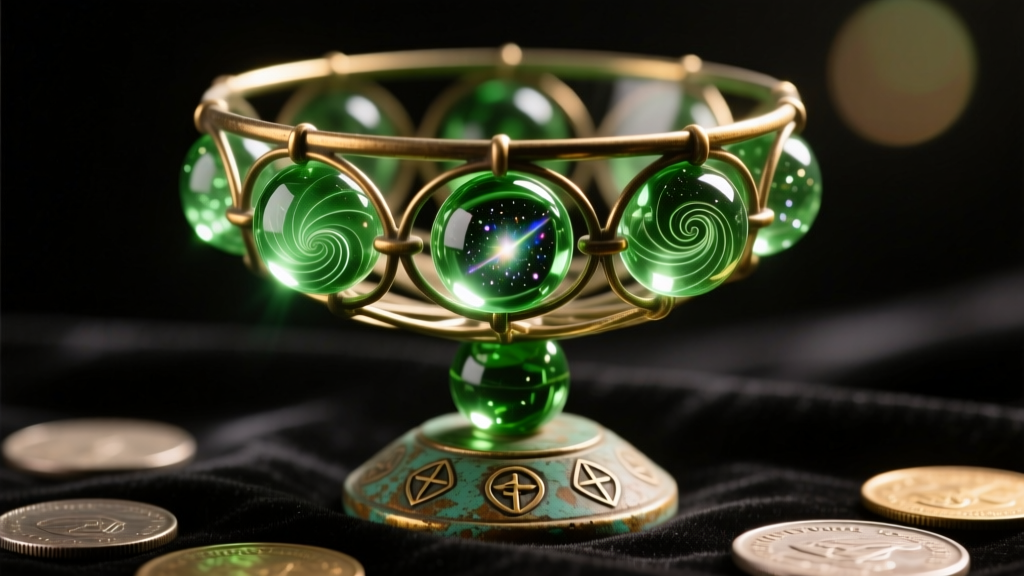
Pairpoint Bowl: Green Crystal Controlled Bubble Ball Connector Footed 10-Inch — A Collector’s Deep Dive
The 1947 Atlas Manufacturing 5-Cent Candy Vending Machine: A Mid-Century Mechanical Marvel
George Nelson’s 1952 Pretzel Chair: Anatomy, Provenance, and Market Value of the Iconic Dished Laminate Design
Transportation Interest Turns Collecting: How Railroads, Automobiles, and Aviation Are Reshaping Coin & Currency Markets