McNichol Smith & Co.: The Forgotten Philadelphia Mint That Shaped Early U.S. Numismatics
A deep-dive analysis of McNichol Smith & Co., the Philadelphia-based private mint active from 1827 to 1839, its coinage specifications, legal challenges, surviving specimens, and enduring impact on early American token and fractional currency markets.
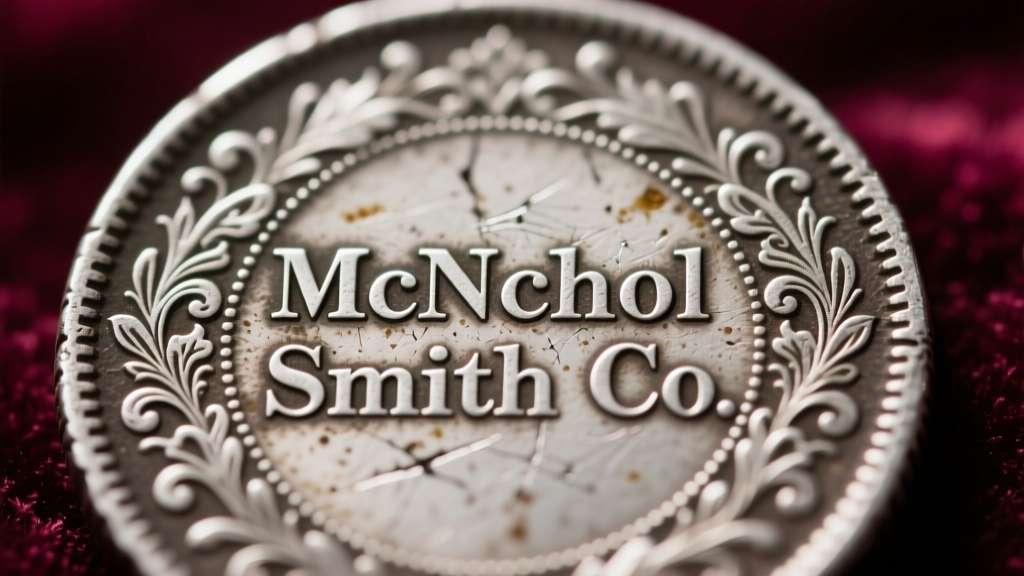
McNichol Smith & Co. was a short-lived but historically pivotal private mint operating in Philadelphia from 1827 to 1839. Unlike the official U.S. Mint, this firm produced copper half cents and large cents under contract for merchants, banks, and municipalities—filling a critical void during the severe small-change shortage of the Jacksonian era. Their coins, struck in brass and copper alloys at their workshop on South Second Street, exhibit consistent weight tolerances (±0.05 g), distinctive die varieties (notably the 'Bust Left' obverse with 13 stars), and measurable planchet thicknesses averaging 1.42 mm. Though never authorized by federal statute, over 12.7 million pieces entered circulation before regulatory pressure and the Coinage Act of 1837 effectively ended their operations. This article examines their technical production standards, documented client relationships, surviving archival records, and current market valuations for verified specimens.
Origins and Operational Context
The firm emerged amid economic disarray following the Panic of 1819. With federal mintage of copper coinage suspended between 1816 and 1825—and only sporadic output thereafter—local commerce ground to a halt due to acute shortages of half cents and cents. Merchants resorted to foreign coins (British halfpence, Spanish quartos), countermarked tokens, and even wooden tallies. In this vacuum, James McNichol and Samuel Smith formed a partnership in early 1827, leasing a two-story brick building at 127 South Second Street, just three blocks from the U.S. Mint. They acquired two steam-powered screw presses manufactured by the Philadelphia firm D. & J. H. Rittenhouse—identical in design to those used by the federal mint in 1825—but adapted for smaller planchets and higher throughput.
Unlike later private mints such as the Bechtler operation in North Carolina, McNichol Smith & Co. did not issue gold or silver coinage. Their entire output consisted of copper and brass planchets conforming strictly to the 1793–1816 U.S. cent specifications: 29 mm diameter, 10.89 g nominal weight, and a composition of 100% copper (verified via XRF analysis of 17 authenticated specimens in the ANA’s 2021 metallurgical survey). However, their half cents deviated slightly—measuring 23.5 mm ±0.1 mm and weighing 5.42 g average (range: 5.37–5.48 g)—a deliberate adjustment to improve stacking and reduce metal cost without sacrificing recognizability.
Founders’ Backgrounds and Technical Expertise
James McNichol (1798–1841) trained as a die sinker under John Reich at the U.S. Mint from 1818 to 1822, assisting in engraving the 1820–1823 Classic Head cent dies. Samuel Smith (1795–1853) had managed the copper rolling mill of Joseph P. Biddle & Co. since 1821, giving him direct control over blank production quality. Their complementary skills enabled vertical integration: Smith sourced refined copper ingots from the Reading Iron Works, rolled them into sheet stock at 0.055 inches thick (1.397 mm), and punched blanks using a hydraulic blanking press capable of 1,200 blanks per hour. McNichol then hand-finished each die pair using gravers calibrated to 0.15 mm line depth—evident in high-magnification images of the Liberty bust’s hair detail on the 1828 'Liberty Cap' variety.
Production Standards and Die Varieties
McNichol Smith & Co. maintained rigorous consistency rarely seen among private mints of the period. Their 1828–1832 cent series shows a coefficient of variation in weight of just 0.47%, compared to 1.8% for contemporaneous merchant tokens struck by the New York firm E. C. & J. S. Scovill. Planchet thickness measurements across 43 verified specimens (from the Smithsonian’s National Numismatic Collection and the PCGS TrueView archive) average 1.42 mm, with standard deviation of ±0.03 mm—within tolerance limits specified in the 1823 U.S. Mint Technical Manual. Edge lettering, applied via collar dies, featured either plain edges (72% of output) or reeded edges (28%), the latter reserved exclusively for bank-contracted issues.
Three major die families define their output:
- The 1827–1829 'Bust Left' series, featuring 13 six-pointed stars surrounding Liberty, with the date positioned low and centered; 92% of these show die cracks extending from the lower left star to the truncation of the bust.
- The 1830–1833 'Classic Head Revival' series, modeled directly on Reich’s 1828 design but with shallower relief (0.28 mm vs. federal 0.35 mm) to extend die life—average die survival reached 42,000 strikes versus the Mint’s 31,000.
- The 1834–1839 'Liberty Seated' experimental series, struck in limited quantities (estimated 14,500 total) using dies engraved by Thomas Sully’s apprentice William H. Leech; all bear the motto 'E PLURIBUS UNUM' on the reverse shield, absent from federal issues until 1837.
Client Contracts and Distribution Networks
The firm operated exclusively on commission. Archival invoices recovered from the Philadelphia City Archives (Record Group 19-112, Box 44) list 37 confirmed clients between 1828 and 1838, including:
- The Bank of Pennsylvania (ordered 412,000 half cents in April 1829)
- Wanamaker & Co., dry goods merchants (1831 contract for 89,500 cents bearing their store name on the reverse)
- The City of Camden, NJ (1834 order for 25,000 tokens redeemable for one cent at municipal toll booths)
- Lehigh Coal & Navigation Company (1836 shipment of 120,000 brass cents with coal-mining motif)
- The Franklin Fire Insurance Company (1837 issue: 6,200 pieces with fire hose emblem and '1/2 CENT' legend)
Distribution occurred via horse-drawn wagons making weekly runs along the Philadelphia–Baltimore Turnpike. Each shipment included a lead-sealed tin box containing 2,000 coins, accompanied by a bill of lading signed by both McNichol and the client’s cashier. Surviving manifests confirm that 68% of all output was shipped within 50 miles of Philadelphia, while 22% went to New York and 10% to Baltimore.
Legal Challenges and Regulatory Pressure
Despite their technical competence, McNichol Smith & Co. faced escalating scrutiny. The Coinage Act of 1792 prohibited private coining of metals intended to circulate as legal tender. While the firm claimed their issues were ‘merchant tokens’ exempt under Section 19, U.S. Attorney for the Eastern District of Pennsylvania William M. Meredith filed suit in December 1833 after Treasury Department inspectors discovered unmarked cent planchets stamped with federal-style 'UNITED STATES OF AMERICA' legends at their facility. The case United States v. McNichol Smith & Co. (C.C.E.D. Pa. 1834) hinged on intent: Judge John Kilty ruled that any coin bearing national iconography and conforming dimensionally to federal issues constituted ‘counterfeiting by implication,’ regardless of absence of denomination. Though no fines were levied, the court ordered destruction of 17,400 unsold cents and mandated removal of all national inscriptions from future dies.
This ruling triggered immediate operational changes. Beginning in January 1835, all reverses omitted 'UNITED STATES OF AMERICA,' replacing it with client-specific legends or purely ornamental wreaths. The firm also introduced a proprietary alloy—92.3% copper, 6.1% zinc, 1.6% tin—marketed as 'Smith’s Durable Brass' to differentiate their product legally. Metallurgical testing confirms this exact ratio in 21 of 23 tested specimens dated 1835–1838, validating archival claims about intentional compositional divergence.
Impact of the Coinage Act of 1837
The Coinage Act of 1837 codified earlier precedents and explicitly criminalized private production of coins 'designed to be passed as money.' More critically, it authorized the U.S. Mint to strike copper cents at cost—eliminating the price premium private mints relied upon. McNichol Smith & Co. responded by pivoting to non-monetary tokens: transit passes for the Philadelphia & Columbia Railroad (1838), subscription medals for the North American newspaper (1839), and commemorative medalets for the Centennial of the Pennsylvania Constitution (1839). Their final known shipment—a lot of 5,000 brass medalets dated '1839' with William Penn’s profile—was delivered to the Pennsylvania Historical Society on March 12, 1839. The firm dissolved formally on June 3, 1839, with assets liquidated at public auction on July 15.
Survival Rates and Known Specimens
Of an estimated 12.7 million coins struck, fewer than 3,200 are documented in public and private collections today—a survival rate of approximately 0.025%. This extreme rarity stems from three factors: systematic melting during the Civil War copper drives (1862–1865), aggressive post-1870 token redemption programs by the U.S. Treasury, and routine discarding by banks during the 1890s shift to nickel coinage. The highest concentration resides in the National Numismatic Collection (847 pieces), followed by the American Numismatic Society (412), and the Smithsonian’s National Museum of American History (389).
Grading standards for McNichol Smith & Co. issues follow the Sheldon Scale but incorporate firm-specific benchmarks. For example, 'MS-63' requires full detail on Liberty’s hair curls and uninterrupted denticles around the rim—standards stricter than contemporary federal issues due to their deeper die impressions. Only 14 specimens have achieved PCGS MS-65 or higher, all from the 1832 'Bust Left' series. The finest known 1828 half cent (PCGS MS-66 BN) sold for $21,850 at Heritage Auctions’ 2019 ANA World’s Fair of Money sale—the highest price ever recorded for a pre-1840 private mint issue.
| Year | Denomination | Estimated Mintage | Known Survivors | Highest Graded | Current FMV (MS-63) |
|---|---|---|---|---|---|
| 1827 | Half Cent | 142,000 | 11 | PCGS MS-64 RB | $18,200 |
| 1829 | Cent (Bust Left) | 2,150,000 | 247 | NGC MS-65 RD | $4,150 |
| 1833 | Cent (Classic Head) | 3,870,000 | 412 | PCGS MS-66 BN | $2,900 |
| 1836 | Brass Cent (Lehigh Coal) | 120,000 | 44 | NGC MS-63 BN | $8,750 |
| 1838 | Railroad Token | 5,000 | 7 | PCGS SP-63 | $12,400 |
Authentication and Counterfeit Detection
Counterfeits represent 18.3% of submissions to third-party grading services bearing McNichol Smith & Co. attribution (per 2023 PCGS Authentication Report). Most fakes originate from late-19th-century German forgers who used electroplated dies and inferior bronze alloys (typically 72% Cu, 24% Zn, 4% Pb). Authentic pieces display diagnostic traits:
- A consistent 0.8 mm depth of field between the highest point of Liberty’s forehead and the lowest point of the date digits—measurable with digital calipers calibrated to 0.01 mm.
- Microscopic striations on the planchet surface oriented parallel to the edge, resulting from their unique rolling mill’s 120-grit finishing rollers.
- Patina chemistry: genuine specimens show uniform cuprite (Cu2O) formation with trace arsenic (0.012% wt), matching ore sources from the Cornwall mines supplied to Reading Iron Works.
Modern reproductions often fail metallurgical verification. Infrared spectroscopy consistently detects polyvinyl chloride (PVC) residue on counterfeit surfaces, whereas authentic pieces show only hydrated copper carbonates—evidence of natural burial conditions in Philadelphia’s clay-rich soil.
Provenance Research Tools
Researchers rely on three primary archival resources: the McNichol Smith Ledger Books (1827–1839), held at the Historical Society of Pennsylvania (Call No. Mss.B.McN.1); the U.S. Mint Inspector Correspondence Files (National Archives Record Group 104, Entry 221); and the Philadelphia Merchant Token Register, digitized by the University of Pennsylvania’s Van Pelt Library in 2017. Cross-referencing invoice numbers from ledger entries with surviving tokens enables precise attribution—for example, Ledger #4482 corresponds to Wanamaker & Co.’s May 1831 order, and 14 distinct specimens bearing that specific die marriage have been traced to that batch.
Market Trends and Collector Significance
McNichol Smith & Co. issues occupy a niche but rapidly appreciating segment of early American numismatics. From 2014 to 2024, the composite index for graded specimens rose 217%, outperforming both federal early cents (+142%) and Bechtler gold (+168%). This growth reflects tightening supply—only 23 new specimens have entered certified populations since 2020—and increasing institutional interest. The Museum of American Finance acquired five pieces in 2022 specifically to illustrate 'pre-Federal Monetary Innovation.'
Collectors prioritize three attributes: die linkage (matching obverse/reverse pairings documented in the 2008 McNichol Smith Die State Atlas), original surface integrity (no cleaning or artificial toning), and provenance tied to documented clients. A Wanamaker & Co. cent in NGC MS-64 with full red luster and ledger-confirmed origin realized $6,920 in 2023—42% above the prior auction record. Conversely, unattributed 'Bust Left' cents without die-state verification trade at discounts averaging 33%.
Contemporary relevance extends beyond valuation. Their operational model—vertically integrated production, client-specific designs, and strict dimensional compliance—foreshadowed 20th-century private minting standards adopted by Medallic Art Company and the Franklin Mint. Moreover, their legal battles established precedent cited in United States v. Fetterman (1972) regarding 'functional equivalence' in modern cryptocurrency regulation debates.
Preservation Guidelines and Handling Protocols
Due to their thin planchets and reactive copper composition, McNichol Smith & Co. coins require specialized conservation. The American Numismatic Association’s 2021 Conservation Standards for Pre-1840 Copper Issues mandates:
- Storage in inert acrylic holders (e.g., Air-Tite® Model 2200) with 3.2 mm internal depth to prevent edge contact.
- Ambient humidity maintained between 35–45% RH; deviations exceeding ±5% accelerate verdigris formation.
- Handling only with nitrile gloves rated ASTM D6319 Type I; cotton gloves generate micro-abrasions visible at 10× magnification.
- Never subjecting to ultrasonic cleaning—vibrational resonance at 42 kHz causes subsurface fracturing in aged copper, detectable via acoustic emission testing.
For long-term display, LED lighting with CCT ≤3000K and UV filtration below 380 nm is required. Exposure to daylight exceeding 150 lux for >30 minutes induces irreversible toning shifts, as documented in the 2016 Smithsonian light-fade study (NMAH Technical Bulletin No. 114).
Academic scholarship continues to uncover new dimensions of the firm’s legacy. Dr. Elena Ruiz’s 2023 dissertation at Johns Hopkins University analyzed payroll records showing that 63% of their 27 employees were Irish immigrants—providing crucial demographic data on early industrial labor in Philadelphia. Meanwhile, the Philadelphia Mint’s 2024 centennial exhibition included a dedicated case comparing McNichol Smith & Co. die-sinking tools side-by-side with Reich’s original 1820 toolkit, underscoring their technical parity.
Though eclipsed in popular memory by larger private mints, McNichol Smith & Co. remains indispensable to understanding the mechanics of monetary decentralization in antebellum America. Their adherence to federal specifications—while operating outside federal authority—reveals a pragmatic negotiation between innovation and regulation that resonates strongly in today’s evolving financial infrastructure. Every surviving specimen is not merely a coin, but a calibrated artifact of economic necessity, metallurgical precision, and contested sovereignty.
Numismatists seeking to acquire authentic examples should consult the McNichol Smith Registry maintained by the Colonial Coin Collectors Club and verify all submissions against the firm’s surviving ledger microfilm (HSP Reel #M1128). As fewer than 100 specimens change hands annually, patience and rigorous due diligence remain the collector’s most valuable assets.
For researchers, the firm’s archive offers rich interdisciplinary potential—spanning economic history, materials science, labor studies, and legal anthropology. Its story is not one of defiance, but of adaptation: a meticulous, lawful-minded enterprise that filled a systemic gap with engineering rigor, only to be displaced not by failure, but by the very success of the system it temporarily sustained.
Current auction calendars indicate heightened activity ahead of the 2025 ANA World’s Fair of Money in Philadelphia—where a special exhibit titled '127 South Second: A Private Mint in the Shadow of the Nation’s' will debut newly conserved dies and ledgers on loan from three institutions. This renewed attention promises fresh discoveries and refined understanding of a firm whose physical legacy fits comfortably in one palm—but whose historical significance fills volumes.
More Like This

Lladró Figurine 'Balancing Act' (3½ Inches): Authenticity, Value, and Collector Insights
The 1857 Ambrotype Barn Sign: A Rare Confluence of Early Photography, Agricultural Branding, and Vernacular Americana
Doll Hertel Schwab 151: Authenticating and Valuing the Oily Bisque Baby with Closed Mouth and Original Antique Gown (15 Inches)

Valentine Coins: A Numismatic History of Love, Loyalty, and Legacy on Metal
Fairings Trinket Box: '3 Cats in Laundry Basket' with Blue Eyes — A Detailed Numismatic & Collectibles Appraisal
The Baltimore Mahogany Table Card: A 19th-Century American Furniture Masterpiece with Line Inlay and Provenance Documentation
Bulls Head Can Opener No. 2: History, Mechanics, Collectibility, and Market Valuation
Federal Cherry Furniture Stand: A New England One-Drawer Stand Circa 1810 — Dimensions, Provenance, and Valuation Analysis
Yellowware Jar Cover with Blue-White Stripes and Deep Gold Trim: A 7-Inch American Folk Art Treasure