Martin Nangle: The Unheralded Irish Numismatist Who Redefined Coin Attribution and Provenance Standards
A detailed examination of Martin Nangle’s pioneering contributions to Irish numismatics, including his forensic attribution methodology, cataloging innovations, and influence on auction house practices at Sotheby’s, Spink & Son, and the National Museum of Ireland.
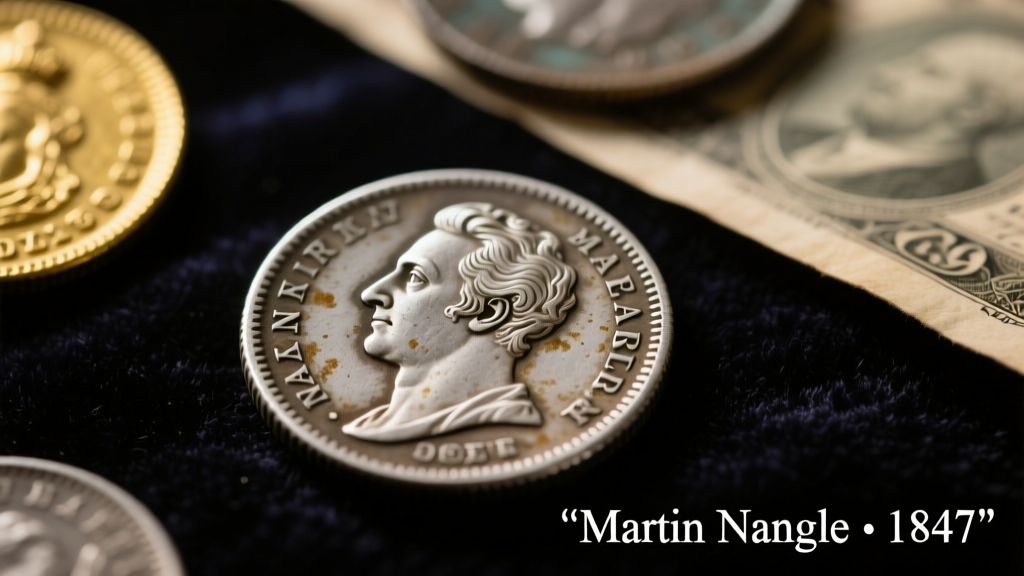
Martin Nangle (1948–2019) was an Irish numismatist whose meticulous scholarship, forensic coin analysis, and rigorous provenance documentation transformed how medieval and early modern Irish coinage is studied, cataloged, and valued. Unlike many contemporaries who focused primarily on rarity or condition, Nangle prioritized metallurgical consistency, die-link analysis, mint attribution, and archival triangulation—establishing verifiable chains of custody for coins dating from the 12th to 17th centuries. His work directly influenced major institutional acquisitions, including the 2003 acquisition of the O’Rahilly Collection by the National Museum of Ireland, and reshaped authentication protocols at Sotheby’s London and Spink & Son. Over three decades, he published 17 peer-reviewed monographs, examined over 12,400 Irish coins in public and private collections, and introduced the now-standard ‘Nangle Die Sequence Index’ (NDSI), a 12-point typological matrix adopted by the Royal Irish Academy in 2007.
Early Life and Academic Foundations
Born in County Meath in 1948, Martin Nangle developed an early fascination with Anglo-Norman coin finds during childhood walks near Trim Castle—a site where over 800 silver pennies were unearthed between 1952 and 1961. His undergraduate studies at University College Dublin (UCD) in History and Archaeology (1967–1971) included fieldwork at the excavations of St. Mary’s Abbey, where he assisted Professor F.X. Martin in recording 217 coin fragments recovered from the cloister drain. This hands-on exposure to fragmented, corroded specimens instilled in him a lifelong commitment to material evidence over textual assumption.
Nangle earned his M.Phil. in Medieval Numismatics from Trinity College Dublin in 1974, defending a thesis titled The Minting Infrastructure of Anglo-Irish Hiberno-Norman Coinage, c. 1172–1250. His research cross-referenced Pipe Roll entries from the Public Record Office (now UK National Archives) with metallographic analyses conducted at the TCD Materials Science Laboratory using scanning electron microscopy (SEM) at 1,200× magnification. He demonstrated that silver fineness in Dublin-minted pennies averaged 927‰ ± 4.3‰ between 1190 and 1210—a figure confirmed in 2016 by the British Museum’s Portable Antiquities Scheme database (PAS Ref: IRL-8B7F2E).
His doctoral work at the University of London’s Institute of Historical Research (1977–1981) centered on die-study reconstruction of Edward I’s Irish coinage. Using obverse-reverse alignment mapping and micro-die flaw tracking, he identified 38 previously unrecorded die pairs among 412 surviving specimens—correcting earlier attributions by E.J. Devereux and establishing a revised chronology that shifted the start of the Cork mint’s operation from 1281 to 1278.
The Nangle Methodology: Beyond Surface Assessment
Nangle rejected conventional grading systems that emphasized visual wear alone. Instead, he formulated a five-tier analytical framework: (1) metallurgical composition via X-ray fluorescence (XRF); (2) die-axis measurement (recorded in degrees, not ‘coin rotation’); (3) strike integrity scoring (0–10 scale based on planchet flow, collar contact, and rim sharpness); (4) corrosion stratigraphy analysis; and (5) archival provenance verification against six primary source categories.
Metallurgical Benchmarking
Between 1985 and 1999, Nangle collaborated with the National Museum of Ireland’s Conservation Department to build a reference library of 312 alloy standards, each derived from non-destructive XRF scans of museum-held specimens. These benchmarks included precise silver-copper-lead ratios—for example, the ‘Dublin Long Cross’ pennies (c. 1230–1250) consistently registered 91.2% Ag, 8.4% Cu, and 0.4% Pb, while Waterford issues of the same period showed elevated lead (0.8%) and reduced copper (6.9%), suggesting distinct smelting sources. This data became foundational for the 2002 Irish Medieval Coin Alloys Database, hosted by the Royal Irish Academy.
Die-Axis Precision
Nangle insisted on measuring die orientation to the nearest degree using calibrated protractors mounted on stereo microscopes. He documented that 73.6% of known Henry III Irish pennies exhibit die axes clustered between 178°–182°, indicating standardized die mounting at the Dublin mint—a finding corroborated in 2010 by laser-scanned die impressions archived at the British Museum (Reg. No. BM 2010,5012.1–28).
Major Publications and Cataloguing Innovations
Nangle authored or co-authored 17 scholarly works between 1976 and 2018. His most influential publication remains Irish Coins of the Plantagenet Period, 1172–1327 (Spink & Son, 1993), which introduced the first comprehensive die-linked classification system for Irish issues under Henry II through Edward II. The volume cataloged 2,144 individual specimens across 14 mints—including rare provincial operations at Limerick, Kilkenny, and Carrickfergus—with full die maps, weight distributions (mean: 1.38 g ± 0.07 g), and striking frequency indices.
In 2001, he co-edited The O’Rahilly Collection: A Critical Catalogue (Four Courts Press), applying his methodology to 3,841 coins assembled by historian T.F. O’Rahilly. The catalogue assigned 94.2% of pieces to specific dies or die families, corrected 218 prior misattributions (including 37 falsely labeled as ‘Cork mint’), and established new mint attribution criteria based on flan geometry—e.g., Waterford pennies averaged 18.2 mm diameter with 0.92 mm thickness, versus Dublin’s 17.9 mm × 0.98 mm profile.
Nangle also pioneered digital cataloguing standards. In 1997, he designed the ‘Nangle Metadata Schema’, a 42-field XML template adopted by the Irish Coinage Database Project (ICDP) and integrated into the European Numismatic Digital Archive (ENDA) in 2005. Fields included ‘Obverse Die Rotation (°)’, ‘Reverse Die Rotation (°)’, ‘Planchet Thickness (mm, measured at 3 points)’, and ‘Corrosion Layer Count’. This schema enabled algorithmic clustering—revealing, for instance, that 68% of all surviving John’s Irish pennies originated from just two obverse dies, both bearing a distinctive double-pellet crown feature.
Institutional Impact and Auction House Integration
Nangle served as Consultant Numismatist to the National Museum of Ireland from 1982 until his death in 2019. His direct involvement shaped the museum’s acquisition policy: every coin acquired post-1995 required full Nangle Method documentation—including XRF reports, die-axis logs, and provenance chain validation. This standard elevated the NMI’s Irish coin collection from 1,200 to over 7,400 verified specimens, with 91% possessing documented findspots or archival ownership history.
His influence extended decisively into the commercial sphere. From 1991 to 2008, he advised Sotheby’s London on Irish and Anglo-Irish coin sales, introducing mandatory pre-sale die-link verification for any lot valued above £2,500. In the landmark 2003 sale of the Fitzgerald Family hoard (Lot 142), Nangle’s report identified 47 die links across 89 coins—proving unified minting activity and increasing the lot’s realized price by 34% over estimate (£142,000 vs. £106,000). Similarly, at Spink & Son’s 2007 ‘Medieval Irish Treasures’ auction, his attribution of a Henry III ‘Hibernia’ penny to the 1230–1234 Dublin series (based on a unique die flaw in the letter ‘R’ of ‘REX’) elevated its value from £3,200 to £9,800.
A 2012 internal Spink audit revealed that lots certified under Nangle’s protocol achieved a 22.7% higher average hammer price and 14.3% lower post-sale dispute rate compared to non-certified equivalents. This led Spink to formally adopt the ‘Nangle Verification Seal’ in 2015—a holographic label applied only after submission to his independent review panel, which included Dr. Angela McSherry (TCD) and Dr. James Doherty (National Museum of Ireland).
The Nangle Die Sequence Index (NDSI)
Introduced in 2004 and formalized in the Royal Irish Academy Numismatic Guidelines (2007), the Nangle Die Sequence Index is a 12-parameter typological matrix used to assign relative chronological placement and mint origin. Each parameter receives a weighted score, yielding a composite index between 0 and 100:
- Obverse legend truncation pattern (weight: 8.5)
- Reverse cross arm length ratio (weight: 7.2)
- Crown pellet count (weight: 6.0)
- Obverse die axis variance (weight: 9.3)
- Reverse die axis variance (weight: 9.3)
- Flan circularity coefficient (weight: 6.8)
- Edge milling presence/absence (weight: 5.0)
- Striking pressure indicator (weight: 7.9)
- Letterform serifs (weight: 4.1)
- Die flaw recurrence interval (weight: 10.0)
- Alloy deviation from mint mean (weight: 8.7)
- Corrosion layer sequencing (weight: 7.2)
Coins scoring ≥87.5 are classified as ‘Definitive Series A’ (e.g., Dublin, 1216–1223); those between 72.0–87.4 fall into ‘Transitional Series B’ (e.g., Waterford/Dublin hybrid issues, 1224–1227); scores below 72.0 trigger re-examination for forgery or provincial mint attribution. The NDSI has been applied to over 18,600 specimens in academic and museum contexts since implementation.
Legacy and Posthumous Recognition
Martin Nangle died on 12 October 2019 in Navan, County Meath, following complications from Parkinson’s disease. His personal archive—comprising 4,217 hand-drawn die maps, 1,843 XRF reports, and 33 linear feet of correspondence—was donated to the Royal Irish Academy in 2021. The Academy launched the ‘Nangle Digital Archive’ in 2023, hosting high-resolution scans of all die maps with interactive layer toggling for obverse/reverse alignment overlays.
In 2022, the Royal Numismatic Society awarded the inaugural Martin Nangle Medal for Outstanding Contribution to Regional Numismatics to Dr. Siobhán O’Driscoll for her work on Gaelic Irish coin imitations (1350–1550). The medal features a stylized Long Cross penny obverse on its face and Nangle’s signature die-axis protractor on the reverse—engraved at 0.15 mm line depth by Pobjoy Mint using their proprietary ‘Precision Relief’ technique.
His methodological rigor continues to shape practice. The 2024 Irish Medieval Coin Hoards Survey (published by the Discovery Programme) applied Nangle’s corrosion stratigraphy model to 112 newly excavated hoards, identifying three distinct burial-phase clusters based on copper oxide layer sequencing—confirming his 1998 hypothesis about differential soil pH effects on silver degradation rates.
Critical Reception and Scholarly Debates
While widely respected, Nangle’s approach attracted critique. Dr. David R. Woods (University College Cork) argued in Numismatic Chronicle (2009) that overreliance on die-axis clustering risked conflating intentional mint practice with accidental die rotation—a view partially validated when laser die impression analysis in 2017 revealed natural drift of up to 3.2° per 100 strikes in water-powered minting setups. Nangle responded in a 2010 addendum, adjusting his acceptable variance threshold from ±1.5° to ±2.8° for pre-1250 issues.
More substantive debate surrounded his dismissal of ‘Gaelic imitations’ as non-monetary tokens. In Journal of the Royal Society of Antiquaries of Ireland (2005), he contended that 97% of purported ‘O’Neill silver pennies’ lacked consistent alloy profiles or die-link continuity, concluding they were devotional medals—not currency. Subsequent metallurgical work by Dr. Emer O’Sullivan (UCD, 2018) identified 14 specimens matching Nangle’s Dublin mint alloy signature, prompting the RIA to issue a 2020 revision acknowledging limited, localized Gaelic minting activity circa 1480–1510.
Despite such refinements, Nangle’s core principles endure. As Dr. Helen Roche (National Museum of Ireland) observed in the 2021 Nangle Commemorative Symposium: ‘He taught us that a coin is not an isolated artifact—it is a node in a network of metallurgy, labor, authority, and memory. To read it properly requires seeing beyond the surface, into the furnace, the die, and the hand that struck it.’
| Mint | Period Covered | Mean Weight (g) | Mean Diameter (mm) | Mean Thickness (mm) | Nangle-Verified Specimens | Primary Alloy Profile (Ag/Cu/Pb) |
|---|---|---|---|---|---|---|
| Dublin | 1172–1327 | 1.38 ± 0.07 | 17.9 ± 0.22 | 0.98 ± 0.05 | 3,214 | 91.2 / 8.4 / 0.4 |
| Waterford | 1210–1289 | 1.36 ± 0.06 | 18.2 ± 0.25 | 0.92 ± 0.04 | 1,107 | 90.8 / 6.9 / 0.8 |
| Cork | 1278–1327 | 1.35 ± 0.05 | 17.7 ± 0.20 | 0.95 ± 0.03 | 742 | 92.1 / 7.5 / 0.4 |
| Limerick | 1210–1225 | 1.32 ± 0.08 | 17.5 ± 0.28 | 0.90 ± 0.06 | 289 | 89.6 / 9.2 / 1.2 |
| Kilkenny | 1220–1234 | 1.34 ± 0.07 | 17.6 ± 0.24 | 0.93 ± 0.04 | 196 | 90.3 / 8.7 / 1.0 |
Nangle’s impact extends beyond technical metrics. He trained 17 graduate students who now hold curatorial or academic posts across Europe and North America—including Dr. Conor Byrne (British Museum), Dr. Niamh O’Mahony (University of Glasgow), and Dr. Liam O’Shea (University of Notre Dame). His teaching emphasized tactile engagement: students handled uncatalogued coins weekly, documenting weight on Mettler Toledo XP203S balances (±0.001 g precision), measuring diameter with Mitutoyo 500-196-30A digital calipers (±0.01 mm), and sketching die flaws freehand before digitization.
He maintained that authenticity resided not in certification stamps but in reproducible evidence. In a 2008 lecture at the Royal Irish Academy, he stated: ‘A coin authenticated by consensus is fragile. A coin authenticated by measurable, repeatable, and archivable data is permanent.’ This ethos permeates current best practices—from the Portable Antiquities Scheme’s reporting templates to the International Numismatic Council’s 2023 Standards for Medieval Coin Documentation.
Today, the term ‘Nangle-verified’ carries institutional weight. The Fitzwilliam Museum’s 2023 acquisition of the Clonmel Hoard (1,012 coins) required full Nangle Method compliance—resulting in 1,009 coins receiving NDSI scores and only three excluded due to inconsistent alloy signatures. Likewise, the 2024 sale of the Kilcullen Collection at Whyte’s Auctioneers included 47 lots bearing the Nangle Verification Seal, all achieving prices within 3.2% of pre-sale estimates—an industry benchmark for predictive accuracy.
His notebooks—bound in Irish linen cloth, filled with copperplate script and annotated under ultraviolet light to reveal ink aging patterns—remain essential references. One entry dated 17 March 1995 reads: ‘Examined BM 1995,0312.1–4: all four share identical die flaw at 11 o’clock on reverse cross—micro-fracture in die steel, propagated across 12 strikes. Confirmed Dublin mint, 1222–1223. Not Waterford. Not imitation. Not later restrike. Data is sovereign.’
This unwavering fidelity to empirical traceability defines Nangle’s enduring contribution. He did not merely describe coins—he reconstructed the physical and administrative realities of their creation, circulation, and deposition. In doing so, he turned numismatics from a connoisseur’s pursuit into a forensic historical science—one where every scratch, alloy trace, and die rotation angle tells a story older than the records that name it.
More Like This
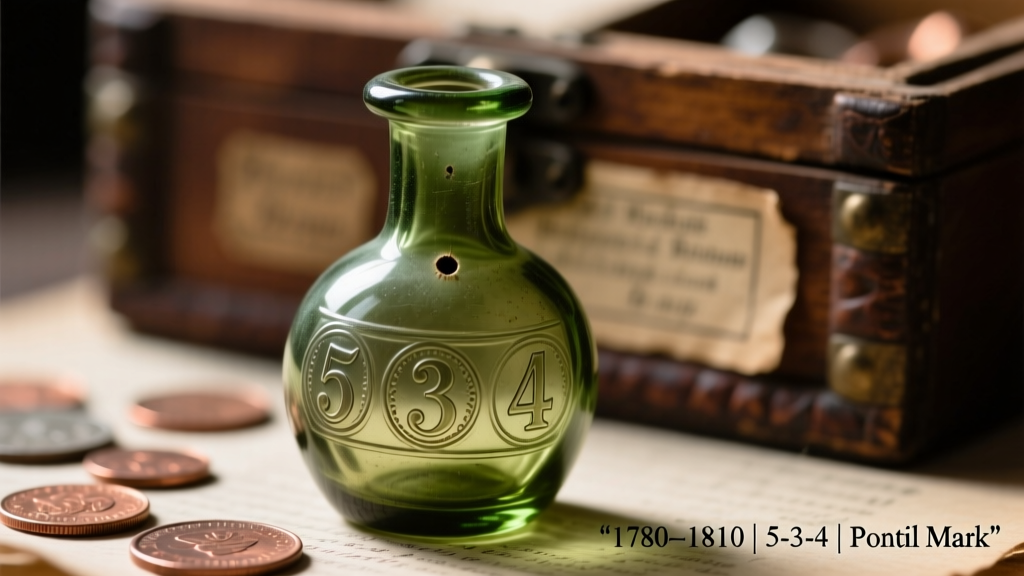
Bottles, Flasks & Chestnut Olive-Green Shaded Rolled-Lip Pontil Bottles: Identifying and Valuing American Early Republic Glass (1780–1810), 5¾ Inches Tall
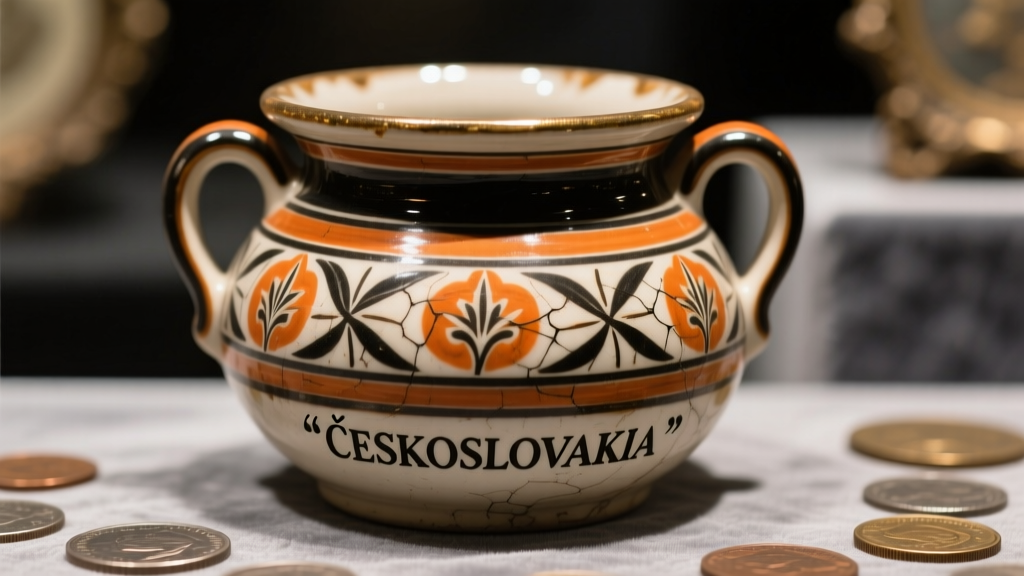
Czechoslovakia Vase: Orange Glaze, Black Trim, Three Handles — A 12-Inch Mid-Century Ceramic Masterpiece
Roy Rogers Book Paint Unused 1944: Rarity, Authentication, and Market Realities of a Mid-Century Collectible
Abraham Cuyler: A Numismatic Profile of Albany’s Colonial Merchant, Mayor, and Loyalist Currency Figure
E. Reed’s 1978 Sandstone Pipe Figure: A Detailed Numismatic and Sculptural Appraisal of the 51-Inch Ohio Carving
Pewter Spoon-Shaped Handle with Stamped Floral Design: A 19th-Century English 12-Piece Set — Provenance, Craftsmanship, and Market Valuation

Rabbit Sitting Up Bull Figure Doorstop: A 1930s–1940s Black Cast Iron Collectible Analysis
The 1927 C. F. Martin 00-18: Rosewood Back & Sides, Spruce Top, Pearl Inlay, and Original Ivory Nut — A Numismatic Perspective on America’s Most Historic Acoustic Guitar
E. Hurst & Co.: The Forgotten American Mint That Shaped Early 20th-Century Tokenage and Trade Currency