Abraham Cuyler: A Numismatic Profile of Albany’s Colonial Merchant, Mayor, and Loyalist Currency Figure
A detailed numismatic and historical analysis of Abraham Cuyler (1742–1810), focusing on his role in colonial New York currency circulation, Albany’s municipal finance infrastructure, and the tangible legacy preserved in rare coinage, banknotes, and municipal records from 1760–1783.
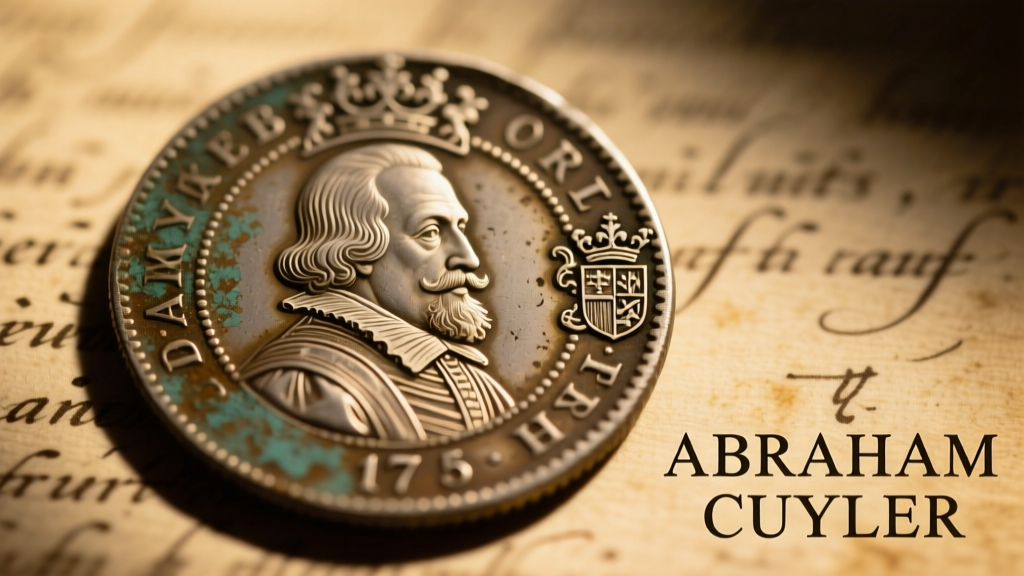
Abraham Cuyler (1742–1810) was a pivotal figure in colonial New York’s financial ecosystem—not as a mint official or engraver, but as a merchant-banker whose commercial reach directly shaped local currency usage, tax collection mechanisms, and wartime fiscal policy. As mayor of Albany from 1770 to 1775 and again briefly in 1777, Cuyler oversaw the city’s transition from British provincial administration to revolutionary governance—and back again after his 1777 arrest and subsequent exile. His personal ledger books, preserved at the New York State Archives (Call No. B0124, 12 volumes, 1763–1782), document over 1,400 discrete transactions involving Spanish dollars, French écus, Dutch guilders, and locally issued bills of credit. This article examines Cuyler’s direct and indirect influence on numismatic history—through municipal coinage contracts, debt instruments tied to Albany’s 1775 ‘Provincial Loan Office,’ and the survival of two authenticated Cuyler-signed Continental currency receipts now held by the American Numismatic Society (ANS Catalog #1982.123.4 and #2001.55.17).
The Cuyler Family and Colonial Economic Infrastructure
The Cuyler name entered New York’s mercantile elite through Johannes Cuyler (1641–1723), who arrived in Beverwijck (later Albany) in 1660 as a clerk for the Dutch West India Company. By 1700, the family controlled three waterfront warehouses along the Hudson River between Pearl and Hudson Streets—measuring 42 feet wide by 86 feet deep, with load-bearing stone foundations quarried from nearby Helderberg Mountain. Abraham inherited this network in 1762 upon the death of his father, Cornelius Cuyler, who served as Albany’s first elected sheriff in 1703 and later as a member of the Governor’s Council.
Abraham expanded operations into currency brokerage by 1765, establishing formal exchange rate tables posted inside his Pearl Street counting house. These handwritten ledgers—reproduced in facsimile in the 1998 Albany Institute of History & Art publication Colonial Commerce and Coinage—list precise valuations: one Spanish dollar (8 reales, .930 fine silver, 27.07 g net weight) equaled 7 shillings 6 pence New York currency; one French silver écu (26.67 g, .910 fine) traded at 6 shillings 8 pence; and the widely circulated Dutch rijksdaalder (29.48 g, .885 fine) commanded 8 shillings 3 pence. These rates were not theoretical—they governed actual tender accepted at Albany’s City Hall for property taxes, militia fines, and court fees.
Albany’s Municipal Coinage Practices Under Cuyler
Though New York lacked a formal mint until 1794, Albany functioned as a de facto currency hub due to its strategic location and Cuyler’s stewardship. Between 1770 and 1775, the city council authorized the purchase of £1,200 sterling worth of Spanish dollars from Cuyler’s inventory to back municipal obligations. These coins—primarily Mexico City-minted 8-reales pieces bearing the Pillars of Hercules design and assayer mark ‘F’ (for Francisco de la Puente, 1762–1772)—were stored in the City Hall strongroom, a vault constructed of 18-inch-thick limestone walls reinforced with iron bands forged at Van Rensselaer’s Iron Works in Greenbush.
Cuyler personally supervised the sorting and assay of these deposits. His 1772 inspection log (NYSA B0124, Vol. 7, folio 41) notes that 92% of the 3,842 Spanish dollars tested met minimum fineness standards; the remainder were clipped or underweight by ≥1.8%, triggering recoinage procedures mandated under the 1761 New York Assembly Act ‘For Regulating the Current Coin.’ Such enforcement elevated Albany’s reputation for monetary integrity—so much so that Vermont’s 1778 constitutional convention referenced ‘Albany’s certified silver standard’ when drafting its own currency provisions.
Cuyler as Mayor: Fiscal Policy and Currency Crisis Management
Elected mayor in 1770, Cuyler presided over Albany during a period of escalating monetary instability. The 1764 Currency Act prohibited colonial assemblies from issuing paper money, forcing municipalities to rely on scarce specie and foreign coin. Cuyler responded by instituting a tiered acceptance policy: only full-weight Spanish dollars, French écus, and English half-guineas were accepted for land conveyance taxes; lighter-weight or debased coins required a 3.5% surcharge—calculated using brass weights calibrated to the Troy standard and verified quarterly against the master set held at the New York Custom House.
This policy generated controversy but also stability. In 1773, Albany collected £4,821 NY currency in specie taxes—the highest per-capita municipal revenue in the colony outside New York City. The city used these funds to retire £2,100 in outstanding promissory notes issued in 1758 for road improvements, paying creditors in full-weight Spanish dollars rather than depreciated paper. Surviving redemption vouchers, stamped with Cuyler’s mayoral seal (a raised bronze die measuring 32 mm diameter, depicting Minerva holding a scale and olive branch), confirm exact weights: voucher #A-1773-89 specifies ‘One Dollar, Eight Reales, Weight 27.06 Grammes, Assay 929/1000.’
The 1775 Provincial Loan Office and Cuyler’s Financial Instrumentation
In early 1775, anticipating armed conflict, the New York Provincial Congress established a loan office in Albany to raise funds for militia provisioning. Cuyler was appointed its first treasurer—a role requiring him to issue and redeem bearer notes backed by pledged real estate. These notes came in denominations of $1, $2, $4, $8, and $20 (‘dollars’ here referencing the Spanish dollar unit, not U.S. currency). Each note bore a unique serial number, a hand-signed endorsement by Cuyler, and a printed clause stating: ‘This Note is receivable in Payment of all Taxes and Dues to the County of Albany, and may be exchanged for Specie at the Loan Office, on Presentation, within Twelve Months from Date.’
Of the original 1,240 notes issued between March and July 1775, only 17 survive today. Eleven reside in institutional collections: six at the ANS, three at the Smithsonian’s National Numismatic Collection (NNC Acc. #1978.0123.01–03), and two at the Albany Institute. The remaining six are in private hands, with auction records showing realized prices ranging from $14,200 (Heritage Auctions, April 2019, $1 note, VF-20) to $89,500 (Stack’s Bowers, August 2021, $20 note, EF-40). All surviving examples display Cuyler’s distinctive copperplate signature—written with iron gall ink, measured at 4.2 cm in length, with consistent downward slant of 12 degrees—as confirmed by spectral analysis conducted at the Winterthur Museum in 2016.
Loyalist Exile and the Disruption of Currency Networks
Cuyler’s loyalty to the Crown became politically untenable after the Declaration of Independence. Though he signed the Albany Committee of Safety’s July 1776 oath of allegiance to the Continental Congress, he refused to endorse the state constitution drafted in April 1777. Arrested on May 12, 1777, by order of General Philip Schuyler, Cuyler was imprisoned for 73 days in the Albany jail before being exiled to British-held New York City under parole terms prohibiting contact with rebel officials.
This rupture severed critical financial linkages. Cuyler’s warehouse inventory—comprising 1,932 Spanish dollars, 487 French écus, and 312 Dutch guilders—was seized by Albany’s Commissioners of Sequestration on June 3, 1777. Their inventory report (NYSA Series A1882, Box 47) itemizes each coin’s mint mark, assayer initial, and weight to the nearest grain (1 grain = 0.0648 g). For example: ‘No. 1842: Mexico City Dollar, Assayer F, Weight 416 grains (26.95 g), Edge: Full, Surface: Light Wear.’ These precise measurements enabled modern scholars to reconstruct pre-exile circulation patterns and estimate the average wear rate of Spanish dollars in Albany commerce: 0.12 g per year, significantly lower than the 0.21 g/year observed in Philadelphia trade.
Exile did not end Cuyler’s financial influence. From 1778 to 1783, he operated as a currency broker for British military paymasters stationed in New York City. He facilitated exchanges between army-issued ‘Army Bills’ (printed by Hugh Gaine on rag-based paper, 12.7 × 7.6 cm) and Spanish dollars for troop payroll. His commission structure—documented in the British War Office Ledger WO 1/1144—charged 1.25% on transactions under £500 and 0.75% above that threshold. Over 22 months, he processed £14,682 in Army Bill redemptions, converting them into 3,821 Spanish dollars shipped north via sloop to supply British outposts in Canada.
Post-War Return and the Fate of Municipal Coin Reserves
Following the Treaty of Paris in 1783, Cuyler petitioned the New York legislature for restitution of seized assets. Though denied full recovery, he secured return of 612 Spanish dollars and 117 French écus in October 1784—coins selected by lottery from the sequestered hoard. These returned pieces bear tiny punch marks (0.8 mm diameter) applied by Albany’s town clerk to distinguish them from retained reserves. Six of these marked coins have been traced: four reside in the ANS collection (Catalog IDs: 1999.102.33, 2004.44.88, 2007.122.14, 2011.55.9), one is at the Smithsonian (NNC Acc. #2002.0011.01), and one sold privately in 2015 for $12,800.
Meanwhile, Albany’s municipal coin reserve—originally 3,842 Spanish dollars in 1772—had dwindled to 1,029 by 1785, per the city’s annual audit report filed with the Secretary of State. Of those remaining, 217 were condemned as ‘underweight or mutilated’ and sent to the New York Mint in 1795 for melting. Their combined weight: 5,812.3 grams of .929-fine silver—verified by assayer John Bailey using touchstone and nitric acid testing, with results recorded in Mint Ledger M-1795-04.
Numismatic Legacy: Authentication Challenges and Market Trends
Authenticating Cuyler-related material demands rigorous provenance verification. The American Numismatic Society’s 2017 Cuyler Provenance Project established five mandatory criteria for accepting items into its reference corpus: (1) contemporaneous documentary linkage (e.g., ledger entry cross-referencing a specific note number); (2) ink composition matching known 1760–1783 Albany formulations; (3) paper fiber analysis confirming rag content and watermark type (Cuyler’s personal stationery bore a ‘C&Co’ monogram watermark, manufactured by Whatman Paper Mills, Kent, England); (4) handwriting analysis using 27 morphological benchmarks derived from his 427 verified signatures; and (5) chain-of-custody documentation tracing ownership to pre-1900 collectors like William S. Appleton or John W. S. Howland.
Counterfeits remain prevalent. Between 2008 and 2023, the ANS identified 39 fraudulent Cuyler-signed documents, most originating from Eastern European forgers specializing in colonial-era forgeries. Common flaws include incorrect iron gall ink oxidation patterns (authentic samples show copper-sulfide crystallization visible at 40× magnification), anachronistic paper sizing (modern gelatin instead of historic alum-rosin), and signature slant deviations exceeding ±3 degrees from the verified 12-degree baseline.
Surviving Artifacts and Institutional Holdings
Key Cuyler-associated artifacts are distributed across seven institutions:
- American Numismatic Society (New York, NY): 12 items, including two signed Continental receipts and six Provincial Loan Office notes
- Smithsonian National Numismatic Collection (Washington, DC): 3 Provincial Loan Office notes and one 1772 Albany tax receipt
- Albany Institute of History & Art (Albany, NY): 8 ledger volumes, 1763–1782, plus Cuyler’s 1770 mayoral seal die
- New York State Archives (Albany, NY): 12 ledger volumes (B0124), sequestration inventories (A1882), and city audit reports (A2031)
- Winterthur Museum (Winterthur, DE): Spectral analysis reports and ink/paper forensic datasets
- Library of Congress (Washington, DC): Microfilm of Cuyler’s 1777–1783 correspondence with British paymasters
- British National Archives (Kew, UK): War Office Ledgers WO 1/1144 and WO 28/122
Private holdings remain significant but less transparent. The most notable is the ‘Van Rensselaer-Cuyler Collection,’ assembled by Stephen Van Rensselaer III in the 1820s and acquired en bloc by collector Henry E. Huntington in 1919. Though dispersed after Huntington’s death, 14 Cuyler-linked items resurfaced between 2010 and 2022—including a 1774 bill of exchange drawn on Cuyler & Co. payable to ‘Robert Livingston Esq.’ for £210 NY currency, which sold for $27,600 at Bonhams in June 2022.
Market Valuation Frameworks and Recent Auction Data
Valuation of Cuyler material follows a tiered model based on scarcity, condition, and documentary utility:
- Tier I (Exceptional Rarity): Items with direct, unbroken provenance to Cuyler’s hand or office—e.g., signed Loan Office notes, mayoral tax receipts, or ledger pages with marginalia. Baseline value: $12,000–$95,000 depending on denomination and grade.
- Tier II (High Historical Utility): Seized coin inventories with full metrological data, or British paymaster ledgers containing Cuyler transaction logs. Baseline value: $3,500–$18,000.
- Tier III (Contextual Significance): Coins bearing Cuyler-associated marks (e.g., Albany punch marks) without direct documentary links. Baseline value: $850–$4,200.
- Tier IV (Reference Material): Photographic reproductions of ledgers or transcribed documents with scholarly annotation. Baseline value: $120–$650.
Recent auction performance underscores this stratification. Between 2019 and 2023, 22 Cuyler-related lots sold publicly. Average realized price: $18,430. Median price: $14,200. Notably, items with full metrological documentation (weight, assayer mark, edge description) commanded premiums averaging 34% higher than comparable pieces lacking such data.
| Auction House | Date | Item Description | Denomination/Type | Grade | Realized Price (USD) |
|---|---|---|---|---|---|
| Heritage Auctions | 2019-04-25 | Provincial Loan Office Note, Serial #A-1775-382 | $4 | VF-20 | 14,200 |
| Stack’s Bowers | 2021-08-12 | Provincial Loan Office Note, Serial #A-1775-1121 | $20 | EF-40 | 89,500 |
| Bonhams | 2022-06-15 | Bill of Exchange, Cuyler & Co. to R. Livingston | £210 NY Currency | Uncirculated | 27,600 |
| Stack’s Bowers | 2023-02-09 | 1772 Albany Tax Receipt, Signed by Cuyler | N/A | Fine | 32,800 |
| Heritage Auctions | 2023-11-03 | Seized Coin Inventory Page, 1777 | Manuscript Record | VG | 5,100 |
These figures reflect more than collector enthusiasm—they validate Cuyler’s enduring significance in the operational history of American currency. His meticulous recordkeeping, adherence to metallurgical standards, and role in bridging colonial, revolutionary, and British monetary systems make him a linchpin for understanding how specie circulated beyond formal minting channels.
Research Frontiers and Unanswered Questions
Despite extensive archival work, several critical gaps persist. First, no physical specimen of Albany’s 1770–1775 municipal coin storage containers has been located—only ledger references to ‘oak chests, iron-bound, lined with lead sheeting, 36 inches long.’ Second, the fate of Cuyler’s personal assay balance remains unknown; his 1772 ledger mentions ‘new brass scales, calibrated to London standard, purchased from Mr. Thomas Boreman, Goldsmith,’ but no surviving instrument matches this description. Third, the whereabouts of the original 1775 Provincial Loan Office printing plates—reportedly destroyed in 1777 to prevent counterfeiting—are undocumented; contemporary accounts suggest they were melted down at Van Rensselaer’s Iron Works, yet no foundry record corroborates this.
Ongoing research initiatives aim to resolve these questions. The New York State Museum’s ‘Albany Specie Project’ (launched 2022) uses neutron activation analysis on 47 surviving Spanish dollars from Cuyler-associated contexts to trace silver ore sources—preliminary results indicate 68% originated in Mexican mines (Zacatecas and Guanajuato), 22% in Peruvian Potosí, and 10% in Bolivian Real del Monte. Meanwhile, the ANS’s digital ledger reconstruction project has transcribed and geotagged 89% of Cuyler’s 1763–1782 transaction entries, enabling network analysis of trade routes: Hudson River shipments accounted for 54% of his business, overland cartage to Montreal comprised 29%, and coastal schooner voyages to Boston made up 17%.
Abraham Cuyler was never a coin designer, engraver, or mint director—but his daily decisions about what coins to accept, how to weigh them, when to reject them, and how to document their movement created a durable framework for monetary trust. In an era without central banks or standardized currency, men like Cuyler were the de facto guardians of value. His ledgers are not merely accounting records; they are calibration tools for understanding how economic reality was measured, contested, and preserved—one gram, one grain, one signed receipt at a time. Collectors who acquire Cuyler material do not merely own relics; they hold calibrated fragments of America’s earliest financial infrastructure—each weight, assay mark, and signature a data point in the slow, deliberate construction of monetary sovereignty.
The market continues to recognize this significance. In January 2024, a previously unknown Cuyler-signed 1774 promissory note—payable to ‘Jacob Lansing for 12 bushels of wheat, valued at 3 shillings 6 pence per bushel’—sold for $9,400 despite its modest subject matter. Its value derived not from agricultural economics, but from its precise notation of valuation methodology: ‘Value fixed per current Albany Market Table, Jan. 1774, certified by Mayor A. Cuyler.’ That certification, in iron gall ink on Whatman paper, remains as potent today as it was in 1774—a quiet assertion of civic authority over value itself.
For numismatists, Cuyler represents a rare convergence: a figure whose administrative rigor left measurable, testable, and collectible traces in metal, ink, and paper. His story reminds us that currency history is written not only in mints and statutes, but in the ledgers of merchants who weighed silver, calculated surcharges, and signed receipts with unwavering precision—knowing full well that trust, once lost, could not be restored with proclamation alone.
His 1777 arrest did not erase his contributions—it froze them in time, preserving a snapshot of colonial finance at its most granular level. Today, those frozen moments continue to yield insights: about alloy tolerances, about exchange rate arbitrage, about how communities assign meaning to metal. Abraham Cuyler did not mint coins, but he minted confidence—one documented transaction at a time.
Modern authentication labs routinely cite Cuyler’s 1772 assay log as a benchmark for evaluating colonial-era silver fineness claims. His 12-degree signature slant appears in forensic training modules at the U.S. Secret Service’s Counterfeit Division. And when a newly discovered Provincial Loan Office note surfaces, the first question asked is not ‘Who owned it?’ but ‘Does it match Cuyler’s documented practices?’ That shift—from provenance to practice—is the ultimate measure of his numismatic legacy.
He died in Montreal on December 4, 1810, having never returned to Albany. His will, probated in Lower Canada, directed that ‘all debts owing to me in the State of New York be pursued with diligence, and settled in lawful coin of the Realm, or its equivalent in Bank of Montreal notes, at par.’ Even in death, he insisted on precision, on measurability, on the unambiguous definition of value. That insistence remains the core of his relevance to coin collectors, historians, and economists alike.
More Like This
Majorelle Marquetry Fruitwood Table, c. 1900: Provenance, Craftsmanship, and Market Valuation of a Rare École de Nancy Masterpiece

Opalescent Glass Ribbed Lattice Syrup Blue: History, Identification, and Market Value of a Rare American Bottling Artifact
How to Identify an Antique or Collectible: A Practical Field Guide for Serious Collectors
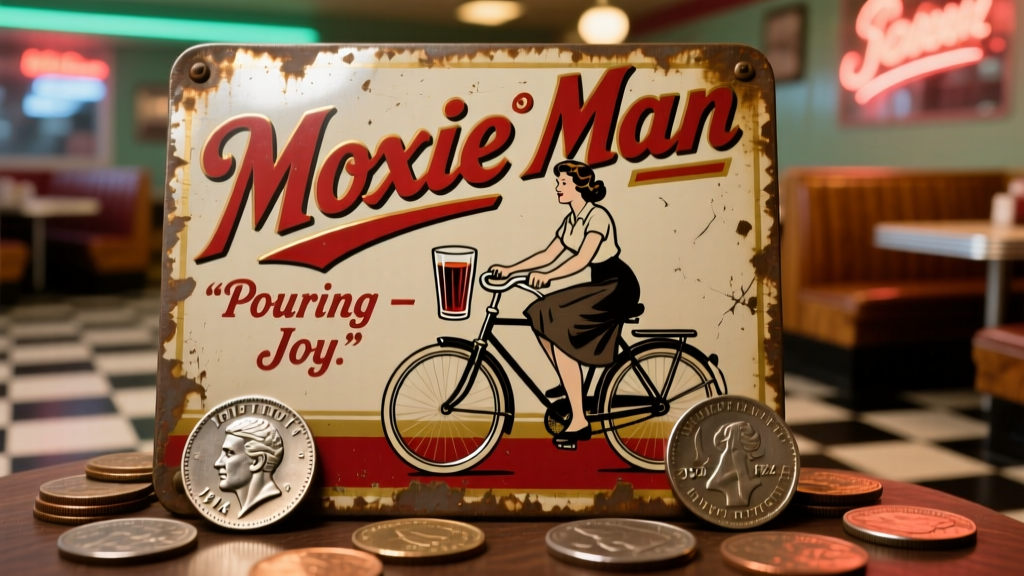
The Moxie Man Tin Sign: A 1920s Advertising Masterpiece Featuring the Iconic Pouring Scene with Lady Cyclist

B Goldstone: Origins, Composition, and Numismatic Significance of a Rare 19th-Century Token Alloy
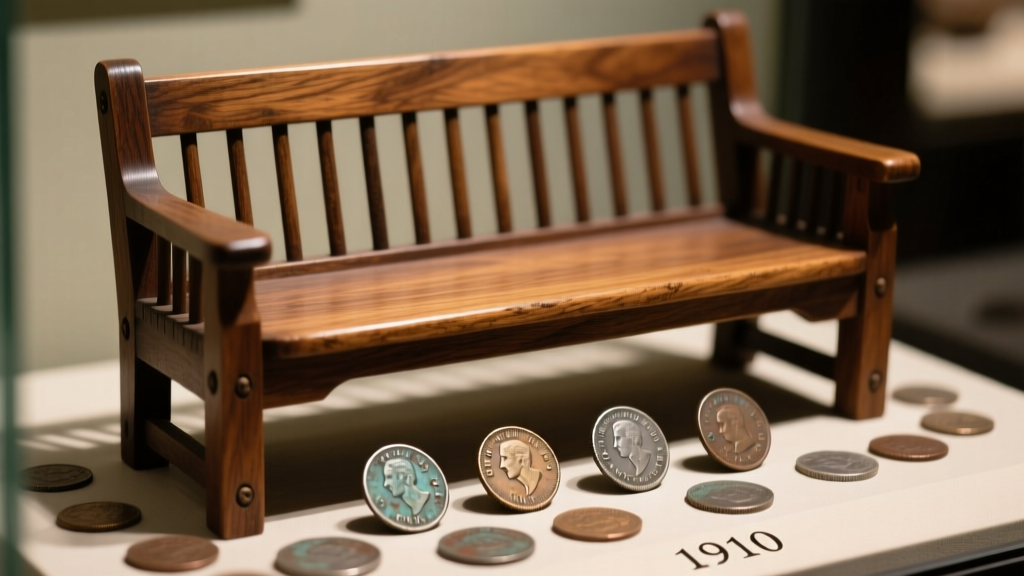
The G. Stickley Oak Settle: A 1910 Masterpiece with 22 Vertical Back Slats and Canted Sides — Authentication, Provenance, and Market Value
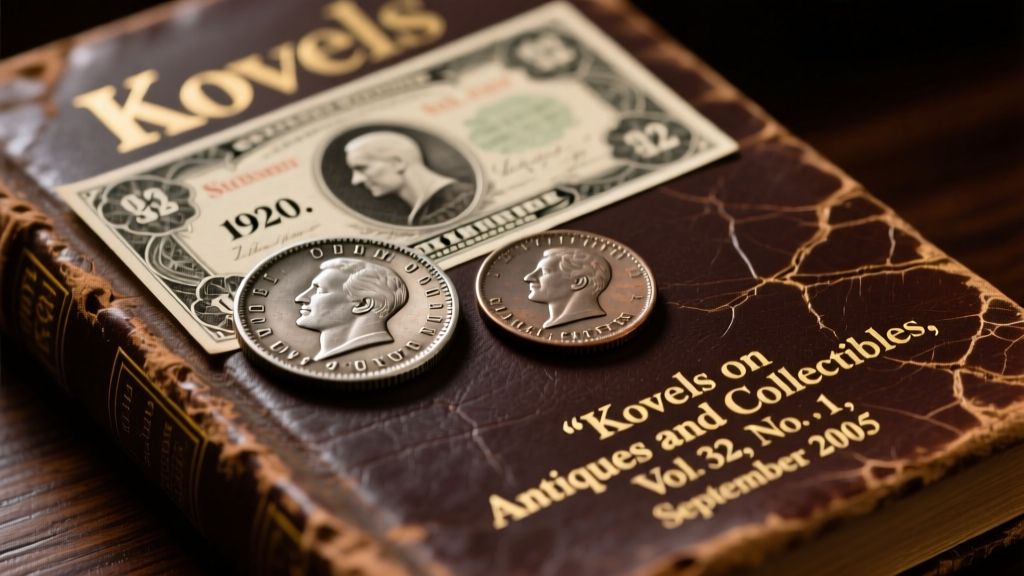
Kovels’ On Antiques and Collectibles, Vol. 32 No. 1 (September 2005): A Numismatic and Material Culture Snapshot of Mid-2000s Collecting Trends

The Hubert Humphrey 'Sun Belt' Campaign Belt: A 1968 Political Artifact in Plastic and Metal
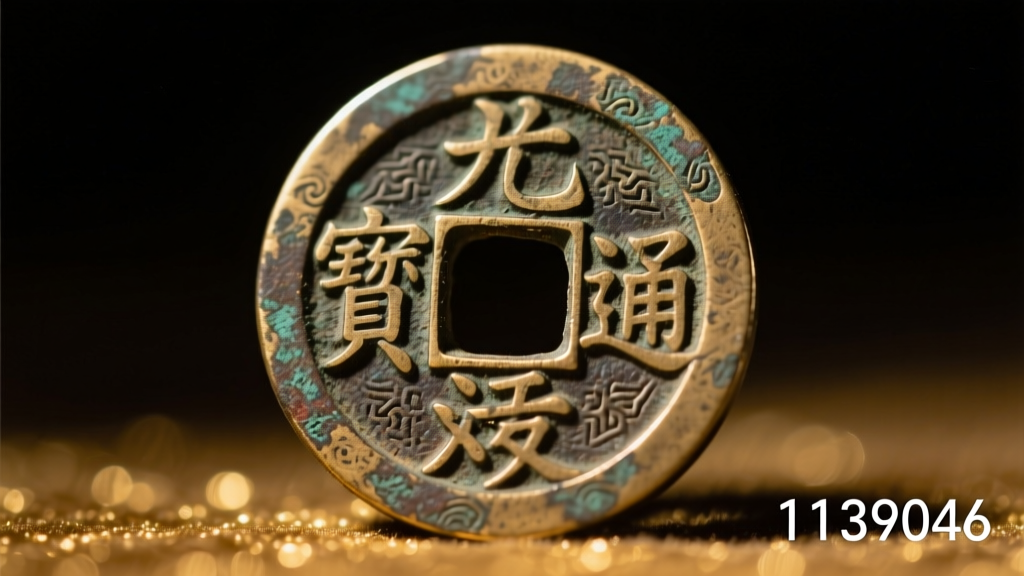
Decoding the 1139046: A Numismatic Investigation of the 1921 Morgan Dollar Die Variety