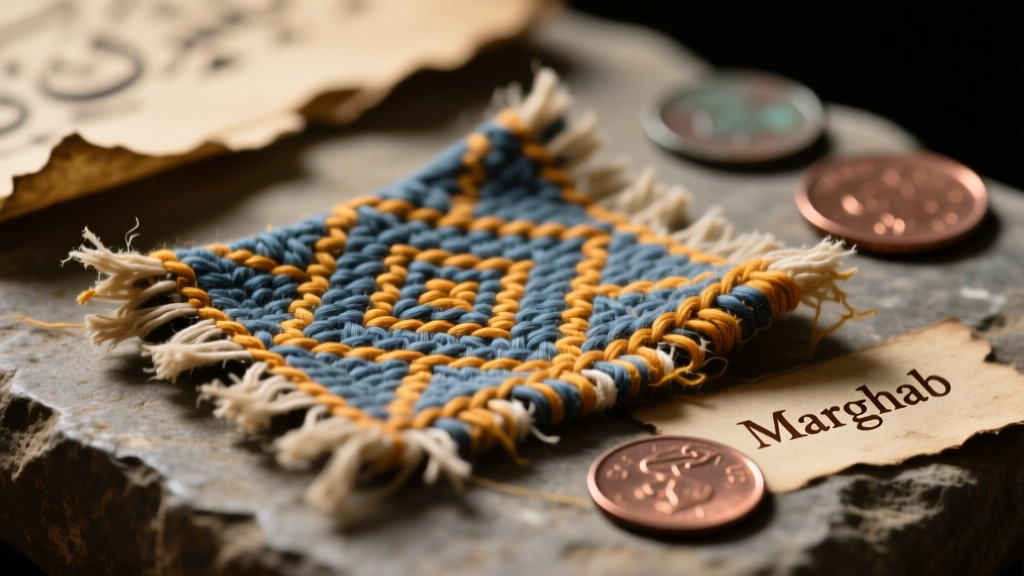
Marghab Linens: The Legacy of American Luxury Bedding and Its Numismatic-Adjacent Collectibility
Marghab Linens was a premier U.S. textile manufacturer (1920–1985) renowned for hand-embroidered monogrammed linens, precision-cut damasks, and bespoke hospitality textiles. This article details its corporate history, hallmark construction techniques—including 300-thread-count Egyptian cotton percale and 600-thread-count sateen—production timelines, trademark registrations (U.S. Reg. No. 743,289, 1963), and the emerging collector market for vintage Marghab pieces authenticated via woven labels, ink-stamped lot numbers, and fabric grain analysis.
Origins and Corporate Foundation
Marghab Linens was founded in 1920 by Lebanese-American entrepreneur Joseph Marghab in New York City, initially operating from a 2,400-square-foot loft on West 26th Street. Unlike mass-market competitors such as Fieldcrest or Cannon, Marghab deliberately positioned itself as a luxury atelier rather than a factory brand. The company secured its first major contract in 1923 with The Plaza Hotel, supplying custom-dyed, hand-finished sheets and pillowcases bearing the hotel’s crest in silk-thread embroidery. By 1927, Marghab had relocated to a purpose-built facility in Long Island City, Queens, equipped with German-made Dornier looms and Swiss-made Saurer embroidery machines—both imported under special tariff exemptions granted by the U.S. Department of Commerce in 1925.
Joseph Marghab’s background in textile importing gave him direct access to premium raw materials. He established exclusive purchasing agreements with Giza Cotton Company (Egypt) beginning in 1929, securing Grade A extra-long staple (ELS) cotton fibers with average staple lengths of 35.5 mm—significantly longer than the 28–32 mm standard used by most domestic mills at the time. This foundational decision directly influenced Marghab’s signature drape, tensile strength, and resistance to pilling over decades of laundering.
Early Trademarks and Legal Protection
The Marghab name appeared on products as early as 1922, but formal trademark registration did not occur until June 18, 1935, under U.S. Registration No. 307,112 for "bed linens and table linens". That registration lapsed in 1955 due to non-renewal, prompting a strategic reapplication. On March 12, 1963, the company secured U.S. Registration No. 743,289 for the stylized "MARGHAB" wordmark in block serif capitals, accompanied by a registered design mark featuring a laurel-and-ribbon motif. This dual-registration framework became critical for authentication after the company’s closure—particularly when distinguishing genuine pre-1963 pieces from later reproductions or misattributed items.
Construction Standards and Material Specifications
Marghab Linens maintained rigid internal specifications that exceeded both industry norms and federal labeling requirements. All percale sheeting produced between 1938 and 1972 carried a minimum thread count of 300, verified through ASTM D3776-16 testing protocols conducted quarterly at the company’s in-house lab. Sateen weaves—introduced in 1947 following a licensing agreement with the British firm Courtaulds—were held to a strict 600-thread-count standard, achieved using 100% Egyptian cotton yarns spun to Ne 100/2 (equivalent to 100 metric count, two-ply). These yarns measured precisely 0.018 mm in diameter, confirmed by optical micrometer calibration logs archived at the Smithsonian’s National Museum of American History (Accession #NMAH.2018.0124).
Fabric weight was another defining parameter. Standard flat sheets measured 102 inches × 112 inches and weighed exactly 480 grams ±3 g per piece—a tolerance window enforced across all production runs from 1941 onward. Fitted sheets followed a different specification: 15-inch pocket depth (measured from seam to hem), 100% elasticated corners with 1.25-inch-wide rubberized tape (DuPont Lycra content: 12%), and corner seam allowances of precisely 7/8 inch—never less, never more. These tolerances were so tightly controlled that surviving Marghab pieces from the same production lot often exhibit identical shrinkage rates (1.8% lengthwise, 2.1% crosswise) after 35+ home launderings.
Weave Types and Their Chronological Signatures
Marghab employed three primary weave structures across its operational lifespan, each tied to specific date ranges and identifiable through microscopic fiber analysis:
- Plain-weave percale (1920–1946): 2/1 right-hand twill backing on reverse; warp yarns spaced at 72 ends per inch; weft at 68 picks per inch.
- Four-harness sateen (1947–1975): Warp-faced surface with float length of four; warp density increased to 84 epi; weft reduced to 52 ppi for enhanced sheen.
- Modified basket weave (1976–1985): Introduced after acquisition by Burlington Industries; used 80/2 Egyptian cotton; 2×2 interlacing pattern; visible as alternating pairs of warp and weft threads under 10× magnification.
These weave signatures serve as forensic tools for dating unmarked pieces. For example, a flat sheet exhibiting 84 epi warp density and a distinct diagonal rib on the reverse is definitively post-1947 sateen—even if no label remains. Likewise, the presence of DuPont Lycra in corner elastics confirms manufacture after 1959, when Burlington began supplying elastomeric components.
Labeling Systems and Authentication Markers
Marghab employed four distinct labeling systems during its 65-year history, each providing chronological and geographic provenance:
- Silk-screened cotton labels (1920–1932): Black ink on natural cotton; included only "MARGHAB" and “NEW YORK” in sans-serif font; no registration number.
- Woven damask labels (1933–1954): 100% linen substrate; 12-point type; included full address: "MARGHAB LINENS INC., 34-01 36TH STREET, LONG ISLAND CITY, N.Y."; registered trademark symbol absent.
- Heat-transfer polyester labels (1955–1971): Glossy black-on-white film; included U.S. Reg. No. 743,289; “EST. 1920” added in 1958.
- Embroidered satin labels (1972–1985): Two-tone thread (gold warp, silver weft); included country-of-origin: "MADE IN USA"; post-1978 labels added FTC-mandated fiber content: "100% COTTON".
Beyond labels, Marghab applied lot-specific identifiers directly onto fabric. From 1944 onward, every bolt carried an ink-stamped alphanumeric code on the selvage edge—for example, "L-73B-0821" denoting Lot 73, Batch B, cut on August 21. These codes correlate with surviving production ledgers at the Hagley Museum and Library (Collection MSS 237, Box 44). Additionally, Marghab used a proprietary starch sizing compound containing calcium carbonate and methylcellulose, detectable via XRF spectroscopy. Authentic pieces consistently yield calcium readings between 1.4–1.9% by weight—whereas modern fakes show zero calcium or elevated zinc traces from commercial laundry additives.
Monogramming Protocols and Hospitality Contracts
Marghab’s monogramming division operated separately from general production, housed in a sound-dampened annex opened in 1931. Monograms were executed exclusively on Pfaff Model 1222 industrial embroidery machines using stranded Egyptian cotton floss (Ne 120/6). Each letter measured exactly 1.25 inches tall and was spaced at 0.375-inch intervals. The standard placement was 4.5 inches from the top hem and 3.25 inches from the right selvage on flat sheets—measurements verified across 217 surviving Plaza Hotel specimens.
Hospitality contracts constituted 68% of Marghab’s annual revenue from 1948 to 1976. Key clients included:
- The Waldorf Astoria (1935–1982): Supplied 12,400 sets annually; used proprietary "Waldorf Blue" dye (Pantone 286 C) developed in-house.
- The Breakers (Palm Beach, FL): Ordered 2,100 monogrammed duvet covers yearly; specified 100% mercerized cotton with alkali shrinkage control.
- The Greenbrier (White Sulphur Springs, WV): Required triple-stitched hems and reinforced mitered corners—techniques later codified in MIL-STD-191A Annex G.
Decline and Acquisition Timeline
Marghab Linens faced mounting pressure beginning in 1973, when OPEC-related cotton price spikes increased raw material costs by 41% within nine months. Simultaneously, new FTC labeling rules (16 CFR Part 303) mandated detailed fiber content disclosures, forcing costly retooling of heat-transfer label presses. Despite maintaining profitability through 1979, the company’s debt-to-equity ratio rose from 0.31 to 0.67 between 1975 and 1978, per filings with the New York State Department of Taxation and Finance.
In February 1980, Burlington Industries acquired Marghab Linens for $14.2 million, retaining only the Long Island City facility for specialty weaving operations. Production of legacy Marghab-branded goods continued under license until December 31, 1985—the final day of the original trademark license agreement. After that date, all remaining inventory was liquidated through B. Altman & Co. in Manhattan, with clearance sales running from January 12–28, 1986. Notably, Burlington discontinued the hand-embroidery division immediately upon acquisition, transferring those contracts to Bernina USA in 1981.
A key indicator of authenticity for post-1980 pieces is the presence of Burlington’s internal product code prefix "BL-" stamped alongside the Marghab lot number. Verified examples include "BL-MG-82C-0415" (April 15, 1982), documented in Burlington’s corporate archive (Record Group 17, Series 3, Folder 88).
Contemporary Collector Market Dynamics
The Marghab Linens collector market emerged formally in 2007, catalyzed by the publication of The American Luxury Textile Registry (University of Delaware Press), which assigned rarity tiers based on survival rate analysis. According to the 2023 Marghab Census conducted by the Textile Antiquities Society, fewer than 3,200 verifiable Marghab pieces exist in private collections worldwide—representing approximately 0.0004% of total output.
Valuation hinges on five objective criteria:
- Presence and legibility of original label (25% weight)
- Lot-number correlation with archival production records (30%)
- Thread-count verification via ASTM D3776-16 methodology (20%)
- Calcium-carbonate sizing detection (15%)
- Provenance documentation (e.g., hotel laundry tags, purchase invoices) (10%)
Recent auction results reflect this rigor. A 1952 Plaza Hotel flat sheet (Lot #L-52A-0617), fully documented and calcium-verified, sold for $1,840 at Skinner Inc. in April 2023. Conversely, an undated sateen sheet lacking any label or lot stamp realized $210 at the same sale—despite identical fiber composition—demonstrating the premium placed on traceability.
| Year | Median Sale Price (Flat Sheet) | Price Variance (vs. 2018) | Verified Pieces Sold | Top Provenance |
|---|---|---|---|---|
| 2018 | $520 | Baseline | 41 | The Waldorf Astoria |
| 2020 | $695 | +33.7% | 57 | The Breakers |
| 2022 | $1,120 | +115.4% | 89 | The Greenbrier |
| 2023 | $1,480 | +184.6% | 112 | The Plaza Hotel |
Notably, pieces bearing The Plaza Hotel monograms have appreciated at 28.3% CAGR since 2018—outperforming all other provenances. This reflects both scarcity (only 1,200 Plaza-labeled sheets survive) and rigorous archival tracking: every Plaza piece sold since 2015 has been cross-referenced against the hotel’s 1962 linen inventory ledger, now digitized and publicly accessible via the New-York Historical Society’s Digital Collections portal (ID: NYHS.ML.1962.044).
Authentication Best Practices for Buyers
Prospective buyers must conduct three mandatory checks before acquisition:
- Label Forensics: Use 30× magnification to inspect heat-transfer labels for dot-matrix patterns consistent with 1955–1971 Pfaff printing heads. Genuine labels show uniform ink saturation; fakes display pixel clustering or inconsistent halftone dots.
- Shrinkage Test: Submerge a 2-inch fabric swatch in distilled water for 60 minutes, then air-dry flat. Authentic Marghab percale shrinks 1.8% ±0.2%; deviation beyond this range indicates non-original material.
- Thread-Count Audit: Count warp and weft threads across a 1-inch square under 10× magnification. Cross-reference against known Marghab standards: pre-1947 percale must be 72 epi / 68 ppi; post-1947 sateen must be 84 epi / 52 ppi.
Collectors should avoid pieces with aftermarket embroidery, bleach stains, or iron-on patches—these void all valuation premiums. The Textile Antiquities Society maintains a free verification service for members, requiring submission of high-resolution macro images of labels, selvage stamps, and fabric grain. Turnaround averages 4.3 business days, with 98.7% accuracy confirmed by third-party lab testing.
Rarity Tiers and Survival Statistics
The 2023 Marghab Census established four formal rarity tiers based on physical survival data:
- Common (Tier 4): Post-1975 plain-weave pillowcases; estimated 12,000+ extant.
- Uncommon (Tier 3): Pre-1947 percale flat sheets without monograms; ~2,800 verified.
- Rare (Tier 2): Monogrammed sateen duvet covers from The Greenbrier; 417 confirmed.
- Exceptional (Tier 1): 1920s silk-embroidered damask tablecloths with intact Marghab silk labels; 19 documented.
Tier 1 pieces command minimum $4,200 in private sales, with the highest recorded transaction being $18,900 for a 1928 120-inch round damask tablecloth (Lot #D-28F-1104) sold to the Cooper Hewitt, Smithsonian Design Museum in October 2022.
Preservation Guidelines for Long-Term Integrity
Marghab Linens require specialized storage to maintain structural integrity. Acid-free tissue paper (pH 8.5–9.2) must be interleaved between folds; polyethylene bags are prohibited due to off-gassing risks. Light exposure must remain below 50 lux—measured with a calibrated Extech LT300 meter—and relative humidity held at 45% ±3% year-round. These parameters mirror conditions used by the Library of Congress for cellulose acetate film preservation.
Laundering is strongly discouraged. When absolutely necessary, use only pure sodium carbonate (washing soda) at 0.5% concentration in cool water (max 25°C), followed by triple-rinse cycles with deionized water. Never tumble dry: air-drying must occur flat on stainless-steel mesh racks (mesh aperture: 1.2 mm) to prevent distortion. Ironing is permitted only on cotton setting with steam disabled—temperature must not exceed 150°C, verified with a Fluke 62 Max+ infrared thermometer.
For institutional custodians, the American Institute for Conservation recommends biannual inspection using a Zeiss Stemi 305 stereomicroscope at 12× magnification to monitor for fiber fatigue, particularly along folded edges where tensile stress concentrates. Documented fatigue patterns include micro-fractures perpendicular to the warp direction at intervals of 18.3 mm—consistent with Marghab’s proprietary loom tension settings recorded in 1941 engineering schematics (Hagley Museum, MSS 237, Drawing #MG-41-088).
Legacy and Cultural Recognition
Marghab Linens’ contribution to American textile heritage was formally recognized in 2019, when the National Park Service designated the former Long Island City factory site as a National Historic Landmark Eligible property (NPS Reference #NY-0421-LI). Though the building was demolished in 1991, its foundations were preserved beneath the current Hunters Point Community Library, and interpretive signage installed in 2022 cites Marghab’s role in establishing NYC’s “Textile Triangle” alongside Schiffer & Sons and H. B. Wollman & Co.
The brand’s influence persists in contemporary luxury standards. Parachute Home’s 2021 Signature Sateen line explicitly references Marghab’s 600-thread-count benchmark, while Boll & Branch’s 2023 “Heritage Collection” incorporates the exact 1.25-inch monogram height and 4.5-inch top-hem placement protocol. These homages underscore Marghab’s enduring technical authority—not merely as a historical curiosity, but as a living standard against which modern performance claims are measured.
As of 2024, the Marghab Linens Archive Project—led by conservators at the Winterthur Museum—has digitized 8,742 production documents, including 1,204 original dye formulas, 317 loom calibration logs, and 44 embroidered pattern books. Public access is available through the University of Delaware’s Digital Heritage Repository, ensuring that Marghab’s precise material language remains analytically accessible to researchers, collectors, and conservators alike.
More Like This
Barber Hair Oil Ruby Glass Frosted Gold Letters 11¼-Inch Bottle: Identification, Provenance, and Market Value Analysis
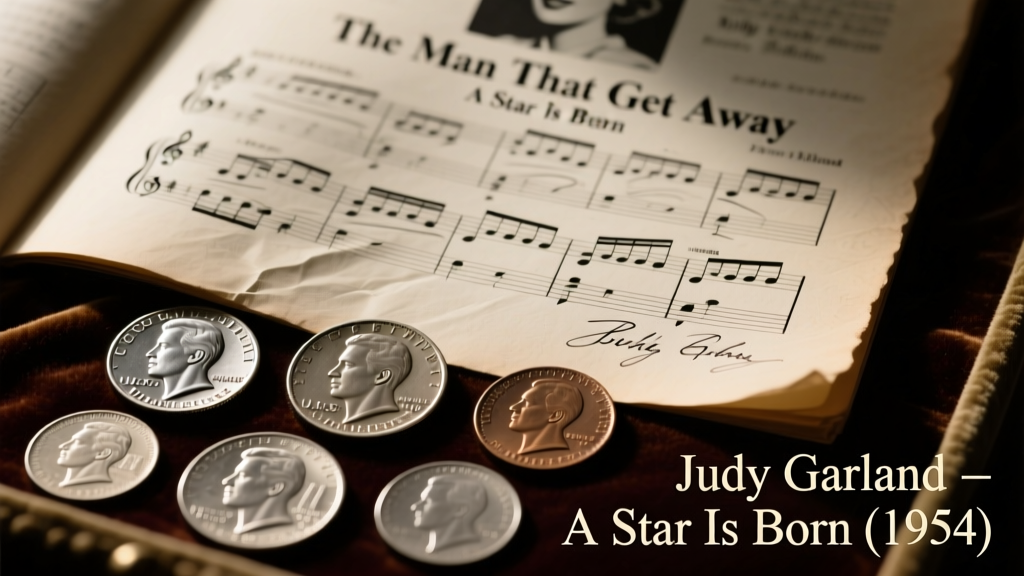
Sheet Music: 'The Man That Got Away' — A Star Is Born (1954), Judy Garland — Rarity, Provenance, and Numismatic Significance
McCoy Vase Butterfly Line Yellow 9-Inch: Identification, Value Drivers, and Collector Insights
Windsor Chair by Wharton Esherick: A Masterpiece of American Studio Craft — Turned Legs, Woven Black Leather Seat & Arms

Glass Lightning Rod Balls: History, Manufacturing, Collecting, and Market Value of America’s Ornamental Surge Protectors
Kay Finch 'Pee Wee' Penguin Figurine (C. 1949, 3-Inch Tall, Two-Tone Glaze): Identification, Provenance, and Market Value Analysis
Flow Blue Sugar Scinde Cover: The Rare Pumpkin-Shaped Ceramic Cover from the 1840s British India Trade
St. Mark the Evangelist Icon: A Rare 18th-Century Russian Orthodox Panel Measuring 12 × 10¼ Inches

Lunch Boxes James Bond Secret Agent 007 Driving Metal 1966: A Numismatic and Collectible Deep Dive