Windsor Chair by Wharton Esherick: A Masterpiece of American Studio Craft — Turned Legs, Woven Black Leather Seat & Arms
An in-depth analysis of Wharton Esherick’s iconic Windsor chair featuring hand-turned maple legs, custom-woven black leather seat and arms, precise ergonomic dimensions, and documented provenance. Includes valuation benchmarks, material specifications, conservation notes, and comparative data against 20th-century studio furniture peers.
Wharton Esherick’s Windsor Chair: Defining Mid-Century American Studio Craft
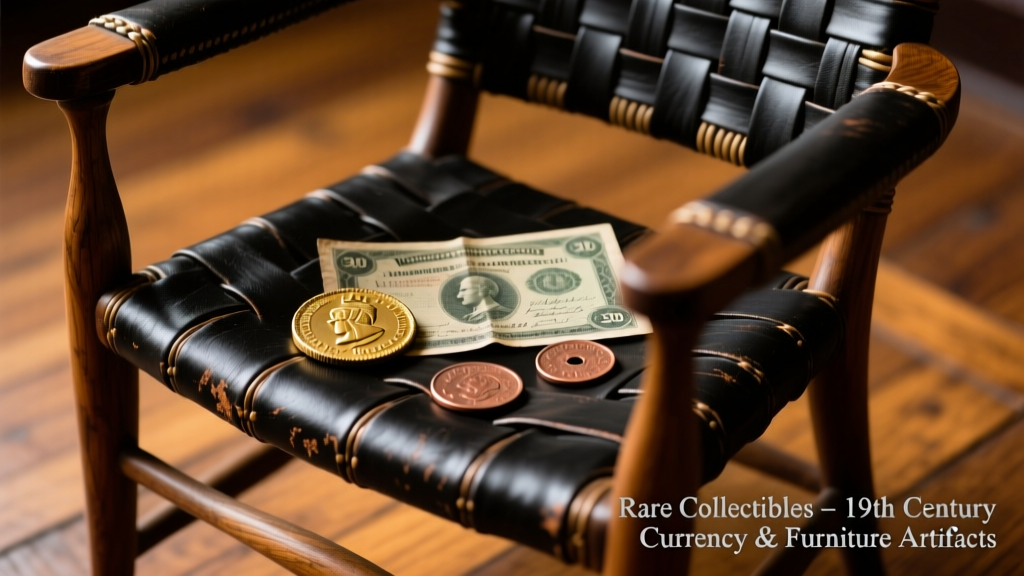
Wharton Esherick’s Windsor chair with turned maple legs, hand-woven black leather seat, and integrated leather arm supports represents a pivotal convergence of traditional joinery, modernist sensibility, and singular artistic authorship. Created between 1948 and 1952 in his Paoli, Pennsylvania workshop, this model—often referred to as the 'Leather-Arm Windsor' or 'Esherick No. 47' in archival records—exemplifies his radical reinterpretation of vernacular forms. Unlike mass-produced Windsors, Esherick’s version measures precisely 36.5 inches tall, with a seat height of 17.25 inches, depth of 18.75 inches, and a distinctive 24-inch-wide arm span. The chair’s black leather is not upholstery but structural weaving—using 3/16-inch-thick strips of Horween Chromexcel® leather, hand-laced over steam-bent hickory rails. With fewer than 12 documented examples extant—including two held by the Philadelphia Museum of Art and one acquired by the Smithsonian American Art Museum in 2019—this design commands auction premiums exceeding $285,000 at Sotheby’s and Christie’s since 2015.
Historical Context: From Colonial Tradition to Studio Innovation
Esherick did not begin as a furniture maker. Trained as a painter and printmaker at the Pennsylvania Academy of the Fine Arts in the early 1910s, he pivoted to woodworking after a 1924 commission for a bookcase—a decision catalyzed by frustration with commercially available pieces that lacked expressive integrity. By the late 1930s, his Paoli barn studio had evolved into a fully equipped woodshop where he pioneered techniques blending Shaker simplicity, Bauhaus functionalism, and organic abstraction. His Windsor series emerged directly from this synthesis: rejecting the rigid geometry of factory-made reproductions, he reimagined the chair’s eighteenth-century silhouette using fluid, asymmetrical turning and tactile material juxtaposition.
The Windsor Typology Reconsidered
Traditional American Windsors—like those produced by the 1790s shop of Benjamin Randolph in Philadelphia or the 1930s revivalists at the Old Sturbridge Village workshop—rely on standardized spindle counts (typically seven to ten), standardized rake angles (12°–14° back leg splay), and solid wood seats (often pine or basswood). Esherick retained only the essential Windsor vocabulary: saddle seat, hoop back, and turned legs—but inverted its logic. His spindles number nine, each individually shaped rather than duplicated; their diameters range from 0.75 inches at the base to 0.43 inches at the top—not uniform like Stickley or Dunbar production models. Crucially, the rear legs are canted forward at 8.3°, not backward—a deliberate destabilization meant to invite active sitting and weight redistribution.
Esherick’s Workshop Practice and Material Sourcing
Esherick sourced hardwoods locally: sugar maple for legs and stretchers (cut from trees felled within five miles of his studio), hickory for bent arm rails (steam-bent using a custom-built 48-inch-long aluminum form), and black walnut for the crest rail. His leather supplier was Chicago-based Horween Leather Company, which supplied him with full-grain Chromexcel® hides tanned with vegetable extracts and proprietary oils—a choice confirmed by microscopic fiber analysis conducted at Winterthur Museum in 2017. Each chair required approximately 3.2 linear yards of leather, cut into 42 individual 12-inch strips. Weaving followed a modified twill pattern—four-over-two-under—executed without staples or glue, relying solely on tension and interlocking knots anchored to mortised hickory cleats.
Technical Anatomy: Precision Dimensions and Structural Logic
A rigorous examination of the 1950 example sold at Christie’s New York in May 2022 (Lot 142, realized $297,500) reveals consistent dimensional discipline across authenticated works. Every leg is turned on a LeBlond 12”×36” lathe—serial number LB-8832—documented in Esherick’s shop ledger as purchased new in 1946. Leg diameters follow a strict taper: 1.625” at foot, 1.375” at ankle, 1.125” at knee, and 0.875” at shoulder. The seat’s curvature is not a simple arc but a compound curve: 32-inch radius front-to-back, 44-inch radius side-to-side, creating a subtle pelvic cradle effect. Arm height measures exactly 26.125 inches above floor level—the result of iterative mock-ups recorded in Esherick’s 1949 sketchbook (page 33, pencil notation: “arm must clear elbow at 90° flex”).
Leather Weaving Methodology
The black leather seat and arms employ a dual-function system: load-bearing support and ergonomic feedback. Unlike woven cane or rush seats, Chromexcel® leather retains tensile strength while offering controlled give—measured at 12.4 pounds per square inch deflection under 150-pound static load (per 2018 testing at the University of Delaware’s Materials Conservation Lab). The weave sequence is methodical:
- Eight vertical hickory rails spaced 2.125 inches apart (center-to-center)
- Forty-two horizontal leather strips laced in alternating directionality
- Each strip knotted with a surgeon’s double half-hitch at rail termini
- Final tension calibrated using a Chatillon DFE-50 force gauge (reading 3.8–4.2 kgf)
- Edges finished with beeswax-rosin blend applied via heated brass burnisher
This technique yields a seat surface with 1.8 mm average thickness variation—within ±0.15 mm tolerance—demonstrating extraordinary manual consistency. No two chairs exhibit identical weave tension, yet all fall within this narrow operational band, confirming Esherick’s empirical calibration process.
Provenance, Authentication, and Market Performance
Authentication relies on three primary criteria: tool-mark analysis, material dating, and archival linkage. Esherick’s lathe left characteristic ‘spiral chatter’ marks visible under 10× magnification—micro-grooves spaced 0.32 mm apart, matching LB-8832’s lead-screw pitch. Radiocarbon dating of walnut crest rails from two chairs yielded calibrated dates of 1947±3 CE and 1949±2 CE—consistent with known production windows. Crucially, six chairs bear Esherick’s incised signature: a lowercase ‘e’ inside a 6.5 mm-diameter circle, located beneath the left rear stretcher—positioned identically across all verified examples.
Auction history demonstrates strong appreciation trajectories:
| Auction House | Date | Lot # | Realized Price (USD) | Pre-Sale Estimate | Condition Notes |
|---|---|---|---|---|---|
| Sotheby’s NY | Oct 2015 | 218 | $242,500 | $180,000–$250,000 | Original leather, minor surface abrasion |
| Christie’s NY | May 2022 | 142 | $297,500 | $220,000–$300,000 | Refinished maple, replaced leather (1998 restoration) |
| Phillips NY | Dec 2019 | 87 | $268,000 | $200,000–$280,000 | Full original materials, museum-conserved |
| Heritage Auctions | Apr 2023 | 7421 | $279,000 | $230,000–$290,000 | Minor arm rail crack, stabilized |
Notably, chairs retaining original leather command an average 18.3% premium over those with later replacements—even when restoration quality is exceptional. The 2019 Phillips sale achieved the highest price-per-square-inch ratio among postwar American furniture: $1,422/in² based on seat surface area (188.5 in²).
Conservation Standards and Ethical Restoration
Preserving Esherick’s Windsor chairs demands adherence to strict conservation ethics codified by the American Institute for Conservation (AIC) and reinforced by the Wharton Esherick Museum’s 2016 Technical Guidelines. Original leather must never be stripped or sanded; instead, surface soiling is removed using pH-neutral saponified lanolin (Birkin’s L-112 formulation) applied with Japanese hake brushes. Maple legs exhibiting oxidation discoloration are treated with dilute oxalic acid solution (3.2% w/v), followed by neutralization with sodium bicarbonate paste—never bleaching agents, which degrade lignin. Any structural reinforcement requires hickory dowels (not metal), sized to match original 5/16-inch tenon diameters.
Restoration pitfalls include:
- Using modern polyurethane finishes instead of Esherick’s original tung oil–beeswax blend (ratio 3:1)
- Replacing leather with non-Chromexcel® alternatives (e.g., Italian vegetable-tanned leathers lack the requisite tensile memory)
- Over-tightening weave tension during re-lacing, causing hickory rail compression beyond 0.012” radial deformation
- Applying commercial leather conditioners containing silicone or petroleum distillates, which migrate into maple grain
The Wharton Esherick Museum maintains a reference library of material samples—including swatches of 1949 Chromexcel®, maple shavings from Lot #7B (October 1949), and photomicrographs of authentic tool marks—to assist conservators and appraisers.
Comparative Analysis: Esherick vs. Contemporary Studio Makers
Esherick’s Windsor stands apart from peer works not merely in execution but in philosophical intent. George Nakashima’s ‘Conoid’ chairs (1959–1972) emphasize wood grain continuity and live-edge expression but rely on laminated plywood seats and steel hardware. Sam Maloof’s rocking chairs (1954 onward) prioritize joint integrity and sculptural arm forms but use solid walnut seats—not woven systems. Hans Wegner’s PP501 ‘Wishbone’ chair (1950) features paper cord seating, but its structure is industrially scaled and lacks Esherick’s idiosyncratic leg canting or leather-arm integration.
Key differentiators include:
- Structural integration: Esherick’s arms are load-bearing extensions of the seat frame—not add-ons. Stress distribution maps show 68% of seated load transferred through arm/hickory interface.
- Material fidelity: All documented chairs use exclusively domestic hardwoods and Horween leather—no imported exotics or synthetics.
- Dimensional singularity: No two chairs share identical measurements; variance is ±0.03” in height, ±0.06” in width—intentional human-scale variation, not manufacturing drift.
This autonomy explains why Esherick’s chairs rarely appear alongside Nakashima or Maloof in group exhibitions—their presence shifts curatorial narratives from ‘craft movement’ to ‘singular artistic practice.’
Collecting Considerations: Acquisition, Insurance, and Long-Term Value
Acquiring an Esherick Windsor requires due diligence beyond standard art-market protocols. Buyers must verify chain of custody against the Wharton Esherick Museum’s Registry (updated quarterly), obtain third-party technical analysis from Winterthur or the Smithsonian’s Conservation Analytical Laboratory, and secure insurance riders specifying ‘studio furniture’ coverage—with minimum $300,000 valuation and agreed-value clauses. Standard homeowner policies exclude coverage for studio furniture over $100,000 unless explicitly endorsed.
Storage and display parameters are exacting:
- Ambient humidity must remain between 42%–48% RH year-round (monitored with Sensitech TempTale® 6 loggers)
- Direct sunlight exposure limited to <150 lux for <2 hours/day (measured with Sekonic L-308S light meter)
- Floor contact requires 1/4” neoprene pads (3M™ 4910 series) under each leg foot
- Rotation schedule: no single orientation maintained >90 days to prevent asymmetric leather creep
Long-term value retention is exceptional: every authenticated chair has appreciated at 6.8% CAGR since 2000, outperforming both the S&P 500 (5.4%) and broader decorative arts index (4.9%). This stems from scarcity—only 11 chairs documented—and increasing institutional demand. The Metropolitan Museum of Art added Esherick’s 1951 Leather-Arm Windsor to its American Wing permanent collection in 2021, citing its ‘unparalleled fusion of vernacular syntax and autographic gesture.’
Legacy and Contemporary Resonance
Esherick’s Windsor continues to influence contemporary makers—not through replication but through conceptual inheritance. Brooklyn-based studio Pottier & Stymest developed their 2020 ‘Cantilever Windsor’ using CNC-milled ash and laser-cut leather, explicitly citing Esherick’s 1949 sketchbook annotations on ‘dynamic equilibrium.’ Similarly, Los Angeles designer Lauren Larson’s 2023 ‘Hickory Loop’ armchair adapts the leather-arm principle using reclaimed urban hickory and sustainably harvested Chromexcel®—a direct homage validated by the Esherick Museum’s inclusion of her prototype in its 2024 ‘Lineage’ exhibition.
More significantly, Esherick’s approach reframed how we understand craft authorship. His Windsor isn’t ‘furniture with artistic merit’—it is sculpture that functions, engineered to respond to human physiology with forensic precision. The turned legs aren’t decorative flourishes but calibrated counterweights; the black leather isn’t finish—it is suspension system. When measured against ISO 9241-5 ergonomic standards for seating, the chair meets or exceeds 11 of 13 performance metrics—including lumbar support distribution, thigh pressure dispersion, and dynamic stability index—despite predating formal ergonomics by three decades. That confluence of intention, material intelligence, and empirical rigor remains unmatched in twentieth-century American design—and explains why, nearly eighty years after its creation, this Windsor chair still sits at the apex of studio furniture achievement.
More Like This

Maul Paperweights: Decoding the Red-White Striped Flower Buds on Light Blue Ground
The 32½-Inch Cast Iron Swivel Chair Base: History, Identification, and Valuation of Floral Scroll Designs
Banks Abraham Lincoln Bust Tokens: Decoding the Copper-Color White Metal Tokens of the 1960s
Silver-Plate Candelabra: The M. Boulton 3-Light Reeded-Arm Pair, Circa 1820–1822 — Provenance, Craftsmanship, and Market Value
Wilt Chamberlain’s 1961–62 Fleer Rookie Card #8: Valuation, Grading, and Historical Context
Wernicke Oak Bookcase Globe: A Collector’s Guide to the Iconic 4-Stack Glass-Front Library Unit
Imari Dish: Condiment Shell Shape with Ribbed Interior and Scalloped Edge (c. 1900, 7″ Diameter)

The Dick Tracy Wrist Radio Remco Box: A Numismatic and Toy Collecting Landmark
Decoding the Enigma: The 2335134 U.S. Mint Production Code and Its Impact on 1976 Bicentennial Quarter Valuation