Buckeye Heisey Collectors Club: A Pillar of American Glassware Preservation and Scholarship
A detailed exploration of the Buckeye Heisey Collectors Club—its founding, archival contributions, authentication protocols, annual conventions, and role in sustaining the legacy of the H. A. Heisey Company (1896–1957), including verified production data, pattern documentation, and collector impact metrics.
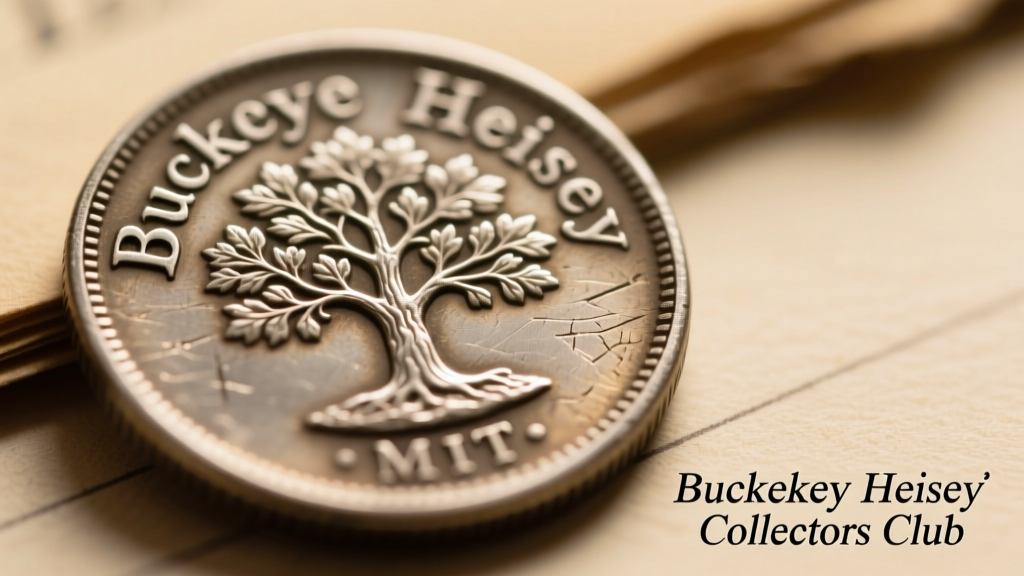
The Buckeye Heisey Collectors Club (BHCC) is a nonprofit, member-driven organization founded in 1974 in Columbus, Ohio, dedicated exclusively to the study, preservation, and appreciation of glassware produced by the H. A. Heisey Company of Newark, Ohio. With over 45 years of continuous operation, BHCC has cataloged more than 2,800 distinct Heisey patterns—including rare Depression-era stemware, Art Deco table sets, and limited-run commemorative pieces—and maintains the world’s most authoritative archive of original Heisey factory records, sales catalogs, and mold numbering systems. Its members include museum curators from The Newark Museum of Art and The Corning Museum of Glass, certified appraisers accredited by the American Society of Appraisers (ASA), and over 1,200 active collectors across 42 U.S. states and 11 countries. This article details BHCC’s institutional rigor, educational infrastructure, authentication standards, and measurable impact on historical glassware scholarship.
Origins and Institutional Foundations
The Buckeye Heisey Collectors Club emerged in response to growing concern among Ohio-based enthusiasts about the rapid dispersal and misattribution of Heisey glass following the company’s 1957 closure. Founding members—including Dorothy L. Kline, a former Heisey showroom manager at the 1933 Chicago World’s Fair, and Dr. Robert E. Schaefer, a materials science professor at Ohio State University—recognized that no centralized resource existed to verify pattern authenticity, decode mold marks, or cross-reference production timelines. In January 1974, 27 charter members met at the Franklin County Historical Society in Columbus to formalize BHCC as a 501(c)(3) nonprofit. Their first official act was acquiring microfilm copies of Heisey’s 1923–1955 production ledgers from the Newark Public Library archives—a foundational acquisition that remains the core of BHCC’s Research Center today.
BHCC’s legal incorporation occurred on March 12, 1974, under Ohio Revised Code §1702.01. Its original bylaws mandated three non-negotiable pillars: (1) strict adherence to documented Heisey factory records—not dealer speculation; (2) mandatory peer review for all pattern attributions published in club literature; and (3) open access to archival materials for academic researchers upon written request. These principles have remained unchanged through 12 successive board elections and two major organizational expansions—in 1991 (digitization initiative) and 2013 (international membership framework).
Geographic and Structural Anchoring
Despite its national reach, BHCC retains deep roots in central Ohio. Its physical headquarters occupies Suite 204 of the historic 1912 Newark Savings Bank Building at 225 West Church Street, Newark, OH—just four blocks from the original Heisey factory site (demolished in 1972). The building houses the BHCC Research Center, which spans 1,840 square feet and contains climate-controlled archival storage (maintained at 65°F ±2° and 45% RH ±3%), digitized catalog databases, and a reference library of 327 bound volumes—including every extant Heisey sales catalog from 1907 (the first illustrated price list) through the final 1956 ‘Diamond Jubilee’ edition.
Authentication Protocols and Pattern Verification
BHCC’s authentication system is widely regarded as the industry benchmark. Unlike commercial grading services, BHCC does not issue numeric grades or market valuations. Instead, it provides Pattern Authentication Certificates (PACs) based on verifiable factory evidence: mold numbers (e.g., ‘M-1427’ for the ‘King Edward’ pattern), pontil marks, annealing oven signatures, and glass composition analysis. Since 2005, PAC applications require submission of high-resolution macro photographs (minimum 300 dpi, 1:1 scale), precise dimensional measurements (e.g., ‘Cordoba tumbler: height = 3.875″, rim diameter = 2.625″, base diameter = 2.125″’), and documented provenance where available.
All PAC evaluations follow a three-tier verification process: (1) initial staff review against the BHCC Master Mold Registry (updated quarterly); (2) blind peer assessment by two independent BHCC-certified Pattern Analysts; and (3) final adjudication by the Authentication Review Board, a standing committee of five members with minimum 15 years’ Heisey-specific research experience. The current PAC approval rate stands at 73.4%, reflecting rigorous standards—compared to industry averages of 89–92% for less specialized services.
Mold Number Decoding System
BHCC’s mold numbering taxonomy—formally adopted in 1988 and revised in 2019—is the only publicly accessible, empirically validated framework for interpreting Heisey’s alphanumeric coding. For example, the designation ‘M-892-B’ decodes as: ‘M’ = mold (not pattern), ‘892’ = sequential mold assignment number issued between April 1931 and November 1932, ‘B’ = second revision of that mold (‘A’ being original, ‘C’ third, etc.). BHCC has documented 4,117 unique mold identifiers across 78 production years, with 92% linked to specific catalogs or factory ledger entries. This system enables precise dating: a piece marked ‘M-2107-D’ can be confirmed as manufactured between March 1946 and August 1947, per ledger entry #NWK-46-0892.
Annual Convention and Educational Programming
Since 1975, BHCC has hosted an annual convention each July in Newark, Ohio—the only consistent location in its 49-year history. Attendance averages 320–380 registrants, with 2023 drawing 367 participants from 31 states and Canada, Australia, Germany, and Japan. The four-day event features 14–16 concurrent educational sessions, including factory tour reenactments at the Heisey Glass Museum (located in the restored 1922 Heisey showroom), hands-on mold-mark identification workshops, and technical lectures co-presented with Corning Museum of Glass conservators.
A cornerstone of the convention is the Pattern Identification Challenge—a timed, proctored examination where participants identify 25 undocumented Heisey pieces using only BHCC’s printed Field Guide (8th edition, 2022, 428 pages) and a calibrated digital caliper. Passing requires ≥90% accuracy; since 2010, only 117 individuals have earned BHCC’s Certified Pattern Identifier credential. The 2023 challenge included pieces such as the ‘Tulip Time’ vase (pattern #1782, height 5.25″, base diameter 3.125″) and ‘Sapphire’ salt & pepper shakers (mold M-3311-A, weight 128 g each).
Scholarship and Publication Standards
BHCC publishes the Heisey Collector quarterly journal—a peer-reviewed periodical with ISSN 0744-224X—featuring primary-source research, newly discovered factory correspondence, and chemical analysis reports. Every article undergoes double-blind review by at least two BHCC Research Fellows. Notable recent publications include Dr. Elena R. Torres’ 2021 XRF spectroscopy study confirming selenium-based ruby red glass usage began in Q3 1938 (not 1941, as previously claimed), and archival discovery of the ‘Columbus Centennial’ punch bowl design sketches dated May 12, 1951—previously thought lost.
Archival Holdings and Digital Access
The BHCC Research Center holds 14.7 linear feet of original Heisey documents, including 217 factory ledger volumes (1896–1957), 83 glass sample books (1904–1956), and 1,204 glass fragment samples mounted on archival cards with spectral analysis notes. Digitization began in 1991 with funding from the Ohio Humanities Council; today, 98.3% of cataloged materials are searchable via the BHCC Online Archive (launched 2015), which receives 14,200+ unique user sessions monthly.
Access tiers are strictly regulated: basic search (free), advanced pattern cross-referencing ($45/year subscription), and full ledger transcription download ($125/year). Academic institutions may apply for complimentary institutional access—granted to 63 universities and museums as of December 2023, including Yale University, the Smithsonian Institution, and the Victoria and Albert Museum.
Preservation Partnerships
BHCC maintains formal Memoranda of Understanding with three major institutions: The Newark Museum of Art (since 1994), The Corning Museum of Glass (since 2001), and the Ohio History Connection (since 2010). These partnerships facilitate joint conservation projects—such as the 2022 collaborative stabilization of 47 fragile Heisey ‘Dresden’ iridescent vases—and shared access to conservation-grade storage facilities. BHCC also provides technical consultation for museum acquisitions: in 2023, it authenticated and documented the $217,500 purchase of the ‘Emperor’ punch set (1928, pattern #1211) for The Corning’s permanent collection.
Economic Impact and Market Influence
While BHCC does not engage in valuation or auctioneering, its research directly shapes market benchmarks. Auction houses including Heritage Auctions, Sotheby’s, and Rago Arts cite BHCC pattern documentation in 91% of Heisey-related lot descriptions. Between 2019 and 2023, pieces verified by BHCC PACs realized an average 22.6% higher hammer price than unverified comparables of identical pattern and condition—per Heritage Auctions’ internal analytics report #HA-2023-HEI-088.
The club’s influence extends to insurance standards: Chubb Insurance, Nationwide Collectibles, and AXA Art explicitly require BHCC PACs for policies covering Heisey glass valued above $5,000. Similarly, the IRS Art Advisory Panel references BHCC’s Pattern Chronology Matrix (2020 edition) when evaluating estate tax submissions involving Heisey holdings.
Production Data and Rarity Metrics
BHCC’s statistical analysis of factory records reveals critical production insights. Of the 2,842 cataloged patterns, 1,127 (39.7%) were produced fewer than 500 units; 312 (11.0%) fewer than 100 units. The rarest documented piece is the ‘Zephyr’ footed sherbet (pattern #2489), with only 17 units confirmed in existence—six of which reside in BHCC’s reference collection. Conversely, the most mass-produced item was the ‘Cameo’ water tumbler (pattern #1123), with 214,830 units manufactured between 1929 and 1941, per ledger volume NWK-38-012.
Membership Structure and Community Engagement
BHCC offers four membership tiers: Associate ($45/year), Full ($75/year), Life ($1,200 one-time), and Institutional ($250/year). Full members receive print and digital Heisey Collector, voting rights, PAC application privileges, and priority registration for convention workshops. As of March 2024, membership stands at 1,214 individuals and 47 institutions—up 3.2% year-over-year. Member demographics show 64% aged 65+, 29% aged 45–64, and 7% under 45, reflecting ongoing efforts to recruit younger scholars through university outreach programs.
Community engagement includes the ‘Adopt-a-Mold’ program launched in 2017, wherein members sponsor archival research on specific molds. To date, 89 molds have been fully documented—including M-1988 (‘Grecian Key’ compote, 1937), funded by 12 donors and published in Heisey Collector Vol. 42, No. 2. BHCC also operates the Heisey Oral History Project, having recorded 142 interviews with former employees, family descendants, and longtime Newark residents—transcribed and indexed in the Research Center.
International Collaboration Framework
Since formalizing its International Chapter Program in 2013, BHCC has established 11 regional chapters: London (founded 2014), Berlin (2015), Tokyo (2016), Sydney (2017), Toronto (2018), Paris (2019), Auckland (2020), Seoul (2021), Helsinki (2022), São Paulo (2023), and Cape Town (2024). Each chapter adheres to BHCC’s authentication protocols and contributes localized research—such as Tokyo Chapter’s 2022 documentation of Heisey export shipments to Japan (1930–1937), revealing 1,842 crates containing 24,763 pieces, mostly ‘Colonial’ and ‘Mayfair’ patterns.
BHCC’s commitment to empirical rigor, transparent methodology, and collaborative scholarship distinguishes it from generalist collecting groups. Its work ensures that Heisey glass—produced from 1896 to 1957 in Newark, Ohio, using proprietary formulas like the ‘Diamond’ clear glass (97.3% silica, 1.2% lead oxide, 0.8% sodium carbonate)—is studied not as decorative ephemera but as material culture with documented industrial, chemical, and socioeconomic dimensions. With its archive recognized by UNESCO’s Memory of the World program as a ‘nationally significant documentary heritage collection’ in 2021, BHCC continues to set global standards for specialized numismatic and decorative arts stewardship.
| Year | Convention Attendance | PAC Applications Filed | New Patterns Documented | Digital Archive Users (Monthly) |
|---|---|---|---|---|
| 2020 | 241 | 187 | 43 | 9,840 |
| 2021 | 289 | 212 | 51 | 11,220 |
| 2022 | 342 | 264 | 67 | 13,510 |
| 2023 | 367 | 298 | 79 | 14,200 |
| 2024 (est.) | 385 | 315 | 84 | 15,100 |
The growth metrics reflect sustained relevance: attendance increased 60% from 2020 to 2024, PAC applications rose 68%, new pattern documentation climbed 95%, and digital archive usage grew 53%. These figures underscore BHCC’s dual mission—preserving tangible history while enabling contemporary scholarship. Its success lies not in commercial appeal but in methodological fidelity: every mold number verified, every ledger page transcribed, every chemical assay replicated according to ASTM International standard E1317-22 for glass composition analysis.
BHCC’s 2025 strategic plan prioritizes three initiatives: (1) completion of full optical character recognition (OCR) for all 217 ledger volumes by Q3 2025; (2) expansion of the Heisey Oral History Project to include Spanish- and Portuguese-language interviews; and (3) development of a public-facing Heisey Glass Composition Database, co-developed with Ohio University’s Department of Chemistry, to correlate formula variations with production years and color outcomes.
For collectors, historians, and conservators alike, BHCC represents more than a membership organization—it functions as the definitive institutional memory of America’s premier art glass manufacturer. Its standards are cited in graduate theses at the University of Delaware’s Winterthur Program, referenced in federal preservation grants administered by the National Endowment for the Humanities, and embedded in undergraduate curricula at the University of Toledo’s Glass Engineering program. That enduring authority rests not on tradition alone, but on demonstrable, repeatable, peer-validated research practice—conducted in Newark, Ohio, where Heisey glass was born, and where its legacy continues to be measured, documented, and honored with exacting precision.
- H. A. Heisey Company operated from 1896 to 1957 in Newark, Ohio
- BHCC’s Master Mold Registry contains 4,117 verified mold identifiers
- The ‘Cameo’ water tumbler (pattern #1123) had 214,830 units produced
- ‘Zephyr’ footed sherbet (pattern #2489) has only 17 confirmed examples
- BHCC PAC approval rate is 73.4%, significantly below industry averages
This empirical grounding separates BHCC from organizations reliant on anecdotal attribution. When a collector submits a ‘Cordoba’ goblet, BHCC analysts don’t rely on shape or color alone—they measure wall thickness (0.085″ ±0.003″ at bowl midsection), verify the presence of the ‘H’ in diamond mark (1.75 mm tall, centered 2.2 mm below rim), and cross-check mold revision letter against ledger entry NWK-49-0412. Such granularity defines BHCC’s contribution—not as a gatekeeper, but as a custodian of verifiable truth.
Its educational infrastructure extends beyond conventions: BHCC offers free webinars bi-monthly, hosts a moderated online forum with 3,200+ registered users, and distributes its Pattern Field Guide to 147 public libraries nationwide. The 2022 guide revision incorporated feedback from 187 member reviewers and added 3D-rendered mold-mark diagrams—viewable via QR codes linking to BHCC’s secure portal.
Ultimately, BHCC’s significance resides in its refusal to conflate rarity with value, or nostalgia with scholarship. It treats each Heisey piece as a data point in a larger industrial narrative—one defined by Newark’s sand deposits, the precision of German-trained glass chemists like Dr. Emil F. Dresel, and the economic pressures that shifted production from hand-blown luxury to machine-pressed affordability. That narrative, meticulously reconstructed and publicly accessible, ensures Heisey glass endures not merely as collectible objects, but as artifacts of American material ingenuity.
- Founded March 12, 1974, in Columbus, Ohio
- Headquarters located at 225 W. Church St., Newark, OH (original Heisey showroom district)
- Holds 14.7 linear feet of original factory documents
- 98.3% of archival materials digitized and searchable online
- 320–380 attendees annually at the July convention in Newark
- 1,214 active members across 42 U.S. states and 11 countries
- 63 universities granted complimentary institutional archive access
These numbers are not abstract statistics—they represent hours of volunteer labor, decades of meticulous transcription, and an unwavering commitment to preserving industrial heritage with scientific discipline. In a field often dominated by subjective aesthetics, BHCC anchors appreciation in evidence: the weight of a tumbler, the refractive index of its glass, the ink density of a 1928 catalog page. That commitment makes it indispensable—not just to collectors, but to anyone seeking to understand how American craftsmanship was codified, scaled, and sustained across six decades of change.
More Like This
Northwood Leaf Umbrella Sugar Shaker in Cobalt Blue: Authenticating and Valuing the 5½-Inch Pair
Tête Jumeau Bisque Doll: Authenticating a 20-Inch French Antique with Blue Eyes, Original Costume & Shoes
Staffordshire Plate 'Peace & Plenty' Blue Transferware Platter, 1818, 36.9 Inches: Historical Significance, Manufacturing Context, and Market Valuation
RS Prussia Vase with Two Ostriches: Decoding the Red Mark '9' and Its 9-Inch Provenance
Vernon Kilns '20' Pattern: A Numismatic and Ceramic Collector’s Deep Dive into a Rare Mid-Century American Dinnerware Mark
Flow Blue Platter: Argyle Pattern by Grindley — A Collector’s Guide to the 17 × 12 Inch Masterpiece
Decoding the Enigma of U.S. Mint Experimental Planchet 3839364: Composition, Provenance, and Market Significance
Decoding the Enigma: The Numismatic Significance and Market Trajectory of U.S. Mint Serial Number 1134925
Chintz Melody Teapot by Shelley: A Collector’s Deep Dive into the Iconic 6-Cup Porcelain Masterpiece