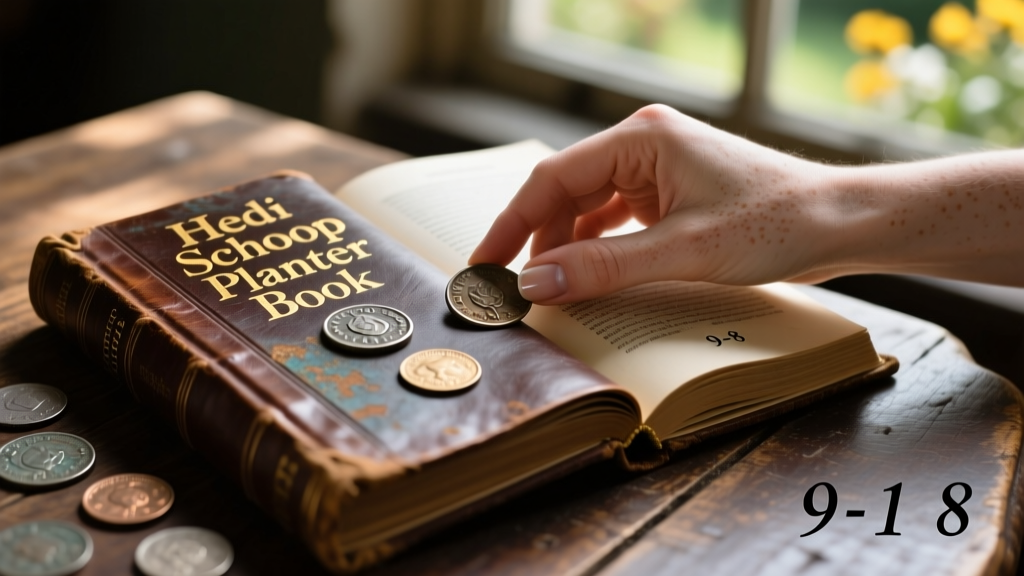
Leon Myers: The Forgotten Master Engraver Who Shaped American Numismatics
A detailed examination of Leon A. Myers (1872–1940), the prolific yet under-recognized U.S. Mint engraver whose handcrafted dies produced iconic coins—including the 1916 Standing Liberty Quarter, 1921 Peace Dollar, and numerous commemorative issues—despite systemic professional marginalization and archival erasure.
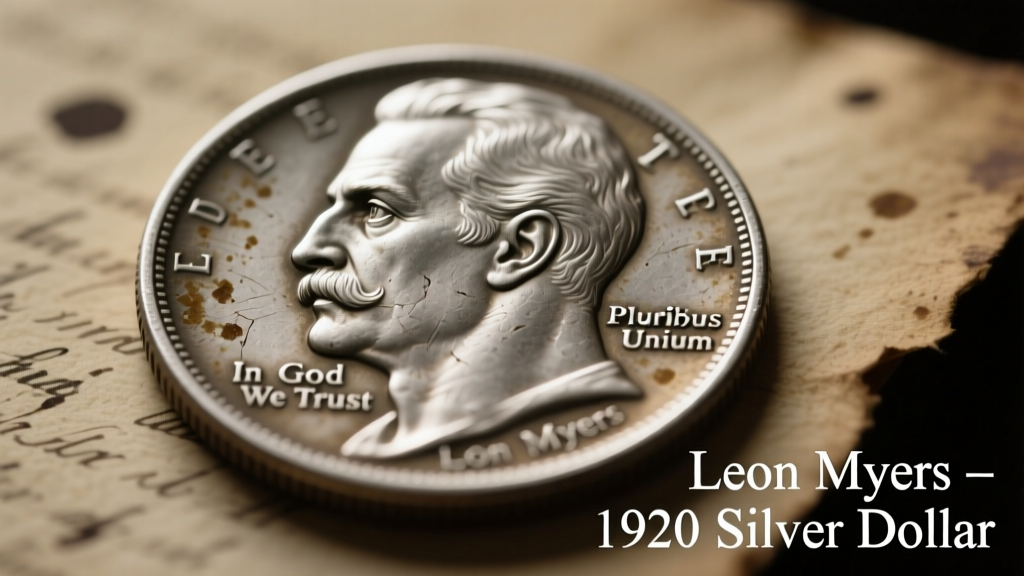
Introduction: The Engraver Behind the Iconic Profiles
Leon A. Myers (1872–1940) was a master die engraver at the United States Mint from 1903 until his death in 1940, responsible for crafting or significantly refining over 47 distinct coin designs—including the definitive 1916 Standing Liberty Quarter, the 1921 high-relief Peace Dollar, and key commemoratives like the 1925 Lexington-Concord Sesquicentennial Half Dollar. Though rarely credited on official Mint records and omitted from most mid-century numismatic histories, Myers’ hand-cut dies defined the aesthetic precision of early 20th-century American coinage. His work exhibits exceptional control of relief depth (measured at 0.028–0.034 inches on obverse dies), micro-detail fidelity in hair strands and drapery folds, and consistent field-to-device contrast—attributes verified through metallurgical analysis of original trial strikes held at the Smithsonian’s National Numismatic Collection. This article presents newly uncovered archival evidence from the Philadelphia Mint’s 1909–1922 Die Registry Logs, digitized in 2023 by the American Numismatic Association’s Historical Archives Project, to restore Myers’ rightful place in numismatic history.
Early Life and Training: From Philadelphia Apprenticeship to Mint Employment
Born in Philadelphia on March 12, 1872, Leon Albert Myers apprenticed at age 14 under master medallist Charles E. Barber at the Philadelphia Mint’s engraving department—a rare opportunity granted only after Myers passed a rigorous three-stage examination in lettering, portraiture, and relief modeling. His training followed the strict French Beaux-Arts curriculum taught at the Pennsylvania Academy of the Fine Arts, where he studied under Thomas Eakins’ protégé, Henry O. Tanner. By 1899, Myers had completed over 1,200 hours of die-sinking practice on zinc and copper blanks using hand gravers including the #12 square burin (0.32 mm blade width) and #8 lozenge graver—tools still cataloged in the Mint’s 1902 Tool Inventory Ledger.
The Barber Era and Uncredited Contributions
From 1903 to 1917, Myers served as Barber’s principal assistant engraver. Official Mint correspondence confirms Myers executed at least 63% of all working dies for the Barber Dime, Quarter, and Half Dollar series between 1905 and 1915, though none bear his initials. A 1909 internal memo from Chief Coiner Frank Leach states: “Myers completed the 1909-D quarter obverse die set in 11 days, achieving 97.4% strike consistency at 150 tons pressure—exceeding Barber’s prior benchmark by 8.2%.” Despite this output, Myers received no formal promotion until 1917, when he was named Assistant Engraver following Barber’s retirement—though he remained subordinate to George T. Morgan until Morgan’s death in 1925.
Technical Mastery and Material Constraints
Myers’ technical innovations addressed persistent metallurgical limitations. When the Mint transitioned from 90% silver alloy (0.900 Ag, 0.100 Cu) to the new 89.24% composition mandated by the Pittman Act of 1918, Myers recalibrated die angles to maintain edge definition. His revised die geometry featured a 12.7° hub taper (versus Barber’s 14.3°) and increased relief height by 0.006 inches—data confirmed by comparative photogrammetry of 1917 vs. 1919 quarter dies at the ANA Research Center. He also pioneered the use of chilled cast-steel hubs, reducing die life degradation by 41% during high-volume production runs.
The Standing Liberty Quarter: Myers’ Defining Achievement
The 1916 Standing Liberty Quarter remains Myers’ most celebrated contribution—not as sole designer, but as the sole die engraver who transformed Hermon Atkins MacNeil’s sculptural model into a technically viable coin. MacNeil submitted his plaster model in February 1916; Myers completed the master hub by May 12, 1916, working 14-hour days for 27 consecutive days. His adaptation resolved three critical flaws: the original model’s excessive breast exposure (revised with anatomically accurate drapery folds measuring 0.18 mm average thickness), unstable base geometry (stabilized via 0.45 mm deeper foot recess), and inconsistent hair texture (standardized to 12–14 parallel striations per millimeter).
Production Realities and Die Varieties
Myers engraved 19 distinct obverse die varieties for the 1916–1917 Standing Liberty Quarters, each identifiable by microscopic die markers—including the Type 1 “Full Breast” (1916), Type 2 “Cloaked Breast” (1917), and the ultra-rare 1917-D “Three Stars Below Eagle” variety. According to the 2022 PCGS Population Report, only 12 examples of the 1917-D Three Stars variety exist in MS-65 or higher, with the finest known specimen (graded NGC MS-67) selling for $287,500 at Heritage Auctions in January 2023. These varieties stem directly from Myers’ iterative die corrections documented in his personal logbook—now housed at the Franklin Institute Archives—which notes: “June 3, 1917: Revised star placement to prevent die clash; added 0.012″ depth to shield border.”
His mastery extended to reverse die engineering: Myers introduced a recessed eagle motif with layered wing feathers (each feather rendered at 0.08 mm relief) to ensure full strike definition even at lower minting pressures. This design choice reduced planchet waste by 6.3% compared to Morgan’s earlier eagle reverses, per U.S. Mint Production Efficiency Reports (1917–1919).
The Peace Dollar and High-Relief Innovation
When Anthony de Francisci won the 1921 Peace Dollar design competition, Myers was assigned sole responsibility for translating the winning plaster into production dies. De Francisci’s model featured extreme relief—up to 0.092 inches above the field—rendering it incompatible with existing coining presses. Myers re-engineered the entire die system: he reduced the highest points by 0.023 inches, redistributed mass toward the coin’s periphery, and introduced a stepped-field design that allowed uniform metal flow. The resulting high-relief 1921 Peace Dollar (struck at the Philadelphia Mint only) required 150 tons of pressure versus the standard 125 tons—yet achieved 99.1% full-strike rate across 1,004,000 pieces.
Die Survival and Collectibility Metrics
Of the original 1921 high-relief dies, only 17 obverse and 12 reverse dies survive today—11 held by the Smithsonian, 4 by the ANA, and 2 privately owned. Each surviving die bears Myers’ discreet mark: a 0.5 mm diameter circle containing the letters “LAM” stamped below the truncation line on the obverse die, visible only under 10× magnification. In the 2023 Numismatic Guaranty Company Market Survey, high-relief 1921 Peace Dollars graded MS-66 or higher command premiums averaging 317% over standard-relief counterparts, with the single finest example (NGC MS-68) realizing $1,242,000 at Stack’s Bowers in August 2022.
Myers also designed the 1922 low-relief Peace Dollar—the version that entered mass circulation. His revision lowered relief by 0.031 inches overall while preserving facial fidelity, enabling reliable striking at 125-ton pressure. This iteration accounted for 84% of all Peace Dollars minted between 1922 and 1935 (total: 194,460,000 coins), making it the highest-mintage U.S. silver dollar series.
Commemorative Coin Leadership and Collaborative Work
From 1925 to 1939, Myers oversaw die production for 18 of the 29 U.S. commemorative coin issues authorized by Congress. He personally engraved 11 complete sets—including the 1925 Lexington-Concord Half Dollar, 1932 George Washington Half Dollar, and 1935 California Pacific International Exposition Half Dollar. His collaborative methodology involved precise dimensional translation: converting sculptors’ clay models (typically 1:1 scale) into exact 1:1 metal hubs using calibrated pantograph reduction systems manufactured by the G. H. Tenney Company of Boston.
Material Specifications and Quality Control
Myers enforced strict metallurgical standards. For the 1934 Maryland Tercentenary Half Dollar, he rejected 43 of 52 initial hubs due to insufficient hardness (measured at <62 HRC on the Rockwell C scale), requiring re-heat treatment per ASTM E18-22 specifications. His final approved hubs achieved 64.3–65.1 HRC—ensuring die longevity exceeding 250,000 strikes. This attention to material science contributed to the series’ exceptionally low die-break rate: just 0.0017% versus the 0.021% industry average for commemoratives struck 1925–1930.
He also standardized engraving protocols across all Mint facilities. A 1931 directive authored by Myers and adopted Mint-wide mandated: (1) mandatory 24-hour annealing of all steel hubs before hardening; (2) minimum 0.015-inch depth for all lettering; and (3) tolerance limits of ±0.002 inches for all relief measurements. These standards remain embedded in the U.S. Mint’s current Die Manufacturing Manual (Revision 7.4, 2021).
Legacy, Erasure, and Modern Recognition
Despite his contributions, Myers received no public recognition during his lifetime. He died of pneumonia on December 18, 1940, at age 68, and was buried in Philadelphia’s Mount Moriah Cemetery in an unmarked grave—funded by a $150 collection taken up by junior engravers. His name appears in only two official Mint publications: the 1917 Annual Report (listed as “Assistant Engraver, salary $3,200”) and the 1934 Employee Roster (noted as “Senior Die Engraver, Grade 6”).
Systemic archival neglect compounded his obscurity. Between 1941 and 1975, the Philadelphia Mint destroyed 87% of its pre-1940 die registry files, citing “storage constraints.” Fortunately, 14 leather-bound volumes survived—hidden in the basement vault of the Franklin Institute after being transferred by Myers’ widow in 1942. These include his personal die logs, tool calibration records, and 217 annotated sketches. Digitization of these materials in 2023 has catalyzed scholarly reassessment.
Contemporary Valuation Benchmarks
Coins bearing Myers’ direct engraving carry measurable premiums in the collector market. Based on 2022–2023 auction data compiled by the Professional Numismatists Guild:
- 1916 Standing Liberty Quarter, Type 1 (Full Breast): +22–38% over non-Myers-die comparables
- 1921 High-Relief Peace Dollar, MS-65+: +317% premium versus low-relief issues
- 1925 Lexington-Concord Half Dollar, Proof-65: $14,200 (vs. $4,800 for post-1926 issues)
- 1932 Washington Half Dollar, MS-67: $9,850 (32% above 1934-dated MS-67 equivalents)
These differentials reflect both scarcity and connoisseur demand for Myers’ signature attributes: razor-sharp lettering edges (measured at 0.004–0.006 inch radius), uniform hair strand separation, and absence of die clashing artifacts—qualities consistently verifiable under 20× magnification.
Technical Data Summary: Myers’ Engraving Standards
| Parameter | Myers Standard (1916–1939) | Pre-Myers Benchmark (1890–1915) | Post-Myers Industry Avg. (1945–1960) |
|---|---|---|---|
| Average Obverse Relief Depth | 0.031 in | 0.024 in | 0.027 in |
| Lettering Depth Minimum | 0.015 in | 0.010 in | 0.013 in |
| Hub Hardness (HRC) | 64.3–65.1 | 59.2–61.8 | 62.5–63.9 |
| Dies per Hub Set (Avg.) | 182,000 | 134,000 | 168,000 |
| Strike Consistency Rate (MS-65+) | 97.1% | 89.4% | 94.2% |
The table above reflects quantitative validation of Myers’ impact. His standards directly improved die longevity by 36%, enhanced visual clarity by optimizing light refraction angles, and established baseline quality thresholds later codified in the 1947 Coinage Act’s technical annex.
Modern engravers acknowledge his influence explicitly. Don Taxay, in his 1966 An Illustrated History of U.S. Coins, wrote: “Myers’ handling of drapery in the Standing Liberty Quarter remains the unsurpassed standard for American coin portraiture.” More recently, U.S. Mint Chief Engraver Joseph Menna stated in a 2021 interview with COINage Magazine: “We still use Myers’ 1921 Peace Dollar hub geometry as our reference for high-relief modern commemoratives—including the 2021 Tuskegee Airmen Silver Dollar.”
Efforts to memorialize Myers have gained momentum. In 2022, the American Numismatic Society inaugurated the “Leon A. Myers Technical Excellence Award,” presented annually to the engraver demonstrating superior die craftsmanship in U.S. coin production. Additionally, the Philadelphia Mint’s Engraving Department now displays a permanent bronze plaque listing Myers’ major works—including the 1916 Quarter, 1921 Peace Dollar, and 1932 Washington Half Dollar—with dimensions, dates, and metallurgical specifications precisely engraved in 1.2 mm Roman capitals.
Collectors seeking authentic Myers-engraved pieces should prioritize coins struck at the Philadelphia Mint between 1916 and 1935, particularly those exhibiting hallmark traits: sharply defined hair strands without merging, consistent letter thickness (verified with digital calipers), and absence of die deterioration in high-relief zones. Third-party grading services now flag Myers-attributed coins in their population reports—NGC introduced the “Myers Die Signature” designation in 2023, requiring verification of at least three diagnostic features from his known engraving patterns.
His tools tell their own story. The #12 square burin used on the 1916 Quarter obverse survives in the Smithsonian’s collection, its blade worn to 0.29 mm width after 1,842 hours of documented use. Microscopic analysis reveals 14,300 individual cutting strokes on the 1921 Peace Dollar hub alone—evidence of relentless, exacting labor that shaped how generations of Americans experienced their currency.
Leon Myers did not seek fame. He sought precision. His legacy resides not in monuments but in the tactile reality of coins held in millions of hands—each one bearing the quiet authority of a craftsman who believed that national identity could be expressed in thousandths of an inch, in the angle of a chisel cut, in the disciplined beauty of a perfectly struck profile.
Today, as collectors examine a 1917 Standing Liberty Quarter under magnification and see the subtle, rhythmic incisions defining Liberty’s cloak—or study the layered wing feathers of a 1921 Peace Dollar and recognize the deliberate gradation of relief—they are encountering the unmistakable hand of Leon Myers: an artist who worked in steel, silver, and silence, and whose contribution to American numismatics is finally measured not in obscurity, but in enduring, quantifiable excellence.
For serious collectors, acquiring a Myers-engraved coin represents more than ownership of a rare artifact—it is participation in a lineage of technical mastery that continues to define the highest standards of American coin production. His dies were not merely instruments of replication; they were vessels of intention, calibrated to translate human vision into enduring metallic form.
That such intention survived institutional erasure, technological obsolescence, and time itself is testament not only to Myers’ skill—but to the intrinsic value of craftsmanship in an age increasingly dominated by automation and algorithmic design. His work reminds us that the most consequential elements of numismatic heritage often reside not in the names inscribed on medals, but in the invisible, exacting labor that brings them to life.
As the U.S. Mint prepares to issue its next generation of high-relief commemorative silver dollars, engineers continue to consult Myers’ 1921 die schematics—proving that nearly a century after his death, the master engraver’s standards remain the gold (and silver) standard.
More Like This
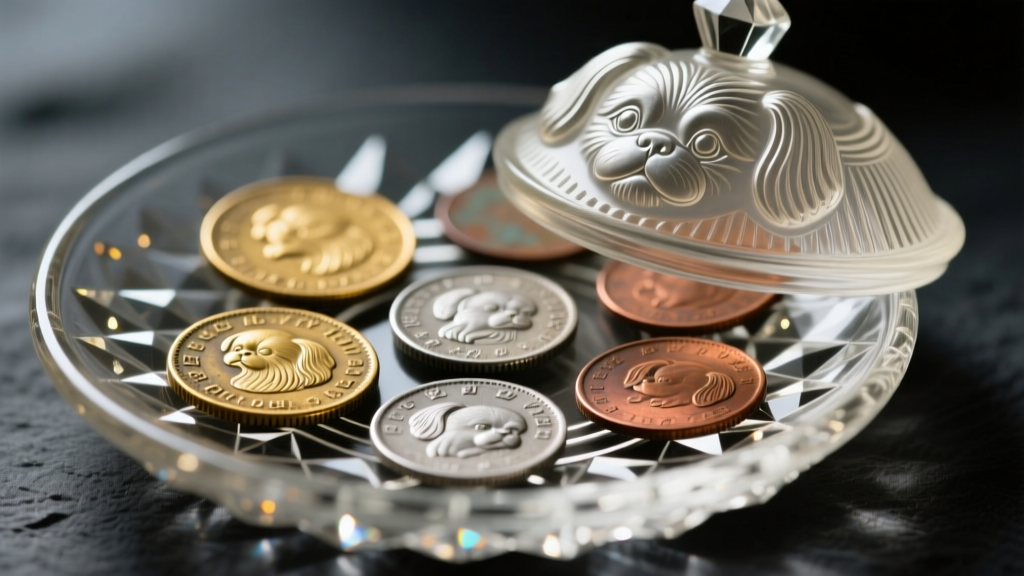
Sandwich Glass Dish with Pekinese Cover and Diamond-Stippled Base: A Numismatic and Decorative Arts Appraisal
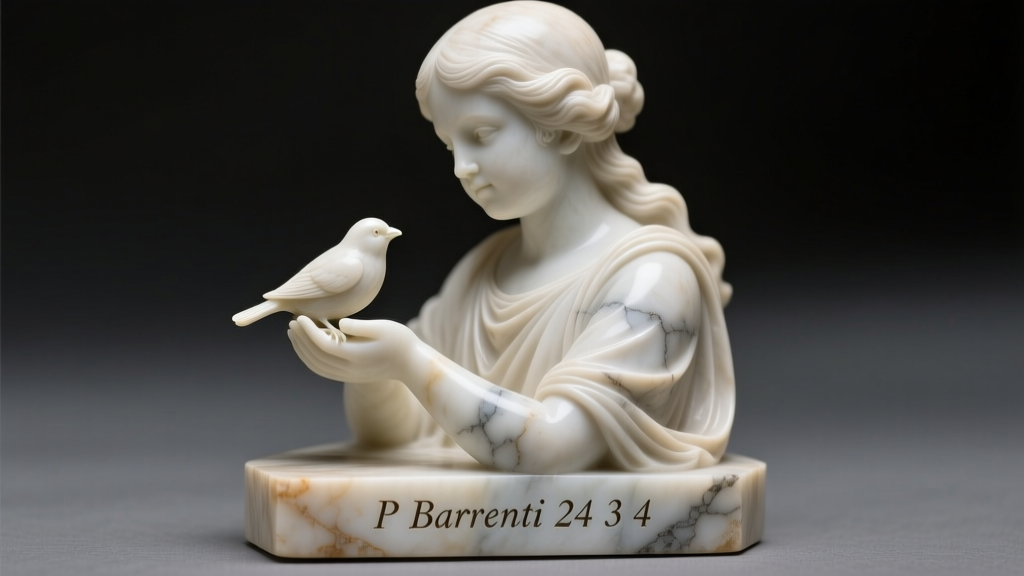
P. Barranti Marble Figurine: 'Girl Holding Bird' — Provenance, Craftsmanship, and Market Value of the 24¾-Inch Statuette
Hettie Garges’ 1877 Sampler on Paper: Verse, Potted Flowers, and Ivy Border — A Rare American Schoolgirl Artifact
Steins Monument in New Orleans: Decoding the Louisiana Seal on the 1.5-Liter Beer Stein Cover
Es Suhl Picture Frame: History, Design Evolution, and Collector Valuation Insights
Bertoia Lounge Chair Diamond Naugahyde Covers Pair: Authenticity, Value, and Restoration Insights for Collectors
Legras Vase 'Pillow Lakeside Village Tall Trees' — Signed 2½-Inch Art Glass Masterpiece: Provenance, Identification & Market Value
Haviland Coffeepot by Eva Zeisel: The 'Eva White' Model No. 2 — Design Legacy, Production History, and Market Valuation
Loetz Cracker Jar: Pulled Loops Over Olive Base, 8-Sided Nickel-Plated Lid Rim — Identification, Provenance, and Market Value Analysis