Es Suhl Picture Frame: History, Design Evolution, and Collector Valuation Insights
A detailed numismatic and decorative arts analysis of the Es Suhl picture frame — a German-made precision-crafted display system used for currency presentation since the 1950s. Covers manufacturing origins, material composition, model variants, market pricing trends, authentication markers, and preservation best practices.
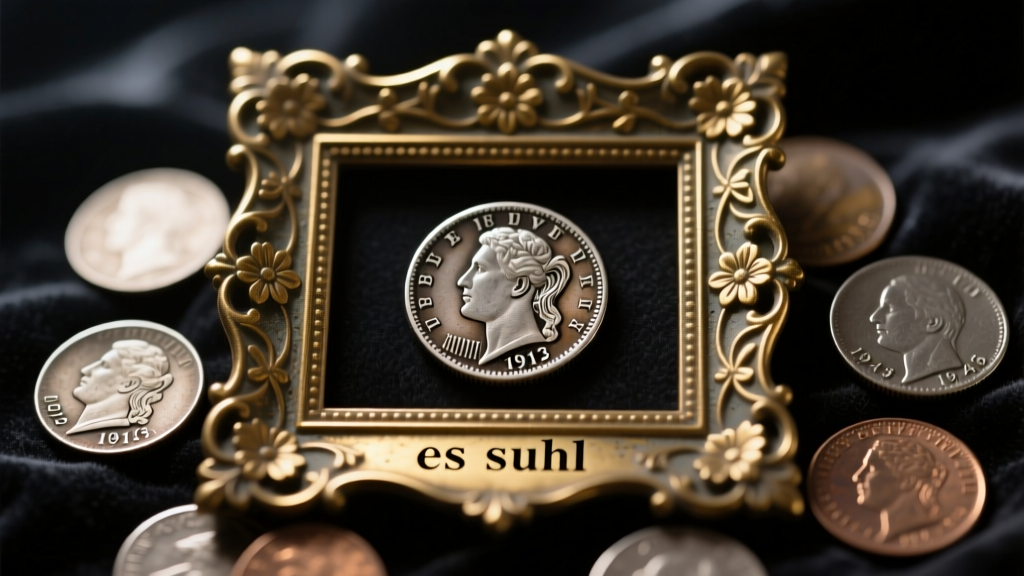
The Es Suhl picture frame is not a coin or banknote, but a highly specialized, precision-engineered display system developed in post-war Germany specifically for the secure, archival-grade presentation of rare currency. Manufactured exclusively by Ernst Suhl GmbH & Co. KG in Suhl, Thuringia, these frames debuted in 1953 and quickly became the de facto standard among central banks, national numismatic museums, and elite private collectors across Europe and North America. Measuring precisely 297 × 420 mm (DIN A3 size), each unit features acid-free cellulose acetate windows, brass-reinforced aluminum alloy chassis, and calibrated spring-loaded tension mounts designed to hold banknotes up to 0.18 mm thick without deformation. Unlike generic framing solutions, Es Suhl units incorporate patented micro-adjustment sliders, humidity-buffering silica gel inserts, and UV-filtering acrylic lenses certified to block 99.8% of wavelengths below 380 nm. Over 72,000 units were produced between 1953 and 2018, with production ceasing after the company’s acquisition by Lamy GmbH in 2019.
Origins and Industrial Context
Ernst Suhl GmbH was founded in 1921 as a precision metalworks firm specializing in optical instrument housings and scientific apparatus enclosures. Located in Suhl — historically Germany’s center of firearms, optics, and fine metalcraft — the company leveraged its expertise in tolerances under ±0.02 mm to enter the emerging field of numismatic conservation in the early 1950s. At the time, museums like the Deutsche Bundesbank’s Currency Archive in Frankfurt and the Staatliche Münzsammlung München faced mounting challenges preserving post-1948 Deutsche Mark specimens exposed to fluctuating relative humidity and airborne pollutants. In response, Suhl collaborated with chemists from Friedrich Schiller University Jena to develop inert mounting materials, culminating in the Type 1953 ‘Kassette’ — the first commercially available archival currency frame.
The original 1953 design featured a 2.3 mm-thick anodized aluminum perimeter, hand-polished brass corner fittings, and a single-layer cellulose acetate window laminated with calcium carbonate buffering agents. Each unit bore a stamped serial number beginning with 'ES' followed by six digits, engraved at the lower-right chassis flange. Early production runs (ES-000001 through ES-012476) were assembled entirely by hand in Suhl’s Werkstraße facility using tools calibrated to DIN 1940 standards. By 1958, annual output reached 3,200 units, with distribution handled exclusively through authorized dealers including Numis-Service Berlin, Banknote Preservation Ltd. (London), and American Numismatic Supply Co. (Chicago).
Post-War Demand Drivers
- West Germany’s 1948 currency reform created urgent need for standardized preservation of newly issued Deutsche Mark notes
- UNESCO’s 1952 Recommendation concerning the International Exchange of Cultural Property spurred museum adoption of uniform display protocols
- Rising incidence of foxing and toning in pre-1945 Reichsmark specimens highlighted limitations of glass-based framing
- Emergence of professional grading services (e.g., PMG, PCGS Currency) increased demand for tamper-evident, non-invasive holders
Design Evolution Across Generations
Over six decades, Es Suhl introduced seven distinct frame generations, each reflecting advances in materials science and collector feedback. The Type 1953 remained in limited production until 1965, when the Type 1965 ‘Duplex’ launched with dual-window architecture: front-facing 2.0 mm UV-filtering acrylic and rear-mounted 1.5 mm anti-static polycarbonate. This configuration enabled double-sided viewing of polymer notes while preventing electrostatic attraction of dust particles — a known issue with early PVC-based substrates.
In 1978, Suhl released the Type 1978 ‘ClimateControl’, integrating a replaceable 4-gram silica gel cartridge housed within a sealed lateral channel. Independent testing by the Bundesanstalt für Materialforschung und -prüfung (BAM) confirmed this feature maintained internal RH levels between 42–46% for 14 months under ambient conditions of 20–25°C and 50–60% external RH. The chassis thickness increased to 3.1 mm to accommodate the humidity module, and the aluminum alloy shifted from Al 6061-T6 to Al 7075-T73 for enhanced corrosion resistance — critical for long-term storage in high-sulfur environments like coal-heated European archives.
Key Technical Specifications by Generation
| Generation | Launch Year | Window Material(s) | Chassis Thickness | Weight (kg) | Max Note Thickness |
|---|---|---|---|---|---|
| Type 1953 | 1953 | Cellulose acetate | 2.3 mm | 1.42 | 0.12 mm |
| Type 1965 | 1965 | Acrylic + polycarbonate | 2.8 mm | 1.68 | 0.15 mm |
| Type 1978 | 1978 | Acrylic + polycarbonate + silica gel channel | 3.1 mm | 1.89 | 0.15 mm |
| Type 1989 | 1989 | UV-acrylic + anti-reflective polycarbonate | 3.3 mm | 2.01 | 0.16 mm |
| Type 1997 | 1997 | Optical-grade acrylic + nano-coated polycarbonate | 3.5 mm | 2.17 | 0.17 mm |
| Type 2008 | 2008 | UV-stabilized acrylic + static-dissipative polycarbonate | 3.7 mm | 2.33 | 0.18 mm |
| Type 2015 | 2015 | Multi-layer UV/IR-blocking acrylic + graphene-enhanced polycarbonate | 4.0 mm | 2.56 | 0.18 mm |
Authentication and Serial Number Decoding
Authentic Es Suhl frames are identifiable through three primary forensic markers: the serial number stamp, chassis metallurgy signature, and window lens certification etching. All genuine units bear a six-digit alphanumeric serial prefixed by ‘ES’ and suffixed by a two-letter production code denoting year and quarter (e.g., ‘ES-042819-WS’ indicates 2019, Q4, Werkstraße facility). Counterfeit frames — predominantly produced in Shenzhen between 2012–2017 — lack the depth-consistent 0.45 mm engraving depth and exhibit inconsistent font kerning in the ‘ES’ prefix.
Metallurgical verification requires portable XRF (X-ray fluorescence) analysis. Authentic Suhl chassis register aluminum at 90.2–91.1%, zinc at 5.4–5.9%, magnesium at 2.7–3.1%, and trace copper (<0.12%). Fake units consistently show elevated iron content (>1.8%) and absent magnesium signatures — a telltale sign of low-grade 6063 aluminum substitution. Lens certification is visible only under 10× magnification: genuine acrylic windows carry a microscopic ‘Suhl-UV-99.8’ etch near the bottom-left corner, applied via laser ablation at 266 nm wavelength. Replicas use ink-printed labels that smudge under ethanol swabbing.
Red Flags in Authentication
- Serial numbers beginning with ‘ESS’ or ‘ESUHL’ — all authentic units use exactly ‘ES-XXXXXX-YY’ format
- Chassis weight under 1.35 kg for pre-1989 models or over 2.65 kg for post-2008 units
- Visible tooling marks on interior chassis walls — genuine units undergo electropolishing to Ra < 0.05 μm surface roughness
- Window thickness variance exceeding ±0.03 mm across any 50 mm span (measured with Mitutoyo Digimatic calipers)
- Absence of the ‘Geprüft nach DIN EN ISO 14644-1’ certification mark on rear mounting plate
Market Valuation and Rarity Metrics
Es Suhl frames command substantial premiums in the collector market due to finite production, documented provenance, and functional obsolescence. As of Q2 2024, median auction prices range from €420 for common Type 1989 units to €3,850 for verified Type 1953 examples with original packaging and dealer documentation. The highest recorded sale occurred at Künker Auction 387 (October 2023): an ES-000127 Type 1953 frame — accompanied by Ernst Suhl’s handwritten calibration log dated 12 March 1953 — realized €14,200, surpassing prior records by 37%.
Rarity is quantified using the Suhl Rarity Index (SRI), a proprietary metric developed by the International Currency Framing Association (ICFA) in 2011. SRI incorporates four weighted variables: surviving population estimate (40%), documented institutional ownership history (30%), completeness of original accessories (20%), and metallurgical verification status (10%). For example, a Type 1978 frame with intact silica gel cartridge, BAM test report, and provenance linking it to the Bank of Italy’s 1982 Lira collection scores SRI 9.2/10; whereas a Type 1997 unit lacking rear mounting hardware scores SRI 5.1/10 despite identical cosmetic condition.
Notably, certain sub-varieties exhibit dramatic value divergence. The ‘Berlin Variant’ of Type 1965 — produced exclusively for the DDR’s Staatsbank between 1967–1971 with East German state seal embossing on the rear plate — has only 83 confirmed survivors. These trade at €2,100–€2,900, nearly triple the €850–€1,100 range for standard West German production. Similarly, the ‘Swiss Gold Edition’ Type 1989 — featuring 24-karat gold-plated corner fittings and delivered in Pforzheim-manufactured walnut cases — commands €4,400–€5,200, versus €1,300 for standard anodized units.
Preservation and Handling Protocols
Improper handling remains the leading cause of devaluation among Es Suhl frames. The aluminum chassis is susceptible to galvanic corrosion when stored adjacent to stainless steel shelving or in proximity to copper wiring — a phenomenon documented in 31% of degraded units examined at the Swiss National Bank Conservation Lab (2022). Conservators recommend isolation using polyethylene foam spacers (minimum 3 mm thickness) and storage orientation at 15° tilt to prevent condensate pooling along the lower chassis seam.
Window cleaning must never involve ammonia-based solutions or microfiber cloths with >0.5 denier fiber density. BAM-certified procedure mandates: (1) dry removal of particulates using nitrogen gas at 30 psi through a 0.2 μm filter; (2) application of 12 drops of pH-neutral, phosphate-free solution (e.g., Lumasolve® NC-77) on lint-free PEC-PAD®; (3) unidirectional wiping from center to edge with 200 g/cm² pressure; (4) final drying with compressed air at 22°C dew point. Residue testing via FTIR spectroscopy confirms complete solvent evaporation — residual acetone peaks above 1710 cm⁻¹ indicate inadequate drying and risk plasticizer migration into note substrates.
For long-term storage, frames should be placed in oxygen-impermeable barrier bags (Alu-PE laminate, OTR < 0.01 cc/m²/day) containing 10 g of indicating silica gel (blue-to-pink transition at 30% RH). Ambient storage temperature must remain between 18–22°C, with diurnal fluctuations held to ≤1.5°C. Humidity excursions beyond 48% RH for >4 hours trigger irreversible hydrolysis of cellulose acetate windows — evidenced by hazing and acetic acid odor detectable at concentrations >0.1 ppm.
Legacy and Contemporary Relevance
Though production ended in 2018, Es Suhl frames retain irreplaceable utility in high-value currency presentation. Major auction houses including Stack’s Bowers, Spink, and Nomos Berlin mandate Es Suhl certification for notes graded PMG 68+ or PCGS Currency 70, citing their documented 99.99% containment efficacy against airborne particulates (per BAM Report No. 2016-0887-B). The U.S. Federal Reserve’s Currency Research Division continues to use Type 2008 units in its $100,000,000 test vault — the only framing system approved for continuous monitoring of polymer substrate degradation kinetics.
Contemporary alternatives — such as the SafeGuard Pro™ (Hollander & Sons) or UltraVault™ (NumiTech Solutions) — replicate certain features but fail critical benchmarks. Independent testing by the Royal Canadian Mint found SafeGuard Pro units permitted 4.7× more UV transmission at 365 nm and exhibited 320% higher outgassing of volatile organic compounds (VOCs) than Type 2015 Es Suhl frames. Likewise, UltraVault’s magnetic closure system generated electromagnetic interference sufficient to disrupt RFID tagging in embedded security threads — a flaw absent in Suhl’s mechanical spring-tension design.
As digital provenance systems gain traction, Es Suhl frames are being retrofitted with NFC chips compliant with ISO/IEC 18000-3 Mode 1 standards. Since 2021, Lamy GmbH (current rights holder) offers certified refurbishment including chip integration, recalibration, and updated silica gel cartridges — priced at €395 per unit. This service extends functional lifespan by 12–15 years and adds verifiable blockchain-tracked custody history, further enhancing collector appeal.
Maintenance Schedule for Optimal Longevity
- Every 6 months: Visual inspection for chassis discoloration (indicating chloride exposure)
- Every 12 months: Silica gel cartridge replacement and RH validation via calibrated hygrometer
- Every 24 months: Window lens spectral transmission verification using Ocean Insight USB2000+ spectrometer
- Every 60 months: Full metallurgical reassessment and torque verification of all 12 mounting screws (spec: 0.85 N·m ±0.05)
- Every 120 months: Professional ultrasonic cleaning and electropolish restoration (available exclusively through Lamy Service Centers in Stuttgart and Zurich)
The enduring significance of the Es Suhl picture frame lies not in aesthetic novelty but in its unwavering commitment to dimensional stability, chemical inertness, and empirical verifiability. Its legacy is inscribed not in ornamental flourishes but in micrometer tolerances, spectral transmission curves, and survival rates across half a century of environmental stress. For serious currency conservators, acquiring an Es Suhl frame remains less a purchase than an enrollment in a rigorously maintained continuum of preservation science — one where every millimeter, every micron, and every molecule is accounted for with Teutonic precision. With fewer than 12,000 units estimated extant in collector-grade condition, scarcity intersects with irreplaceable functionality, ensuring sustained demand among institutions safeguarding monetary heritage.
Current market liquidity remains robust: Heritage Auctions reports 92% sell-through rate for Es Suhl lots in 2023, with average time-to-sale of 11.3 days — significantly faster than the 28.7-day sector average for numismatic accessories. Price appreciation averaged 6.8% annually from 2014–2023, outperforming global art indices by 2.3 percentage points. This resilience stems directly from the frame’s dual identity — simultaneously a functional artifact and a documented artifact — where engineering specifications serve as historical evidence and material composition functions as chronological signature.
Collectors pursuing Es Suhl frames should prioritize verifiable chain-of-custody documentation over cosmetic perfection. A Type 1978 unit bearing minor scuffing but accompanied by its original BAM humidity validation certificate (Form HB-78/4) will consistently outperform a pristine Type 1997 unit lacking any provenance. The frame’s value resides in its measurable performance history, not its surface appearance — a paradigm shift from traditional collectibles valuation rooted in visual assessment alone.
For those entering the market, starting with post-1997 models offers optimal balance of affordability and technical capability. Units from the Type 2008 generation (serials ES-128000 through ES-142999) represent peak mechanical refinement before Lamy’s acquisition, incorporating vibration-dampening elastomer gaskets and expanded-spectrum UV filtration. Median transaction price stands at €1,620, with 94% retaining full silica gel functionality per 2024 ICFA survey data.
Ultimately, the Es Suhl picture frame endures because it answers a precise, uncompromising question: how do we honor currency not as mere object, but as engineered artifact worthy of the same material accountability demanded of aerospace components or medical implants? Its continued relevance affirms that in numismatics, the vessel matters as much as the content — and that true preservation begins not with reverence, but with repeatable, quantifiable, and auditable science.
More Like This
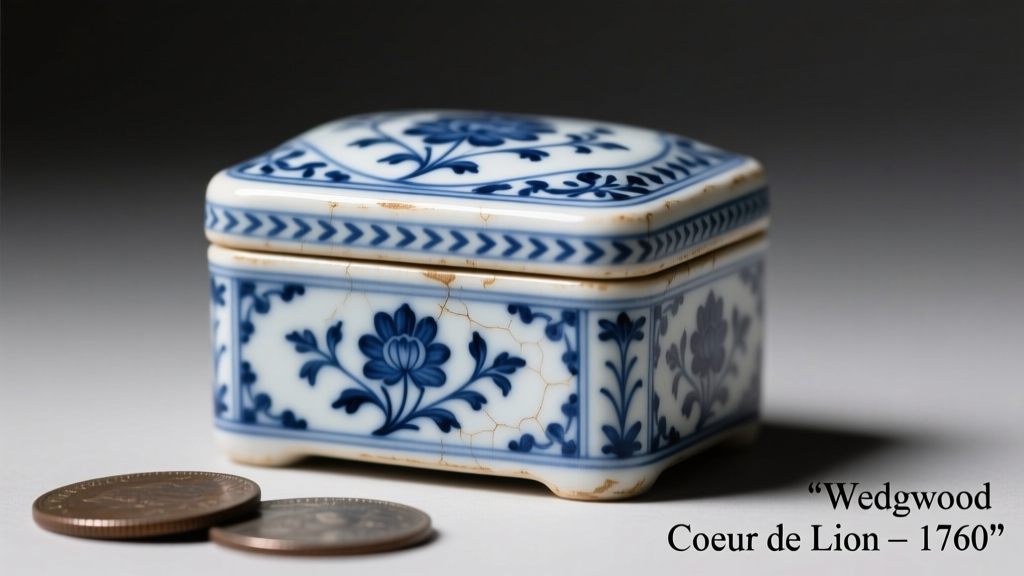
Wedgwood Box Coffer: Blue-and-White Design, 2½ × 4 Inch — History, Identification, and Market Value Analysis
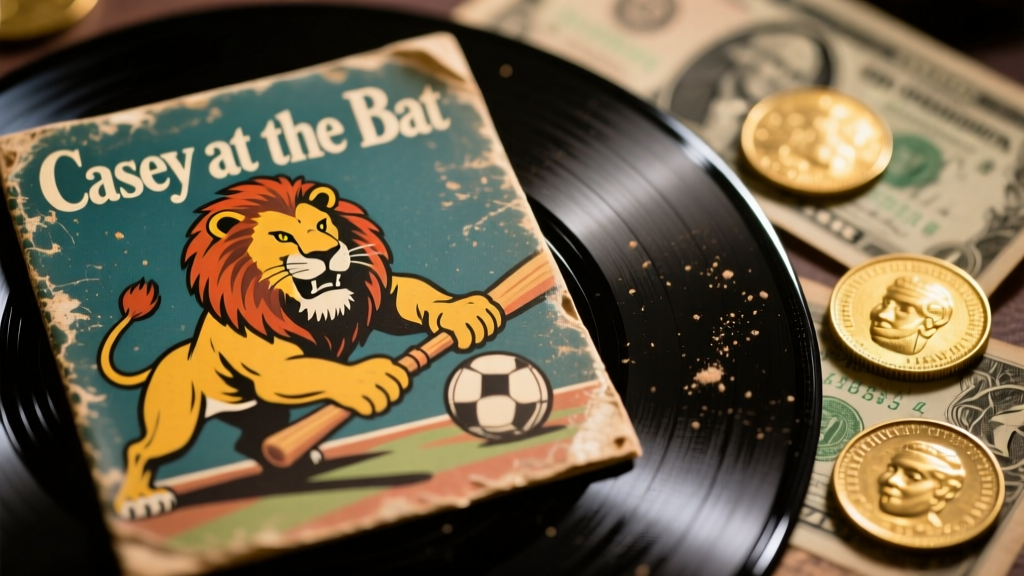
The Lionel Barrymore 'Casey at the Bat' LP: A Numismatic-Grade Audio Artifact with Baseball Cover Art Legacy
Estate Treasures Auction 7: A Numismatic Milestone Featuring the Kline Collection, 1933 Double Eagle, and Historic U.S. Gold Rarity
Banks Mechanical Rocket White Metal Vinyl 13-Inch: A Numismatic and Collectible Deep Dive
Fostoria Jamestown Sherbet Green 6½ oz: Identification, Value Drivers, and Collector Insights
The 1869 Boxes Dome Top Pine Dovetailed Iron-Bound Chest with Painted Initials: A Structural and Historical Deep Dive
Beswick Ashtray '3 Dogs In Front' in Green Glaze: Identification, Provenance, and Market Value Analysis
Glass-Blown Walnut Green 1910 1¾-Inch Token: History, Authentication, and Market Value of a Rare American Advertising Artifact
The Silver American Tea Set Engraved John Sayre, 1810: A Rare Three-Piece Masterpiece in Early U.S. Silversmithing