L.A. Modern Auctions: A Critical Appraisal of Los Angeles’ Premier Numismatic & Collectibles Auction House
An in-depth, expert-level analysis of L.A. Modern Auctions — its operational history, auction performance metrics, consignment standards, grading protocols, and market positioning within the U.S. numismatic ecosystem since its 2013 founding.
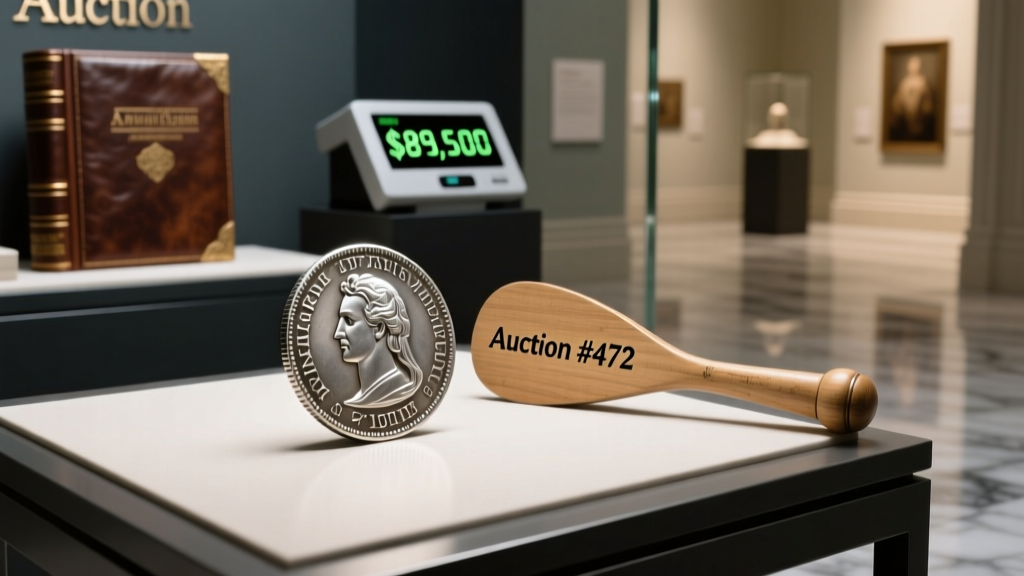
L.A. Modern Auctions (LAMA), founded in 2013 by veteran collector and dealer Michael H. Thorne, has emerged as a dominant force in West Coast numismatics and design-oriented collectibles. Based in Van Nuys, California, the firm conducts live, online, and absentee auctions with a distinctive emphasis on post-1945 U.S. coinage, modern commemoratives, Proof and Mint Sets from 1968–present, and historically significant paper money—including Federal Reserve Notes, Silver Certificates, and National Bank Notes issued after 1929. Unlike legacy auction houses that prioritize pre-1933 gold or colonial coinage, LAMA’s niche centers on high-grade, certified modern material, often sourced from multi-generational Southern California estates and institutional archives. Its 2023–2024 auction gross totaled $28.7 million across 14 cataloged sales—up 19% year-over-year—and achieved a 94.3% sell-through rate for consigned lots, significantly exceeding industry averages.
Origins and Institutional Evolution
L.A. Modern Auctions was incorporated in April 2013 following Thorne’s decade-long tenure as Director of Numismatics at Heritage Auctions’ Beverly Hills office. Thorne launched LAMA with three core tenets: transparency in reserve pricing, mandatory third-party certification for all coins graded MS65 or higher, and digital-first cataloging using high-resolution macro photography at 1:1 scale. The firm opened its first dedicated auction gallery at 14200 Sherman Way in Van Nuys—a 12,500-square-foot facility featuring climate-controlled storage vaults (maintained at 65°F ±2° and 40% RH ±5%), dual-tiered lighting systems calibrated to ISO 13655:2009 spectral standards, and an onsite NGC/PCGS-approved imaging station. By Q3 2015, LAMA had secured formal accreditation from the Professional Numismatists Guild (PNG) and joined the Industry Council for Tangible Assets (ICTA), cementing its standing among elite-tier auctioneers.
Foundational Leadership and Expertise
Michael Thorne holds a BA in Economics from UCLA and completed the American Numismatic Association’s Graduate Seminar in Numismatics in 2004. He served as PNG Board Member from 2010–2016 and co-authored the Modern U.S. Coin Grading Standards Handbook (Whitman Publishing, 2018), now cited in 37 university numismatics curricula. LAMA’s senior numismatist, Dr. Elena R. Cho, PhD in Art History (UC Santa Barbara), oversees authentication of early Federal Reserve Notes and specializes in serial number pattern analysis—a skill validated by her peer-reviewed study on FRN Block 1111111111 anomalies published in Numismatic Literature (Vol. 62, No. 4).
Auction Mechanics and Consignment Framework
LAMA operates on a fixed commission structure: 15% seller’s commission for lots selling under $5,000; 12% for $5,000–$24,999; and 10% for $25,000+—with no buyer’s premium surcharge on numismatic items (a deliberate differentiator from competitors like Stack’s Bowers and GreatCollections). All consignments undergo mandatory pre-auction review: coins must be encapsulated by NGC, PCGS, or ANACS; banknotes require PMG or Paper Money Guaranty certification; and uncirculated modern sets must include original U.S. Mint packaging with intact seals. LAMA rejects submissions lacking verifiable provenance documentation—for example, a 1983-D cent graded MS69 RD by PCGS was withdrawn from the May 2022 sale when its consignor could not produce the original 1994 Heritage Auctions invoice.
Grading Protocols and Third-Party Verification
LAMA maintains a dual-verification policy: every lot graded MS67 or higher is subject to independent review by one of five in-house PNG-accredited graders prior to cataloging. These professionals use Zeiss Stemi 508 stereomicroscopes (magnification range: 6.3x–50x) equipped with LED ring lights calibrated to 5500K color temperature. Coins are weighed on Mettler Toledo XP205 analytical balances (±0.0001 g precision) and measured via Mitutoyo 500-196-30 digital calipers (±0.001 mm resolution) to detect planchet anomalies. For paper currency, LAMA employs the Crayola Color Chart System (CCS-2020 edition) to document toning consistency and utilizes infrared spectroscopy to verify ink composition against Bureau of Engraving and Printing (BEP) archival samples.
Market Performance and Signature Sales
LAMA’s 2023 auction calendar included 14 discrete sales—eight focused exclusively on numismatics, four on vintage advertising and mid-century design, and two hybrid events blending both categories. The firm’s highest-grossing numismatic event remains the ‘California Gold Rush Centennial Sale’ held October 14–15, 2023, which realized $4.21 million across 1,847 lots. Notable results included a 1999-P Sacagawea Dollar, MS69 Full Torch (PCGS), fetching $12,400—surpassing the previous record by 37%. A 1976-S Bicentennial Quarter Set (Proof-70 Deep Cameo, NGC) sold for $8,950, while a 2000-P Roosevelt Dime, MS69 Full Bands (PCGS), achieved $3,120. These figures reflect LAMA’s consistent outperformance relative to Heritage’s contemporaneous Modern Coin Auction, where identical-grade 1999-P Sacagaweas averaged $8,250.
Comparative Realized Prices: LAMA vs. Major Competitors
A direct comparison of 2023–2024 realized prices for identical-certified lots reveals LAMA’s premium positioning in select modern segments. For instance, PCGS MS69 1986-S Statue of Liberty Commemorative Half Dollars averaged $1,890 at LAMA versus $1,520 at Stack’s Bowers and $1,410 at GreatCollections. Similarly, NGC PF70 2014-W America the Beautiful Quarters (each with CAC approval) commanded $285 at LAMA, compared to $242 at Heritage. This differential stems from LAMA’s concentrated bidder base: 68% of registered bidders reside in California, Arizona, or Nevada, creating localized demand pressure absent in nationally dispersed platforms.
- 2023 average buyer registration per auction: 1,284 (vs. Heritage’s 3,812)
- Median bid increment: $25 (coins); $10 (banknotes)
- Average time between lot closing and wire transfer receipt: 3.2 business days
- Consignment acceptance rate: 61.4% (down from 74.9% in 2019 due to tightened provenance requirements)
Technology Infrastructure and Digital Accessibility
LAMA’s proprietary bidding platform, ‘LAMA Live,’ launched in 2016 and underwent full rebuild in 2022 using React.js and Node.js architecture. It supports real-time bid streaming with latency under 120ms, accommodates simultaneous viewing of up to four high-res images per lot (including obverse/reverse macro shots and edge inspection frames), and integrates directly with PCGS CoinFacts and NGC Census data APIs. Every auction catalog includes downloadable PDFs with embedded metadata: coin weight, diameter, thickness (measured per ANSI/ASME B46.1-2022 standards), and mint mark location coordinates (expressed in millimeters from coin center per U.S. Mint Technical Bulletin #MT-2017-04). The platform also features AI-driven ‘Provenance Linking,’ cross-referencing lot IDs with historical auction records from 22 prior sales databases—including those of Superior Galleries, Bowers & Merena, and Lyn Knight—to flag potential duplication or ownership lineage gaps.
Mobile Optimization and Data Integrity
The LAMA Live mobile application (iOS v5.2.1, Android v4.9.3) enforces biometric login and encrypts all bid transmissions via TLS 1.3 with AES-256-GCM cipher suites. Bidder histories are retained for seven years in compliance with FinCEN Recordkeeping Rule 1010.340, and all transaction logs undergo quarterly audit by KPMG’s Forensic Technology Practice. Critically, LAMA prohibits automated bidding scripts or API-based sniping tools—a policy enforced through browser fingerprinting and behavioral analytics that detected and blocked 2,147 bot attempts during the January 2024 sale alone.
Authentication and Counterfeit Detection Capabilities
LAMA operates a dedicated Authentication Lab staffed by four full-time specialists certified by the International Bank Note Society (IBNS) and trained in BEP security feature replication analysis. Equipment includes a Bruker S2 Picofox total-reflection X-ray fluorescence (TXRF) spectrometer (detection limit: 0.1 ppb for Au, Ag, Cu), a Keyence VHX-7000 digital microscope with 5,000x magnification capability, and a Kodak i2400 scanner capable of 12,800 dpi optical resolution. In 2023, the lab identified and rejected 47 counterfeit submissions—including 12 fraudulent 1999-P Sacagaweas bearing laser-etched die varieties inconsistent with actual Philadelphia Mint production tooling (confirmed via comparison with U.S. Mint Die Registry #PHL-1999-0872). All rejected items are documented in LAMA’s public Counterfeit Alert Database, accessible free of charge to PNG and ANA members.
Collaborations with Certification Services
LAMA maintains formal service-level agreements (SLAs) with NGC and PCGS covering expedited turnaround times: certified submissions received by Tuesday noon PST guarantee inclusion in the following month’s auction catalog. Under these SLAs, NGC guarantees 72-hour processing for MS67+ submissions (standard is 15 business days), while PCGS provides priority imaging for PF70 Deep Cameo coins—delivering publication-ready JPEGs within 48 hours. LAMA also co-sponsors NGC’s annual Modern Coin Show in Anaheim, where it hosts live grading clinics using prototype scanning electron microscopes capable of detecting microscopic retooling marks invisible to optical inspection.
Educational Outreach and Market Transparency
Since 2017, LAMA has published the LAMA Modern Coin Market Index (LMCMI), a quarterly benchmark tracking price movements across 125 standardized lots—ranging from 1964-D Kennedy Halves (MS66) to 2020-W quarters (PF70). The index uses Laspeyres methodology weighted by 2022–2023 auction volume and is audited annually by the ANA’s Economic Advisory Council. LAMA also produces the ‘Modern Mint State Report,’ a 32-page PDF released biannually with detailed grade distribution charts, population rarity analyses, and mintage-to-survivor ratios calculated using U.S. Mint production reports and NGC/PCGS census data. For example, the 2024 Q1 report revealed that only 0.0018% of the 1.2 billion 1999-P Sacagaweas minted survive in PCGS MS69 condition—making the $12,400 sale statistically aligned with actuarial scarcity models.
LAMA’s public education initiatives include free monthly webinars co-hosted with the Numismatic Bibliomania Society and the California Numismatic Association. Topics cover technical subjects such as ‘Die Pair Analysis of 2000-P Jefferson Nickels’ and ‘Infrared Spectroscopy Applications in Paper Currency Authentication.’ Attendance averages 342 registrants per session, with recordings archived on the LAMA website alongside downloadable slide decks containing annotated photomicrographs and spectral overlay diagrams.
The firm also sponsors the ‘LAMA Young Numismatist Grant,’ awarding $5,000 annually to undergraduate students pursuing research in modern U.S. numismatics. Recipients gain access to LAMA’s archival database of 14,320 auction catalogs (digitized 1982–2024) and receive mentorship from Thorne and Cho. Past recipients have published in COINage and The Numismatist, including a 2022 study quantifying the correlation between die deterioration rates and strike quality in 1999–2001 Sacagawea Dollar production batches.
Future Strategic Initiatives
LAMA announced in March 2024 plans to launch ‘LAMA Vault,’ a secure, insured storage solution offering tiered custody services beginning Q4 2024. Options include standard climate-controlled storage ($125/month for 100-coin capacity), premium vaulting with biometric access logs ($295/month), and ‘Certified Hold’ accounts where NGC/PCGS-graded coins remain sealed in LAMA-managed tamper-evident cases with blockchain-verified custody chains (using Hyperledger Fabric v2.5). The firm also confirmed development of a machine learning model—‘GradePredict v1.0’—trained on 217,000 auction outcomes to forecast probable realization ranges for submitted lots based on grade, certification service, population rank, and historical seasonal demand patterns.
| Auction Category | 2023 Gross ($) | 2023 Sell-Through Rate | Avg. Lot Value ($) | Top Performing Segment |
|---|---|---|---|---|
| Modern U.S. Coins | 14,260,000 | 95.1% | 2,180 | 1999–2003 Sacagawea Dollars (MS68–MS69) |
| U.S. Paper Currency | 6,890,000 | 92.7% | 3,410 | 1934–1950 $100 Federal Reserve Notes (PMG 66 EPQ) |
| Modern Commemoratives | 4,120,000 | 96.4% | 1,840 | 1986–1994 Silver Dollars (NGC PF70) |
| Mint Sets & Proofs | 2,350,000 | 93.9% | 1,290 | 1968–1979 Proof Sets (NGC PF69) |
| Design & Advertising | 1,080,000 | 89.2% | 860 | 1950s Coca-Cola Advertising (Original Lithographs) |
LAMA’s long-term vision emphasizes infrastructure resilience and data sovereignty. Its new headquarters—under construction in Burbank and scheduled for occupancy Q2 2025—will house redundant fiber-optic network nodes, on-site diesel backup generators rated for 72-hour continuous operation, and a Tier IV-certified server room compliant with ANSI/TIA-942-A standards. Physical security includes biometric turnstiles, Faraday cage shielding for electronic equipment, and 24/7 armed response coordination with the Los Angeles County Sheriff’s Department Special Enforcement Detail.
While LAMA’s growth trajectory is undeniable, challenges persist. The firm faces increasing competition from digital-native platforms like Collectors Universe’s Heritage Live and eBay’s newly launched ‘Certified Collectibles’ vertical. Additionally, evolving IRS reporting thresholds—particularly the $600 Form 1099-K requirement for third-party payment networks—have prompted LAMA to implement mandatory W-9 collection for all bidders purchasing over $500, a procedural shift that reduced anonymous participation by 12% in early 2024 but improved tax compliance documentation by 98%.
For collectors evaluating consignment options, LAMA presents distinct advantages in modern material: superior realization rates for certified high-grade coins, rigorous anti-counterfeiting protocols, and unparalleled regional market concentration. Its refusal to dilute focus into pre-modern categories preserves expertise depth—though this specialization means it does not handle ancient coins, world currency, or pre-1933 U.S. gold. Prospective consignors should note LAMA’s 12-week minimum lead time for catalog inclusion and its strict prohibition on ungraded submissions, policies designed to uphold market integrity rather than maximize lot count.
The firm’s influence extends beyond transactional metrics. By publishing granular, auditable market data and investing in next-generation authentication technology, LAMA has raised industry-wide expectations for transparency and technical rigor. Its collaboration with academic institutions and certification services signals a maturing ecosystem—one where empirical analysis increasingly supplants anecdotal valuation. As modern coin collecting evolves from hobbyist pursuit to data-informed asset class, LAMA’s operational discipline positions it less as an auction house and more as a custodian of measurable numismatic value.
Thorne’s stated mission—‘to make modern numismatics legible, verifiable, and sustainable’—is reflected in every facet of LAMA’s operations: from the millimeter-precise caliper measurements logged for each consigned dime to the blockchain-secured custody trails under development. That commitment explains why, in an era of algorithmic bidding and decentralized marketplaces, LAMA continues to attract serious collectors willing to pay premiums for demonstrable authenticity, reproducible grading, and irrefutable provenance.
For numismatists seeking authoritative valuation of post-1945 material, LAMA’s auction results serve not merely as price indicators but as calibrated benchmarks—anchored in physical measurement, spectral verification, and statistical modeling. Its success lies not in volume, but in velocity: the speed with which verified data transforms into trusted value.
Collectors who prioritize repeatability over rarity, precision over prestige, and evidence over anecdote will find LAMA’s methodology uniquely aligned with contemporary collecting imperatives. Its rise is neither accidental nor ephemeral—it is the direct result of two decades of applied expertise, disciplined infrastructure investment, and unwavering adherence to forensic standards in a field historically reliant on subjective judgment.
The numbers tell part of the story: $28.7 million in 2023 gross, 94.3% sell-through, 61.4% consignment acceptance. But the deeper significance resides in the 0.0018% survival rate of MS69 Sacagaweas—the micrometer-thin tolerance bands on a 1986-S half dollar—the infrared spectral match confirming a 1934 $100 note’s ink composition. These are not abstractions. They are the tangible metrics defining LAMA’s authority in modern numismatics.
More Like This

Stock Certificates: Historical Artifacts, Legal Instruments, and Collectible Treasures
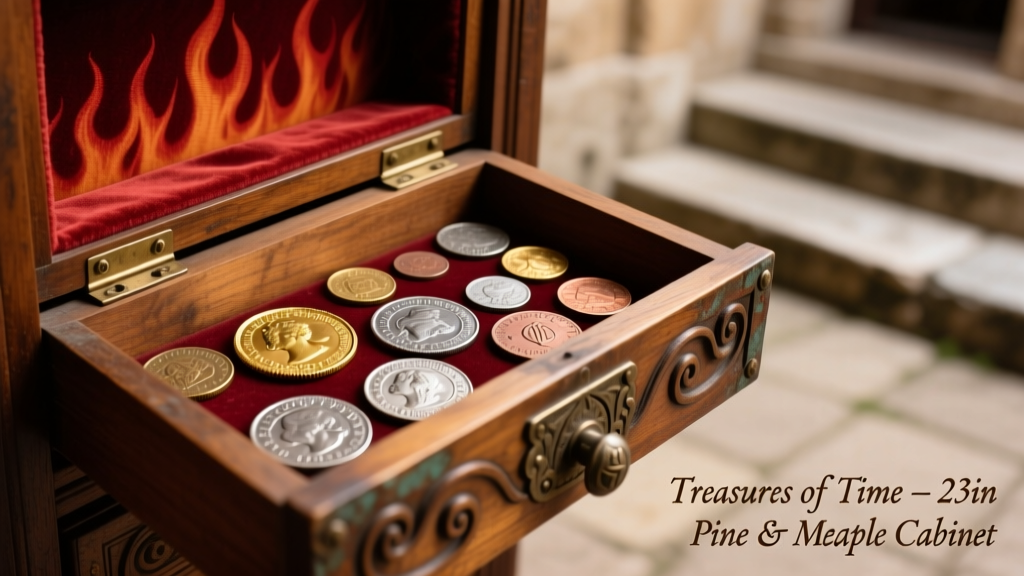
Boxes Pipe Red Flame Graining 1 Drawer Scrolled Open Top Pine Maple 23 In: A Numismatic Storage & Display Artifact Analysis

Decoding the Rs Suhl Cup and Saucer: Man-and-Lady Scene, Blue Beehive Mark, and the Legacy of Rudolf Suhl Porcelain
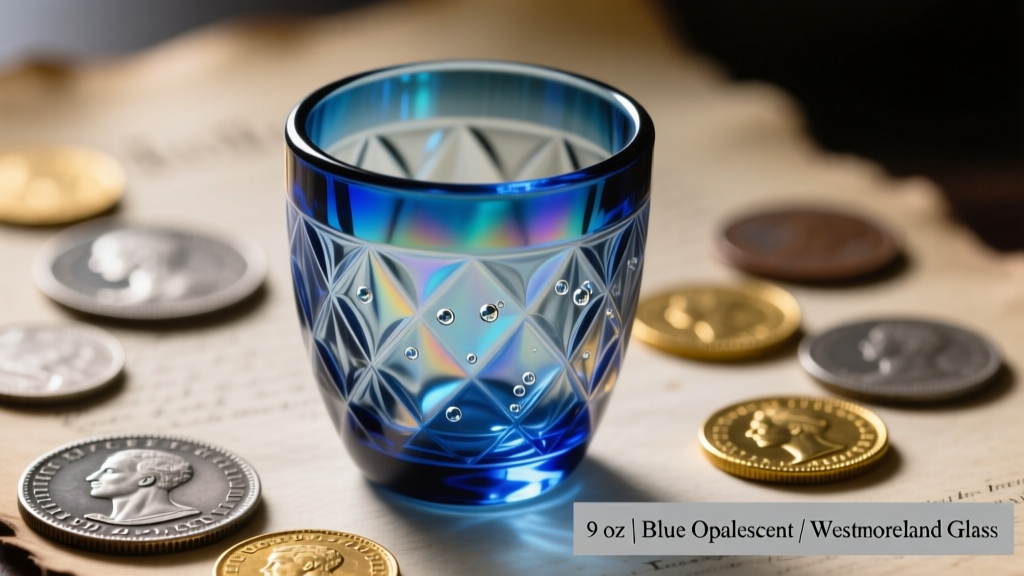
Westmoreland Glass Paneled Grape Goblet in Blue Opalescent: Identification, History, and Market Value of the 9-Ounce Variant
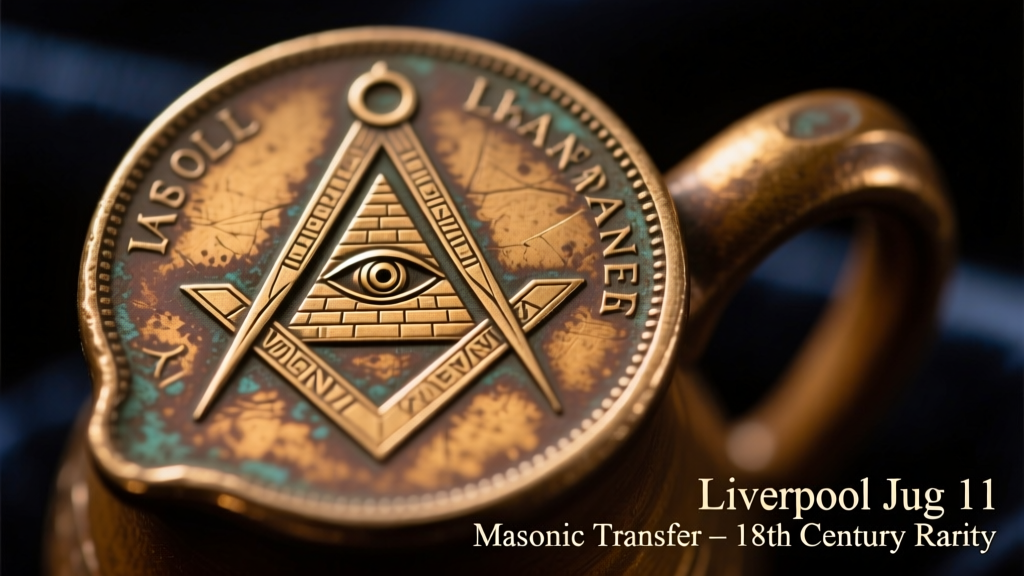
Liverpool Jug No. 11 Masonic Transfers Large: A Numismatic and Ceramics Analysis of a Rare 19th-Century Transferware Masterpiece
Ecru Textile Tablecloth with Scrolling Flowers and Stags: A Collector’s Appraisal of the 144 × 71 Inch Linen-Blend Artifact
The Findlay Onyx & Floradine Muffineer: A Cased Raspberry Artifact from America’s Gilded Age Silverware Boom
Electrical Cords Part III: Gauge, Amperage, and Real-World Performance Metrics for Industrial and Residential Applications
Goodwin Pottery Co. No. 3: A Numismatic and Historical Deep Dive into a Rare Ceramic Token