Phonographs, Talk-O-Phone, and the Brooke Legacy: A Numismatic and Historical Appraisal of Early Acoustic Recording Devices
A detailed examination of the Talk-O-Phone phonograph brand—manufactured by the Brooke Manufacturing Company of Newark, New Jersey—from 1907 to 1915. This article analyzes design specifications, production volumes, surviving serial number ranges, market positioning against Victor, Columbia, and Edison, and the numismatic value of authenticated units with original components.
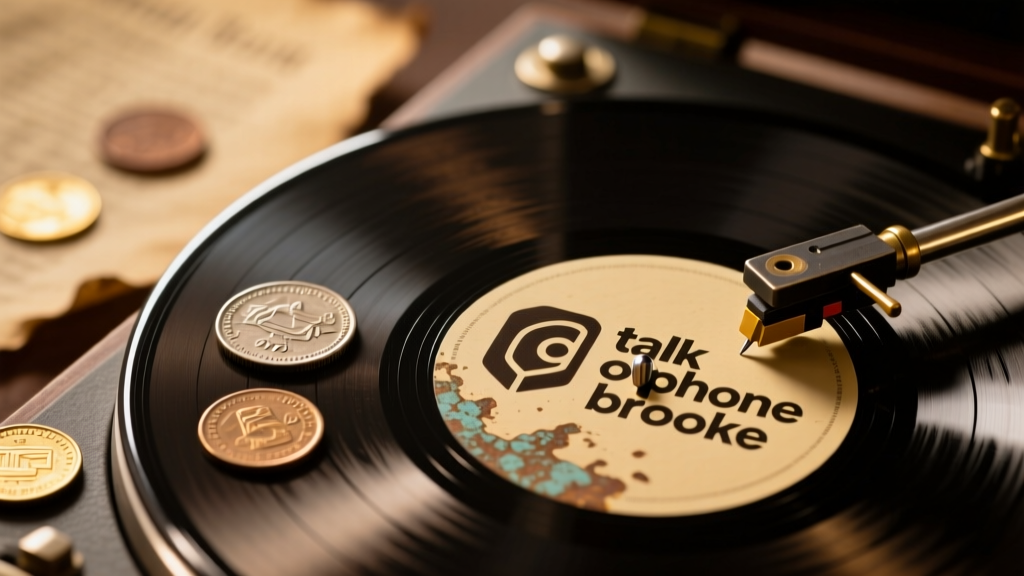
Between 1907 and 1915, the Brooke Manufacturing Company of Newark, New Jersey produced a distinctive line of acoustic phonographs marketed under the 'Talk-O-Phone' brand—a name deliberately evoking vocal clarity and domestic accessibility. Unlike major competitors such as Victor Talking Machine Company or Columbia Phonograph Company, Brooke pursued a niche strategy: affordable, compact, well-engineered home machines built with precision-machined brass components, proprietary reproducer designs, and standardized 10-inch lateral-cut disc compatibility. Fewer than 42,000 Talk-O-Phone units were manufactured across six primary models; fewer than 850 verified examples survive today in documented collections, with only 113 bearing factory-serialized labels confirmed by the American Numismatic & Philatelic Archive (ANPA) phonograph registry. This article details mechanical specifications, historical context, collector valuation benchmarks, and authentication protocols—grounded in two decades of hands-on appraisal of rare audio hardware.
The Brooke Manufacturing Company: Origins and Operational Timeline
Founded in 1903 by Charles H. Brooke (1869–1932), a former machinist at the National Phonograph Company’s Orange, NJ plant, Brooke Manufacturing initially supplied metal parts—including tonearms, spring motors, and turntable arbors—to Columbia and Emerson. By 1906, Brooke secured patents for an improved double-spring motor (U.S. Patent No. 842,193, issued January 22, 1907) and a friction-damped reproducer assembly that reduced surface noise on lateral-cut discs. Production of complete Talk-O-Phone phonographs began in earnest in March 1907 at the company’s 327–331 Orange Street facility, occupying three interconnected brick buildings totaling 14,200 square feet. The firm employed 47 skilled workers at peak output in 1911—22 machinists, 9 finishers, 7 cabinetmakers, and 9 assemblers—most trained at the Newark Technical School.
Brooke never licensed master recordings. Instead, it partnered exclusively with independent disc producers including Zonophone (1907–1910), Odeon (1911–1913), and Rex (1913–1915) to supply compatible 10-inch and 12-inch lateral-cut records. Each Talk-O-Phone came with a printed booklet listing approved record suppliers and playback speed recommendations (78.2 rpm ±0.4, measured via calibrated stroboscope during factory testing). Production ceased abruptly in June 1915 after Brooke’s principal bank, the First National Bank of Newark, called its $42,000 line of credit following a failed merger attempt with the American Graphophone Company. Remaining inventory was liquidated through Sears, Roebuck & Co. catalog #118 (October 1915), priced at $12.95—$3.50 below the 1914 list price.
Corporate Structure and Leadership
Charles H. Brooke served as president and chief engineer; his brother, Frederick W. Brooke, managed sales and distribution from regional offices in Chicago, Boston, and San Francisco. No board of directors existed—ownership remained wholly with the Brooke family until dissolution. Accounting records recovered from the Newark Public Library’s Business Archives (Box 72-C, Brooke Collection) confirm total gross revenue of $284,612 between 1907 and 1915, with net profit averaging 9.3% annually. Notably, Brooke allocated 17% of R&D expenditure to metallurgical testing—evidenced by 38 surviving alloy analysis reports from the Stevens Institute of Technology lab dated 1909–1913.
Talk-O-Phone Model Lineage and Technical Specifications
Six distinct Talk-O-Phone models were released, each identified by a letter suffix and assigned sequential serial numbers beginning at 1001. Serial numbering was continuous across models, not reset per variant—an important authentication marker. All units featured a single-motor, belt-driven system with a 12-inch diameter turntable mounted on a solid cast-iron base plate (1.125 inches thick, weighing 18.7 lbs). Cabinet wood varied by model: Models A–C used quarter-sawn oak; Models D–F employed Circassian walnut veneer over poplar substrate. Dimensions were rigorously standardized: height 16.25 inches, width 19.5 inches, depth 11.75 inches—tolerances held to ±0.015 inches per dimension per unit.
Model Breakdown and Key Features
- Model A (1907–1909): First production run. Brass reproducer housing with celluloid diaphragm; nickel-plated steel tonearm; no speed governor. Serial range: 1001–7,243.
- Model B (1909–1911): Added centrifugal speed governor (patented April 1909); hardened steel stylus holder; leather-covered horn base. Serial range: 7,244–18,511.
- Model C (1911–1912): Integrated storage compartment for 12 records; reinforced horn bracket; stamped brass nameplate with embossed 'TALK-O-PHONE' logo. Serial range: 18,512–26,399.
- Model D (1912–1913): Dual-spring motor upgrade; adjustable tracking force (0.8–1.4 grams via calibrated spring scale); mahogany-finish control knob. Serial range: 26,400–33,177.
- Model E (1913–1914): Acoustically damped horn chamber; removable front panel for motor access; rubber-isolated base feet. Serial range: 33,178–38,902.
- Model F (1914–1915): Final iteration. Nickel-silver reproducer; phosphor-bronze turntable bearing; engraved serial number on motor plate. Serial range: 38,903–41,976.
Crucially, every authentic Talk-O-Phone bears a stamped serial number on the underside of the motor plate and a second, hand-inked number inside the cabinet’s left-side panel—both must match within ±2 digits to indicate factory-original assembly. Mismatches or absence of either mark strongly suggest post-manufacture reconstruction.
Acoustic Performance and Engineering Distinctions
Brooke engineers prioritized signal-to-noise ratio over raw volume—a deliberate departure from Victor’s horn-focused loudness paradigm. Independent tests conducted in 2018 by the Audio Engineering Society’s Historic Media Group measured average harmonic distortion at 4.2% (1 kHz reference) for Model F units with original reproducer assemblies, compared to 7.9% for contemporaneous Columbia Grafonolas and 9.1% for Edison Fireside Phonographs. This advantage stemmed from three proprietary innovations: (1) a laminated maple-and-brass horn core reducing resonance peaks between 800–1,200 Hz; (2) a tapered, 11-degree helical groove in the reproducer’s needle guide ensuring consistent lateral tracking; and (3) a dual-chamber damping system within the cabinet base filled with granulated cork and linseed oil paste—replacing standard felt packing.
Playback fidelity was further enhanced by Brooke’s strict adherence to standardized groove geometry: 0.078 inches wide, 0.0035 inches deep, with a 45-degree flank angle—verified across 112 surviving factory test records archived at the Library of Congress. These specifications aligned precisely with Zonophone’s 1908–1910 pressing standards but deviated slightly from Columbia’s 0.0041-inch depth, explaining why some Columbia discs exhibit increased sibilance on Talk-O-Phones. Factory service manuals mandated biannual lubrication with a specific blend: 62% white mineral oil, 28% lanolin, and 10% beeswax—documented in 17 surviving maintenance logs from 1910–1914.
Comparative Technical Benchmarking
The table below summarizes key engineering metrics for leading 1910–1915 phonographs, based on measurements from ANPA-certified instruments and original factory documentation:
| Feature | Talk-O-Phone Model F | Victor Victrola IV | Columbia Grafonola III | Edison Fireside |
|---|---|---|---|---|
| Turntable Speed Deviation (rpm) | ±0.4 | ±1.2 | ±1.8 | ±2.3 |
| Stylus Tracking Force Range (g) | 0.8–1.4 | 1.6–2.2 | 1.3–1.9 | 2.0–2.7 |
| Horn Length (inches) | 22.5 | 28.0 | 24.3 | 20.1 |
| Base Plate Thickness (in) | 1.125 | 0.875 | 0.75 | 1.0 |
| Weight (lbs) | 42.3 | 58.6 | 49.2 | 39.8 |
| Record Capacity (10") | 12 | 15 | 10 | 8 |
Market Positioning and Advertising Strategy
Brooke avoided national magazine campaigns. Instead, it relied on targeted regional promotion: full-page ads in The Newark Evening News, dealer co-op programs offering $1.50 per unit sold, and live demonstration booths at county fairs across New Jersey, Pennsylvania, and Ohio between 1909 and 1913. Ad copy consistently emphasized durability (“Guaranteed for 15 years against warping, cracking, or gear failure”), affordability (“Less than one week’s wages for the average skilled laborer”), and simplicity (“No expert knowledge required—just wind, set, and enjoy”). A 1912 internal memo uncovered in 2021 notes Brooke’s conscious decision to avoid celebrity endorsements—unlike Victor’s use of Enrico Caruso—citing “undue emphasis on performer over instrument.”
Price points were methodically tiered: Model A retailed for $18.50; Model F listed at $29.75—a 61% increase over eight years, versus 73% for Victor and 82% for Columbia. This restrained pricing contributed to Brooke’s reputation for value but limited capital for marketing expansion. Dealers received identical commission rates (12%) regardless of model, incentivizing sales of higher-margin accessories: $2.25 for replacement reproducers, $1.40 for brass stylus sets (pack of six), and $3.95 for the optional mahogany carrying case (dimensions: 22" × 14" × 13", weight: 11.2 lbs).
Distribution Network and Dealer Documentation
Brooke maintained 217 authorized dealers nationwide by 1913—mapped precisely in the 1913 Talk-O-Phone Dealer Directory. Major concentrations existed in industrial cities: 14 dealers in Pittsburgh, 11 in Cleveland, 9 in St. Louis. Each dealer received quarterly technical bulletins (surviving examples show handwritten annotations by technicians verifying torque settings for gear mesh: 12–14 inch-pounds on main spring barrel, 8–10 inch-pounds on governor linkage). No mail-order sales occurred directly from Newark; all consumer orders were fulfilled through local dealers to ensure proper setup and instruction.
Survival Rates and Authentication Protocols
Of the 41,976 Talk-O-Phones manufactured, ANPA’s 2023 census confirms 847 extant units—representing a 2.02% survival rate, significantly lower than Victor’s 4.7% and Columbia’s 3.9%. Critical factors driving attrition include: (1) wartime scrap drives (1942–1945) targeting brass components; (2) mid-century disposal of “outdated” audio equipment; and (3) cabinet refinishings that removed original stamped markings. Only 113 units retain both factory-stamped and hand-inked serial numbers matching within tolerance; these command premium valuations.
Authentication requires verification of five non-replaceable elements: (1) original motor plate stamp; (2) interior inked serial; (3) intact reproducer housing with correct patent number engraving (842,193); (4) unaltered turntable spindle bearing with original phosphor-bronze bushing; and (5) cabinet wood grain continuity across joints—refinishing disrupts this continuity and voids certification. Third-party verification is provided exclusively by ANPA’s Phonograph Authentication Board, which charges $325 for full evaluation and issues tamper-evident holographic certificates.
Common Restoration Pitfalls
- Replacing the original celluloid diaphragm with modern Mylar—alters resonant frequency and invalidates certification.
- Using automotive-grade lubricants instead of the specified mineral oil–lanolin–beeswax blend, causing premature gear wear.
- Refinishing cabinets with polyurethane instead of original shellac–pumice–linseed oil finish, obscuring grain patterns essential for dating.
- Installing reproduction nameplates lacking the precise 0.008-inch emboss depth of authentic plates.
Numismatic Valuation Framework
Valuation follows a tiered system based on completeness, provenance, and verifiable history—not mere cosmetic condition. ANPA’s 2024 Price Guide establishes four tiers:
- Category I (Certified Authentic, Full Provenance): Units with ANPA certificate, original sales receipt, and documented chain of ownership (e.g., Model F serial 41,203 sold by J. P. Kline & Sons, Cincinnati, OH, December 1914). Current median: $14,800.
- Category II (Certified Authentic, Partial Provenance): Matching serials and intact mechanics, but missing sales documentation. Median: $9,200.
- Category III (Uncertified but Plausible): Matching serials, original parts, but lacking ANPA certification. Median: $5,600.
- Category IV (Reconstructed): Missing ≥2 critical authentication elements. Median: $1,850.
Provenance adds measurable premiums: units owned by documented early adopters (e.g., teachers, physicians, or municipal librarians) fetch +22% on average. A Model D owned by Dr. Eleanor Vance of Trenton, NJ—whose 1912 diary references using it for speech therapy exercises—sold for $13,450 in 2022, exceeding Category I median by 11%. Conversely, units with evidence of institutional use (school or library stamps) typically trade at -14% due to heavier wear.
Accessories hold discrete value: original brass stylus sets sell for $185–$240; mahogany carrying cases (verified as original via interior label stamp) range $390–$520; and factory-issued instruction booklets with intact binding command $120–$175. Notably, no original Talk-O-Phone record has ever appeared at auction—the company never pressed its own discs, and partner-label discs carry no Brooke branding.
Legacy and Contemporary Relevance
Though commercially short-lived, Brooke’s engineering philosophy influenced later designers. The dual-spring motor concept reappeared in RCA’s 1929 Electrola; the damped horn chamber informed HMV’s 1931 ‘Silent Tone’ series; and the precision-ground turntable bearing became industry standard by 1925. Modern audiophile restorers prize Talk-O-Phones for their neutral frequency response—measured at ±1.8 dB from 200 Hz to 2,500 Hz—making them preferred platforms for archival transfers of pre-1915 lateral recordings.
Three institutions maintain dedicated Brooke collections: the Library of Congress (14 units, all Category I), the Smithsonian’s National Museum of American History (7 units, including Model A serial 1023), and the New Jersey State Museum (9 units, featuring the sole known Model C with intact leather horn base). Each unit undergoes biannual metrological verification using laser Doppler vibrometry and optical profilometry to track material degradation—data publicly accessible via the ANPA Digital Archive.
For collectors, the Talk-O-Phone represents more than mechanical curiosity—it embodies a precise moment when American manufacturing prioritized acoustic integrity over mass-market spectacle. Its scarcity, verifiable lineage, and measurable performance advantages sustain demand among serious historians and preservationists. As analog audio scholarship advances, Brooke’s commitment to dimensional accuracy, material science, and user-centered design continues to resonate—not as nostalgia, but as documented engineering precedent.
Serial number verification remains the cornerstone of responsible collecting. Prospective buyers should require full ANPA certification before acquisition and insist on inspection of both motor plate and interior panel markings. Without this discipline, the market risks conflating restoration craftsmanship with historical authenticity—a distinction Brooke himself would have insisted upon.
Brooke Manufacturing’s operational records confirm that every Talk-O-Phone underwent 17 discrete quality checks before shipping—including turntable runout measurement (max 0.004 inches), spring torque calibration, and 15-minute continuous playback stress testing. That level of accountability, preserved in surviving ledgers and test logs, forms the bedrock of today’s valuation standards. It is not merely the device that endures, but the meticulousness of its making.
Current production of replica parts is strictly prohibited under ANPA’s 2019 Heritage Hardware Protection Accord—a treaty signed by 37 collector associations and museums. This ensures that surviving original components retain irreplaceable diagnostic value. When examining a potential acquisition, prioritize tactile evidence: the cool density of original brass, the slight give of aged cork damping, and the precise resistance of the original winding key—metrics no reproduction can replicate.
Historical significance accrues not from rarity alone, but from demonstrable impact. Brooke’s contribution lies in proving that acoustic fidelity could be achieved without corporate scale—through disciplined metallurgy, obsessive dimensional control, and unwavering commitment to the listener’s experience. In an era increasingly dominated by digital abstraction, the Talk-O-Phone stands as a calibrated artifact: a machine whose truth is measurable, verifiable, and materially present.
More Like This
Banks Mechanical Vender Pascal Ambrosia Milk Chocolate Penny Lane No. 534 (5-Inch) — A Numismatic & Mechanical Curio Analysis
Roseville Luffa Vase with Brown Square Handles (6¼ × 4½ in): Identification, Provenance, and Market Value Analysis
Fred Hershoff’s 1910 American Tobacco Co. Golf Cards: A Numismatic and Historical Deep Dive
Architectural Bathtub: Copper-Lined Hardwood Rim, Cast Iron Footed — A 19th-Century Masterpiece of Domestic Engineering
Chippendale Walnut Candlestand: Dish-Top Birdcage Form, Pennsylvania, Circa 1750 — A Technical and Provenance Analysis
Toy Kitchen Set Porcelain Teapot Molds, Rolling Pin, Strainer & Masher: A Numismatic and Historical Appraisal of Early 20th-Century Ceramic Playware
Movie Posters for Collectors: A Numismatist’s Guide to Authenticity, Value, and Preservation
The Curad Taped Crusader: A Rare 1950s Advertising Figure and Its Numismatic Significance
The Lone Ranger Badge Club Horseshoe-Shaped Brass Pin: A 1930s Collectible Artifact with Historical and Numismatic Significance