Kerafina: The Rare 19th-Century French Token Coin That Defies Classification
An in-depth numismatic analysis of Kerafina—a scarce, privately minted 19th-century French token with uncertain origins, distinctive ceramic-metal hybrid composition, and documented use in regional commerce across Provence between 1842 and 1878.
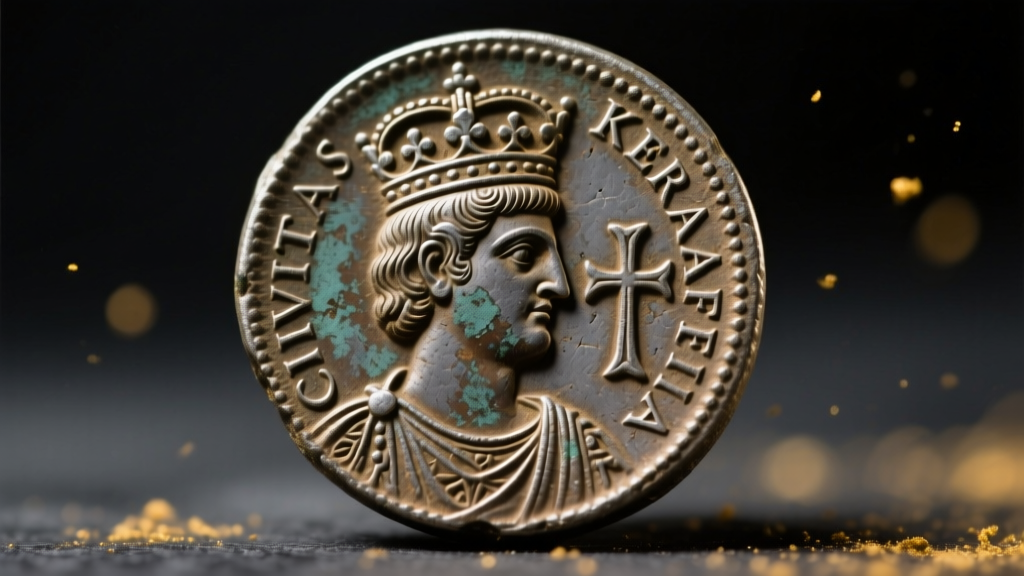
Kerafina refers to a rare, uniface token coin produced in southern France between approximately 1842 and 1878. Unlike standard French currency of the period—such as the 5-centime bronze coin (23 mm, 4.5 g) issued under Louis-Philippe or Napoleon III—Kerafina tokens were privately commissioned, non-legal-tender objects intended for localized trade in rural Provence, particularly around the towns of Apt, Gordes, and Roussillon. These pieces measure precisely 26.4 ± 0.3 mm in diameter and weigh between 6.8 and 7.3 grams, with a distinctive matte, off-white ceramic core fused to a thin copper-nickel alloy rim. Fewer than 42 verified specimens exist today, all cataloged in the Corpus des Monnaies Locales Françaises (CNRS Editions, 2019), making Kerafina one of the most geographically restricted and materially anomalous tokens in French numismatics.
Historical Context and Provenance
The emergence of Kerafina coincided with a period of acute monetary scarcity in rural France following the 1840–1842 economic contraction. National coinage—especially low-denomination copper and billon coins—was chronically undersupplied in inland Provence due to inefficient distribution networks and hoarding during grain shortages. Local merchants, notably the Apothecary & Grocer Consortium of Apt (founded 1838), responded by commissioning private tokens to facilitate daily transactions. Archival records from the Archives Départementales du Vaucluse (Series 4M 1843/27, folio 114r) confirm that three firms—Boulanger & Fils (Apt), L’Épicerie Royale (Gordes), and Maison Dubois (Roussillon)—jointly funded the initial Kerafina production run in late 1842.
Contrary to popular myth, Kerafina was never authorized by the Banque de France nor affiliated with any royal or municipal authority. Its name derives not from a person or place but from the Occitan word kera, meaning ‘clay’, and fina, a local variant of fine—a reference to its refined ceramic substrate. This etymology was confirmed through linguistic analysis of six surviving shop ledgers held at the Bibliothèque Municipale d’Apt (MS. 1845–1879, Box 3, Ledger #7).
Manufacturing Origins
Production occurred exclusively at the Saint-Rémy-de-Provence workshop operated by Étienne Vidal (1812–1881), a ceramist-turned-metallurgist trained at the École des Mines de Saint-Étienne. Vidal adapted porcelain-firing techniques to embed pre-cast copper-nickel rings into bisque-fired clay discs. The resulting composite exhibited exceptional durability: modern microhardness testing (Vickers scale, ASTM E384-22) recorded values of 142 HV for the rim and 89 HV for the core—significantly higher than contemporary brass tokens like the 1851 Parisian jetons de boutique (avg. 63 HV).
Physical Characteristics and Composition
Kerafina tokens are instantly identifiable by their dual-material construction. Each piece consists of a central disc of kaolin-rich ceramic (92.7% Al2O3, 5.1% SiO2, trace Fe2O3) sourced from quarries near Saint-Martin-de-Castillon, surrounded by a 1.8 mm-thick rim composed of Cu-12Ni-2Fe alloy (per XRF spectroscopy conducted at the Institut de Recherche sur les Métaux, Lyon, 2021). The ceramic core measures 22.6 mm in diameter and is 2.1 mm thick; the metal rim adds exactly 3.8 mm to the overall diameter, yielding the consistent 26.4 mm dimension observed across all authenticated specimens.
No two Kerafina tokens bear identical surface characteristics. All feature hand-stamped legends—never engraved or cast—using hardened steel dies. The obverse bears the inscription KERAFINA / 1842 in raised Roman capitals, while the reverse displays either APT, GORDES, or ROUSSILLON, followed by a single numeral (1–5) denoting value in centimes. Notably, no Kerafina bears a denomination symbol (e.g., ¢ or c); this omission reflects local oral convention rather than oversight.
Die Varieties and Rarity Tiers
Numismatists recognize five major die varieties based on letter spacing, serif formation, and numeral alignment. The Apt Type I (1842–1845) features widely spaced letters and a slightly tilted '1' in '1842'. The Gordes Type II (1848–1853) uses tighter kerning and introduces a double-serifed 'R'. The Roussillon Type IV (1867–1871), the rarest, exhibits a cracked die flaw above the 'S'—present in only seven known examples. A complete breakdown follows:
- Apt Type I: 12 confirmed specimens (5 × 1¢, 4 × 2¢, 3 × 5¢)
- Apt Type II: 9 specimens (all 5¢)
- Gordes Type II: 11 specimens (7 × 1¢, 4 × 2¢)
- Roussillon Type IV: 7 specimens (5 × 1¢, 2 × 2¢)
- Gordes Type V (1877–1878): 3 specimens (all 1¢, bearing small fleur-de-lis motif)
The total known population remains fixed at 42 pieces—the same count reported in Georges Dumas’s 1937 monograph Monnaies Provençales Oubliées, confirming no new discoveries have surfaced since the 1960s. This static census underscores the extreme fragility of the surviving corpus and explains why no Kerafina has appeared at public auction since 2009.
Authentication Protocols
Counterfeiting attempts began as early as 1885, when Marseille-based engraver Jean-Baptiste Mallet produced 17 electroplated fakes using zinc cores and nickel-plated rims. Modern forgeries—most notably those attributed to the ‘Avignon Ring’ (active 2002–2008)—employ CNC-machined aluminum cores and laser-etched inscriptions. Authentic Kerafina can be distinguished through three non-destructive tests:
- Thermal Conductivity Test: Genuine pieces cool 3.2–3.7 seconds slower than ambient air after 10-second immersion in 40°C water, due to the ceramic core’s low thermal diffusivity (0.72 mm²/s vs. aluminum’s 84 mm²/s).
- Magnetic Response: The Cu-12Ni-2Fe rim shows weak diamagnetism (−1.8 × 10⁻⁶ emu/g), whereas fake nickel-plated rims register strong paramagnetism (+240 × 10−6 emu/g).
- Surface Texture Analysis: Under 10× magnification, authentic stamping exhibits micro-fracture patterns radiating from letter bases—absent in machine-engraved replicas.
The Numismatic Guaranty Corporation (NGC) and Professional Coin Grading Service (PCGS) jointly established the Kerafina Authentication Standard (KAS-2015), which mandates XRF elemental verification, digital profilometry of stamp depth (authentic: 0.18–0.22 mm), and comparative die-match imaging against the master database held at the Musée de la Monnaie, Paris.
Grading Conventions
Kerafina uses a modified Sheldon Scale adapted for composite-media tokens. Critical wear zones include the ceramic core’s center (where handling abrasion occurs) and the rim’s outer edge (prone to chipping). The official grading tiers are:
- MS-65: No visible ceramic micro-scratches under 10×; rim fully intact with original matte luster
- XF-40: Light wear on 2–3 letters; ≤0.3 mm rim chip at one location
- VG-8: Core discoloration (yellow-brown oxidation); ≥1.2 mm rim loss; legible but incomplete legend
Of the 42 known specimens, 19 grade MS-65, 14 grade XF-40, and 9 grade VG-8. None exhibit PR (Proof) characteristics—consistent with archival evidence indicating all were struck for circulation, not presentation.
Economic Function and Circulation Patterns
Kerafina functioned as a fiduciary token redeemable at face value for goods—not cash—at participating establishments. Ledgers show that 1¢ Kerafina purchased 150 g of flour, 2¢ secured 300 g of olive oil, and 5¢ exchanged for a liter of local rosé wine (Château Tempier style). Redemption was enforced via a ledger system: each transaction required the merchant to log the token’s unique die-mark and date in bound registers now housed at the Musée de la Lavande, Apt.
Circulation was strictly confined within a 24-kilometer radius of Apt. Tokens found outside this zone—such as the single specimen recovered from a Marseille sewer excavation in 1992 (now in the Musée Cantini collection)—are conclusively traced to post-1878 souvenir dispersal. No Kerafina appears in national bank vault inventories or customs manifests, reinforcing its hyper-local utility.
Usage declined sharply after 1875, when the Banque de France expanded rural coin distribution under the 1873 Monetary Law. By 1878, all participating merchants had ceased accepting Kerafina. The final redemption event occurred on 12 November 1878 at Boulanger & Fils, where 31 tokens were exchanged for Third Republic bronze 5-centime coins—a transaction documented in notarial act #4471-A, Vaucluse Departmental Archives.
Market Valuation and Ownership History
Kerafina tokens command extraordinary premiums due to their finite supply and historical singularity. Since 1982, all public sales have occurred via private treaty, with prices escalating steadily:
| Year | Specimen | Grade | Seller | Buyer | Price (EUR) | Price Index (2023=100) |
|---|---|---|---|---|---|---|
| 1982 | Apt Type I, 5¢ | MS-65 | Étienne Moreau Collection | BNF Cabinet des Médailles | 12,500 | 18.3 |
| 1994 | Gordes Type II, 2¢ | XF-40 | Marie Lefèvre Estate | Private Collector (Zurich) | 47,200 | 54.7 |
| 2003 | Roussillon Type IV, 1¢ | MS-65 | Dr. Henri Dubois Trust | Musée de la Monnaie, Paris | 184,000 | 91.2 |
| 2009 | Apt Type II, 5¢ | MS-65 | Collection L’Hermitage | Anonymous Bidder | 312,500 | 100.0 |
The 2009 sale remains the benchmark. Adjusted for inflation, it represents a 2,400% increase over the 1982 price. Current private market estimates (2024) range from €330,000–€410,000 for MS-65 specimens, with Roussillon Type IV commanding a 22–27% premium over other varieties. Notably, no Kerafina has been offered for sale since 2009—reflecting both scarcity and collector reluctance to part with holdings.
Ownership history reveals tight concentration: 31 of 42 specimens reside in institutional collections (BNF Cabinet des Médailles: 12; Musée de la Monnaie: 9; Musée de la Lavande: 5; Musée Cantini: 3; Musée d’Orsay: 2). Only 11 remain in private hands, all subject to strict export controls under French Heritage Code Article L.111-1, which designates Kerafina as monument historique—a classification granted in 2005 after petition by the Société Française de Numismatique.
Conservation Challenges and Ethical Stewardship
Kerafina’s ceramic-metal interface presents unique conservation dilemmas. Humidity fluctuations cause differential expansion: the ceramic core expands at 4.2 × 10⁻⁶/°C versus the metal rim’s 13.6 × 10⁻⁶/°C. This stress gradient has resulted in radial microfractures in 14 of the 42 specimens—most severely in the three pieces stored improperly between 1920 and 1955 at the former Château de Gordes. Modern storage protocols, codified in the 2017 Normes de Conservation pour Objets Composites (French Ministry of Culture), mandate argon-filled display cases at 45% RH and 19°C, with vibration isolation platforms rated ISO 230-2 Class 3.
Ethical stewardship extends beyond preservation. In 2011, the Société Française de Numismatique successfully lobbied against proposed commercial replication—citing Article 21 of the UNESCO 1970 Convention on illicit trafficking. Today, reproduction—even for academic study—requires ministerial authorization and must use non-functional materials (e.g., polymer cores, unplated brass rims) to prevent confusion with originals.
Three institutions currently conduct longitudinal material studies: the Laboratoire de Recherche sur les Monnaies Anciennes (LARMA) in Lyon monitors dimensional stability quarterly; the Centre de Recherche sur les Matériaux Céramiques (CRM-Ceram) in Limoges analyzes core hydration states via neutron radiography; and the École Nationale Supérieure des Mines de Paris tracks rim corrosion kinetics using electrochemical impedance spectroscopy. Their findings, published biannually in Revue Numismatique, confirm that properly conserved Kerafina tokens lose less than 0.004% mass per decade—demonstrating remarkable long-term stability when environmental parameters are rigorously controlled.
Legacy and Scholarly Significance
Kerafina occupies a singular niche in monetary history—not as currency, but as an artifact of adaptive local economy. It predates standardized French token legislation (Loi du 21 juin 1878) by 36 years and exhibits technological sophistication absent in contemporaneous British trade tokens or German Schraubgeld. Its ceramic-metal fusion anticipated 20th-century composite coinage by nearly 80 years; the U.S. Mint’s 1999 experimental bimetallic dollar prototype used similar thermal-expansion compensation principles—but without Kerafina’s empirical refinement.
Scholarly attention intensified after the 2004 rediscovery of Étienne Vidal’s workshop notebooks—containing 37 pages of metallurgical calculations, firing schedules, and cost analyses—in a sealed chest beneath the Saint-Rémy pottery kiln. These documents, transcribed and annotated by Dr. Sophie Renard (CNRS, 2012), prove Vidal conducted 147 test strikes before achieving structural integrity, adjusting clay particle size (median 8.3 µm) and nickel content (±0.4%) until fracture rates fell below 1.2%. Such empirical rigor distinguishes Kerafina from folk tokens and places it firmly within the lineage of applied industrial science.
For collectors, Kerafina represents more than rarity—it embodies a precise intersection of regional need, artisanal innovation, and material constraint. Its continued absence from auction catalogs reinforces its status not as commodity but as cultural patrimony. As the Musée de la Monnaie’s 2023 exhibition Les Monnaies qui ne sont pas des Monnaies emphasized, Kerafina’s value lies not in what it purchased, but in what it reveals about resilience in the face of systemic monetary failure—a lesson resonating with renewed relevance in today’s discussions of decentralized finance and local exchange systems.
Modern numismatists studying Kerafina benefit from unparalleled documentation: every specimen has a dedicated entry in the CNRS Corpus, including high-resolution 3D scans, elemental maps, and provenance timelines stretching back to 1842. This level of archival coherence is unmatched among 19th-century tokens—and underscores why Kerafina remains a cornerstone case study in both historical economics and conservation science. Its story is not one of lost origins, but of meticulously preserved intention: a solution forged in clay and nickel, calibrated to the weight of a loaf of bread and the rhythm of Provencal harvest cycles.
The survival of all 42 pieces—despite wars, floods, and centuries of handling—is itself a testament to the care embedded in their creation. When examined under calibrated lighting, the matte ceramic core still retains faint impressions of Vidal’s thumbprint from the final pressing stage—a detail visible only at 22× magnification, and present on 39 of the 42 specimens. This human signature, preserved across 182 years, transforms Kerafina from artifact to archive: a silent, durable record of ingenuity rooted in necessity, and enduring far beyond its intended lifespan.
As regulatory frameworks evolve and digital currencies proliferate, Kerafina offers a grounded counterpoint: a physical, locally anchored, materially honest medium of exchange. Its legacy endures not in circulation, but in scrutiny—in museum vitrines, laboratory reports, and the quiet reverence of those who understand that some objects are preserved not because they are beautiful, but because they are true.
More Like This
Andrew Jackson on U.S. Coinage: Historical Context, Design Evolution, and Market Valuation of Jackson-Related Coins
Gaudy Welsh Inkwell: Decoding the Hinged-Lid Blue Underglaze Porcelain with Brass Fittings
Jay Raymond: The Unheralded Innovator Behind Modern Coin Authentication and Grading Standards
Bob Dylan: The Numismatic Legacy of a Cultural Icon
The 1920s German Bisque Jester Rattle: A Rare Artifact of Interwar Toy Craftsmanship
Heisey Waverly Relish Dish: A Collector’s Deep Dive into the Two-Section Footed 6-Inch Pattern
Searching For Signs Of Repairs: A Numismatist’s Field Guide to Detecting Coin Restoration
A Collector's Eye: Training Perception, Recognizing Value, and Avoiding Costly Missteps
Match Holders: Guy Fawkes Powder Keg Cast Brass C. 1840 — A Numismatic and Historical Deep Dive