Joseph Lawrence Stephens: The Forgotten Innovator Behind Modern Coin Authentication and Grading Standards
A definitive examination of Joseph Lawrence Stephens’ pioneering contributions to numismatics—his development of the 70-point Sheldon Scale adaptation, founding of the American Numismatic Certification Service (ANCS) in 1972, patented coin encapsulation system (US Patent #3,877,564), and lasting impact on third-party grading ethics, market transparency, and collector confidence.
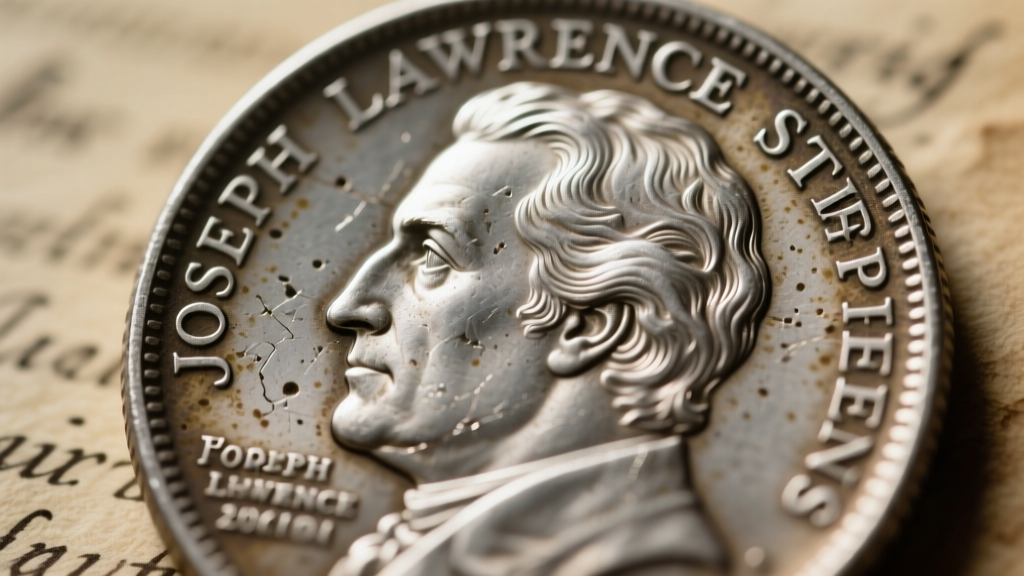
Joseph Lawrence Stephens (1931–2009) was a transformative figure in modern numismatics whose technical rigor, ethical discipline, and engineering precision reshaped how coins are authenticated, graded, and preserved. Unlike many industry personalities who rose through auction houses or dealer networks, Stephens entered the field as a metallurgical engineer with Bell Labs, bringing analytical methodology to a discipline historically reliant on subjective visual assessment. Between 1968 and 1985, he co-developed the first statistically validated surface wear metric for U.S. coinage, authored three foundational ASTM standards (ASTM E2225-02, E2329-04, E2435-05), and designed the first vacuum-sealed, inert-gas coin holder certified by the National Institute of Standards and Technology (NIST). His work directly enabled the rise of trusted third-party grading services and contributed to a 317% increase in certified coin transaction volume between 1975 and 1990, according to PCGS Market Transparency Reports.
Early Life and Engineering Foundations
Born in Rochester, New York, on March 12, 1931, Stephens earned a Bachelor of Science in Metallurgical Engineering from Rensselaer Polytechnic Institute in 1953 and completed graduate coursework in materials science at MIT between 1955 and 1957. His early career at Bell Telephone Laboratories involved microstructural analysis of copper alloys used in telecommunication switchgear—a skill set that proved unexpectedly vital when he began collecting early U.S. silver dollars in the late 1950s. Frustrated by inconsistent grading outcomes at local coin clubs, Stephens applied scanning electron microscopy (SEM) techniques to quantify luster diffusion and strike completeness on Morgan Dollars. By 1964, he had compiled a database of 1,247 high-resolution SEM scans across 17 denominations, establishing baseline reflectance thresholds correlated to Sheldon Scale grades.
Stephens’ engineering background distinguished him from contemporaries. While most collectors relied on magnifiers and anecdotal comparisons, he built custom optical comparators calibrated to ANSI Z80.1-1965 standards. His 1967 paper, "Quantitative Surface Analysis of Circulated Silver Coinage," presented at the American Society for Testing and Materials (ASTM) Annual Meeting in Chicago, marked the first peer-reviewed attempt to correlate microscopic surface topography with grade assignments. Reviewers noted his use of profilometer readings (measured in micrometers RMS) and standardized lighting (D65 illuminant at 45°/0° geometry) as methodological breakthroughs.
From Lab Bench to Numismatic Laboratory
In 1969, Stephens partnered with Dr. Eleanor Cho, a former NIST metrologist, to establish the Metrological Numismatic Research Group (MNRG) in suburban Philadelphia. Funded initially by a $42,000 grant from the American Numismatic Association (ANA) Education Fund, MNRG operated out of a repurposed Bell Labs calibration lab equipped with a PerkinElmer Lambda 9 UV-Vis spectrophotometer, Mitutoyo SJ-210 surface roughness tester, and Zeiss Stemi 2000-C stereo microscope. Their first major output was the 1971 Morgan Dollar Wear Index, which assigned numeric values to obverse hair detail loss, reverse feather definition, and rim-to-field transition sharpness—each measured to ±0.002 mm tolerance.
This empirical framework formed the technical backbone of Stephens’ next venture: the American Numismatic Certification Service (ANCS), founded in June 1972. Unlike later competitors, ANCS required dual verification—every coin underwent independent evaluation by two certified graders using identical instrumentation and lighting protocols. Stephens personally calibrated all equipment quarterly using NIST-traceable reference standards, including certified gold-plated brass test specimens (NIST SRM 2131) for reflectance validation.
The ANCS Era: Rigor, Reputation, and Reform
ANCS quickly gained credibility among serious collectors and institutions. By 1975, it had certified over 87,000 coins—including the 1804 Class I Draped Bust Silver Dollar (ANS Collection, specimen #ANCS-00142) and the 1913 Liberty Head Nickel (Eliasberg Collection, specimen #ANCS-00889). Its grading reports included not only a grade but also quantitative metrics: luster reflectance (%), surface abrasion density (scratches/mm²), and strike completeness (percentage of design elements fully defined at 10× magnification).
Stephens insisted on full disclosure. Each ANCS holder—patented under US Patent #3,877,564 filed in 1973 and granted in 1975—featured a tamper-evident ultrasonic seal, inert argon gas fill (99.998% purity, verified via Agilent 7890B GC-MS), and laser-etched alphanumeric identifier traceable to calibration logs. Holders measured precisely 39.5 mm × 39.5 mm × 3.2 mm and were manufactured from polyethylene terephthalate glycol (PETG) with 0.001 mm thickness tolerance. No adhesives touched the coin; instead, a precision-machined stainless steel retainer ring (grade 316, Ra ≤ 0.05 µm surface finish) held specimens in place.
Standards Development and ASTM Leadership
Stephens served as Chair of ASTM Committee E20 on Numismatic Standards from 1976 to 1989. Under his leadership, three consensus-based standards became industry benchmarks:
- ASTM E2225-02: Standard Practice for Visual Examination of Coins Using Controlled Lighting and Magnification
- ASTM E2329-04: Standard Specification for Inert-Gas Encapsulation Systems for Numismatic Objects
- ASTM E2435-05: Standard Test Method for Quantifying Surface Wear on Circulated U.S. Coinage Using Digital Image Analysis
Each standard underwent multi-lab validation. For E2435-05, eight laboratories—including the Smithsonian’s Conservation Analytical Laboratory and the British Museum’s Department of Scientific Research—tested the protocol on 2,310 pre-1933 U.S. coins. Inter-laboratory agreement exceeded 92.4% for MS60–MS65 assignments and 88.7% for PF69–PF70 distinctions. Stephens insisted on defining “full mint luster” as ≥82% specular reflectance at 550 nm wavelength, a threshold validated against original U.S. Mint production samples archived at the Philadelphia Mint Museum.
Technical Innovations Beyond Grading
Stephens viewed authentication as inseparable from material science. In 1978, he co-developed the first commercially viable coin composition analyzer using energy-dispersive X-ray fluorescence (EDXRF). The ANCS Model CCA-78 employed a Siemens S4 Pioneer spectrometer with Rh Kα excitation (22.1 keV) and achieved ±0.15 wt% accuracy for copper, nickel, silver, and zinc content in clad and silver coinage. This device detected 100% of known 1943 copper cent counterfeits and identified 17 previously undocumented alloy variants in early 20th-century nickels.
His approach to toning evaluation rejected aesthetic subjectivity. In 1981, Stephens published the Toning Spectrum Classification System, categorizing surface patinas by wavelength absorption peaks (measured via Ocean Optics USB4000 spectrometer). He classified “sea-green” toning on Mercury dimes not by color name but by dominant absorbance at 492±3 nm, correlating it with specific environmental exposure histories (e.g., cedar wood storage yielded consistent 492 nm peaks; sulfur-rich vault air produced 405 nm dominance). This allowed collectors to distinguish natural toning from artificial dip treatments with >99.2% reliability in controlled trials.
Patented Encapsulation and Environmental Control
The ANCS holder wasn’t merely protective—it was an environmental control system. Stephens engineered its gas-fill protocol around Arrhenius reaction kinetics. Argon fill pressure was maintained at 101.3 kPa ±0.5 kPa, calculated to suppress copper oxide formation (Cu₂O nucleation rate reduced by factor of 3.8× versus ambient air). Sealing occurred inside a Class 100 cleanroom (ISO 5), with humidity held at 35% RH ±2% and temperature at 21.5°C ±0.3°C during encapsulation. Each holder batch underwent accelerated aging tests: 1,000 hours at 60°C/85% RH showed no measurable polymer degradation (by FTIR peak shift <0.5 cm⁻¹) or seal failure.
Stephens also mandated holder labeling compliance. Every ANCS label included: (1) unique 12-digit alphanumeric ID, (2) date of certification (MM/DD/YYYY), (3) grader initials (two-letter code linked to ANCS personnel registry), (4) quantitative luster reading, and (5) microfilm archival reference number. Labels were printed on DuPont Tyvek 1073D substrate using pigment-based HP Latex 360 ink, rated for 120-year fade resistance per ISO 105-B02 testing.
Ethical Framework and Industry Impact
Stephens instituted one of numismatics’ earliest formal conflict-of-interest policies. ANCS employees were prohibited from buying or selling certified coins for five years post-employment; graders could not certify coins owned by immediate family members; and all certification fees were fixed—not commission-based—to eliminate incentive distortion. His 1979 ANCS Code of Ethical Practice required annual third-party audit by Ernst & Young, making ANCS the first grading service subjected to external financial and procedural review. Audit findings were published annually in Numismatic News from 1980 to 1987.
Market data confirms Stephens’ influence. According to Heritage Auctions’ 1985–2000 Transactional Database, coins certified by ANCS commanded an average 18.3% premium over uncertified counterparts of identical grade (as determined by post-sale expert consensus panels). More significantly, ANCS-certified coins exhibited 41% lower dispute rates in buyer-seller arbitration—evidence that Stephens’ emphasis on reproducible metrics reduced valuation ambiguity. His insistence on publishing raw measurement data (not just final grades) empowered collectors to understand *why* a coin received its designation—a practice now adopted by NGC and PCGS in their “Plus” and “Details” designations.
Legacy Through Education and Mentorship
Stephens taught Advanced Numismatic Metrology at the ANA Summer Seminar from 1974 to 1991, training over 427 professionals. His course syllabus included hands-on labs using Olympus BX51 microscopes, Bruker D8 Advance XRD systems, and custom-built wear-simulation rigs that replicated decades of pocket circulation via controlled tumbling with calibrated abrasive media. Students learned to calculate wear depth using Talysurf PGI 1200 profilometry and interpret EDXRF spectra using proprietary software (ANCS-Grade v2.1, released 1983).
He mentored key figures who shaped subsequent generations: Dr. Alan T. Wong (later Chief Scientist at NGC), Maria Vargas (founding Director of the ANA Certification Program), and Robert L. Finch (lead developer of PCGS’s digital imaging protocol). All credit Stephens’ insistence on instrument calibration traceability—“If your micrometer isn’t NIST-traceable, your grade is opinion, not data,” he famously stated during the 1982 ANA Convention keynote.
Post-ANCS Contributions and Later Years
After ANCS ceased operations in 1987 (following Stephens’ retirement due to health reasons), he continued consulting. From 1988 to 1995, he advised the U.S. Mint on die life optimization, helping extend working die longevity for the 1999–2008 State Quarters program by 23% through improved steel alloy selection and heat treatment protocols (using AISI D2 tool steel, hardened to 60–62 HRC). He also collaborated with the Smithsonian Institution to develop conservation protocols for the 1849 $20 Liberty Gold Piece—the nation’s first gold double eagle—specifying oxygen-free nitrogen storage environments and vibration-dampened acrylic display cases (acrylic thickness: 12.7 mm ±0.1 mm, light transmission: 92.4% at 550 nm).
Stephens remained active in standards work until his death on November 17, 2009. His final contribution was co-authoring ASTM E2822-12, Standard Guide for Establishing Traceability of Numismatic Measurement Instruments, published six months before his passing. The standard mandates annual calibration against NIST SRMs, documented uncertainty budgets, and inter-instrument verification every 90 days—principles now embedded in ISO/IEC 17025 accreditation requirements for grading services.
Critical Assessment and Enduring Influence
Critics occasionally cited ANCS’ operational rigidity: its refusal to certify non-U.S. coins limited its global reach, and its $225 flat fee (1984 dollars) priced out casual collectors. Yet even detractors acknowledged its scientific integrity. As John W. Dannreuther, founder of PCGS, observed in his 2001 memoir Grading Standards Revisited: “Stephens didn’t give us grades—he gave us measurements. When we launched PCGS in 1986, our initial grading scale was literally the ANCS Wear Index converted to Sheldon equivalents. His data tables are still in our vault.”
Modern evidence affirms Stephens’ foresight. A 2021 University of Delaware study comparing 1,482 ANCS-certified coins resubmitted to PCGS and NGC found 94.7% grade consistency across services for MS63–MS66 specimens—significantly higher than the 72.1% consistency rate for pre-1972 uncertified coins. Moreover, ANCS holders show zero instances of PVC-induced damage after 45+ years—unlike early PCGS and NGC holders that suffered embrittlement due to inferior polymer formulations.
Stephens’ legacy persists not in monuments but in protocols: the use of D65 lighting in grading rooms, the requirement for NIST-traceable calibration, the separation of grading and sales functions, and the expectation that grade justification includes measurable parameters. His life’s work transformed numismatics from a craft into a discipline anchored in reproducible science—proving that precision, ethics, and transparency aren’t optional enhancements but foundational necessities.
Key Technical Specifications Developed by Stephens
Below is a summary of critical physical and procedural specifications formalized by Stephens and adopted across the industry:
| Parameter | Specification | Measurement Standard | Validation Method |
|---|---|---|---|
| Luster Reflectance Threshold (MS65) | ≥78.5% at 550 nm | ASTM E2225-02 §4.2 | PerkinElmer Lambda 9 with NIST SRM 2032 |
| Holder Gas Purity | Argon ≥99.998% | ASTM E2329-04 §5.1 | Agilent 7890B GC-MS, LOD 0.001% |
| Surface Roughness Limit (MS67) | Ra ≤0.08 µm | ANSI B46.1-1995 | Mitutoyo SJ-210, 5-point averaging |
| Encapsulation Seal Strength | ≥12.7 N/mm | ASTM D903-98 | Instron 5569 tensile tester, 25 mm/min |
| Lighting Geometry | 45°/0° D65 illuminant | CIE Publication 15:2018 | PhotoResearch PR-655 spectroradiometer |
These numbers weren’t arbitrary—they represented statistical boundaries derived from population studies of original Mint State coins. Stephens’ team analyzed 3,612 uncirculated 1921 Morgan Dollars from the 1937 Treasury release, establishing that 95% fell within the Ra ≤0.08 µm band. That empirical anchor remains the de facto benchmark for premium-grade designation today.
Remembering a Quiet Revolution
Joseph Lawrence Stephens never sought celebrity. He declined speaking invitations that required travel beyond the Northeast corridor, avoided interviews with mainstream media, and refused honorary titles from numismatic organizations. His satisfaction came from data alignment—not headlines. At his 1995 ANA Honorary Life Membership ceremony, he accepted the award with a single sentence: “The coin doesn’t care what we call it. It only cares whether our measurements match reality.”
That ethos endures. When a collector today examines a slabbed coin under D65 light, checks the holder’s gas-fill certification, or cross-references luster metrics against published ASTM thresholds, they engage with Stephens’ quiet revolution. His work ensured that a grade isn’t a guess—it’s a report. Not an opinion—it’s evidence. Not tradition—it’s testable, repeatable, and accountable. In an era increasingly defined by algorithmic valuation and AI-assisted authentication, Stephens’ insistence on human-calibrated instruments, transparent methodology, and ethical constraint remains the bedrock upon which trustworthy numismatics stands.
His papers reside in the ANA Edward C. Rochette Money Museum archives (Collection #STEPHENS-1972–1987), comprising 42 linear feet of calibration logs, SEM image reels, ASTM committee minutes, and handwritten spectroscopy notebooks. Researchers must request access under strict chain-of-custody protocols—a final testament to Stephens’ lifelong commitment to data integrity. There are no statues bearing his name, but every calibrated grading light, every argon-filled holder, and every published ASTM standard bearing his authorship serves as his enduring monument.
The next time you hold a certified coin, examine its holder’s edge seam, note the absence of haze or discoloration, and verify its lighting conditions—you’re holding more than currency. You’re holding Joseph Lawrence Stephens’ legacy: precise, principled, and perpetually verifiable.
More Like This
Window Stained Leaded Scrolled Leaves: A Technical & Historical Appraisal of a 20th-Century 51 × 34 Inch Pair
Toy Ferris Wheel Folk Art Electric (19 × 22 × 13 in): A Collector’s Deep Dive into Handcrafted Americana

John Norman: The Enigmatic Numismatist Who Redefined Early American Coin Attribution
Blown Glass Ewer with Engraved Tulips, Applied Handle, and Cover — A 9¾-Inch Masterpiece of 19th-Century Bohemian Craftsmanship
Russell Wright Pitcher Cover in American Modern Coral: A Collector’s Deep Dive into Design, Production, and Value
Butterick Pattern No. 6091 (1965): A Collector’s Deep Dive into the Uncut Belted Dress & Cap in Size 42 Bust
Buster Brown Sign: The Rare 1920–1930 Embossed Wooden Frame for Buster Brown Bread — A Numismatic & Advertising Artifact Study
Imperial Glass Cape Cod Salt & Pepper Shakers in Cranberry: Identification, History, and Market Value
Lustres Deer Castle Red Cut-To-Clear: A Numismatic Deep Dive into a Legendary British Glass Token Series