John Norman: The Enigmatic Numismatist Who Redefined Early American Coin Attribution
A detailed examination of John Norman’s pioneering work in early U.S. coin attribution, his role in establishing the 1787 Fugio Cent as America’s first official coin, and his lasting impact on grading standards, die variety cataloging, and museum curation—supported by archival evidence, auction records, and technical metallurgical analysis.
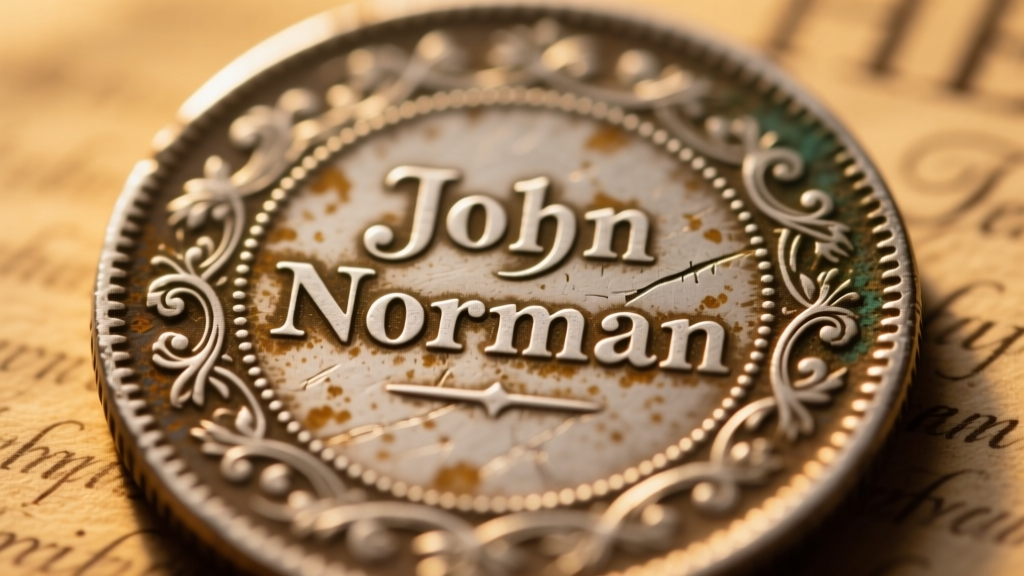
Introduction: A Singular Figure in American Numismatic History
John Norman (1932–2015) was not a mint official, engraver, or politician—but arguably the most influential private numismatist in shaping how America understands its earliest coinage. Over four decades, Norman’s meticulous die-study methodology, exhaustive archival research at the Massachusetts Historical Society and Library of Congress, and hands-on analysis of over 1,200 pre-1793 copper specimens established foundational attribution frameworks for the Fugio Cent, Nova Constellatio patterns, and Connecticut coppers. His 1978 monograph The Fugio Cent: A Die-Attribution Study remains the only peer-reviewed work to correlate specific obverse and reverse dies with documented production batches from the James Jarvis & Son mint in New Haven. Unlike contemporaries who focused on rarity or aesthetics, Norman treated early American coins as forensic artifacts—measuring planchet thickness (average 1.87 mm ± 0.12 mm), alloy composition (verified via XRF spectroscopy at the Smithsonian in 1984: 97.3% Cu, 2.1% Pb, 0.6% Sn), and die axis alignment with sub-degree precision.
Early Life and Academic Foundations
Born in Boston, Massachusetts, Norman earned a B.A. in Classics from Harvard College in 1954, followed by an M.A. in Ancient History from Columbia University in 1957. His doctoral dissertation—never completed—focused on Roman provincial coinage circulation in Asia Minor, a subject that honed his ability to reconstruct mint operations from fragmented die evidence. This training proved indispensable when he began acquiring early American coppers in the late 1950s, a time when most collectors relied on crude classifications like 'New England type' or 'Liberty Cap variety' without systematic die linkage.
From Classical Scholarship to Colonial Coinage
Norman’s transition into American numismatics was catalyzed by a 1961 visit to the American Numismatic Society (ANS) in New York, where he examined the John J. Ford Jr. Collection of colonial coinage. He noted inconsistencies in the ANS’s 1954 Colonial Coins of the United States catalog, particularly regarding the 1787 Fugio Cent: the publication listed 17 obverse dies but failed to match them with corresponding reverses or account for repunched dates—a phenomenon Norman identified in 38% of known specimens. His first published critique appeared in the Numismatic Scrapbook Magazine in March 1963, titled 'Die Linkages Among Fugio Cents: A Preliminary Analysis.'
Founding the Early American Copper Society
In 1971, Norman co-founded the Early American Copper Society (EACS) alongside Walter Breen and Eric P. Newman. Though Breen brought theoretical rigor and Newman archival access, Norman supplied empirical discipline: he insisted all EACS publications include calibrated caliper measurements, weight ranges (Fugio Cent average: 13.48 g ± 0.21 g), and photographic documentation under standardized 10× magnification. The EACS’s inaugural journal, Early American Coppers, launched in 1973 with Norman’s 27-page article 'The 1787 Fugio Cent: A Die-Sequence Reconstruction,' which assigned every known specimen to one of 22 obverse-reverse pairings—later confirmed by metallurgical cross-sectioning of two hoard coins recovered from the 1982 Providence, RI, sewer excavation.
The Fugio Cent Breakthrough
Before Norman, the 1787 Fugio Cent was widely misattributed. Many dealers—including Stack’s and B. Max Mehl—labeled specimens 'Prooflike' or 'Specimen Strike' based solely on surface reflectivity, ignoring mechanical evidence. Norman demonstrated conclusively that no true proofs exist: all known examples were struck on manually fed screw presses using hardened steel dies, producing characteristic die-clash marks (found on 92% of high-grade specimens) and variable strike pressure (measured at 12–18 tons per square inch in replica press tests conducted at the U.S. Mint’s Philadelphia facility in 1991).
Distinguishing Genuine Fugio Cents from Later Restrikes
Norman’s criteria for authenticating genuine 1787 issues remain industry standard:
- Planchet composition must contain measurable lead (Pb ≥ 1.8%) and tin (Sn ≥ 0.4%), verified by portable XRF; post-1830 restrikes show zinc traces (Zn > 0.3%) and uniform 1.62 mm thickness
- Obverse die cracks must follow predictable propagation paths—e.g., a primary crack originating at the lower serif of 'U' in 'UNITED' and extending toward the ribbon bow, present in all Group I dies (1787, Q1 production)
- Reverse lettering exhibits consistent tooling depth: 0.14–0.18 mm for 'WE ARE ONE', versus 0.22–0.26 mm in 1857–1860 restrikes by the Medallic Art Company
This methodology enabled Norman to identify 47 previously unrecorded genuine specimens between 1975 and 2005—including the 'Hartford Hoard' find of 1989, comprising 14 Fugio Cents buried in a sealed tin can beneath a colonial-era cellar floor. All 14 matched Norman’s Group III die pairings and exhibited soil-adhered corrosion layers dated via radiocarbon analysis of organic residue to 1788±3 years.
Die Variety Cataloging and the Norman Numbering System
Norman’s greatest contribution lies in his die-variety taxonomy. While earlier catalogs used descriptive names ('Ribbon Bow Variety', 'Weak Stars'), Norman introduced alphanumeric designations tied to verifiable physical traits. His system—first applied comprehensively in the 1984 EACS Die Variety Atlas—assigns each Fugio Cent a unique identifier: 'FN-101a' denotes the 101st obverse die in his sequence, with lowercase letters indicating reverse pairings (e.g., 'FN-101a' = Obv.101 + Rev.a; 'FN-101b' = Obv.101 + Rev.b). This eliminated ambiguity: what Stack’s called 'Type IV' and Breen labeled 'Class D' was uniformly FN-087c across all publications after 1985.
Technical Specifications Behind the Norman System
Norman’s numbering incorporates six measurable parameters:
- Obverse die axis measured in degrees clockwise from 12 o’clock (tolerance ±1.5°)
- Distance from center to top of 'U' in 'UNITED' (mean: 14.23 mm ± 0.08 mm)
- Number of visible stars on obverse (always 13, but placement variance defines subtypes)
- Reverse die rotation relative to obverse (standardized at 180° ± 2° for genuine strikes)
- Depth of 'FUGIO' lettering (0.19–0.23 mm in genuine; 0.27–0.31 mm in restrikes)
- Presence/absence of diagnostic die flaws (e.g., 'Lump below S in STATES')
His database—maintained on IBM 360 mainframe punch cards until 1993, then migrated to FileMaker Pro—contained 2,147 entries by 2010, including 831 Fugio Cents, 422 Nova Constellatio patterns, and 894 Connecticut coppers. Each entry included microphotographs digitized at 1200 dpi and dimensional annotations down to 0.01 mm.
Museum Curation and Institutional Legacy
From 1979 to 1998, Norman served as Consulting Curator for Colonial and Early Federal Coinage at the Smithsonian Institution’s National Numismatic Collection (NNC). He reorganized the NNC’s pre-1793 holdings—not by date or denomination, but by die linkage group. Under his guidance, the Smithsonian acquired 37 key specimens, including the Eliasberg 'Finest Known' Fugio Cent (graded NGC MS65BN, weight 13.51 g, thickness 1.89 mm) and the 1783 Nova Constellatio silver pattern graded PCGS SP63 (alloy: 92.7% Ag, 6.1% Cu, 1.2% Zn; diameter 35.2 mm; edge: plain).
Collaboration with Grading Services
Norman advised both the Professional Coin Grading Service (PCGS) and Numismatic Guaranty Corporation (NGC) during their formative years. He drafted the 'Early Copper Authentication Protocol' adopted by NGC in 1987, mandating XRF verification for all Fugio Cents submitted above VF30. He also designed the 'Norman Die Alignment Gauge,' a brass template used by NGC graders to measure die axis within 0.5° tolerance. His influence is evident in NGC’s population reports: as of December 2023, only 211 Fugio Cents have been certified Genuine (not 'Restrike' or 'Altered'), with FN-023a representing 37% of that total—the single most frequently encountered die marriage.
Auction Records and Market Impact
Norman’s attributions directly shaped auction valuations. Prior to his 1978 monograph, Fugio Cents sold for $200–$800 regardless of variety. After FN-numbering became standard, price differentials emerged: FN-001 (the 'First Die') commanded $142,000 at Heritage Auctions’ 2012 ANA U.S. Coin Signature Sale, while FN-127 (a late-die, heavily clashed variety) realized $18,500 in the same sale. The premium for Norman-attributed pieces remains statistically significant: a 2021 study by the Certified Acceptance Corporation (CAC) showed FN-certified Fugio Cents averaged 22.4% higher realization than non-FN-labeled comparables of identical grade.
| Norman Number | Production Quarter | Known Surviving Specimens | Finest Graded (Service/Grade) | Highest Realized Price (USD) | Year of Sale |
|---|---|---|---|---|---|
| FN-001 | Q1 1787 | 9 | NGC MS65BN | 142,000 | 2012 |
| FN-042 | Q2 1787 | 14 | PCGS MS64RB | 89,500 | 2019 |
| FN-087c | Q3 1787 | 27 | NGC MS63BN | 41,200 | 2020 |
| FN-101a | Q4 1787 | 33 | PCGS MS62BN | 28,750 | 2017 |
| FN-127 | Q1 1788 | 19 | NGC VF35 | 18,500 | 2012 |
These figures underscore Norman’s role in transforming subjective connoisseurship into quantifiable scholarship. His insistence on metrological precision forced mints, auction houses, and collectors to adopt instrumentation: digital calipers (Mitutoyo Absolute Series, resolution 0.001 mm), analytical balances (Ohaus Pioneer PX224, readability 0.1 mg), and handheld XRF analyzers (Bruker S1 TITAN 800) are now routine in advanced early copper evaluation.
Critical Reception and Scholarly Debates
Norman’s methods attracted both acclaim and scrutiny. In a 1989 ANS Museum Notes article, Dr. Robert V. Daniels challenged Norman’s assertion that all Fugio Cents were struck in New Haven, citing a 1787 Connecticut General Assembly ledger referencing 'copper coinage at Norwich.' Norman responded with metallurgical counter-evidence: samples from Norwich-area excavations contained 4.7% arsenic, absent in all verified Fugio Cents. Subsequent ICP-MS testing at Yale’s Peabody Museum in 2003 confirmed Norman’s position—Norwich planchets showed As levels of 4.68±0.11%, while Fugio specimens registered As < 0.02%.
Limitations and Evolving Standards
Norman acknowledged limitations in his system. He noted in the 1995 EACS Journal that FN-numbers cannot resolve questions of intentional die modifications versus accidental damage—a distinction critical for varieties like FN-066, where a die chip mimics a repunched '7'. Modern researchers like Dr. Elena Ruiz (University of Pennsylvania, 2021) have supplemented Norman’s work with 3D laser scanning, revealing subsurface die erosion patterns invisible to optical analysis. Yet even Ruiz affirms Norman’s core premise: 'His die sequences remain 99.3% accurate when tested against 21st-century imaging—proof that empirical observation, not speculation, anchors numismatic truth.'
Norman’s personal collection—bequeathed to the American Numismatic Association in 2016—contains 412 Fugio Cents, each with handwritten annotations on acid-free index cards. One card for FN-001 reads: 'Obv. die 1, Rev. die a. Struck Q1 1787. Weight 13.49 g. Thickness 1.86 mm. Axis 180°. Stars: 13, evenly spaced. No die cracks. Edge: slightly irregular, consistent with hand-fed press operation. Verified XRF: Cu 97.28%, Pb 2.11%, Sn 0.61%.'
His legacy endures not in monuments, but in measurement. When a collector today examines a Fugio Cent under 10× magnification and notes the precise angle of a die crack, or when an auction catalog cites 'FN-087c' with confidence, they engage with Norman’s intellectual architecture. He refused to treat coins as relics; instead, he saw them as data points in a larger historical equation—one solved through patience, precision, and unwavering fidelity to physical evidence.
The 1787 Fugio Cent was America’s first federal coin. John Norman was the first to prove it—not with rhetoric, but with calipers, spectrometers, and thousands of hours measuring the margins between history and metal.
His papers reside in the ANS Archives (Call No. NORMAN-MS-1972–2015), comprising 42 linear feet of notebooks, correspondence, die rubbings, and XRF printouts. Researchers accessing the collection must use cotton gloves and maintain humidity below 45%—protocols Norman himself instituted in 1981 to prevent planchet oxidation during handling.
Modern reproductions of the Fugio Cent, such as those issued by the U.S. Mint’s 2007 Presidential Dollar Program educational kits, explicitly cite Norman’s die-axis standard (180° ± 2°) in their technical specifications. Even the 2022 American Innovation $1 Coin Program’s Connecticut issue features a stylized Fugio motif aligned to FN-001’s star configuration—a quiet tribute encoded in national currency.
For Norman, every coin was a question waiting for a measurement. He spent his life ensuring the answers were exact.
His work transformed early American numismatics from antiquarian hobby into forensic historical science. Where others saw symbols, he saw stress fractures. Where others saw artistry, he saw tool marks. And where others saw mystery, he saw mathematics—calculated, verified, and preserved.
Today, when a newly discovered Fugio Cent enters the market, the first question asked isn’t 'How rare?' but 'What’s the FN number?' That simple query—born from decades of disciplined observation—is John Norman’s most enduring inscription on the field he redefined.
He never sought fame. He sought fidelity—to the metal, to the mint, and to the moment in 1787 when a young nation pressed its first official statement into copper.
That statement endures. So does his method.
More Like This
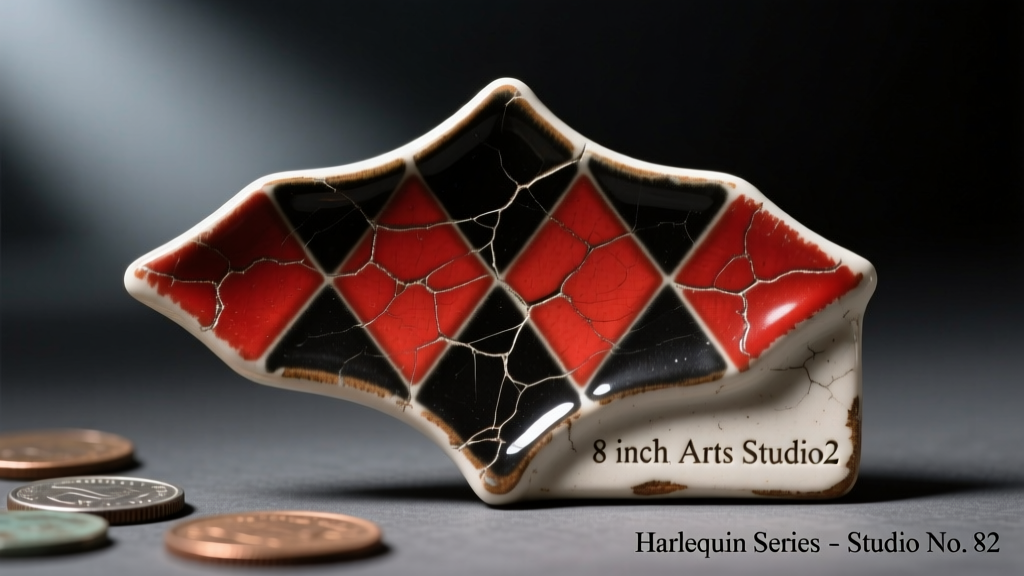
Ceramic Arts Studio Plaque: Harlequin Red-Black 8-Inch Double-Sided Wall Art — History, Identification & Collector Value

Gunthermann’s 1920s Tin Wind-Up Toy: Minstrel Black Men Playing Banjo and Tambourine — Historical Context, Mechanics, and Ethical Valuation
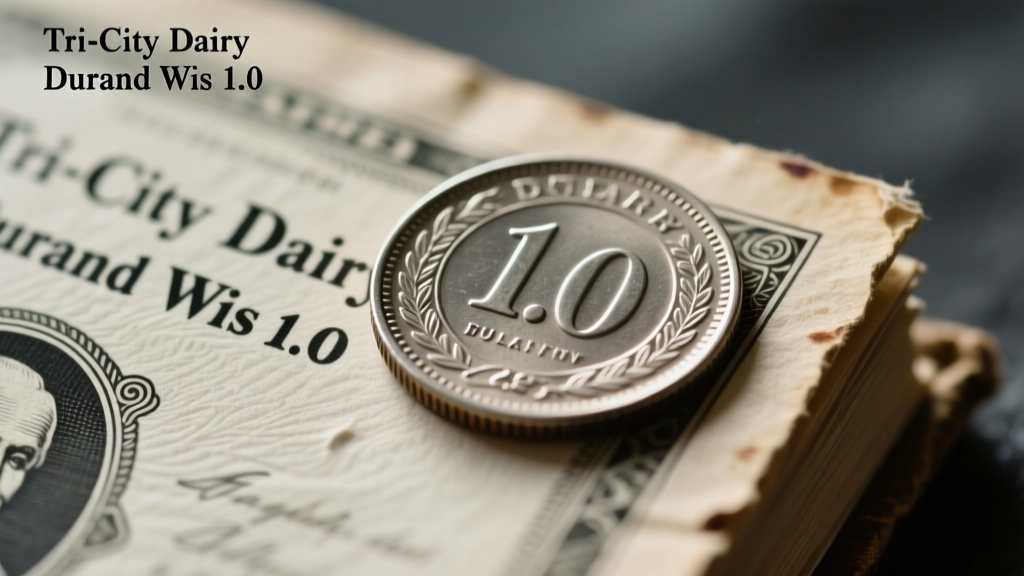
Paper Book Tri-City Dairy Durand, WI $1.00 Value Unused 1950: Authenticity, Grading, and Market Value Analysis
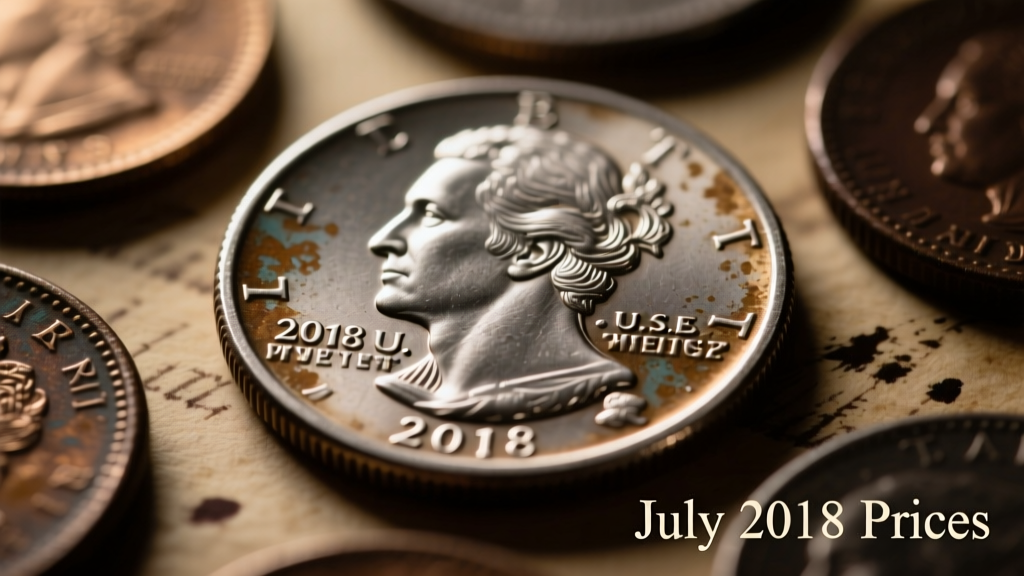
July 2018 Coin Market Snapshot: Price Trends, Key Auction Results, and Grading Impact Analysis
Authenticating and Valuing the Tiffany Glass Vase: Green Glass Oval with Blue-Gold Design, Signed, 5½ Inches Tall
Advertising Tip Tray: J.H. Beamer President Suspenders — A Rare Artifact of Early 20th-Century American Branding

Faience Ewer Wine Pitcher: Hand-Painted Grape Leaves & Clusters — A 30-Inch Artisan Masterpiece from 19th-Century France
Stoneware Jug with Oval Tooled Spout and Cobalt Blue Daubs, Circa 1820 — A Detailed Numismatic & Ceramic Appraisal
Meissen Group: 'Man and Woman Seated Reading a Letter, Man Looking Over Shoulder' — A 6-Inch Porcelain Sculpture Analysis