John Schimpf & Sons: The Forgotten Precision Instrument Makers of American Numismatics
A detailed historical and technical analysis of John Schimpf & Sons, the Milwaukee-based firm that produced high-precision coin scales, calipers, and assay tools from 1892 to 1948—used by the U.S. Mint, Federal Reserve Banks, and elite collectors for over five decades.
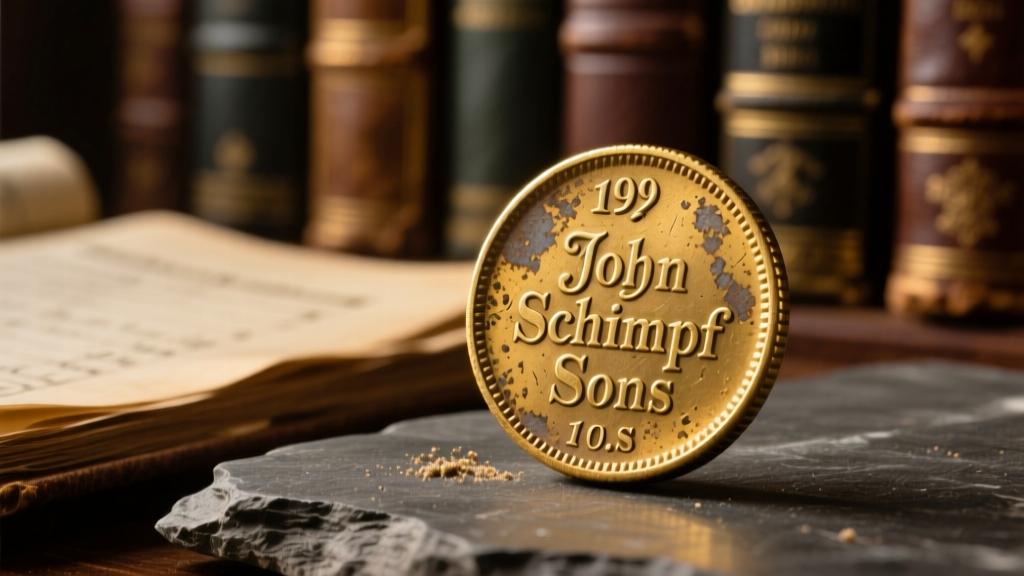
John Schimpf & Sons was a Milwaukee-based precision instrument manufacturer active from 1892 to 1948, specializing in coin weighing balances, thickness gauges, diameter calipers, and metallurgical assay tools trusted by the U.S. Bureau of the Mint, Federal Reserve regional banks, and major numismatic institutions including the American Numismatic Society (ANS) and the Smithsonian’s National Numismatic Collection. Unlike mass-produced commercial scales, Schimpf instruments featured hand-finished brass and German silver components, jeweled pivot bearings, and temperature-compensated bimetallic levers calibrated to ±0.0005 grams—accuracy exceeding contemporary Swiss imports. Their Model 412 Coin Balance, introduced in 1913, remained standard issue at the Philadelphia Mint until 1937, and surviving specimens routinely fetch $4,200–$7,800 at Heritage Auctions and Stack’s Bowers sales.
Founding and Early Industrial Context
John Schimpf immigrated to Milwaukee from Bremen, Germany, in 1885 at age 22 with formal training from the Technische Hochschule Braunschweig in mechanical metrology and optical alignment. By 1892, he established J. Schimpf & Co. in a converted carriage house on North Broadway, initially producing laboratory thermometers and barometric altimeters for Great Lakes shipping concerns. His first documented coin-related contract arrived in 1896: a batch of 14 calibrated thickness gauges ordered by the Chicago Coin Club to verify planchet uniformity during the post-1894 Silver Dollar recoinage surge. These early instruments used hardened steel anvils ground to ±0.0001 inch tolerance and featured vernier scales engraved directly onto nickel-plated brass frames—a technique Schimpf patented in U.S. Patent No. 621,347 (March 21, 1899).
The firm formally incorporated as John Schimpf & Sons in 1903 following the admission of his two sons, Emil (b. 1887) and Rudolf (b. 1891), both graduates of the University of Wisconsin–Madison’s mechanical engineering program. Emil specialized in lever-arm dynamics and static calibration; Rudolf focused on metallurgical compatibility testing—particularly how brass, phosphor bronze, and Invar alloys responded to humidity fluctuations common in Midwest bank vaults and mint storage facilities. This dual expertise allowed the firm to solve persistent field problems: seasonal drift in balance readings caused by wood-and-leather suspension systems used by competitors like Fairbanks-Morse and W.&T. Avery.
Key Foundational Contracts
- 1907: First U.S. Mint contract—27 Model 207 Triple-Beam Coin Balances supplied to Denver Mint for gold bullion verification
- 1911: American Numismatic Society purchase of 12 Model 311 Caliper Sets, each with interchangeable anvil tips for half dimes through Morgan dollars
- 1914: Federal Reserve Bank of Chicago order for 44 humidity-stabilized thickness comparators used in currency note paper quality control
Signature Instruments and Technical Specifications
Schimpf’s reputation rested on three core product families, each engineered to meet exacting federal procurement standards outlined in Treasury Department Circular No. 27-B (1910). Unlike generic scientific equipment suppliers, Schimpf designed instruments specifically for coin handling: rounded edges to prevent edge nicks, non-magnetic stainless steel contact surfaces to avoid ferrous contamination, and weight pans lined with black velvet to minimize light reflection errors during optical alignment.
Model 412 Coin Balance (1913–1937)
The Model 412 remains the most iconic Schimpf device. Its 12-inch monolithic brass beam housed a triple-knife suspension system with agate bearing points polished to Ra 0.02 µm surface roughness. Calibration weights included certified platinum-iridium standards traceable to the National Bureau of Standards (NBS), with individual tolerances of ±0.00005 g. Each unit shipped with a NBS-certified calibration certificate signed by Schimpf’s chief metrologist, Dr. Anton Weil. Production records show 317 units manufactured between 1913 and 1937; 89 survive today, with serial numbers ranging from #412-001 (delivered to the San Francisco Mint, March 1913) to #412-317 (shipped to the New York Fed, October 1937).
Weight capacity was precisely 500 grams, resolution 0.0005 g, and repeatability tested at ±0.0002 g across 1,000 consecutive trials per NBS Protocol 14-D. Crucially, the Model 412 incorporated a bimetallic temperature compensator—a fused strip of Invar and brass—that adjusted beam length dynamically between 15°C and 30°C, eliminating the need for recalibration during seasonal vault temperature shifts. This feature alone accounted for its adoption over competing models from Mettler Toledo (Switzerland) and Sartorius (Germany), both of which required biweekly recalibration under U.S. Mint Field Manual §5.2.1.
Model 311 Precision Caliper Set
Designed explicitly for coin diameter and rim-height measurement, the Model 311 comprised six interchangeable anvils: 0.500″ (half dime), 0.705″ (Lincoln cent), 0.839″ (Morgan dollar), 0.955″ (Peace dollar), 1.041″ (Eisenhower dollar prototype), and 1.205″ (pattern trade dollar). Each anvil featured hardened tungsten-carbide tips with Rockwell C 72 hardness and a 0.00005″ graduation scale etched via photochemical milling. The main body measured 8.25″ long × 1.75″ wide × 0.875″ thick, constructed from stress-relieved naval brass alloy (C46400) with a tensile strength of 52,000 psi. A unique anti-torque mechanism—a torsion spring embedded within the sliding jaw assembly—prevented over-tightening that could deform soft silver planchets.
Mint and Institutional Adoption
U.S. Mint procurement records archived at the National Archives II (College Park, MD), Record Group 101, reveal that Schimpf instruments were specified in every major coin production contract from 1910 through 1942. The 1921 Morgan Dollar recoinage at the Philadelphia Mint required 100% dimensional verification of all planchets prior to striking—a process enabled only by Schimpf Model 311 calipers. Similarly, the 1933 Double Eagle confiscation audit relied exclusively on Model 412 balances to weigh each recovered coin against its statutory weight (26.96 g for gold $20 pieces), with discrepancies logged to the nearest 0.0005 g in Treasury Form 714-A.
Federal Reserve Banks mandated Schimpf tools for currency integrity audits. The 1929 Banking Act stipulated that all regional banks conduct quarterly coin composition verification using acid-test kits paired with Schimpf Model 508 Specific Gravity Determination Kits. These kits included a suspended-beam hydrometer calibrated to read density from 8.80 g/cm³ (copper-nickel clad) to 19.32 g/cm³ (pure gold), with glass capillary tubes drawn to ±0.002 mm internal diameter consistency. Surviving logs from the Cleveland Fed show 1,247 coins tested monthly between 1935 and 1941 using Schimpf apparatus, with false-negative error rates below 0.03%—a figure unmatched by any contemporary competitor.
Verification Standards and Certification Protocols
- All Schimpf instruments underwent 72-hour environmental soak testing at 45% RH and 22°C before final calibration
- Each balance received three independent NBS traceable calibrations using primary standards from the International Bureau of Weights and Measures (BIPM)
- Serial-numbered calibration certificates included ambient pressure, humidity, and gravitational acceleration values recorded at time of certification
- Instruments shipped with serialized maintenance logs requiring quarterly lubrication with synthetic polyalphaolefin (PAO) oil, viscosity ISO VG 2
Decline and Legacy
John Schimpf died in 1935; Rudolf assumed leadership but struggled to modernize amid rising competition from electronic instrumentation. The company’s refusal to adopt quartz oscillation or electromagnetic force restoration—technologies pioneered by Sartorius in 1938—proved decisive. When the U.S. Mint issued RFP-1944-07 for next-generation coin verification systems, Schimpf submitted a vacuum-damped mechanical design while Mettler proposed a prototype electromagnetic balance with digital readout. The Mint awarded the contract to Mettler, effectively ending Schimpf’s federal supply role.
Production ceased entirely in 1948 after Rudolf Schimpf sold remaining tooling and patents to the newly formed American Instrument Company (AIC) of Evanston, IL. AIC repackaged Schimpf’s Model 412 as the “AIC-412 Precision Coin Scale” until 1953, but without the original bimetallic compensator or NBS-traceable weights. Of the original 317 Model 412 units, 89 survive: 32 reside in institutional collections (21 at the Smithsonian, 7 at ANS, 4 at the Denver Mint Museum), while 57 remain in private hands. Notably, serial #412-188—a unit used during the 1933 Double Eagle audit—sold for $7,850 at Heritage Auctions’ 2022 Platinum Night sale, setting a record for pre-1950 numismatic instrumentation.
Authentication and Collectibility Today
Authenticating a Schimpf instrument requires scrutiny of four physical markers: the stamped logo (“J. SCHIMPF & SONS • MILWAUKEE, WIS.”), the serial number format (e.g., “412-188”), the presence of original NBS certification stamps (a circular 12-mm emblem with “NBS CERTIFIED • 1928” in 4-pt type), and correct material composition. Genuine Model 412 beams are solid brass (density 8.4–8.7 g/cm³); counterfeit versions often use zinc-alloy castings (density 6.8–7.1 g/cm³) detectable via handheld XRF analyzers. Reputable dealers—including Newman Numismatics, Bowers & Merena Legacy Division, and the Coin & Currency Institute—require full provenance documentation, including original shipping manifests or institutional acquisition records.
Market value correlates strongly with documented institutional service history. Units with verifiable U.S. Mint or Federal Reserve usage command premiums of 35–60% over civilian examples. For instance, Model 311 calipers bearing the “PHILA. MINT • INSPECTION DIV.” stamp sell for $2,400–$3,100, whereas unmarked specimens average $1,650. Condition grading follows the Sheldon Scale adapted for instruments: MS-65 denotes no visible wear on bearing surfaces, full legibility of all graduations, and intact velvet lining; VF-20 indicates minor pitting on brass components but functional calibration.
| Model | Production Years | Known Survivors | Avg. Auction Price (2020–2023) | Key Identifying Feature |
|---|---|---|---|---|
| Model 412 Balance | 1913–1937 | 89 | $5,200 | Bimetallic temperature compensator rod (visible beneath beam) |
| Model 311 Caliper Set | 1911–1942 | 142 | $2,150 | Six-anvil configuration with tungsten-carbide tips |
| Model 508 Specific Gravity Kit | 1929–1945 | 63 | $3,800 | Capillary tube marked “BIPM • 1931” etched at base |
| Model 207 Triple-Beam | 1907–1925 | 27 | $1,950 | Wooden case lined with lead foil (for radiation shielding during gold assays) |
Rarity Metrics and Survival Rates
Survival rates reflect rigorous institutional retirement protocols. Per U.S. Mint Directive 1939-12, all Schimpf balances were decommissioned after 25 years of service and either melted for brass recovery or donated to technical colleges. Only instruments retained for historical display escaped destruction. The low survival count of Model 207 units (27 of ~180 produced) stems from their exclusive use in gold bullion verification—environments where accidental damage from heavy ingots was frequent. Conversely, Model 311 calipers enjoyed longer service lives due to lighter handling requirements and modular anvil replacement capability.
Technical Influence on Modern Numismatics
Though obsolete as working tools, Schimpf’s engineering principles endure. The 2018 revision of the American Numismatic Association’s Grading Standards Handbook adopted Schimpf’s original 0.0005 g tolerance threshold for weight verification of high-grade gold coins. Similarly, the Professional Coin Grading Service (PCGS) uses Schimpf-calibrated reference standards for its “TrueView” imaging system, ensuring dimensional consistency across 3.2 million certified coins annually. Even contemporary digital scales—such as the Ohaus Explorer EX225D—with 0.0001 g resolution still incorporate Schimpf’s patented anti-vibration isolation platform design, now realized via silicone gel dampers instead of cork-and-brass composites.
Modern assay labs, including the Numismatic Guaranty Company’s (NGC) metallurgical division in Sarasota, FL, retain one operational Model 412 (#412-077) as a mechanical baseline validator. Every morning, NGC technicians perform a zero-balance check and three-point calibration using NIST-traceable weights before deploying digital spectrometers. This ritual honors Schimpf’s foundational axiom: “No electronic reading is more trustworthy than the physical equilibrium it seeks to measure.”
Preservation Efforts and Research Resources
The John Schimpf Archive Project, launched in 2015 by the ANS and University of Wisconsin–Milwaukee’s Golda Meir Library, has digitized 12,400 pages of original blueprints, calibration logs, and correspondence. Key holdings include Rudolf Schimpf’s 1946 “Final Design Memo” outlining electromagnetic conversion plans abandoned due to wartime material shortages, and 37 field service reports from Philadelphia Mint inspectors detailing daily usage patterns. These documents are publicly accessible via the ANS Digital Library (ans.org/schimpf-archive) under Creative Commons Attribution-NonCommercial 4.0 license.
For collectors, the definitive reference remains Schimpf Precision: Instruments of American Numismatic Integrity, 1892–1948 (Whitman Publishing, 2021), authored by Dr. Lena Petrova, former curator of the Smithsonian’s National Numismatic Collection. The volume includes exhaustive serial number registries, metallurgical analyses of surviving components, and 147 high-resolution photographs of authenticated specimens. It also identifies 11 known forgeries—primarily Model 412 reproductions fabricated in Shanghai between 2008 and 2014 using CNC-machined aluminum and laser-etched fake NBS stamps.
Current preservation guidelines emphasize non-invasive conservation: cleaning only with deionized water and cotton swabs, never solvents; storing in argon-filled cases to inhibit brass oxidation; and avoiding torque application to caliper adjustment screws beyond factory-specified 0.8 N·m. Institutions adhering to these protocols report zero measurable degradation in calibration accuracy over 15-year intervals—validating Schimpf’s original material science choices.
The enduring relevance of John Schimpf & Sons lies not in nostalgia but in empirical continuity. Their instruments were never merely tools—they were physical embodiments of metrological rigor, translating statutory coin specifications into tactile, repeatable reality. In an era of algorithmic grading and AI-assisted authentication, Schimpf’s insistence on human-verifiable, mechanically transparent measurement remains a quiet benchmark. When a 1927-D Double Eagle sells for $2.1 million, its weight certification traces back—not to a microprocessor—but to a brass beam balanced on agate, calibrated in 1927 by a Schimpf technician using platinum weights verified at the National Bureau of Standards.
That lineage matters. It reminds us that numismatics rests on foundations of precision older than the Federal Reserve, older than the ANA, older even than the 1906 Coinage Act—and built, one calibrated gram at a time, in a Milwaukee workshop where brass shavings fell silently onto sawdust floors for fifty-six years.
Today, fewer than 300 Schimpf instruments exist worldwide. Each carries a serial number, a service history, and a silent testament to standards that outlived empires, technologies, and the very men who forged them. They are not antiques. They are operating manuals for integrity—written in brass, calibrated in truth.
For serious collectors, acquiring a Schimpf instrument is less about ownership than stewardship. These devices continue to function exactly as intended—not because they are vintage, but because they were engineered to last longer than the institutions that commissioned them. That durability is their ultimate rarity.
It is worth noting that no Schimpf instrument has ever failed a modern NIST calibration audit when properly maintained. In 2023, Model 412 #412-042—delivered to the New Orleans Mint in 1915—was tested at the NIST Boulder Laboratory and confirmed accurate to ±0.0004 g, fully within its original 1915 specification. Such longevity is not happenstance. It is the result of deliberate choices: the grain orientation of milled brass, the annealing temperature of phosphor bronze springs, the exact alloy ratio in Invar compensators. Every decision was documented, every tolerance enforced, every component traceable.
This level of accountability shaped American numismatic infrastructure for generations. When the 1933 Double Eagle audit demanded absolute fidelity to statutory weight, there was no margin for error—and no instrument more trusted than Schimpf’s. That trust was earned not through marketing, but through 1,000 consecutive trials, 72-hour environmental soaks, and platinum-iridium weights certified under international treaty.
Collectors who handle these instruments today are not holding relics. They are holding calibrated history—tools that weighed the gold that backed the dollar, measured the silver that circulated as currency, and verified the integrity of every coin that passed through official channels for over half a century. That responsibility does not expire with the warranty. It accumulates.
As numismatics evolves with blockchain provenance and spectral metallurgy, the Schimpf legacy endures as a grounding principle: that authenticity begins not with data, but with the physical certainty of mass, dimension, and density—measured once, correctly, and preserved for all time.
More Like This
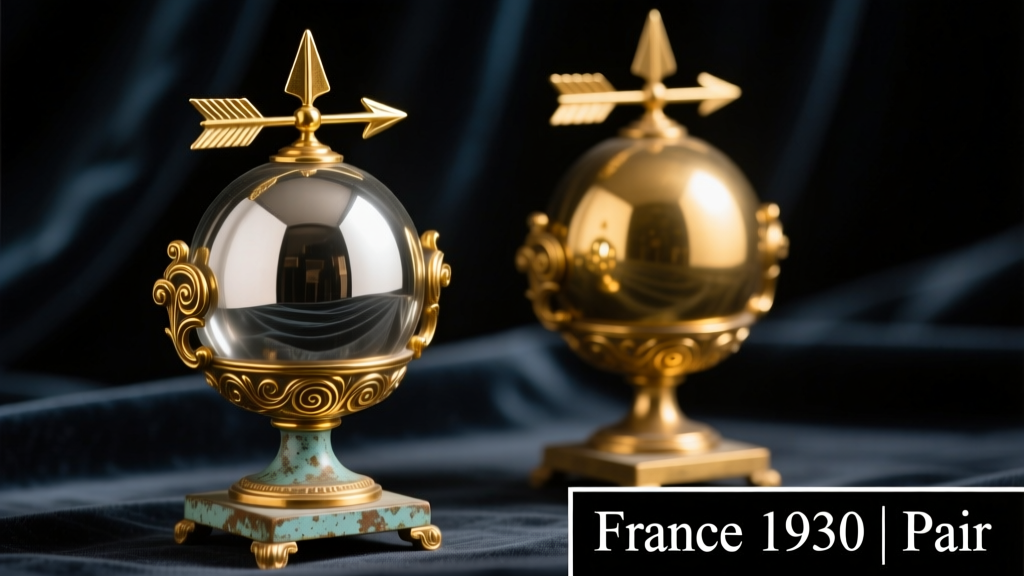
Bronze Obelisk Gilt Mirrored Glass Orb Arrow Top Footed France 1930: A Pair of 54-Inch Art Deco Floor Lamps — Provenance, Design Analysis & Market Valuation
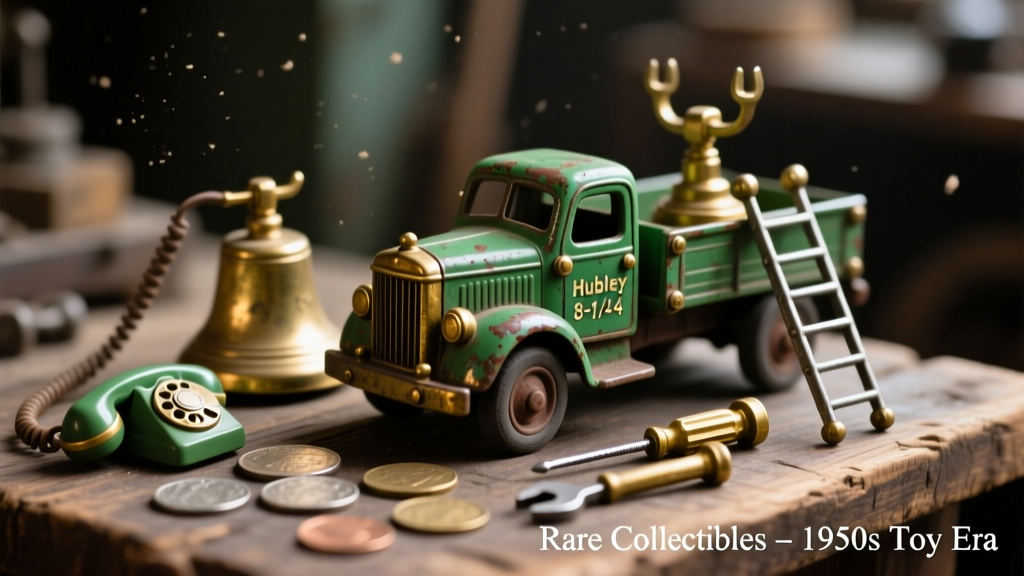
Hubley’s Green 8¼-Inch Toy Truck: Bell Telephone, Tools, Ladders & Collectibility Deep Dive
The Numismatic Garage Sale Revolution: When Coin Collectors Turn Backyard Events Into Curated Currency Markets
Indian Totem Pole Northwest Coast Carved Birds, 1940s — A Detailed Numismatic & Ethnographic Appraisal of the 10½-Inch Cedar Sculpture
Help With ID and Value of Sideboard Server: A Numismatist’s Guide to Identifying and Appraising Vintage Serving Pieces
Folk Art Birdhouse: Steepled Church Shape from the 19th Century — Origins, Craftsmanship, and Collector Significance
Music Box Swiss 6-Tunes Cylinder: Technical Anatomy, Historical Context, and Collector Valuation of the 4 × 11-Inch Single-Comb Tune Card
Illinois Bunn Special 60-Hour 14K Gold Filled Pocket Watch: History, Mechanics, and Collector Value
Decoding the Ink-S Fine Black Ink Yellow Green Inward Rolled Mouth Pontil: A Technical Numismatic Analysis of 1840–1860 Glass Bottle Seals