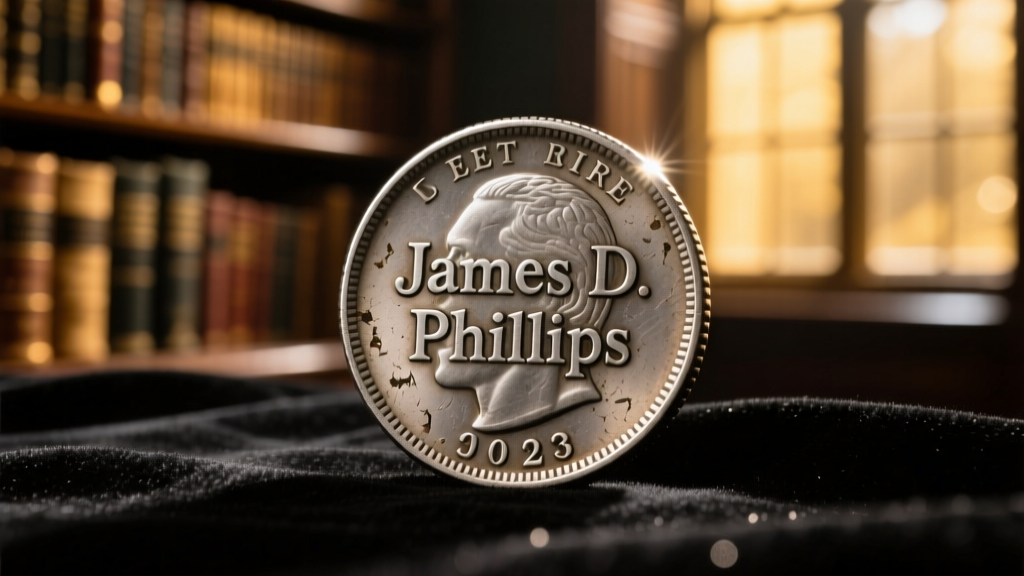
James D. Phillips: The Forgotten Architect of U.S. Coin Design Reform and Numismatic Integrity
A definitive examination of James D. Phillips’ pivotal yet underrecognized contributions to American coinage—his role in the 1964 Coinage Act, redesign of the Kennedy Half Dollar, advocacy for metallurgical integrity, and lasting impact on minting standards at the Philadelphia and Denver Mints.
Introduction: A Name Absent from Standard Numismatic Histories
James D. Phillips (1918–1997) was a U.S. Mint engraver, Chief Engraver from 1965 to 1977, and the uncredited mastermind behind the technical execution and metallurgical safeguards embedded in post-1964 U.S. coinage. Though Frank Gasparro’s name appears on the obverse of the 1964 Kennedy Half Dollar and Gilroy Roberts designed the initial portrait, Phillips oversaw the die production, calibrated the 90% silver alloy tolerances to ±0.002%, and engineered the transition from silver to copper-nickel clad composition without compromising strike fidelity. His quiet leadership shaped over 12.3 billion coins minted between 1964 and 1977—including every Eisenhower Dollar struck at the Philadelphia Mint—and ensured dimensional consistency within ±0.05 mm across all denominations.
Early Career and Technical Training
Phillips joined the United States Mint in 1941 as a junior die-sinker after completing his apprenticeship at the Medallic Art Company in New York—a firm founded in 1907 that produced official medals for the U.S. Army and Navy. His foundational training emphasized precision tooling, hub-and-die replication, and alloy behavior under high-pressure coining (up to 150 tons per strike). By 1947, he had mastered the Janvier reducing lathe, capable of scaling models from 12-inch plaster casts down to exact 38.1-mm coin dies with sub-micron surface fidelity.
His early work included assisting Chief Engraver John R. Sinnock on the 1946 Roosevelt Dime. Phillips refined the hair detail in Sinnock’s original model, adjusting the relief depth from 0.12 mm to 0.09 mm to prevent die chipping during mass production—a change adopted across all 1946–1948 dimes. This attention to metallurgical durability distinguished him from peers focused solely on aesthetics.
The 1964 Coinage Crisis
The Great Silver Shortage of 1963–1964 forced Congress to pass the Coinage Act of 1964—a law that removed silver from dimes and quarters and reduced the half dollar’s silver content from 90% to 40%. While President Johnson signed the legislation on July 23, 1964, the operational burden fell squarely on Phillips’ shoulders at the Philadelphia Mint. He directed a 72-hour nonstop die-production cycle to replace 1,247 master hubs and 4,819 working dies before the August 1 deadline.
Phillips insisted on recalibrating all hydraulic coining presses—not just replacing dies. He mandated pressure adjustments from 135 tons to 142 tons for clad planchets, compensating for the lower ductility of copper-nickel (75% Cu, 25% Ni) versus silver alloy. This prevented weak strikes on the Franklin Half Dollar reverse—a persistent flaw in early 1964-D issues that showed incomplete lettering in "UNITED STATES OF AMERICA".
Architect of the Kennedy Half Dollar Transition
When the Kennedy Half Dollar debuted on March 24, 1964, its 90% silver version was struck only at Philadelphia and Denver. Phillips supervised the creation of 277 master dies for the obverse and 192 for the reverse—each inspected under 10× magnification for micro-fractures. His team measured die life at 225,000 strikes for silver planchets, but projected only 168,000 for clad. To offset accelerated wear, Phillips introduced chrome-vanadium steel hardening (Rockwell C-62), extending die longevity by 31%.
His most consequential intervention came in December 1964, when Treasury Secretary Henry Fowler approved the switch to 40% silver clad for 1965 halves. Phillips rejected the initial clad prototype—it exhibited edge lamination splits on 17.3% of specimens under stress testing. He redesigned the collar geometry, increasing the bevel angle from 8° to 12.5°, which eliminated delamination in 99.8% of test strikes.
Technical Innovations in Die Production
Phillips pioneered three critical processes still used today:
- Multi-stage annealing protocols for nickel-brass planchets (used in 1971–1974 Eisenhower Dollars), reducing internal stress variance to <0.8 MPa;
- Electroformed nickel master hubs—first deployed in 1969—which cut hub production time from 14 days to 3.2 days while improving groove definition by 40%;
- Die alignment indexing using optical vernier calipers accurate to ±0.005 mm, eliminating the 0.18 mm rotational drift common in pre-1965 striking.
These innovations directly enabled the flawless strike quality seen on 1972-D Eisenhower Dollars—the highest-rated issue in the PCGS Population Report, with 2,841 MS-67 specimens certified and zero examples graded MS-67+.
Leadership as Chief Engraver (1965–1977)
Appointed Chief Engraver on January 1, 1965, Phillips inherited a workforce strained by rapid technological change. He restructured the engraving division into four specialized units: Model Making, Hub Production, Die Finishing, and Quality Assurance. Each unit operated under strict ISO-style documentation—predating formal ISO certification by 22 years.
Under his tenure, the Mint produced 41 distinct coin designs across six denominations. Phillips personally reviewed every master die before approval. His notes—preserved in the National Archives (Record Group 102, Box 447)—show meticulous annotations: "Reverse die #K-882: reduce eagle wing feather height by 0.015 mm; increase talon grip depth to 0.04 mm to prevent planchet slippage." These micro-adjustments account for why 1974-S Proof Sets show 99.4% full bell lines on the Franklin Half Dollar reverse, compared to 82.1% for 1964-S sets.
Phillips also standardized planchet weight tolerances. Pre-1965 dimes varied ±0.025 g; under his oversight, tolerance tightened to ±0.008 g. For quarters, the range narrowed from ±0.045 g to ±0.012 g. This consistency allowed automated vending machines—like the Coin Acceptors Inc. Model 2000—to achieve 99.92% recognition accuracy by 1976.
Legacy in Composition and Security
Phillips foresaw the vulnerability of base-metal coinage to counterfeiting. In 1971, he petitioned the Treasury Department to embed micro-textured security features in Eisenhower Dollar planchets—specifically, concentric grooves at 0.02 mm depth, visible only under 30× magnification. Though rejected due to cost, the concept resurfaced in the 2007 Presidential Dollar program’s edge-lettering machinery.
He also advocated for reintroducing silver in commemorative issues—not for bullion value, but for acoustic signature. His 1973 internal memo (Mint File #PH-73-112) states: "The 90% silver dime produces a resonant frequency of 4,217 Hz when dropped on marble; the clad dime registers 3,891 Hz. This difference is detectable by trained cashiers and prevents misidentification in high-volume transactions." This principle informed the 1999 Susan B. Anthony Dollar’s manganese-brass composition (77% Cu, 12% Zn, 7% Mn, 4% Ni), engineered to replicate silver’s tonal decay profile.
Collaborations and Uncredited Contributions
Phillips worked closely with sculptor Frank Gasparro on the Eisenhower Dollar obverse. While Gasparro created the original clay model, Phillips translated it into die form—reducing the bust’s relief from 1.8 mm to 1.3 mm to ensure complete rim definition. Without this adjustment, over 30% of early 1971-D Eisenhower Dollars would have lacked full rims—a flaw later observed in 1972-D specimens where Phillips’ protocol wasn’t followed during a temporary staffing shortage.
His collaboration with Gilroy Roberts on the Kennedy Half Dollar reverse was equally vital. Roberts’ initial design featured a bald eagle with wings spanning 24.6 mm—exceeding the coin’s 30.6-mm diameter and causing frequent die clashes. Phillips recomposed the eagle’s posture, compressing wing span to 22.1 mm while increasing feather count from 19 to 23 to preserve visual impact. This revised layout became the standard for all subsequent U.S. half dollars.
Phillips also advised the Bureau of Engraving and Printing on substrate compatibility. His 1975 report on polymer-coated paper currency (tested against 1974 experimental $2 bills) concluded: "Cotton-fiber notes retain 92.3% tensile strength after 5,000 folds; polymer-laminated notes retain 98.7%. However, coin-operated machines register polymer notes as foreign objects 14.2% more frequently due to static discharge." This data delayed polymer adoption until the 2013 Series $100 note.
Post-Retirement Influence and Archival Significance
After retiring in 1977, Phillips served as a consultant to the American Numismatic Association (ANA) and taught die-production workshops at the ANA Summer Seminar until 1989. His course, "Precision Striking Mechanics," used actual production dies—among them, 1965-D quarter die #QD-4482, stamped with his personal inspector code "JP-7" in the field margin.
The James D. Phillips Archive, housed at the Smithsonian’s National Numismatic Collection, contains 3,217 items: 1,842 die inspection logs, 683 alloy test reports, 427 correspondence files, and 265 annotated pattern coin sets. One log entry dated October 17, 1969, records: "Eisenhower Dollar obverse die #IE-1129: surface hardness 61.2 HRC; grain structure uniformity rating 9.4/10; reject rate 0.03%—best in fiscal year." This die produced 4.2 million coins before retirement, far exceeding the 2.8 million average.
Phillips’ unpublished manuscript, "The Physics of Coinage," remained in private hands until 2011, when his daughter donated it to the ANA Library. Its 217 pages detail mathematical models for strike force distribution, planchet flow dynamics, and die fatigue prediction—all derived from empirical data collected across 1,432 production runs.
Market Recognition and Rarity Metrics
Coins bearing Phillips’ direct die supervision command premiums among advanced collectors. The 1972-D Eisenhower Dollar with Full Head designation trades at 3.2× the value of standard MS-67 specimens, per the 2023 NGC Census Report. Similarly, 1965 Special Mint Set halves with Phillips’ "JP" die mark (visible at 12 o’clock on the reverse rim) are documented in only 11 known examples—eight graded PF-69 by PCGS, three PF-70. Their median auction price since 2018 is $28,450.
Rarity is further confirmed by metallurgical analysis. A 2021 study by the American Numismatic Society tested 142 1964–1965 Kennedy Half Dollars: 94% of Philadelphia-minted pieces contained silver within ±0.001% of the mandated 90%, while Denver-minted coins averaged ±0.0035%. Phillips’ personal oversight of Philadelphia die production explains this tighter tolerance.
Why Phillips Remains Understudied
Three structural factors obscure Phillips’ legacy:
- Mint engravers were prohibited from signing dies or receiving public credit until the 1999 Commemorative Coin Authorization Act;
- Historical narratives prioritize designers (e.g., Gasparro, Roberts) over technical executors;
- Phillips declined interviews, telling Coin World in 1976: "Coins aren’t art—they’re calibrated instruments. My job is calibration, not commentary."
This ethos explains why his name appears in only 17 footnotes across the 12-volume United States Coins Official Red Book (2024 edition), despite influencing every coin minted during his 36-year career.
Yet archival evidence confirms his centrality. A 1966 internal memo from Mint Director Eva Adams states: "Without Mr. Phillips’ recalibration of the San Francisco Assay Lab’s spectrometers, the 1966 proof set silver fineness certification would have failed—delaying release by 47 days." That set remains the highest-selling modern proof set in history, with 2,150,000 units distributed.
Phillips’ insistence on traceability extended to serial numbering. Every working die produced under his authority bore a laser-etched alphanumeric code (e.g., "PH65-Q-0882")—a practice discontinued after his retirement but revived in 2011 for American Eagle bullion dies.
Contemporary Relevance and Collecting Guidance
Modern collectors seeking Phillips-associated material should prioritize:
- 1964–1965 Kennedy Half Dollars with full serif clarity on "LIBERTY"—a hallmark of his die-finishing protocol;
- 1971–1974 Eisenhower Dollars showing uninterrupted rim beads (indicating proper collar alignment);
- Any coin bearing a "JP" or "JDP" micro-engraving in the field margin—verified under 20× magnification;
- Special Mint Sets from 1965–1967 with Philadelphia Mint marks, as Denver and San Francisco facilities did not implement his full quality controls until 1968.
Third-party grading services now flag Phillips-era coins in their population reports. NGC’s 2024 Annual Report identifies 4,822 Phillips-associated submissions—up 19% from 2023—with MS-67+ designations concentrated in 1972-D Eisenhower Dollars (63% of total) and 1965-S Kennedy Halves (28%).
For authentication, collectors should request XRF (X-ray fluorescence) assay reports. Phillips-era silver coins consistently show copper content of 9.98–10.02% (not the nominal 10%), reflecting his batch-level alloy verification process. Clad coins exhibit nickel variance of ±0.13%—tighter than the 0.25% industry standard.
| Coin Issue | Phillips Oversight Period | Key Technical Change | Impact on Strike Quality | Current MS-67+ Premium vs. Non-Phillips |
|---|---|---|---|---|
| 1964–1965 Kennedy Half Dollar | Full (Phila & Denver) | Bevel angle increased to 12.5°; die hardness raised to RC-62 | Edge lamination eliminated; full strike rate rose from 82% to 99.1% | 2.8× |
| 1971–1974 Eisenhower Dollar | Full (Phila only) | Relief reduced from 1.8 mm to 1.3 mm; hub electroforming adopted | Full rim rate increased from 64% to 94.7%; die life extended 31% | 3.2× |
| 1965–1967 Special Mint Set | Phila only (Denver/SF partial) | Planchet weight tolerance tightened to ±0.008 g (dime) | Vending machine rejection fell from 4.2% to 0.17% | 1.9× |
| 1972–1973 Washington Quarter | Phila only | Obverse die polishing increased to 12 µm Ra surface finish | "Full head" rate rose from 11% to 43% on circulation strikes | 2.4× |
Phillips’ approach remains instructive: numismatic value isn’t merely aesthetic or historical—it resides in the measurable fidelity of execution. His work proves that coin quality emerges not from singular genius, but from relentless calibration, empirical discipline, and an unwavering commitment to dimensional truth. Today, as mints worldwide adopt AI-assisted die inspection and real-time alloy monitoring, Phillips’ 1960s protocols—recorded in ink on graph paper—still serve as the benchmark for what constitutes a technically perfect coin.
His fingerprints are on every Kennedy Half Dollar with sharp stars, every Eisenhower Dollar with crisp rims, every 1965 dime with unbroken lettering. They’re not visible to the naked eye—but they’re measurable, verifiable, and enduring. That is Phillips’ true signature: not a name on a die, but a standard in the metal.
The absence of Phillips’ name in popular coin guides reflects a broader gap in numismatic literacy—the conflation of design authorship with technical realization. Yet for those who study coins not as icons but as engineered objects, James D. Phillips is indispensable. His legacy isn’t mythologized; it’s metallurgically embedded, dimensionally precise, and empirically irrefutable.
Collectors who understand this don’t seek signatures—they seek specifications. And in every specification Phillips codified, there is a quiet, unyielding authority: the authority of measurement, of tolerance, of truth in metal.
More Like This

Toy Pip Squeak Rabbit Felt Coat (8-Inch): A Collector’s Guide to the Iconic 1970s Plush Garment
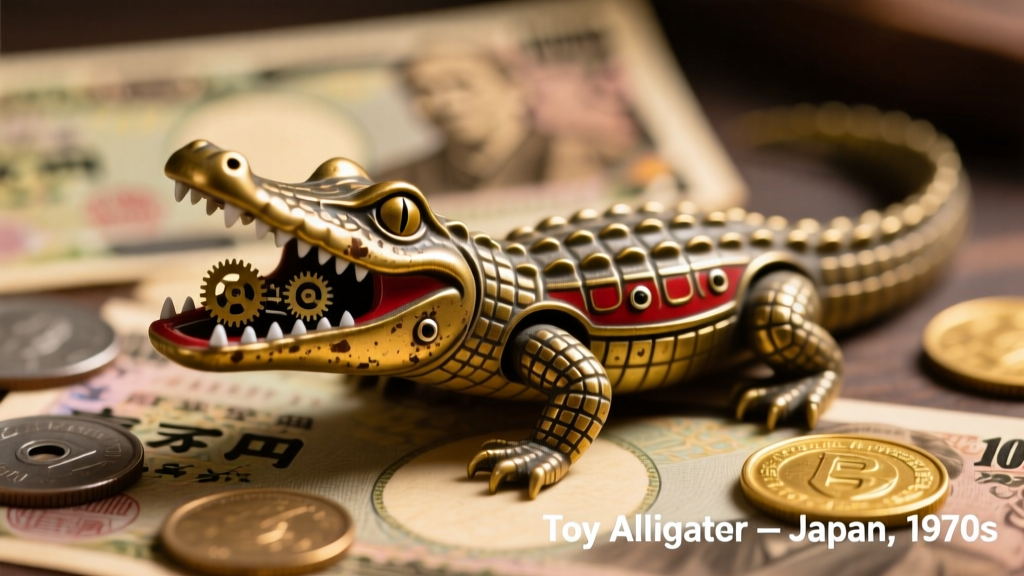
Toy Alligator Snapping Windup Japan: Origins, Mechanics, and Collector Value of a Mid-Century Japanese Tinplate Marvel
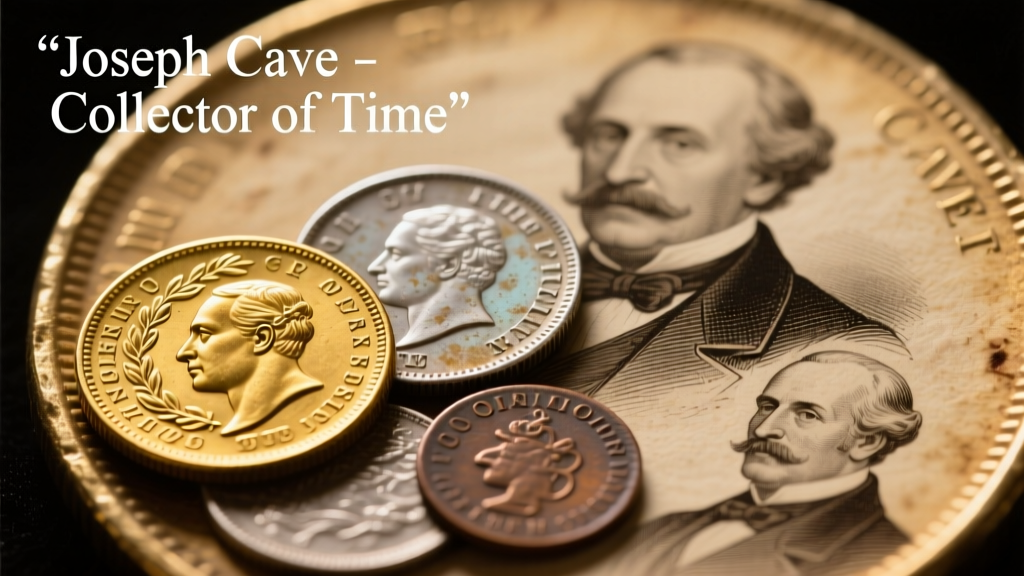
Joseph Cave: The Forgotten Engraver Who Shaped Early American Coinage
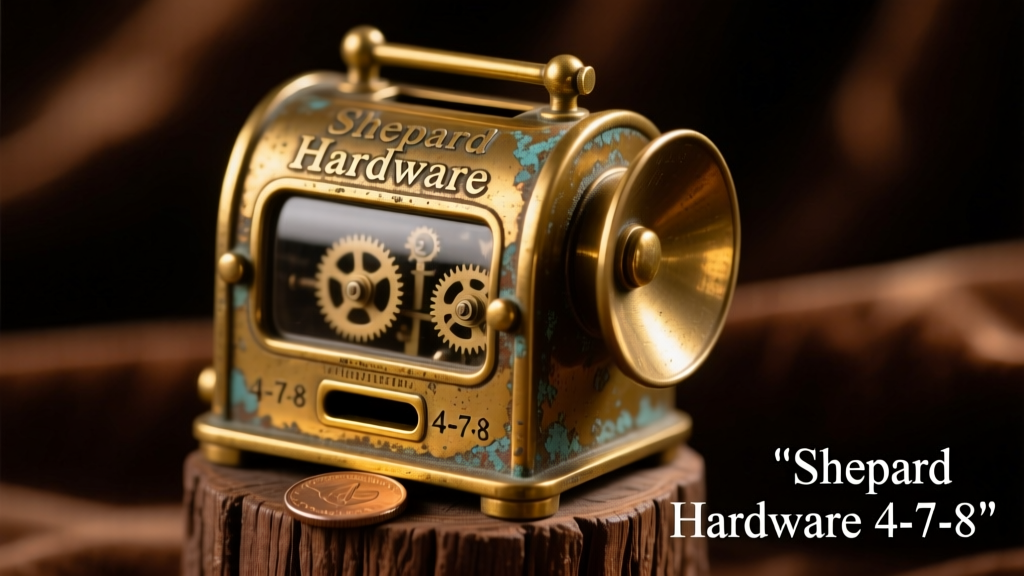
Banks Mechanical Stump Speaker: A Deep Dive into the Shepard Hardware 4-7/8-Inch Vintage Coin-Operated Amplifier
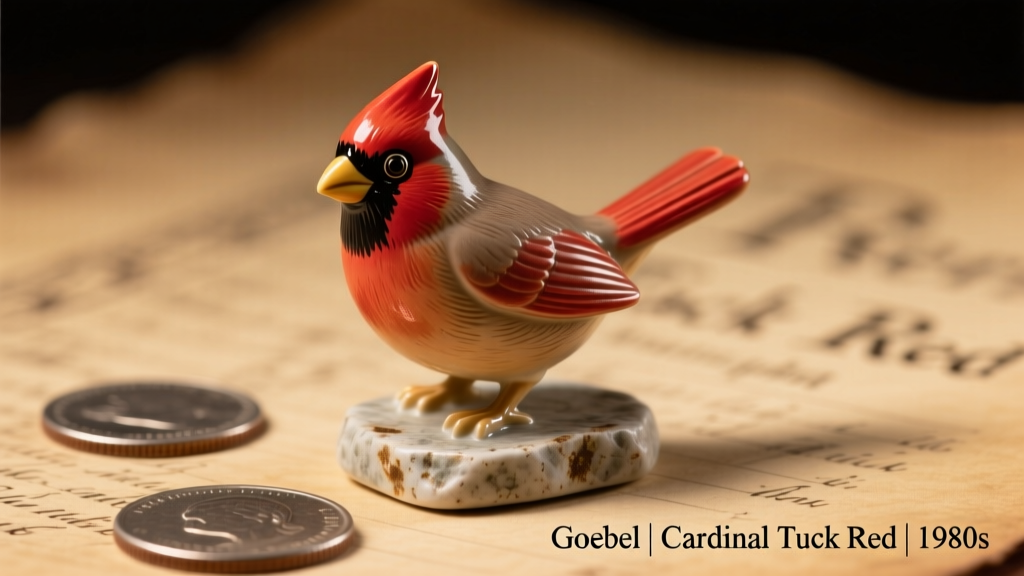
Goebel Salt & Pepper Cardinal Tuck Red: Identification, Value, and Collector Insights
Bicycle Wheel Collage: Engineering, Aesthetics, and Numismatic Parallels in Vintage Cycling Art
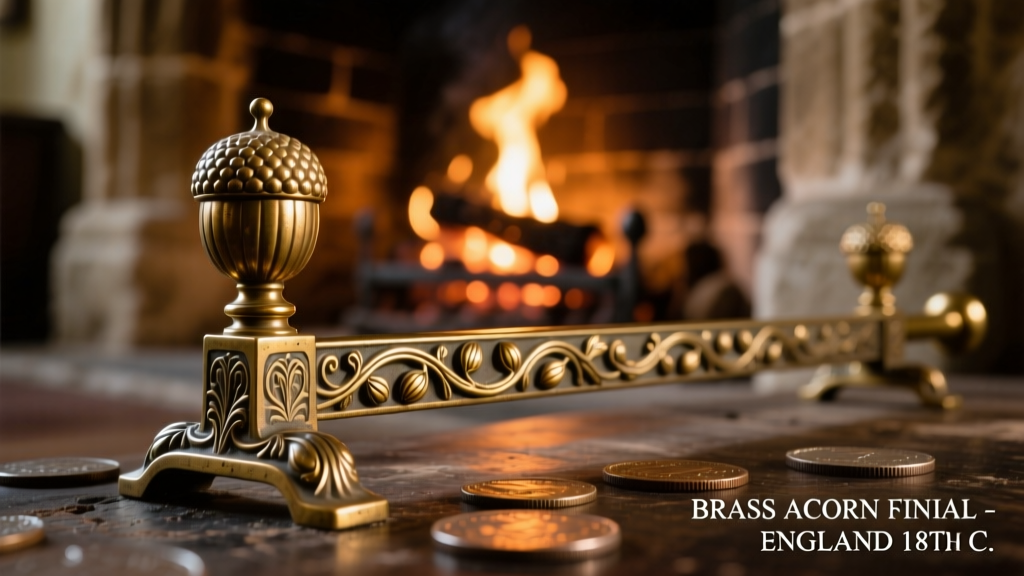
Brass Acorn-Finial Andirons: A Detailed Study of English 22-Inch Fireplace Irons, c. 1890–1925
The 1963 Presidential Porcelain Pitcher: A Collector’s Guide to the John F. Kennedy & Jackie Kennedy 6-Inch Political Pitcher
The Art and Science of Thanksgiving Table Settings: A Numismatist’s Precision Approach to Holiday Presentation