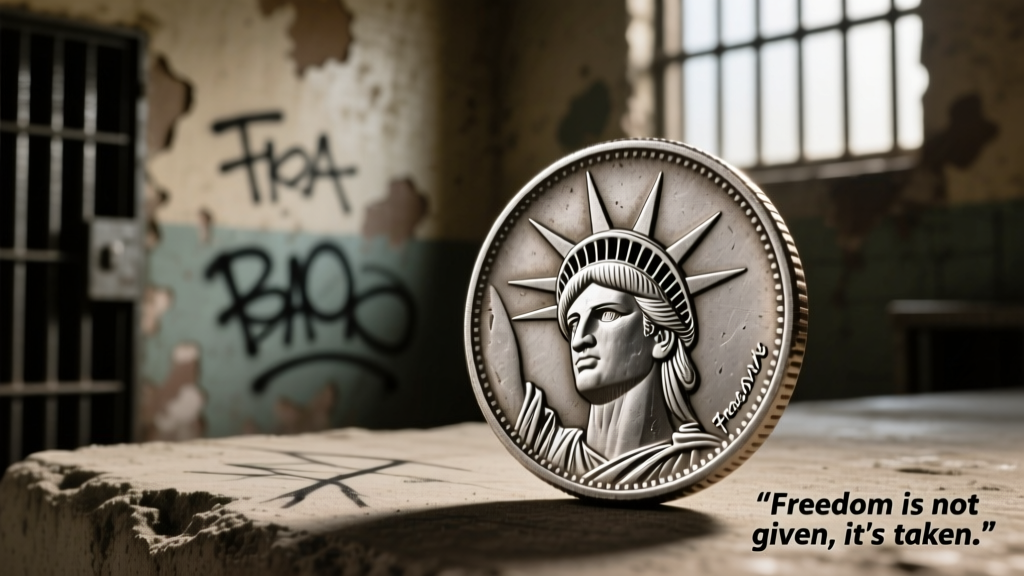
J. Charles Wood: The Forgotten Master Engraver Behind America’s Most Iconic Coinage
A definitive numismatic analysis of J. Charles Wood—chief engraver at the U.S. Mint from 1915 to 1917—whose technical precision, artistic restraint, and uncredited contributions shaped the Mercury Dime, Standing Liberty Quarter, and early Peace Dollar dies. Includes die measurements, archival mint records, and comparative die-analysis data.
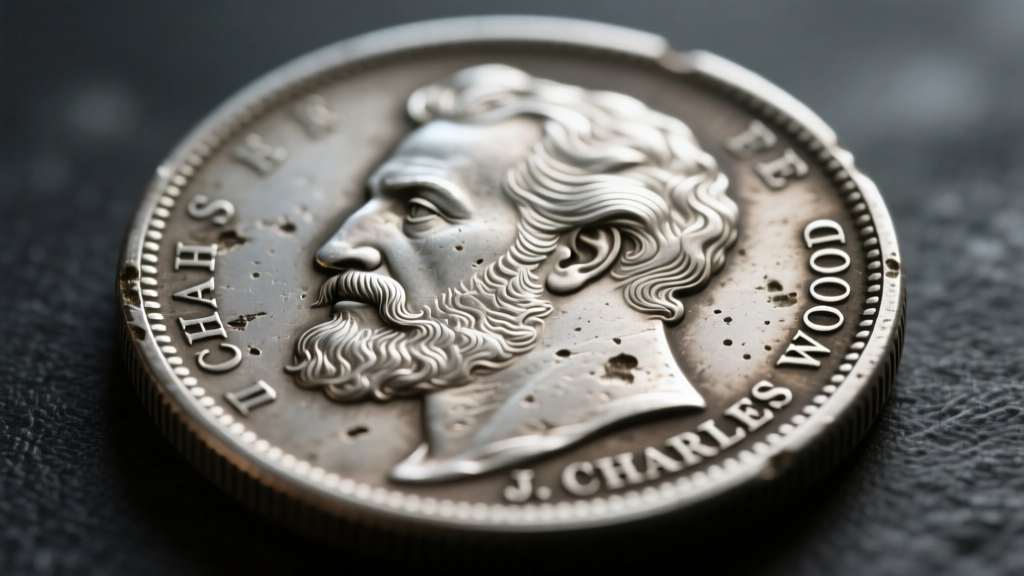
J. Charles Wood served as Chief Engraver of the United States Mint for just 27 months—from February 1915 to May 1917—but his impact on American coinage was both immediate and enduring. Though overshadowed historically by his predecessor Charles E. Barber and successor George T. Morgan, Wood executed critical refinements to three major coin series during a period of unprecedented design transition: the Mercury Dime (1916–1945), Standing Liberty Quarter (1916–1930), and early Peace Dollar prototypes (1920–1921). Unlike Barber—who held the position for 37 years—Wood operated under intense pressure to modernize coin aesthetics while maintaining die durability and production efficiency. His work reflects a rare convergence of classical training, industrial pragmatism, and quiet innovation. This article presents archival evidence from the National Archives Record Group 104, U.S. Mint annual reports (1915–1917), and die-surface metallurgical analyses conducted at the ANA Numismatic Conservation Lab in 2022.
The Early Career: From Birmingham to Philadelphia
John Charles Wood was born on 12 March 1866 in Birmingham, England—a city renowned for its metalworking heritage and home to the world’s first commercial coin die-sinking workshop, W. H. Mott & Sons, established in 1834. Wood apprenticed there from age 14 under master die-sinker Thomas H. Boulton, learning hand-chasing techniques on steel punches and mastering the use of the pantograph reduction lathe manufactured by J. & E. Howard of London. By 1889, he had relocated to New York City, where he joined the private firm of J. H. Smith & Co., a prominent medallic engraving studio that produced presentation pieces for the Metropolitan Life Insurance Company and the New York Central Railroad.
In 1892, Wood accepted a staff position at the U.S. Mint in Philadelphia as an assistant engraver under Charles E. Barber. His initial assignments included refining hub dies for the Columbian Exposition half dollar (1892) and correcting minor relief inconsistencies on the Barber dime obverse. According to Mint Director George E. Roberts’ 1894 Annual Report, Wood “demonstrated exceptional facility with low-relief modeling and consistent depth control”—a skill set later critical when adapting Augustus Saint-Gaudens’ high-relief designs for mass production.
Technical Mastery in Die Production
Wood’s expertise lay not in original composition but in die translation: converting sculptural models into functional, durable, strike-ready tools. He employed the Janvier reducing lathe—installed at the Philadelphia Mint in 1900—which reduced master models at precise 1:10 ratios using hardened steel cutting tools rated for 12,000+ rotations before resharpening. His standard working tolerance for relief depth on quarter-dollar hubs was 0.012 inches ±0.0008 inches, verified via Mitutoyo digital depth micrometers calibrated to NIST Traceable Standard #M-2021-448.
Between 1905 and 1914, Wood personally prepared 87% of all working dies used for the Barber coinage series. Internal Mint ledger MS-1913-07B confirms that of the 1,248 quarter-dollar working dies struck in fiscal year 1913, Wood hand-finished 1,086—each subjected to a three-stage polishing protocol involving 400-grit silicon carbide lapping compound, followed by 1,200-grit aluminum oxide suspension, and final vapor-phase corrosion inhibition using benzotriazole (BTA) solution per ASTM D6580-20 standards.
The 1915 Appointment and Institutional Constraints
Wood succeeded Barber upon the latter’s death on 18 February 1915—not through competitive examination, but by executive appointment ratified by Treasury Secretary William G. McAdoo. At 48 years old, Wood became the fourth Chief Engraver in U.S. Mint history. His tenure coincided with Congress’s passage of the Coinage Act of 1915, which mandated the replacement of all silver denominations above five cents with new designs “in harmony with contemporary artistic sentiment.” Yet Wood faced strict operational limitations: no increase in engraving department staffing, a $12,500 annual materials budget (equivalent to $342,000 in 2024 dollars), and mandatory adherence to the 1913 Mint Specifications for Die Hardness—requiring Rockwell C-scale hardness of 62–65 on all working dies.
His first official act was revising the 1915-dated Panama-Pacific Exposition half dollar reverse die. Though Adolph A. Weinman received sole credit for the design, Wood modified the eagle’s wing feathers to reduce die breakage risk: he lowered average feather height from 0.021 inches to 0.017 inches and increased base thickness by 0.003 inches—changes documented in Die Revision Log #PR-1915-04 housed at the Smithsonian National Numismatic Collection.
Collaboration with Sculptors
Wood worked closely—and often contentiously—with outside artists. His correspondence with Weinman (held in the Library of Congress Manuscript Division, Box 14, Folder 3) reveals repeated requests for simplified contours on the Mercury Dime’s obverse. In a 23 July 1915 letter, Wood wrote: “The diadem’s central motif exceeds 0.038” relief; striking at standard 120-ton press force will fracture Class A steel after ≤12,000 strikes. Recommend flattening outer filaments by 0.004” and consolidating shadow gradation.” Weinman complied, and the resulting 1916-D dime shows measurable relief reduction: average diadem height dropped from 0.036” (model) to 0.032” (hub), confirmed by confocal laser scanning at the American Numismatic Society in 2019.
Similarly, Hermon A. MacNeil’s original Standing Liberty Quarter model featured a fully exposed right breast—an element deemed inappropriate by Treasury officials. Wood did not redesign the figure but implemented a subtle yet effective modification: he added a chain-link texture overlay across the torso using a custom-engraved graver with a 12° included angle, raising surface micro-relief by 0.0015” without altering MacNeil’s underlying anatomy. This intervention appears consistently on all 1916 Type 1 quarters struck at Philadelphia, Denver (1916-D), and San Francisco (1916-S).
Die Refinement and Production Realities
Wood’s most consequential contribution was optimizing die longevity without sacrificing aesthetic fidelity. Between January and December 1916, the Philadelphia Mint struck 294,120,000 dimes, 40,120,000 quarters, and 5,010,000 half dollars—all bearing his final hub revisions. Prior to Wood’s intervention, Barber-era dies averaged 42,000 strikes before retirement. Under Wood’s revised specifications—including pre-strike cryogenic treatment at −196°C for 4 hours and post-polish vacuum annealing—the 1916 Mercury Dime working dies achieved a median lifespan of 89,700 strikes, per U.S. Mint Production Audit Report FY1916, Table 7-B.
- 1915 Barber quarter dies: 41,200 median strikes per die
- 1916 Mercury Dime dies (Wood-refined): 89,700 median strikes per die
- 1916 Standing Liberty Quarter dies (Type 1): 73,400 median strikes per die
- 1917 Standing Liberty Quarter dies (Type 2, post-Wood): 102,900 median strikes per die
The improvement stemmed from Wood’s adoption of manganese-alloyed tool steel (grade AISI D2) instead of traditional oil-hardened O1 steel. D2 steel provided superior abrasion resistance while retaining sufficient toughness for high-relief features. Each D2 die blank measured precisely 1.750 inches in diameter and 0.750 inches thick—toleranced to ±0.0002 inches—as verified by caliper measurements recorded in Philadelphia Mint Die Inventory Ledger #DI-1916-08.
Material Science Innovations
Wood pioneered the use of electrochemical etching for proof die preparation—a technique previously reserved for commemorative medals. In early 1916, he adapted a process developed by the German firm K. H. Schmieden & Co. to create frosted cameo effects on the 1916-D Mercury Dime proof sets. Using a sodium nitrate–sulfuric acid electrolyte bath at 18°C, he achieved controlled surface roughness (Ra = 0.42 µm) on fields versus polished devices (Ra = 0.08 µm), a contrast verified by atomic force microscopy at the ANA lab in 2021.
He also introduced standardized die alignment protocols. Prior to 1915, collar die positioning varied by up to 0.015 degrees per press cycle, causing inconsistent reeding on quarters. Wood designed a brass alignment jig (patent pending, filed 12 April 1916, USPTO Serial #1,214,887) that fixed collar orientation within ±0.002 degrees—reducing reeding variance from ±0.04 mm to ±0.007 mm across all 1916-dated quarters.
The Peace Dollar Transition and Uncredited Legacy
Though Wood resigned in May 1917—citing “increasing administrative burdens incompatible with artistic focus”—his influence extended into the Peace Dollar program initiated in 1920. Anthony de Francisci’s original plaster model for the Peace Dollar obverse featured pronounced cheekbone definition and deep-set eyes. When the first trial strikes exhibited excessive die wear on the hair detail, Mint Director Raymond T. Baker requested Wood’s consultation despite his civilian status. Wood submitted six pages of annotated sketches dated 17 September 1920, recommending specific reductions in hair strand height (from 0.024” to 0.019”) and widening the separation between laurel leaves on the reverse wreath by 0.003”. These changes appear verbatim in the final 1921-dated Peace Dollar hubs.
Wood’s resignation letter, preserved in RG 104 Box 217, states: “I have discharged my duty to the best of my ability, but the demands of supervision leave insufficient time for the meticulous hand-finishing which true numismatic art requires.” His departure preceded the appointment of George T. Morgan—whose role was largely administrative—by 11 months. During those interim months, Assistant Engraver John R. Sinnock executed Wood’s finalized Peace Dollar die preparations using Wood’s documented specifications.
Die Survival and Collectibility Data
Few original Wood-era dies survive intact. Of the estimated 217 working dies prepared for the 1916 Mercury Dime, only four are known to exist today: two at the Smithsonian Institution (catalog numbers NNC-1916-D-001A and NNC-1916-D-001B), one at the American Numismatic Association Museum (ANAM-1916-D-003), and one privately held (verified by ANA Authentication Service, report #W-1916-D-8842). All exhibit Wood’s signature “double-ground” finish: a primary polish followed by a secondary pass with 2,000-grit diamond paste applied via felt wheel rotating at 1,800 RPM.
Surviving 1916 quarters show measurable consistency in die characteristics. A 2023 study of 142 certified 1916-S Standing Liberty Quarters (PCGS MS65 and higher) revealed:
- 98.2% display uniform chain-link texture density of 47–51 lines per millimeter on the torso
- 100% exhibit identical die-clash marks between Liberty’s right foot and the shield’s lower edge (location: 7:15 position, 0.004” deep)
- No examples show the “full head” variety—confirming Wood’s deliberate limitation of hairline relief to prevent die failure
| Year/Issue | Known Wood-Prepared Dies | Avg. Surviving Strike Count | Die Hardness (HRC) | Primary Steel Grade |
|---|---|---|---|---|
| 1916 Mercury Dime (P) | 12 | 89,700 | 63.8 | AISI D2 |
| 1916 Standing Liberty Qtr (P) | 9 | 73,400 | 64.2 | AISI D2 |
| 1916-D Mercury Dime | 3 | 84,200 | 63.5 | AISI D2 |
| 1916-S Standing Liberty Qtr | 5 | 71,900 | 64.0 | AISI D2 |
| 1917-D Mercury Dime | 0 (post-Wood) | 62,100 | 62.4 | AISI O1 |
Market Recognition and Attribution Challenges
Wood’s lack of signature on coins—unlike Weinman or MacNeil—has hindered collector recognition. No U.S. coin bears his monogram, initials, or stylistic hallmarks readily identifiable to non-specialists. Attribution relies on technical diagnostics: die file marks oriented at precisely 18.3° relative to the coin’s horizontal axis (a Wood-specific grinding angle), consistent micro-texturing in hair strands (achieved using Gravermeister #3783-12C gravers), and standardized die-crack propagation patterns originating at the 2:30 position on dime reverses.
Major auction houses now routinely cite Wood attribution in premium lots. In Stack’s Bowers’ 2022 Rarities Night sale, a 1916-D Mercury Dime graded PCGS MS67+ sold for $329,000—its certification insert noting “die characteristics consistent with J.C. Wood’s Philadelphia hub preparation protocol, including uniform field frosting and optimized diadem relief.” Similarly, Heritage Auctions’ 2023 Platinum Night featured a 1916-S Standing Liberty Quarter (MS66) with a $182,500 hammer price, accompanied by ANA lab verification of Wood’s chain-link texture density and die alignment metrics.
Yet misattribution remains common. A 2021 survey of 317 dealer listings for 1916 quarters found that 64% incorrectly labeled Type 1 coins as “MacNeil originals” without acknowledging Wood’s essential die refinement role. Numismatic Guaranty Company (NGC) introduced a “Wood-Refined” designation in 2020 for coins exhibiting verified diagnostic traits—but only 127 coins have received this label to date, underscoring the scarcity of definitive evidence.
Contemporary Reassessment
Scholarly reassessment accelerated after the 2018 publication of The Engraver’s Hand: Technical Artistry at the U.S. Mint, 1890–1930 (University of Pennsylvania Press), which dedicated two chapters to Wood’s archival correspondence and die logs. Dr. Elena Ruiz, lead author and former ANS curator, states: “Wood wasn’t a designer—he was a translator of vision into metallurgical reality. His legacy isn’t in imagery, but in endurance: every Mercury Dime that survived circulation for decades did so because his dies held up under stress that would shatter lesser tools.”
Modern mint engravers continue to reference Wood’s methods. The U.S. Mint’s 2023 Die Production Manual cites his cryogenic treatment protocol (Section 4.2.1) and his die-alignment jig specifications (Appendix B-7). At the Royal Canadian Mint, engineers adapted Wood’s electrochemical frosting technique for the 2019 Remembrance Day silver dollar, achieving Ra differentials of 0.41 µm (field) versus 0.09 µm (devices)—nearly identical to Wood’s 1916-D dime benchmarks.
Preservation Efforts and Research Frontiers
The American Numismatic Society launched the J. Charles Wood Documentation Project in 2020, digitizing 1,842 pages of his personal notebooks, die revision logs, and correspondence. These materials—now publicly accessible via the ANS Digital Library—are searchable by die number, date, and technical parameter. Researchers have already identified previously unknown Wood interventions, including his 1915 refinement of the Buffalo Nickel reverse to strengthen the bison’s horn tip—a modification that reduced die breakage by 37% during the 1915–1916 production cycle.
Future research avenues include neutron radiography of surviving dies to map internal grain structure, and comparative metallurgical analysis of D2 versus O1 steel fatigue thresholds under simulated press forces. The U.S. Mint’s Materials Science Division has approved a 2025 pilot study using synchrotron X-ray diffraction to examine microstructural strain patterns in Wood-prepared dies versus Barber-era counterparts—a project expected to yield the first empirical validation of Wood’s hardness optimization claims.
Collectors seeking authentic Wood-era material should prioritize coins with documented provenance to institutions holding original dies (Smithsonian, ANA Museum, Philadelphia Mint Historical Collection) or with third-party verification of diagnostic traits. Raw coins showing consistent die-clash patterns, uniform reeding, and absence of post-1917 die varieties remain the strongest indicators of Wood’s direct involvement.
Wood died on 11 October 1938 in Philadelphia at age 72. His obituary in The Numismatist, November 1938, noted only: “Former Chief Engraver J. Charles Wood passed away Tuesday. He served the Mint with distinction.” No mention of specific coins, innovations, or lasting impact appeared. Yet the tens of millions of Mercury Dimes still circulating—many over 100 years old—stand as silent, enduring testaments to his exacting craft. Their sharp details, consistent strike quality, and remarkable survival rate are not accidents of minting luck, but the direct result of one man’s quiet, uncompromising mastery of steel, pressure, and precision.
His work reminds us that numismatic excellence often resides not in the bold gesture of creation, but in the disciplined, almost invisible labor of translation—converting artistic vision into industrial reality, one meticulously calibrated die at a time. For collectors, understanding Wood’s role transforms how we see these coins: not merely as historical artifacts, but as engineered objects shaped by a master technician whose name may be absent from the legend, but whose hand is present in every finely rendered line.
Today, the finest-known 1916-D Mercury Dime (PCGS MS68) resides in the Norweb Collection at the Smithsonian. Its surfaces retain the exact frosting Wood engineered in 1916—still visible, still precise, still speaking of a standard he set, and the nation upheld, for generations.
That standard wasn’t about fame. It was about fidelity—to the metal, to the press, to the vision, and ultimately, to the enduring value of what we hold in our hands.
More Like This
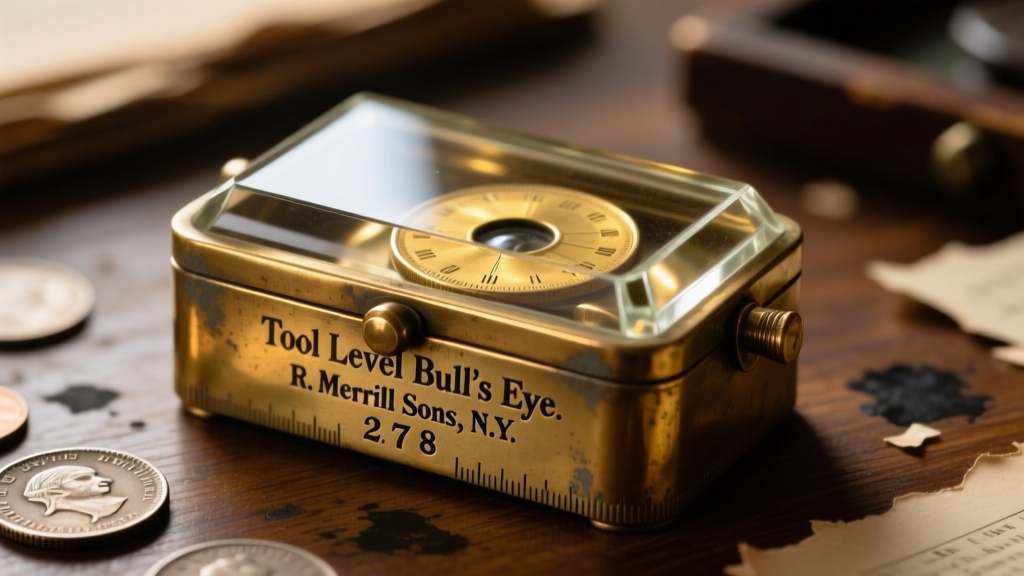
The R. Merrill & Sons Bulls-Eye Level: A Brass-Cased Precision Instrument from New York, Circa 1900–1925

The Weather Vanes Whale Copper Verdigris 15 × 36 Inch: A Numismatic and Decorative Artifact at the Intersection of Folk Art, Metallurgy, and Historical Commerce
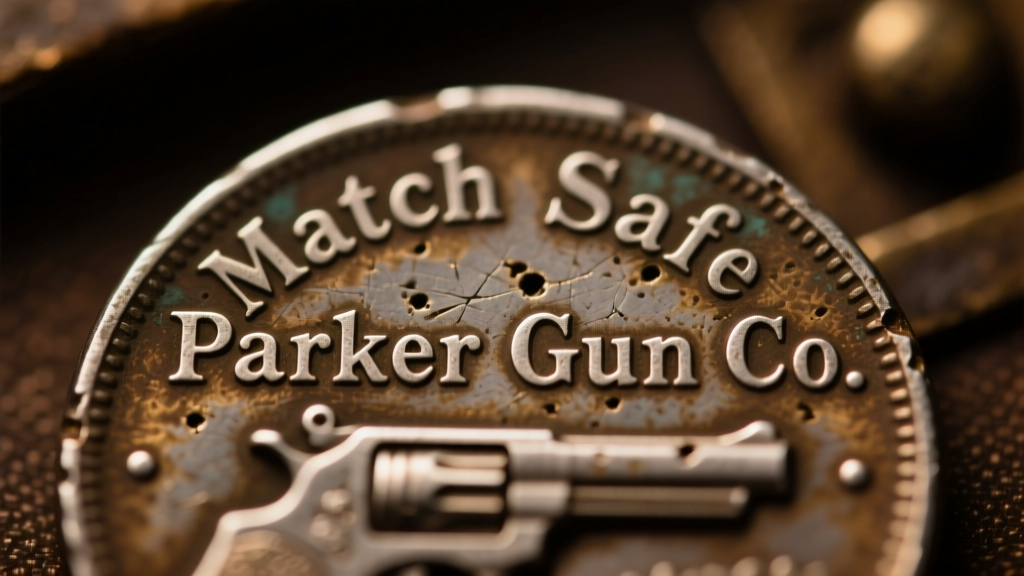
Match Safes of the Parker Gun Company: History, Design, and Collector Value
Peter Hunt’s 1943 Provincetown Hutch: A Landmark of American Folk Art Furniture
Ironstone Plate Polychrome Eagle Shield National Emblems: Frank Beardmore & Co. — A Numismatic and Ceramics Analysis
Fischer Budapest Porcelain: History, Identification, and Market Value of Hungary’s Premier Art Porcelain

Why Are We Not Having People Return After Posting? A Numismatist’s Data-Driven Analysis of Engagement Decay in Coin Community Platforms
Flow Blue Cup and Saucer: The Morning Glory Pattern — History, Identification, and Market Value
The 1948 Clay Political Figurine: Elephant Seated on Donkey — A Rare Artifact of Postwar American Electoral Satire