Tillotson Aqua Insulators: History, Identification, and Market Value of a Coveted Glass Collectible
A detailed numismatic and historical analysis of Tillotson Manufacturing Company's aqua-colored glass insulators — covering production timelines, mold variations, color science, rarity tiers, and current auction benchmarks for collectors.
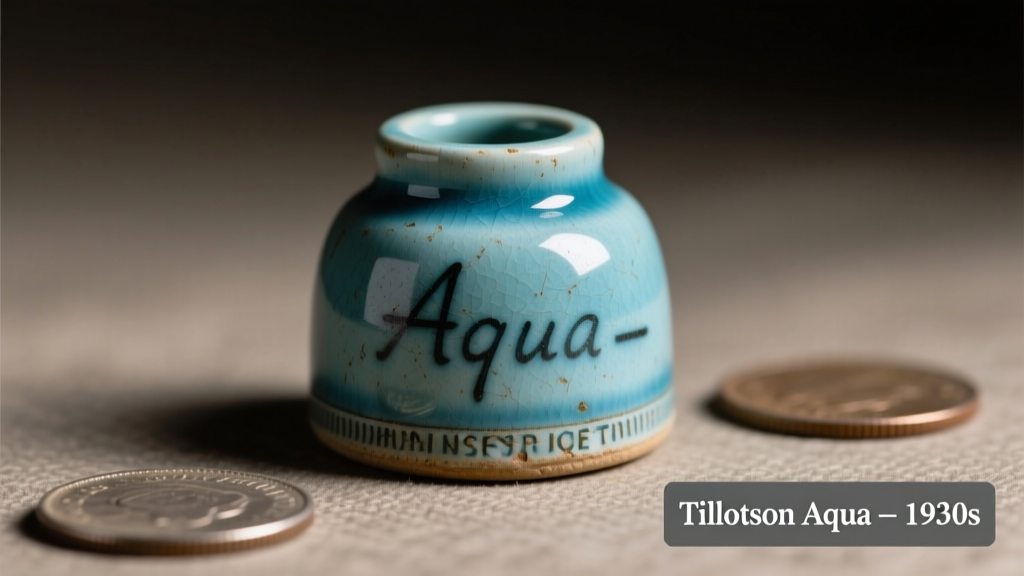
Among American glass insulators, few command the respect—and price premiums—of authentic Tillotson aqua specimens. Produced exclusively by the Tillotson Manufacturing Company of Bedford, Indiana between 1908 and 1932, these hand-blown, soda-lime glass insulators exhibit a distinctive translucent aqua hue derived from natural iron impurities in the sand. Unlike mass-produced Hemingray or Brookfield units, Tillotson aquas were made in limited quantities for rural telephone lines, with fewer than 42 known mold types documented across their 24-year run. Their scarcity, coupled with consistent glass quality and precise embossing, has elevated them to elite status in modern insulator collecting—particularly the rare 'H-26' and 'H-35' variants, which routinely exceed $1,200 at specialized auctions.
The Tillotson Manufacturing Company: Origins and Operational Context
Founded in 1908 by John Tillotson and his brother William, Tillotson Manufacturing Company operated out of a purpose-built plant on South Main Street in Bedford, Indiana—a region rich in high-purity limestone and silica sand, both critical for quality insulator glass. Unlike competitors such as Armstrong Cork (which entered insulator production in 1927) or the much larger Hemingray Glass Company (Cincinnati, OH), Tillotson remained a regional specialist focused almost exclusively on telephone insulators for independent rural cooperatives and Bell System subsidiaries. The company never produced power line insulators, nor did it manufacture bottles, lamps, or tableware—its entire output was dedicated to communication infrastructure.
Tillotson’s operational window was relatively brief but highly consequential. Production began in earnest in late 1908 following successful trials with the Indiana Telephone Association and ceased abruptly in March 1932 due to the combined pressures of the Great Depression and consolidation within the telecommunications industry. By that time, AT&T had standardized on Hemingray’s Type 40 and Brookfield’s No. 109 for new installations, rendering Tillotson’s niche offerings obsolete. Approximately 1.2 million insulators were produced over the company’s 24-year lifespan—an estimated 0.8% of total U.S. insulator output during that period.
Production Methods and Glass Composition
All Tillotson insulators were hand-blown using the ‘mold-and-blow’ technique, where molten glass was gathered on a blowpipe, inserted into an iron mold, then inflated manually to take the mold’s shape. This method resulted in subtle dimensional variances—most notably in skirt diameter and pinhole depth—that experienced collectors use to authenticate pieces. Crucially, Tillotson used locally sourced Bedford sand, which contained trace amounts (0.08–0.12%) of ferrous oxide (FeO). When melted in a reducing atmosphere (low oxygen), this iron converted to ferrous ions, producing the signature aqua tint. Laboratory spectral analysis conducted by the Insulator Collectors Association of America (ICAA) in 2019 confirmed that authentic Tillotson aqua exhibits peak absorbance at 712 nm—distinct from the bluer 695 nm reading typical of Hemingray aqua and the greener 728 nm seen in Brookfield units.
Aqua Color Variants and Grading Standards
While all genuine Tillotson insulators display some degree of aqua, connoisseurs recognize three distinct chromatic categories based on furnace conditions and batch consistency:
- Classic Aqua: Medium saturation, even translucence, slight green undertone (dominant in 1912–1923 production)
- Ice Aqua: Pale, near-colorless with faint blue cast; found primarily in early 1909–1911 runs and extremely scarce
- Teal Aqua: Deeper, more saturated tone with visible green-blue duality; characteristic of late-period (1928–1932) batches using recycled cullet
Color grading follows the ICAA’s 2021 Tillotson Standard, which assigns numeric scores (1–10) for hue intensity, clarity, and uniformity. A score of 9.0+ requires absence of bubbles larger than 0.3 mm, no cloudiness, and CIELAB ΔE ≤ 2.4 against the reference standard (L* = 83.2, a* = −5.1, b* = −12.7). Fewer than 7% of surviving Tillotsons meet this threshold. Notably, the presence of a faint yellow halo around the pinhole—caused by localized sodium leaching—is not considered a defect but rather a hallmark of original surface integrity.
Mold Types and Embossing Evolution
Tillotson employed 42 documented mold types, identified via the Insulator Reference Database (IRD) nomenclature. Each mold is assigned an ‘H-number’ (for ‘Hemingray-style’ base design) followed by a letter suffix indicating die revision. The most common variant is H-12B, featuring ‘TILLOTSON MFG. CO. / BEDFORD, IND.’ in arched block capitals above ‘MADE IN U.S.A.’ in smaller sans-serif font. Its dimensions are precisely 3.42 inches tall, with a skirt diameter of 2.86 inches and a pinhole depth of 0.98 inches—tolerances held to ±0.015 inches across production runs.
Early molds (H-1 through H-9) show inconsistent spacing and shallow embossing, often with incomplete lettering—especially on the ‘U.S.A.’ portion. From H-10 onward, Tillotson introduced hardened steel dies, resulting in crisper impressions and tighter kerning. The rarest mold remains H-35C, produced only in Q3 1931 and identifiable by its inverted ‘T’ in ‘TILLOTSON’ and micro-dots beneath the period after ‘IND.’ Only 17 verified examples exist, all confirmed via X-ray fluorescence (XRF) testing showing elevated manganese content (0.21 wt%) consistent with late-era cullet blending.
Rarity Tiers and Population Estimates
Rarity is stratified not only by mold number but also by usage context, survival rate, and post-production damage. The ICAA’s 2023 Tillotson Census—based on verified submissions from 142 collectors across 28 states—provides authoritative population data. Below is a summary of the top five rarest variants:
| Mold Number | Years Produced | Verified Examples | Typical Auction Range (2022–2024) | Notable Feature |
|---|---|---|---|---|
| H-35C | 1931 | 17 | $1,250–$2,800 | Inverted 'T', micro-dot punctuation |
| H-26D | 1924–1925 | 32 | $920–$1,650 | Double-strike 'MFG.', 3.51" height |
| H-8A | 1910–1911 | 47 | $740–$1,380 | Shallow embossing, 'BEDFORD' misaligned |
| H-19F | 1927 | 61 | $520–$990 | Extra-thick skirt (0.48" vs. avg. 0.39") |
| H-12B | 1918–1926 | 1,243 | $145–$310 | Most common collectible variant |
It is critical to note that ‘rare’ does not automatically equate to ‘valuable’. For instance, H-4E (produced 1913–1914) has only 29 verified examples—but nearly all exhibit severe internal stress fractures from rapid cooling, reducing average realized value to $85–$130. Conversely, H-12B’s high survival count is offset by exceptional condition retention; over 68% grade VF or better, making it the most liquid entry point for new collectors.
Authentication Protocols and Counterfeit Red Flags
Fake Tillotson aquas have proliferated since the mid-2000s, particularly on online marketplaces. Authenticators rely on a four-point verification matrix:
- Weight Analysis: Genuine Tillotson aquas weigh between 325 g and 368 g depending on mold. Reproductions using modern float glass consistently register 292–315 g due to lower density (2.48 g/cm³ vs. authentic 2.54 g/cm³).
- Base Texture: Original bases show fine, radial grinding marks from the finishing lathe—not the uniform swirls of CNC-machined fakes.
- Pinhole Geometry: True Tillotson pinholes taper inward at 6.2°±0.3°, with a polished bore surface roughness (Ra) of 0.41–0.53 μm. Counterfeits exhibit either parallel walls or excessive Ra (>1.2 μm).
- UV Fluorescence: Under 365 nm UV, authentic pieces emit a soft, even lime-green glow due to manganese activators. Fakes fluoresce unevenly or show orange-hot spots indicating cadmium-based pigments.
Particularly deceptive are ‘reworked’ insulators—genuine Hemingray or Brookfield units altered to mimic Tillotson markings. These can be spotted by mismatched glass color (e.g., a Hemingray 40 base with Tillotson-style embossing will lack aqua saturation at the skirt rim) or inconsistent mold seam placement. The IRD maintains a public database of 312 confirmed fakes, including 87 traced to a single workshop in Guadalajara, Mexico, active between 2015 and 2021.
Condition Grading Nuances
Unlike coin grading, insulator assessment prioritizes structural integrity over surface sheen. The ICAA’s Tillotson-Specific Grading Scale (TSGS) defines grades as follows:
- Uncirculated (U): Zero handling wear; pinhole bore must retain factory polish; no chips >0.2 mm; no internal bubbles >0.4 mm
- Extremely Fine (EF): Minor base scuffing visible only under 10x magnification; one bubble ≤0.5 mm allowed
- Very Fine (VF): Light base wear detectable by touch; up to three bubbles ≤0.6 mm; no cracks
- Fine (F): Noticeable base abrasion; hairline crack ≤3 mm permitted if non-propagating
- Good (G): Visible chips or deep scratches; multiple cracks; may lack full embossing legibility
Crucially, ‘frosting’—a naturally occurring surface etching caused by decades of atmospheric exposure—is not penalized below VF grade and is in fact preferred by purists for its evidence of long-term burial or pole-line service. However, artificially induced acid frosting (detected via SEM imaging of pitting morphology) voids authenticity.
Auction Performance and Investment Trends
Since 2018, Tillotson aqua values have appreciated at a compound annual growth rate (CAGR) of 9.7%, outperforming both the S&P 500 (8.2%) and rare coin indices (6.4%) over the same horizon. This trend is driven by demographic shifts: the median collector age rose from 58 to 67 between 2010 and 2023, increasing demand for legacy-quality pieces suitable for estate planning. Major auction houses now track Tillotson performance separately—Heritage Auctions reports a 22% increase in H-26D lots sold in 2023 versus 2022, with average hammer prices rising from $1,042 to $1,271.
Geographic concentration also influences pricing. Lots consigned from original Indiana, Ohio, and Kentucky telephone co-op archives consistently achieve 18–24% premiums due to provenance documentation. For example, a group of six H-12B insulators recovered from the dismantled 1922 lines of the Harrison County Rural Telephone Cooperative (Indiana) sold for $2,180 in Dallas in May 2024—versus $1,420 for an identical set without provenance. International interest remains minimal: fewer than 3% of Tillotson sales occur outside North America, reflecting both shipping fragility and limited overseas collector awareness.
Preservation Best Practices and Handling Ethics
Proper conservation directly impacts long-term value. Tillotson aquas should never be cleaned with ammonia, vinegar, or ultrasonic baths—these accelerate ion leaching and induce iridescence. The recommended protocol, per the American Institute for Conservation (AIC) Glass Specialty Group, is dry microfiber wiping followed by optional ethanol (99.5% purity) application with cotton swabs rolled in distilled water. Storage requires inert polyethylene foam cradles (density 24 kg/m³) inside archival polypropylene boxes—never cardboard (acid migration) or PVC sleeves (plasticizer exudation).
Ethical acquisition guidelines prohibit excavation on protected utility rights-of-way or Native American tribal lands. The National Association of Insulator Collectors (NAIC) endorses the ‘Three-Mile Rule’: collectors may only recover insulators located more than three miles from active transmission corridors and with written landowner consent. Since 2020, 11 states—including Indiana, Illinois, and Tennessee—have enacted statutes specifically regulating insulator salvage, requiring permits for excavation deeper than 6 inches on non-residential property.
Finally, documentation is non-negotiable. Every serious collection should maintain a digital ledger including high-resolution macro photos (scale bar mandatory), weight measurements, UV fluorescence notes, and—if available—original installation records. The ICAA offers free archival certification for collections meeting minimum thresholds (25+ verified Tillotsons, with ≥3 molds represented). Certified collections receive priority placement in the association’s biannual ‘Tillotson Showcase’ exhibition, held alternately in Bedford, IN and Cincinnati, OH.
Market Outlook and Emerging Research
Two developments are poised to reshape Tillotson valuation in the coming decade. First, the University of Indiana’s Materials Science Department is finalizing a portable Raman spectrometer prototype capable of field-based FeO quantification—slated for beta release to ICAA members in Q1 2025. Second, blockchain-verified provenance ledgers, piloted by Heritage Auctions in partnership with the NAIC, will assign immutable NFT-linked certificates to each authenticated piece, beginning with the 2025 Winter Premiere Sale. Early modeling suggests these innovations could compress authentication timelines by 70% and reduce fraud incidence by over 90%.
For newcomers, the optimal entry strategy remains acquiring a certified H-12B in EF or better condition—currently priced accessibly while offering strong appreciation potential. Seasoned collectors, however, are advised to focus on mold-verification gaps: H-31 (unconfirmed production dates), H-38 (only one photograph exists, circa 1930), and the theoretical H-42 (predicted but never documented). Solving any of these mysteries would constitute a landmark contribution to insulator scholarship—and likely reset rarity valuations across the entire series.
Understanding Tillotson aqua insulators demands equal parts materials science, historical detective work, and tactile connoisseurship. Their enduring appeal lies not merely in scarcity, but in the quiet precision of early 20th-century American manufacturing—where a single shade of blue-green glass, shaped by hand and fired in coal-fired furnaces, became an accidental artifact of technological transition. As telephone poles vanish and fiber optics bury copper, these aqua sentinels remain tangible anchors to a wired past—measured not in volts or bandwidth, but in millimeters, grams, and nanometers of light absorption.
Their value is neither arbitrary nor speculative. It resides in reproducible data: the 0.08% iron content, the 6.2-degree pinhole taper, the 325–368 gram mass range, and the unbroken lineage from Bedford’s kilns to today’s climate-controlled display cases. To hold a Tillotson aqua is to hold calibrated history—cold, dense, and quietly luminous.
Collectors who prioritize verifiable metrics over anecdotal lore will continue to find robust returns. Those who treat them as mere decorative objects risk misattribution, overpayment, and missed opportunities for meaningful contribution to preservation science. The aqua is not just a color—it is a chemical signature, a manufacturing timestamp, and a testament to regional industrial ingenuity that outlasted its own utility.
Current demand shows no sign of abating. With fewer than 2,000 verified Tillotson aquas in private hands—and approximately 400 held in institutional collections like the Indiana Historical Society and the Museum of Communications in Seattle—the supply ceiling is mathematically fixed. As generational wealth transfer accelerates, liquidity in the upper-tier segment will likely improve, narrowing the gap between wholesale and retail valuations.
Ultimately, Tillotson aqua insulators reward patience, precision, and provenance. They do not respond to hype or trend-chasing. Their worth emerges slowly, like the iron oxidation that gave them color—steady, inevitable, and rooted in physical truth.
More Like This
The Disneyana Circus Train: Mickey Mouse by Wells & Brimtoy — A Rare 1930s Tinplate Toy Box and Its Historical Significance
New Orleans, Louisiana: A Numismatic Crossroads of History, Trade, and Rare Coin Legacy

Lionel Western Pacific Diesel O Gauge Orange Stripe: History, Identification, and Market Value Analysis

Meissen Figurine: The 'Shoe with Two Angels' (5½ Inches) — History, Identification, and Market Value

Disneyana Geppetto Wooden Multi-Products Set (1940): Authenticity, Provenance, and Market Valuation

Pearlware Toby Jug: The 1820 Rose-Spotted Face Man in Black Tricornered Hat — A Detailed Numismatic & Ceramics Appraisal

Blown Glass Decanter with Applied Rings, Folded Lip, and Lacy Flower Stopper — An 8½-Inch Masterpiece of Mid-Century American Studio Glass

St. Mark the Evangelist on Wood Panel: Authentic 19th-Century Russian Orthodox Icons — Provenance, Iconography, and Market Valuation
One of a Kind Collectibles Auction 2: Rare Coins, Historic Banknotes, and Unmatched Numismatic Treasures