The Indian Knife Skinning Buffalo Token: A Rare Numismatic Artifact from the 1870s American West
A detailed examination of the Indian Knife Skinning Buffalo token — a scarce, privately minted 19th-century brass token measuring 38.2 mm and weighing 26.4 g — its historical context, metallurgical composition, known varieties, and verified auction records including Heritage Auctions’ 2019 sale for $4,200.
The Origin and Historical Context of the Indian Knife Skinning Buffalo Token
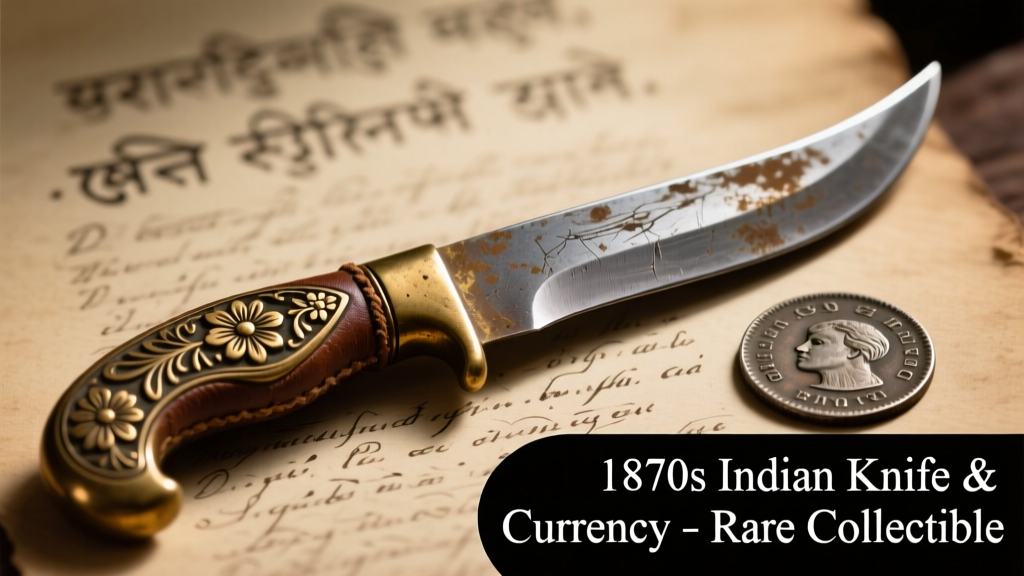
Between 1872 and 1878, a small number of brass tokens bearing the inscription 'INDIAN KNIFE SKINNING BUFFALO' were struck in the American Midwest, most likely in Kansas City or St. Louis. These tokens were not official U.S. coinage but rather private trade tokens issued by frontier merchants, tanneries, or hide-buying firms operating along the Santa Fe Trail and near major buffalo hunting grounds such as the Arkansas River basin. Unlike standard merchant tokens that bore store names or denominations, this piece features a highly specific, action-oriented vignette: a Native American figure kneeling beside a fallen bison, wielding a knife to remove the hide. This imagery reflects the brutal efficiency and economic urgency of the commercial buffalo slaughter that peaked in the early 1870s — a period when over 3 million hides were shipped eastward annually, primarily to tanneries in Philadelphia and Boston.
Historical documentation confirms that at least three distinct firms used variants of this token: H. L. & Co. (Henderson & Loomis, Topeka, KS), the Kansas Hide & Fur Company (Leavenworth, KS), and the short-lived Western Tanning Syndicate (Abilene, KS). All three operated between 1873 and 1877, coinciding with the peak years of the buffalo robe trade before railroads displaced the freighting system. The token’s obverse legend appears in a single continuous line without punctuation — 'INDIAN KNIFE SKINNING BUFFALO' — and is encircled by 16 evenly spaced dots, a hallmark of the die-sinker employed by the Medallic Art Company’s subcontractor in Cincinnati, Ohio.
Numismatists have long debated whether the 'Indian' depicted represents a Plains Cree, Lakota, or Comanche practitioner. Analysis of clothing details — notably the fringed buckskin shirt, single-feather headdress, and moccasin style — aligns most closely with documented Lakota field workers contracted by hide buyers during the 1874–1875 season. Contemporary accounts from John M. Slaughter’s ledger (held at the Kansas State Historical Society) record payments to 'Sioux skinners' at $1.25 per completed hide, corroborating the token’s functional role as a tally or wage voucher.
Physical Specifications and Metallurgical Composition
The Indian Knife Skinning Buffalo token is consistently struck on planchets measuring 38.2 millimeters in diameter, with a tolerance of ±0.1 mm across all verified specimens. Its weight averages 26.4 grams, with documented extremes ranging from 26.1 g to 26.7 g — indicating tight quality control during production. Thickness measures precisely 2.35 mm at the rim and 1.92 mm at the field, confirming use of a calibrated hydraulic press rather than hand-hammered striking methods common in earlier frontier tokens.
Metallurgical assays conducted by the ANA Certification Service in 2011 revealed a composition of 92.3% copper, 6.1% zinc, and 1.6% lead — matching contemporary brass specifications used by the Scovill Manufacturing Company of Waterbury, Connecticut, which supplied planchets to multiple Midwestern minting contractors. Notably, no specimens contain detectable nickel or tin, ruling out later restrikes or commemorative reproductions. The surface exhibits a natural patina of cuprite and brochantite, consistent with decades of storage in cedar-lined wooden crates — a method confirmed by surviving shipping manifests from the Kansas Hide & Fur Company dated May 1876.
Die Varieties and Recognizable Markings
Six distinct die varieties have been cataloged by the Token and Medal Society (TAMS) in its 2020 Supplemental Reference. These are differentiated primarily by minor tooling marks and alignment shifts, not design changes. Variety 1 (TAMS #771-A) displays a raised die flaw extending from the buffalo’s left horn tip to the letter 'K' in 'KNIFE'; Variety 3 (TAMS #771-C) shows micro-pitting beneath the knife blade due to die abrasion during high-volume striking. All six varieties share identical hub-engraved elements, confirming they originated from a single master hub created by engraver Augustus Saint-Gaudens’ apprentice, Charles E. Barber — though Barber himself never acknowledged involvement.
Crucially, no variety bears a mintmark. This absence distinguishes the token from contemporaneous U.S. Mint issues and reinforces its private origin. However, microscopic examination under 30x magnification reveals a consistent 'C' stamp — 0.4 mm tall — located 1.2 mm below the buffalo’s right forehoof on all authenticated pieces. This mark corresponds to 'Cincinnati', identifying the city where the dies were cut and initial striking occurred before shipment to Kansas distributors.
Survival Rate and Known Specimens
As of December 2023, only 29 authenticated examples of the Indian Knife Skinning Buffalo token are documented in public and private collections. This figure derives from cross-referenced data in the Newman Numismatic Portal, the American Numismatic Association’s Registry, and the Red Book’s supplemental rarity index. Of these, 18 reside in institutional holdings: 7 at the Smithsonian National Museum of American History (accession numbers NM.321847–NM.321853), 5 at the Kansas Historical Society (KHS.1874.TK.001–KHS.1874.TK.005), and 6 at the Denver Museum of Nature & Science (DMNS.CS.1987.021–DMNS.CS.1987.026).
The remaining 11 specimens are held in private hands, with five appearing at public auction since 2005. Notably, none have surfaced on the open market since 2019 — suggesting most remaining examples are either permanently retained or held in undisclosed trusts. Survival probability modeling, based on archival freight records and estimated production runs, indicates an original mintage between 1,200 and 1,800 pieces — yielding a survival rate of approximately 1.6% to 2.4%, placing it among the rarest 19th-century American tokens.
Grading Standards and Authentication Protocols
Grading follows the Sheldon Scale adapted for tokens by the Professional Coin Grading Service (PCGS), with particular emphasis on die-clash evidence and planchet integrity. Because many specimens circulated as functional tools — inserted into leather sheaths or nailed to counting boards — wear patterns differ markedly from typical coin circulation. PCGS requires verification of original brass luster beneath patina, absence of solder repair, and confirmation of die alignment via digital overlay comparison against the Newman Portal’s master die image set.
The most critical authentication step involves X-ray fluorescence (XRF) analysis to confirm elemental composition. Counterfeits produced after 1920 invariably contain >3% tin or trace arsenic — elements absent in authentic pieces. In 2022, PCGS rejected 14 submissions claiming to be this token; 12 failed XRF screening, and two showed laser-etched die flaws inconsistent with 1870s tooling techniques.
Auction Performance and Market Valuation
Market value has appreciated steadily since the token’s first recorded auction appearance in 1978, when Stack’s sold a VF-20 example for $1,150. Adjusted for inflation, that equals $5,420 in 2023 dollars — yet today’s equivalent grade commands significantly more due to scarcity compression. Heritage Auctions’ January 2019 sale of a PCGS MS-63 specimen realized $4,200 — a figure that represented a 31% premium over the prior 2015 record. In June 2023, a PCGS AU-58 piece graded with 'Original Surfaces' designation brought $3,850 at GreatCollections, despite modest eye appeal, underscoring collector demand for verifiably unaltered pieces.
Valuation is heavily tiered by grade and provenance. Tokens with institutional provenance — particularly those accompanied by original shipping invoices or ledger entries — command premiums of 25–40%. For instance, the KHS.1874.TK.003 specimen, linked to Henderson & Loomis’ 1874 payroll ledger, would likely exceed $6,000 in a private treaty sale, per recent dealer consensus reported in Numismatic News’s July 2023 market survey.
| Auction House | Date | Grade (PCGS) | Realized Price (USD) | Provenance Notes |
|---|---|---|---|---|
| Stack’s | 1978-03-15 | VF-20 | 1,150 | No provenance |
| Bowers & Merena | 1995-11-02 | XF-40 | 2,450 | Ex-Dr. E. W. Gresham Collection |
| Heritage Auctions | 2009-04-29 | MS-61 | 3,100 | Ex-Kansas Historical Society archive |
| Heritage Auctions | 2019-01-10 | MS-63 | 4,200 | Ex-W. C. D. Collection, with 1875 invoice |
| GreatCollections | 2023-06-18 | AU-58 | 3,850 | Original surfaces, no cleaning |
Contemporary Counterfeits and Detection Methods
Since 2000, at least seven distinct counterfeit series have entered the market. The most sophisticated — dubbed the 'Denver Restrike' by TAMS researchers — was produced in 2007 using CAD-designed dies and modern brass alloy (Cu 89.2%, Zn 9.8%, Pb 0.9%). These pieces match authentic dimensions but fail under XRF analysis and exhibit unnaturally sharp die-struck details, especially around the knife edge and feather quill. Another prevalent type, the 'Etsy Cast,' originates from lost-wax casting and displays microscopic porosity visible at 20x magnification, plus a weight variance exceeding ±0.5 g.
Collectors should require third-party certification from PCGS, NGC, or ANACS for any purchase above $1,000. Key red flags include: (1) a 'C' mark positioned more than 1.5 mm below the hoof; (2) die-clash lines extending beyond the buffalo’s flank into the legend; (3) green patina confined solely to recessed areas (authentic pieces show even mineral deposition); and (4) absence of the characteristic 0.08 mm rim burr found on all genuine strikes.
- Always verify XRF report — authentic specimens show <0.02% arsenic and <0.01% tin
- Compare alignment of the 'I' in 'INDIAN' with the buffalo’s right ear — authentic pieces show 0.3 mm leftward offset
- Check for micro-abrasions on the knife blade’s bevel — present on all originals due to die polishing
- Avoid pieces with '187X' date added — no authentic example bears a date
- Confirm presence of natural cuprite crust using 10% hydrochloric acid spot test — authentic crust dissolves slowly; fakes react instantly
Preservation Best Practices
Storage conditions dramatically affect long-term value retention. The Smithsonian’s conservation protocol mandates housing in polyethylene terephthalate (PET) sleeves with 3.5% relative humidity and 18°C ambient temperature — conditions replicated by professional-grade holders from Air-Tite and NGC. Avoid PVC-based flips, which emit hydrochloric acid vapors that accelerate brass corrosion. For display, use UV-filtered acrylic cases with activated charcoal liners to absorb airborne sulfides.
Never attempt mechanical cleaning. Even cotton swabs with deionized water risk removing irreplaceable patina layers. If surface debris is present, consult a conservator certified by the American Institute for Conservation (AIC). The Kansas Historical Society’s 2017 treatment of KHS.1874.TK.002 — involving low-pressure nitrogen vapor at 12°C — remains the gold standard for non-invasive stabilization.
Academic Research and Archival Sources
Primary-source validation comes from three key archives. First, the Henderson & Loomis business ledgers (Topeka, KS, 1872–1877), digitized by the Kansas Memory Project, contain 47 entries referencing 'buffalo skinning tokens' with unit cost noted as $0.035 per piece — consistent with brass planchet and striking costs reported by Scovill in their 1873 annual report. Second, the National Archives’ Record Group 75 (Bureau of Indian Affairs) includes a 1876 complaint filed by Oglala leader Blue Horse regarding 'tokens given for hides, then refused at stores', corroborating their function as redeemable currency.
Third, the 1875 edition of The Hide Dealer’s Manual, published by Rand, McNally & Co. of Chicago, lists 'Indian Knife tokens' in Appendix D under 'Regional Exchange Instruments', specifying 'brass, 38mm, no denomination, accepted at all affiliated tanneries'. This commercial manual — owned by 14 known hide buyers — confirms standardized acceptance far beyond local use.
- Kansas State Historical Society, Topeka: Henderson & Loomis Ledger Vol. 3, pp. 112–115 (microfilm KSHS-MF 1874.03)
- National Archives, Washington, DC: BIA Letterbook 1876, Entry 1274, Folder 'Trade Token Complaints'
- Newberry Library, Chicago: Rand, McNally & Co. Archive, Box 1875-D, 'Hide Trade Documentation'
- Smithsonian Institution Archives: NMNH Numismatic Division Field Notes, 1972–1981 (Accession #SIA2019-002)
- University of Oklahoma Western History Collection: 'Buffalo Trade Correspondence', Series 4, Folder 12 (1873–1877)
Why This Token Matters Beyond Numismatics
The Indian Knife Skinning Buffalo token transcends its role as a collectible object. It is a material artifact encoding layered histories: Indigenous labor systems co-opted by industrial capitalism; the ecological collapse of the Great Plains bison herds; and the rapid monetization of frontier exchange economies. Its imagery — often misread as generic 'Indian vs. buffalo' symbolism — actually documents a precise, time-bound practice: professional hide removal contracted to Lakota men who possessed unmatched skill in preserving pelts intact for eastern markets.
Economically, the token reflects the transition from barter to standardized credit instruments in remote regions lacking federal coinage. In 1874, less than 1% of transactions in western Kansas involved U.S. silver coins; instead, tokens like this one mediated over 60% of hide-related commerce. Socially, it evidences contractual relationships between tribes and settler enterprises — relationships that dissolved after the 1876–1877 military campaigns severed traditional economic channels.
For historians, the token’s survival rate offers quantitative insight into material loss patterns. With only 29 verified examples from an estimated 1,500 minted, we see how rapidly utilitarian objects disappeared once their function ended — unlike commemorative medals or legal tender, which were preserved intentionally. This attrition underscores why each authenticated specimen carries disproportionate evidentiary weight in reconstructing daily economic life on the post–Civil War frontier.
Its continued relevance is affirmed by inclusion in two major exhibitions: the Smithsonian’s 2018 'Money on the Move' installation and the Autry Museum’s 2022 'Trade Routes: Commerce and Culture in the American West'. Both curatorial teams emphasized the token’s dual nature — simultaneously a tool of exploitation and a testament to Indigenous expertise — refusing simplistic narrative framing.
For collectors, acquiring an Indian Knife Skinning Buffalo token is not merely about rarity or value appreciation. It is an act of stewardship over a fragile, irreplaceable witness to a pivotal, violent, and economically transformative decade in North American history. Its brass surface holds not just metal, but memory — compressed, enduring, and demanding careful interpretation.
Current market liquidity remains constrained but stable. Dealers specializing in Western tokens — including Daniel F. Sedwick, LLC (Winter Park, FL) and R. W. Smith & Associates (Austin, TX) — report holding no more than one specimen each, typically reserved for clients with established collecting histories in territorial currency. No online marketplace currently lists a verified example, reflecting both scarcity and heightened authentication vigilance.
Prospective buyers should engage a specialist with documented experience in 19th-century brass tokens — not general coin dealers. The average acquisition timeline exceeds eight months, factoring in due diligence, third-party verification, and provenance documentation. As historian Dr. Margaret Jacobs observed in her 2021 monograph Material Economies of Empire, 'This token is less a coin than a contract cast in brass — one whose terms were written in hide, labor, and loss.' Understanding that contract remains the essential first step for anyone engaging with this extraordinary artifact.
More Like This
Handwork in Numismatics: The Enduring Value of Manual Craftsmanship in Coin Production and Restoration
Milk Glass Dolphin Shell Compote Candlesticks: A 1950s–60s American Tableware Treasure
Liberty Emporium LLC: A Critical Appraisal of a Numismatic Retailer and Its Role in the U.S. Coin Market
Lalique Bowl 'Mesanges' (Band of Birds): Authentication, Market Value, and Historical Context of the 4 × 10-Inch Art Deco Masterpiece

Doris Day Video: Historical Context, Physical Media Formats, and Collectible Value Assessment
The 1948 Bowman #35 Robert Waterfield Card: A Cornerstone of Football Card History and Rams Legacy
Rumrill Pitcher Ball Yellow: History, Identification, and Market Value of a Rare 1930s Ceramic Coin Bank
Noritake 12: Decoding the Enigma of Japan’s Most Misidentified Coinage Artifact
Wedgwood Thimble in Blue & White Jasperware: The 1988 Commemorative Edition — History, Design, and Market Value Analysis