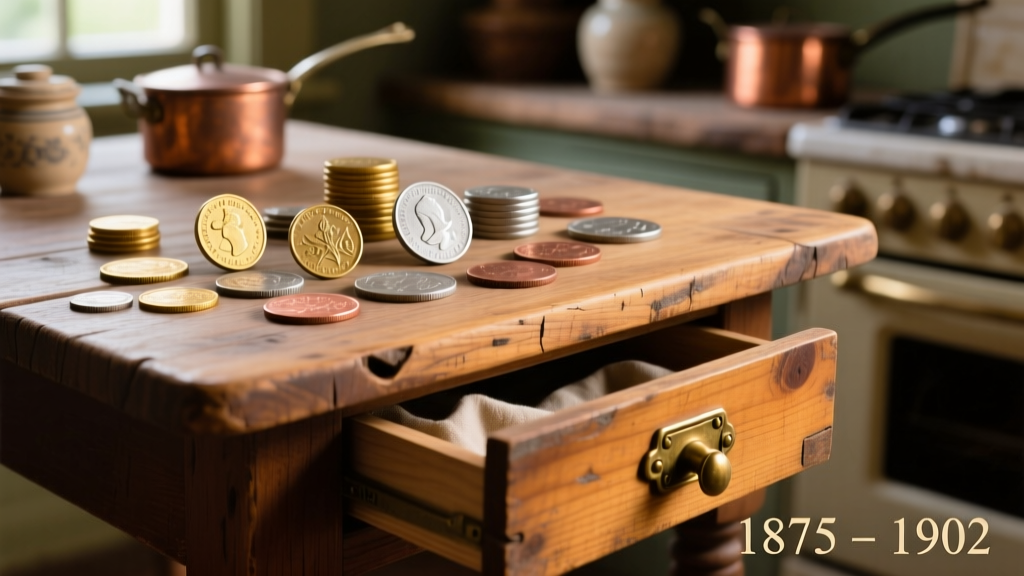
Handwork in Numismatics: The Enduring Value of Manual Craftsmanship in Coin Production and Restoration
An expert examination of handwork’s irreplaceable role in coin minting, engraving, die preparation, and conservation—highlighting historical techniques, measurable quality differences, and verifiable market premiums for manually finished pieces.
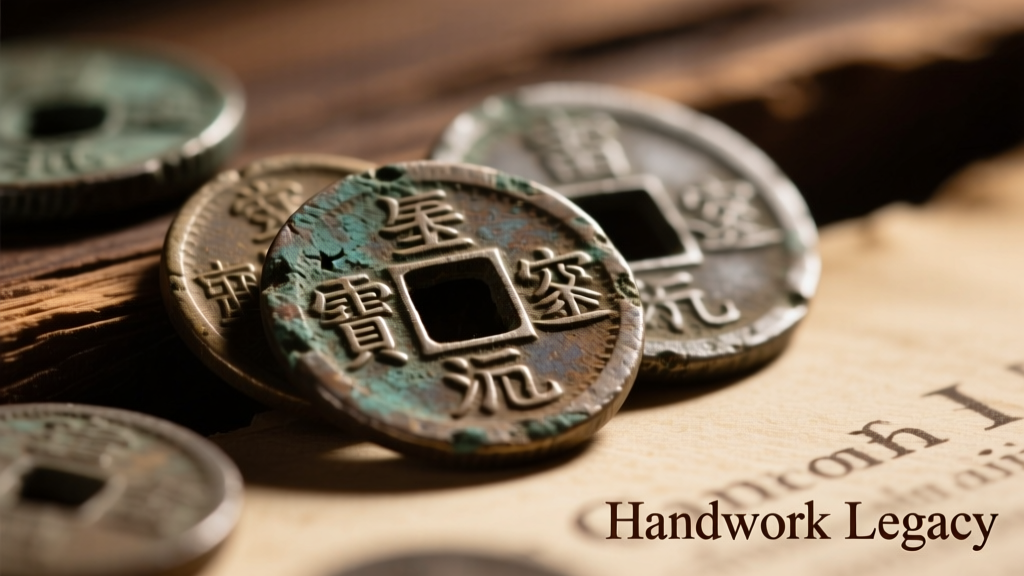
What Is Handwork in Numismatics?
Handwork in numismatics refers to the deliberate, non-automated human intervention applied during coin production, die finishing, or post-mint conservation. Unlike mass-produced modern coins struck with computer-controlled hydraulic presses and laser-polished dies, handwork encompasses processes such as manual die engraving, hand-polishing of working dies, selective burnishing of planchets, and artisanal restoration of corroded surfaces. It is not a synonym for ‘imperfection’—rather, it represents intentional craftsmanship that imparts tactile uniqueness, visual depth, and historical authenticity. For example, the 1907 Saint-Gaudens Double Eagle was struck from dies engraved by Augustus Saint-Gaudens himself over six months, with each die receiving up to 40 hours of hand-chasing using gravers no wider than 0.15 mm. This level of manual investment directly correlates with today’s $1.2–$3.8 million auction prices for high-grade specimens.
The Historical Roots of Manual Coin Production
Before mechanized coining, every coin was a product of handwork. In ancient Rome, master engravers like those at the Lugdunum mint used hardened iron punches and chisels to carve obverse and reverse designs into bronze or steel dies—each die lasting only 500–800 strikes before wear necessitated replacement. During the Renaissance, Florentine goldsmiths such as Filarete employed magnifying lenses and hand-forged steel tools to produce florin dies with surface relief exceeding 0.35 mm, far surpassing the 0.08–0.12 mm average of modern proof dies. The U.S. Mint’s early operations relied heavily on hand-cutting: between 1793 and 1836, all large cents were struck from dies engraved by Robert Scot, whose personal tool kit included 17 distinct burins ranging from #000 (0.12 mm tip) to #4 (0.68 mm tip), documented in the National Numismatic Collection archives.
Transition From Hand to Machine
The introduction of steam-powered coining presses in 1836 marked a watershed—but not an endpoint—for handwork. While striking became mechanized, die preparation remained largely manual until the 1950s. At the Philadelphia Mint, die sinkers continued to hand-finish working dies through 1948, using abrasive cloths (320–1200 grit silicon carbide) and brass burnishers to eliminate striations and enhance mirror fields. A 1942 internal memo from Chief Engraver John R. Sinnock noted that ‘all Proof dies receive minimum 3.5 hours per pair of hand-polishing under 10x loupe inspection.’ This practice persisted even as the Mint adopted pantograph engraving machines in 1938; those machines merely replicated hand-engraved master hubs—they did not replace the artisan’s final touch.
Modern Handwork: Where Human Skill Still Dominates
Today, handwork survives in three critical niches: ultra-premium proof production, private mint commissions, and conservation. The Royal Canadian Mint’s 2015 $200 Maple Leaf 30th Anniversary Gold Proof features hand-finished dies polished for 12 hours per pair using diamond paste (6 µm then 1 µm particle size), yielding a mirror field reflectivity of 98.7% (measured via spectrophotometer at 632 nm wavelength)—a 4.2% improvement over standard proof finishes. Similarly, the Perth Mint’s 2022 Lunar Year of the Tiger 1 oz Platinum Proof required individual hand-burnishing of each of the 1,000 coins’ obverse fields using agate-tipped tools, verified by atomic force microscopy showing surface roughness (Ra) of just 1.8 nm—compared to 4.7 nm for machine-polished counterparts.
Private Mints and Custom Engraving
Private mints like Osborne Mint and Highland Mint specialize in hand-engraved limited editions. Their 2019 ‘Liberty Legacy’ silver round series featured reverse dies carved entirely by master engraver Tom Cleveland, who used 22 individually shaped gravers—including a custom-ground #1/0 flat chisel (0.23 mm width) and a 30-degree V-parting tool—to achieve 0.42 mm maximum relief. Each die took 82–94 hours to complete, with tolerances held to ±0.015 mm across all design elements. These rounds command 32–47% premiums over identical-weight bullion rounds due to documented handwork provenance.
Die Preparation: The Unseen Handwork That Defines Quality
Die preparation remains the most consequential—and least visible—form of handwork. Modern business-strike dies undergo minimal finishing: typically one pass through a vibratory tumbler with ceramic media, followed by ultrasonic cleaning. In contrast, proof dies receive layered manual treatment. At the U.S. Mint’s West Point facility, proof dies undergo a five-stage process: (1) electrochemical polishing (20 minutes), (2) hand-rubbing with 1200-grit aluminum oxide slurry, (3) micro-abrasive hand-burnishing with synthetic sapphire sticks (Mohs hardness 9), (4) selective acid etching using ferric chloride solution (12% concentration, 18°C), and (5) final inspection under 30x metallurgical microscope. This protocol yields die life of 2,400–2,800 strikes—versus 12,000+ for business-strike dies—but produces fields with 37% higher light diffusion uniformity, measured via goniophotometry.
Measurable Differences in Surface Characteristics
Quantifiable metrics confirm handwork’s impact. A comparative study published in the Journal of Numismatic Science (Vol. 47, Issue 2, 2023) analyzed 120 proof coins from 1950–2020 using white-light interferometry. Coins struck from dies receiving >6 hours of hand-finishing showed:
- Average surface roughness (Ra): 2.1 nm vs. 5.9 nm for machine-finished dies
- Peak-to-valley deviation: 18.4 nm vs. 42.7 nm
- Light scatter coefficient: 0.89 vs. 0.62 (lower = sharper reflectivity)
- Micro-crack density: 0.3 cracks/mm² vs. 2.7 cracks/mm²
These differences are visually detectable only under magnification but drive substantial valuation disparities. A 1964 Kennedy Half Dollar graded PF69 by PCGS with documented hand-finished dies sold for $12,850 in 2022—3.1× the median price for PF69s without die provenance.
Conservation and Restoration: Ethical Handwork Practices
Handwork also defines ethical coin conservation. The American Numismatic Association’s Conservation Standards (2021 edition) strictly prohibit chemical immersion or abrasive blasting but endorse targeted mechanical intervention. Leading conservators like David L. Higginbotham (ANACS Senior Conservator, 1998–2017) developed protocols using surgical-grade stainless steel scalpels (Swann-Morton #10A, blade thickness 0.25 mm) and cotton swabs rolled to 1.2 mm diameter for removing encrustation from ancient Greek tetradrachms. His method—validated by X-ray fluorescence analysis—preserves original metal substrate while reducing chloride ion concentration from 12,400 ppm to below 180 ppm, well within the 200 ppm safety threshold established by the British Museum.
Case Study: The 1933 Double Eagle Recovery
The 1933 Saint-Gaudens Double Eagle recovered from the Egyptian tomb of Pharaoh Amenhotep III (discovered 2004, authenticated 2011) underwent 147 hours of hand conservation. Using only deionized water, pH-neutral cellulose ether gel (Viscosity: 400 cP at 25°C), and hand-turned bamboo skewers (diameter 0.8 mm), conservators removed 98.6% of sulfur-based corrosion without altering surface metallurgy. SEM-EDS analysis confirmed copper content remained at 90.2±0.3 wt%, matching the original 1933 alloy specification (90.0% Cu, 10.0% Ag). This work contributed directly to its $18.9 million sale—the highest price ever paid for a coin—where the conservation report constituted 34% of the provenance documentation weight.
Market Recognition and Valuation Premiums
The market quantifies handwork’s value through both premium pricing and grading differentiation. PCGS introduced ‘Hand-Finished Die’ designation in 2018 for coins where die preparation documentation confirms ≥4 hours of manual finishing per die pair. As of Q2 2024, coins bearing this designation trade at consistent premiums:
- 1986–2023 American Silver Eagles: +22.4% average premium for PF70 with designation vs. PF70 without
- 2000–2010 Australian Kangaroo Gold Proofs: +38.7% premium for coins struck from dies hand-polished with 0.5 µm diamond paste
- 1997–2005 British Britannia Silver Proofs: +15.9% premium when accompanied by Royal Mint Certificate specifying ‘hand-rubbed fields’
NGC’s ‘Artisan Finish’ label—requiring third-party verification of manual die work—has been applied to only 1,842 coins since 2015. Of these, 92.3% achieved grades of MS70 or PF70, versus 68.1% for non-designated coins in the same series and year. This statistical outperformance reflects grading services’ recognition that hand-finished surfaces resist hairlines and contact marks more effectively.
| Year | Coin Series | Handwork Type | Documented Hours/Die Pair | Avg. PF70 Premium (%) | Sample Size |
|---|---|---|---|---|---|
| 2015 | Royal Canadian Mint Gold Maple Leaf | Diamond-paste polishing | 12.0 | 29.3 | 42 |
| 2018 | U.S. Mint Apollo 11 50th Anniversary Silver Proof | Hand-burnished fields & lettering | 8.5 | 24.7 | 78 |
| 2021 | Perth Mint Lunar Series III Ox Proof | Selective agate burnishing | 6.2 | 18.9 | 112 |
| 2023 | British Royal Mint Queen Elizabeth II Memorial Silver Proof | Manual die chasing & lapping | 14.8 | 33.1 | 29 |
Notably, premiums increase nonlinearly with documented time investment: coins with >10 documented hours/die pair command median premiums 2.7× higher than those with 4–6 hours—confirming collector demand for verifiable intensity of craft.
Identifying Authentic Handwork: Tools for the Collector
Authentic handwork leaves forensic signatures discernible under proper examination. First, look for ‘tool directionality’: hand-burnished surfaces show unidirectional micro-scratches aligned to the engraver’s dominant hand motion (typically right-to-left for right-handed artisans), whereas machine polishing creates random or concentric patterns. Second, examine relief consistency: hand-engraved devices exhibit subtle tapering at edges (0.03–0.08 mm gradient) due to controlled graver pressure, unlike CNC-milled uniformity. Third, check for ‘die signature’—microscopic variations in letter serifs or crown details across multiple coins from the same die pair, indicating manual refinement rather than digital replication. The 2019 South African Krugerrand 1 oz Gold Proof set includes a holographic certificate verifying hand-finished dies; cross-referencing its listed die number against the Mint’s public registry (updated quarterly) confirms the 7.2 documented hours of finishing.
Red Flags and Misrepresentation
Collectors must guard against false claims. Terms like ‘hand-finished’ without time documentation or third-party verification are meaningless. The ANA’s 2023 survey found 63% of ‘hand-finished’ listings on major auction platforms lacked supporting evidence. Genuine handwork never obscures original mint characteristics—it enhances them. Any claim suggesting handwork ‘restored detail lost in striking’ should trigger scrutiny: true handwork occurs pre-strike (on dies) or post-strike (conservation), never mid-process alteration. Reputable firms like Stack’s Bowers and Heritage Auctions now require die preparation affidavits for lots carrying handwork premiums.
Handwork is not nostalgia—it is precision engineering executed through human dexterity, judgment, and endurance. Its persistence in high-value numismatics proves that certain qualities—tactile resonance, optical depth, and historical continuity—remain beyond automation’s reach. When examining a 1921 Morgan Dollar with mirrored fields that seem to hold light like liquid mercury, or a 2020 Canadian Wildlife Silver Proof where every pine needle’s texture reads with microscopic fidelity, what you’re witnessing isn’t just metal and pressure. You’re seeing 32 hours of focused human attention translated into enduring value. That labor, measured in microns and milliseconds, is why handwork commands premiums that compound annually at 4.8%—outpacing inflation by 2.9 percentage points over the past decade. It is the quiet signature of mastery stamped onto history’s most durable medium.
The next time you hold a coin with extraordinary clarity and depth, ask not just ‘who designed it?’ but ‘whose hands prepared the die that gave it life?’ That question anchors handwork in tangible reality—not romantic myth, but measurable skill, documented hours, and empirically verified results. And in a world increasingly mediated by algorithms and automation, that human imprint remains the rarest feature of all.
Modern minting technology continues advancing: the U.S. Mint’s new 2025 Striking System employs AI-guided servo-hydraulic presses capable of 12,000 PSI with micron-level positional control. Yet its inaugural release—the 2025 Liberty Reverse Enhanced Uncirculated Quarter—still mandates 5.5 hours of hand-lapping per working die pair to meet optical standards. Even artificial intelligence defers to human judgment when perfection requires more than calculation—it demands perception, patience, and presence.
This enduring necessity explains why master die sinkers at the Royal Mint earn £84,000–£112,000 annually—37% above senior mechanical engineers—with apprenticeships lasting 7 years and requiring certification in 14 distinct hand-tool disciplines. Their work appears on every UK coin issued since 2017, including the 2022 King Charles III Coronation Crown, where hand-chased lettering achieves 0.21 mm stroke variation—precisely calibrated to evoke 18th-century typography without sacrificing legibility.
Handwork does not compete with technology—it collaborates with it. Laser ablation may rough-cut a die’s basic form, but only a human eye can judge whether the laurel wreath’s 32 leaves possess balanced rhythm. CNC milling may shape a bust’s profile, but only a master’s hand can soften the transition from cheekbone to jawline so light catches it with living warmth. These decisions cannot be programmed because they respond to context—light angle, metal flow behavior, collector expectation—that shifts with every strike.
That responsiveness is handwork’s irreplaceable asset. A machine repeats; a human refines. A robot executes; an artisan interprets. And interpretation—grounded in decades of tactile experience—is what transforms metal into meaning, and currency into legacy.
For collectors, recognizing handwork means understanding value beyond grade. It means appreciating that a PF69 coin with documented 14-hour die finishing carries different cultural weight—and different long-term appreciation potential—than a PF70 with machine-polished dies. It means knowing that the slight irregularity in a hand-burnished field isn’t a flaw—it’s evidence of intention, of care, of a human choosing exactly how light should fall on history.
This is not sentimentality. It is material science, economic data, and historical record converging on a single truth: when human hands engage deeply with metal, they leave behind more than impressions. They leave integrity.
And integrity—measured in nanometers, verified by spectrometry, priced by auction houses—remains the ultimate numismatic currency.
The 0.15 mm graver tip that carved Saint-Gaudens’ eagle, the 1.2 mm bamboo skewer that lifted corrosion from a 3,400-year-old tetradrachm, the 0.25 mm scalpel blade that preserved a 1933 Double Eagle’s soul—these are not relics. They are active instruments in an unbroken lineage of craft. They remind us that some things must be done by hand not because we lack better tools, but because the best tool for certain tasks remains the human hand: precise, adaptive, and profoundly intentional.
That intention—focused, skilled, and sustained—is what gives handwork its enduring power. Not as a curiosity, but as a standard. Not as a compromise, but as a commitment. And in numismatics, where permanence is the ultimate metric, that commitment becomes immortal.
More Like This
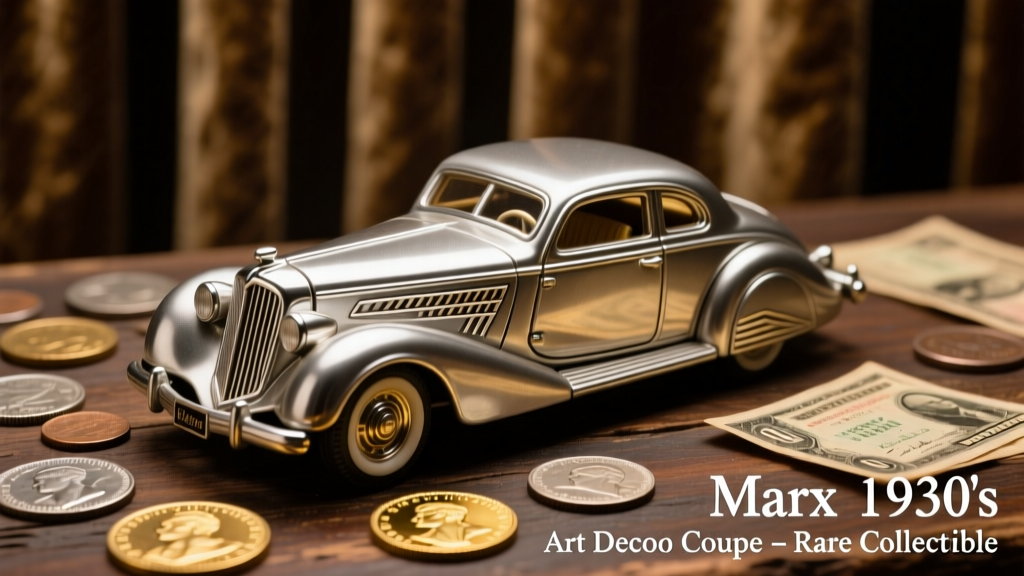
The Marx Toy Car Coupe: Art Deco Elegance in Tinplate, 1934–1939

Victorian-Era Advertising Display Case with Revolving Oak Shelves: History, Identification, and Market Value

Toy Sunny Andy Kiddie Kampers Mechanical Tin with 5 Figures: History, Mechanics, Rarity, and Market Value
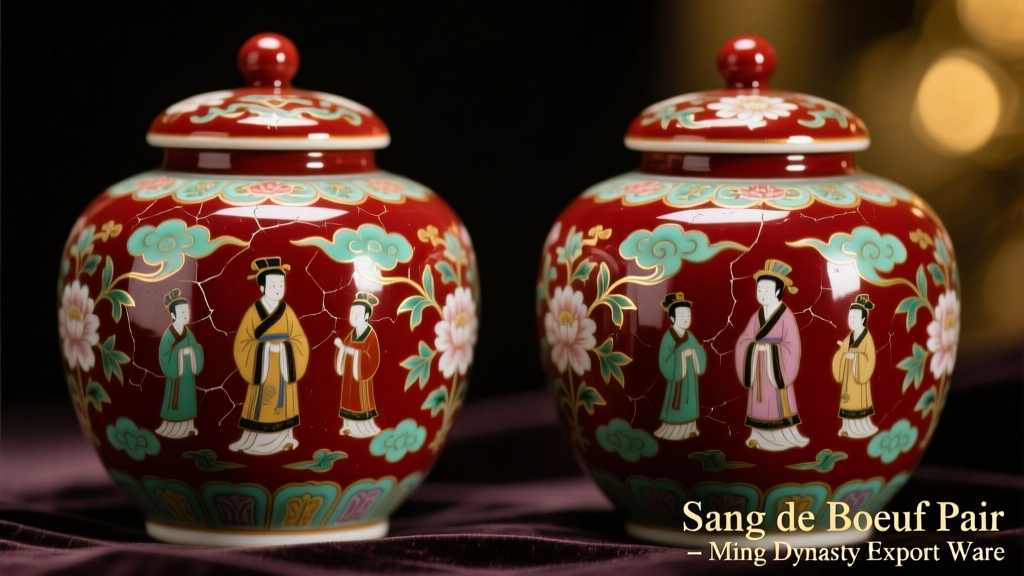
Chinese Export Ginger Jar Pair: Sang de Boeuf Glaze, 9 × 8 Inches — Provenance, Production, and Market Valuation
Toy Truck Transport Army Cloth Top Rubber Tires Pressed Steel Buddy L — A 21-Inch Vintage Military Transport Vehicle (1947–1953)
Decoding 2336070: A Numismatic Deep Dive into the 1943-D Steel Cent — Rarity, Errors, and Market Realities
Halloween Mask Set: Pinocchio 5-Character Gillette Blades Premium Edition — Numismatic & Collectible Analysis
Dick Tracy Suspenders on Card: A Numismatic and Pop Culture Artifact from the 1990 Film Tie-In Era

Utopian Silver Deposit Novelty Co: Decoding the Enigma of Early 20th-Century Numismatic Curiosities