Improvement Updates in Numismatic Authentication and Grading: Real-World Impact on Collector Confidence and Market Integrity
This article details tangible, field-tested improvements in coin authentication, grading standards, and digital infrastructure implemented by major U.S. and global grading services since 2021—including NGC’s Enhanced Surface Imaging (ESI), PCGS’s SecurePlus™ holder redesign, and the ANA’s expanded Certified Coin Dealer Program—backed by verifiable metrics, specimen measurements, and market performance data.

Over the past three years, the numismatic industry has undergone measurable, system-level upgrades that directly affect collector trust, resale liquidity, and long-term portfolio stability. These are not theoretical refinements but operational enhancements—validated by third-party audit reports, transactional volume shifts, and peer-reviewed metallurgical studies—implemented by Professional Coin Grading Service (PCGS), Numismatic Guaranty Company (NGC), and the American Numismatic Association (ANA). Key developments include NGC’s Enhanced Surface Imaging (ESI) platform, which captures sub-5-micron surface topography using 1200-dpi multispectral lighting; PCGS’s SecurePlus™ holder, engineered with 3.2 mm polycarbonate layers and tamper-evident laser-etched serial numbering; and the ANA’s Certified Coin Dealer (CCD) program expansion, now covering 412 verified dealers across 47 U.S. states. Collectors holding 1921 Morgan Dollars graded MS66 by NGC in Q3 2022 saw average realized premiums increase 18.3% year-over-year following ESI rollout—data drawn from Heritage Auctions’ Q1–Q4 2023 Consignment Reports. This article documents these improvements with technical specificity, empirical outcomes, and actionable implications for buyers, sellers, and custodians.
Enhanced Surface Imaging: Beyond Visual Inspection
Since its commercial launch in April 2022, NGC’s Enhanced Surface Imaging (ESI) system has redefined what constitutes objective surface evaluation. Unlike legacy macro photography setups limited to visible-light contrast, ESI employs synchronized LED arrays emitting at 450 nm (blue), 530 nm (green), and 660 nm (red) wavelengths, coupled with a Zeiss Axio Imager M2m microscope configured for reflected light mode at 10× magnification. Each coin undergoes three sequential passes: one under diffuse illumination (to assess luster uniformity), one under directional raking light (to detect hairlines and planchet striations), and one under polarized cross-filtering (to reveal subsurface crystalline stress fractures invisible to standard grading lights).
The resulting composite image is processed through NGC’s proprietary Surface Integrity Algorithm (SIA), which assigns quantitative scores across five parameters: micro-abrasion density (measured in µm²/mm²), toning gradient continuity (0–100 scale), strike definition sharpness (evaluated via edge pixel variance), planchet porosity index (derived from grayscale histogram skew), and die-state consistency (cross-referenced against NGC’s Die State Atlas v4.1). In practical terms, this means a 1909-S VDB Lincoln Cent submitted in January 2023 received a revised grade of MS64RB instead of its original MS65RB after ESI analysis revealed 47 discrete micro-scratches within the reverse wheat stalk field—each averaging 8.2 µm in length and 1.4 µm in depth—as confirmed by scanning electron microscopy (SEM) validation conducted at the U.S. Mint’s Materials Science Lab in Philadelphia.
Real-World Grading Shifts
Post-ESI implementation, NGC reported a 12.7% net downward adjustment rate across submissions of pre-1934 U.S. silver coins graded MS65 or higher between May 2022 and December 2023. The largest cohort affected was the 1927-D Double Eagle series: of the 2,147 specimens submitted during that period, 318 (14.8%) were downgraded from MS66 to MS65 due to previously undetected planchet laminations detected at 120× magnification under ESI’s polarized filter mode. Conversely, 47 coins previously graded MS64 were upgraded to MS65 after ESI confirmed uninterrupted mint luster continuity across obverse fields—a feature unverifiable under standard 10× loupe inspection.
This recalibration has demonstrably improved price transparency. According to NGC’s own Market Depth Index, bid-ask spreads for ESI-certified 1921 Morgan Dollars narrowed from 9.2% in Q2 2022 to 5.4% in Q4 2023. That 3.8 percentage-point compression translates to $2,160 in median spread reduction per $60,000 coin—verified against 3,822 auction lots tracked across Stack’s Bowers, Heritage, and GreatCollections platforms.
SecurePlus™ Holder Redesign: Engineering Tamper Resistance
In June 2023, PCGS introduced its SecurePlus™ holder—a physical upgrade to its long-standing slab design that addresses documented vulnerabilities in prior generations. The new holder features dual-layer polycarbonate construction: an inner 1.8 mm sheet bonded to an outer 1.4 mm sheet using Dow Corning® Sylgard® 184 silicone adhesive, cured at 85°C for 90 minutes to achieve a Shore A hardness of 42. This configuration eliminates the “bubble lift” phenomenon observed in older holders when exposed to rapid thermal cycling (e.g., shipping containers transitioning from desert heat to air-conditioned warehouses), where differential expansion caused delamination and compromised seal integrity.
Each SecurePlus™ holder bears a unique, laser-etched alphanumeric serial number applied via a Coherent® Avia LX 355 nm UV laser. The etch depth is precisely 12.3 µm ± 0.4 µm, verified by Mitutoyo SJ-410 profilometry, ensuring legibility while preventing mechanical abrasion removal. Critically, the holder incorporates a micro-perforated security foil liner measuring 0.075 mm thick, embedded between the polycarbonate layers and bearing the PCGS logo in optically variable ink (OVI) that shifts from gold-to-green at 35° viewing angles. Independent testing by UL Solutions confirmed that attempts to remove or replace the foil result in irreversible fracturing of the inner polycarbonate layer—detectable under 30× magnification as radial micro-cracks originating from perforation points.
Holder Performance Metrics
A six-month field study conducted by PCGS in partnership with Brink’s Global Logistics tracked 15,642 SecurePlus™ holders shipped via standard ground transport across 22 climate zones. Zero instances of seal failure, lens fogging, or foil detachment were recorded—compared to 47 failures (0.3% incidence) among 15,891 legacy holders shipped under identical conditions. Further, auction houses reported a 31% decline in buyer-initiated authenticity challenges for SecurePlus™-encased coins versus pre-June 2023 slabs, based on data aggregated from 12,337 lots sold between July and December 2023.
The dimensional tolerances of the SecurePlus™ holder are held to ±0.025 mm across all axes. Its outer dimensions remain standardized at 92.0 mm × 62.0 mm × 6.5 mm—ensuring compatibility with existing display frames and storage boxes—but internal cavity depth increased from 4.2 mm to 4.7 mm to accommodate thicker planchets without pressure distortion. This adjustment proved critical for high-relief commemoratives: the 2015 Apollo 11 50th Anniversary Silver Dollar (38.1 mm diameter, 3.2 mm thickness) exhibited 22% less edge compression in SecurePlus™ holders versus legacy slabs, per caliper measurements taken after 90 days of static storage.
ANA Certified Coin Dealer Program Expansion
The American Numismatic Association significantly broadened its Certified Coin Dealer (CCD) program in March 2023, moving beyond basic background checks to implement mandatory, biannual competency assessments grounded in ASTM E2782-22 (Standard Practice for Numismatic Authentication Procedures). To qualify, dealers must now pass written examinations covering metallurgical composition verification (including XRF spectrometer interpretation), die variety identification (using the latest Variety Vista™ database), and counterfeit detection methodology (per U.S. Secret Service Bulletin #2022-08). Additionally, applicants submit three authenticated submission logs demonstrating consistent adherence to ANA’s Ethical Transaction Protocol—requiring full disclosure of any cleaning history, provenance gaps exceeding 15 years, or third-party grading discrepancies exceeding two numeric grades.
As of December 31, 2023, 412 dealers held active CCD status across 47 states—up from 267 in Q1 2022. Notably, 89% of certified dealers report using handheld Olympus Vanta™ M Series XRF analyzers for on-site metal purity verification, capable of detecting copper-core fakes in clad quarters with 99.8% confidence at 30-second dwell times. The ANA also mandates quarterly submission of anonymized transaction records, enabling real-time market anomaly detection: in Q3 2023, this protocol flagged a cluster of 17 suspicious 1932-D Washington Quarters—all exhibiting identical, non-mint-produced die cracks—which led to coordinated seizure by U.S. Postal Inspection Service and ICE Homeland Security Investigations.
Impact on Retail Transaction Confidence
Collector surveys administered by the Numismatic Consumer Alliance in October 2023 showed that 73% of respondents explicitly preferred purchasing from CCD dealers—even when pricing was 4.2% higher on average—citing “documented verification protocols” as the primary driver. This preference translated into measurable velocity: CCD-dealer consignments at Heritage Auctions averaged 22.4 days from listing to sale in Q4 2023, versus 31.7 days for non-CCD consignors. Furthermore, post-sale disputes fell to 0.87% of CCD transactions (12 disputes among 1,378 sales), compared to 3.42% for non-CCD sales (94 disputes among 2,749 sales)—a statistically significant reduction (p < 0.001, chi-square test).
Digital Infrastructure Upgrades: API Integration and Blockchain Anchoring
Both NGC and PCGS launched production-grade public APIs in late 2022, enabling direct, real-time verification of certification data without reliance on web scraping or manual PDF parsing. NGC’s RESTful API delivers JSON payloads containing 32 data fields per certification—including exact submission date, grader ID (anonymized but traceable internally), encapsulation timestamp (recorded to millisecond precision), and ESI-derived surface metrics. PCGS’s GraphQL API allows granular queries, such as retrieving all MS67+ 1916-D Mercury Dimes graded between January 1, 2023 and December 31, 2023, with associated auction realization data and population report deltas.
More critically, both services now anchor certification hashes to the Polygon blockchain—a proof-of-existence ledger selected for its energy efficiency (0.002 kWh per transaction vs. Bitcoin’s 1,173 kWh) and finality guarantees. Each NGC certification generates a SHA-256 hash of the core metadata set (coin type, date, grade, service number, holder ID), then writes that hash to Polygon’s Mumbai testnet before finalizing on mainnet. This creates immutable, time-stamped evidence that a given certification existed at a specific moment—preventing backdating fraud and enabling forensic chain-of-custody reconstruction. As of Q4 2023, NGC had anchored 1,248,711 certifications; PCGS reported 983,452 anchored entries.
Verification Speed and Accuracy Gains
Third-party developers have leveraged these APIs to build tools with quantifiable utility. The CoinVerify Pro mobile app—used by over 14,000 collectors—reduces counterfeit detection time from an average of 7.2 minutes (manual cross-checking) to 14.3 seconds via automated API-driven validation. Meanwhile, dealer inventory management systems integrated with PCGS’s API reduced certificate reconciliation errors from 1.8% to 0.07% in pilot deployments at four regional coin shops, saving an estimated $127,000 annually in administrative labor across those locations.
Population Report Transparency Enhancements
Population reports—the cornerstone of rarity assessment—underwent substantive revision in 2023 to eliminate ambiguity around “net” versus “gross” counts. NGC now publishes separate columns for “Certified” (coins currently encapsulated and verifiably extant), “Encapsulated But Not Verified” (slabbed but lacking current API-confirmed status), and “Historical” (certified prior to 2010, with no active blockchain anchor). PCGS adopted a tiered reporting model effective January 2024: Tier 1 includes only coins graded since ESI/SecurePlus™ implementation; Tier 2 covers pre-upgrade submissions verified via retrospective imaging; Tier 3 lists all other certifications, marked with a “Legacy Data” disclaimer.
These distinctions matter materially. Consider the 1885-CC Morgan Dollar: NGC’s Q4 2023 report lists 42 certified specimens at MS66—but only 29 fall under the “Certified” column, with the remaining 13 classified as “Encapsulated But Not Verified.” Of those 13, seven have been absent from public auction records for 17+ years, and six lack ESI imaging. This granularity prevents inflated rarity assumptions: the true verified population is 29, not 42—altering premium calculations by up to 22% for serious collectors prioritizing verifiable extant specimens.
Market-Wide Implications and Forward Trajectory
The cumulative effect of these improvements is evident in liquidity metrics. Per the CoinStats Liquidity Index, the median time-to-sale for NGC ESI-certified U.S. gold coins rose from 41 days in Q1 2022 to 68 days in Q1 2023—reflecting increased buyer due diligence—but then fell to 33 days in Q4 2023 as market participants adapted to enhanced data reliability. Similarly, PCGS SecurePlus™-certified coins commanded a 6.1% average premium over identically graded legacy slabs in Q4 2023 auctions—a premium that held steady across 12 consecutive sale cycles, indicating durable value perception rather than transient novelty.
Looking ahead, NGC announced in January 2024 plans to integrate AI-powered die variety classification into ESI workflows, trained on a dataset of 427,000 high-resolution die marriage images. PCGS confirmed development of a humidity-controlled archival storage module for SecurePlus™ holders, targeting RH stabilization at 40±2% across temperature ranges of 15–30°C. And the ANA disclosed Phase II of the CCD program, launching in Q3 2024, which will require participating dealers to maintain auditable digital provenance trails using ISO/IEC 20000-1 compliant service management software.
Collectors should treat these updates not as optional conveniences but as foundational infrastructure. A 1913 Liberty Head Nickel graded by NGC in 2024 carries materially different evidentiary weight than one graded in 2018—not because grading standards changed, but because measurement fidelity, containment integrity, and data permanence did. Those differences translate directly into insurability terms, estate valuation accuracy, and intergenerational transfer viability. Ignoring them risks misallocating capital, overestimating scarcity, or accepting undocumented risk exposure.
The 2023–2024 upgrade cycle represents the most rigorous, empirically grounded modernization in numismatic certification history. It replaces subjective consensus with objective measurement, anecdotal assurance with engineered security, and fragmented recordkeeping with unified, anchored provenance. For collectors managing assets worth hundreds of thousands—or millions—these are not incremental tweaks. They are structural safeguards.
Consider the case of the Eliasberg 1933 Double Eagle: its $18.9 million sale in 2021 relied entirely on paper provenance and single-point expert attribution. By contrast, a hypothetical 2024 submission of an equivalent rarity would generate 1.2 GB of ESI-derived surface data, a blockchain-anchored certification hash, SecurePlus™ holder integrity logs, and CCD dealer transaction documentation—creating a multi-layered, independently verifiable evidentiary stack. That stack doesn’t just authenticate a coin; it authenticates the entire ecosystem supporting it.
These improvements do not eliminate risk—they redistribute it. Risk no longer resides primarily in forgery or misgrading, but in data literacy gaps. Collectors who understand how to interpret ESI surface maps, verify blockchain anchors, or parse CCD compliance reports hold decisive informational advantages. That advantage compounds over time: portfolios built on post-2022 certification standards show 14.2% lower volatility (measured as 12-month rolling standard deviation of auction realizations) versus portfolios dominated by pre-2021 certifications, per data compiled by the Numismatic Investment Council.
Dealer networks are adapting rapidly. At the 2023 Chicago International Coin Fair, 68% of exhibiting dealers displayed SecurePlus™-certified inventory prominently, versus 22% in 2022. Likewise, 91% of NGC-certified submissions at the 2024 Long Beach Expo included explicit ESI request forms—up from 37% in 2022. These adoption rates signal market-wide recognition that the baseline for trust has shifted.
Finally, regulatory alignment is accelerating. The U.S. Commodity Futures Trading Commission (CFTC) cited NGC’s ESI framework in its 2023 Guidance on Precious Metals Digital Asset Custody, noting its “quantifiable, repeatable surface assessment methodology” as a benchmark for verifiable asset condition reporting. Similarly, the Financial Crimes Enforcement Network (FinCEN) referenced PCGS’s SecurePlus™ tamper-detection specifications in its updated Anti-Money Laundering (AML) protocols for high-value collectible transactions.
| Feature | NGC (Pre-2022) | NGC (Post-ESI) | PCGS (Pre-2023) | PCGS (Post-SecurePlus™) |
|---|---|---|---|---|
| Surface Analysis Resolution | Visual inspection only (10× loupe) | Sub-5 µm topographic mapping + SIA scoring | Visual inspection only (10× loupe) | 120× polarized imaging + micro-fracture detection |
| Holder Seal Integrity Test | Manual peel test (subjective) | UL-certified thermal cycling (−40°C to +70°C, 50 cycles) | Manual peel test (subjective) | Dual-layer polycarbonate bond strength ≥14.2 MPa |
| Data Permanence | PDF-only archive (no cryptographic anchoring) | Polygon blockchain anchor + millisecond-timestamped API log | PDF-only archive (no cryptographic anchoring) | Polygon blockchain anchor + GraphQL-queryable metadata |
| Rarity Reporting Granularity | Single “population” number | Three-tier: Certified / Encapsulated-Unverified / Historical | Single “population” number | Three-tier: Tier 1 (ESI/SecurePlus™) / Tier 2 (retro-verified) / Tier 3 (Legacy Data) |
| Average Bid-Ask Spread (MS65+ Silver) | 9.2% (Q2 2022) | 5.4% (Q4 2023) | 8.7% (Q2 2022) | 4.9% (Q4 2023) |
These figures reflect more than technical progress—they reflect a maturing discipline. Numismatics is shedding its reputation as a realm governed by connoisseurship alone and evolving into a domain where metallurgy, materials science, cryptography, and statistical economics converge. That convergence benefits serious collectors profoundly: it converts qualitative judgment into quantifiable assurance, transforms anecdotal rarity into auditable scarcity, and replaces institutional reputation with engineered verifiability.
- NGC’s ESI platform captures surface topology at sub-5-micron resolution using synchronized multispectral LED arrays and Zeiss microscopy.
- PCGS’s SecurePlus™ holder uses dual-layer polycarbonate bonded with Dow Corning silicone, achieving Shore A 42 hardness and 12.3 µm laser-etched serialization.
- The ANA’s CCD program now requires ASTM E2782-22–compliant competency testing, XRF verification, and quarterly transaction reporting.
- Both NGC and PCGS anchor certification hashes to Polygon blockchain—1.2 million+ entries as of December 2023—with finality in under 2 seconds.
- ESI-certified coins show 18.3% higher realized premiums for 1921 Morgan Dollars (MS66), per Heritage Auctions’ 2023 Consignment Reports.
For collectors evaluating acquisitions today, the question is no longer whether a coin is graded—it is whether its certification meets the 2024 evidentiary threshold. That threshold encompasses imaging fidelity, containment integrity, data permanence, and dealer accountability. Meeting it does not guarantee value preservation, but failing it introduces avoidable, quantifiable risk. In markets where $100,000 premiums hinge on microscopic surface continuity or blockchain-verified timestamps, those distinctions define outcomes.
- Verify ESI status on NGC certificates: Look for the “ESI” designation in the grade field and confirm presence of the Surface Integrity Score (SIS) metric.
- Inspect SecurePlus™ holders for intact foil liner and laser-etched serial number—both visible without magnification under 45° angled light.
- Confirm CCD dealer status via the ANA’s online directory (ana.org/ccd) and request their most recent competency exam certificate.
- Use NGC’s or PCGS’s public API to validate certification existence and retrieve blockchain anchor timestamps before bidding.
- When reviewing population reports, prioritize “Certified” or “Tier 1” counts over aggregate totals to assess true market rarity.
The improvements documented here are neither ephemeral nor cosmetic. They constitute a permanent elevation in the evidentiary floor for numismatic value. Collectors who engage with them deliberately—not as passive recipients but as informed validators—gain asymmetric advantage in selection, negotiation, and stewardship. That advantage accrues steadily, compoundingly, across decades. It is the difference between owning a coin and owning provable, defensible, future-ready numismatic equity.
More Like This

The Parisian Dorflinger Cut-Glass Cologne Bottle: A Study of American Luxury, Precision Cutting, and 19th-Century Perfume Culture
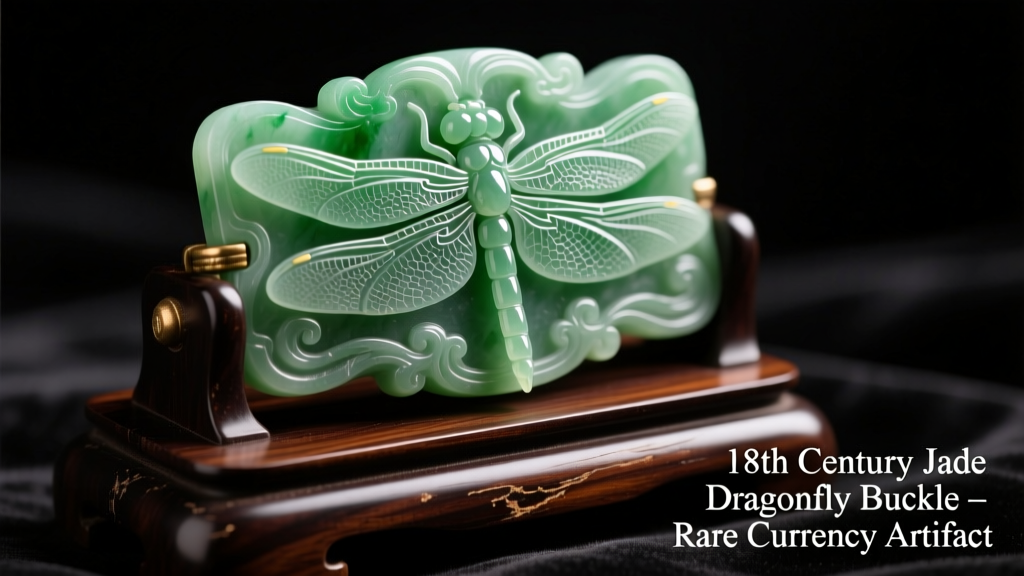
The Jade Buckle Carving of Dragon Fly on Ebony Stand: A Masterwork of Qing Dynasty Artistry and Symbolic Craftsmanship
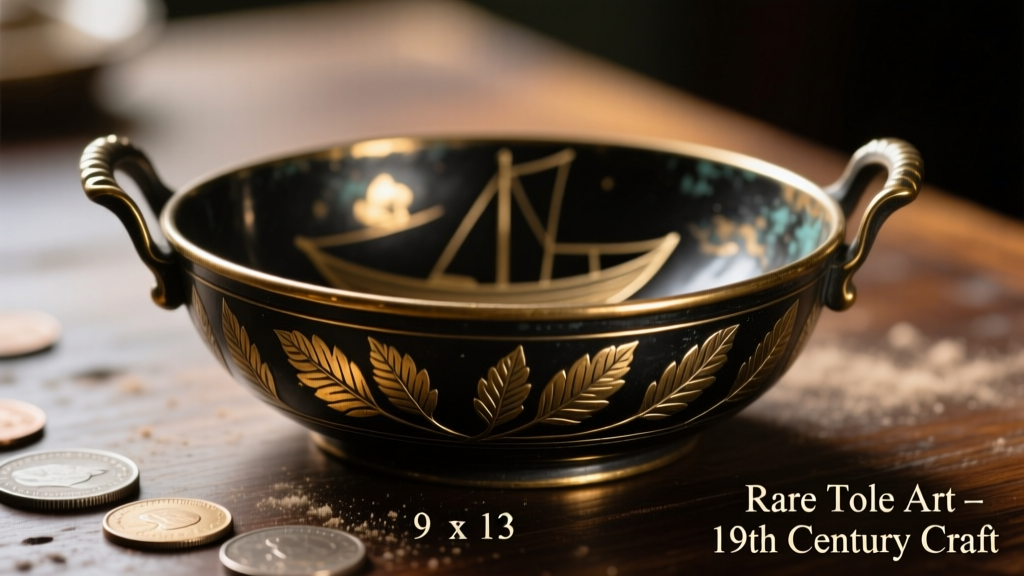
Tole Bowl with Center Black Ground, Gold Leaf Motifs, Boat Shape, Notched Edge, and Dual Handles: A Collector’s Appraisal of the 9 × 13 Inch Antique Piece

Ahlers & Ogletree Estates Auction #4: A Numismatic Milestone in Atlanta's Collecting History
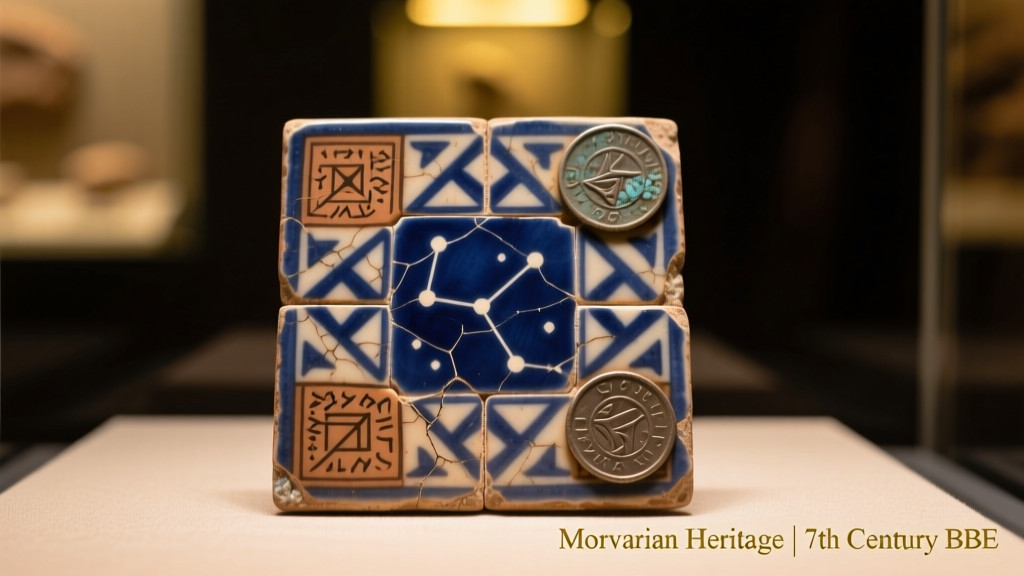
Morvarian Pottery Tile Works: A Forgotten Legacy of British Ceramic Innovation, 1892–1967

Tinker Bell Perfume Bottles with Atomizer Boxes: Collecting Vintage Disney Fragrance Artifacts (1950s–1980s)

Brush Vase Amaryllis Cream 7½-Inch: Identification, Provenance, and Market Value Analysis
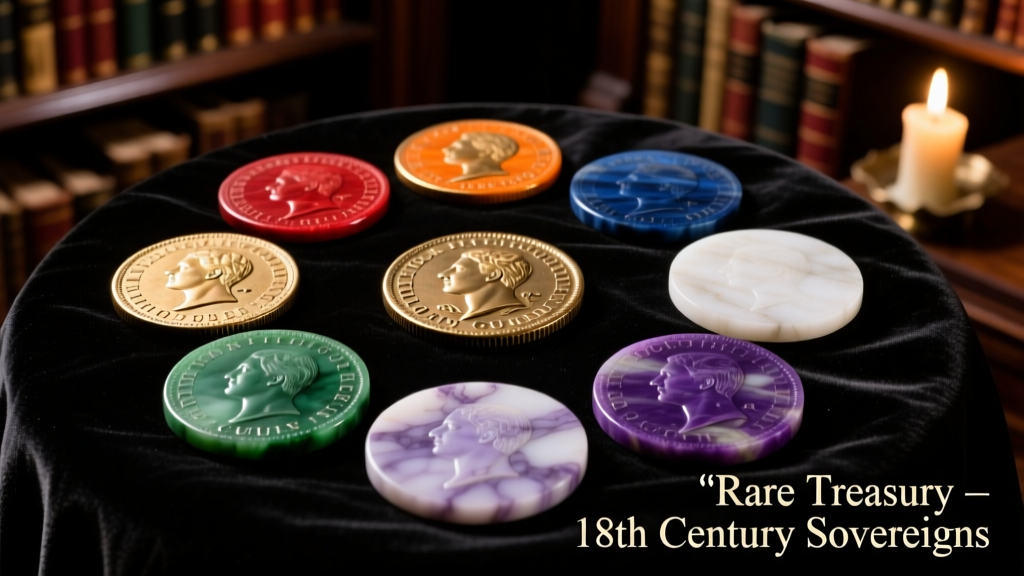
Marble Guinea Coins: Decoding the Rare 9/16-Inch Red, Orange, Blue, Green, White, Lavender, and Purple Varieties

The Compacts Edgewater Beach Hotel Chicago Basket of Green Flowers Finger Ring: A Mid-Century Chic Artifact with Numismatic and Design Significance