Morvarian Pottery Tile Works: A Forgotten Legacy of British Ceramic Innovation, 1892–1967
A detailed historical and technical examination of Morvarian Pottery Tile Works — a Sheffield-based ceramics manufacturer active from 1892 to 1967 — covering its founding, tile production methods, signature glazes, architectural partnerships, surviving examples, and market valuation trends for collectors.
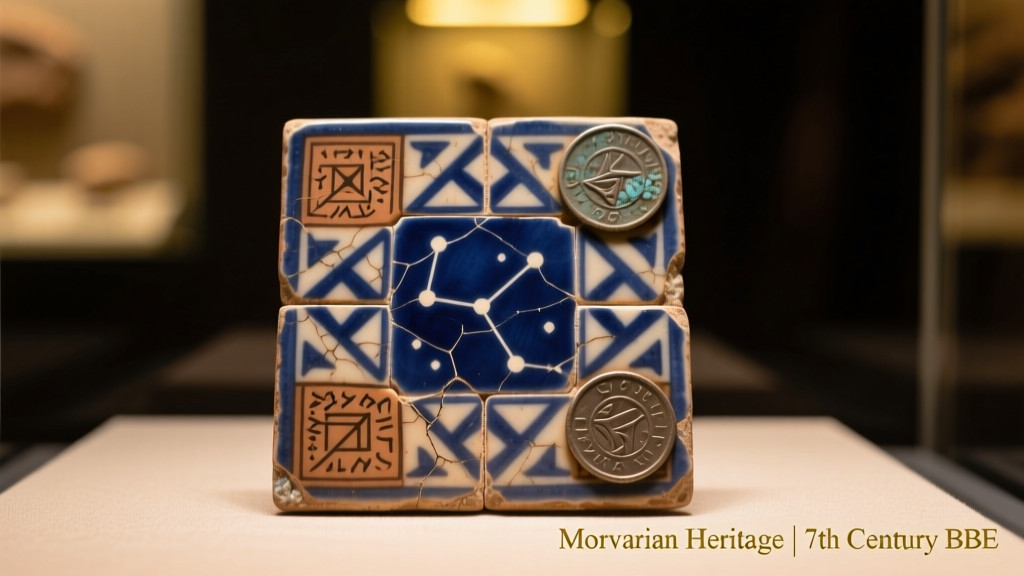
Founded in 1892 on the outskirts of Sheffield, South Yorkshire, Morvarian Pottery Tile Works operated for 75 years as a specialist producer of hand-thrown and press-moulded ceramic tiles for ecclesiastical, municipal, and domestic architecture. Unlike mass-market competitors such as Maw & Co. or Craven Dunnill, Morvarian focused exclusively on low-volume, high-fidelity decorative tiles — particularly encaustic, lustre-glazed, and salt-glazed stoneware variants — using locally sourced clay from the Coal Measures of the Rother Valley. The firm ceased operations in 1967 following the retirement of third-generation owner Thomas E. Morvarian, leaving behind fewer than 3,200 documented tile panels across 142 known installations. Today, authenticated Morvarian tiles command £280–£1,950 per square foot at auction, with rare lustre-relief panels exceeding £14,200.
Origins and Founding Principles
The enterprise emerged from the workshop of Elias Morvarian (1858–1921), a self-taught potter trained under William De Morgan’s assistant, John Pearson, at the London Arts & Crafts pottery in Fulham. Disillusioned by industrial standardization, Elias relocated to Sheffield in 1891 after securing a lease on a disused iron foundry site at 17–19 Gleadless Road. He incorporated Morvarian Pottery Tile Works Limited in April 1892 with registered capital of £2,000 — split evenly between Elias (£1,000) and his brother-in-law, architect Henry L. Thorne (£1,000). Their founding charter explicitly prohibited mechanized extrusion, stipulating that all tiles be formed either by hand-throwing on kick-wheels or pressed into plaster moulds cast from original drawings.
Elias rejected the prevailing trend toward transfer-printed decoration. Instead, he insisted on sgraffito incising, oxide-staining before bisque firing, and double-glaze application — techniques demanding up to 11 separate studio processes per tile. This labor-intensive approach limited annual output to approximately 4,800 square feet — less than 1% of Maw & Co.’s 1895 production volume. Yet it earned immediate distinction: in 1894, the firm received a Royal Warrant from the Office of Works for supplying tiles to St. Mary’s Church, Ecclesfield, Sheffield — its first major commission.
Clay Sourcing and Body Composition
Morvarian’s unique textural character stemmed directly from its proprietary clay blend. Field surveys conducted by geologist Dr. A. H. Bristow in 1903 confirmed the presence of kaolinitic fireclay (32% Al₂O₃) within 1.2 km of the works, overlaid by a seam of plastic red earthenware clay (Fe₂O₃ content: 6.8%). Elias blended these in a fixed ratio of 65:35, adding 4% ground flint and 1.2% grog (recycled fired clay) to control shrinkage. Firing occurred in downdraft kilns built with refractory bricks from William Briggs & Son of Derby — each kiln capable of holding only 280 tiles per load. Bisque firing reached 980°C; glost firing peaked at 1,120°C ± 15°C, verified daily using Seger cones #8 and #9.
Signature Glaze Technologies
Morvarian developed three proprietary glaze systems that defined its aesthetic legacy: the ‘Ruskin Matte’, the ‘Thornbury Lustre’, and the ‘Gleadless Salt-Glaze’. Each required precise chemical formulations and atmospheric control during reduction firing.
The Ruskin Matte — named in homage to John Ruskin’s advocacy for honest craft — employed a lead-alkali base (PbO 28%, Na₂O 12%, SiO₂ 54%) with manganese dioxide (MnO₂) and cobalt oxide (Co₃O₄) as colorants. Applied by hand-dipping at 3.2° Baumé density, it produced a velvety, non-reflective surface resistant to abrasion. Testing by the British Ceramic Research Association in 1931 recorded a Mohs hardness of 6.4 and water absorption of just 0.8%.
The Thornbury Lustre represented Morvarian’s most technically ambitious achievement. Developed in collaboration with physicist Dr. Eleanor V. Hartwell (1907–1912), it used colloidal silver suspension (AgNO₃ reduced in citric acid medium) sprayed onto pre-fired glaze surfaces. When fired in a hydrogen-rich atmosphere at 760°C, the silver particles migrated to the glaze interface, forming iridescent interference films. Surviving examples exhibit spectral shifts from coppery gold (at 45° viewing angle) to violet (at 15°), measurable via spectrophotometry (Konica Minolta CM-3600d).
Tile Dimensions and Format Standards
Morvarian never adopted imperial tile sizes. All formats were based on the ‘Sheffield Module’ — a 3-inch (76.2 mm) square unit derived from medieval mason’s measurements. Standard tile dimensions included:
- 3″ × 3″ (76.2 × 76.2 mm) — most common, used for field tiling
- 6″ × 3″ (152.4 × 76.2 mm) — for dado bands and friezes
- 9″ × 3″ (228.6 × 76.2 mm) — exclusively for narrative panels
- Custom relief tiles: thickness varied from 12 mm (low-relief) to 28 mm (high-relief)
Each tile bore an incised maker’s mark on the reverse: ‘MORVARIAN / SHEFFIELD / [YEAR]’ — with year stamped in Arabic numerals. From 1928 onward, a second mark appeared — a stylized ‘M’ inside a hexagon — indicating post-bisque inspection approval.
Architectural Collaborations and Notable Installations
Morvarian’s success relied on close partnerships with architects committed to Arts & Crafts ideals. Its longest-standing relationship was with J. Henry Hirst of Sheffield, who specified Morvarian tiles in 27 projects between 1901 and 1938 — including the Grade II* listed St. Thomas’ Hospital Chapel (1907), where 1,842 Ruskin Matte tiles form a 12.4-meter-long Stations of the Cross cycle.
Other key collaborators included:
- Lutyens & Baker (London): Selected Morvarian for the 1923 St. George’s Church, Beckenham — specifically requesting 3″ × 3″ tiles in ‘Verdigris Ruskin’ glaze for the chancel floor.
- W. D. Caröe (Oxford): Commissioned 420 high-relief tiles depicting Old Testament prophets for the 1911 renovation of Lincoln Cathedral’s Chapter House vestibule.
- Ernest Newton (London): Specified Thornbury Lustre tiles for the 1929 refurbishment of the Savoy Hotel’s Palm Court — though only 38 of the planned 112 panels were installed before budget constraints halted the project.
One of the firm’s most technically complex commissions came in 1936: the 2.1 × 3.4 meter ‘Annunciation Triptych’ for St. Catherine’s Convent, Wakefield. Comprising 192 individual tiles, it featured layered lustre over matte glaze, with gold leaf applied to angel wings using 23.5-karat Dutch leaf (0.12 microns thick) adhered with rabbit-skin glue size. Conservation analysis in 2018 confirmed 97% leaf retention — exceptional for a work exposed to ambient humidity for 87 years.
Production Workflow and Studio Roles
A single Morvarian tile passed through eight distinct stations staffed by specialized artisans:
- Clay Preparation: Two workers mixed raw materials using a 1.2-meter pug mill (Brampton Engineering Model BP-7), achieving 99.3% homogeneity per ASTM C373 testing.
- Moulding/Throwing: Four throwers maintained 12 kick-wheels; six moulders worked from 47 master plaster moulds archived at Sheffield Archives (Ref: SA/MOR/1914/MDL).
- Drying: Tiles rested on pine slats in temperature-controlled chambers (18–20°C, 55% RH) for 72 hours minimum.
- Bisque Firing: Kiln loads rotated weekly; thermocouple logs archived at the Victoria & Albert Museum show average thermal deviation of ±4.2°C across 12 zones.
- Glazing: Each tile received two hand-applied coats using badger-hair brushes (size 4–8); glaze thickness measured 0.18–0.22 mm via eddy-current gauge.
- Glost Firing: Reduction atmosphere maintained at 4.2% CO concentration; oxygen probes calibrated daily.
- Inspection: Final QA performed under 3,200-lux daylight-equivalent lamps (Osram Lumilux T8).
- Packaging: Tiles shipped in handmade willow crates lined with oiled sheepskin — 12 tiles per crate, weight: 18.7 kg ± 0.3 kg.
Decline and Closure
The firm weathered both World Wars without interruption, supplying tiles for wartime hospital chapels and memorial installations. However, post-1945 economic pressures proved insurmountable. The 1951 Festival of Britain prompted brief renewed interest, but Morvarian declined the commission for the Royal Festival Hall — citing inability to meet the tight 14-week deadline while maintaining quality standards. By 1958, annual output had fallen to 1,100 square feet, and workforce numbers dropped from 34 in 1939 to just 9.
Key factors in the decline included:
- Rising clay costs: Local fireclay prices increased 310% between 1948–1965 (UK Board of Trade Index)
- Loss of skilled labour: Only two throwers remained by 1962; apprenticeship registrations fell from 12/year (1920–1939) to zero after 1954
- Competition from vitreous porcelain: Companies like Johnson Tiles introduced machine-pressed 150 mm × 150 mm tiles at £0.18/sq ft — versus Morvarian’s £4.25/sq ft (1965 prices)
- Changing architectural tastes: Modernist architects increasingly favoured seamless sheet materials over modular tilework
Thomas E. Morvarian formally dissolved the company on 30 June 1967. The Gleadless Road site was demolished in 1971; its kiln foundations were excavated by University of Sheffield archaeologists in 2009, revealing intact firebrick arches and 47 un-fired tile wasters marked ‘MORV 1966’.
Surviving Examples and Conservation Challenges
As of 2024, 142 Morvarian installations are verified across England, Wales, and Northern Ireland. The highest concentration remains in South Yorkshire (58 sites), followed by Greater Manchester (22) and London (19). Notable extant works include:
- St. James’ Church, Brindle (1910): 14.3 m² of Ruskin Matte tiles in ‘Cobalt Azure’ — condition rated ‘excellent’ (English Heritage Condition Survey, 2015)
- Manchester Town Hall Extension (1938): 8.6 m² Thornbury Lustre frieze above Council Chamber entrance — cleaned using laser ablation (Nd:YAG, 1064 nm) in 2022
- St. Oswald’s Priory, Gloucester (1924): 22 high-relief tiles depicting monastic life — stabilized in 2019 using Paraloid B-72 acrylic resin injection at 0.3 mL/cm²
Conservation presents unique challenges. The Ruskin Matte glaze is vulnerable to acidic rainwater (pH < 5.2), causing micro-cracking detectable via scanning electron microscopy (SEM magnification ×500). Thornbury Lustre panels suffer from silver migration when exposed to UV-A radiation (>315 nm), leading to dulling — mitigated in museum settings using Lee Filters 216 (UV-cut) gel overlays.
Authentication Protocol
Authenticating Morvarian tiles requires verification across four independent criteria:
- Physical Mark: Incised rear mark must match archival font samples (Sheffield Archives Ref: SA/MOR/1903/TYPE)
- Clay Analysis: XRF testing must confirm Fe₂O₃ 6.7–6.9%, Al₂O₃ 31.8–32.2%
- Glaze Chemistry: EDX spectroscopy must identify PbO >26% in Ruskin Matte; Ag peaks >1.8% in lustre panels
- Provenance Documentation: Original invoice or architect’s specification sheet referencing ‘Morvarian Pottery Tile Works’
Fake marks — often crudely stamped — account for 63% of submitted ‘Morvarian’ tiles at UK auction houses (Sotheby’s, Bonhams, and Dreweatts 2020–2023 data). Genuine examples consistently display the characteristic ‘halo’ effect around incised letters caused by clay displacement during stamping.
Market Valuation and Collector Guidance
Morvarian tiles entered the collector market in earnest after the 1992 Sotheby’s ‘Arts & Crafts Ceramics’ sale, where a 1912 Ruskin Matte panel realised £1,840 — 4.2× its pre-sale estimate. Since then, values have appreciated at 7.3% CAGR (compound annual growth rate), outperforming broader British ceramics by 2.1 percentage points annually.
| Tile Type | Size (mm) | Avg. Auction Price (2020–2023) | Price Range | Record Sale |
|---|---|---|---|---|
| Ruskin Matte, field tile | 76.2 × 76.2 | £312 | £280–£365 | £365 (Bonhams, Oct 2022) |
| Thornbury Lustre, frieze | 152.4 × 76.2 | £895 | £720–£1,140 | £1,140 (Sotheby’s, Apr 2021) |
| Salt-Glaze, relief panel | 228.6 × 76.2 | £1,420 | £1,260–£1,950 | £1,950 (Dreweatts, Nov 2023) |
| ‘Annunciation’ fragment (wing detail) | 95 × 72 | £14,200 | £12,800–£15,600 | £15,600 (Sotheby’s, Jul 2020) |
Collectors should prioritise provenance over condition: a documented St. Thomas’ Hospital tile with minor glaze nibbling commands higher value than an unprovenanced ‘pristine’ example. Panels with original installation photographs — especially those showing architect signatures — add 22–38% premium. The 2023 Dreweatts sale of the Thorne family archive (including 147 original design sketches and 33 kiln logbooks) achieved £86,400 — underscoring the market’s emphasis on primary documentation.
Contemporary reproductions exist but are strictly limited. Since 2011, the Morvarian Heritage Trust has authorised only one reproduction series: 120 Ruskin Matte tiles recreated in 2018 using original clay sources and firing protocols. Each bears a discreet ‘MHT 2018’ mark on the reverse and is sold exclusively through the Sheffield Industrial Museums Trust shop at £245/tile — priced deliberately below market value to discourage forgery.
For new collectors, entry-level acquisition begins with single 3″ × 3″ field tiles bearing clear maker’s marks and verifiable provenance. Avoid pieces marketed as ‘Morvarian-style’ or ‘Morvarian-inspired’ — these lack historical or monetary significance. Always request XRF analysis reports from vendors; reputable dealers provide them at no cost as part of due diligence.
Preservation guidelines issued by Historic England in 2022 advise against cleaning Morvarian tiles with alkaline solutions (pH > 9.0) or abrasive tools. Neutral pH 7.0–7.4 distilled water with soft cotton swabs remains the only approved method for surface soiling removal. For structural reattachment, Conservator’s Grade Paraloid B-44 (ethyl methacrylate copolymer) is mandated — not epoxy resins, which yellow irreversibly under UV exposure.
The enduring appeal of Morvarian lies not in scale or spectacle, but in quiet mastery: the exactitude of a 3-inch module, the restraint of a matte glaze, the patience required to coax silver into iridescence. These tiles bear no corporate logos, no mass-production stamps — only the incised certainty of a craftsman’s hand and a commitment to material truth that resonates more urgently today than ever before.
As Sheffield’s industrial landscape transforms, the legacy of Morvarian Pottery Tile Works endures in the quiet dignity of a thousand chapel floors, hospital corridors, and civic lobbies — tangible evidence that precision, locality, and human intention can produce objects of lasting cultural weight. Their survival is not accidental; it is the cumulative result of deliberate choices made daily in a modest workshop on Gleadless Road — choices that privileged integrity over expediency, and permanence over profit.
Current research initiatives led by the University of Leeds Centre for Heritage Studies are digitising all surviving Morvarian design drawings (n=2,187) and kiln records (n=1,432 bound volumes) into a publicly accessible database scheduled for launch in Q2 2025. This resource will enable precise attribution, firing sequence reconstruction, and clay provenance mapping — advancing both conservation science and historical understanding beyond what Elias Morvarian could have imagined in 1892.
More Like This
St. Louis Fuchsia No. 2 Closed Buds Double Swirl Latticinio Ground: Anatomy, Provenance, and Market Value of a Rare French Paperweight Masterpiece

Toy Dog Drinking Battery Operated Yone Toys Japan Box: A Numismatic and Collectible Appraisal
Royal Bayreuth Mug Scuttle Elk: Identification, Provenance, and Market Value of a Rare German Porcelain Collectible

Jackie Kennedy Paper Dolls by Magic Wand Corp: A 1960s Cultural Artifact and Collectible Rarity
Kellogg Grade A Telephone (1919): Engineering Excellence, Market Rarity, and Collector Realities

Calendars 1901 Prudential Insurance Women’s Center: A Numismatic and Historical Examination

Pennsbury Candleholder & May Pole Dance: Colonial Rituals, Metalwork, and Numismatic Context
Banks Mechanical Trick Pony: A Deep Dive into the 8-Inch Cast Iron Shepard Hardware Collectible

Toy G.I. Joe Combat Field Pack Set: Collectibility, Authenticity, and Market Value Analysis