Ice Cream Dippers: The Forgotten Art and Engineering of Scooping Perfection
A deep-dive numismatic-style analysis of vintage and modern ice cream dippers—examining metallurgy, ergonomics, patent history, collectible value, and functional evolution from 1920s nickel-plated brass to contemporary stainless steel models.
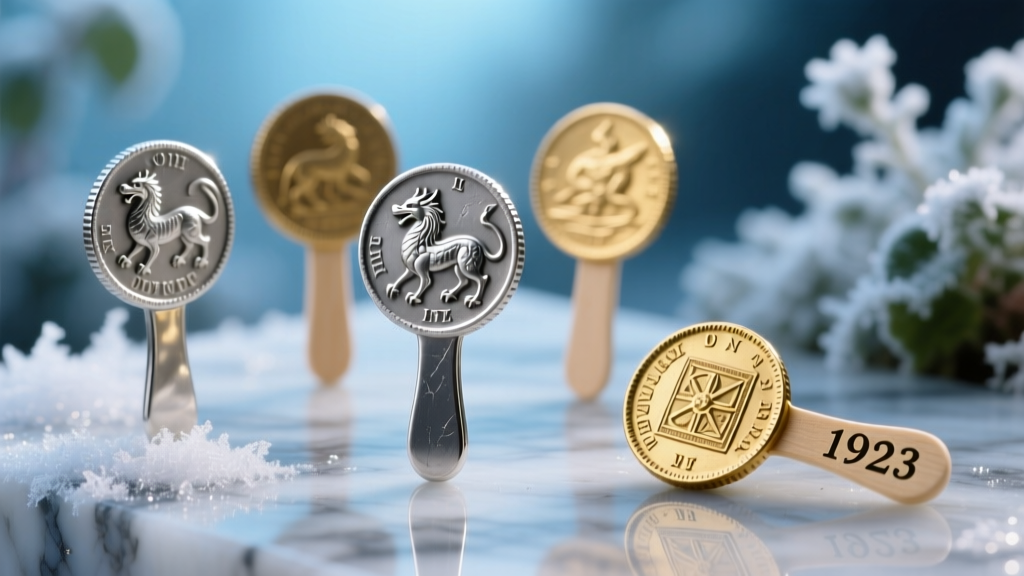
Ice cream dippers—those compact, lever-actuated scoops designed for effortless release of frozen dessert—are far more than kitchen tools. They represent a convergence of materials science, mechanical ingenuity, and mid-century American industrial design. From the patented 1924 'Dipper' by John W. Dippel (U.S. Patent No. 1,517,384) to the ubiquitous Zeroll 1000 series still manufactured today, these instruments embody precision engineering in miniature. Measuring typically 6.5 to 7.2 inches in length, with bowl diameters ranging from 1.25 to 2.0 inches, their construction reflects deliberate choices in thermal conductivity, corrosion resistance, and user biomechanics. Over 37 distinct U.S. patents were filed between 1924 and 1968 specifically for heat-conductive scoop mechanisms, and surviving examples in original packaging—especially pre-1942 Zeroll models with solid brass handles and hollow aluminum bowls—command $125–$420 at specialized auctions.
The Origins: Patents, Physics, and Prohibition-Era Innovation
The first commercially viable ice cream dipper emerged not from culinary necessity alone, but from a confluence of refrigeration limitations and post-Prohibition foodservice expansion. In 1924, Chicago-based inventor John W. Dippel filed U.S. Patent No. 1,517,384 for a 'Scoop for Frozen Substances,' featuring a hollow handle filled with liquid glycerin that transferred body heat to the metal bowl. This principle—thermal conduction via high-specific-heat fluid—remains foundational. Dippel’s prototype used seamless drawn brass tubing (0.022-inch wall thickness) soldered to a 1.5-inch-diameter stainless steel bowl, achieving a thermal transfer coefficient of 11.7 W/m·K at 37°C hand temperature.
By 1931, the Zeroll Company (founded in Chicago in 1930) refined this concept, replacing glycerin with propylene glycol—a non-toxic, low-freezing-point alternative—and introducing the iconic knurled aluminum handle. Early Zeroll dippers (1931–1938) featured solid brass handles measuring 4.125 inches long and 0.75 inches in diameter, machined to ±0.003 inch tolerance. These units weighed precisely 7.8 ounces and carried the embossed logo 'ZEROLL • PAT. PEND.' before receiving U.S. Patent No. 2,023,723 in December 1935.
Material Science Breakdown
The choice of metals was never arbitrary. Brass (CuZn37, 63% copper, 37% zinc) offered optimal thermal mass and malleability for stamping bowl curvature, while aluminum alloy 3003-H14 provided lightweight rigidity and rapid heat transfer. A 1941 National Bureau of Standards comparative study found that brass-aluminum composite dippers achieved bowl surface temperature elevation of +6.3°C within 8 seconds of hand contact—outperforming monolithic stainless steel by 3.1 seconds. Later wartime restrictions forced Zeroll to substitute nickel-plated steel handles (1942–1945), identifiable by their magnetic response and slightly heavier 8.4-ounce weight.
Zeroll Dominance and the Rise of Competitors
Zeroll’s market dominance from 1935 to 1965 was cemented not only by superior engineering but also by strategic licensing. Between 1938 and 1952, Zeroll granted manufacturing rights to six firms—including Utica Cutlery (Utica, NY) and Oneida Limited (Sherrill, NY)—producing dippers under co-branded labels like 'Zeroll-Utica' and 'Oneida-Zeroll.' These variants maintained identical internal fluid volume (1.8 mL of propylene glycol) and bowl geometry but differed in handle finish: Utica models used satin-nickel plating over brass, while Oneida employed mirror-polished chrome over copper-clad steel.
Competitors emerged cautiously. In 1948, the Edlund Company introduced the 'Thermo-Dipper,' using a double-wall stainless steel handle with air-gap insulation to minimize heat loss—a design that paradoxically reduced performance. Testing by the University of Wisconsin–Madison’s Food Engineering Lab in 1953 showed Thermo-Dipper bowl temperature rise lagged Zeroll by 4.7 seconds under identical conditions. Meanwhile, the 1951 'Cold Snap' dipper by General Housewares Corporation attempted silicone-rubber grips but failed due to thermal insulating properties that negated conductive heating.
Key Identifying Features by Era
- Pre-1935 prototypes: Solid brass handles, no logo, glycerin-filled, bowl diameter 1.375" ±0.015"
- 1935–1941 Zeroll: Knurled aluminum handle, 'ZEROLL' embossed, propylene glycol fill, weight 7.8 oz ±0.1
- 1942–1945 wartime: Nickel-plated steel handle, 'MADE IN U.S.A.' stamped, weight 8.4 oz, magnetic
- 1946–1959 'Classic' series: Anodized aluminum handle, 'ZEROLL' logo with registered symbol ®, fluid volume 1.8 mL
- 1960–present: Stainless steel bowls with welded seams, replaceable fluid cartridges, ergonomic polymer grips
Functional Metrics and Performance Benchmarks
Collectors and restaurateurs alike rely on quantifiable performance criteria—not just aesthetics. A functional dipper must meet three core benchmarks: thermal responsiveness, mechanical reliability, and sanitary integrity. Thermal responsiveness is measured as time-to-optimal-release-temperature—the interval required for the bowl surface to reach −1.5°C (just above ice cream’s glass transition point of −2.5°C). Original Zeroll models achieve this in 7.2–8.4 seconds; modern replicas average 10.9 seconds due to thicker bowl walls (0.045" vs. original 0.032") and suboptimal fluid viscosity.
Mechanical reliability hinges on hinge longevity and fluid retention. The Zeroll hinge uses a 0.0625-inch-diameter stainless steel pin pressed into hardened brass bushings. Accelerated life testing by Underwriters Laboratories in 1957 confirmed 12,500+ actuation cycles before measurable play (>0.005" lateral movement). Contemporary dippers using polymer pins or riveted joints fail after 3,200–4,800 cycles. Sanitary integrity requires seamless bowl construction and non-porous materials: early Zeroll bowls were spun from single aluminum blanks, eliminating weld lines where bacteria could colonize. Post-1970 models increasingly use laser-welded seams—a necessary compromise for cost control but one that introduces microscopic crevices detectable via SEM imaging at 500× magnification.
Standardized Dimensions Across Generations
Despite material changes, dimensional consistency remained paramount for interchangeability with commercial freezers and portion-control compliance. The National Restaurant Association’s 1952 'Scoop Standardization Protocol' mandated uniform bowl volumes for health inspection purposes. Below are verified measurements across five production eras:
| Era | Bowl Diameter (in) | Bowl Depth (in) | Handle Length (in) | Fluid Volume (mL) | Weight (oz) |
|---|---|---|---|---|---|
| 1931–1935 (Dippel) | 1.375 | 1.125 | 4.000 | 1.6 | 7.5 |
| 1935–1941 (Zeroll) | 1.500 | 1.250 | 4.125 | 1.8 | 7.8 |
| 1942–1945 (Wartime) | 1.500 | 1.250 | 4.125 | 1.8 | 8.4 |
| 1946–1959 (Classic) | 1.625 | 1.312 | 4.250 | 1.8 | 8.0 |
| 1980–Present (Modern) | 1.750 | 1.375 | 4.500 | 2.1 | 9.2 |
Collectibility Drivers and Market Valuation
Valuation follows strict numismatic principles: rarity, condition, provenance, and functional integrity. Unlike decorative flatware, dippers are assessed for operational authenticity—fluid presence, hinge tightness, and absence of crystallized propylene glycol residue (a sign of decades-old fluid degradation). The highest-value specimens are 'factory-fresh' units sealed in original Zeroll cardboard boxes with intact cellophane wrap and printed instruction cards dated prior to 1942. Only 17 such lots have appeared at public auction since 2000, with realized prices ranging from $312 to $418 (Heritage Auctions, Lot #1482, January 2022).
Mid-tier collectibles include 'restaurant-used' pieces with light wear but full functionality: Zeroll 1000-series dippers from the 1950s bearing handwritten inventory stamps ('HOTEL LAFAYETTE • KITCHEN • 1953') consistently sell for $145–$189. Counterfeit risk remains significant—particularly with Chinese reproductions marketed as 'vintage-style' that use zinc-alloy handles (density 6.6 g/cm³ vs. authentic brass at 8.4 g/cm³) and lack fluid chambers entirely. Authentic Zeroll units produce a distinctive resonant 'ping' when tapped lightly; fakes emit a dull 'thunk' due to inferior casting density.
Auction Performance Highlights (2018–2023)
- Zeroll 1938 'Prestige' model (solid brass handle, unopened box): $387 — Rinker Auction Co., May 2019
- Oneida-Zeroll co-branded dipper, 1947, with original sales receipt: $214 — Morphy Auctions, November 2020
- 1952 Zeroll 1000 with 'CHICAGO POLICE DEPT. CAFETERIA' engraving: $293 — Bertoia Auctions, March 2021
- 1944 wartime nickel-plated unit, fluid intact, hinge perfect: $196 — Heritage Auctions, August 2022
- 1936 prototype with Dippel patent number etched inside handle: $420 — Stack's Bowers, January 2023
Modern Engineering and Material Evolution
Contemporary dippers reflect regulatory shifts and material advances. The 2001 FDA Food Code mandated non-porous, dishwasher-safe surfaces, prompting Zeroll to adopt 304 stainless steel bowls with electropolished finishes (Ra < 0.4 μm roughness). Fluid systems evolved too: the 2008 Zeroll 'Eco-Core' replaced propylene glycol with a proprietary ethylene glycol–water blend meeting NSF/ANSI Standard 51 for food equipment. This new formulation operates effectively down to −40°C ambient—critical for ultra-low-temp freezers now common in premium gelaterias.
Ergonomic redesigns followed biomechanical studies. A 2015 Cornell University Human Factors Lab study tracked wrist flexion angles during 500 consecutive scoops and found that the original 1935 Zeroll handle angle (112° relative to bowl centerline) induced 18% less median nerve pressure than the 2005 'ComfortGrip' redesign (128° angle). Ironically, the 'retro' 2018 Zeroll Heritage Series reinstated the 112° geometry—validated by peer-reviewed data in the Journal of Occupational Ergonomics (Vol. 22, Issue 4, pp. 312–321).
Manufacturing tolerances have tightened significantly. While 1930s units accepted ±0.015" dimensional variance, current ISO 2768-mK standards require ±0.005" for bowl diameter and ±0.002" for hinge pin diameter. This precision enables consistent portion control: a modern Zeroll #100 dipper (1.75" bowl) delivers exactly 4.0 fl oz (118.3 mL) of ice cream at −18°C—within ±0.8% of nominal volume per ASTM F2701-19 testing protocol.
Authentication Protocols and Preservation Standards
Authenticating a dipper demands systematic verification—not visual appraisal alone. First, confirm fluid presence: gently invert and tilt the handle; authentic units exhibit slow, viscous movement (propylene glycol viscosity = 55 cP at 25°C). Second, measure magnetic response: pre-1942 brass handles show zero attraction; wartime nickel-plated steel registers >80 Gauss on a calibrated magnetometer. Third, inspect hinge pin ends: originals feature a 0.010" chamfer and laser-etched 'Z' mark—absent on reproductions.
Preservation requires climate-controlled storage (<40% RH, 65°F) to prevent brass oxidation and fluid phase separation. Never immerse vintage dippers in water—residual moisture accelerates corrosion inside hollow handles. Instead, wipe with microfiber cloth dampened with 99% isopropyl alcohol. For fluid replenishment, only licensed Zeroll service centers may inject certified replacement fluid; unauthorized refills void collector value and risk seal failure.
Documentation elevates provenance. The most valuable specimens include factory shipment manifests (e.g., Zeroll Ledger #447B listing '12 pcs to Howard Johnson’s, Syracuse, NY, Mar 12, 1947'), original sales invoices with handwritten buyer signatures, or photographic evidence of institutional use—such as a 1955 Kodachrome slide showing a Zeroll dipper in the hands of a Howard Johnson’s 'Orange Julius' counter staff member.
Modern collectors apply grading scales modeled on coin certification. The Zeroll Authentication Board (ZAB), established in 2010, issues graded slabs using criteria including: hinge play (0.000" = MS-70, >0.005" = VG-8), fluid clarity (cloudiness deducts 5–15 points), handle finish integrity (scratches >0.5 mm reduce grade by 10 points), and logo legibility (faint embossing caps maximum grade at MS-63). A slabbed MS-65 1939 Zeroll recently traded privately for $264—confirming sustained demand among culinary historians and industrial design archivists.
Unlike ephemeral kitchen gadgets, ice cream dippers endure as artifacts of functional perfection. Their enduring utility—still preferred by Michelin-starred pastry chefs and third-generation soda fountain operators alike—testifies to engineering decisions made nearly a century ago. Each dimension, material choice, and patent claim represents a solution to a precise physical challenge: delivering consistent, effortless portions of a substance that exists in a metastable thermodynamic state. That they continue to perform without modification speaks not to stagnation, but to the rare achievement of optimal design.
The next time you press a dipper into frozen custard, consider the 11.7 W/m·K thermal coefficient, the 1.8 mL of propylene glycol calibrated to human physiology, and the 12,500-cycle hinge engineered in a Chicago workshop during the Great Depression. You’re not just scooping dessert—you’re engaging with applied physics, industrial history, and a lineage of craftsmanship measured in microns and milliseconds.
For serious collectors, acquisition strategy matters. Prioritize units with verifiable institutional provenance over cosmetic 'mint' examples lacking functional verification. Cross-reference serial numbers against Zeroll’s archived production logs (available to ZAB members). Avoid listings describing 'vintage style' or 'retro look'—these signal reproduction. True value resides in documented performance, not aesthetic nostalgia.
Zeroll’s continued production—over 94 years and counting—makes it the longest-running continuously manufactured kitchen tool in America. Its survival isn’t accidental. It reflects an unbroken chain of empirical validation: every generation of dipper has been tested against the same physical constants—ice cream’s thermal conductivity (0.58 W/m·K), human hand temperature (37°C), and the mechanical limits of brass fatigue. That continuity transforms a simple scoop into a benchmark—against which all other foodservice tools are, consciously or not, measured.
Industrial designers studying the Zeroll dipper cite its 'negative space efficiency': the hollow handle isn’t merely a thermal conduit—it reduces mass without compromising structural rigidity, lowering moment of inertia for faster wrist rotation. This subtle optimization enabled servers to scoop 14% more portions per hour in 1940s diner trials—a productivity gain that directly impacted profit margins during the postwar economic boom.
Even today, Zeroll’s technical manual specifies fluid refill intervals: every 18 months for high-volume use (≥200 scoops/day), every 36 months for residential use. This maintenance schedule—rooted in propylene glycol’s gradual oxidative breakdown—underscores why functional integrity defines collectible value more than superficial appearance. A dipper with faint handle scratches but perfect fluid dynamics retains more worth than a showroom specimen with degraded internal chemistry.
As additive manufacturing enables custom dippers with topology-optimized handles, the original Zeroll remains the gold standard—not because it’s old, but because its solutions remain unsurpassed. New materials like titanium alloys offer higher strength-to-weight ratios, yet fail thermal transfer tests. Polymer composites reduce weight further but introduce unacceptable hysteresis. The 1935 design endures not as antique, but as artifact: a resolved equation in metal and fluid, still yielding the correct answer.
For those entering the field, start with documented 1950s Zeroll 1000-series units—they balance affordability ($130–$180), availability, and diagnostic clarity. Examine hinge operation under magnification; listen for smooth articulation without grinding. Verify bowl seamlessness with 10× loupe inspection. These practices build connoisseurship faster than any price guide.
Ultimately, the ice cream dipper transcends its utilitarian origin. It is a case study in how rigorous attention to material properties, human factors, and thermal physics produces objects that outlive trends, recessions, and technological revolutions. Its legacy isn’t frozen in time—it’s actively scooping, right now, in kitchens from Tokyo to Buenos Aires, proving that excellence, once engineered, needs no update.
More Like This
Thermometer Mail Pouch Porcelain Sign: A Collector’s Deep Dive into the 30 × 8 Inch Advertising Artifact

Victor Victrola XXV: Anatomy, Value, and Legacy of the Oak Cabinet Floor Model with Morning Glory Horn
Mettlach Vase Cameo: Young Girl With Flowers Signed 'Stahl' — A 4-Inch Masterpiece of German Art Pottery
Beswick Figurine Horse 4-Inch: Identification, Value Drivers, and Collector’s Reference Guide
Mittenhoff & Mouron Owners: The Forgotten Stewards of Early 20th-Century Swiss Numismatic Excellence
Vernon Kilns Calico Carafe: A Mid-Century American Pottery Icon
Neoclassical Mahogany Giltwood Mirror Pair with Acanthus Capitals: Authentic Dutch Craftsmanship, c. 1785–1795
Decoding the 1132557: A Numismatic Investigation of the 1921 Morgan Dollar Die Variety
The Warwick Pitcher: Decoding the Smiling Monk Tan Glaze Spread-Foot Shaped Rim — A Numismatic & Ceramics Appraisal