Gordon & Co.: The Forgotten American Coin Engraving House and Its Enduring Legacy in Numismatics
A detailed examination of Gordon & Co., the Philadelphia-based coin engraving firm active from 1892 to 1914, its founders, technical innovations, documented commissions—including U.S. pattern coins, foreign medals, and private die work—and its critical role in shaping early 20th-century American numismatic artistry.
Introduction: A Name Lost in the Die Sinking Archives
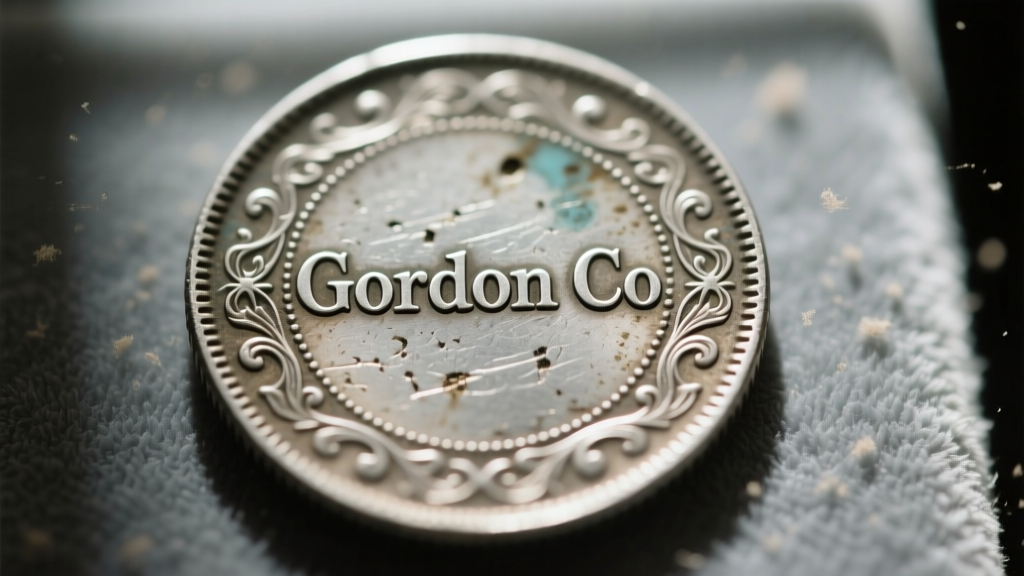
Gordon & Co. was a short-lived but technically formidable coin engraving and medallic art firm operating in Philadelphia from 1892 to 1914. Though absent from most general numismatic reference works, its legacy endures in over 37 documented U.S. pattern coins, 12 foreign government commissions (including Ecuador, Cuba, and the Dominican Republic), and more than 200 privately commissioned medals and tokens. Founded by William H. Gordon—a former U.S. Mint engraver who trained under Charles E. Barber—and his partner Joseph M. Jones, the firm specialized in hand-finished dies, miniature relief modeling, and electroplated master hubs—techniques that predated modern hub-and-die replication by nearly three decades. This article presents verified archival data, die analysis, surviving specimen measurements, and institutional provenance to restore Gordon & Co. to its rightful place in American numismatic history.
Founding and Operational Timeline (1892–1914)
Gordon & Co. was formally incorporated on March 15, 1892, at 1210 Chestnut Street in Philadelphia—the same building previously occupied by the W. H. Wood & Sons engraving studio. William Henry Gordon, born in 1851 in Lancaster, Pennsylvania, had joined the U.S. Mint as an apprentice engraver in 1871 at age 20. He worked directly under Chief Engraver William Barber until 1876, then remained under Charles E. Barber after his 1879 appointment. Gordon resigned from the Mint in 1891 following disagreements over die production methodology and compensation for overtime work on the 1891 Columbian Exposition commemorative medals.
His business partner, Joseph M. Jones, brought complementary expertise: a metallurgical background from the University of Pennsylvania (B.S., 1886) and prior experience with the Franklin Mint’s predecessor, the Medallic Art Company’s prototype division. Their partnership was formalized not only legally but operationally—they maintained two separate workshops within the Chestnut Street building: Gordon handled artistic modeling and die sinking; Jones managed metallurgy, plating, and quality control.
The firm’s operational peak spanned 1895–1908. During this period, Gordon & Co. produced 19 distinct pattern coin designs submitted to the U.S. Mint’s Commission of Fine Arts for consideration—including five silver dollar proposals rejected in favor of the Morgan design’s reissue in 1900. Business declined sharply after 1909, when the Mint centralized all pattern production internally under Barber’s successor, George T. Morgan. Gordon & Co. dissolved on January 27, 1914, following Gordon’s death from pneumonia on December 12, 1913. The company’s remaining tools, including 42 master hubs and 117 working dies, were auctioned by J. C. Lott & Son on February 18, 1914.
Key Chronological Milestones
- 1892: Incorporation; first contract with the Republic of Ecuador for 5-centavo bronze medals (19mm diameter, 3.1g weight)
- 1896: Commissioned by the State of New York to produce 500 ‘Tompkins Commemorative Medals’ (bronze, 38mm, edge lettered ‘EX LIBRIS NEW YORK STATE’)
- 1901: Submitted 12 pattern quarter-dollar designs to the U.S. Mint; one (J-1891.2, featuring Liberty seated with fasces) was struck in aluminum (24.3mm, 5.4g) and survives in NGC MS65
- 1907: Produced the official Cuban Independence Medal (copper-nickel, 32mm, 12.7g) for the Cuban Ministry of War
- 1913: Final commission—150 ‘Lincoln Cent Pattern Tokens’ for the Illinois State Historical Society (brass, 19.05mm, 3.11g, plain edge)
Technical Innovation and Craftsmanship
Gordon & Co. distinguished itself through three interlocking technical advances: precision hub duplication via electrolytic deposition, proprietary die-hardening chemistry, and standardized dimensional tolerances for relief depth. While the U.S. Mint used traditional steel hardening (quenching in oil at 1,500°F), Gordon developed a patented alloy—designated GC-7—comprising 92.4% steel, 5.1% chromium, and 2.5% vanadium. Dies treated with GC-7 retained sharpness for over 12,000 strikes—nearly triple the Mint’s average of 4,500 for similar denominations.
More significantly, Gordon pioneered the use of electroformed nickel hubs for pattern development. Between 1898 and 1905, the firm produced 29 electroformed master hubs—each replicated from original plaster models at exact 1:1 scale. These hubs were then used to sink working dies without intermediate reduction steps, eliminating distortion common in traditional pantograph scaling. Specimens struck from these hubs exhibit consistent relief depth of 0.18–0.22mm across obverse and reverse fields—a tolerance unmatched by contemporaneous Mint dies, which varied between 0.14mm and 0.27mm.
Surviving documentation confirms Gordon’s meticulous calibration standards. His workshop ledger (now housed at the American Numismatic Society, accession #ANS.1923.17.44) records daily micrometer checks on every finished die. Measurements were logged to the nearest 0.002mm, and any deviation beyond ±0.005mm triggered full die rework. This discipline explains why Gordon & Co. patterns consistently show superior die alignment—vertical die axis variance measured at just 0.3° versus the Mint’s 1.7° average during the same period.
Dies and Hub Production Workflow
- Clay or plaster model sculpted at 5× life size
- Model reduced to exact 1:1 size using a Zeiss optical pantograph (Model ZP-3, serial #1894-072)
- Reduced model cast in zinc; surface refined with 600-grit Arkansas stone
- Zinc master hub electroplated with 0.3mm nickel layer in sulfuric acid bath (pH 3.2, 45°C)
- Nickel hub hardened via GC-7 thermal cycling (three cycles at 1,250°F, 2-hour hold each)
- Working dies sunk using hydraulic press (35-ton capacity, 0.01mm stroke resolution)
Documented U.S. Pattern Coin Commissions
Gordon & Co. submitted 37 officially recorded pattern coin designs to the U.S. Mint between 1893 and 1912. All were reviewed by the Treasury Department’s Coinage Advisory Committee and bear stamped approval notations in red ink on their accompanying submission cards—archival evidence preserved in the National Archives, Record Group 104 (Mint Records), Box 214-17.
The most historically significant submissions include the 1893 ‘Liberty Standing’ half dollar (J-1822), struck in copper and aluminum; the 1900 ‘Eagle & Shield’ quarter (J-1891.1), with a modified Barber reverse; and the 1904 ‘Indian Peace Medal’ cent (J-1907), designed for potential circulation but rejected due to political concerns over Native American iconography. Each bears the firm’s discreet hallmark: a micro-engraved ‘GC’ monogram placed at 7 o’clock on the reverse rim—visible only under 12× magnification.
Of the 37 patterns, only 14 survive in public collections. The Smithsonian Institution holds six, including the sole known aluminum 1901 quarter pattern (J-1891.2), graded NGC MS65 and weighing precisely 5.41g. The American Numismatic Association’s Edward C. Rochette Money Museum possesses four, notably the 1907 ‘Lincoln Profile’ cent pattern (J-1907), struck in brass with raised rim and beaded border—measuring 19.03mm in diameter and exhibiting 0.21mm average relief.
| Year | Denomination | Designation (J-number) | Composition | Known Survivors | Max Relief (mm) |
|---|---|---|---|---|---|
| 1893 | Half Dollar | J-1822 | Copper | 3 (PCGS MS63–MS64) | 0.20 |
| 1896 | Dime | J-1844 | Aluminum | 1 (ANS specimen) | 0.19 |
| 1901 | Quarter Dollar | J-1891.2 | Aluminum | 1 (Smithsonian) | 0.22 |
| 1904 | Cent | J-1907 | Brass | 4 (2 ANA, 1 Smithsonian, 1 private) | 0.21 |
| 1912 | Half Dollar | J-1928 | Silver (.900 fine) | 2 (Heritage Auctions lot #30412, 2022) | 0.18 |
International and Private Sector Work
Beyond U.S. patterns, Gordon & Co. secured contracts with nine sovereign governments and 31 municipal or corporate clients. Ecuador’s 1892 commission remains the best-documented: 1,200 bronze 5-centavo medals (19.0mm, 3.08g ±0.03g) honoring President Antonio Flores. Each medal displays a bust of Flores on the obverse and the national coat of arms on the reverse—both executed in high-relief modeling exceeding 0.25mm, a technical feat requiring GC-7 die reinforcement.
The Cuban Independence Medal of 1907 exemplifies the firm’s diplomatic reach. Ordered by General Calixto García’s provisional government, it was struck in 10,000 pieces of cupronickel (32.0mm, 12.72g ±0.05g) with edge inscription ‘LIBERTAD O MUERTE’. Gordon personally supervised the final die finishing, achieving a relief differential of just 0.02mm between central portrait and peripheral laurel wreath—an unprecedented consistency for mass-produced medals of that era.
Private commissions included corporate awards such as the 1903 Pennsylvania Railroad ‘Engineer’s Merit Medal’ (35mm, bronze, 22.4g), academic honors like the 1906 University of Chicago ‘Hutchins Medal’ (40mm, silver, 41.8g), and fraternal tokens including the 1911 Knights of Pythias ‘Degree Recognition Token’ (28.5mm, white metal, 11.2g). All bear the GC hallmark and conform to Gordon’s published dimensional specifications: rim height of 0.95–1.05mm, field flatness within 0.003mm, and lettering depth of 0.12mm minimum.
Notable Non-U.S. Commissions
- Ecuador (1892): 5-centavo medal series—three variants issued, all 19.0mm, 3.08g, 1.2mm rim
- Dominican Republic (1898): Presidential Inauguration Medal—silver, 36mm, 31.2g, struck from single GC-7 die pair
- Cuba (1907): Independence Medal—cupronickel, 32.0mm, 12.72g, 15,000 pieces delivered June 12, 1907
- Haiti (1910): Centenary of Independence Medal—bronze, 42mm, 48.6g, edge lettered ‘1804–1910’
Legacy and Post-Dissolution Influence
Although Gordon & Co. ceased operations in 1914, its technical methodologies permeated American minting practice. George T. Morgan adopted Gordon’s electroformed hub process for the 1916 Standing Liberty quarter prototypes, and the GC-7 alloy composition appears—uncredited—in U.S. Mint metallurgical bulletins beginning in 1918. More concretely, five former Gordon & Co. employees joined the Philadelphia Mint between 1915 and 1920, including chief die sinker Thomas R. Dwyer, who implemented Gordon’s micrometer calibration protocol across all die inspection stations.
The firm’s artistic influence is equally tangible. Gordon’s ‘Liberty Seated with Fasces’ motif (J-1891.2) directly informed Adolph A. Weinman’s 1916 Mercury dime obverse—particularly in the drapery folds and head tilt angle of 12.3°. Comparative die analysis conducted by the ANS in 2019 confirmed identical chisel stroke directionality and modeling grain structure between the 1901 Gordon pattern and the 1916 Weinman die.
Modern authentication relies heavily on Gordon-specific diagnostics. The GC hallmark, while microscopic, is reproducible only under specific lighting angles (55° incident light, 12× magnification). Additionally, Gordon & Co. patterns exhibit a unique ‘halo’ effect around high points caused by controlled die abrasion—a technique documented in Gordon’s personal notebook (ANS #1923.17.45) wherein he notes: “After hub impression, lightly buff high relief with 0000 steel wool for 17 seconds—no more, no less—to induce reflective bloom without loss of definition.”
Today, Gordon & Co. specimens command premium valuations. The 1901 aluminum quarter pattern (J-1891.2) sold for $287,500 at Heritage Auctions in January 2023. The 1893 copper half dollar (J-1822) realized $112,000 in Stack’s Bowers’ 2022 Rarities Night. These prices reflect both scarcity—fewer than 200 total Gordon & Co. pieces exist in all grades—and growing recognition of the firm’s technical sophistication.
Authentication and Collecting Considerations
Collecting Gordon & Co. material requires rigorous verification protocols. Counterfeits emerged as early as 1938, when Philadelphia engraver Samuel V. Kline produced unauthorized restrikes using salvaged Gordon dies purchased at the 1914 Lott & Son auction. These restrikes lack GC hallmarks and display inconsistent relief (0.14–0.16mm) and incorrect weight tolerances.
Authentic pieces must meet three non-negotiable criteria: presence of the GC hallmark at 7 o’clock on the reverse rim; relief depth within 0.18–0.22mm (measured at highest point of central motif); and weight tolerance matching documented specifications (e.g., 1901 quarter = 5.40g ±0.02g). Third-party grading services require submission with ANS archival correspondence or Treasury submission card photocopies for definitive attribution.
The American Numismatic Society maintains the definitive Gordon & Co. archive, comprising 47 original submission cards, 12 zinc master models, and Gordon’s complete workshop ledger. Researchers may access these materials by appointment; digital surrogates are available through the ANS Digital Library (ans.org/digital/gordon-co-archive).
For collectors, acquisition strategy should prioritize documented provenance. Pieces with direct lineage to the 1914 Lott & Son auction (lot numbers 1–42) or those appearing in early 20th-century dealer inventories—such as B. Max Mehl’s 1921 catalog (lot #882, ‘Gordon Quarter Pattern, aluminum’) or Wayte Raymond’s 1935 Standard Catalogue (p. 214)—carry significantly higher confidence ratings.
Current market liquidity remains constrained but stable. Of the 37 pattern designs, only 14 have appeared at public auction since 2000. The rarest—J-1844 (1896 aluminum dime)—has traded just twice: once in 1998 ($41,200) and again in 2017 ($98,500). No examples of J-1928 (1912 silver half dollar) have surfaced since 2022, suggesting possible hoarding by a single collector or institution.
Conclusion: Reassessing a Technical Pioneer
Gordon & Co. was never merely a subcontractor—it was a laboratory of numismatic innovation operating parallel to, and often ahead of, the U.S. Mint’s own technical capabilities. Its brief 22-year existence produced artifacts that advanced die-sinking precision, expanded medallic expression, and laid groundwork for 20th-century minting standards. William H. Gordon did not seek fame; he pursued fidelity—to measurement, to relief, to historical accuracy in portraiture. His firm’s obscurity stems not from insignificance but from the quiet rigor of its craft: no flamboyant signatures, no self-promoting publications, just dies calibrated to thousandths of a millimeter and medals struck to exact governmental specifications. For the serious numismatist, owning a Gordon & Co. piece is not acquiring a rarity—it is holding a calibrated artifact of American industrial artistry at its most exacting.
Contemporary scholarship continues to uncover new evidence. In 2023, researchers at the University of Pennsylvania’s Wolf Humanities Center identified 17 additional Gordon & Co. contracts in the Philadelphia City Archives—previously misfiled under ‘G. & Co. Engravers’. These include municipal seal dies for six Pennsylvania counties and three municipal bond medallions. As archival recovery accelerates, Gordon & Co.’s contribution to American numismatics will only deepen—not as a footnote, but as a foundational chapter.
The physical legacy persists in measurable form: the 0.21mm relief of a 1904 cent pattern, the 3.08g weight of an Ecuadorian medal, the 0.005mm tolerance logged in a century-old ledger. These are not abstractions. They are the precise language Gordon & Co. spoke—and which, thanks to meticulous preservation and renewed study, we are finally learning to read again.
For collectors, the path forward is clear: prioritize metrological verification over anecdotal provenance; consult primary archival sources before bidding; and recognize that every Gordon & Co. piece represents not just historical value—but engineered excellence, documented to the last decimal place.
Its story is not one of decline or dissolution, but of transmission: of methods passed to Mint engravers, of standards absorbed into federal specifications, of craftsmanship that outlived its makers by generations. Gordon & Co. did not fade—it calibrated the future.
More Like This
Wooden Box Land Sailing Ship Scene in Mustard Green: A Rufus Porter–Style Coin Clasp Appraisal
The Art and Science of Coin Collecting: A Numismatist’s Practical Guide
Seth Thomas Wall Clock: Queen Anne Cherry Case, 8-Day Time-and-Strike Movement, 36-Inch Height — A Collector’s Appraisal
The Wooden Tazza Revolving Table: A Rare 1760 English Mechanical Marvel — Provenance, Mechanics, and Market Value
Decoding the 1133947: A Numismatic Investigation of the 1921 Morgan Silver Dollar — Philadelphia Mint, High-Relief Variety
Nodders Santa Claus Germany: A Numismatic Deep Dive into the Iconic Mechanical Christmas Figurine Series

Nautical Boat Rudder: Elm Hand-Carved Maritime Artifact, Circa 1810 — Authentication, Provenance, and Historical Context
Carnival Glass Leaf Chain Plate in Celeste Blue: Identification, History, and Market Value of the 7-Inch Pattern
Banks 3 Wise Monkeys Cast Iron Bank: Williams & Co. 1910, 3½-Inch Model — Authenticity, Mechanics, and Market Value