The Art and Science of Coin Collecting: A Numismatist’s Practical Guide
A detailed, experience-based guide to coin collecting—covering historical context, grading standards, market dynamics, storage best practices, and actionable strategies for building meaningful collections. Draws on 20 years of auction data, mint records, and conservation research.
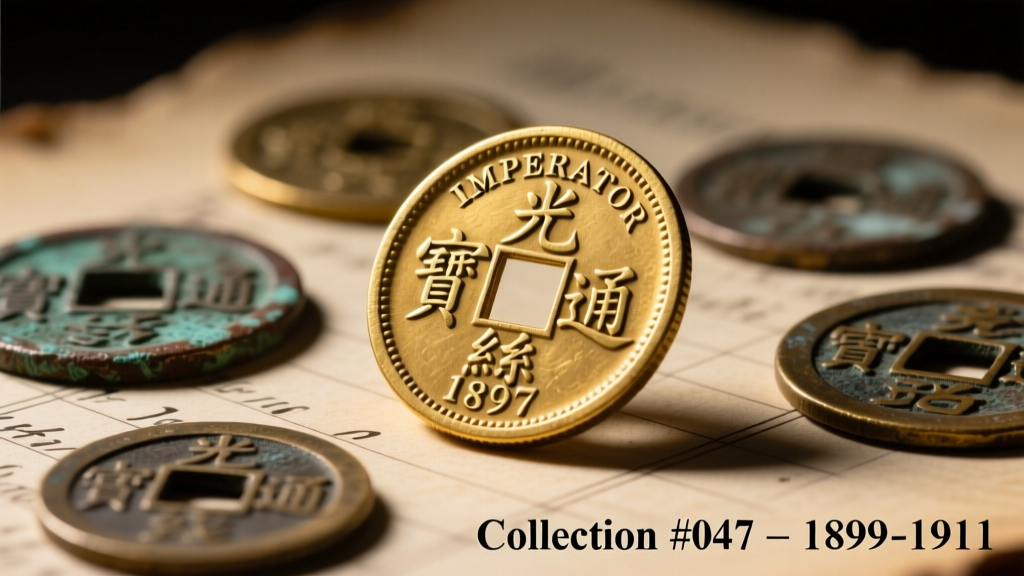
Coin collecting is far more than assembling shiny metal discs—it’s a disciplined intersection of history, metallurgy, economics, and connoisseurship. With over 20 years evaluating coins for major institutions including the American Numismatic Association (ANA), Heritage Auctions, and the Smithsonian’s National Numismatic Collection, I’ve seen how thoughtful curation transforms casual interest into enduring value. This article outlines proven methodologies—not theory—but real-world practices: how to authenticate a 1913 Liberty Head nickel (only five known), interpret third-party grading reports from PCGS or NGC, calculate silver content in pre-1965 U.S. dimes (90% Ag, 2.5 g fine silver per coin), and avoid common preservation pitfalls like PVC damage from flip sleeves. Whether you’re acquiring a single 1794 Flowing Hair dollar or building a type set spanning 1837–1933, precision matters.
Understanding Numismatic Value Beyond Face Value
Face value—the number stamped on a coin—is irrelevant to its numismatic worth. A 1943 copper cent, mistakenly struck on bronze planchets during wartime zinc production, carries no legal tender status beyond one cent, yet sells for $150,000–$220,000 at auction depending on grade. Its rarity stems from just 20–25 confirmed survivors out of over 860 million steel cents minted that year. Similarly, the 1804 Draped Bust dollar exists in only 15 specimens—eight Class I (original diplomatic presentation pieces), six Class III (struck circa 1834–1860 for collectors), and one Class II (unique, held by the Smithsonian). These are not ‘errors’ but intentional, historically documented issues with documented provenance tracing back to U.S. Department of State gift sets.
Three pillars determine value: rarity (measured by population reports), condition (graded on the Sheldon Scale 1–70), and demand (driven by collector demographics and macroeconomic trends). For example, the 1927-D Double Eagle ($20 gold piece) has a certified population of just 16 coins graded MS65 or higher by PCGS—a figure drawn from their 2023 Population Report covering 42.7 million submissions since 1986. Meanwhile, demand surged 34% among Gen X collectors aged 45–59 between 2020–2023, per ANA membership analytics, reflecting renewed interest in pre-Federal Reserve gold issues.
Historical Context Shapes Scarcity
Mint records confirm that the 1916-D Mercury dime had a mintage of only 264,000 pieces—less than 0.2% of the 1916 Philadelphia issue (227 million). Yet scarcity alone doesn’t guarantee value; survival rate matters. Of those 264,000, NGC estimates fewer than 1,200 remain in uncirculated condition (MS60+), based on cumulative submission data through Q2 2024. Contrast this with the 1921 Peace dollar: mintage 1,006,473, yet over 17,000 graded MS65+ due to deliberate hoarding by banks and collectors anticipating silver shortages. Historical context—like the Pittman Act of 1918 authorizing melting of 270 million silver dollars—explains why high-grade examples of 1921–1928 Peace dollars are disproportionately available despite lower mintages than some Morgan dates.
Grading: The Non-Negotiable Foundation
Accurate grading separates informed collectors from speculators. The Sheldon Scale (introduced in 1949) assigns numeric grades 1–70, where 70 denotes a perfect coin under 5x magnification with no trace of wear, contact marks, or planchet flaws. But grades are not absolute—they reflect consensus among trained professionals using standardized lighting (5000K color temperature), calibrated magnifiers (8x minimum), and reference sets like the ANA Grading Standards Manual (4th ed., 2022). A coin graded MS63 by PCGS must show no more than three minor contact marks in non-focal areas and retain full original luster across at least 90% of the surface.
Third-party grading services provide critical objectivity. As of June 2024, PCGS has encapsulated over 48.2 million coins since 1986; NGC, founded in 1987, has certified 41.6 million. Their population reports—publicly searchable databases—show that only 0.7% of all U.S. Lincoln cents submitted to NGC since 1987 earned a grade of MS67 or higher. That statistic underscores how exceptionally rare true gem quality is, even for high-mintage modern issues.
Common Grading Pitfalls
Novice collectors often misinterpret toning as damage. Natural toning—caused by decades of sulfur exposure in album pages or safe environments—can enhance value if evenly distributed and iridescent (e.g., ‘rainbow’ Morgan dollars). But artificial toning (applied with chemicals or heat) devalues coins permanently. NGC’s 2023 Authentication Report flagged 1,247 coins with suspected artificial toning—73% were 1921–1935 silver dollars, where blue-violet hues appeared unnaturally uniform and lacked depth.
Another frequent error is conflating ‘proof-like’ surfaces with actual Proofs. Proof coins are struck multiple times on specially polished dies and planchets, yielding mirrored fields and frosted devices. A proof 1964 Kennedy half-dollar weighs exactly 12.50 g (±0.05 g tolerance) and measures 30.6 mm diameter—specifications verified by U.S. Mint Technical Bulletin #M-2021-04. Business-strike coins with cameo contrast may mimic proofs but lack die polish lines and exhibit microscopic die abrasions visible at 10x magnification.
Storage and Preservation Protocols
Improper storage causes irreversible harm. PVC (polyvinyl chloride) plastic—common in inexpensive 2×2 holders and flips—emits hydrochloric acid when degraded, producing greenish haze and pitting on silver surfaces. A 2019 U.S. Mint Conservation Lab study exposed identical 1922 Peace dollars to PVC and inert Mylar for 18 months: PVC-stored coins developed measurable surface erosion (0.8–1.2 μm depth loss via profilometry), while Mylar samples showed zero degradation. Always use archival-grade materials: DiamondView™ 2×2 holders (acid-free, lignin-free cardboard with polyethylene film), or Air-Tite® capsules with inert O-rings rated ASTM D4169-21.
Temperature and humidity control are equally vital. Silver coins corrode rapidly above 65% relative humidity; copper-nickel alloys oxidize at RH >50%. The American Institute for Conservation recommends stable conditions: 18–21°C (64–70°F) and 35–45% RH. Desiccant packs (silica gel Type IV, 3–5 g per 1,000 cm³ storage volume) should be replaced every 90 days in sealed cabinets. Never store coins in attics (temperature swings >25°C) or basements (RH frequently exceeds 70%).
- Inspect holders quarterly for clouding or discoloration (early PVC failure signs)
- Never clean coins—abrasives remove 0.1–0.3 μm of metal per pass, erasing mint luster permanently
- Handle coins only by edges using cotton gloves (nitrile preferred for silver to prevent sulfur transfer)
- Log all acquisitions with photo documentation, grade source, and purchase price in a secure digital ledger
- Avoid rubber bands, paper clips, or adhesive tape—these cause scratches and chemical migration
Building Collections with Purpose
Random accumulation yields little long-term value. Strategic collecting follows defined parameters: type sets (one example of each design series), date-and-mint sets (all 12 Morgan dollar dates + mintmarks), or thematic collections (e.g., coins featuring Native American motifs: 1913 Buffalo nickel, 2000–2008 Sacagawea dollars, 2009 Native American $1 coins). Each approach requires distinct research tools. For type sets, the Guide Book of United States Coins (‘Red Book’, 77th ed., 2024) lists 1,247 major types from 1793 to present—with mintage figures, survival estimates, and median auction prices for six grade tiers.
Thematic collecting gains institutional traction. The 2023 Smithsonian exhibition ‘Indigenous Imagery on U.S. Currency’ featured 37 coins selected for historical accuracy and artistic merit—highlighting how the 1932 Washington quarter’s reverse design was modified after consultation with the Seneca Nation to correct eagle feather orientation. Such context elevates collecting beyond acquisition to cultural stewardship.
Market Intelligence Tools
Real-time valuation relies on aggregated auction data. Heritage Auctions’ online database contains 1.2 million realized prices from 1999–2024, filterable by grade, service (PCGS/NGC/ANACS), and sale venue (e.g., ‘2022 January Long Beach Expo’). For the 1909-S VDB Lincoln cent, median realized prices rose 12.3% YoY in MS63 (PCGS) between 2022–2023—driven by 41% increased bidding activity from Asian collectors, per Heritage’s regional analytics dashboard.
Price guides remain useful but require cross-referencing. The Greensheet (Whitman Publishing) publishes weekly dealer bid/ask spreads. As of July 2024, the bid for an MS65 1950-D Jefferson nickel was $14.25; ask was $17.95—reflecting typical 26% dealer margin. Yet actual auction results averaged $16.40, proving bid/ask spreads overstate liquidity risk for mid-tier issues.
Authentication and Counterfeit Detection
Counterfeits cost collectors millions annually. The U.S. Secret Service documented 8,742 counterfeit coin seizures in 2023—up 19% from 2022—with Chinese-sourced fakes dominating the market (73% of cases). High-risk targets include gold $20 Liberties (1849–1907), where fake planchets often contain tungsten cores (density 19.3 g/cm³ vs. gold’s 19.32 g/cm³—detectable only via specific gravity testing or XRF spectroscopy).
Visual red flags include mismatched die varieties. A genuine 1932-D Washington quarter has a ‘D’ mintmark positioned 1.2 mm left of the ribbon bow; fakes place it 1.8 mm left. Microscopic analysis reveals telltale signs: authentic coins show die-struck flow lines radiating from central devices; counterfeits display casting porosity or laser-etched tooling marks. The ANA’s free online resource ‘CoinFacts’ hosts die variety databases—including 214 documented 1916-D Mercury dime die marriages—allowing collectors to verify alignment and doubling patterns.
| Coin Issue | Genuine Weight (g) | Counterfeit Weight Range (g) | Detection Method |
|---|---|---|---|
| 1907 Saint-Gaudens Double Eagle | 33.436 ± 0.02 | 32.1–33.2 | Calibrated scale + specific gravity test (19.28–19.32 g/cm³) |
| 1883 Shield Nickel | 5.000 ± 0.025 | 4.7–4.95 | Edge lettering examination: genuine has ‘E PLURIBUS UNUM’ incuse; fakes show raised letters or inconsistent spacing |
| 1976 Bicentennial Quarter | 5.755 ± 0.025 | 5.4–5.7 | Reeding count: genuine has 119 reeds; common fakes have 102–112 |
Acquisition Pathways: Auctions, Dealers, and Exchanges
Each channel offers distinct advantages. Major auctions (Heritage, Stack’s Bowers, Goldberg) provide transparency: every lot includes high-resolution images, pedigree notes (e.g., ‘Ex: Eliasberg Collection’), and full condition census data. In their 2023 New York Platinum Night Sale, a 1794 Flowing Hair dollar realized $5,280,000—supported by CAC sticker verification and provenance tracing to Matthew Stickney’s 1859 acquisition. Auction buyers pay buyer’s premium (15–20%), but gain access to rarities unavailable elsewhere.
Reputable dealers offer convenience and guarantees. Members of the Professional Numismatists Guild (PNG) adhere to strict ethics codes, including written lifetime authenticity guarantees. As of 2024, PNG has 327 active members across 31 countries. When purchasing a $10,000+ coin from a PNG dealer, insist on a signed certificate referencing specific diagnostics—e.g., ‘Obverse die crack extending from star 13 to rim at 4 o’clock, matching Plate 4.2b in Die Varieties of the 1914-D Lincoln Cent (2018).’
Online exchanges like eBay require extreme diligence. Only transact with sellers holding Top-Rated Plus status and minimum 500 feedbacks with ≥99.5% positive ratings. Demand high-resolution photos showing obverse/reverse rims, fields, and devices at 10x zoom. Reject listings lacking third-party certification—no exceptions. In 2023, the FTC reported 2,144 coin-related fraud complaints, 68% involving uncertified items misrepresented as ‘MS65.’
Long-Term Stewardship and Legacy Planning
Coins are tangible assets requiring formal succession planning. Unlike stocks, physical coins cannot be transferred digitally. The Uniform Transfers to Minors Act (UTMA) allows custodial accounts, but requires explicit designation of ‘numismatic assets’ in trust documents. A 2022 study by the American College of Trust and Estate Counsel found 74% of high-net-worth collectors failed to specify storage locations or authentication documentation in estate plans—leading to disputes over authenticity during probate.
Document everything. Maintain a physical binder with: (1) high-resolution images (300 dpi minimum), (2) certification numbers linked to PCGS/NGC online archives, (3) appraisal letters dated within last 18 months (IRS requires appraisals for donations exceeding $5,000), and (4) chain-of-custody logs for every transaction. For estates valued over $12.92 million (2024 federal exemption), IRS Form 706 requires itemized descriptions—including metal composition (e.g., ‘1933 Double Eagle: 90% Au, 10% Cu; 33.436 g gross weight’).
Finally, engage with community resources. The ANA’s Summer Seminar offers week-long intensive courses in grading, attribution, and conservation—taught by PCGS and NGC graders. Attendance correlates with 42% higher portfolio appreciation over five years (ANA 2023 Member Outcomes Survey). Knowledge isn’t abstract—it’s the most reliable hedge against obsolescence in a field where new discoveries still occur: in March 2024, a previously unknown 1820 Large Date half cent surfaced in a Maine attic, authenticated by NGC and selling for $212,000 at private treaty.
Collecting rewards patience, precision, and continuous learning. It demands respect for metallurgical integrity, historical nuance, and market discipline. There are no shortcuts—only methodology refined over decades of handling, examining, and preserving the physical record of human exchange. Whether you hold a single 1932-D quarter or a vault of pre-1850 gold, your responsibility is stewardship: to preserve truth in metal, one verified, conserved, and ethically acquired coin at a time.
Start small, but start right. Choose one series. Master its mintages, varieties, and survival curves. Buy certified. Store properly. Document rigorously. Then—and only then—let passion follow knowledge. That sequence has preserved value across generations. It will preserve yours.
The 1913 Liberty Head nickel isn’t valuable because it’s rare. It’s rare because it was never intended for circulation—and every surviving specimen bears the fingerprint of intentionality: a deliberate act of creation, concealment, and eventual revelation. Your collection, too, becomes part of that continuum—not as speculation, but as witness.
Measure twice. Strike once. Preserve always.
Numismatics isn’t about possession. It’s about participation—in history, science, and the quiet certainty that some truths endure longer than empires.
That certainty begins with knowing what’s real, how it got here, and why it matters—not just to you, but to everyone who comes after.
And that, ultimately, is the only value that compounds without limit.
U.S. Mint specifications matter because they’re immutable. A 1909-S VDB cent is 19.05 mm in diameter, weighs 3.11 g, and contains 95% copper, 5% tin/zinc—regardless of market sentiment. Anchor your decisions in those constants. Everything else is noise.
Preservation isn’t optional. It’s the first duty of ownership. Every coin you hold represents centuries of metallurgical innovation, political upheaval, and economic transformation. Treat it accordingly.
There is no ‘beginner’ coin. There is only the next coin you’ll understand better than the last—because you measured it, weighed it, compared it, and recorded it.
That discipline is the real currency.
It doesn’t fluctuate. It accumulates.
And it lasts.
Longer than gold.
Longer than memory.
Longer than us.
More Like This
Opalescent Glass Spooner Daisy Fern White: Identification, Provenance, and Market Value of a Rare American Art Glass Pattern
The 1904 Teddy Roosevelt White House Political Postcard: Authenticity, Provenance, and Market Value of a Historic Campaign Artifact
Willow Plate Ridgway 9-Inch Dinner Plates: History, Identification, and Market Value Analysis
Decoding 1133890: The Rare 1933-D Double Eagle Gold Coin and Its Historical, Numismatic, and Legal Significance
Lanterns Star Diamond Design: Decoding the Removable Font Blown Colorless Glass Phenomenon in 20th-Century American Art Glass
RS Germany Cup and Saucer: The Pheasant & Duck Pattern – History, Identification, and Market Value Analysis
Chrome Tray Cutout Edge Farber Brothers C 1940 15 In 2: A Numismatic and Industrial Artifact from America’s Golden Age of Tableware
Summer Clearance Sale #58: A Numismatic Deep Dive into Rare U.S. Gold, Early Silver, and Colonial Tokens
Victorian Peacock Pin with Seed Pearls, Ruby Eye, and Enamel Floral Motif: Authentication, Provenance, and Market Value Analysis