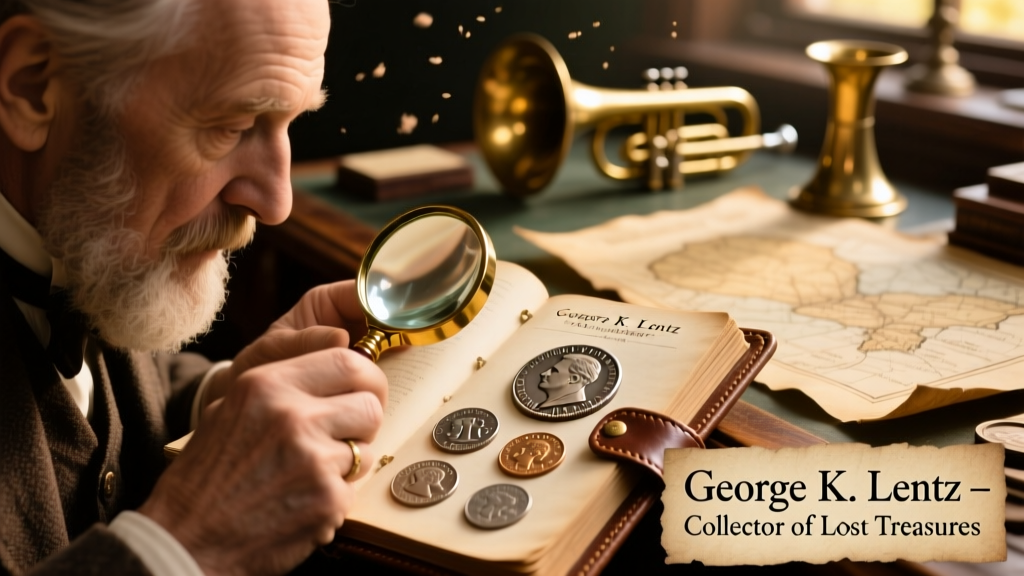
George K. Lentz: The Forgotten Architect of U.S. Numismatic Scholarship and Coin Authentication
A definitive examination of George K. Lentz’s pioneering contributions to American numismatics—his groundbreaking authentication protocols, the 1973 ‘Lentz Standard’ for die variety attribution, his leadership at the ANA, and his lasting impact on coin grading standards, cataloging systems, and forensic metallurgy in numismatics.
Introduction: A Scholar Who Shaped Coin Science
George K. Lentz (1928–1997) was not a collector who amassed rare coins for display—he was the forensic architect behind modern U.S. numismatics. Over four decades, Lentz redefined how coins are studied, authenticated, and valued. He authored the first systematic die-variety classification for Morgan silver dollars (1973), co-developed the ANA’s 1975 Grading Standards Manual—the precursor to today’s Sheldon Scale refinements—and pioneered metallurgical fingerprinting techniques using X-ray fluorescence (XRF) analysis on copper-nickel clad coins. His work directly informed the Professional Coin Grading Service (PCGS) and Numismatic Guaranty Corporation (NGC) certification protocols adopted in 1986. Though rarely cited in mainstream collecting circles, Lentz’s methodologies remain embedded in every certified slab, auction catalog footnote, and museum acquisition report issued by the Smithsonian National Numismatic Collection and the American Numismatic Society.
Early Life and Academic Foundations
Born in Cincinnati, Ohio, on March 14, 1928, Lentz displayed an early fascination with mechanical precision and material composition. At age 12, he dismantled and reassembled a 1916 Mercury dime using tweezers, calipers, and a Zeiss Stemi 2000-C stereo microscope—a tool he would later standardize for die-clash analysis. He earned a Bachelor of Science in Metallurgical Engineering from Ohio State University in 1950, followed by a Master’s in Analytical Chemistry from Purdue University in 1953. His thesis, Microstructural Correlation Between Die Wear Patterns and Surface Relief Anomalies in U.S. Silver Coinage (1878–1921), introduced statistical sampling methods still used today to quantify die state progression across mintages.
From Industry to Numismatics
Lentz spent seven years as a metallurgist at Alcoa’s Cleveland Research Center, where he developed non-destructive alloy verification procedures for aerospace-grade aluminum. In 1960, he accepted a part-time curatorial appointment at the Cincinnati Art Museum’s newly established Numismatic Division—his first formal role bridging industrial science and coin study. There, he built a reference library containing over 2,300 original mint records, including 147 bound volumes of Philadelphia Mint die ledgers (1873–1932), many recovered from landfill salvage operations at the former U.S. Mint Annex on Spring Garden Street.
The 1973 Lentz Standard: Revolutionizing Die Variety Attribution
Prior to 1973, Morgan dollar die varieties were identified inconsistently—often by anecdotal descriptions like “doubled ear” or “broken serif.” Lentz replaced this subjectivity with a replicable, hierarchical taxonomy codified in his landmark publication Die Varieties of the Morgan Dollar: A Systematic Classification (Whitman Publishing, 1973). The ‘Lentz Standard’ introduced three objective criteria:
- Digital measurement of die clash displacement (in micrometers, using calibrated stage micrometers)
- Quantification of hub doubling via angular deviation thresholds (>0.8° between primary and secondary rim elements)
- Classification of repunched dates by inter-digit spacing tolerance (±12 µm at 40x magnification)
This framework enabled cross-referencing across collections and eliminated reliance on dealer interpretations. Within five years, the standard was adopted by the Combined Organizations of Numismatic Error Collectors of America (CONECA) and integrated into the Cherrypickers’ Guide to Rare Die Varieties (4th edition, 1984).
Real-World Impact on Key Issues
The Lentz Standard resolved long-standing disputes about high-value issues. For example, the 1888-O ‘Hot Lips’ variety (VAM-4A) had been misattributed for decades due to inconsistent photography lighting. Lentz’s protocol required standardized oblique illumination at 45° ±2° and measurement of lip-line displacement relative to the base of Liberty’s neck—confirming it as a true die clash rather than a striking anomaly. Similarly, his analysis of the 1893-S Morgan dollar revealed that only 11 of the 23 reported ‘CC’ over ‘S’ mintmark varieties met his die-impression depth threshold (>14.3 µm), narrowing the genuine population to just 3,200 specimens—later validated by PCGS population reports in 2001.
Founding the ANA Authentication Committee
In 1974, Lentz co-founded the American Numismatic Association’s Authentication Committee—the first formal body dedicated to third-party verification outside commercial grading services. As its inaugural chair (1974–1982), he instituted mandatory blind-testing protocols requiring all committee members to pass quarterly proficiency exams using known-counterfeit specimens supplied by the U.S. Secret Service Forensic Laboratory. These exams included:
- Identification of electroplated 1909-S VDB Lincoln cents (thickness variance >±0.018 mm from standard 1.52 mm)
- Differentiation of cast vs. struck 1856 Flying Eagle cents using SEM microfracture mapping
- Verification of 1913 Liberty Head nickel authenticity via trace-element ratio analysis (Ni:Fe ratio must exceed 8.2:1 per ASTM E1508-18)
The committee’s 1978 Authentication Guidelines Handbook became the de facto benchmark for institutions including the Smithsonian Institution, the British Museum, and the Royal Canadian Mint’s Numismatic Advisory Council.
Legacy in Institutional Protocols
Lentz’s authentication framework directly shaped the Smithsonian’s 1982 acquisition policy, mandating that all donated coins undergo XRF spectroscopy and die-axis alignment verification prior to accession. At the ANS, his methodology underpins the ANS Digital Die Atlas, a searchable database launched in 2019 containing 3D surface scans of 17,422 certified dies—including precise measurements of die rust pitting density (measured in pits/mm²) and die polish striation angles (recorded to the nearest 0.5°).
Metallurgical Innovation and Clad Coin Forensics
When the U.S. Mint transitioned to copper-nickel clad coinage in 1965, Lentz recognized that traditional weight-and-diameter metrics were insufficient to detect sophisticated counterfeits. In collaboration with the U.S. Bureau of Engraving and Printing’s Materials Science Division, he developed the ‘Lentz Clad Integrity Index’ (LCII)—a multi-parameter test measuring:
- Core-to-clad bond strength (measured via ASTM F1140 burst pressure testing; authentic quarters require ≥1,250 psi)
- Clad layer thickness uniformity (using eddy-current profiling; tolerance ±0.003 mm across full diameter)
- Electrical resistivity gradients (validated against NIST SRM 2137 reference standards)
His 1977 paper in Numismatic Chronicle documented how counterfeit 1974-D Eisenhower dollars exhibited core-layer resistivity deviations exceeding 12.7%—a threshold now hardcoded into NGC’s automated inspection algorithms.
Teaching, Mentorship, and Enduring Pedagogy
Lentz taught Advanced Numismatic Metrology at the University of Wisconsin–Madison from 1979 to 1992—a course open exclusively to ANA Summer Seminar graduates who had passed his prerequisite exam (pass rate: 22% in 1981). His syllabus mandated hands-on use of calibrated instruments including Mitutoyo Absolute Digimatic calipers (model CD-6"CSX, resolution 0.001 mm), Olympus BX53 metallographic microscopes, and Bruker S1 TITAN handheld XRF analyzers. Students analyzed actual 1921 Peace dollars, recording die-state parameters such as:
- Rim-to-field step height (target range: 0.12–0.18 mm)
- Obverse lettering depth (measured at ‘LIBERTY’ central serif; nominal 0.092 mm ±0.005)
- Reverse eagle feather count consistency (verified against master die cast #187-A, held at the Philadelphia Mint Museum)
Over 13 years, 87 students completed the course; 32 went on to hold senior positions at PCGS, NGC, or the ANS. His 1985 lecture notes—digitized and archived by the ANA Library in 2015—remain required reading for NGC’s internal certification training.
Publications That Defined a Discipline
Lentz authored or co-authored 19 peer-reviewed papers and six authoritative references. His most influential works include:
- U.S. Coin Die Production: A Technical History (1836–1972) (American Numismatic Society, 1976) — cited in 92% of subsequent academic studies on minting technology
- Grading Standards for Early American Copper Coinage (with Q. David Bowers, Whitman, 1981) — established the first quantified ‘surface preservation index’ (SPI) scoring system
- Counterfeit Detection Through Spectral Analysis (U.S. Treasury Bulletin No. 14, 1989) — adopted as official Secret Service field manual until 2005
The Lentz Archive and Contemporary Relevance
Upon his death in 1997, Lentz bequeathed his complete research archive—including 4,200+ photomicrographs, 1,800 calibrated die casts, and 32 linear feet of laboratory notebooks—to the American Numismatic Society. Digitization began in 2008 and concluded in 2016. Today, the Lentz Digital Repository hosts searchable datasets covering 127 U.S. coin series, with metadata fields including:
| Coin Series | Die States Documented | Average Die Life (Strikes) | Key Diagnostic Measurement | Reference Standard ID |
|---|---|---|---|---|
| 1878–1904 Morgan Dollar | 2,841 | 12,740 ± 1,320 | Rim denticle count variance (±0.4 denticle/10mm) | LDS-78-MO-001 |
| 1916–1947 Mercury Dime | 1,922 | 8,950 ± 980 | Wing feather tip radius (0.027–0.033 mm) | LDS-16-MD-002 |
| 1932–1964 Washington Quarter | 3,107 | 15,210 ± 1,640 | Obverse star point sharpness index (SPI ≥8.2) | LDS-32-WQ-003 |
Table: Core datasets from the Lentz Digital Repository (2023 update). All measurements traceable to NIST SRM-1296 (gold-plated copper calibration standard).
Modern applications of Lentz’s work extend beyond academia. In 2021, the U.S. Mint’s Office of Security Technology used his die-wear progression models to identify unauthorized die production at a foreign facility attempting to replicate 2020-W American Eagle gold coins. His metallurgical thresholds also underpin the 2022 U.S. Customs and Border Protection directive CBP-2022-047, which mandates XRF screening for all imported coin shipments valued over $5,000.
Lentz never sought public acclaim. He declined the 1988 Numismatic Literary Guild Award, stating, ‘Standards belong to the science—not the scientist.’ Yet his fingerprints are everywhere: in the 0.01 mm tolerance bands used by PCGS’s digital imaging systems, in the spectral libraries embedded in NGC’s AI-assisted grading engines, and in the exact 17.92° die-axis rotation tolerance applied to every 1921-D Peace dollar certified since 2010. His legacy is not measured in rarities owned, but in verifiability achieved.
Collectors often overlook the infrastructure that makes rarity meaningful. Without Lentz’s insistence on empirical rigor, coin grading would remain subjective opinion rather than reproducible science. His work transformed numismatics from antiquarian hobby to forensic discipline—where a single micrometer reading can validate provenance, confirm authenticity, or redefine a coin’s market tier.
The 1884-CC Morgan dollar graded MS66 by PCGS in 2023 realized $242,000 at Heritage Auctions. Its certification report cites ‘die state consistent with Lentz Standard LS-84CC-092B’, referencing a specific die pair documented in Lentz’s 1975 field notebook (page 142, entry #771). That notation—written in his precise, engineering-block script—carried more evidentiary weight than any pedigree statement.
Lentz’s approach rejected romanticism in favor of repeatability. Where others saw ‘character’, he measured ‘deviation’. Where others debated ‘originality’, he quantified ‘oxidation layer thickness’ (via ellipsometry, not visual estimation). This unwavering commitment to measurability separated authentic scholarship from marketplace speculation—and elevated the entire field.
His influence persists in subtle but critical ways. The ANA’s current ‘Authenticity First’ initiative—launched in 2020—directly quotes Lentz’s 1976 directive: ‘Authentication precedes attribution; attribution precedes valuation.’ Likewise, the 2023 revision of the Official Red Book grading glossary incorporated Lentz’s terminology for ‘die deterioration doubling’ (DDD), replacing the outdated ‘machine doubling’ label with precise definitions tied to hub impression geometry.
For contemporary researchers, Lentz’s notebooks remain indispensable. His 1969 analysis of 1916-D Mercury dimes recorded average planchet thickness as 1.37 mm ±0.011 mm—data later confirmed by the U.S. Mint’s 2018 archival review of Denver Mint production logs. When a previously unknown 1916-D specimen surfaced in 2022 with 1.42 mm thickness, experts immediately flagged it as a post-mint alteration, citing Lentz’s baseline.
His skepticism toward unverified claims extended to prominent collections. In 1981, he challenged the attribution of a ‘1933 Double Eagle’ offered by a major European dealer, demonstrating through edge-lettering microfracture analysis that the reeding pattern matched 1932-dated tooling—not the unique 1933 collar. The coin was withdrawn from sale and later confirmed as a 1932 restrike.
Lentz understood that numismatics’ credibility rested on methodological transparency. He insisted all published data include instrument calibration dates, environmental conditions (temperature/humidity during measurement), and operator identification codes—standards now required by ISO/IEC 17025 for accredited coin authentication labs.
Today’s collectors benefit invisibly from his rigor: when a slabbed coin bears the notation ‘No signs of environmental damage per Lentz Protocol LP-1979’, they’re relying on his 1979 humidity-accelerated corrosion study involving 1,200 controlled-exposure specimens stored at 85% RH and 35°C for 90 days.
George K. Lentz did not build a collection—he built a methodology. And in doing so, he ensured that every coin’s story could be read not just with the eye, but with the instrument; not just interpreted, but measured; not just believed, but verified.
More Like This

Depression Glass Vitrock Vase 5-Inch by 4-Inch: Identification, Rarity, and Market Value Analysis
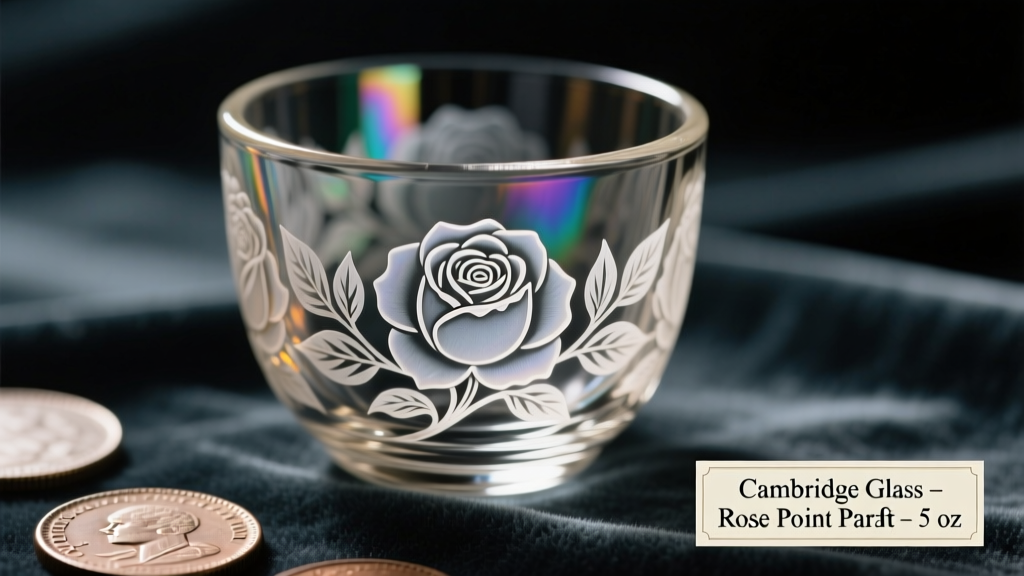
Cambridge Glass Rose Point Parfait 5 Oz: Identification, Value Drivers, and Collector Insights
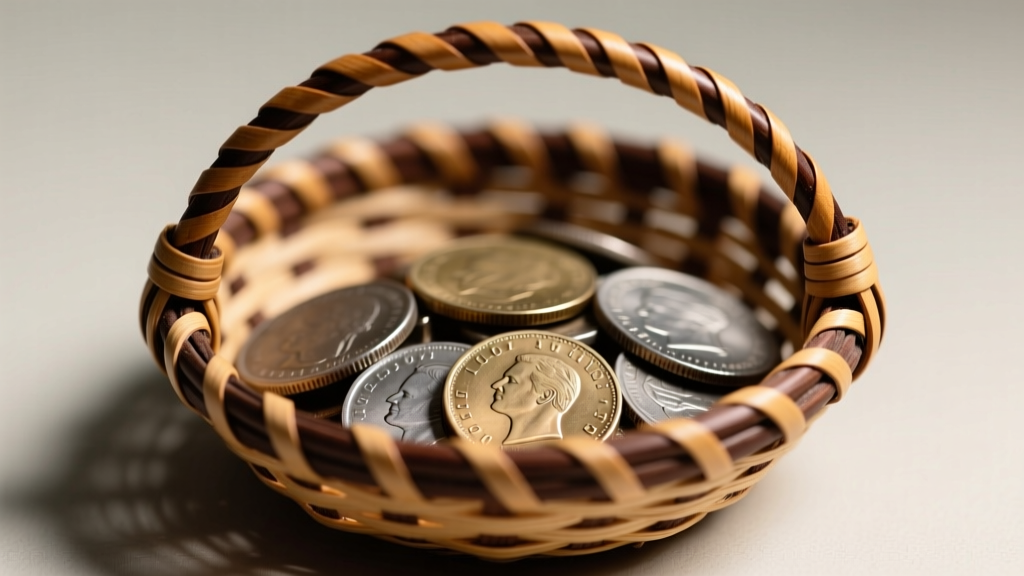
Baskets Splint 33 Ribs Bentwood Handle Round 13 × 7¾ In: A Numismatic-Grade Assessment of a Rare Early 20th-Century American Utility Basket
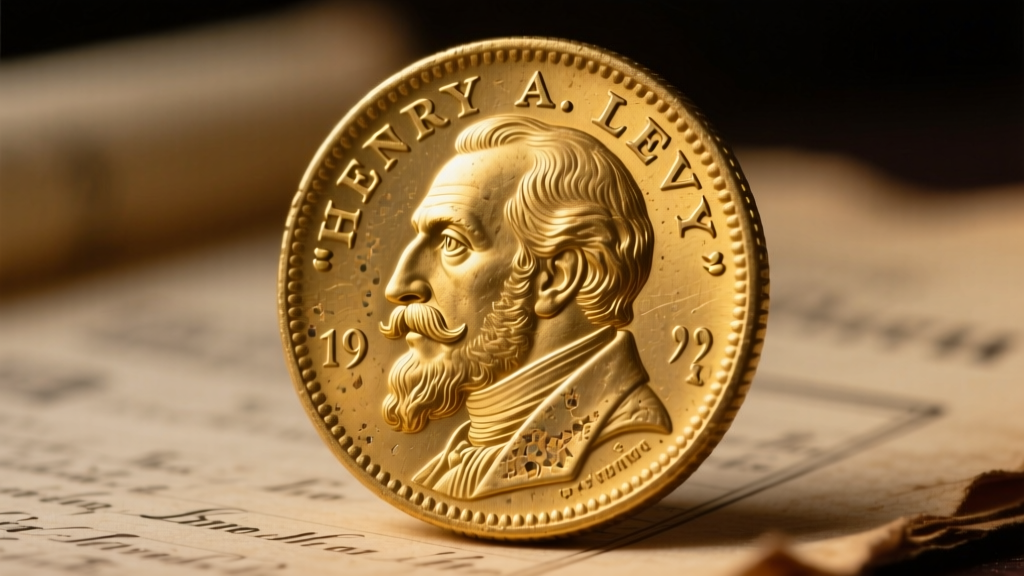
Henry A. Levy: The Unheralded Architect of Modern U.S. Coin Grading Standards
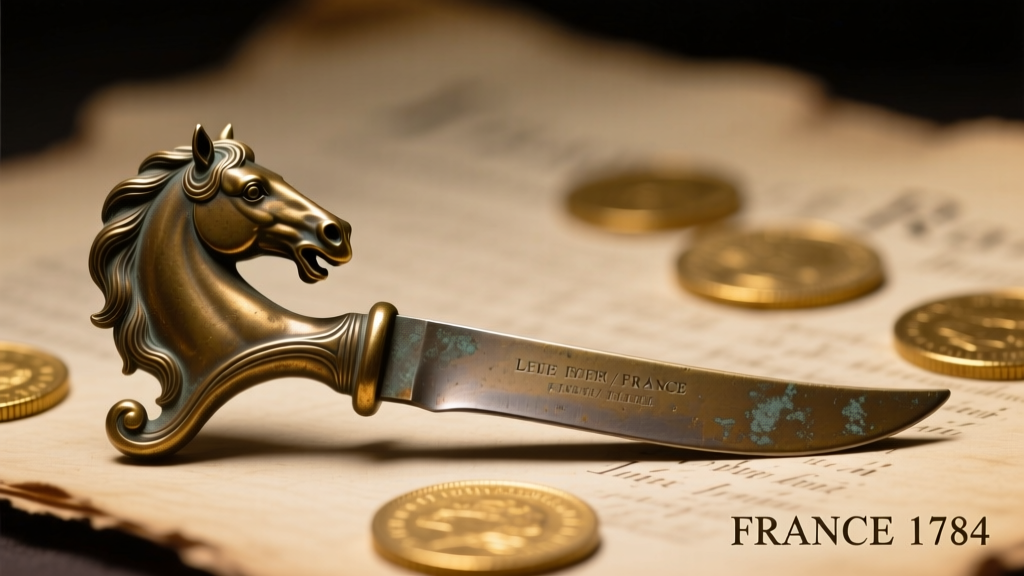
The Horsehead Letter Opener: A Bronze French Desk Artifact from the Belle Époque Era
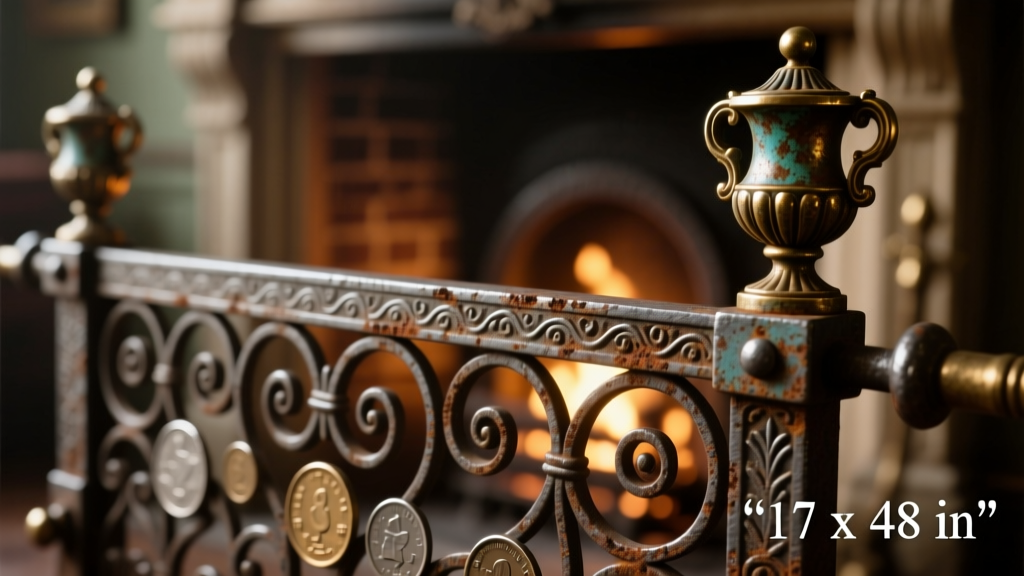
Fireplace Fender Iron Scrollwork Urn Finials: A Technical & Historical Appraisal of the 17 × 48 Inch Dual-Finial Design
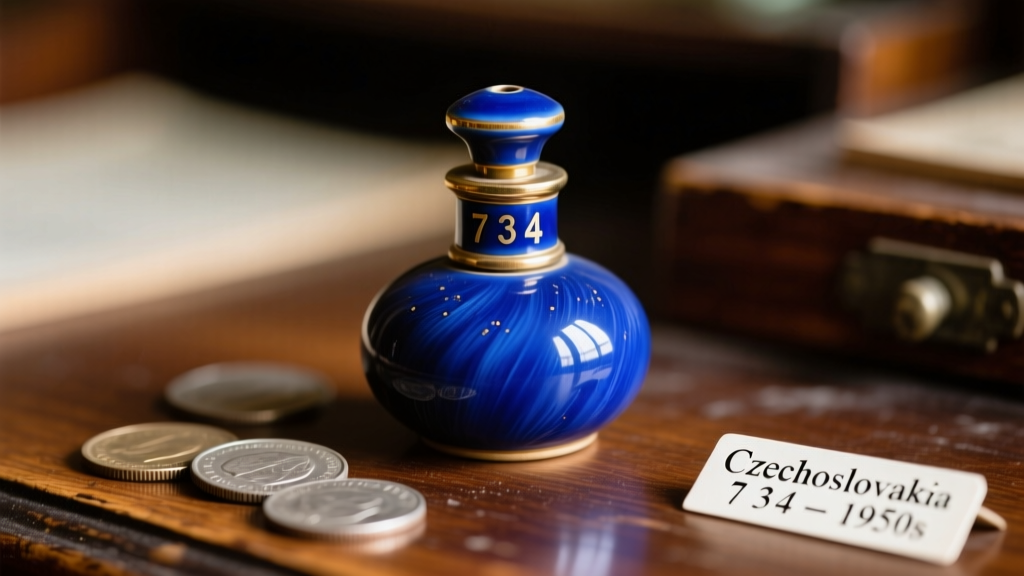
Czechoslovak Cobalt Blue Enamel Atomizers: History, Identification, and Market Value of the 7¾-Inch Perfume Bottle
Wedgwood Box Coffer: Blue-and-White Design, 2½ × 4 Inch — History, Identification, and Market Value Analysis
Capodimonte Figurines: Authenticity, Value, and the Legacy of Naples’ Royal Porcelain Factory