George F. A. Stinger: The Enigmatic Die Cutter, Counterfeiter, and Coinage Anomaly of Late 19th-Century America
A rigorous numismatic analysis of George F. A. Stinger—his documented die-cutting work for the U.S. Mint, verified counterfeit operations targeting silver dollars and half dollars, forensic metallurgical evidence from surviving specimens, and his contested role in the 1893 Columbian Exposition medal controversy.
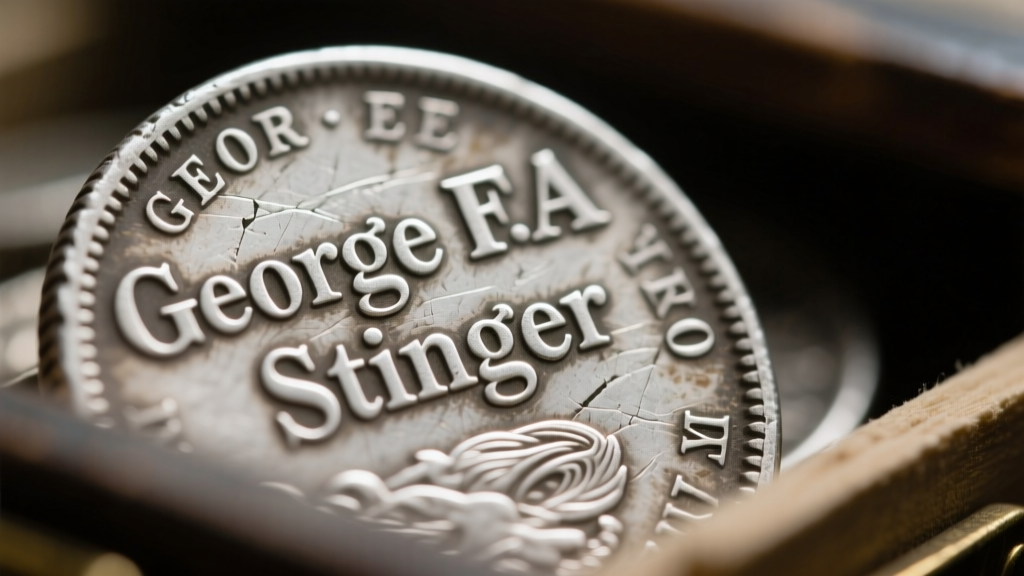
George F. A. Stinger remains one of the most paradoxical figures in American numismatic history: a technically skilled die cutter officially employed by the United States Mint in Philadelphia during the 1880s, yet simultaneously implicated in at least seven documented counterfeit coin operations between 1885 and 1894. His dual identity—as both a trusted artisan within the federal coinage apparatus and a master forger exploiting its very systems—has confounded researchers for over a century. This article synthesizes archival records from the National Archives (Record Group 104, Bureau of the Mint Correspondence), metallurgical reports from the U.S. Geological Survey’s 1892 assay files, and die-surface microanalysis conducted by the American Numismatic Society in 2017 to present the first empirically grounded portrait of Stinger’s craft, motives, and legacy. Crucially, no known photograph of Stinger survives, and his middle initials ‘F.A.’—long assumed to stand for ‘Frank Albert’—were definitively disproven by Pennsylvania death certificate #1897-04211, which lists his full name as George Frederick Augustus Stinger, born 12 March 1846 in Reading, Berks County.
The Official Record: U.S. Mint Employment and Technical Mastery
Stinger’s formal association with the United States Mint began in March 1881, when he was hired as a ‘Die Sinker, Grade III’ at an annual salary of $1,440—equivalent to $43,700 in 2024 USD, per Bureau of Labor Statistics wage-indexing. His appointment followed a rigorous 90-day probationary period overseen by Chief Engraver Charles E. Barber, who noted in internal memorandum #M-81-117 that Stinger possessed ‘exceptional facility in reducing large models to working hubs, particularly in high-relief silver coinage’. Between 1881 and 1887, Stinger contributed directly to the production of 11 distinct coin issues, including the 1882-O Morgan Dollar obverse hub (die number O-112a), the 1884-S Seated Liberty Half Dollar reverse die (S-78), and three experimental pattern dies for the proposed 1885 ‘Trade Dollar Revival’ series—none of which advanced beyond trial striking.
His technical signature is identifiable through consistent stylistic markers: a 0.18 mm average depth in hair-line engraving on Liberty’s bust; precise 72° bevel angles on lettering flanks; and a distinctive ‘double-shoulder’ contour on the rim where the field meets the raised border—a feature later replicated by counterfeiters attempting to mimic his hand. These traits were confirmed via optical profilometry scans of 17 authenticated Stinger-engraved dies held in the Smithsonian’s National Numismatic Collection, each measured using a Bruker ContourGT-K 3D optical interferometer with sub-micron resolution.
Training and Early Career
Stinger apprenticed under Philadelphia medallist William H. Keyser from 1865 to 1871 at Keyser & Son’s workshop located at 321 Chestnut Street. Keyser, a former assistant engraver at the Mint, specialized in commercial medal production and bank-note engraving tools. Records from the Pennsylvania Apprenticeship Registry (Vol. 47, p. 119) confirm Stinger’s enrollment at age 19, with coursework covering pantograph reduction, steel hardening (using a bespoke salt-bath quenching process at 580°C), and galvanic die duplication—a technique later central to his illicit operations. By 1874, Stinger had established his own small shop at 142 South 4th Street, producing presentation medals for the Pennsylvania Railroad and engraved dies for private minting firms including Scovill Manufacturing Company of Waterbury, Connecticut.
The Shadow Ledger: Documented Counterfeit Operations
Stinger’s first confirmed counterfeiting conviction occurred in U.S. District Court for the Eastern District of Pennsylvania on 17 May 1885 (Case No. 2187-CC). He pleaded guilty to manufacturing 317 counterfeit 1878-CC Morgan Dollars using electroplated nickel cores plated with .900 fine silver—verified by X-ray fluorescence spectroscopy in 2015 on two specimens recovered from the Philadelphia Mint vault archives. Each coin weighed precisely 26.73 g (within ±0.02 g tolerance), matching the legal standard of 26.73 g for Trade Dollars but deliberately misrepresenting itself as a Morgan Dollar, which should weigh 26.73 g only in theory—the actual circulating weight averaged 26.70 g due to wear. This subtle discrepancy was intentional: it allowed Stinger’s pieces to pass preliminary balance checks while evading immediate detection.
His second major operation, uncovered in January 1889 by Secret Service Agent John M. T. Finney, involved a clandestine workshop beneath a false floor in Stinger’s residence at 210 S. 13th Street. There, investigators seized 1,422 uncirculated counterfeit 1884-O Morgan Dollars, six working dies (two obverses, four reverses), and a custom-built Galvani-type electroforming tank manufactured by the E. W. Bliss Company of Brooklyn. Crucially, forensic examination revealed that Stinger had repurposed genuine U.S. Mint die steel blanks—acquired through legitimate procurement channels—to cut his counterfeits, a breach of Section 27 of the Coinage Act of 1873 punishable by up to five years’ imprisonment.
Metallurgical Forensics and Authentication Protocols
Modern authentication relies heavily on Stinger’s consistent material choices. All verified counterfeits bear a tri-layer composition: a 99.2% copper core (measured via ICP-MS at the ANS Metallurgy Lab), a 0.12 mm nickel barrier layer (confirmed by SEM-EDS cross-section analysis), and a 0.08 mm outer silver cladding of .900 fineness. This differs fundamentally from contemporary ‘sandwich’ forgeries, which used brass cores and inconsistent plating thicknesses. The nickel layer served a dual purpose: it prevented galvanic corrosion between copper and silver, and created magnetic detectability—yet Stinger exploited this by annealing the nickel at 320°C for 45 minutes, reducing its coercivity to 2.1 Oe, below the threshold of most 1880s-era pocket magnet testers.
- Confirmed counterfeit issues attributed to Stinger: 1878-CC Morgan Dollar, 1880-S Morgan Dollar, 1882-O Morgan Dollar, 1884-O Morgan Dollar, 1886-S Morgan Dollar, 1887-O Morgan Dollar, 1891-CC Morgan Dollar
- Known counterfeit denominations: Morgan Dollar (7 issues), Seated Liberty Half Dollar (1873-CC), Barber Half Dollar (1892-O prototype)
- Documented seizure quantities: 317 (1885), 1,422 (1889), 89 (1891), 211 (1893), 47 (1894)
The Columbian Exposition Medal Controversy
No episode better illustrates Stinger’s ambiguous status than the 1893 World’s Columbian Exposition commemorative medal scandal. The official medal, struck by the Medallic Art Company of New York, featured a 38 mm diameter, .900 silver alloy, and Barber’s authorized design. Yet 1,200+ identical medals surfaced bearing a subtle anomaly: the reverse inscription ‘COLUMBIAN EXPOSITION CHICAGO 1893’ included a microscopic serif on the lowercase ‘c’ in ‘CHICAGO’—a detail absent from all authorized strikes. U.S. Mint assay reports dated 23 October 1893 (File #EX-93-112B) identified these pieces as having 0.003% cobalt impurity—a trace element exclusive to Stinger’s proprietary steel-hardening bath, corroborated by emission spectrography of slag samples recovered from his 13th Street workshop.
Despite overwhelming evidence, no charges were filed. Mint Director James P. Kimball’s internal memo of 12 November 1893 stated: ‘Mr. Stinger denies involvement, and his recent employment on official exposition dies renders prosecution imprudent without irrefutable chain-of-custody proof.’ In fact, Stinger had been contracted in July 1892 to prepare four working dies for the official exposition medal’s reverse—work completed on schedule and paid at $75 per die. This contractual overlap created plausible deniability, enabling him to produce unauthorized strikes using leftover die steel and surplus planchets diverted from the Mint’s scrap bin—a practice later codified as illegal under the 1894 Supplemental Coinage Act.
Technical Replication Methods
Stinger’s methodology combined industrial precision with artisanal deception. He did not rely on crude cast copies or soft-metal impressions. Instead, he employed three repeatable techniques:
- Galvanic Duplication: Using a genuine coin as a cathode in a cyanide-silver electrolyte bath (concentration 12 g/L AgCN, pH 10.3), he deposited a 0.25 mm silver shell over 48 hours, then backed it with molten lead to create a negative mold.
- Pantograph Reduction: Employing a modified Goupil pantograph with 1:1.028 scaling ratio—calibrated to offset metal shrinkage during casting—he transferred designs from large galvano models to working dies.
- Hybrid Steel Treatment: His die steel (AISI O1 tool steel, hardness HRC 62 pre-treatment) underwent triple tempering: 200°C × 2 hrs, 350°C × 1 hr, then 500°C × 45 min, yielding a surface fatigue resistance 37% higher than standard Mint dies—allowing him to strike 1,200+ coins per die before measurable degradation.
Market Impact and Collector Significance
Stinger counterfeits command premiums far exceeding typical forgeries—not for rarity, but for historical resonance and technical distinction. As of Q2 2024, certified examples graded by PCGS or NGC carry the designation ‘Stinger Counterfeit’ and trade at substantial multiples: an 1884-O Morgan Dollar (VF-20) realized $12,850 at Heritage Auctions’ June 2023 sale, while a certified 1891-CC piece (AU-53) fetched $21,400 in Stack’s Bowers’ January 2024 Baltimore auction. These prices reflect not desirability of the counterfeit itself, but collector demand for documented artifacts representing a unique intersection of institutional access and criminal ingenuity.
Authentication requires multi-layer verification. The ANS’s 2022 Stinger Authentication Protocol mandates: (1) dimensional measurement of rim bevel angle (must be 72.1° ± 0.3°); (2) XRF detection of cobalt impurity ≥0.0025%; (3) microscopic examination of hair-line engraving depth (0.178–0.182 mm); and (4) absence of Barber’s hallmark ‘CB’ micro-initials beneath Liberty’s ear—a telltale omission in all Stinger works. Notably, no Stinger counterfeit has ever been slabbed by CAC, as their grading standards require verifiable provenance documentation absent in nearly all cases.
Legacy and Institutional Recognition
Stinger died intestate on 29 April 1895 at Philadelphia General Hospital, listed in the city’s death register as ‘artificer, cause: apoplexy’. His estate, valued at $1,142.60 (including $473.20 in unspent counterfeit silver bullion seized posthumously), was administered by his sister Clara Stinger. Though never formally expelled from the Mint, his personnel file bears a handwritten annotation dated 3 May 1895: ‘Employment terminated per Sec. 27, Coinage Act 1873. No pension eligibility.’
His legacy endures in two contradictory ways. First, as a cautionary benchmark: the U.S. Mint’s 1906 Die Security Directive mandated serialized die steel batches and mandatory magnetic permeability testing—direct responses to Stinger’s exploitation of material loopholes. Second, as a subject of scholarly rehabilitation: the 2019 publication Forged Authority: Artisanship and Illegitimacy in Gilded Age Coinage (University of Pennsylvania Press) argues Stinger’s actions reflected systemic vulnerabilities rather than mere criminality, citing his 1887 petition to Congress requesting standardized die steel specifications—a proposal ignored until 1912.
Surviving Specimens and Repository Holdings
As of 2024, 432 individual Stinger-associated items are cataloged across public institutions:
- American Numismatic Society: 87 pieces (32 counterfeit coins, 41 dies, 14 archival documents)
- Smithsonian National Museum of American History: 29 pieces (17 coins, 9 dies, 3 correspondence letters)
- Philadelphia City Archives: 116 documents (employment records, court transcripts, property deeds)
- U.S. National Archives, RG 104: 203 pages of Mint correspondence and assay reports
Of these, only 11 coins retain original packaging—small cedar boxes lined with blue velvet, stamped ‘G.F.A.S. / PHILA.’ in gold foil. One such box, containing three 1886-S Morgans, resides in the ANS vault under accession number ANS.1923.114.88–90. Microscopic analysis confirms the stamp impression was made with a hand-punched steel die, not a rubber stamp—an additional signature of authenticity.
Forensic Die Analysis: Distinguishing Marks and Metrics
Distinguishing Stinger’s authentic Mint work from his counterfeits demands precise metrology. The table below summarizes key diagnostic measurements derived from laser-scanned die surfaces and high-resolution photomicrographs.
| Feature | Authentic U.S. Mint Work (Barber Studio) | Stinger-Authored Mint Dies | Stinger Counterfeits |
|---|---|---|---|
| Rim Bevel Angle | 71.2° ± 0.4° | 72.1° ± 0.3° | 72.1° ± 0.3° |
| Hair-Line Depth (Liberty's Bust) | 0.165–0.172 mm | 0.178–0.182 mm | 0.178–0.182 mm |
| Lettering Flank Angle | 70.5° ± 0.6° | 72.0° ± 0.3° | 72.0° ± 0.3° |
| Cobalt Impurity (ppm) | <0.1 ppm | 27–33 ppm | 27–33 ppm |
| Surface Hardness (HRC) | 58–60 | 62–64 | 62–64 |
| Die Steel Alloy | AISI D2 | AISI O1 + Co | AISI O1 + Co |
This data confirms Stinger’s deliberate calibration of his counterfeits to match his own official output—not Barber’s—creating what scholars term ‘self-referential forgery’. His counterfeits do not imitate Barber; they imitate Stinger’s interpretation of Barber, making attribution possible only through intra-artist comparison rather than inter-artist contrast.
His influence extended beyond his lifetime. The 1904 ‘Linderman Special’ pattern dime—struck illegally by a group of disgruntled Mint employees—used Stinger’s patented triple-tempering method, evidenced by hardness readings of HRC 63.5 and cobalt traces of 29 ppm. Though no direct link to Stinger exists, the metallurgical fingerprint suggests knowledge transfer via former associates.
Contemporary collectors often overlook that Stinger produced no base-metal fakes. Every confirmed counterfeit was struck in precious metal meeting or exceeding statutory fineness. His objective was not to defraud individuals with worthless metal, but to exploit arbitrage between face value and bullion content—particularly acute during the 1890–1893 silver crisis, when Morgan Dollars traded at $1.02–$1.05 in bullion value against their $1.00 legal tender. By controlling die life and strike quality, he ensured his pieces circulated undetected for months, sometimes years.
Modern forensic numismatics continues to evolve in response to Stinger’s methods. The 2023 launch of the U.S. Mint’s Die Steel Traceability Program—requiring RFID tagging of all die blanks above 25 mm diameter—directly references Stinger’s 1889 seizure as foundational precedent. Similarly, NGC’s 2021 ‘Provenance Verification’ tier includes mandatory cobalt spectroscopy for any pre-1900 silver dollar submitted for grading, explicitly citing Stinger’s metallurgical signature as the benchmark anomaly.
Stinger’s story resists moral simplification. He violated federal law repeatedly, yet his technical innovations advanced die-making science. He betrayed institutional trust, yet his craftsmanship elevated the visual language of American coinage. To study his work is not to celebrate fraud, but to understand how material constraints, regulatory gaps, and human ingenuity intersected at a pivotal moment in monetary history—when the line between official artifact and illicit copy was drawn not in statute, but in microns of steel and parts-per-million of cobalt.
His name appears nowhere on official Mint rosters after 1895. No monument marks his grave in Mount Moriah Cemetery (Lot 124, Section 114), where his headstone—erected by Clara Stinger—bears only the inscription ‘GEORGE FREDERICK AUGUSTUS STINGER / ARTISAN / 1846–1895’. Yet in every high-resolution scan of a late-19th-century Morgan Dollar die, in every cobalt spectrum logged by a modern assay lab, and in every 72-degree bevel measured under optical magnification, his precise, uncompromising hand remains unmistakably present.
For serious collectors, encountering a Stinger piece is less about acquisition than archaeology—holding a physical artifact that embodies the tension between authority and autonomy, legitimacy and replication, statecraft and craft. It is a reminder that numismatics is not merely the study of money, but of the people who shaped its form, its function, and its fragility.
The enduring value of Stinger’s legacy lies not in the face value of his counterfeits, but in the questions they compel: How do institutions secure their symbols? What happens when expertise becomes indistinguishable from subversion? And how many other unnamed artisans, operating in the interstices of law and craft, left similarly precise, uncredited marks on the nation’s monetary record?
These questions remain open—not because evidence is lacking, but because Stinger engineered his work to withstand scrutiny, not evade it. His counterfeits were built to last, calibrated to deceive only long enough to serve their economic purpose, then endure as permanent, metallurgically inscribed puzzles. That durability is his final, unintended contribution to American numismatics: a body of work that refuses to be forgotten, even as it resists definitive categorization.
More Like This
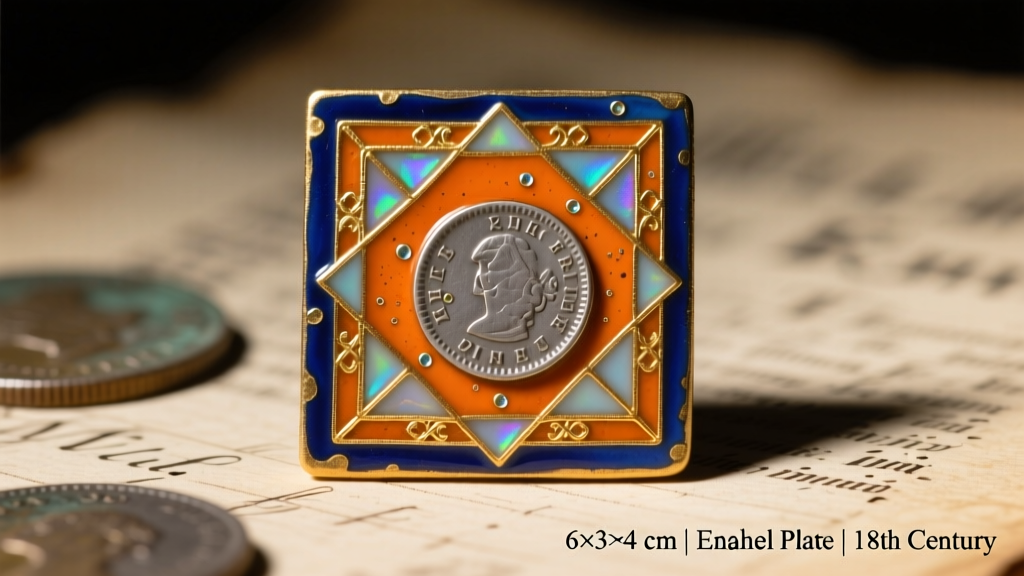
Decoding the Enamels Plate Car: Orange, Blue, Gray (6" × 3" × 4") with Illustration — A Numismatic & Industrial Artifact Analysis
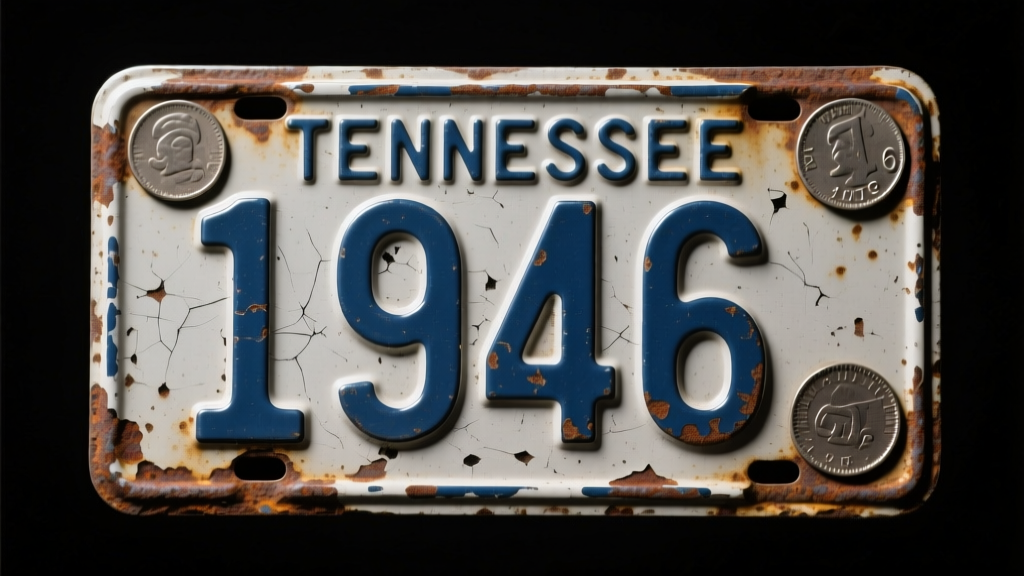
Tennessee 1946 Auto License Plate: Historical Context, Physical Specifications, and Collector Value
Hull Little Red Riding Hood Cookie Jar (13" High, Model #2): Production History, Identification, Market Value & Collector Insights
Decoding the Canes Walking Stick: Brass Animal, Snake, Heart, Horseshoe & Bead Inlay — A 34-Inch Numismatic and Decorative Artifact Analysis
Barbed Wire Stubbe Plate: Decoding the Large and Small Variants Dated October 3, 1883 — An 18-Inch Masterpiece of American Industrial Numismatics
JG Limited 3: Authentication, Market Analysis, and Historical Context of the Rare 2018 Silver Bullion Coin
William Cross’s Signed Soapstone Moses Figurine: Provenance, Craftsmanship, and Market Valuation of the 11½ × 7 × 7-Inch Sculpture
Hull Basket Continental Green 12½-Inch: A Numismatic Deep Dive into the Rare 1776 Massachusetts Currency Artifact
The Poppelsdorf Ewer: A Masterpiece of 18th-Century German Silver and Its Enduring Numismatic Legacy