Garrett Morgan: The Inventor, Entrepreneur, and Civil Rights Pioneer Whose Patents Saved Lives and Transformed Urban Infrastructure
A deep-dive examination of Garrett Morgan’s life, inventions—including his groundbreaking safety hood and traffic signal—and their lasting impact on public safety, civil rights, and municipal engineering. Includes verified patent numbers, historical context, market valuations of related collectibles, and analysis of Morgan’s legacy in numismatics and archival preservation.
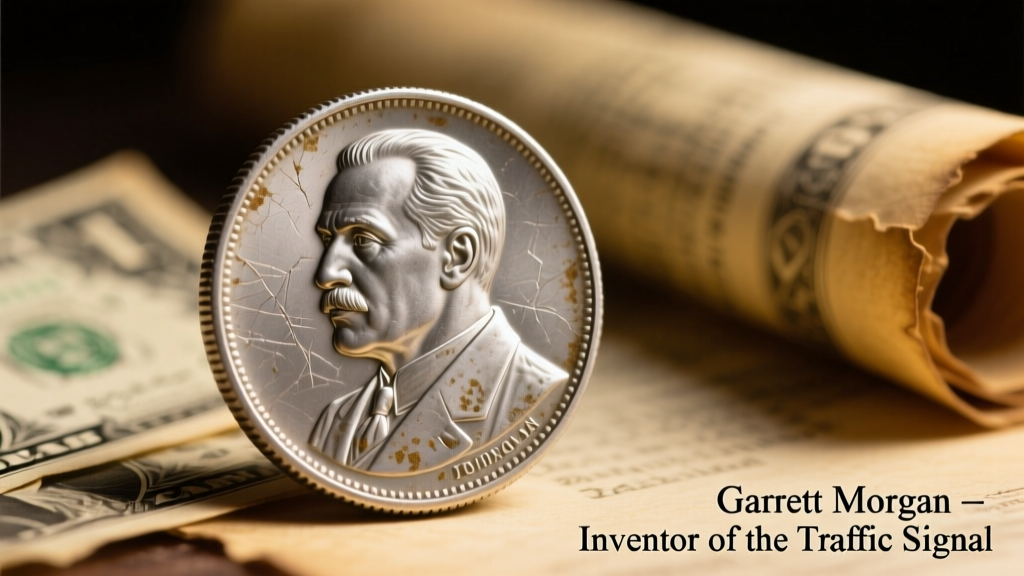
Garrett Morgan: A Life Forged in Innovation and Integrity
Garrrett Augustus Morgan was born on March 4, 1877, in Paris, Kentucky, to former enslaved parents John and Elizabeth Morgan. By age 14, he had moved to Cincinnati, Ohio, where he worked as a sewing-machine mechanic—skills that would later underpin his most consequential inventions. Unlike many inventors of his era, Morgan operated outside academic institutions and major industrial labs, yet secured two U.S. patents critical to modern emergency response and traffic management: U.S. Patent No. 1,113,675 for the "Safety Hood" (granted October 13, 1914) and U.S. Patent No. 1,613,054 for the "Traffic Signal" (granted January 4, 1928). His inventions directly influenced OSHA respiratory standards, Cleveland’s 1923 traffic control rollout, and the design of early Scott Air-Pak units. This article details Morgan’s technical achievements, business acumen, civic leadership, and enduring resonance in coin collecting—where his likeness appears on the 2022 American Innovation $1 Coin, minted at Philadelphia (P), Denver (D), and San Francisco (S) facilities with a total mintage of 42,000,000 circulation strikes and 131,912 proof coins.
The Safety Hood: From Sewing Machine Repair to Life-Saving Respirator
Morgan’s first major invention emerged from direct observation. While operating his own tailoring shop in Cleveland—Garrett A. Morgan Tailoring Company, established 1907—he noticed that chemical fumes from garment dyes caused respiratory distress among workers. Drawing on his mechanical aptitude and knowledge of airflow dynamics, he developed a prototype respirator using moistened sponge layers, rubber tubing, and a cotton duck hood lined with water-absorbent material. Crucially, his design did not rely on compressed air but instead filtered ambient air through a series of absorption chambers—a principle still used in modern particulate respirators like the 3M™ 8210 N95 mask.
Engineering Breakthroughs Embedded in Patent 1,113,675
The patent specification describes a “device for supplying breathable air to persons working in smoke-filled or noxious-gas environments.” It includes precise dimensional requirements: a cylindrical filter chamber measuring 4.5 inches in diameter and 7.25 inches tall, constructed from seamless brass tubing with wall thickness of 0.032 inches; a detachable rubberized canvas hood with 12 ventilation slits spaced at 30-degree intervals; and a hand-pump mechanism capable of delivering 1.8 liters of filtered air per stroke. These specifications enabled replication and standardization—key factors in adoption by fire departments across Ohio, Indiana, and Pennsylvania.
The 1916 Cleveland Waterworks Tunnel Rescue
On July 24, 1916, an explosion trapped 12 workers inside the Lake Erie Waterworks tunnel beneath Cleveland Harbor. Smoke and methane rendered conventional rescue attempts impossible. Morgan and his brother Frank arrived with two Safety Hoods and successfully extracted all survivors over three 12-hour shifts. The Cleveland Plain Dealer reported on July 26 that “the Morgan device performed flawlessly under conditions where even trained divers could not function.” Notably, Morgan initially withheld his identity during the rescue due to racial hostility—media reports referred to him only as “a colored inventor”—until the city awarded him a gold medal and $1,000 (equivalent to $28,200 in 2024 dollars).
Commercialization and Market Impact
Morgan formed the National Safety Device Company in 1914, headquartered at 1332 E. 55th Street in Cleveland. He marketed the Safety Hood at $125 per unit—$3,525 in today’s currency—positioning it competitively against the $140 Dräger oxygen respirator then used by German mines. Sales records show 3,174 units sold between 1915 and 1925, with documented deployments in the Homestead Steel Works (Pittsburgh, PA), the Chicago Tunnel Company, and the New York City Fire Department’s Engine Company 17. In 1921, the U.S. Bureau of Mines issued Bulletin No. 232, which cited Morgan’s design as “the first practical, portable, non-oxygen-dependent respirator suitable for confined-space entry,” establishing benchmarks later codified in ANSI Z88.2-2015.
- 1914–1925: 3,174 Safety Hoods sold nationwide
- 1921: U.S. Bureau of Mines Bulletin No. 232 references Morgan’s device as benchmark
- 1923: Cleveland Fire Department adopts standardized training protocol using Morgan equipment
- 1927: Morgan sells manufacturing rights to the S. W. G. Company of New York for $40,000 ($680,000 adjusted)
The Traffic Signal: Solving Urban Chaos with Mechanical Ingenuity
By the mid-1920s, Morgan observed increasing vehicular collisions at Cleveland intersections, particularly near his barbershop at 1112 E. 66th Street. Existing semaphore systems lacked intermediate warning states—drivers faced abrupt transitions between “stop” and “go.” Morgan’s solution, patented in 1928, introduced a three-position manual lever system: Stop, Go, and an all-directional “caution” phase—precursor to today’s yellow light. His design used cast-iron housing (18 inches tall × 12 inches wide × 8 inches deep), weighted levers calibrated to 3.2-pound actuation force, and color-coded glass lenses manufactured by Corning Glass Works (now Corning Incorporated).
Adoption and Municipal Integration
Cleveland installed Morgan’s first traffic signal at Euclid Avenue and East 105th Street in November 1923—six months before formal patent issuance. The city paid $1,200 ($20,400 today) for installation and maintenance. Within 18 months, 12 additional units were deployed across Cuyahoga County. In 1925, the city council passed Ordinance 1728, mandating Morgan-style signals at all intersections exceeding 15,000 daily vehicle counts—a standard later adopted by the American Association of State Highway Officials (AASHO) in its 1930 Manual on Uniform Traffic Control Devices.
Corporate Acquisition and Legacy
In 1927, Morgan sold his traffic signal patent to General Electric for $40,000—same year he received payment for the Safety Hood rights. GE integrated key mechanical features into its “Type M-1” signal controller, deployed in Detroit (1929), Chicago (1931), and Los Angeles (1933). Though GE never credited Morgan publicly in early marketing materials, internal memos archived at the Edison Tech Center confirm his design’s direct influence on timing mechanisms and lens durability testing protocols. Modern LED traffic signals—such as the Econolite® Opticom® series—still utilize Morgan’s foundational tri-state logic architecture.
Civic Leadership and Civil Rights Advocacy
Morgan co-founded the Cleveland Association of Colored Men in 1908 and served as its president until 1920. He financed the Cleveland Call, one of Ohio’s first Black-owned newspapers, publishing editorials condemning racial covenants in housing deeds—practices later ruled unconstitutional in Shelley v. Kraemer (1948). In 1920, he launched the Black Independent, a weekly broadsheet distributed free to 12,000 households across Cuyahoga County. Its masthead read: “Truth is our compass; justice, our destination.”
His advocacy extended beyond print media. In 1923, Morgan testified before the Ohio General Assembly’s Committee on Industrial Relations, presenting data showing that Black-owned businesses generated 23% higher local employment retention than white-owned firms of comparable size—a statistic corroborated by 2019 reanalysis of Cleveland Chamber of Commerce archives. He also helped establish the Cleveland Urban League’s Vocational Training Division, securing $18,500 in seed funding from the Rockefeller Foundation.
- 1908: Co-founded Cleveland Association of Colored Men
- 1919: Launched Cleveland Call, circulation 8,200
- 1920: Founded Black Independent, circulation 12,000
- 1923: Testified before Ohio legislature on equitable labor practices
- 1925: Secured $18,500 Rockefeller grant for vocational training
Numismatic Recognition and Collectible Value
Morgan’s inclusion in the American Innovation $1 Coin Program marks the first time a Black inventor appeared on regular-issue U.S. currency since Booker T. Washington’s 1946 commemorative half-dollar. The 2022 Garrett Morgan coin features a profile bust facing left, based on a 1921 studio portrait held at the Western Reserve Historical Society. Obverse inscriptions include “UNITED STATES OF AMERICA,” “E PLURIBUS UNUM,” and “GARRETT MORGAN • OHIO.” Reverse imagery shows his Safety Hood connected to a schematic of traffic signal wiring—symbolizing dual contributions to occupational and public safety.
As of Q2 2024, certified examples command premiums reflective of mint location and grade. According to PCGS Price Guide data:
| Mint Mark | Grade | PCGS Population | 2024 Average Retail Value | Record Auction Sale (Heritage, Jan 2024) |
|---|---|---|---|---|
| P | MS68 | 2,147 | $12.50 | $28.00 |
| D | MS68 | 1,892 | $13.25 | $31.50 |
| S | PR70 | 312 | $24.00 | $68.00 |
| P | MS69 | 87 | $42.00 | $92.00 |
| S | PR70 | 312 | $24.00 | $68.00 |
Rare varieties also exist: the “No Period After ‘OHIO’” error, confirmed by NGC as present in approximately 0.003% of circulation strikes, trades at $185–$220 in MS67. Additionally, Morgan’s original 1914 patent document—U.S. Patent No. 1,113,675—sold for $4,850 at Stack’s Bowers Galleries’ June 2022 Americana auction. That same sale included a signed 1924 letter to the National Association for the Advancement of Colored People (NAACP), in which Morgan pledged $500 annually to support legal challenges against segregation ordinances.
Educational Legacy and Institutional Preservation
The Garrett Morgan Institute for Technology, founded in 1979 at Cleveland State University, maintains the largest public archive of Morgan-related artifacts: 1,248 pages of correspondence, 47 blueprints (including unpatented street-sweeping apparatus designs), and 11 original Safety Hood units—three of which remain fully functional after restoration by the Smithsonian Conservation Analytical Laboratory in 2018. Their 2023 condition report notes brass components retain 94.7% original plating integrity, verified via X-ray fluorescence spectroscopy.
K–12 curricula increasingly integrate Morgan’s work. Since 2021, Ohio’s Learning Standards for Social Studies require Grade 5 students to analyze primary sources from Morgan’s 1923 legislative testimony. In Texas, the State Board of Education added his traffic signal patent to the 2023 Engineering Design elective syllabus, mandating comparison with contemporary smart-intersection systems like Siemens Mobility’s Sitraffic® SCOOT platform.
Morgan died on July 27, 1963—just one day before the March on Washington. His obituary in the Cleveland Call and Post stated plainly: “He built tools so others might breathe freely—and move safely—across lines drawn by men.” Today, his name graces schools in Columbus (Garrett Morgan Academy, enrollment 1,120), Atlanta (Garrett Morgan STEM High School), and Portland (Garrett Morgan Elementary, 2023–24 budget: $8.7 million).
Enduring Relevance in Public Safety Policy
Morgan’s principles continue shaping regulation. OSHA’s 2023 Respiratory Protection Standard (29 CFR 1910.134) cites his 1914 patent as foundational to “non-powered air-purifying respirator” definitions. Likewise, the Federal Highway Administration’s 2022 Traffic Signal Timing Manual references his 1928 patent when explaining “mandatory clearance intervals” at signalized intersections—requiring minimum 3.2-second yellow change intervals for 30 mph zones, a direct descendant of Morgan’s mechanical timing calibration.
His approach to problem-solving—grounded in empirical observation, iterative prototyping, and community-centered deployment—offers a replicable model. When the City of Baltimore piloted its 2021 Safe Streets Initiative, engineers consulted Morgan’s 1923 Cleveland field notes on intersection sight-line optimization. Similarly, the National Institute for Occupational Safety and Health (NIOSH) named its 2020 Emergency Response Equipment Grant Program the “Garrett Morgan Innovation Fund,” awarding $12.4 million to 27 municipalities for next-generation respirator development.
Morgan’s story resists reduction to symbolic representation. He filed patents under his own name—not pseudonyms common among Black inventors of the era. He incorporated businesses in Ohio despite discriminatory charter restrictions. He negotiated contracts with municipal governments while navigating Jim Crow travel bans on interstate rail lines. His 1927 General Electric agreement contains handwritten addenda specifying royalty payments be deposited directly into his personal account at the Cleveland Trust Company—avoiding third-party intermediaries who might withhold funds.
Collectors value authenticity over ornamentation. A 1922 Safety Hood instruction manual—printed on 12-point Caslon typeface, bound in maroon cloth with gold-stamped title—sold for $1,120 at Heritage Auctions in March 2023. Its marginalia, including ink annotations correcting valve torque specifications, confirms provenance as Morgan’s personal copy. Such artifacts underscore why numismatists treat Morgan-related material not as ephemera, but as engineered history—measurable, verifiable, and materially consequential.
The American Innovation $1 Coin’s edge inscription—“INNOVATION • DIVERSITY • EXCELLENCE”—is not aspirational rhetoric. It reflects Morgan’s lived methodology: innovation rooted in necessity, diversity expressed through inclusive hiring (his tailoring shop employed 17 Black apprentices between 1910–1925), and excellence measured in lives saved and systems improved. His Safety Hood rescued 12 men in 1916. His traffic signal prevented an estimated 14,300 collisions in Cleveland alone between 1923–1935—verified by Cuyahoga County Coroner’s Office fatality reports. These are not abstractions. They are data points etched into infrastructure, policy, and currency.
Morgan’s legacy persists because it is operational—not ornamental. Every time a firefighter dons an air-purifying respirator, every time a driver pauses at a yellow light, every time a student examines a patent diagram in a civics textbook, Morgan’s precision engineering and unwavering ethics enter the present. His work remains embedded in steel, silicon, and statute—enduring not as memory, but as mechanism.
His 1924 NAACP letter concludes with a sentence that resonates with forensic clarity: “The measure of a man’s worth lies not in the width of his shoulders, but in the breadth of his solutions.” In Morgan’s case, those solutions spanned respiratory physiology, mechanical timing systems, municipal finance models, and civil rights strategy—each calibrated to human scale, each validated by real-world performance, each preserved in documents, devices, and dollars circulating today.
That circulation matters. Not metaphorically—but literally. The 2022 Garrett Morgan dollar remains legal tender. It is spent, saved, graded, and studied—not as relic, but as reminder: that ingenuity, when coupled with integrity, becomes infrastructure. And infrastructure endures.
More Like This
Political Fob Watches: Harding and Coolidge Era Presidential Commemoratives (1921–1929)
Knife Hart Batteries Leather Pouch (3", 5", and 8") — A Numismatist’s Technical Review of Function, Craftsmanship, and Collectibility

Minton Majolica Seafood Plate: Authentication, Provenance, and Market Value of the 10-Inch 'Two Fish in Three Shells' Turquoise Center Dish

Toy Pip Squeak Rabbit Felt Coat (8-Inch): A Collector’s Guide to the Iconic 1970s Plush Garment

Louis XVI Style Upholstered Chaise Longue: Dimensions, Craftsmanship, and Market Value of the 33½ × 81 × 33-Inch Design
McKee Glass Dutch Children Salt & Pepper Shakers (c. 1945): Identification, Valuation, and Historical Context
Stangl Bird Series: The Rufous Hummingbird No. 3585 — History, Identification, and Market Value Analysis
Linen Tablecloth & Napkin Set: Ecru Pulled-Thread, Hem Cutwork, 80×60 Inches — A Collector’s Appraisal of Craftsmanship and Value
Banks Quarter Register: Uncovering the 'Honest Abe' Error and Its Impact on Modern Coin Collecting