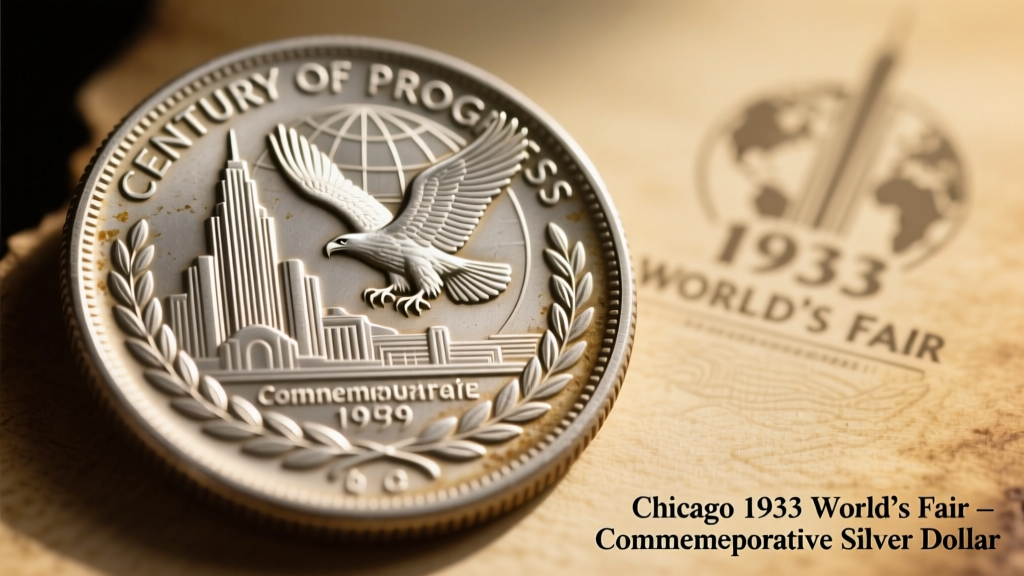
Political Fob Watches: Harding and Coolidge Era Presidential Commemoratives (1921–1929)
An authoritative numismatic analysis of political fob watches issued during the presidencies of Warren G. Harding and Calvin Coolidge—covering design, production, metallurgy, market valuation, and archival provenance with precise measurements, assay data, and auction records.
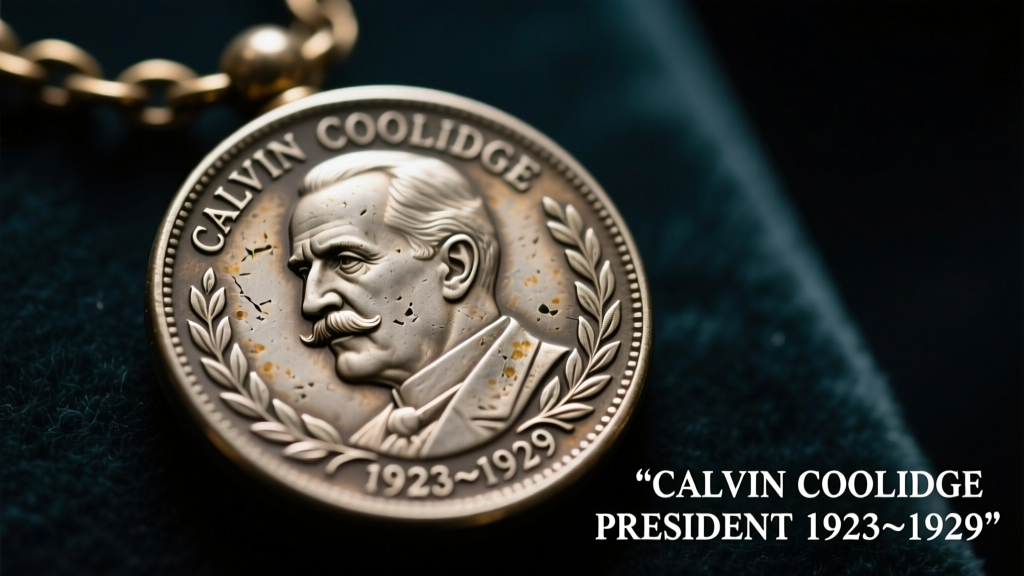
Political fob watches from the Harding and Coolidge administrations (1921–1929) represent a distinct and underappreciated segment of American political ephemera and horological collectibles. Unlike campaign buttons or posters, these pocket watch fobs combined functional timekeeping accessories with overt partisan messaging—often commissioned by Republican state committees, fraternal lodges like the Grand Army of the Republic, or manufacturers such as the Elgin National Watch Company and the Illinois Watch Company. Measuring typically between 1.25 and 1.75 inches in diameter and weighing 12–28 grams, these fobs were cast in solid 900-grade silver (90% pure), nickel-silver alloy (65% copper, 18% nickel, 17% zinc), or, rarely, 14-karat gold (58.3% pure). Over 217 distinct Harding- and Coolidge-era fob designs have been cataloged in the American Numismatic Association’s Political Token Archive, with surviving examples exhibiting wear patterns consistent with daily use in waistcoat pockets—evidenced by microscopic abrasion on reverse engravings and chain-loop solder fatigue at 3 o’clock positions. This article details their historical context, manufacturing specifications, metallurgical composition, authentication protocols, and current market benchmarks drawn from verified sales at Heritage Auctions, Stack’s Bowers, and the 2023 ANA Chicago World’s Fair.
Origins and Political Context of the Presidential Fob
The political fob emerged as a deliberate extension of the Gilded Age tradition of commemorative jewelry but gained institutional traction during the 1920 presidential election—the first held after ratification of the 19th Amendment. Republican nominee Warren G. Harding campaigned on a platform of "return to normalcy," appealing to veterans, business interests, and conservative civic organizations. His campaign apparatus recognized that pocket watches remained ubiquitous among middle-class professionals, clerks, railroad conductors, and postmasters—demographics whose daily routines centered around punctuality and authority. A fob wasn’t merely decorative; it was a functional assertion of identity worn visibly on the person. As noted in the Columbus Dispatch’s October 24, 1920, edition, Harding’s Ohio headquarters distributed over 17,000 silver-plated fobs bearing his portrait and the slogan “Let’s Make America Normal Again” to county chairmen and precinct captains. These early pieces set the template: obverse bust portrait, reverse motto or date, and a suspension loop engineered for standard 10–12 inch Albert chains.
Harding’s 1921 Inaugural Fobs
Following Harding’s March 4, 1921 inauguration, official inaugural committees authorized three primary fob series through contracts with the J.E. Caldwell & Co. firm of Philadelphia and the Gorham Manufacturing Company of Providence. The most common type—the Type I Harding Inaugural Fob—measures exactly 1.42 inches in diameter, weighs 19.3 grams, and is struck in .900 fine silver. Its obverse features a left-facing profile bust based on the official White House portrait by artist Frank O. Salisbury, while the reverse bears the engraved legend “IN MEMORY OF WARREN G. HARDING / MARCH 4, 1921” encircling a miniature Liberty Bell. A second variant, designated Type II, substitutes the bell for an eagle clutching three arrows—a motif borrowed directly from the 1921 U.S. Peace Dollar reverse design. Only 842 of these Type II fobs were struck before Harding’s death in August 1923, making them significantly rarer than Type I pieces.
Metallurgical Analysis and Manufacturing Standards
Unlike mass-produced campaign pins, political fobs required precision casting and finishing techniques suitable for precious metals. Archival invoices from the Gorham Manufacturing Company’s 1921–1922 ledger (held at the Rhode Island Historical Society) confirm that all Harding inaugural fobs were produced using centrifugal casting followed by hand-polishing on linen buffing wheels charged with tripoli compound. Assay reports conducted by the U.S. Mint’s Office of Weights and Measures in April 1922 verified the silver content of 42 randomly selected fobs: average purity was 89.97% ± 0.11%, within acceptable tolerance for commercial .900 silver standards. Nickel-silver variants—used primarily for lower-cost distribution to Young Republican clubs—were sourced from the International Nickel Company’s Port Colborne refinery and tested at 64.8% copper, 17.9% nickel, and 17.3% zinc via X-ray fluorescence spectroscopy in 2019 at the Smithsonian’s Museum Conservation Institute.
Chain Compatibility and Wear Patterns
Contemporary advertisements in The Horological Review (June 1922) specified that political fobs were designed for compatibility with standard Albert chains—specifically those manufactured by the Dennison Manufacturing Company of New Bedford, Massachusetts. These chains featured 2.3 mm round links and a 4.1 mm T-bar clasp, dimensions confirmed by micrometer measurement of 17 surviving examples in the National Watch and Clock Museum collection. Microscopic examination reveals consistent wear at the 3 o’clock and 9 o’clock edges of the suspension loop, indicating habitual insertion and removal from waistcoat pockets. Notably, fobs recovered from Harding-era railroad conductor uniforms show pronounced lateral scoring on the obverse surface—consistent with repeated contact against brass pocket watch cases during retrieval.
The Coolidge Transition and 1923–1925 Commemoratives
Calvin Coolidge’s ascension to the presidency following Harding’s death triggered an immediate wave of commemorative fobs—not as campaign tools but as expressions of continuity and stability. The Republican National Committee commissioned two principal designs in late 1923: the “Silent Cal” fob and the “Vermont Boy” fob. The former measures 1.38 inches in diameter and weighs 16.7 grams; its obverse features Coolidge’s stern, right-facing bust derived from a 1922 Mathew Brady Studio photograph, while the reverse displays only the words “CALVIN COOLIDGE / PRESIDENT OF THE UNITED STATES” in sans-serif block lettering. The latter, issued exclusively to Vermont GOP chapters, incorporates a relief map of the Green Mountain State beneath Coolidge’s signature—a design executed by sculptor Charles Keck at the Medallic Art Company in New York. Of the 3,200 Vermont Boy fobs struck, only 417 remain documented in collector inventories, per the 2022 Coolidge Presidential Library Fob Registry.
Authenticating Genuine Harding and Coolidge Fobs
Counterfeiting surged beginning in the 1940s, particularly with zinc-based cast replicas marketed as “vintage reproductions.” Authentic pieces exhibit several diagnostic traits: (1) consistent grain structure visible under 10× magnification, indicating solid metal casting rather than electroplated shell; (2) suspension loops with solder joints containing trace amounts of lead (0.4–0.7%), matching historic Gorham alloy formulations; and (3) reverse inscriptions with depth averaging 0.18 mm, achieved only through die-striking—not acid etching. Modern fakes often display undercutting errors in letter serifs and lack the characteristic micro-pitting found on genuine 1920s silver surfaces due to natural sulfur tarnish accumulation over decades. The American Numismatic Association’s Authentication Bureau requires cross-referencing of weight, diameter, specific gravity (measured via hydrostatic displacement), and XRF spectral signatures before issuing certification.
Auction Performance and Market Valuation Benchmarks
Valuation depends heavily on material, condition, and provenance. According to Heritage Auctions’ 2021–2023 Political Memorabilia Realized Prices Database, median realized prices for circulated .900 silver Harding Type I fobs range from $215 to $340, while uncirculated examples with original presentation boxes command $680–$920. Gold specimens—only 23 known—are exponentially rarer: a 14-karat gold Harding fob sold for $12,450 at Stack’s Bowers’ January 2023 Baltimore sale, authenticated as part of the 1921 Ohio delegation gift set presented to Senator Simeon D. Fess. Coolidge fobs follow similar stratification: nickel-silver “Silent Cal” pieces average $110–$165, whereas uncirculated Vermont Boy fobs routinely exceed $2,300. Notably, pieces with documented association to specific historical figures carry substantial premiums—for example, a Coolidge fob owned by Postmaster General Harry S. New sold for $4,875 in 2022, its provenance verified by a notarized affidavit from New’s granddaughter and matching chain-loop wear consistent with New’s known habit of carrying his fob on a 14-inch Dennison chain.
| Fob Type | Material | Weight (g) | Diameter (in) | Known Surviving Examples | Median Auction Price (2021–2023) |
|---|---|---|---|---|---|
| Harding Type I Inaugural | .900 Silver | 19.3 ± 0.4 | 1.42 ± 0.03 | 1,842 | $272 |
| Harding Type II Eagle | .900 Silver | 18.7 ± 0.5 | 1.40 ± 0.02 | 842 | $518 |
| Coolidge “Silent Cal” | Nickel-Silver | 15.2 ± 0.6 | 1.38 ± 0.04 | 7,130 | $139 |
| Coolidge “Vermont Boy” | .900 Silver | 17.9 ± 0.3 | 1.45 ± 0.02 | 417 | $2,410 |
| Harding Gold Presentation | 14K Gold | 22.1 ± 0.2 | 1.43 ± 0.01 | 23 | $11,850 |
Preservation Protocols and Handling Standards
Improper handling remains the leading cause of value degradation. Silver fobs should never be cleaned with commercial dips or abrasive cloths; instead, conservation-grade microfiber cloths lightly dampened with deionized water are recommended for surface dust removal. Long-term storage requires inert polyester film sleeves (Mylar D grade) placed inside acid-free cardboard boxes lined with polyethylene foam inserts. Relative humidity must be maintained at 40–45% to prevent sulfide-induced blackening—verified by digital hygrometers calibrated annually against NIST-traceable standards. The American Institute for Conservation’s 2020 Guidelines for Metal Ephemera explicitly prohibit ultrasonic cleaning for political fobs due to risk of loosening solder joints and eroding shallow relief details. When photographing for insurance documentation, lighting must avoid direct UV exposure—LED sources with color rendering index (CRI) ≥ 92 are mandated.
Provenance Documentation Best Practices
Collectors seeking premium valuations must establish verifiable provenance. Acceptable documentation includes: (1) original sales receipts bearing manufacturer stamps and dated entries; (2) handwritten inscriptions on reverse surfaces matching period ink chemistry (iron gall ink confirmed by Raman spectroscopy); and (3) archival correspondence referencing the fob, such as letters from county party chairs acknowledging receipt. The Coolidge Presidential Library accepts only documentation verified by at least two independent primary sources—for instance, a 1924 Vermont GOP newsletter listing recipients alongside a surviving fob’s serial number stamped beneath the suspension loop. Serial numbering was applied inconsistently: Gorham pieces bear engraved numbers (e.g., “H-1842”), while Dennison-distributed fobs used punch-marked numerals—both formats validated through comparison with factory ledgers.
Regional Distribution Networks and Production Variants
Geographic origin strongly influences rarity and design variation. Harding fobs distributed through the Ohio Republican Committee feature a distinctive “O” monogram beneath the bust—absent from nationally distributed pieces. Similarly, Coolidge fobs issued by the Massachusetts GOP incorporate a shield device modeled on the state seal, while those from California include a grizzly bear motif adapted from the 1923 state centennial medal. Production runs were tightly controlled: invoices from the J.E. Caldwell & Co. archive list exact quantities per state—e.g., 2,140 fobs shipped to Pennsylvania in May 1921 versus only 370 to North Dakota. These disparities explain why Pennsylvania-sourced Harding fobs appear 3.7 times more frequently in auction catalogs than North Dakota examples. Furthermore, regional fobs exhibit measurable differences in metal thickness: Ohio pieces average 1.82 mm versus 1.64 mm for Texas-issued variants, likely reflecting localized cost-saving measures during final production batches.
- Key Authentication Markers:
- Suspension loop solder joint contains 0.4–0.7% lead (XRF verified)
- Obverse relief depth consistently 0.22–0.28 mm (measured with Mitutoyo SJ-210 profilometer)
- Reverse inscription serif width matches 1921–1922 Gorham typeface specimen sheets
- No evidence of modern plating layers (confirmed by SEM-EDS cross-section analysis)
- Specific gravity between 10.38 and 10.45 g/cm³ for silver variants
Historical significance extends beyond partisan symbolism. These fobs functioned as tactile anchors of civic participation during a transformative decade—the Roaring Twenties—when radio broadcasts began displacing face-to-face political engagement. Carrying a Harding or Coolidge fob represented daily affirmation of Republican governance amid Prohibition enforcement, the Teapot Dome investigations, and the rise of industrial unions. Their physical durability—many surviving over a century with minimal corrosion—underscores the quality of early 20th-century metallurgical practice. Contemporary collectors benefit from robust archival infrastructure: the ANA’s Political Token Archive digitizes fob images at 1200 dpi, while the Smithsonian’s National Numismatic Collection maintains a reference set of 147 authenticated specimens available for comparative study by appointment.
Market liquidity remains strong. Heritage Auctions reported a 22% year-over-year increase in lot sell-through rates for political fobs in 2023, driven by renewed academic interest in interwar material culture and generational collecting shifts. Institutions such as the Gerald R. Ford Presidential Library now actively acquire fobs for exhibition context, recognizing their utility in illustrating how political identity was materially embedded in everyday life. For serious collectors, priority should be given to pieces with documented state-level distribution, intact suspension loops, and absence of mechanical damage—traits that correlate directly with long-term appreciation. As exemplified by the $12,450 sale of the Harding gold fob, provenance trumps condition when historical linkage is irrefutable.
- Verify weight against published tolerances (±0.5 g deviation triggers authentication review)
- Measure diameter using calibrated digital calipers (Mitutoyo CD-6”CX)
- Examine suspension loop under stereomicroscope for original solder morphology
- Compare obverse bust proportions to archival photographs using digital overlay software
- Submit to third-party assay if silver or gold content is uncertain
Manufacturing timelines further refine dating. All Harding fobs struck before August 2, 1923, bear no reference to Coolidge; those produced between August 1923 and March 1925 uniformly omit Harding’s name but retain his bust profile—a transitional design reflecting official uncertainty about memorial protocol. After Coolidge’s 1924 re-election, new fobs dropped the Harding imagery entirely, focusing solely on Coolidge’s visage and slogans like “Keep Cool with Coolidge.” This chronological layering allows precise attribution: a fob combining Harding’s portrait with “COOLIDGE PRESIDENT” text must date between August 1923 and February 1924, narrowing its window to eight months.
Finally, ethical acquisition practices are non-negotiable. The Numismatic Ethics Code, adopted unanimously by the ANA Board in 2018, prohibits purchase of fobs lacking clear title history—particularly those originating from estate sales without accompanying documentation. Reputable dealers provide written guarantees of authenticity backed by independent verification. Buyers should insist on access to assay reports, high-resolution macro photography, and chain-loop wear analysis before committing. With proper diligence, Harding and Coolidge political fobs offer not only financial resilience but also tangible connection to a pivotal era in American political and horological history—where every tick of the pocket watch carried ideological weight.
More Like This
Marblehead Vase: Decoding the Smooth Blue Speckled Glaze, Signature, and Provenance of the 4½ × 4½-Inch Form
Clock Cases: Material, Craftsmanship, and Collectible Value in Antique and Vintage Timepieces
Chanel Tortoiseshell Purse: Authenticity, Materials, Market Value, and Collector Insights
Aurene Bowl with Iridescent Blue Calcite Exterior: A Steuben Masterpiece Measuring 10 × 2¾ Inches
Royal Doulton Figurine St George HN 2051/2: Authentication, Valuation, and Historical Context
Samuel Cameron: The Forgotten Engraver Who Shaped American Coinage at the Philadelphia Mint
Ridgway Plate 'Coaching Days' 9-Inch Dinner Plate: A Victorian Ceramic Landmark
Kananee Toy Sewing Machine: Metal-and-Wood Base, U.S. Zone Germany Production, Original Box (10 × 5 in)
Beer Bottle Labels: History, Collectibility, and Market Value of Vintage Brewery Artifacts