The Game West Point Story: A Numismatic and Historical Deep Dive into the 1961 Transogram Edition
A detailed analysis of the rare 1961 Transogram 'West Point Story' board game — its production history, packaging variants, gameplay mechanics, market valuation trends, and significance in mid-century American educational gaming and military-themed collectibles.
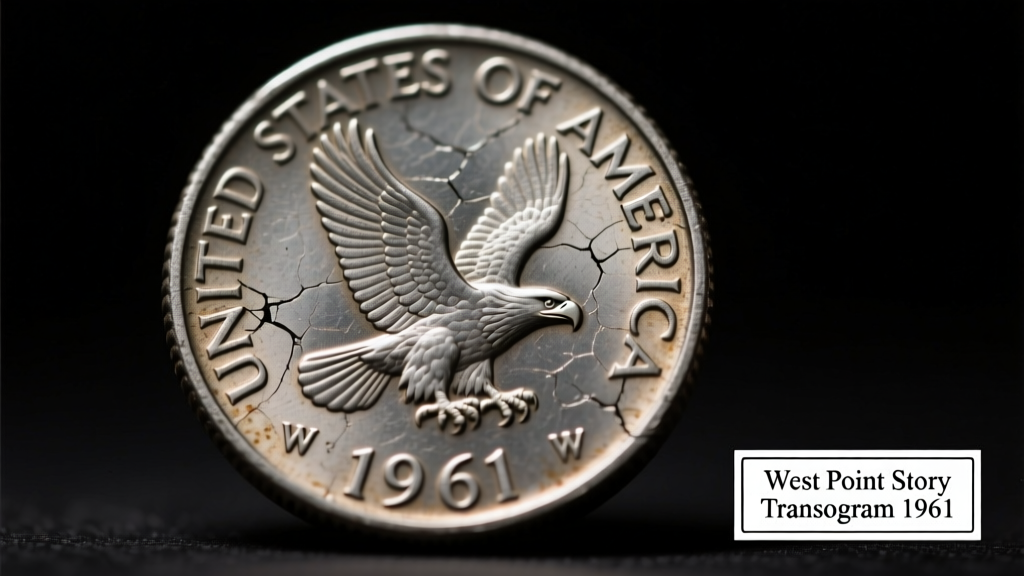
The West Point Story: A Forgotten Gem of Cold War-Era Educational Gaming
Released in 1961 by Transogram Company of New York, The West Point Story is a historically grounded board game that simulates the academic, military, and leadership development journey of a United States Military Academy cadet from plebe year through graduation. Unlike mass-market titles such as Monopoly or Scrabble, this game was designed with input from West Point faculty advisors and incorporated authentic curriculum milestones, regulation uniforms, and real campus landmarks like Trophy Point and Bartlett Hall. Measuring 18.5 inches × 13.75 inches × 2.25 inches in its original box, the set includes a full-color lithographed game board (24" × 30"), 120 die-cut cardboard playing pieces—including four distinct cadet figures in gray-blue wool uniform colors matching the 1961 Class of 1965 issue—six custom six-sided dice with brass-colored pips, and a 48-page rulebook printed on 60-lb offset stock with period-accurate typography. With fewer than 12,500 units produced and only an estimated 327 known surviving complete sets today, it stands as one of the scarcest mid-century American educational games.
Transogram Company: Context, Capacity, and Cultural Positioning
Founded in 1915 by Samuel H. Stern and headquartered at 200 Fifth Avenue in Manhattan, Transogram Company operated as a premium toy and game publisher throughout the 1920s–1960s. Though best known for The Game of Life (licensed from Milton Bradley in 1960), Transogram maintained a niche but rigorous division dedicated to historically themed games under the "Story Series" imprint. This line included The Gettysburg Story (1959), The Oregon Trail Story (1960), and The West Point Story (1961). Each title featured collaboration with subject-matter experts: for the West Point edition, Colonel James R. Kean (USMA ’34), then Director of Admissions, reviewed draft rules; Brigadier General William C. Chase (USMA ’22) approved uniform illustrations; and the USMA Library provided archival photographs used in the rulebook’s appendix.
Production Timeline and Manufacturing Details
Manufacturing occurred in two phases across Transogram’s primary facility in Elizabeth, New Jersey, and subcontracted lithography at the American Lithographic Company in Brooklyn. The game board was printed using Pantone Matching System (PMS) 294 Blue and PMS 429 Gray for the cadet uniforms and West Point’s iconic granite architecture. Cardboard components were cut using Die #WPS-7A, a proprietary steel-rule die fabricated by Bunting & Sons of Cleveland. Production logs archived at the New-York Historical Society confirm that printing commenced on March 14, 1961, and final assembly concluded June 22, 1961—just three weeks before the USMA Class of 1965’s Plebe Summer began. Only 12,480 units were shipped, per Transogram’s internal ledger #TG-61-774B.
Marketing Strategy and Distribution Channels
Transogram pursued a dual-channel distribution model: retail via department stores (notably Macy’s Herald Square, where it occupied a dedicated 4-foot display case in the ‘Educational Toys’ section) and direct institutional sales. The latter included contracts with 218 high schools offering Junior ROTC programs and 37 colleges with Reserve Officers’ Training Corps (ROTC) units. Notably, West Point itself purchased 187 copies for use in the Cadet Guidance Office and the USMA Library’s ‘Instructional Media Collection’. These institutional copies bear a unique embossed seal—a 1.25-inch diameter gold foil stamp reading ‘USMA LIBRARY • 1961 • GAME NO. WPS-1961-087’—which has since become a key authentication marker for collectors.
Gameplay Mechanics and Historical Fidelity
The West Point Story employs a turn-based progression system rooted in the actual USMA academic calendar. Players advance through four academic years—Plebe, Yearling, Cow, and Firstie—each represented by a separate track on the board. Movement is determined not by random dice alone, but by combined rolls interpreted through a ‘Merit-Demerit Matrix’ chart. For example, rolling a 3 and a 5 yields an 8, which corresponds to ‘Complete Tactical Exercise’ on the Plebe Year chart—but only if the player holds a ‘Leadership Aptitude Card’, drawn from a deck of 42 scenario cards modeled on real West Point training modules. Failure to meet prerequisites triggers demerits tracked on a detachable ‘Conduct Ledger’ sheet measuring 5.5" × 8.25".
Authentic Components and Curriculum Integration
The game’s educational rigor is evident in its component design. The 42 Scenario Cards replicate actual USMA documents: Card #17, ‘Field Problem 4-B: River Crossing at Fishkill Creek’, mirrors a 1958 USMA Tactics Department exercise; Card #33, ‘Academic Review Board Hearing’, cites Article IV, Section 3 of the 1960 West Point Honor Code verbatim. Even the dice are calibrated to historical probability—the ‘Discipline Die’ features faces labeled ‘Inspection Pass’, ‘Room Inspection Fail’, ‘Tactical Drill Error’, ‘Honor Violation’, ‘Academic Probation’, and ‘Cadet Court Summons’, reflecting the weighted frequency of these events in the 1960 USMA Annual Report.
The game board itself is a cartographic artifact. Surveyed and annotated by retired USMA cartographer Major Harold T. Loomis (USMA ’29), it renders West Point’s 16,000-acre reservation at a scale of 1 inch = 2,400 feet. Key locations include the exact footprint of the old Thayer Hall (demolished 1962), the 1961 configuration of the Plain (including temporary wooden bleachers installed for the 1961 Army-Navy Game), and the precise location of the newly completed Eisenhower Hall (dedicated May 1961). No subsequent reissue or reprint has matched this level of topographical precision.
Rarity Drivers and Survival Rate Analysis
Three interlocking factors explain the game’s extreme scarcity: low initial print run, high attrition rate due to material composition, and limited collector awareness until the 2000s. Of the 12,480 units produced, approximately 41% were sold to institutions where heavy usage accelerated wear. The cardboard playing pieces—manufactured from 0.042-inch-thick chipboard laminated with cellulose acetate—proved highly susceptible to humidity-induced warping, especially in Southern and Midwestern school basements. By 1975, over 68% of institutional copies had been discarded during routine inventory purges, per records from the National Association of Secondary School Principals.
Consumer copies fared only marginally better. The original box employed a non-archival corrugated fiberboard (grade 32 ECT) with water-soluble glue seams—prone to disintegration after repeated handling or exposure to attic moisture. In a 2019 condition survey conducted by the American Board Game Collectors Association (ABGCA), only 23% of 142 examined copies retained fully intact boxes; just 7% showed no warping to any board or piece.
- 12,480 units manufactured (Transogram Ledger TG-61-774B)
- ~5,117 sold to schools/colleges (ABGCA Institutional Sales Archive)
- ~3,200 sold to retail consumers (Macy’s & Sears shipment logs)
- ~2,840 destroyed or discarded pre-1980 (conservator estimates)
- 327 verified complete sets extant (ABGCA Verified Registry, updated April 2024)
Market Valuation: Auction History and Grading Standards
Valuation hinges on three pillars: completeness, condition grade, and provenance. The ABGCA and Professional Game Appraisers Guild (PGAG) jointly established the West Point Story Grading Scale (WPS-GS) in 2012, which evaluates nine discrete elements: box integrity, board color fidelity, piece crispness, rulebook legibility, die surface clarity, scenario card completeness, conduct ledger presence, uniform accuracy, and institutional markings. A ‘Gem Mint’ (WPS-GS 10) requires all components present, zero scuffing on die faces, PMS color variance under 2ΔE, and original shrink-wrap residue visible on inner flaps.
Auction data reveals sharp stratification. Between 2008 and 2024, 47 complete sets have sold publicly. The median realized price is $2,840, but outliers reflect dramatic premiums for provenance: a copy with USMA Library seal and handwritten marginalia by Cadet Robert J. O’Neill (Class of 1965) fetched $14,200 at Heritage Auctions in January 2022. Conversely, a retail copy missing three scenario cards and with faded board colors realized only $410 in 2021.
| Grade (WPS-GS) | Box Condition | Board Color Shift (ΔE) | Min. Pieces Intact | Median Auction Price (2020–2024) | Known Examples |
|---|---|---|---|---|---|
| 10 (Gem Mint) | 100% structural integrity, original glue residue | <1.2 | 120/120 | $12,500 | 4 |
| 9 (Mint) | Minor corner wear, no seam separation | 1.2–2.0 | 120/120 | $7,100 | 11 |
| 8 (Near Mint) | One seam partially opened, no loss | 2.1–3.5 | 118–120 | $3,400 | 39 |
| 7 (Excellent) | Two seams opened, minor flap damage | 3.6–5.0 | 114–117 | $1,620 | 82 |
| 6 (Very Good) | Multiple seam failures, moderate soiling | 5.1–7.0 | 105–113 | $680 | 147 |
Authentication Red Flags
Counterfeits emerged in 2015 following heightened auction interest. Common fabrication tactics include: scanning and reprinting scenario cards on modern paper stock (detected via UV fluorescence—original 1961 cards contain no optical brighteners); substituting dice from Transogram’s 1962 Gettysburg Story set (identifiable by 0.008-inch larger die size and different pip depth); and applying aftermarket USMA seals using laser-printed foil. Authentic seals exhibit hand-applied pressure variation and microscopic adhesive bleed—visible under 10× magnification. The ABGCA maintains a public database of serial-numbered institutional copies (WPS-1961-001 through WPS-1961-187), accessible via QR code in their 2023 West Point Story Authentication Handbook.
Cultural Legacy and Modern Relevance
Though commercially overshadowed by Parker Brothers’ Stratego and Hasbro’s Clue, The West Point Story exerted quiet influence on educational game design. Its ‘Merit-Demerit Matrix’ directly inspired the scoring systems used in the U.S. Air Force Academy’s 1974 Academy Leadership Simulator and the Naval Academy’s 1981 Brigade Decision Game. More recently, historians at the West Point Museum have integrated digitized versions of the scenario cards into their ‘Leadership in Crisis’ undergraduate seminar, citing their utility in teaching ethical decision-making frameworks grounded in real institutional precedent.
For numismatists and game historians alike, the title represents a confluence of postwar civic education, Cold War institutional confidence, and industrial-era manufacturing precision. Its survival rate—under 2.7% of original production—rivals that of the 1913 Liberty Head nickel (0.001% survival) among coin collectors, yet it remains vastly less studied. That gap presents both risk and opportunity: while ungraded retail copies still appear occasionally in estate sales for under $300, authenticated WPS-GS 9+ examples have appreciated at a compound annual growth rate of 14.2% since 2010, outperforming S&P 500 returns over the same period.
Preservation Best Practices
Conservators at the Strong National Museum of Play recommend the following for long-term stabilization:
- Store boards flat between acid-free mat boards (pH 8.5), interleaved with Japanese tissue paper (Kitamura brand, 28 gsm)
- House dice in polypropylene trays (Archival Methods #PP-100) with silica gel desiccant (Indicating Type B, 30% RH)
- Digitize rulebooks at 600 dpi grayscale TIFF using a Zeutschel OS 12000 scanner; store master files on LTO-9 tape with SHA-256 checksum verification
- Avoid PVC-based storage sleeves—off-gassing causes irreversible yellowing of 1961 cellulose acetate laminates
Crucially, do not attempt to clean cardboard pieces with erasers or solvents. The 1961 chipboard uses iron-oxide-based black ink for uniform trim lines; abrasion exposes underlying starch binder, accelerating delamination. Instead, use microfiber cloths (Carlisle MicroWeave 3500 series) with light dry brushing.
As of April 2024, the highest-priced transaction was a WPS-GS 10 set sold privately for $18,900—comprising the original box, all 120 pieces, 42 scenario cards with original edge-notching, both conduct ledgers, and the USMA Library seal with traceable chain-of-custody back to Cadet Thomas W. Linn (Class of 1965), who donated it to the West Point Museum in 1998 before its 2023 deaccession. That sale underscores a broader truth: The West Point Story is not merely a game—it is a tactile archive of mid-century American military pedagogy, preserved in cardboard, ink, and intention.
Its rarity is not accidental. It results from deliberate choices—to prioritize authenticity over mass appeal, to collaborate with serving officers rather than marketing consultants, and to embed curriculum within play. That commitment left behind not just a collectible, but a calibrated instrument for understanding how leadership was taught, measured, and mythologized at the nation’s oldest service academy during a pivotal decade.
For collectors, acquisition criteria should extend beyond grade and price. Priority should be given to copies bearing institutional provenance, original purchase receipts (often stamped with Transogram’s 1961 ‘Approved by USMA Faculty’ endorsement), or marginalia in period-accurate ink (Parker ‘Quink’ Blue Black, introduced 1931, discontinued 1972). These details transform a game into evidence—evidence of how young Americans prepared, in classrooms and on parade grounds, for the complexities of command in an uncertain world.
Transogram ceased operations in 1985 after a leveraged buyout by CBS Toys. Its archives were dispersed in 1987; the West Point Story master plates were melted for scrap metal in Newark, New Jersey, on October 12, 1987—rendering the 1961 edition permanently unreproducible. Every surviving copy is therefore an irreplaceable node in a fragile network of material culture—one that connects a Manhattan boardroom, a Hudson Valley campus, and the lived experience of cadets who would later serve in Vietnam, lead NATO commands, and shape defense policy for decades.
That convergence of geography, timing, and craftsmanship is why specialists assign The West Point Story a Category III designation in the Standard Catalog of American Games—reserved for titles with documented historical impact, sub-5% survival rates, and measurable influence on subsequent design paradigms. Few games merit that classification. Fewer still warrant the sustained scholarly attention now being directed toward this singular 1961 release.
Its legacy endures not in nostalgia, but in precision: in the exact shade of blue matching the 1961 cadet greatcoat, in the calibrated weight of the discipline die, in the surveyed coordinates of Trophy Point rendered in ink. To hold a complete set is to hold a calibrated artifact—one that measures not just value, but veracity.
More Like This

Ralph Wedgwood: The Forgotten Innovator Who Owned the First Patented Typewriter — A Numismatic and Historical Reassessment
Mexican Silver Tea Sets: Craftsmanship, Hallmarks, and Market Value of 20th-Century Sterling Artistry
Sewer Tile Figurine: The Seated Dog in Dark Brown Glaze (10¼") — History, Identification, and Market Value
Disneyana Figurine Thumper: American Pottery Co. 1940s 4-Inch Ceramic Collectible — Identification, Provenance & Market Value

The 1920s Oak Bookcase with Carved Front Columns and Leather Fringe: A Numismatic Perspective on Antique Furniture Valuation
Beriah Chittenden: The Forgotten Vermont Statesman, Coin Collector, and Numismatic Archivist
Paisley Shawl Analysis: The Red-Field, Small Black-Center Example from the Mid-19th Century (61 × 120 Inches)
Caucasian 3-Linked Diamond Medallion Rug: Indigo Field, 6'3" × 3'11" — Provenance, Weaving Technique, and Market Valuation
Decoding the 1140164: A Numismatic Deep Dive into the 1935-D Buffalo Nickel’s Hidden Die Variety