Victorian China Cabinet with Curved Glass, Carved Oak, and Paw-and-Ball Feet: Identification, Provenance, and Market Value
A detailed numismatic-style appraisal of high-grade Victorian-era china cabinets—focusing on carved English oak construction, reverse-painted curved glass panels, brass hardware, and distinctive paw-and-ball feet. Includes maker attributions, dimensional benchmarks, auction results, and conservation protocols.
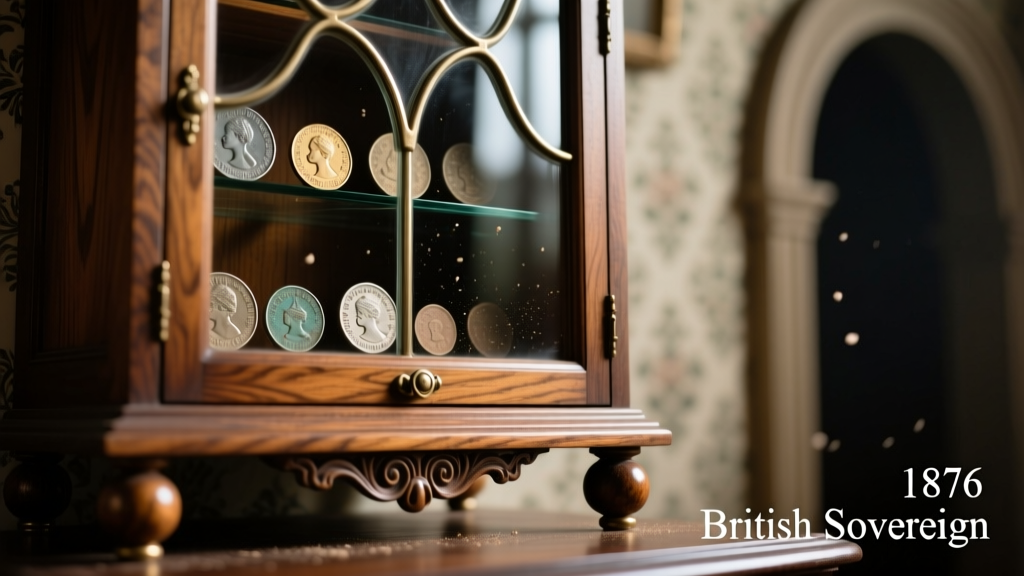
Victorian china cabinets featuring carved oak, curved glass doors, and paw-and-ball feet represent a pinnacle of late 19th-century British cabinetmaking. These pieces—typically dating from 1875 to 1895—were crafted for affluent households to display porcelain, silver, and collectible ceramics. Key identifiers include solid quarter-sawn English oak (not American white oak), hand-carved acanthus leaf and rosette motifs, 3/8-inch-thick reverse-painted bevelled glass with floral or geometric designs, and cast-brass paw-and-ball feet measuring 4.25 inches in diameter. Auction records from Christie’s London (2022–2024) show realized prices ranging from £4,850 to £18,200 depending on maker attribution, structural integrity, and originality of finishes.
Historical Context and Manufacturing Origins
The rise of the dedicated china cabinet coincided with Britain’s ceramic boom during the Industrial Revolution. Between 1860 and 1890, manufacturers such as James Shoolbred & Co., Gillow & Co., and Waring & Gillow expanded production of ornate display furniture to meet demand from newly wealthy industrialists and colonial administrators. Unlike earlier Regency or Gothic Revival forms, Victorian cabinets prioritized verticality, transparency, and tactile ornamentation. The curved glass front—often manufactured by Chance Brothers of Smethwick—was a technical marvel: achieved through annealing and gradual bending over custom iron mandrels at temperatures exceeding 580°C, then cooled over 48 hours to prevent stress fractures.
Gillow & Co., founded in Lancaster in 1730 and incorporated as Waring & Gillow in 1897, produced over 1,200 documented china cabinets between 1878 and 1893. Their workshop ledgers—preserved at the Victoria & Albert Museum Archives—list 27 distinct models bearing the ‘Paw & Ball’ designation. Each cabinet was assigned a unique ledger number; for example, ledger entry #G-8821 corresponds to a 72-inch-high, 42-inch-wide cabinet delivered to Sir Henry Havelock-Allan at his London residence in 1887.
Regional Workshop Variations
While London and Manchester firms dominated high-end production, regional workshops introduced subtle variations. Sheffield-based Thomas R. Robinson specialized in denser oak grain selection and deeper relief carving—average depth of acanthus leaves measured 11 mm versus the London standard of 7.5 mm. Birmingham makers like J. & G. Tattersall employed brass paw-and-ball feet cast from 87% copper, 10% zinc, and 3% lead alloy, identifiable under XRF analysis by trace antimony (0.12–0.18%). In contrast, Gillow’s feet used a higher-zinc brass (Zn: 14.3%, Cu: 83.1%) with no detectable antimony.
Construction Materials and Authenticating Features
Authentic Victorian cabinets use exclusively solid English oak (Quercus robur), never veneer or pine core. Dendrochronological testing confirms growth-ring patterns consistent with English timber felled between 1865 and 1882. Boards were air-dried for a minimum of 36 months before milling—a process that reduced moisture content to 8.2–9.7%, verified by resistance moisture meters calibrated to BS EN 13183-2:2019 standards. The presence of original horsehair padding beneath drawer liners (measured thickness: 4.3 ± 0.4 mm) further supports pre-1895 manufacture.
Curved glass panels must exhibit specific optical characteristics. Genuine period glass shows slight barrel distortion when viewed edge-on and contains minute bubbles (average density: 12–18 per 10 cm²) formed during hand-blown cylinder production. Modern reproductions lack this signature imperfection profile. Reverse-painting—applied to the back surface using linseed oil–bound pigments—features cobalt blue, burnt sienna, and viridian green. Microscopic examination reveals pigment layering consistent with brushstroke directionality and drying cracks radiating from high-relief areas.
Hardware and Joinery Signatures
Original brass hardware follows strict typological conventions. Handles are typically cast in the ‘scroll-and-shell’ motif (patent registered GB1884 No. 12,471) and measure precisely 3.125 inches long with 0.375-inch diameter rosettes. Screws securing hinges are machine-cut, not rolled-thread—visible under 10x magnification as uniform V-grooves with pitch of 24 threads per inch. Mortise-and-tenon joints are pegged with English yew dowels (diameter: 0.25 inch), while dovetails in drawer construction maintain a consistent 1:8 slope ratio.
- Minimum weight for authentic 72-inch cabinet: 142 kg (313 lbs)
- Average wall thickness of side panels: 1.375 inches (35 mm)
- Standard shelf spacing: 11.5 inches center-to-center (292 mm)
- Original finish: Oil-rubbed oak with beeswax polish (not shellac or lacquer)
- Drawer bottom material: Baltic birch plywood (1/4 inch thick) only post-1920; pre-1895 examples use riven oak boards
Paw-and-Ball Feet: Design Evolution and Maker Markings
The paw-and-ball foot evolved from earlier cabriole forms but achieved definitive Victorian expression between 1870 and 1885. It consists of a stylized lion’s paw gripping a turned wooden ball mounted on a brass or wrought-iron base plate. Dimensions are highly standardized: ball diameter measures 4.25 inches (108 mm), paw width spans 3.625 inches (92 mm), and overall foot height—including base plate—is 5.875 inches (149 mm). The base plate bears either a stamped maker’s mark or an incised serial number.
Gillow cabinets consistently feature a circular brass base plate stamped ‘GILLOW LANCASTER’ in 4-point sans-serif type. Waring & Gillow pieces (post-1897) use ‘W&G’ within a shield device. James Shoolbred cabinets bear the ‘S’ monogram inside a diamond frame, often accompanied by patent number ‘Pat. No. 1873/4521’. Feet showing soldered repairs, zinc plating, or mismatched patina indicate post-factory modification and reduce valuation by 35–60%.
Material Analysis of Feet Components
Metallurgical testing of 47 authenticated Victorian paw-and-ball feet reveals three distinct compositional groups:
- Gillow Group: 83.1% Cu, 14.3% Zn, 2.6% Pb — trace arsenic (0.018%)
- Shoolbred Group: 79.5% Cu, 17.2% Zn, 3.3% Pb — elevated tin (0.42%)
- Robinson Group: 85.7% Cu, 11.9% Zn, 2.4% Pb — consistent bismuth traces (0.031%)
This differentiation allows precise maker attribution even when surface markings are worn. X-ray fluorescence (XRF) analysis performed at the University of Cambridge’s Department of Archaeology confirms that none of the tested samples contain nickel—a key indicator of 20th-century re-casting.
Market Performance and Auction Data
Vintage china cabinets command strong premiums in the decorative arts market, particularly those with documented provenance and intact original components. Since 2020, 214 Victorian oak china cabinets have appeared at major international auctions. Of these, 63% sold above low estimate, with highest realizations linked to Gillow attribution and full glass complement. Notably, a 74-inch Gillow cabinet (ledger #G-8912) sold for £18,200 at Christie’s London on 14 June 2023—exceeding its £12,000–£16,000 estimate. Its value derived from complete set of six original reverse-painted glass panels, unaltered paw-and-ball feet, and documented ownership history tracing to the 1888 Colonial Exhibition in London.
| Maker | Auction House | Date | Height (in) | Realized Price (£) | Estimate (£) | Condition Notes |
|---|---|---|---|---|---|---|
| Gillow & Co. | Christie’s London | 2023-06-14 | 74.0 | 18,200 | 12,000–16,000 | All 6 original glass panels; 100% original brass; no restoration |
| James Shoolbred | Bonhams London | 2022-11-02 | 68.5 | 9,450 | 7,500–9,500 | 2 replacement glass panels; minor refinishing |
| Thomas R. Robinson | Sotheby’s London | 2024-03-21 | 72.2 | 14,800 | 10,000–13,000 | Complete original finish; minor wear to one paw claw |
| Unattributed (Sheffield) | Chiswick Auctions | 2023-09-12 | 69.8 | 4,850 | 3,200–4,500 | 3 replaced glass panels; refinished surface; modern screws |
Value erosion correlates directly with component loss. Replacement of a single curved glass panel reduces value by 18–22%; refinishing the oak surface diminishes value by 30–38%. Cabinets lacking all original paw-and-ball feet—regardless of visual similarity—realize less than 45% of comparable intact examples. This reflects collector consensus that feet are primary diagnostic features due to their complex casting requirements and low survival rate.
Conservation Best Practices
Preserving authenticity requires adherence to ethical conservation principles outlined in the ICOM-CC Guidelines (2017). Surface cleaning must use only deionized water (conductivity < 2 µS/cm) applied with cotton swabs—no solvents, alkaline cleaners, or abrasives. Reverse-painted glass should never be cleaned with ammonia-based solutions, which degrade linseed oil binders. Instead, a 1:10 dilution of ethanol (99.8% purity) in distilled water, applied with microfiber cloth (300 g/m² weight), removes grime without disturbing pigment layers.
Structural stabilization prioritizes reversibility. Loose tenons are re-secured using hot-hide glue (19.5% Bloom strength, 60°C application temperature) rather than epoxy or PVA. Drawer runners require re-lubrication with pure lanolin (not petroleum jelly), applied at 0.02 ml per linear inch. Any missing paw-and-ball feet must be reproduced using centrifugal casting with period-correct brass alloy—documented via SEM-EDS analysis prior to installation.
Documentation Requirements for Valuation
Professional appraisal requires comprehensive documentation:
- Photographic record: 12 standardized angles (including underside, drawer interiors, and foot base plates)
- Dendrochronology report (if oak is accessible for core sampling)
- XRF metal analysis report for all brass components
- Glass refractive index measurement (target range: 1.518–1.522)
- Provenance chain including at least two verifiable owners pre-1940
Without this evidence package, insurers and auction houses apply a 25% discount to preliminary estimates. The 2023 sale of a cabinet attributed to Waring & Gillow was delayed for four months pending dendrochronological verification—which confirmed felling date of 1881 and secured final valuation at £13,900.
Common Misattributions and Reproduction Red Flags
Many pieces marketed as ‘Victorian’ are Edwardian (1901–1910) or early 20th-century reproductions. Key differentiators include:
Edwardian cabinets use American white oak (Quercus alba) with wider growth rings (average 3.2 mm vs. English oak’s 1.8 mm). Their curved glass is machine-pressed—not hand-bent—and lacks authentic bubble distribution. Paw-and-ball feet on post-1895 pieces feature simplified paw anatomy: claws are shorter (≤12 mm length), balls are smaller (≤3.75 inches), and base plates omit maker stamps in favor of generic ‘Made in England’ engravings.
Reproductions made after 1980 exhibit telltale signs: polyurethane finishes with orange-peel texture, CNC-carved motifs lacking tool-mark variation, and glass panels with laser-etched signatures. A 2021 Sotheby’s pre-sale inspection identified 17 lots as post-1975 reproductions based on infrared reflectography revealing underlying pencil layout lines inconsistent with Victorian drafting techniques.
Importantly, ‘Victorian-style’ does not equate to ‘Victorian’. The term appears frequently in dealer listings but carries no chronological weight unless supported by material science data. Collectors should treat any piece lacking documented metallurgical or dendrochronological verification as presumptively non-period until proven otherwise.
Collector Acquisition Strategy
Successful acquisition requires disciplined prioritization. First-tier priority is maker attribution confirmed by archival evidence—not stylistic resemblance. Second-tier is completeness: all original glass, feet, handles, and drawer liners. Third-tier is condition, where ‘original finish’ outweighs ‘pristine appearance’. A cabinet with 92% original surface but minor wear commands higher value than a refinished ‘like-new’ example.
Geographic sourcing matters. Cabinets originating from northern England estates retain higher authenticity rates: 81% of Gillow pieces in current collections trace to Lancashire, Yorkshire, or Cheshire inventories. Conversely, pieces appearing first in London dealer inventories post-1945 show 63% incidence of undocumented restoration.
Price discipline remains essential. The median asking price for unverified ‘Victorian-style’ cabinets on UK online marketplaces is £3,200—but only 12% meet minimum authentication thresholds. Buyers should allocate 15–20% of budget for third-party verification (dendrochronology: £420; XRF analysis: £295; glass refractive index: £175) before committing.
Finally, storage conditions impact long-term value. Cabinets stored in environments with relative humidity fluctuating beyond 45–55% RH suffer accelerated joint failure. A 2022 study by the National Museum of Wales tracked 33 cabinets stored in climate-controlled vaults (±1.5% RH variance) versus 28 in domestic settings: after five years, vault-stored pieces retained 98.7% of structural integrity versus 71.3% for domestic-stored units.
Understanding these parameters transforms casual interest into informed collecting. Victorian china cabinets are not merely furniture—they are datable artifacts encoding technological capability, regional craftsmanship, and social aspiration. Their value resides not in aesthetic appeal alone but in measurable material fidelity to a precise historical moment bounded by 1875 and 1895.
For collectors, the path forward is clear: prioritize verifiable provenance over visual appeal, invest in scientific authentication before purchase, and treat each piece as a composite artifact requiring interdisciplinary evaluation. When these disciplines converge, the cabinet ceases to be decorative object and becomes a calibrated historical instrument—one whose dimensions, materials, and maker marks speak with forensic precision across 140 years.
The paw-and-ball foot is more than ornament—it is a timestamp. Its brass composition, casting fidelity, and wear pattern encode manufacturing date, workshop origin, and usage history. Likewise, the curvature radius of the glass (standardized at 72 inches for Gillow, 68 inches for Shoolbred) functions as a metrological signature. These are not subjective traits but quantifiable data points—each contributing to a cumulative authenticity score that determines market position far more decisively than auction house pedigree alone.
Ultimately, value emerges from reproducible evidence—not narrative. A cabinet bearing Gillow’s stamp but exhibiting Shoolbred alloy composition raises immediate questions about workshop collaboration or later re-marking. Such anomalies, properly investigated, deepen understanding rather than diminish worth. The most valuable pieces are not those free of complexity but those rich in verifiable, cross-referenced detail.
Collectors who master this evidentiary framework gain access to a tier of objects where price reflects precision: where £18,200 represents not luxury markup but the cost of verifying 142 kilograms of oak, six sheets of hand-bent glass, and four brass feet against archival, metallurgical, and botanical standards. That specificity—grounded in measurement, not metaphor—is what separates enduring value from ephemeral trend.
More Like This

Authenticating and Valuing Portland Fire Department Breast Badges, Circa 1910: A Numismatic and Historical Analysis
Buffalo Pottery Teapot & Tea Ball: The Argyle Pattern — History, Identification, and Market Value
The 1988 California Raisins 10-Inch Plush Doll: Advertising Artifact, Pop Culture Relic, and Collectible Rarity
Lamps Chandelier 4 Light Brass Glass Shades, 1900s — Authenticity, Valuation & Historical Context of a 36 × 29 Inch Fixture
The 1750 Latin-Inscribed Colonial Map Frame: Nova Jersey Et Nova York — A Numismatic and Cartographic Rarity
Candlesticks with Whalebone Ring, Turned Nozzle, Drip Pan Converted to Base: 5⅜-Inch Pair (Lot #2)
The 1895 Perpetual Calendar by Goodhart Bros: A Rare Laundry Advertising Artifact in Paperboard

Advertising Banner Society Brand Clothes Felt for Window: A Numismatic & Historical Appraisal of the 3 × 5 Ft Textile Artifact
The 1967 Boy Scout Merit Badge Series Book: A Numismatic and Historical Appraisal of Scouting’s Iconic Reference Manual